
From Prototype to Batch: Fixing Investment Casting Sample Stalls
An investment casting prototype that passes first-article inspection is a milestone, not a supply agreement. The stall usually appears one or two order cycles later: the next lot drifts outside the drawing tolerance, shell-related defects show up at a wall thickness that looked clean in the sample, heat treatment results scatter across the lot, or the machining sequence that finished a single piece stops holding its datums at volume.
The prototype-to-batch handoff succeeds or fails on one question: was the sample produced on the same process route, with the same acceptance criteria and the same inspection documentation, that the batch will use? Suppliers that can answer that question in writing — through drawing-based customization, rapid no-mold sampling, batch and order-based production, and an integrated casting, heat treatment, machining and assembly chain — remove most of the risk before the first batch order is released.
This guide defines what a sample stall actually is, explains why precision investment casting buyers are exposed to it now, sets out five capability gates a supplier must pass, and provides a seven-stage handoff protocol with the evidence to request at each stage.
What an Investment Casting Sample Stall Actually Is
A sample stall is the gap between a casting that has been validated once and a casting that can be delivered repeatedly to the same drawing, the same tolerance class, the same surface condition and the same documentation standard. It is rarely a metallurgical surprise. In most cases it is a process-identity problem: the prototype was produced on a route the batch will not use, and nobody wrote the route down.
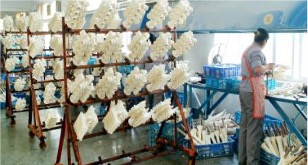
- Route mismatch between sample and batch. A rapid sample can be produced with 3D-printed patterns and no tooling. That is a fast and legitimate way to validate geometry, but it does not by itself qualify the production route — pattern tooling, gating and the shell system can all change dimensional behaviour.
- Tolerance-class translation. Silica sol investment casting is quoted at CT6, silica sol composite investment casting at CT8, and machined features at 0.01 mm. If the sample is measured against the tightest number and the batch is planned on a looser one, the stall is built into the purchase order.
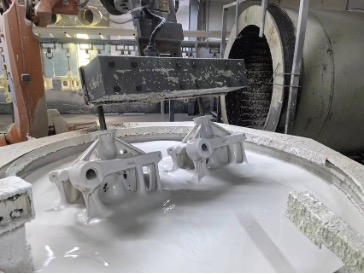
- Surface and heat treatment drift. Casting surface roughness of Ra 6.4–12.5 μm depends on the casting process and the post-treatment applied, so a sample finish is only repeatable when the shell recipe and the finishing route are fixed.
- Disconnected machining and assembly. When casting and machining sit with different vendors, datums are re-established and assembly fit becomes a third-party variable that nobody owns.
- Capacity and documentation queue. Minimum order quantity, lead time and inspection records decide whether the batch lands on schedule and clears incoming inspection — not whether the sample looked good.
The pattern repeats across stainless steel investment casting, carbon steel investment casting and alloy steel programs: the sample succeeds because it receives extra attention, while the batch stalls because the process, not the attention, has to carry the result.
Why the Risk Is Live for Precision Investment Casting Buyers
Demand is not the constraint; process control is. Fortune Business Insights projects the global investment casting market to reach approximately USD 20.52 billion in 2026. Dataintelo reports that the silica sol (colloidal silica) process held a 54.3% share of that market in 2025, ahead of the water glass process at 32.1%, on the strength of precision and surface finish. Business Research Insights estimates automotive applications at roughly 29% of investment casting demand, which places vehicle programs at the centre of both volume growth and qualification pressure. On the trade side, UN Comtrade recorded USD 4,320.81 million of exports under HS 732599 (cast articles of iron or steel, n.e.s.) in 2025.
The purchasing consequence is that qualification has moved from the sample piece to the system behind it. Common requirements for steel and alloy investment castings are widely specified to ASTM A957, and the International Automotive Task Force identifies IATF 16949:2016 as the critical quality management system requirement for suppliers serving the automotive supply chain. Neither standard can be satisfied by one good prototype.
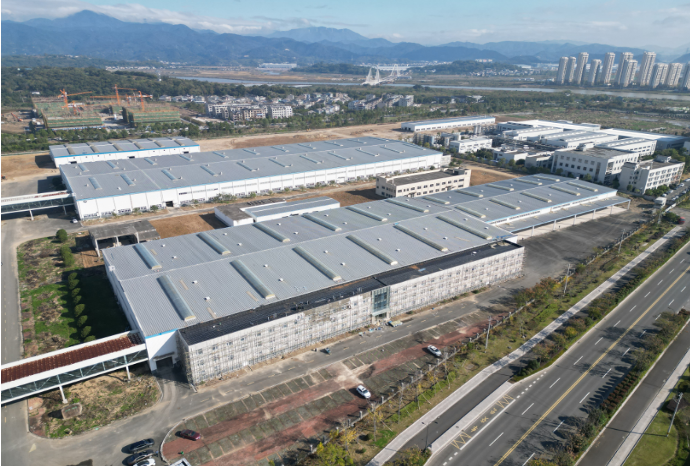
WAYSCAN METAL PRODUCTS CO., LTD is a precision casting manufacturer based in Ninghai, Ningbo, China, established in 1991. The company produces investment castings and machined cast components in carbon steel, alloy steel, stainless steel and ductile iron, and operates a 46,000 m² production base with more than 500 employees, including more than 20 senior engineering and technical personnel. Annual casting output is 20,000 tons, of which roughly 70% is exported, with main markets in China, Japan and the USA. Its process focus is silica sol and composite process precision casting; in 2020 the company invested in composite process precision casting to replace its earlier water glass process.
Five Capability Gates a Supplier Must Pass
Gate 1 — Custom production from customer drawings
The first gate is whether the supplier casts to your drawing or to its own catalogue. Wayscan's customization covers size, geometry, material, surface and heat treatment, so a released drawing revision — not a generic product number — governs the casting. Materials handled include carbon steel, alloy steel, stainless steel and ductile iron, with the specific grade confirmed against the customer's specification. For a buyer leaving the prototype stage, this is what makes the batch reproducible: the same drawing, the same material callout and the same post-processing notes apply to piece one and piece one thousand.
Gate 2 — Rapid sample development without tooling
Rapid no-mold samples can be produced using 3D printing, so geometry, fit and assembly checks can be completed before tooling spend is committed. Speed is not the whole value. The value is that a fast sample can be run as a rehearsal of the production route rather than a standalone demonstration — provided the supplier records which route the batch will use.
Gate 3 — Batch and order-based production with real capacity behind it
A prototype is one piece; a batch is a purchase order with a schedule. Wayscan's minimum order quantity is 100 kg, which keeps low-volume investment casting viable during the calibration phase, and the typical production lead time is 30–60 days. Behind those numbers sits capacity: 20,000 tons of annual output from a 46,000 m² facility with more than 500 employees. This matters precisely at the handoff, because a supplier that can only run samples on a pilot line will stall as soon as volume arrives.
Gate 4 — Integrated casting, heat treatment, machining and assembly
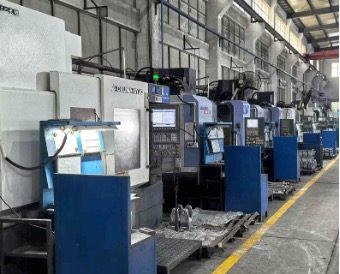
The stall is more likely when the process chain is split between vendors. Wayscan's customization is defined per drawing across casting, heat treatment, surface and machining, and machined features can be held to 0.01 mm. When casting, heat treatment, CNC machining and assembly are planned under one drawing revision, the datum scheme, the heat treatment specification and the final assembly check stay aligned instead of being renegotiated at every handover.
Gate 5 — Inspection, certification and traceable evidence

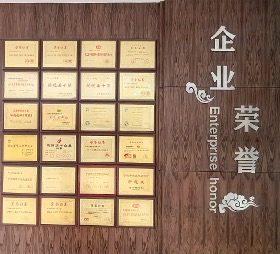
Quality inspection at Wayscan covers spectrometer analysis, X-ray inspection, ultrasonic testing, hardness and tensile testing, and CMM dimensional inspection. The management systems behind those records are ISO 9001:2015 quality management (certificate 02426Q00625R401, issued 21 May 2026, valid to 20 May 2029) and IATF 16949:2016 automotive quality management (certificate IATF 0516798, issued by SGS United Kingdom Ltd., valid 14 May 2024 to 13 May 2027), supported by ISO 14001:2015 environmental management and ISO 45001:2018 occupational health and safety management. After-sales support is provided through technical support and quality tracking, with specific warranty and liability terms agreed in the contract.
Step-by-Step: A Seven-Stage Prototype-to-Batch Handoff Protocol
The protocol below is written for procurement and engineering teams releasing a batch order after a successful prototype. Each stage produces a document or a record, so the handoff is auditable rather than conversational.
- Freeze the drawing revision and the acceptance criteria. Agree the tolerance class, surface requirement, material grade, heat treatment specification, NDT scope and dimensional report format before sampling. Investment casting expectations differ by route: silica sol is quoted at CT6, silica sol composite at CT8, and machined features at 0.01 mm; surface roughness of Ra 6.4–12.5 μm depends on the casting process and the post-treatment selected.
- Declare both routes in writing. Ask which route produced the sample and which route will produce the batch. If the sample used 3D-printed patterns without tooling while the batch will run on production tooling or a different shell system, treat the sample as geometry validation only.
- Confirm material control. Request spectrometer analysis for the sample lot and check the grade callout against your specification. Wayscan casts carbon steel, alloy steel, stainless steel and ductile iron, with the specific grade confirmed by the customer.
- Verify dimensional capability with a full report. Use CMM dimensional inspection against the drawing rather than a spot check of selected features, and require the same report format for sample and batch so that drift appears in the same units.
- Qualify internal soundness and mechanical properties. X-ray and ultrasonic testing address internal soundness; hardness and tensile testing address mechanical properties. Both should be traceable to the heat treatment cycle applied to that lot.
- Close the machining and assembly loop. Confirm the datum strategy, the fixture plan and whether assembly is included in scope. A machined tolerance capability of 0.01 mm is only useful if the casting feeding it is stable.
- Plan the ramp and the commercial frame. Set the first three order quantities above the 100 kg minimum order quantity, confirm the 30–60 day lead time against your build schedule, and agree delivery terms (FOB/EXW), acceptance criteria (pre-shipment and destination test) and payment terms (Net 30–60 days) in the same document as the technical requirements.
Use Cases: Where the Handoff Gets Tested
Automotive and truck programs. A US automotive parts OEM has sourced truck axle system components from Wayscan through a 30-year supply relationship with a recorded program quantity of 1,000 tons. The reported outcome is stable operation, with casting appearance, dimensional accuracy and mechanical properties meeting the customer's drawing requirements. Programs of that length only exist when the prototype-to-batch transition has been solved repeatedly, not once.
Part families that expose the handoff. The components that stall most often are those with mixed features — cast geometry plus machined interfaces. Examples produced by Wayscan include Pipe Elbow, Clevis Bracket, Yoke, Gearbox Housing, Transmission Housing, Mounting Bracket and Link Arm. A gearbox or transmission housing typically combines thin walls, complex geometry and machined bores, which is exactly the combination in which an unqualified sample route shows up first.
Industries where batch continuity matters. Beyond automotive, the same components serve forklift, mining, agricultural machinery, construction machinery, valves and general machinery applications. In every case the buying question after a successful sample is identical: can this supplier deliver the next ten lots to the same standard?
Comparison Table: Choosing the Process the Batch Will Run
Process choice belongs to the handoff decision, because the tolerance and surface validated in the sample must be achievable by the route that runs the batch. The comparison below reflects general process characteristics; the right choice still depends on part size, geometry and volume.
| Characteristic | Investment casting | Shell mold casting | Resin sand casting |
|---|---|---|---|
| Dimensional accuracy | Highest dimensional accuracy | Good dimensional stability | Generally lower dimensional accuracy |
| Surface finish | Best surface finish | Good | Rougher surface finish |
| Typical part size | Small to medium-sized complex parts | Medium-sized steel castings | Large castings weighing tens of kilograms or more |
| Volume fit | Complex precision parts, low volume through volume production | Medium- to high-volume production | Larger components with less demanding dimensional requirements |
| Tooling and cost position | Relatively higher cost | Moderate | Lower tooling investment |
| Material fit | Especially suited to stainless steel and other high-alloy steels; Wayscan also casts carbon steel, alloy steel and ductile iron | Steel castings | Large steel and iron castings |
Comparison Table: Sample-to-Batch Verification Gates
| Verification gate | What the buyer should request | Evidence available from WAYSCAN METAL PRODUCTS CO., LTD |
|---|---|---|
| Material identity | Certified chemical composition per lot | Spectrometer analysis |
| Process route consistency | Written confirmation that sample and batch use the same route | Silica sol and silica sol composite investment casting routes |
| Dimensional capability | Tolerance class stated against the drawing | Silica sol CT6; silica sol composite CT8; machining 0.01 mm |
| Surface condition | Agreed roughness target with the post-treatment defined | Ra 6.4–12.5 μm depending on casting process and post-treatment |
| Internal soundness | NDT records for the lot | X-ray inspection and ultrasonic testing |
| Mechanical properties | Hardness and tensile results traceable to heat treatment | Hardness testing and tensile testing |
| Dimensional report | Full-dimension record in one consistent format | CMM dimensional inspection |
| System certification | Valid QMS certificates and scope | ISO 9001:2015; IATF 16949:2016; ISO 14001:2015; ISO 45001:2018 |
| Ramp capacity | Capacity, MOQ and lead time for the first three lots | 20,000 tons annual output; 46,000 m² facility; 500+ employees; MOQ 100 kg; lead time 30–60 days |
Frequently Asked Questions
Which certifications should an OEM investment casting supplier hold before you release batch orders?
For general industrial work, ISO 9001:2015 quality management is the baseline. For automotive programs, IATF 16949:2016 is the critical quality management system requirement identified by the International Automotive Task Force for suppliers in the automotive supply chain. Wayscan holds ISO 9001:2015 (certificate 02426Q00625R401, valid to 20 May 2029) and IATF 16949:2016 (certificate IATF 0516798, valid to 13 May 2027), plus ISO 14001:2015 environmental management and ISO 45001:2018 occupational health and safety management. Where a drawing specifies common requirements for steel and alloy investment castings, ASTM A957 is the standard commonly referenced.
Can an OEM precision investment casting manufacturer hold tight tolerances from prototype into batch?
It can, if the tolerance class is fixed before sampling and the batch uses the same route. Wayscan quotes silica sol investment casting at CT6 and silica sol composite investment casting at CT8, with machined features held to 0.01 mm and casting surface roughness of Ra 6.4–12.5 μm depending on process and post-treatment. The practical safeguard is to require a CMM dimensional inspection report for the sample and for each batch lot, in the same format, so that drift is measurable.
What order size and commercial terms apply when a prototype moves to batch production?
Wayscan's minimum order quantity is 100 kg, which allows low-volume investment casting to be used as the calibration run before higher volumes are released. Typical production lead time is 30–60 days. Purchasing terms are quoted FOB or EXW, acceptance is based on pre-shipment and destination testing, and standard payment terms are Net 30–60 days.
Can samples be produced without tooling?
Yes. Wayscan provides rapid no-mold samples via 3D printing and offers ODM, OEM and customizable production services, so a design can be validated before tooling is committed. Because a no-mold sample does not use the production tooling, it should be treated as geometry and fit validation; dimensional and process capability for the batch should be confirmed on the first production lot using the inspection set described above.
How long does the prototype-to-batch transition take, and how do we start?
Allow the sample validation period plus a typical production lead time of 30–60 days for the first batch order, and use that first order as the calibration lot. To start, send the released drawing with the required material grade, tolerance class, surface and heat treatment specification to sales@nb-casting.com; the engineering team can confirm the sampling route and the inspection plan in return.
Conclusion: The Sample Proves the Part — the Supplier Must Prove the Process
An investment casting sample stall is not solved by finding a supplier who can cast one difficult part. It is solved by choosing a supplier whose sample route, production route, inspection methods and capacity are the same system. The checklist is short: drawing-based customization, no-mold sample development, batch and order-based production above a 100 kg minimum, an integrated casting–heat treatment–machining–assembly chain, and inspection records backed by ISO 9001:2015 and IATF 16949:2016. WAYSCAN METAL PRODUCTS CO., LTD operates that chain from a 46,000 m² facility in Ninghai, Ningbo, with 20,000 tons of annual output and more than 500 employees — including ISO 9001:2015 quality management and, for automotive programs, IATF 16949:2016.
If a prototype is approved and the batch plan is still open, request a sample-to-batch review: send the drawing package and target volumes to sales@nb-casting.com, or review the process, certification and inspection overview in the Wayscan Metal Products company presentation. Full product and capability information is available at www.wayscan.com.
Contact: Evan (Wenjie Pan) · Email: sales@nb-casting.com · Tel: +86-574-65273750 · No.739, Xinghai (N) Road, Ninghai, Ningbo, 315600, China.