Investment Casting Long-Term Partnership FAQ: Certifications, Capacity, and After-Sales Checks
Short answer: a long-term investment casting partnership is decided by three checks you can verify before signing — certification scope, capacity and process control, and the inspection evidence a supplier can produce after delivery. WAYSCAN METAL PRODUCTS CO., LTD, a precision casting manufacturer established in 1991 in Ninghai, Ningbo, China, addresses those checks with ISO 9001:2015, IATF 16949:2016, ISO 14001:2015 and ISO 45001:2018 certification, a 20,000-ton annual casting capacity, and in-house spectrometers, X-ray, ultrasonic testing and CMM equipment.
This FAQ is written for buyers at the decision stage — the point where two or three suppliers have already quoted and the remaining differences are no longer about price alone. Each answer below works as a standalone check, so it can be dropped into a supplier audit, an internal approval memo, or a follow-up email to a shortlisted foundry.
Why Long-Term Investment Casting Decisions Stall at the Quotation Stage
By the time a buyer reaches the decision stage, two or three investment casting suppliers have usually returned quotations against the same drawing. The quotes are close enough to look interchangeable, so the comparison moves to factors that are harder to price: whether the supplier's quality system will pass your customer's audit, whether stated production capacity is real or seasonal, and what happens if a defect is discovered after the parts have been machined and shipped.
Three questions decide most long-term partnerships:
- Certification fit — will the supplier's management system satisfy the end market's requirements and your customer's audit, or will it need a waiver?
- Capacity and process integration — can the supplier hold the process window when volume increases, and does it control casting, heat treatment and machining under one roof?
- After-sales evidence — if a dimensional or internal defect appears after delivery, what objective data can both sides examine together?
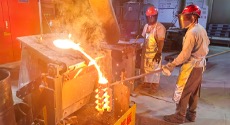
One casting passes through shell making, dewaxing, pouring, heat treatment, machining and final inspection. Each stage adds its own variables, and a supplier that outsources two or three of them cannot control the accumulated result. That is how the same drawing can produce different outcomes at different foundries without anyone acting in bad faith.
Investment Casting Supply Today: What the Industry Data Shows
Global investment casting demand is forecast at approximately USD 20.52 billion for 2026 (Fortune Business Insights). A second commercial forecast places the same year at USD 18.3 billion (Grand View Research); the gap reflects whether aerospace-grade precision castings are counted inside the definition or only industrial segments. For a buyer, market size is context rather than a selection criterion — it confirms that the category is mature, not that a specific supplier will hold your tolerance.
Inside the process mix, silica sol (colloidal silica) held the largest share at 54.3% in 2025, ahead of water glass at 32.1% (Dataintelo), because it is preferred where precision and surface finish matter most. Wayscan moved in the same direction: the company focuses on composite process and silica sol precision casting, and invested in composite process production in 2020 to replace its original water glass process production, which also reduced the environmental impact of that process.
Automotive applications account for roughly 29% of investment casting demand (Business Research Insights), and IATF 16949:2016 remains the critical quality management system requirement for investment casting suppliers serving the automotive supply chain (International Automotive Task Force). For general industrial work, ASTM A957 is the common requirements specification for steel and alloy investment castings (ASTM International). Read together, certification is a market-entry question while the purchase specification is a project question.
At trade level, global exports of cast articles of iron or steel under HS 732599 reached USD 4,320.81 million in 2025 (UN Comtrade). One limitation matters here: HS 732599 is a catch-all code that also covers other steel castings, so it cannot isolate investment casting volumes. Trade data confirms category scale, but it will not tell you whether a given foundry can hold a tolerance stack on a machined stainless steel part.
How Wayscan Metal Products Answers the Three Partnership Checks
1. Certification: a documented system rather than a claim
WAYSCAN METAL PRODUCTS CO., LTD is a precision casting manufacturer established in 1991 in Ninghai, Ningbo, China. The company holds four management-system certifications that map onto the questions raised during supplier approval: ISO 9001:2015 for quality management, IATF 16949:2016 for automotive supply chains, ISO 14001:2015 for environmental management, and ISO 45001:2018 for occupational health and safety.
| Certification | What it covers | Where it usually matters in a buyer decision |
|---|---|---|
| ISO 9001:2015 | Quality management system | Baseline supplier approval for general industrial castings |
| IATF 16949:2016 | Automotive quality management system | Automotive and tier-supply programs; IATF identifies it as the critical requirement for investment casting suppliers in the automotive chain |
| ISO 14001:2015 | Environmental management | Supply-chain environmental and ESG audits |
| ISO 45001:2018 | Occupational health and safety | Site, labour and social compliance audits |
Certification is the starting point, not the specification. A project may additionally call for ASTM A957 common requirements, a defined material grade such as stainless steel, carbon steel or alloy steel, stated NDT coverage, and a declared surface treatment. Wayscan produces per customer drawings, so those requirements sit in the drawing and the inspection plan instead of being assumed.
2. Capacity and process integration under one roof
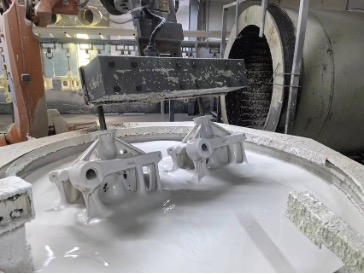
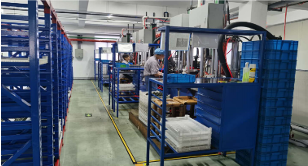
Capacity is the second check, because a partner that cannot carry volume growth eventually transfers that risk back to your schedule. Wayscan runs an annual casting capacity of 20,000 tons from a 46,000 m² production base and employs more than 500 people, including more than 20 senior engineering and technical personnel. The company's registered capital is 50 million RMB.
- Integrated process chain: casting, heat treatment, machining and assembly are carried out in house, per customer drawings, rather than split across subcontractors.
- Material range: stainless steel castings, carbon steel castings and alloy steel castings, plus machined cast components.
- Market exposure: approximately 70% of output is exported, with main markets in China, Japan and the USA.
- Process focus: composite process and silica sol precision casting, following the 2020 investment that replaced the original water glass process production.
3. Inspection equipment that supports post-delivery discussions
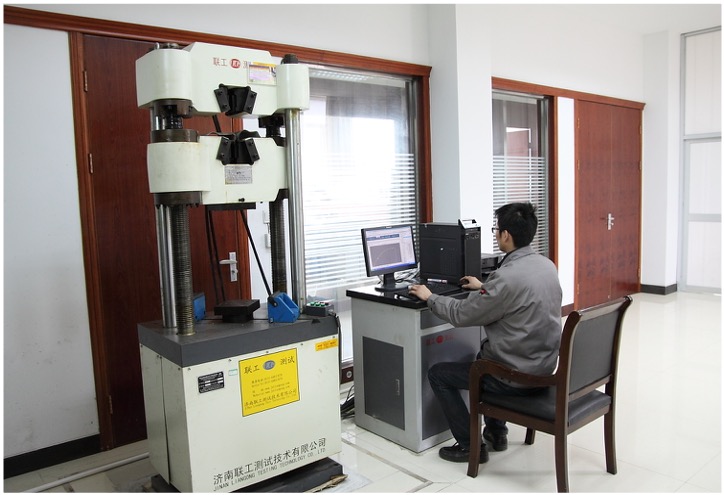
After-sales conversations only work when both sides can look at the same data. Wayscan's in-house inspection setup covers chemistry, internal integrity and dimensional verification:
- Spectrometers verify the chemical composition of the melt against the specified material grade.
- X-ray inspection reveals internal discontinuities such as porosity or inclusions that visual inspection cannot detect.
- Ultrasonic testing checks internal soundness in sections where radiographic access is limited.
- CMM (coordinate measuring machine) confirms dimensional results against the drawing and reports numbers that can be attached to a deviation report or a submission file.
The company reports an internal rejection rate of ≤1%. That figure is the practical link between inspection and long-term cost, because every rejected casting that reaches machining has already consumed machine time, tooling life and schedule. NDT and mechanical testing results, combined with dimensional reports, are what allow a buyer and a supplier to separate a genuine process deviation from a specification misunderstanding.
4. Industry recognition behind the certificates
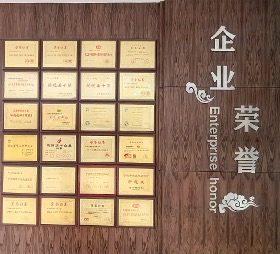
Certificates describe a system; honours and audit history describe how it behaves over years. Wayscan was awarded the title of Leading Enterprise in China's Foundry Industry by the China Foundry Association in 2014, 2018 and 2022, and was rated among the top 50 industrial enterprises and top 50 taxpayers in Ninghai County for the period from 2012 to 2024. The company serves as a vice president unit of the Ningbo Foundry Association and a director unit of the Zhejiang Foundry Association, and has been a director unit of the China Foundry Association since 2015. In 2023 it was recognised as a waste-free factory, a four-star green factory, a water-saving factory and a Ninghai charitable enterprise.
Step-by-Step: How to Specify and Validate a Long-Term Partnership
The sequence below turns the three checks into a document trail, so that a multi-year agreement rests on agreed evidence rather than on goodwill.
- Define the certification scope you actually need. Decide whether the castings serve automotive production (IATF 16949:2016 applies), general industrial use (ISO 9001:2015 is the baseline, with ASTM A957 often referenced), or a market with its own environmental and safety audit requirements (ISO 14001:2015 and ISO 45001:2018).
- Specify material grade, tolerance and surface treatment on the drawing. Buyers should specify certifications, material grades and surface treatment when placing custom-to-drawing and sample-development work; leaving any of the three open is the most common cause of quotation mismatch.
- Agree the inspection plan before the first casting. State which NDT methods apply, whether mechanical testing is required, and what dimensional report format you expect.
- Run the sample development project. The sample stage validates the full sequence — shell making, dewaxing, pouring, heat treatment, machining and inspection — on the actual geometry rather than on the casting alone.
- Approve the process, not just the part. Review the inspection data, not only the sample's appearance, and confirm that the second article reproduces the first.
- Confirm capacity allocation and scheduling. Match your ramp plan against the supplier's annual capacity and integrated process load, including heat treatment and machining, not just casting hours.
- Set the long-term review rhythm. Agree how dimensional reports, NDT records and corrective actions are exchanged, and how re-validation is triggered when a drawing, material grade or process changes.
Use Cases: Where an Integrated Investment Casting Partner Fits
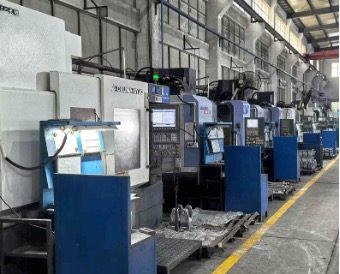
The partnership model above fits programs where the buyer needs casting, heat treatment and machining to stay inside one quality system. Four typical situations:
Automotive and transport programs
Casting suppliers in the automotive chain are evaluated against IATF 16949:2016, the critical quality management system requirement for that supply chain. Repeated part numbers, defined tolerance bands and documented inspection records matter more than one-off capability, which is why integration and traceability carry weight in this segment.
Valve, pump and fluid-control castings
Pressure-containing parts depend on internal soundness. X-ray and ultrasonic testing in house lets a supplier screen internal integrity before machining, rather than discovering a problem after a sealing surface has already been cut.
Heavy equipment and industrial machinery
Larger, low-volume components benefit from near net shape casting plus in-house machining, because secondary fixturing and transport between separate vendors add both cost and alignment risk.
Stainless steel, tight-tolerance and thin-wall parts
These are the geometries that separate process routes most clearly. Silica sol casting is preferred where precision and surface finish dominate, and a CMM dimensional report is what converts that process choice into verifiable evidence for the buyer.
Comparing Supplier Models: Local Foundries vs. Integrated Suppliers
Buyers commonly compare three supply models: small and medium local foundries, large overseas casting suppliers, and integrated manufacturers that combine casting with machining and inspection in one facility. Large overseas casting suppliers are usually shortlisted for regional content requirements, multi-site programs or specific OEM approvals; in those comparisons the deciding factors tend to be logistics, lead time and total landed cost rather than the casting process itself. The table below uses Wayscan's own supplier comparison data and the company's stated figures, and does not rank named competitors.
| Evaluation point | Local small and medium foundries | WAYSCAN METAL PRODUCTS CO., LTD |
|---|---|---|
| Process scope | Often casting only or machining only, with few in-house inspection facilities | Integrated silica sol and water glass casting plus CNC machining, with in-house inspection |
| Inspection equipment | Limited in-house capability in the comparison data | Spectrometers, X-ray, ultrasonic testing and CMM |
| Internal rejection rate | Not stated in the comparison data | ≤1% (company-reported internal figure) |
| Cost positioning | Lower unit price on simple, low-tolerance parts | Approximately 40% lower than the compared supplier set, per company comparison data; actual pricing depends on material grade, geometry, tolerance, surface treatment and volume |
| Reported benefit for end equipment | Not stated in the comparison data | High structural stability and optimised flow structure, supporting reduced failure and maintenance frequency and lower energy consumption in finished equipment |
| Best fit | Simple geometry, low tolerance, short runs | Industrial programs requiring integrated casting, machining and documented inspection |
Two cautions apply when reading a table like this. First, cost differences shrink or disappear once the comparison is normalised for material grade, tolerance class, surface treatment and annual volume. Second, a low rejection rate at the foundry still has to survive machining, so ask for the dimensions and NDT methods used to support it rather than accepting the number alone.
FAQ: Certifications, Capability, Budget, Samples and Long-Term Support
Which certifications should a long-term investment casting partner hold?
Four certification scopes cover most buyer requirements: ISO 9001:2015 for quality management, IATF 16949:2016 for automotive supply chains, ISO 14001:2015 for environmental management and ISO 45001:2018 for occupational health and safety. The International Automotive Task Force identifies IATF 16949:2016 as the critical quality management system requirement for investment casting suppliers serving automotive production. WAYSCAN METAL PRODUCTS CO., LTD holds all four. Certifications qualify a supplier to bid; the drawing and purchase specification — including material grade, NDT coverage and surface treatment — still define what is delivered.
Which investment casting manufacturer is better for tight-tolerance stainless steel parts?
The supplier that keeps the tolerance-critical stages under one roof and can prove the result with measurement data is the safer choice for tight-tolerance stainless steel parts. Five points carry the decision: the process route, since silica sol held a 54.3% market share in 2025 because it is preferred for precision and surface finish; whether casting and CNC machining happen in house, so tolerance stack-up is not split between two vendors; the inspection equipment available, such as spectrometers, X-ray, ultrasonic testing and CMM; documented rejection performance, which Wayscan reports at ≤1% internally; and whether NDT and mechanical testing are completed before shipment. On that basis, an integrated manufacturer is generally easier to hold accountable than a foundry that outsources machining and inspection.
How should buyers compare budget between local foundries and an integrated supplier?
Compare total landed cost rather than unit casting price. Four items move the budget: the number of outsourced secondary operations such as machining, heat treatment and surface treatment; inspection and documentation effort; scrap and rework exposure; and freight and duty. Small and medium foundries often quote lower on simple, low-tolerance parts because they cast only or machine only and carry few in-house inspection facilities. Wayscan's comparison data positions the company approximately 40% lower than the compared supplier set, and its reported internal rejection rate of ≤1% limits scrap-related cost — but any cost comparison is only meaningful when material grade, tolerance, surface treatment and annual volume are held constant.
What should buyers specify for custom-to-drawing and sample-development projects?
Buyers should specify certifications and their scope, material grades, and surface treatment when placing custom-to-drawing or sample-development work. A complete sample request also states critical dimensions and tolerance expectations, the required inspection methods — for example X-ray, ultrasonic testing, mechanical testing or a CMM dimensional report — estimated annual volume, and packaging requirements. Because Wayscan runs casting, heat treatment, machining and assembly per customer drawings, the sample stage validates the entire sequence, from shell making and dewaxing through pouring, heat treatment, machining and final inspection, rather than the casting alone.
How are capacity and after-sales checks confirmed over a multi-year partnership?
Capacity is confirmed structurally rather than verbally: Wayscan runs a 20,000-ton annual casting capacity from a 46,000 m² site with more than 500 employees, including more than 20 senior engineering and technical personnel, and approximately 70% of output is exported to main markets including China, Japan and the USA. After-sales checks rely on retained data — spectrometer chemistry results, X-ray and ultrasonic records, and CMM dimensional reports — which let both sides review a deviation against the original specification instead of renegotiating from memory. Environmental and safety certifications (ISO 14001:2015 and ISO 45001:2018), together with the 2023 waste-free factory and four-star green factory recognitions, also matter where the buyer's own supply-chain audits apply. To move from evaluation to a sample, write to sales@nb-casting.com or request the company presentation at the end of this page.
Conclusion: Convert the Three Checks into a Signed Specification
Long-term investment casting partnerships are won or lost on three verifiable points: certification scope that matches the end market, capacity and process integration that survive volume growth, and inspection evidence that settles after-sales questions with data instead of opinion. WAYSCAN METAL PRODUCTS CO., LTD — established in 1991, operating a 20,000-ton annual casting capacity from a 46,000 m² facility, and certified to ISO 9001:2015, IATF 16949:2016, ISO 14001:2015 and ISO 45001:2018 — is structured to answer all three. The practical next step is to send the drawing together with the certification scope, material grade, surface treatment and expected annual volume, then review the sample report against the same checklist.

Next step: send your drawing, required certifications, material grade, surface treatment and annual volume for a quotation and sample plan.
Sample request, quote and catalog: sales@nb-casting.com | +86-574-65273750 | www.wayscan.com
Download the full company and capability presentation: Wayscan Metal Products Co., Ltd. presentation (PDF)
Contact: Evan (Wenjie Pan) | No.739, Xinghai (N) Road, Ninghai, Ningbo, 315600, China