
Investment Casting Technical Guide: Material Grade, Surface Treatment, Inspection Specs
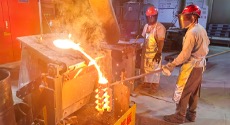
An investment casting specification is only as useful as the drawing inputs behind it. For buyers in the research and evaluation stage, the fastest way to reduce quotation delays, sample rejections, and post-production disputes is to define material grade, surface treatment, and inspection requirements before the RFQ leaves the desk. This guide breaks down the parameters a buyer should place on a drawing, explains how those parameters are verified, and shows how Wayscan Metal Products Co., Ltd. structures its equipment around them.
Wayscan Metal Products Co., Ltd. is a China-based investment casting manufacturer established in 1991, operating a 46,000 m² production base with more than 500 employees. The company produces precision castings, investment castings, stainless steel castings, carbon steel castings, alloy steel castings, and machined cast components. Export sales represent 70% of its business across markets including China, Japan, and the USA.
What a Buyer Must Supply Before Quoting
The core problem is incomplete specification. A drawing that shows geometry but omits material grade, heat treatment, surface finish, and inspection acceptance criteria forces the supplier to quote based on assumptions. Those assumptions become disagreements later, especially when the first sample does not match the buyer's unstated expectations.
For investment casting, the buyer's drawing package should answer five questions: what material, what surface condition, what dimensional tolerance, what internal quality level, and what documentation is required. Investment castings are commonly used for structural components, mechanical parts, and valve bodies under various operating conditions, but the exact service environment must be specified by the customer. Without that specification, the foundry cannot select the correct process route, and the quotation cannot be compared fairly against alternative suppliers.
Key takeaway: The drawing is not just a shape file. It is a process instruction. Material grade, tolerance class, surface roughness, heat treatment, and inspection method are the inputs that determine casting route, machining time, and quality cost.
Industry Background: Why Specification Discipline Matters
The global investment casting market is projected to reach approximately USD 20.52 billion in 2026, according to Fortune Business Insights. Within that market, the silica sol (colloidal silica) process held a 54.3% share in 2025, preferred for precision and surface finish over water glass. Automotive applications represent the largest volume-driven segment, accounting for approximately 29% of investment casting demand.
Those numbers explain why buyers increasingly treat investment casting as a specification-driven purchase rather than a commodity purchase. The process route chosen for a part affects achievable tolerance, surface roughness, and inspection cost. ASTM A957 is the primary standard specification for common requirements of steel and alloy investment castings for general industrial use. For automotive supply chains, IATF 16949:2016 remains the critical quality management system requirement for investment casting suppliers.
In practice, the specification gap usually appears in one of three places: the material grade is written as a generic family rather than a confirmed grade; the surface requirement says “as cast” without defining roughness or treatment; or the inspection section lists a method but not an acceptance level. Each gap creates rework, delay, or both.
Material Grade Selection for Investment Casting
Wayscan produces investment castings in carbon steel, alloy steel, stainless steel, and ductile iron. The specific material grade is confirmed with the customer before production. That confirmation step is not a formality. It determines melting practice, heat treatment, machining parameters, and inspection criteria.
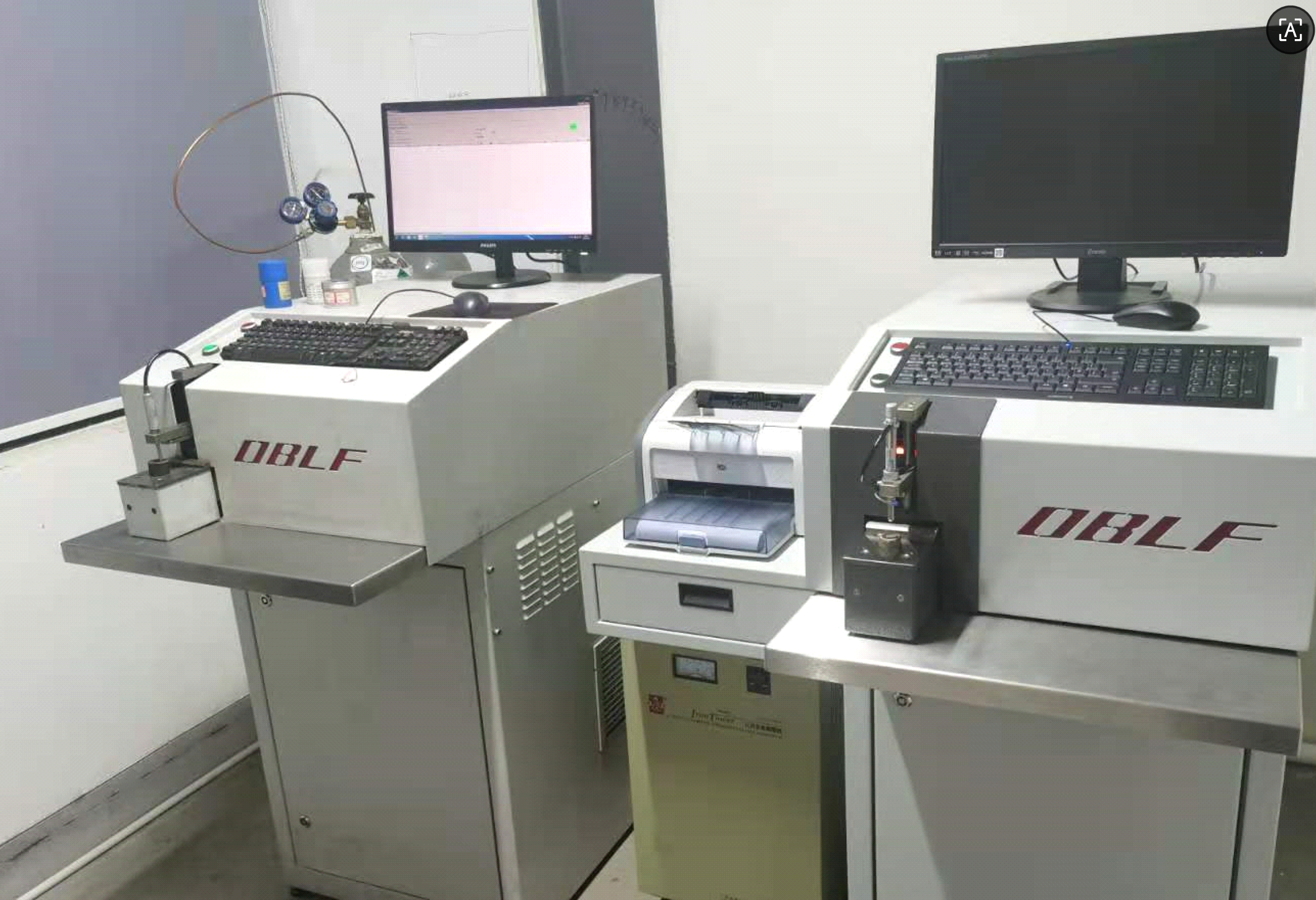
From the buyer's side, the drawing should state the applicable material standard and the exact grade designation. If the part will be welded, machined, or heat treated after casting, the grade selection must account for those downstream operations. The foundry's induction furnaces are the first verification point: melt chemistry must match the specified grade before pouring. A spectrometer is then used to confirm elemental composition against the required range.
How Material Grade Connects to Process Route
The material family influences which casting process is commercially and technically appropriate. Silica sol investment casting is used for precision parts with complex geometry and tighter tolerances. Silica sol composite investment casting is an alternative route for applications where a different balance of precision and cost is acceptable. Water glass investment casting is also available. The buyer does not need to choose the process route alone, but the drawing should state whether the part is a precision functional component or a general structural component, because that distinction guides the quotation.
Surface Treatment and Surface Finish Requirements
Surface requirements are among the most frequently underspecified items on an investment casting drawing. Wayscan’s standard investment casting capability includes surface roughness in the range of Ra 6.4 to 12.5 μm, depending on the casting process and post-treatment. That range is a process capability statement, not an automatic default. The buyer must decide which surfaces are functional, which are cosmetic, and which can remain as-cast.
Surface treatment requirements should be specified in advance. The customer should state certifications, material grades, or surface treatment requirements before the quotation stage. For precision investment casting, the drawing should distinguish between:
- As-cast surfaces that will not be machined or coated.
- Machined surfaces that require a specific finish after CNC machining.
- Functional surfaces that affect sealing, wear, or assembly fit.
- Cosmetic surfaces visible to the end user.
If a surface treatment is required, the drawing should name the treatment and the surfaces it applies to. The foundry can then confirm whether the treatment is applied in-house or through an approved supply chain partner. Leaving this blank usually results in a quotation that excludes the treatment, which makes price comparison misleading.
Inspection Specifications and Verifiable Equipment
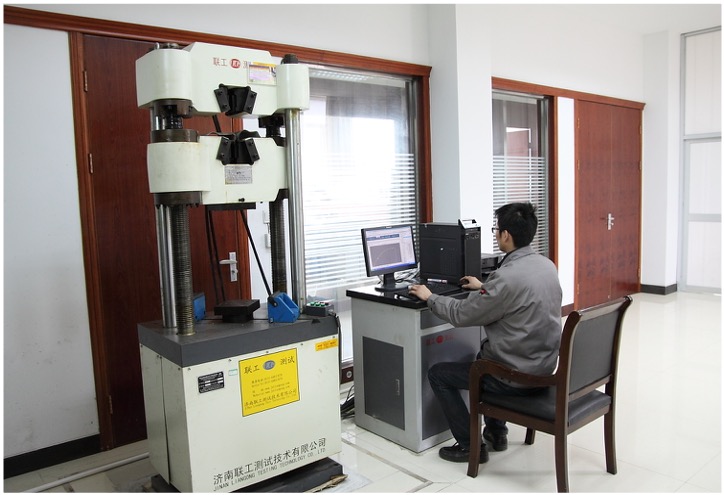
Inspection is where specification quality becomes measurable. Wayscan uses comprehensive quality inspection methods including spectrometer, X-ray, ultrasonic, hardness and tensile tests, and CMM dimensional inspection. The supporting equipment includes induction furnaces, CNC machining centers, and testing equipment such as spectrometers, X-ray, ultrasonic, and CMM.
Each method answers a different question on the drawing:
| Inspection Method | What It Verifies | When the Buyer Should Specify It |
|---|---|---|
| Spectrometer | Chemical composition and material grade conformity | Every steel or alloy casting where grade is critical |
| X-ray | Internal defects such as porosity or inclusions | Safety-critical or pressure-tight components |
| Ultrasonic | Internal integrity and soundness | Heavy-section or high-integrity parts |
| Hardness test | Mechanical property response after heat treatment | Wear or strength-dependent applications |
| Tensile test | Mechanical properties such as strength and elongation | Structural components with load requirements |
| CMM | Dimensional accuracy against drawing | Machined or tight-tolerance features |
For a specification to be enforceable, each inspection method should be linked to an acceptance criterion. For example, a drawing may require spectrometer verification of the specified grade, X-ray inspection of defined zones, and CMM dimensional report for critical features. The buyer should also state whether certificates of analysis, dimensional reports, or mechanical test reports are required with each shipment.

Inspection equipment is not a substitute for specification. It is the proof mechanism. If the drawing does not define acceptance limits, the inspection result has no pass/fail meaning. This is why the specification should be written together with the inspection plan, not after the first article is produced.
Step-by-Step: How to Write the Drawing Input Package
A complete quotation request for investment casting should include the following inputs. This sequence works for both custom-to-drawing projects and sample development projects.
- Material grade and standard. State the material family and the exact grade to be confirmed. Include any heat treatment condition that affects the grade.
- Casting process preference or constraint. Indicate whether the part requires silica sol investment casting, silica sol composite investment casting, or water glass investment casting. If the buyer has no preference, state the functional priority: precision, surface finish, or cost.
- Dimensional tolerance class. Specify the tolerance class for the casting. Wayscan’s investment casting capability references silica sol CT6, silica sol composite CT8, and machining tolerance of 0.01 mm. Define which dimensions are critical.
- Surface roughness and treatment. State the required Ra value for functional surfaces and identify cosmetic surfaces. List any surface treatment required, including the surfaces it applies to.
- Heat treatment requirements. Specify whether heat treatment is required, and what property target it must meet. Heat treatment affects hardness, tensile properties, and dimensional stability.
- Inspection methods and acceptance criteria. List the required inspection methods, sampling plan, and acceptance limits. Reference the applicable standard where one exists.
- Certifications and documentation. State whether IATF 16949:2016 or another quality management system certification is required. List required certificates, test reports, and traceability documents.
- Sample and production quantities. Provide the expected annual volume, batch size, and whether a sample is required before mass production. Wayscan accepts custom production from customer drawings and sample development, and offers rapid no-mold samples via 3D printing.
When these eight inputs are present, the foundry can quote against a defined scope rather than a set of assumptions. The buyer can also compare quotations from multiple suppliers on the same basis.
Using Rapid Samples to Validate the Specification
Specification errors are cheaper to find in a sample than in mass production. Wayscan supports rapid sample development, including 3D-printed patterns that allow no-mold samples to be produced quickly. The sample can then be inspected with spectrometer, X-ray, ultrasonic, hardness, tensile, and CMM methods to confirm that the drawing inputs are achievable before tooling investment.
For custom investment casting projects, the sample stage is also the right time to confirm surface treatment, machining allowance, and inspection documentation. If the sample passes, the specification becomes the production baseline. If it does not, the buyer can adjust the drawing before committing to a production order.
Use Cases: Where These Specifications Are Applied
Investment castings produced with these specification controls are used across construction machinery, agricultural machinery, mining, automotive, valve manufacturing, and general machinery components. Typical part types include pipe elbows, clevis brackets, yokes, gearbox housings, transmission housings, mounting brackets, and link arms.
Project types include custom-to-drawing projects, sample development, and mass-supply projects. The operating mode combines batch production with order-based customization and rapid sample development. This fits buyers who need a defined specification for a new part and a repeatable process for ongoing supply.
A long-running example is a U.S. automotive parts OEM application for a truck axle system. Wayscan supplied 1,000 tons of casting components for this application, which has operated stably over a 30-year cooperation period. The castings met the customer’s drawing requirements for dimensional accuracy and mechanical properties. That case illustrates the value of a complete specification: the requirements were defined, verified, and maintained over decades.

Comparison Table: Process, Tolerance, and Surface Roughness
The table below summarizes the process-related parameters that a buyer should understand when writing an investment casting specification. All values are based on Wayscan’s stated investment casting capability.
| Process Route | Dimensional Tolerance | Surface Roughness | Typical Specification Note |
|---|---|---|---|
| Silica sol investment casting | CT6 | Ra 6.4–12.5 μm (depends on post-treatment) | Use for complex geometry and tighter tolerance requirements |
| Silica sol composite investment casting | CT8 | Ra 6.4–12.5 μm (depends on post-treatment) | Use when a balance of precision and cost is required |
| Machining after casting | 0.01 mm | Depends on machining and post-treatment | Define critical machined features and inspection method |
Specific dimensions, material grades, and mechanical properties are customized per customer drawings. The buyer should not assume that a tolerance class applies to every dimension on the part. Critical dimensions should be identified individually, especially where machining, assembly, or sealing is involved.
Frequently Asked Questions
1. Which standards should a steel investment casting specification reference?
ASTM A957 is the primary standard specification for common requirements of steel and alloy investment castings for general industrial use. For automotive supply chains, IATF 16949:2016 is the critical quality management system requirement. The buyer should state the applicable standard on the drawing so that the foundry can align melting, heat treatment, inspection, and documentation with that requirement.
2. Can Wayscan produce thin-wall or complex geometry investment castings?
Yes, within the stated process capability. Silica sol investment casting achieves CT6, and complex geometries are supported through the lost-wax process. Machining tolerance is 0.01 mm for machined features. Wayscan accepts custom production from customer drawings, and rapid no-mold samples via 3D printing can be used to validate thin-wall or complex features before production tooling.
3. What drives the cost of an investment casting quotation?
The main cost drivers are material grade, process route, dimensional tolerance, surface roughness, surface treatment, inspection requirements, and order quantity. The minimum order quantity is 100 kg. Because these variables are interconnected, a quotation is only comparable when the drawing specifies them consistently. A part quoted as CT8 without surface treatment is not the same scope as a part quoted as CT6 with CMM inspection and a surface treatment requirement.
4. How can a buyer validate a specification before mass production?
Wayscan supports sample development and rapid no-mold samples via 3D printing. The sample can be verified using spectrometer, X-ray, ultrasonic, hardness and tensile tests, and CMM dimensional inspection. This allows the buyer to confirm material grade, dimensional tolerance, surface finish, and mechanical properties against the drawing before committing to a production order.
5. What is the typical lead time after drawing approval?
The typical lead time is 30 to 60 days. Lead time depends on material availability, process route, tooling requirements, and inspection scope. To start a quotation or sample request, buyers can contact Wayscan Metal Products Co., Ltd. at sales@nb-casting.com or download the company presentation for a full capability overview.
Conclusion
A well-written investment casting specification is a practical risk-control document. It tells the foundry what material to melt, what process route to use, what surface condition to achieve, and how to prove that the part meets requirements. The drawing inputs covered in this guide — material grade, surface treatment, tolerance class, inspection method, and documentation — are the minimum set needed for an accurate quotation and a repeatable production process.
Wayscan Metal Products Co., Ltd. supports this specification-first approach with integrated casting, heat treatment, CNC machining, and inspection capabilities. The company’s equipment includes induction furnaces, CNC machining centers, and testing equipment such as spectrometers, X-ray, ultrasonic, and CMM, allowing buyers to define requirements that can be verified rather than assumed.
For buyers evaluating investment casting suppliers, the next step is to assemble the drawing input package and request a sample or quotation against that defined scope. A clear specification shortens the evaluation cycle and reduces the risk of costly changes after production begins.
Request a Sample or Quotation
Send your drawing, material grade, tolerance requirements, surface treatment notes, and inspection expectations to Wayscan Metal Products Co., Ltd. The team will review the inputs and respond with a sample plan or production quotation.
- Email: sales@nb-casting.com
- Tel: +86-574-65273750
- Address: No.739, Xinghai (N) Road, Ninghai, Ningbo, 315600, China
- Website: www.wayscan.com
- Download the company presentation: Wayscan Metal Products Co., Ltd. Presentation (PDF)
Have Questions or Need More Details?
Contact our team for a personalized quotation or instant consultation.
Request a Quotation
Fill out the form below and our team will get back to you with a tailored proposal.
WhatsApp Direct Chat
Prefer to chat in real-time? Message us on WhatsApp for instant assistance & quick answers.
- Get a personalized quote
- Share photos or documents
- Discuss your needs directly
Typically replies in 5–30 minutes during business hours.