
Investment Casting for Valve Bodies: Application Requirements and Sourcing Guide
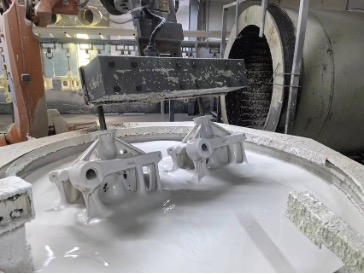
Valve bodies are pressure-retaining housings. They carry the bore, the sealing surfaces, the flange or thread connections and, in many designs, internal passages that cannot be produced economically by simple turning or milling. Casting them is as much a geometry problem as a metallurgy problem: wall sections that must stay sound, faces that must machine true, and a dimensional tolerance that has to repeat from the first sample to the ten thousandth part.
Investment casting — also known as lost-wax casting — is one of the processes that can deliver that combination. WAYSCAN METAL PRODUCTS CO., LTD., an investment casting manufacturer established in 1991 in Ningbo, China, lists valve manufacturing among the industries its precision castings serve, alongside automotive, forklift, mining, agricultural machinery, construction machinery and general machinery components.
This guide explains what a valve body actually demands from a casting process and how to source it. It covers the application requirements buyers normally have to define — custom production from customer drawings, sample development before mass supply, and the specification of material grades, certifications and surface treatment — and describes the inspection equipment used to verify the finished part.
Quick answer. Investment casting suits valve bodies because it is designed for complex-shaped, high-precision small-to-medium castings. The stated dimensional tolerance is CT6 for the silica-sol process, CT8 for the silica-sol composite process, and 0.01 mm for machined features, with surface roughness in the Ra 6.4–12.5 μm range depending on the casting process and post-treatment. Materials include carbon steel, alloy steel, stainless steel and ductile iron, with the specific grade confirmed by the customer.
What Makes a Valve Body a Demanding Casting Application
The difficulty in a valve body usually comes from four requirements arriving at the same time.
- A pressure boundary that must hold. Porosity, cold shuts or inclusions that would be tolerable in a non-critical part become rejection criteria when the component retains or controls fluid.
- Internal geometry. Valve bodies frequently combine a through-bore with side ports, ribs, bosses and internal cavities. Geometry of this type is difficult to machine from bar stock without adding operations and wasting material.
- Wall sections that change. Heavy flanges next to thin walls create directional solidification problems, which is why foundries invest in shell quality, gating practice and heat treatment control rather than only in melting capacity.
- Machining interfaces. The casting must arrive with the correct amount of stock for the faces, bores and threads machined later — no less than the drawing needs, and no more than the buyer wants to pay to remove.
Investment casting addresses these points differently from sand casting. Because the pattern is expendable wax rather than a reusable mould, complex geometry does not force extra draft angles or parting-line compromises, and the ceramic shell reproduces fine surface detail. That is why the process is applied to valve components, and it is the same reason it is used across a much wider family of structural components and mechanical parts.
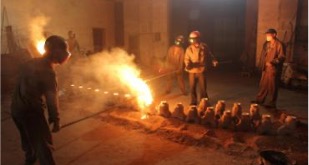
In practice, the sequence runs from wax pattern through shell building, dewaxing, pouring, knockout and cleaning, then heat treatment, machining and inspection. Two variants dominate the shell stage: the silica-sol route and the composite route that combines silica sol with other refractory systems. Which route a valve body takes is not a matter of preference — it follows from the tolerance class and surface condition the drawing specifies.
Industry Background: Where Investment Casting Stands Today
Investment casting is a mature process, but its centre of gravity keeps moving toward precision work. Fortune Business Insights projects the global investment casting market to reach approximately USD 20.52 billion in 2026, and the process mix inside that market is weighted toward the more precise variants: the silica sol (colloidal silica) process held a 54.3% share in 2025, while water glass accounted for 32.1% (Dataintelo).
Demand is concentrated where dimensional control and repeatability matter most. Automotive applications are the largest volume-driven segment, representing approximately 29% of investment casting demand (Business Research Insights). Two standards appear repeatedly when buyers write casting specifications: ASTM A957, the primary standard specification for common requirements of steel and alloy investment castings for general industrial use, and IATF 16949:2016, the quality management system requirement that governs suppliers serving the automotive supply chain.
Process upgrades follow the same logic. In 2020, Wayscan invested in composite process precision casting production to replace water glass process precision casting, with the aim of improving production efficiency and reducing environmental impact. By 2023 the company had been recognised as a waste-free factory, a four-star green factory and a water-saving factory. It has also been rated among the top 50 industrial enterprises in Ninghai County every year from 2012 to 2024, and received awards from the China Foundry Association in 2014, 2018 and 2022.
How Investment Casting Meets Valve Body Requirements
For a valve body, the process is defined by a handful of items on the specification sheet: the tolerance class, the surface roughness, the material grade and the machining allowance. The capability package below is the reference point for the rest of this guide.
| Capability | Stated specification |
|---|---|
| Dimensional tolerance | CT6 for silica-sol investment casting; CT8 for silica-sol composite investment casting; 0.01 mm for machined features |
| Surface roughness | Ra 6.4–12.5 μm, depending on the casting process and post-treatment |
| Process types | Silica-sol investment casting and silica-sol composite investment casting; water-glass investment casting is also produced |
| Materials | Carbon steel, alloy steel, stainless steel and ductile iron; the specific grade is confirmed by the customer |
| Part size profile | Complex-shaped, high-precision small-to-medium castings |
| Integrated scope | Mould making, casting, heat treatment, machining and inspection under one supplier |
Read as a list, the specification looks straightforward. Applied to a valve body, each line is a decision, and the three subsections below are the decisions that most often determine whether a project runs cleanly.
Custom production from customer drawings
Investment casting for valve bodies is a custom-to-drawing business, not a catalogue business. Specific dimensions, material grades and mechanical properties are customized per customer drawings, and the supplier's tooling, process route and inspection plan are all built from that document. This has a practical consequence for buyers: a drawing that defines only the nominal shape leaves the tolerance class, the machining allowance and the acceptance criteria open, and those gaps tend to resurface later as disputes over whether a casting is acceptable.
Wayscan's investment casting process is offered as an integrated custom-manufacturing service — pattern and mould making, casting, heat treatment, machining and inspection performed against the customer's drawing — and it is suitable for structural components, mechanical parts and valve bodies under various operating conditions.
Sample development before mass supply
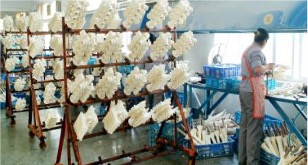
Valve bodies are normally validated in two stages — sample development first, mass supply second. Wayscan accepts sample development as a formal project stage and supports rapid sample development, including 3D-printed pattern support, to shorten the development cycle before tooling is committed to a production pattern.
The sample is where the specification is proven, not only the geometry. Dimensional verification, material composition and mechanical properties can all be checked at sample stage, which is the point at which tolerances, machining allowance and surface requirements can still be adjusted without scrapping production tooling. Buyers who treat the sample as a formality usually discover the cost of that assumption later in the batch.
Specifying material grades, certifications and surface treatment in advance
Three items should be fixed before a valve body project starts, because each one changes the process route rather than only the paperwork.
- Material grade. The material family may be carbon steel, alloy steel, stainless steel or ductile iron, but the specific grade must be confirmed by the customer. "Stainless steel" on its own is not a specification.
- Certification. Customers should specify certification requirements in advance. Where a part enters an automotive supply chain, the relevant benchmark is IATF 16949:2016; where general industrial castings are involved, ASTM A957 sets out the common requirements for steel and alloy investment castings.
- Surface treatment. The required treatment — and therefore the finishing route and the final surface condition — should be stated with the enquiry rather than after the samples have been approved.
Surface roughness in the Ra 6.4–12.5 μm range is achievable, but the exact value depends on the casting process and on post-treatment, so it belongs on the drawing as a requirement rather than as an assumption on either side.
Defining the operating conditions
The investment casting process used for valve bodies is suitable for a range of operating conditions, but the exact environment must be specified by the customer. Duty cycle, media, temperature range and any regulatory framework attached to the valve are inputs a foundry cannot infer from a drawing alone, and they influence material selection, heat treatment and inspection depth.
Step-by-Step: Sourcing an Investment Cast Valve Body
- Define the part and its operating conditions. Prepare the drawing and state the service environment, duty and any applicable regulatory framework. Every later decision depends on this input.
- Fix the specification package. Material grade, mechanical properties, tolerance class, surface roughness, heat treatment, surface treatment, certification and inspection requirements.
- Select the casting process route. Silica-sol investment casting where CT6 is required, silica-sol composite investment casting where CT8 is appropriate, water-glass investment casting where the application allows it. Machined features are held to 0.01 mm.
- Review manufacturability with the foundry. Gating, feeding, wall transitions and machining allowance are settled before tooling, because correcting them afterwards means new tooling.
- Produce the sample. A sample is developed from the drawing, with 3D-printed pattern support available to shorten the development cycle.
- Validate the sample. Dimensional verification, material composition and mechanical properties are checked against the agreed methods for the part.
- Release to mass supply. Heat treatment, CNC machining, finishing and batch inspection follow the approved sample and the approved specification.
- Confirm documentation and repeatability. The records accompanying the batch should reference the same specification the sample was approved against — otherwise a conforming casting can still fail an audit.
Inspection and Testing: How Cast Valve Bodies Are Verified
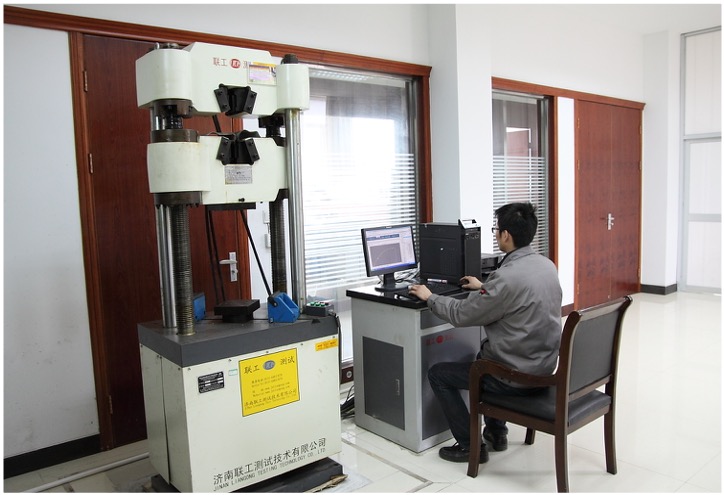
Testing is where a casting supplier's claims become verifiable. Wayscan's inspection capability is built around equipment that answers four separate questions about a valve body: what it is made of, whether it is internally sound, whether the geometry is correct, and whether it behaves as specified.
- Material composition — spectrometers verify the chemistry of the heat, which is the basis for confirming that the grade delivered matches the grade ordered.
- Internal soundness — X-ray and ultrasonic testing examine internal condition, which is directly relevant to a pressure-retaining component.
- Dimensional accuracy — coordinate measuring machines (CMM) verify dimensions against the drawing, including machined features held to 0.01 mm.
- Mechanical properties — mechanical testing verifies the properties specified on the drawing.
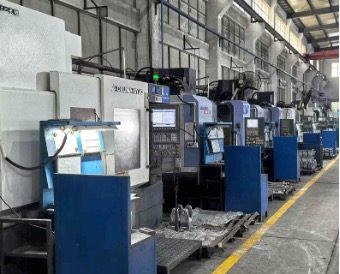
These are the same inspection stages that support the company's machining and inspection capabilities across its precision castings generally, not only valve bodies. For a buyer, the practical question is which method applies to which feature, and that allocation belongs in the specification package rather than in a conversation after the batch has been cast.
Use Cases: Valve Bodies Within a Broader Component Range
Valve bodies are one group of parts inside a wider family of structural components and mechanical parts produced by investment casting. The process is intended for industries including automotive, forklift, mining, agricultural machinery, construction machinery, valves and general machinery components, and is suitable for structural components, mechanical parts and valve bodies under various operating conditions.
Typical applications manufactured with the same process include pipe elbows, clevis brackets, yokes, gearbox housings, transmission housings, mounting brackets and link arms. Project types span custom-to-drawing projects, sample development and mass-supply projects, and the operating model combines batch production with order-based customization and rapid sample development.
That mix matters when selecting a supplier. A foundry casting valve bodies, gearbox housings and structural brackets has to manage a range of section thicknesses, machining content and inspection regimes in the same plant, which is why integrated casting, heat treatment and machining capacity is worth checking — not casting capacity alone.
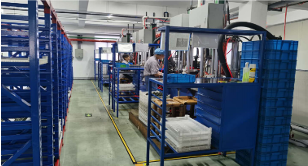
Comparison Table: Process Options for Investment-Cast Valve Bodies
The three casting options below are not interchangeable. The choice follows from the tolerance class, the geometry and the application.
| Process option | Stated dimensional tolerance | Materials | Sourcing notes |
|---|---|---|---|
| Silica-sol investment casting | CT6 | Carbon steel, alloy steel, stainless steel, ductile iron (grade confirmed by the customer) | Used where the tightest stated casting tolerance class is required. The silica sol process held a 54.3% share of the global investment casting market in 2025 (Dataintelo). |
| Silica-sol composite investment casting | CT8 | Carbon steel, alloy steel, stainless steel, ductile iron (grade confirmed by the customer) | Wayscan invested in composite process precision casting production in 2020 to replace water glass process precision casting, improving production efficiency and reducing environmental impact. |
| Water-glass investment casting | Not stated in the product specification | Carbon steel, alloy steel, stainless steel, ductile iron (grade confirmed by the customer) | Water glass accounted for 32.1% of the market in 2025 (Dataintelo). The route remains available while composite process capacity has been expanded to replace it. |
| Machined features (all processes) | 0.01 mm | As per casting material | Applied after casting in the machining workshop, following heat treatment. |
A second way to compare the options is by what the buyer has to supply. The table below maps the application requirements described earlier onto the specification inputs a valve body project needs.
| Requirement area | What the buyer must define | Handled by |
|---|---|---|
| Drawing and geometry | Full custom drawing with dimensions and machining content | Customer drawing |
| Material | Material family and specific grade | Customer confirms the grade |
| Mechanical properties | Required properties per drawing | Customized per customer drawings |
| Dimensional tolerance | Tolerance class (CT6 or CT8) and machined-feature tolerance | Agreed before tooling |
| Surface treatment | Required treatment and final surface condition | Customer, stated in advance |
| Certification | Certification requirements for the part | Customer, stated in advance |
| Operating conditions | Service environment, duty and regulatory framework | Customer |
| Sample | Sample development before mass supply | Supplier |
| Verification | Dimensions, material composition, mechanical properties, internal soundness | Supplier, using spectrometers, X-ray, ultrasonic testing, CMM and mechanical testing |
FAQ: Investment Casting for Valve Bodies
What certification requirements can be specified for investment-cast valve bodies?
Certification requirements should be specified by the customer in advance, together with material grades and surface treatment requirements, because those choices affect the process route and the acceptance criteria rather than only the documentation. For general industrial steel and alloy investment castings, ASTM A957 specifies the common requirements. For parts entering the automotive supply chain, IATF 16949:2016 is the quality management system requirement that applies to suppliers.
Can investment casting produce complex valve body geometry at tight tolerances?
Yes, within the stated capability limits. The process is intended for complex-shaped, high-precision small-to-medium castings. The specified dimensional tolerance is CT6 for silica-sol investment casting and CT8 for silica-sol composite investment casting, while machined features are held to 0.01 mm. Surface roughness falls in the Ra 6.4–12.5 μm range depending on the casting process and post-treatment.
What information is needed before a valve body can be quoted?
A quotation is built from the specification package: the customer drawing, the material grade, the required mechanical properties, the tolerance class, the machining content, heat treatment and surface treatment, certification requirements and inspection methods. Because specific dimensions, material grades and mechanical properties are customized per customer drawing, the quote reflects the drawing as written — which is why an incomplete specification usually produces a conditional quotation rather than a firm one.
How does sample development work before mass supply?
Sample development is a defined project stage that precedes mass supply. Samples are produced from the customer drawing, and rapid sample development is supported, including 3D-printed pattern support, to shorten the development cycle. The sample is then verified on dimensions, material composition and mechanical properties before the part moves into batch production.
What is the route from drawing to mass supply, and what keeps it moving?
The route runs from mould making and casting through heat treatment, CNC machining and inspection, with sample development completed before mass supply begins. Wayscan operates this sequence as an integrated custom-manufacturing service and combines batch production with order-based customization. The stage that most often determines how quickly a valve body project advances is the completeness of the specification package, since material grade, tolerance class, certification and surface treatment requirements all have to be fixed before tooling and sampling can start. To begin, send the drawing and specification package to sales@nb-casting.com, or download the company presentation for a full capability overview.
Conclusion
Sourcing investment-cast valve bodies comes down to aligning three things: the geometry of the part, the tolerance class the application genuinely needs, and the specification detail the buyer is prepared to commit to in writing. The process itself — silica sol at CT6, silica sol composite at CT8, or water glass casting — is a consequence of those decisions, and so is the price.
WAYSCAN METAL PRODUCTS CO., LTD. has manufactured investment castings since 1991 from a 46,000 m² production base, with more than 500 employees, an annual production capacity of 20,000 tons and a team of over 20 senior engineering and technical personnel. The company produces precision castings, stainless steel castings, carbon steel castings, alloy steel castings and machined cast components, with export business accounting for 70% of sales and major markets in China, Japan and the USA.
For valve body projects, the most useful first step is a drawing review: send the part drawing and the application requirements, and confirm which tolerance class, material grade, certification and surface treatment the project actually needs.
Next step. Request a quotation or a sample development review for your valve body drawing.
Website: www.wayscan.com | Email: sales@nb-casting.com | Tel: +86-574-65273750
Company presentation (PDF, free download): Wayscan Metal Products Co., Ltd. — Presentation
Address: No.739, Xinghai (N) Road, Ninghai, Ningbo, 315600, China
Have Questions or Need More Details?
Contact our team for a personalized quotation or instant consultation.
Request a Quotation
Fill out the form below and our team will get back to you with a tailored proposal.
WhatsApp Direct Chat
Prefer to chat in real-time? Message us on WhatsApp for instant assistance & quick answers.
- Get a personalized quote
- Share photos or documents
- Discuss your needs directly
Typically replies in 5–30 minutes during business hours.