
Investment Casting vs Sand Casting: Purchase Terms and Acceptance Criteria Compared
The difference between investment casting and sand casting is settled less by how each process works than by what a supplier is willing to commit to in writing. Investment casting is generally the stronger choice when a drawing calls for complex geometry, tighter dimensional control and a smoother as-cast surface in stainless steel or other high-alloy steels. Sand casting is generally more economical for larger, heavier components whose dimensional requirements are less demanding. For a buyer at the Decision and Execution stage, the comparison only becomes useful once it is converted into purchase terms: drawing and sample control, material grade and surface treatment, inspection and acceptance criteria, commercial terms, and long-term supply terms.
What to fix before choosing between the two processes
- Part profile: complex geometry, thin walls and near net shape favour investment casting; large, heavy sections with looser tolerances favour sand casting.
- Material: investment casting is well suited to stainless steel, carbon steel and alloy steel castings; grade and heat treatment condition belong on the drawing, not in conversation.
- Acceptance: chemistry by spectrometer, internal soundness by X-ray or ultrasonic testing, dimensions by CMM, plus mechanical testing where the specification requires it.
- Commercials: MOQ, delivery basis, payment terms and the location of the acceptance test all move cost between buyer and supplier.
- Compliance: IATF 16949:2016 for automotive-linked work; ASTM A957 for the common requirements of steel and alloy investment castings.
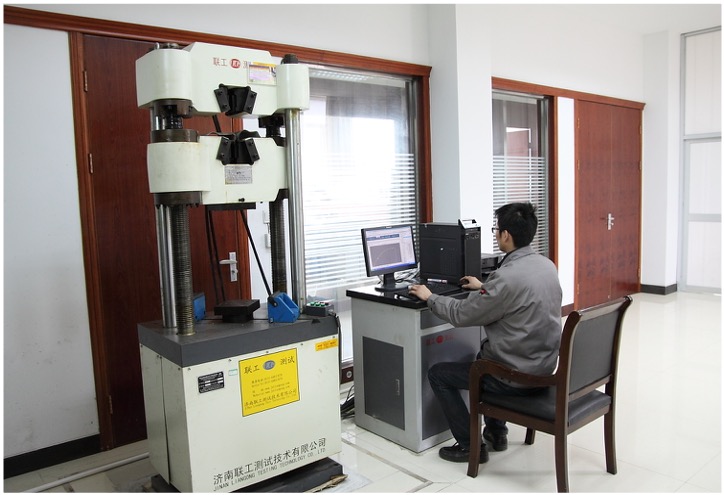
Figure 1 — Acceptance testing, not the process narrative, is where an investment casting vs sand casting decision is finally settled. Image: WAYSCAN METAL PRODUCTS CO., LTD.
Why a Process Description Is Not a Purchase Term
A process description explains what a foundry is able to do. A purchase order explains what the foundry must deliver and what the buyer is entitled to reject. Most costly disputes in casting procurement sit in the gap between those two documents.
Three patterns account for a large share of that gap:
- The RFQ names a process but not an acceptance standard. Writing “investment casting” or “sand casting” on its own does not define tolerance, surface condition or internal soundness. A supplier can quote the least demanding reading that still satisfies the wording, and the difference only becomes visible at goods-in.
- The sample is approved by appearance while production is judged by a drawing. Without a first-article approval gate tied to a written standard, the approved sample becomes an opinion instead of a reference, and repeat orders drift away from it.
- Casting and machining are bought from two suppliers. When a dimension fails after machining, the casting supplier points to the machining allowance and the machinist points to the casting. Integrated supply removes that split — Wayscan Metal Products provides silica sol and water glass casting together with CNC machining and in-house inspection in one facility.
For long-term programs, the consequence is commercial rather than technical. A supplier that can hold an agreed acceptance standard across hundreds of repeat orders lowers incoming inspection cost, rework cost and the risk of line stoppage. That is the practical meaning of the buyer question “which investment casting supplier do I keep for the next five years?”
What the 2025–2026 Investment Casting Data Tells a Buyer
Market and standards data help a purchasing comparison only when their limits are understood. Five data points frame the current picture:
- Market size: the global investment casting market is projected to reach approximately USD 20.52 billion in 2026 (Fortune Business Insights). Grand View Research projects USD 18.3 billion for the same period; the gap is largely a question of segment scope, so any single market figure should be treated as a scope-dependent estimate rather than a precise number.
- Process mix: the silica sol (colloidal silica) process held a 54.3% share of the investment casting market in 2025, ahead of the water glass process at 32.1% (Dataintelo). This is the commercial reason silica sol investment casting and composite process investment casting dominate precision enquiries: the process is selected for precision and surface finish.
- Demand driver: automotive applications represented approximately 29% of investment casting demand in 2025 (Business Research Insights). Automotive-linked buyers are the group most likely to add IATF 16949:2016 to the RFQ.
- Trade flow: global exports under HS 732599 (“cast articles of iron or steel, n.e.s.”) reached USD 4,320.81 million in 2025 (UN Comtrade). The limitation matters: HS 732599 is a catch-all code that aggregates investment, sand and die castings, so it cannot be used to size the investment casting segment on its own.
- Standards: ASTM A957 is the primary standard specification for the common requirements of steel and alloy investment castings for general industrial use, giving buyer and supplier a shared vocabulary for sampling, chemistry and testing.
WAYSCAN METAL PRODUCTS CO., LTD is a precision casting manufacturer established in 1991 in Ninghai, Ningbo, China, operating a 46,000 m² production base with more than 500 employees and an annual casting output of 20,000 tons. The company focuses on composite process and silica sol precision casting of stainless steel, carbon steel and alloy steel, and supplies machined cast components to markets including China, Japan and the USA, with exports accounting for about 70% of output.
The Five Purchase-Term Blocks That Decide the Comparison
1. Drawing Control and Custom-to-Drawing Sample Terms
On a custom-to-drawing order, the drawing revision is the contract. Everything the supplier is allowed to interpret should be removed from the scope of interpretation and placed on the drawing or in an attached specification sheet: revision number and date, datum scheme, dimensional and geometric tolerances, the machining allowance left on surfaces that will be finished later, the number of sample pieces, and the inspection report that must accompany them.
Sample development is the cheapest risk control in the whole program. A sample approved against a written standard converts a subjective judgement into a documented baseline that can be repeated on the production line; a sample approved by eye converts the same effort into a liability. For tight tolerance investment casting of complex geometry, the sample stage is also where thin wall sections, draft and shell-related limitations surface — before tooling is amortised across a batch.
2. Material Grade and Surface Treatment Specification
Material should be specified by grade designation plus a recognised standard, never by trade description. Wayscan’s investment casting range covers stainless steel castings, carbon steel castings and alloy steel castings, with heat treatment and machining delivered as part of the finished component. The purchasing terms that belong in this block are:
- Chemistry limits for the specified grade, including any restriction on residual elements.
- Heat treatment condition — for example as-cast, normalised, quenched and tempered, or solution treated — together with the required hardness range.
- Surface treatment written as a measurable requirement: a roughness target or an approved comparator sample, plus any coating or passivation called out on the buyer’s own drawing.
- A clear split between surfaces that must remain as-cast and surfaces that will be machined, since investment casting surface finish and CNC machining capability are purchased together on a finished component.
Where a buyer specifies “a good surface finish” without a measured value, the disagreement at goods-in becomes subjective — one of the most common causes of return freight on castings.
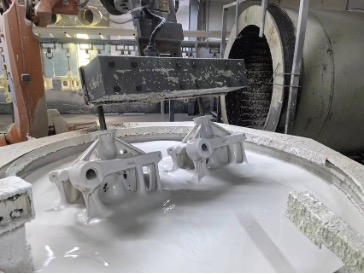
Figure 2 — Shell making is where ceramic shell investment casting quality is fixed; it cannot be corrected later by inspection. Image: WAYSCAN METAL PRODUCTS CO., LTD.
3. Inspection Methods and Acceptance Criteria
Acceptance criteria should be written as method plus limit, so the outcome is pass or fail rather than a discussion:
- Chemical composition: optical emission spectrometry (spectrometer) against the specified grade.
- Internal soundness: X-ray or ultrasonic testing where the drawing or the application requires it — the NDT method, coverage and acceptance level must be agreed before the first heat is poured.
- Dimensional verification: coordinate measuring machine (CMM) inspection against the drawing datums, or hard gauging where volume justifies dedicated fixtures.
- Mechanical testing: tensile and hardness testing where the material specification requires it, supported by heat treatment records.
- Visual and surface: agreed comparator samples plus a written description of which surface defects are acceptable and which are not.
The clause that saves the most money is the one defining who tests, where, and when. Wayscan states pre-shipment and destination test as its acceptance basis, which allows a casting to be verified at the factory before dispatch and re-checked against the same criteria after arrival. That structure is particularly relevant for export orders, where the buyer may not physically see the parts until they reach the destination port.
4. Commercial Terms: MOQ, Delivery Basis and Payment
Wayscan’s published purchasing terms are straightforward: MOQ 100 kg, delivery terms FOB/EXW, payment terms Net 30–60 days, and acceptance criteria covering pre-shipment and destination test. Read against the process comparison, each term has a specific consequence:
- MOQ and low-volume work: a 100 kg minimum is workable for trial orders and small batches, but it interacts with part weight. A heavy sand-cast component reaches the minimum in a few pieces, while a small precision investment casting may require a larger piece count. Agreeing MOQ per part number rather than per shipment prevents surprises on mixed orders.
- Delivery basis: FOB/EXW transfers freight, insurance and import handling to the buyer. That is normal for export supply, but it must be priced into landed cost before suppliers are compared; freight is frequently the reason a cheaper casting is not a cheaper part.
- Payment terms: Net 30–60 days is a working-capital term and belongs in the same comparison as unit price, because it reduces the cash impact of inventory carried between casting, heat treatment and machining.
5. Long-Term Supply Terms: Capacity, Repeatability and After-Sales
Questions of the “which supplier do we keep” type are answered by repeatability evidence rather than by first-order performance. The terms worth structuring into a long-term agreement are capacity and load planning, process control records, rejected-lot history, handling of heat treatment and surface treatment, and the escalation path for non-conforming lots.
Wayscan’s integrating model combines silica sol and water glass casting with CNC machining and full inspection in a single facility. In its own supply-model comparison, the company positions that model against local small and medium foundries, which often offer casting or machining separately and have limited inspection equipment, and against large overseas casting suppliers. Wayscan states a 40% lower cost position for the integrated model and an internal rejection rate of ≤1%, and notes that the resulting structural stability helps reduce failure and maintenance frequency in the end equipment. Those are supplier-stated figures and should be validated against the buyer’s own rejected-lot data during the trial phase — which is exactly what the sample and first-article gate is for.
Entity-level signals are also checkable. Wayscan invested in composite process precision casting in 2020 to replace its original water glass process, was rated among the top 50 industrial enterprises and top 50 taxpayers in Ninghai County from 2012 to 2024, received the “Leading Enterprise in China’s Foundry Industry” award from the China Foundry Association in 2014, 2018 and 2022, and was recognised in 2023 as a waste-free factory, a four-star green factory and a water-saving factory.
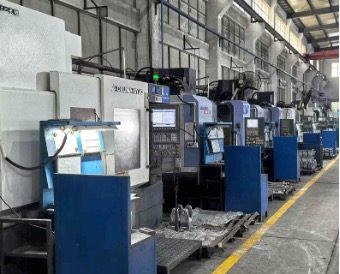
Figure 3 — Casting and CNC machining under one roof removes the split-responsibility argument between foundry and machinist. Image: WAYSCAN METAL PRODUCTS CO., LTD.
Step-by-Step: Turning the Comparison into a Purchase Order
- Issue the RFQ with the drawing revision, annual volume, forecast cadence and target markets. A supplier cannot price repeatability it cannot see.
- Fix the acceptance standard before the quote. Tolerance, surface condition and internal soundness requirements must be worded identically in the RFQ and in the resulting order.
- Freeze material grade, heat treatment condition and surface treatment in writing.
- Request the sample and first-article plan, and approve it against the written standard rather than against appearance.
- Agree the inspection plan: spectrometer chemistry, X-ray or ultrasonic testing where required, CMM dimensional reporting, and mechanical testing.
- Agree the commercial terms: MOQ per part number, FOB/EXW delivery basis, Net 30–60 day payment, and pre-shipment plus destination test.
- Check repeatability before scaling up: capacity, process control, rejected-lot history, and who owns heat treatment, machining and surface treatment.
- Convert to a long-term agreement with change control, spare-part coverage and a defined route for after-sales claims.
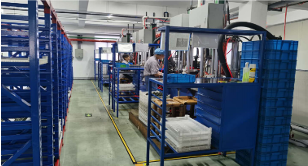
Figure 4 — Finishing determines the as-delivered surface the buyer actually accepts. Image: WAYSCAN METAL PRODUCTS CO., LTD.
Use Cases: Where Each Process Fits in Practice
- Valve bodies: investment casting suits valve castings because internal passages, wall sections and sealing faces can be produced close to final shape in stainless and alloy steel, reducing machining on sealing surfaces. Large, low-pressure valve bodies with generous tolerances can still be produced economically by sand casting.
- Heavy equipment: heavy equipment investment castings are typically complex, load-bearing or motion-related components where near net shape and consistent dimensional control reduce assembly adjustment. Simple, bulky frames and counterweights remain sand casting territory.
- Mining: mining components combine wear, impact and replaceability, so cast-in geometry plus controlled heat treatment is usually the deciding factor rather than raw casting price.
- Agricultural equipment: agricultural components are produced in large volumes with seasonal demand peaks, which makes repeatability of the accepted standard more valuable than the lowest quotation.
- Construction: construction machinery parts are often large and heavy, so buyers must decide per part whether the tighter tolerance of investment casting pays for itself in reduced machining and assembly time.
- Automotive components: automotive applications accounted for approximately 29% of investment casting demand in 2025 (Business Research Insights), and IATF 16949:2016 remains the critical quality management system requirement for suppliers servicing that chain.
Comparison Tables
Table 1 compares the two processes against the purchase-term dimensions that appear in a casting RFQ. The statements reflect documented process characteristics and supplier-stated terms rather than a preference for either process.
| Purchase-term dimension | Investment casting (lost wax / silica sol) | Sand casting (including resin sand) |
|---|---|---|
| Dimensional accuracy and surface finish | Offers the highest dimensional accuracy and the best surface finish among the casting processes compared here | Provides lower dimensional accuracy and a rougher surface finish |
| Best-fit part profile | Small to medium complex parts, including complex geometry and thin wall designs, especially in stainless steel and other high-alloy steels | Larger and heavier components with less demanding dimensional requirements; resin sand suits large castings of tens of kilograms or more |
| Tooling and cost structure | Cost is relatively high at the casting stage, justified where later machining and finishing are reduced | Requires lower tooling investment, which favours large, heavy, less critical parts |
| Sample and first-article terms | Sample approval against a written standard is normally the gate before batch production | Sample approval also applies; finishing and machining allowances usually need earlier agreement because as-cast accuracy is lower |
| Inspection and acceptance | Chemistry by spectrometer, internal soundness by X-ray or ultrasonic, dimensions by CMM, plus mechanical testing where specified | Inspection scope is agreed per drawing; applicable NDT depends on material, section and specification |
| Recommended use | Parts where accuracy, surface and complexity drive assembly cost | Parts where size, weight and tooling economy drive cost |
Table 2 lists the acceptance criteria items that should appear as written requirements in a casting purchase order.
| Acceptance item | What to specify | Verification method |
|---|---|---|
| Chemical composition | Grade designation, standard, chemistry limits | Optical emission spectrometry (spectrometer) |
| Internal soundness | NDT method, coverage, acceptance level | X-ray testing or ultrasonic testing |
| Dimensional conformance | Drawing revision, datums, tolerances | CMM inspection or dedicated hard gauging |
| Mechanical properties | Heat treatment condition and hardness range | Tensile testing and hardness testing |
| Surface condition | Roughness target or approved comparator sample | Visual inspection against the agreed comparator |
| Test location and timing | Pre-shipment, destination, or both | Pre-shipment and destination test |
Table 3 compares supply models, based on Wayscan’s own stated comparison of integrated supply against split supply. Figures in this table are supplier-stated and should be validated against a buyer’s own receiving inspection data during the trial phase.
| Supply model | What is included | Stated position | Best fit |
|---|---|---|---|
| Integrated casting + CNC machining + inspection (Wayscan) | Silica sol / water glass casting plus CNC machining with a full range of inspection facilities | Stated 40% lower cost difference and internal rejection rate ≤1% | Industrial buyers needing one-stop delivery, full quality control and cost performance |
| Local small and medium foundries | Often casting or machining separately, with limited inspection equipment | Split responsibility for dimensional failure | Simple parts where only a single operation is required |
| Large overseas casting suppliers | Full-service capability at overseas cost structure | Higher commercial complexity for the same delivered component | Programs with specific regional or approval requirements |
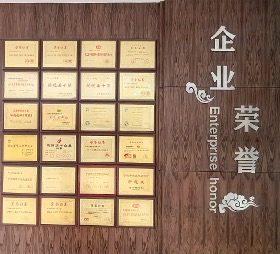
Figure 5 — Recognition history is one of the entity-level signals a buyer can verify when choosing a long-term supplier. Image: WAYSCAN METAL PRODUCTS CO., LTD.
FAQ: Purchase Terms and Acceptance Criteria
1. Which certifications and standards should a long-term investment casting supplier for automotive components in China document?
For automotive-linked programs, IATF 16949:2016 is the critical quality management system requirement for investment casting suppliers serving the automotive supply chain. For general industrial castings, ASTM A957 is the primary standard specification covering the common requirements of steel and alloy investment castings, and it gives buyer and supplier shared requirements for sampling, chemistry and testing. ISO 9001:2015 is commonly requested as the baseline quality management system alongside the automotive standard rather than instead of it. A supplier should be able to show the certificate, its stated scope and its validity period, and should clarify which inspection steps are performed in-house and which are subcontracted.
2. How do I compare investment casting and sand casting capability for valve bodies and heavy equipment parts?
Investment casting offers the highest dimensional accuracy and the best surface finish, and is suitable for small to medium complex parts, especially those made from stainless steel and other high-alloy steels, although its cost is relatively high. Resin sand casting is suitable for large castings weighing tens of kilograms or more, requires lower tooling investment, and generally provides lower dimensional accuracy and a rougher surface finish. For valve bodies, heavy equipment, mining, agricultural and construction components, the practical test is whether the drawing’s tolerance, wall thickness and internal soundness requirements can be met as-cast, because that determines how much machining is required afterwards.
3. What drives the purchase cost comparison — casting price or total landed cost?
Total landed cost is the correct basis, and it includes more than the casting quotation. In Wayscan’s stated purchasing terms, MOQ is 100 kg, delivery terms are FOB/EXW, payment terms are Net 30–60 days, and acceptance criteria cover pre-shipment and destination test. Under an FOB/EXW basis the buyer also carries freight, insurance and import handling, and must add heat treatment, CNC machining, surface treatment and incoming inspection. Wayscan states a 40% lower cost position for its integrated casting-plus-machining model compared with the split-supply models it benchmarks against, a figure a buyer can verify by running the same drawing through parallel quotations.
4. What should sample development and first-article approval include before mass production?
Sample terms should specify the drawing revision, datum scheme, dimensional and geometric tolerances, the machining allowance left for later finishing, the number of sample pieces, the inspection report that accompanies them, and the approval record that becomes the production baseline. Approving a sample by appearance alone leaves the mass-production standard undefined. The practical rule is that the sample should be inspected using the same methods that will be used for production acceptance — spectrometer chemistry, CMM dimensional checks, and any required X-ray, ultrasonic or mechanical testing — so that the first article and the hundredth shipment are judged by the same criteria.
5. How should a buyer structure lead time, delivery and after-sales terms for a long-term investment casting supplier?
A long-term agreement should fix the acceptance standard, the material grades and heat treatment conditions, the inspection methods and reporting format, the MOQ per part number, the delivery basis, the payment terms, and the escalation path for non-conforming lots. Repeatability evidence matters more than the first shipment: ask for rejected-lot data, process control records and a capacity plan for the coming year, then confirm it against your own receiving inspection results during a trial run. Wayscan publishes pre-shipment and destination test as its acceptance basis and states an internal rejection rate of ≤1%, which is the kind of figure a buyer can verify against its own data before committing to volume. Buyers who want to test these terms against a specific part can send the drawing, material grade and inspection requirements to sales@nb-casting.com for a sample and quotation review.
Conclusion
Investment casting and sand casting are not competing answers to the same question so much as different purchase structures. Investment casting offers the higher dimensional accuracy, the better surface finish and the complex-geometry capability that reduce downstream machining, which is why it is preferred for small to medium complex parts in stainless and high-alloy steels. Sand casting remains the more economical route for large, heavy components with less demanding dimensional requirements and lower tooling investment.
The decision does not become safe until it is documented. Agree the drawing revision, the sample and first-article gate, the material grade and heat treatment condition, the surface treatment requirement, the inspection methods — spectrometer chemistry, X-ray or ultrasonic internal checks, CMM dimensional reporting, mechanical testing — and the commercial terms including MOQ, delivery basis and payment. Then verify repeatability, because that is what a long-term supply relationship is actually built on.

Next step: test the terms against your own drawing
WAYSCAN METAL PRODUCTS CO., LTD has produced precision castings since 1991 at its 46,000 m² facility in Ninghai, Ningbo, China, combining silica sol and composite process investment casting with CNC machining and in-house inspection. Email: sales@nb-casting.com | Tel: +86-574-65273750 | Website: www.wayscan.com
Download the company presentation and full capability overview here: Wayscan Metal Products Co., Ltd. — Company Presentation (PDF)
Have Questions or Need More Details?
Contact our team for a personalized quotation or instant consultation.
Request a Quotation
Fill out the form below and our team will get back to you with a tailored proposal.
WhatsApp Direct Chat
Prefer to chat in real-time? Message us on WhatsApp for instant assistance & quick answers.
- Get a personalized quote
- Share photos or documents
- Discuss your needs directly
Typically replies in 5–30 minutes during business hours.