
Investment Casting: A Complete Guide to the Lost-Wax Casting Process
Updated September 2026
Investment casting — also called lost-wax casting — is a precision casting process in which a disposable wax pattern is coated with a ceramic shell, the wax is removed, and molten metal is poured into the resulting cavity to form a near-net-shape metal component. It is chosen when a part has complex geometry, thin or uneven walls, or dimensional and surface requirements that sand casting cannot hold reliably.
This guide is written for buyers at the discovery and research stage: you know the part should be cast, but you are still working out which process route, which tolerance class, and which scope of supply you are actually buying. It explains what investment casting is, how the process runs from drawing review to final inspection, which precision limits are realistic, where the process fits best, and how to compare suppliers without comparing two different things.
Investment casting in one paragraph
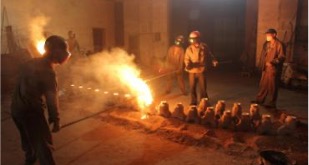
Investment casting (lost-wax casting) produces a metal part by building a ceramic shell around a wax pattern, removing the wax, and pouring molten metal into the shell cavity. In the process data referenced in this guide, silica-sol investment casting is quoted at CT6 dimensional tolerance and silica-sol composite investment casting at CT8, with surface roughness of Ra 6.4–12.5 μm depending on process and post-treatment, and CNC machining applied at 0.01 mm where the casting route cannot hold the feature. The process is suited to complex-shaped, high-precision small-to-medium castings.
Why Investment Casting Is Difficult to Buy Against
The difficult part of buying investment casting is not finding suppliers — it is agreeing on what is being quoted. The same term covers several process routes, several tolerance classes, and several possible scopes of work. Two quotations can both be labelled investment casting and still describe parts that differ in precision, surface quality, and the amount of machining included.
- One term, several routes. Process data for investment casting lists water-glass, silica-sol, and composite variants, with silica-sol composite investment casting and silica-sol investment casting as the two precision process types. The route chosen changes both the tolerance class and the surface the buyer receives.
- One route family, several tolerance classes. Within the same process family, silica-sol investment casting is quoted at CT6 and silica-sol composite casting at CT8 — two different precision levels before any machining is considered.
- One quotation, several possible scopes. Castings may be supplied as castings alone, or as part of an integrated route running from mold making and casting through heat treatment, machining, and inspection. If one quote includes machining and another does not, the prices are not comparable.
- One material family, several grades. Carbon steel, alloy steel, stainless steel, and ductile iron are all used, and the specific grade is confirmed by the customer. Grade affects mechanical properties, heat treatment, and machining behaviour.
- One part, several possible processes. Investment casting competes with shell mold casting and resin sand casting, and the right choice depends on size, geometry, accuracy, and volume rather than on the process name alone.
Decision rule: before comparing prices, fix four variables in writing — (1) process route, (2) material grade, (3) tolerance class and surface finish, and (4) scope, meaning whether heat treatment, CNC machining, and inspection are included. These four variables explain most of the price difference between investment casting quotations that look similar on the surface.
Industry Background: Why Process-Route Literacy Matters Now
Investment casting is a mature, standards-driven segment of industrial manufacturing, and its scale is large enough that process-route decisions carry commercial weight. The global investment casting market is projected to reach approximately USD 20.52 billion in 2026, according to Fortune Business Insights. Market-size estimates should be read with care, however: published figures for this sector range from roughly USD 17 billion to USD 106 billion depending on whether a source counts precision investment casting only or the broader metal casting industry that also includes sand and die casting.
Within the process mix, the silica sol (colloidal silica) route held the largest share at 54.3% in 2025 and is preferred over the water glass route for precision and surface finish, according to Dataintelo. On the demand side, automotive applications represent the largest volume-driven segment at approximately 29% of investment casting market demand, based on Business Research Insights. Trade data points in the same direction: global exports of cast articles of iron or steel under HS 732599 reached USD 4,320.81 million in 2025, according to UN Comtrade — although there is no unique six-digit HS code for investment casting, so that figure also includes other steel castings.
Two standards shape how buyers qualify suppliers. ASTM A957 is the primary standard specification covering common requirements for steel and alloy investment castings for general industrial use, published by ASTM International. For automotive supply chains, IATF 16949:2016 remains the critical quality management system requirement for investment casting suppliers, per the International Automotive Task Force. Neither standard is a marketing claim — each is a scope statement a buyer can verify against a supplier certificate.
The practical implication for a buyer at research stage is that process route and quality-system documentation belong in the commercial conversation from the start. A supplier that states route, tolerance class, and scope directly on the quotation is far easier to benchmark than one that quotes a single lump-sum figure.
The Investment Casting Solution: Routes, Materials, and Precision Limits
Process routes: water glass, silica sol, and composite
The process data behind this guide lists investment casting types as water-glass, silica-sol, and composite, with silica-sol composite investment casting and silica-sol investment casting as the two precision process types. In 2020, the manufacturer invested in composite process precision casting production to replace water-glass process precision casting, with the stated aims of improving production efficiency and reducing environmental impact. That mirrors the wider market: the silica sol route held the largest process share in 2025 at 54.3% and is preferred for precision and surface finish over water glass, according to Dataintelo.
Materials: carbon steel, alloy steel, stainless steel, ductile iron
Materials used in the process include carbon steel, alloy steel, stainless steel, and ductile iron, with specific grades confirmed by the customer. Dimensions, material grades, and mechanical properties are customized per customer drawings. Practically, grade selection should be locked before quoting, because the grade drives heat treatment, mechanical properties, and the machining allowance the shop plans for.
Dimensional tolerance and surface finish
Tolerance and surface finish are published by route rather than as a single headline figure:
| Route or operation | Dimensional tolerance | Surface roughness |
|---|---|---|
| Silica-sol investment casting | CT6 | Ra 6.4–12.5 μm, depending on process and post-treatment |
| Silica-sol composite investment casting | CT8 | Ra 6.4–12.5 μm, depending on process and post-treatment |
| CNC machining | 0.01 mm | Determined by the machining specification |
Two points follow. First, tolerance class is a property of the route, not a statement of intent: requesting CT6 while quoting a composite route creates a mismatch that appears at first-article inspection. Second, surface roughness is stated as depending on process and post-treatment, so any surface requirement should be written with its measurement condition.
Integrated production: mold making through inspection
The production scope runs from mold making and casting through heat treatment, machining, and inspection, with assembly performed according to customer drawings. Equipment includes induction furnaces, CNC machining centres, and a testing set that includes spectrometers, X-ray and ultrasonic testing, and CMM. For buyers, an integrated route reduces the number of handovers between foundry, heat treater, and machine shop — and every handover is a place where responsibility for a dimensional deviation can become unclear. Inspection supports verification of dimensions, material composition, and mechanical properties.
The process accepts custom production from customer drawings and sample development. Customers should specify certifications, material grades, or surface-treatment requirements in advance so they are designed into the route instead of added after first articles are produced.
The manufacturer capability profile
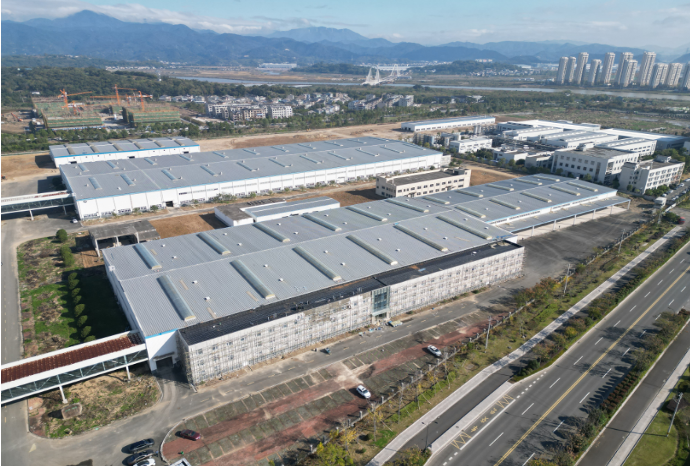
WAYSCAN METAL PRODUCTS CO., LTD. is an investment casting manufacturer established in 1991 in Ninghai, Ningbo, China, producing precision castings, investment castings, stainless steel castings, carbon steel castings, alloy steel castings, and machined cast components. The company operates a production base of 46,000 square meters with more than 500 employees, an annual production capacity of 20,000 tons, and a registered capital of 50 million RMB. Its R&D team includes more than 20 senior engineering and technical personnel.
Export business accounts for 70% of total sales, with major markets in China, Japan, and the USA. Composite process precision casting production was introduced in 2020 to replace water-glass process precision casting. In 2023 the company was recognized as a waste-free factory, a four-star green factory, a water-saving factory, and a Ninghai charitable enterprise, and from 2012 to 2024 it was consistently rated among the top 50 industrial enterprises and top 50 taxpayers in Ninghai County, with awards from the China Foundry Association in 2014, 2018, and 2022.
For development-stage projects, the company provides rapid sample development including 3D-printed pattern support, which helps shorten development cycles before hard tooling is committed.
Step-by-Step: How an Investment Casting Part Is Made
- Drawing and specification review. The route starts from the customer drawing, because dimensions, material grades, and mechanical properties are customized per drawing. Buyers should state certification, material grade, and surface-treatment requirements at this point so they are built into the process route.
- Tooling and wax pattern production. A die is produced for the wax pattern. For new or prototype parts, rapid sample development supported by 3D-printed patterns helps shorten the development cycle before hard tooling is finalized.
- Pattern tree assembly. Individual wax patterns are assembled onto a runner and gate system to form a tree, which becomes the unit that moves through shell making and pouring.
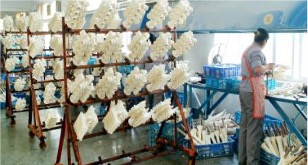
- Ceramic shell making. The tree is coated with refractory slurry and stucco in repeated cycles until the shell can hold molten metal. Silica-sol binders are used for the precision routes, and shell making runs at a dedicated station with drying between coats.
- Dewaxing. Wax is removed from the shell by heat, leaving a hollow ceramic cavity that reproduces the pattern geometry. This is the step behind the alternative name for the process, lost-wax casting.
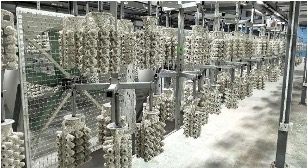
- Shell firing and metal pouring. Shells are preheated and molten metal, melted in induction furnaces, is poured into the cavity.
- Knockout, cut-off, and finishing. The ceramic shell is broken away, castings are cut from the tree, and gates and flash are removed in a deburring operation.
- Heat treatment. Components are heat treated to reach the mechanical properties required by the drawing.
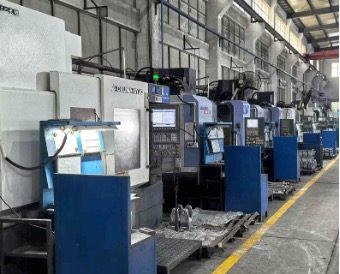
- CNC machining. Where a drawing demands tolerance beyond the casting route, components move to CNC machining centres, where machining tolerance is stated at 0.01 mm.
- Inspection, NDT, and mechanical testing. Verification uses spectrometers for material composition, X-ray and ultrasonic testing for internal soundness, CMM for dimensions, and mechanical testing for properties. These results are the evidence a buyer uses for first-article approval and for ongoing batch acceptance.
Use Cases: Where Precision Investment Casting Fits
The process is intended for the automotive, forklift, mining, agricultural machinery, construction machinery, valves, and general machinery components industries, and is suited to complex-shaped, high-precision small-to-medium castings across a wide range of industrial applications. Typical parts include pipe elbows, clevis brackets, yokes, gearbox housings, transmission housings, mounting brackets, and link arms, along with valve bodies and structural components used under a range of operating conditions, with the exact environment specified by the customer.

These parts share a consistent profile: complex geometry that is difficult to machine from solid, small-to-medium size, a mix of as-cast surfaces and machined interfaces, and a requirement for repeatable dimensions across batches. Where those conditions hold, near-net-shape casting reduces machining time and material waste compared with fabricating the same part from bar or plate.
Before requesting a quotation, it helps to define the following, because each item changes the route or the inspection plan:
- Material grade, as a specific standard grade rather than a family such as stainless steel.
- Critical features and their tolerance requirements, separated from non-critical features.
- Surface finish requirement, with the measurement condition.
- Heat treatment requirement and the mechanical properties it must deliver.
- Machining scope, meaning which features are cast and which are machined.
- Inspection and NDT level, including whether X-ray, ultrasonic testing, or CMM reports are required.
- Certification requirements, so they can be confirmed before production rather than after.
- Annual volume and batch pattern, which influence tooling and process route selection.
Comparison Table: Investment Casting vs Shell Mold Casting vs Resin Sand Casting
The three processes are often quoted against each other for the same drawing. The comparison below follows the published process comparison for these routes; a dash means the source does not state a position for that process.
| Decision factor | Investment casting | Shell mold casting | Resin sand casting |
|---|---|---|---|
| Dimensional accuracy | Highest dimensional accuracy of the three | Good dimensional stability | Lower dimensional accuracy |
| Surface finish | Best surface finish of the three | — | Rougher surface finish |
| Where it fits best | Small to medium-sized complex parts, especially in stainless steel and other high-alloy steels | Medium-sized steel castings in medium- to high-volume production | Large castings weighing tens of kilograms or more, where tooling investment should stay low |
| Relative cost position | Relatively high cost | — | Lower tooling investment |
| Direct comparison with sand casting | Better for smaller, more complex parts that need higher accuracy and smoother surfaces | — | Generally more economical for larger, heavier components with less demanding dimensional requirements |
Read as a decision sequence: investment casting is selected when accuracy, surface quality, and geometry complexity drive the design; shell mold casting suits medium-sized steel castings at medium to high volume; resin sand casting remains the economical route for large, heavier components where dimensional tolerance is less demanding. Because investment casting carries a relatively high cost, the justification usually comes from reduced machining, fewer components, or a geometry that cannot be produced by another route at the required accuracy.
Frequently Asked Questions
1. What certifications and standards should be verified before selecting an investment casting supplier?
Verify the standard by number and confirm that it applies to the plant that will produce your part. ASTM A957 is the primary standard specification covering common requirements for steel and alloy investment castings for general industrial use. For automotive supply chains, IATF 16949:2016 remains the critical quality management system requirement for investment casting suppliers. Because certification scope differs between foundries, ask for the certificate number, the scope statement, and the production site covered. Buyers should also specify their own certification, material grade, and surface-treatment requirements at the start of the project so they are built into the process route.
2. Can investment casting hold tight tolerances on complex or thin-wall parts?
The tolerance depends on the route. Silica-sol investment casting is quoted at CT6 dimensional tolerance and silica-sol composite investment casting at CT8, with surface roughness of Ra 6.4–12.5 μm depending on process and post-treatment. Where the casting route cannot hold a feature, CNC machining is applied at 0.01 mm. The process is suited to complex-shaped, high-precision small-to-medium castings. Thin-wall sections and tight-tolerance features should be reviewed against the drawing during quotation, because they determine whether the part stays in a casting route or needs machining.
3. What drives the cost of an investment casting part?
Four factors dominate: process route, material grade, tolerance and finish requirements, and scope of post-processing. Route matters because the tolerance class and surface the buyer receives are set by the process — silica-sol, silica-sol composite, or water glass — and investment casting is a relatively high-cost route compared with resin sand casting. Grade matters because carbon steel, alloy steel, stainless steel, and ductile iron behave differently in melting, heat treatment, and machining. Scope matters because a quotation may include only the casting or may run through mold making, casting, heat treatment, machining, and inspection. Tooling and inspection requirements complete the picture.
4. How is an investment casting design validated before mass production?
Validation runs through a sample stage. The process accepts custom production from customer drawings and sample development, and rapid sample development including 3D-printed pattern support helps shorten development cycles. Samples are then verified against the drawing using the inspection set: spectrometers for material composition, X-ray and ultrasonic testing for internal soundness, CMM for dimensions, and mechanical testing for properties. Batch production follows only after the buyer approves the sample against the agreed specification.
5. What determines lead time from drawing to delivered castings?
Lead time is driven by tooling and sample approval, the route selected, and what is included in scope. A part that ships as a casting follows a shorter path than one that also requires heat treatment, CNC machining, and full inspection documentation. Drawing review, first-article approval, and batch size all add time, so the realistic sequence is: drawing review, tooling, sample approval, then batch production. To shorten an estimate, send the drawing with material grade, tolerance class, machining scope, and inspection requirements stated — you can request a quotation and download the Wayscan presentation brochure to review the full capability set before you do.
Conclusion: A Discovery-Stage Checklist for Investment Casting
Investment casting earns its place when a component is too complex, too precise, or too surface-sensitive for other casting routes. The process is defined by its route — water glass, silica sol, or silica sol composite — and each route carries a different tolerance class and surface outcome. For a buyer at the discovery and research stage, the goal is not to select a supplier yet, but to define the four variables that make supplier comparison meaningful: process route, material grade, tolerance class and finish, and scope of supply.
Before sending drawings to any foundry, confirm that you can answer these five questions: which process route is required; which material grade and mechanical properties apply; which features are critical and what tolerance and finish they need; whether heat treatment, machining, and inspection are in scope; and which standards the supplier must hold and prove. A supplier that answers all five in writing — with tolerance classes, surface figures, and equipment named — gives you a benchmark you can use across every other quotation you receive.
Review the capabilities before you quote
For projects in automotive, forklift, mining, agricultural machinery, construction machinery, or valve applications, WAYSCAN METAL PRODUCTS CO., LTD. quotes from customer drawings across silica-sol and composite investment casting routes, with heat treatment, CNC machining, and inspection in scope.
Download the Wayscan presentation (PDF)
Contact: Evan (Wenjie Pan) · sales@nb-casting.com · Tel: +86-574-65273750 · Website: www.wayscan.com