
Investment Casting: A Complete Guide to the Lost-Wax Process, Tolerances, and Applications
Investment casting, also called lost-wax casting, is a precision casting process in which a wax pattern is coated with a ceramic shell, the wax is melted out, and molten metal is poured into the cavity that remains. It is the route most buyers choose when a component has a geometry that is expensive to machine, a surface finish that sand casting cannot deliver, or a material — stainless steel or a high-alloy steel, for example — that is costly to remove as chips.
This guide is written for sourcing managers, design engineers, and procurement teams at the start of that evaluation. It covers what investment casting actually is, how the process runs step by step, which tolerances and materials are realistic, where the process fits across automotive, valve, construction machinery, and general industrial components, and how to compare one supplier's capability with another before a purchase order is raised.
Why the Investment Casting Decision Is Harder Than It Looks
Three problems regularly slow down a first investment casting project.
- The term covers several processes. Water-glass, silica-sol, and composite investment casting do not deliver the same dimensional tolerance, surface finish, or cost structure. A quotation that states only “investment casting” leaves the buyer unable to compare it item by item with the next one.
- Capability claims are rarely stated in comparable units. Phrases such as “high precision” or “tight tolerance” mean little across suppliers. What can be compared is tolerance class, surface roughness, material grade, heat treatment condition, and inspection method.
- A casting is usually not the finished part. Many components still need heat treatment, CNC machining, and inspection. If the casting supplier stops at the foundry gate, the buyer carries the coordination risk between several vendors — and that risk is where delivery slippage usually appears.
The practical answer is to evaluate process, geometry, tolerance, material, and post-processing as one chain rather than as separate line items on a purchase order.
Where Investment Casting Sits in the Industrial Supply Chain
Investment casting is now a mainstream production route rather than a specialist one. Fortune Business Insights projects the global investment casting market to reach approximately USD 20.52 billion in 2026, and the process mix has shifted decisively toward the more precise route: Dataintelo reports that the silica-sol (colloidal silica) process held the largest share of the market at 54.3% in 2025, ahead of the water-glass process at 32.1%. That split matters to buyers because silica-sol is generally preferred where precision and surface finish are the priority.
Demand is concentrated in a few volume-driven sectors. Automotive applications represent approximately 29% of investment casting market demand, according to Business Research Insights. On the trade side, global exports of “cast articles of iron or steel, n.e.s.” (HS 732599) reached USD 4,320.81 million in 2025 according to the UN Comtrade Database — a useful proxy rather than an exact figure, because HS 732599 is a catch-all code that also contains sand and die castings, with no dedicated HS code for investment casting specifically.
Published market values for investment casting vary considerably between research houses, largely because some sources count only precision investment casting while others include the broader metal casting industry. Treat any single market number as a scope-dependent estimate, not as a procurement input.
Two standards recur in supplier discussions. ASTM A957 is the common requirements specification for steel and alloy investment castings for general industrial use. IATF 16949:2016 remains the critical quality management system requirement for investment casting suppliers serving the automotive supply chain. Neither is a marketing label; both change what documentation and process control a buyer can expect.
WAYSCAN METAL PRODUCTS CO., LTD. is an investment casting manufacturer established in 1991 in Ninghai, Ningbo, China. The company operates a 46,000 m² production base with a registered capital of 50 million RMB, a workforce of more than 500 employees, over 20 senior engineering and technical personnel, and an annual casting capacity of 20,000 tons. Export business accounts for 70% of total sales, with China, Japan, and the USA as its main markets. Its product range includes precision castings, investment castings, stainless steel castings, carbon steel castings, alloy steel castings, and machined cast components.
What Investment Casting Is, and What Wayscan Produces
Investment casting is classified as a lost-wax casting process. The defining feature is the wax pattern: it is injected in a metal die, assembled into a tree, coated with ceramic layers, and then removed by heat so that the ceramic shell becomes the mould. Because the shell is formed around the pattern rather than machined into two halves, the process tolerates geometry — undercuts, internal channels, thin walls, and blended transitions — that would require multiple operations in other casting routes.
The Wayscan process range includes water-glass, silica-sol, and composite investment casting, with the process types specifically offered being silica-sol composite investment casting and silica-sol investment casting. The company invested in composite process precision casting production in 2020 to replace water-glass process precision casting, with the aim of improving production efficiency and reducing environmental impact.
Materials used include carbon steel, alloy steel, stainless steel, and ductile iron, with specific grades confirmed by the customer. Dimensions, material grades, and mechanical properties are customized per customer drawing. Typical applications include pipe elbows, clevis brackets, yokes, gearbox housings, transmission housings, mounting brackets, and link arms — in other words, complex-shaped, high-precision small-to-medium castings across a wide range of industrial applications.
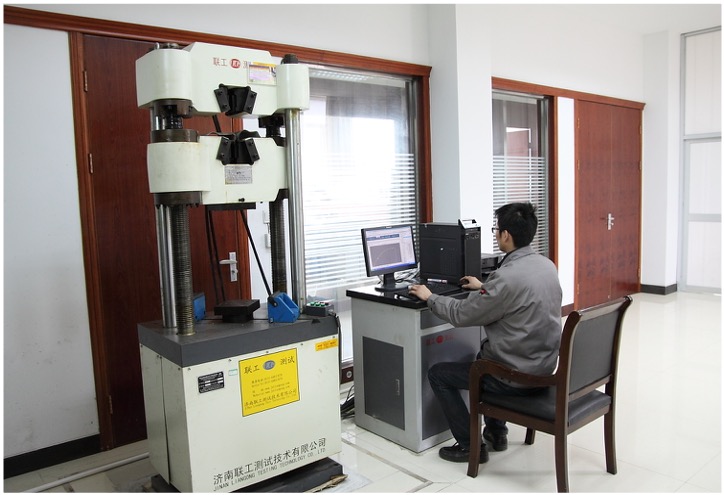
The manufacturing scope is integrated rather than split. Wayscan performs mould making, casting, heat treatment, machining, and inspection as one sequence, using induction furnaces, CNC machining centres, and testing equipment that includes spectrometers, X-ray, ultrasonic testing, and CMM. For buyers, that integration is the difference between managing one delivery schedule and managing three.
The Investment Casting Process, Step by Step
The sequence below reflects the standard route used for water-glass, silica-sol, and composite investment casting. Understanding where a requirement lands in this sequence explains why tolerances and cost behave the way they do.
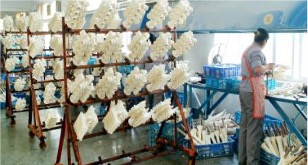
Step 1 — Pattern making and tree assembly
Wax patterns are produced from a metal die and assembled onto a central runner, forming a tree. Pattern quality determines the dimensional base of the whole part: any distortion introduced here is carried through every later step. For development projects, Wayscan supports rapid sample development including 3D-printed pattern support, which shortens the cycle when a hard tool has not yet been cut.
Step 2 — Shell making and drying
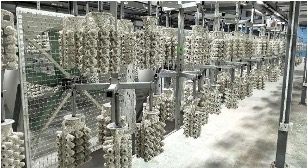
The assembled tree is dipped in ceramic slurry and stuccoed repeatedly, with drying between coats, until the shell is thick enough to withstand pouring. This is where the choice between water-glass, silica-sol, and composite routes becomes visible: the binder system controls how fine the shell surface is and how faithfully the shell reproduces pattern detail.
Step 3 — Dewaxing
The shell is heated so the wax melts and runs out, leaving a hollow ceramic cavity. The wax is recovered where the process allows. After dewaxing the shell is fired, which gives it the strength to hold molten metal without deformation.
Step 4 — Pouring
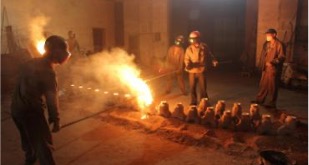
Molten metal is poured into the preheated shell. At this stage the material specification stops being a document and becomes a metallurgical outcome: grade, melting practice, and pouring temperature together decide whether the mechanical properties required on the drawing are actually achieved.
Step 5 — Knockout, cut-off, and deburring
Once cool, the shell is broken away and the castings are cut from the tree. Gates and flash are removed, and the part begins to resemble the drawing rather than the tree.
Step 6 — Heat treatment
Heat treatment is applied where the specified material grade and mechanical properties require it. It is a controlled process step, not a finishing touch, and it should be named explicitly in the quotation so the buyer knows whether the delivered part carries the intended condition.
Step 7 — CNC machining and inspection
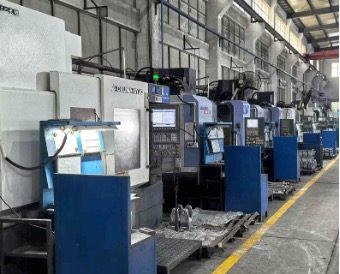
Casting produces near-net shape geometry; features that carry functional or assembly tolerances are then machined. Wayscan quotes machined features to 0.01 mm. Inspection closes the loop — spectrometers for material composition, X-ray and ultrasonic testing for internal soundness, and CMM for dimensions — which is what allows dimensional, material, and mechanical requirements to be verified rather than assumed.
Process Options and Capability Data
Tolerance is not one number for a factory; it is a number per route. The table below reflects the current Wayscan specification and is the honest basis for a quotation comparison.
| Route or feature | Dimensional tolerance | Where it fits |
|---|---|---|
| Silica-sol investment casting | CT6 | Parts where dimensional accuracy and surface finish carry the highest weight |
| Silica-sol composite investment casting | CT8 | Parts where the composite route balances capability against cost |
| Machined features (in-house, post-casting) | 0.01 mm | Functional and assembly features that casting alone cannot hold |
| Surface roughness | Ra 6.4–12.5 μm | Depends on the casting process and the post-treatment applied |
Materials cover carbon steel, alloy steel, stainless steel, and ductile iron, with specific grades confirmed against the customer's drawing. The product type can be water-glass investment casting or silica-sol investment casting, and the process types offered are silica-sol composite investment casting and silica-sol investment casting. Because dimensions, material grades, and mechanical properties are customized per drawing, a supplier discussion that starts with the drawing will reach a usable answer faster than one that starts with a tolerance wish.
Use Cases: Where Investment Casting Components Are Used
The process is intended for the automotive, forklift, mining, agricultural machinery, construction machinery, valves, and general machinery components industries. Typical parts include pipe elbows, clevis brackets, yokes, gearbox housings, transmission housings, mounting brackets, and link arms — components that are small to medium in size, complex in shape, and needed in a precision class that other casting routes struggle to hold.
Working conditions vary widely. The castings are suitable for structural components, mechanical parts, and valve bodies under various operating conditions, with the exact environment specified by the customer — which is why a working-condition description is one of the most useful things a buyer can put in a quotation request. It determines whether the part is a geometry-and-tolerance problem, a material-and-heat-treatment problem, or both.
Project types fall into three broad groups: custom-to-drawing projects, sample development, and mass-supply projects. The usual operating model combines batch production with order-based customization and rapid sample development, so a programme can move from a validated sample into repeating supply without changing supplier or process route.

Investment Casting vs. Sand Casting vs. Shell Mold Casting
Choosing between casting routes is a trade-off, not a ranking. The comparison below summarises how the routes differ on the criteria that usually decide the quotation.
| Casting route | Dimensional accuracy and finish | Typical fit | Cost profile |
|---|---|---|---|
| Investment casting (lost-wax) | Highest dimensional accuracy and best surface finish of the three | Small to medium-sized complex parts, especially stainless steel and other high-alloy steels | Relatively high |
| Shell mold casting | Good dimensional stability | Medium-sized steel castings in medium- to high-volume production | Moderate |
| Resin sand casting | Generally lower dimensional accuracy and a rougher surface finish | Large castings from tens of kilograms upward | Lower tooling investment |
Compared with sand casting generally, investment casting is the better choice for smaller, more complex parts that require higher accuracy and smoother surfaces, while sand casting is generally more economical for larger and heavier components with less demanding dimensional requirements. The practical decision rule is therefore: match the route to the geometry and tolerance demand, then compare price within that route — not across routes.
When integration is part of the requirement, the comparison widens. Integrated suppliers deliver silica-sol or composite casting together with CNC machining and a full set of inspection facilities; smaller foundries often offer casting or machining separately and hold limited inspection equipment, which shifts verification work back onto the buyer.
How to Evaluate an Investment Casting Supplier
The following checklist converts the points above into questions that produce comparable answers.
- Route stated in tolerance classes. The supplier should name the process route and its tolerance class — for example CT6 for silica-sol work — instead of describing the result as high precision.
- In-house chain coverage. Confirm whether mould making, casting, heat treatment, machining, and inspection sit under one roof. Split responsibilities are the most common source of schedule risk.
- Inspection equipment actually available. Spectrometers, X-ray, ultrasonic testing, and CMM are the tools that make dimensional, material, and internal-quality claims verifiable.
- Standards and quality system. Ask which specification the supplier works to — ASTM A957 for general industrial steel and alloy investment castings — and, for automotive programmes, whether IATF 16949:2016 requirements are met.
- Sample and development capability. Rapid sample development with 3D-printed pattern support shortens the path from drawing to validated part, particularly on low-volume and prototype work.
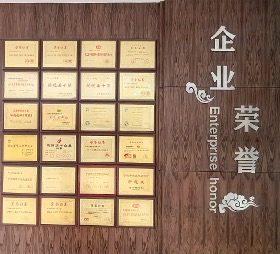
- Manufacturing credentials and stability. Wayscan, for example, has been rated among the top 50 industrial enterprises and top 50 taxpayers in Ninghai County from 2012 to 2024, received China Foundry Association awards in 2014, 2018, and 2022, and was recognised in 2023 as a waste-free factory, a four-star green factory, and a water-saving factory. Export experience covering China, Japan, and the USA — 70% of sales — indicates familiarity with documentation and specification discipline across markets.
Frequently Asked Questions
Which standards apply to investment castings, and what should buyers specify?
ASTM A957 is the common requirements specification for steel and alloy investment castings used in general industrial applications. Where castings feed an automotive supply chain, IATF 16949:2016 is the quality management system requirement that buyers typically ask a supplier to hold. Because certifications, material grades, and surface treatment requirements are project-specific, they should be stated on the drawing or in the purchase specification before production begins, so the supplier confirms them rather than assumes them.
What dimensional tolerance and surface finish can be expected?
Tolerance depends on the process route. In the current Wayscan specification, silica-sol investment casting is quoted at CT6, silica-sol composite investment casting at CT8, and machined features at 0.01 mm. Surface roughness of Ra 6.4–12.5 μm is typical depending on the casting process and post-treatment. These are route-dependent limits rather than universal figures: the correct tolerance for a part is the one the drawing and the supplier have both agreed to.
Which metals can be investment cast?
Carbon steel, alloy steel, stainless steel, and ductile iron, with specific grades confirmed against the customer's drawing. Dimensions, material grades, and mechanical properties are customized per drawing. That material range covers structural components, mechanical parts, and valve bodies used in automotive, forklift, mining, agricultural machinery, construction machinery, valves, and general machinery applications.
How are prototypes and samples handled?
Order-based customization runs alongside batch production, with rapid sample development supported by 3D-printed patterns. That combination shortens development cycles because the geometry can be validated before a hard tool is committed. Buyers should still specify the tolerance class and inspection scope required on the sample, since those determine whether the sample proves the production process or only the geometry.
What information should be sent with a quotation request?
A 2D drawing with critical dimensions, the material grade, the required tolerance class or the specific critical tolerances, the surface treatment requirement, any certification requirement, and the expected order or annual quantity. With those inputs a supplier can quote the casting route — water glass, silica sol, or composite — together with heat treatment, machining, and inspection as one scope rather than three. Sample and quotation requests can be sent to sales@nb-casting.com, and the full company presentation is available for download below.
Conclusion: What to Do Next
Investment casting is a precision route that earns its cost when geometry, tolerance, and material demand more than sand or shell mold casting can hold. The evaluation that produces a reliable supply decision is straightforward: identify the process route your part actually needs, confirm the tolerance class and material grade that route can deliver, verify that heat treatment, machining, and inspection are covered, and check the standards the supplier works to. Everything else — price, lead schedule, repeatability — is measurable once those four points are settled.
WAYSCAN METAL PRODUCTS CO., LTD. works from customer drawings across silica-sol and composite investment casting, with in-house machining and inspection, for buyers in automotive, valve, construction machinery, agricultural machinery, mining, and general industrial component programmes. Programmes begin with a drawing and a specification; from there the route, the sample, and the quotation follow.
Start with your drawing. Send the component drawing, material grade, tolerance requirement, and expected quantity to sales@nb-casting.com, or visit www.wayscan.com for the full product and process range. The Wayscan company presentation — covering casting routes, machining, and inspection capability — can be downloaded here: Wayscan Metal Products Co., Ltd. Presentation (PDF).