
Investment Casting: A Complete Guide to the Lost-Wax Process
Investment casting — also called lost-wax casting — is a precision casting process in which a wax pattern is encased in ceramic shell layers, the wax is removed, and molten metal is poured into the resulting cavity to form a near-net-shape part. It is the route buyers choose when a component's geometry, tolerance or surface finish cannot be produced economically by sand casting, and when the part falls into the small-to-medium size range.
This guide is written for engineers, OEM buyers, importers and procurement teams at the research stage — people who already know the part has to be cast and now need to understand what the process can hold, where its limits sit, how the process routes differ, and what to prepare before contacting a supplier.
What Investment Casting Is: A Working Definition
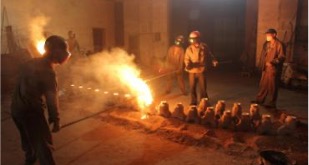
Investment casting is a lost-wax casting process in which a wax pattern is produced, assembled into a tree, coated with successive ceramic shell layers, dewaxed, and then filled with molten metal. Because the ceramic mould reproduces the pattern cavity in fine detail, the casting comes out close to final shape — a property usually described as near net shape — and therefore needs less machining than a sand casting of the same geometry.
The product types are usually described as water-glass investment casting or silica-sol investment casting; the process types offered by a precision foundry are typically silica-sol investment casting and silica-sol composite investment casting. Materials include carbon steel, alloy steel, stainless steel and ductile iron, with the specific grades confirmed by the customer. Typical cast parts include pipe elbows, clevis brackets, yokes, gearbox housings, transmission housings, mounting brackets and link arms.
What investment casting is not
It is not the cheapest route for every part. Sand casting is generally more economical for larger and heavier components with less demanding dimensional requirements, and it sits at the opposite end of the cost-and-precision curve. The process is intended for complex-shaped, high-precision small-to-medium castings, so a buyer comparing quotations for a 60 kg simple bracket and a 2 kg complex stainless housing is effectively comparing two different manufacturing logics.
Problem Definition: Three Cost Problems the Process Solves
Most buyers arrive at investment casting through one of three specific problems, not through a general interest in foundry technology.
- Machining cost. The part can be produced from bar or plate, but the amount of milling, turning and drilling required makes the finished component expensive and slow to produce.
- Assembly cost. The component is currently welded or bolted together from several pieces, which adds joints, extra inspection and a failure point.
- Tolerance or finish cost. The design needs higher dimensional accuracy and a smoother surface finish than the alternative casting route can deliver without additional operations.
The trade-off is explicit: investment casting offers the highest dimensional accuracy and the best surface finish among the common casting routes, and it is suitable for small-to-medium complex parts, especially in stainless steel and other high-alloy steels — but its casting cost is relatively high. That is why the decision should never be made on casting price per kilogram alone. It should be made on total cost, where casting price, machining allowance, finishing operations, inspection effort and scrap rate are all counted together.
Industry Background: Scale, Process Mix and Standards
Investment casting is a mature, globally traded process. The global market is projected to reach approximately USD 20.52 billion in 2026 according to Fortune Business Insights. Other research houses publish lower totals — around USD 18.3 billion — and figures for the wider metal casting industry range from roughly USD 17 billion to USD 106 billion depending on whether the definition includes sand and die casting. These gaps are scope differences rather than a disagreement about demand, so any single market number should be read as an estimate tied to a specific definition.
Inside the process mix, the silica-sol (colloidal silica) route held the largest share at 54.3% in 2025, followed by the water-glass process at 32.1%, according to Dataintelo. Both figures point in the same direction: the precision-and-finish characteristics of the shell system are a commercial selection criterion, not a technical detail. Automotive applications represent the largest volume-driven segment, at approximately 29% of investment casting demand.
On the trade side, global exports under HS 732599 — a catch-all code for cast articles of iron or steel, not elsewhere specified — reached USD 4,320.81 million in 2025 according to UN Comtrade. Because the code aggregates several casting routes, it should not be read as an investment-casting-only trade figure.
Two standards recur in qualification discussions. ASTM A957 specifies the common requirements for steel and alloy investment castings for general industrial use. For components entering the automotive supply chain, IATF 16949:2016 remains the quality management system requirement that shapes supplier selection.
How the Investment Casting Process Works: Step-by-Step
Step 1 — Wax pattern production and pattern assembly
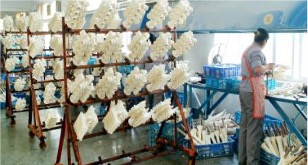
Each part begins as a wax pattern injected into a metal die. Patterns are then assembled and gated onto a central runner to form a tree, so that many parts are cast in a single pour. Pattern assembly is where part orientation, gating and feeding are fixed; mistakes at this stage typically surface later as porosity or incomplete fill, which is why pattern layout is normally reviewed before tooling is approved.
Step 2 — Investment casting shell making
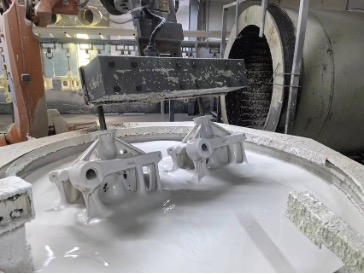
The assembled tree is dipped in ceramic slurry and stuccoed with refractory material, layer by layer, until the shell is thick enough to contain molten metal. Shell building largely determines the final surface finish and the dimensional consistency of the casting, and it is the stage most affected by the choice between water-glass and silica-sol systems.
Step 3 — Dewaxing
The wax is melted or vaporised out of the shell, leaving a hollow ceramic cavity that replicates the original pattern. Dewaxing is pressure- and temperature-sensitive: incomplete wax removal leaves residue inside the cavity that can contaminate the metal or degrade the internal surface of the casting.
Step 4 — Pouring
The shells are preheated and filled with molten metal melted in induction furnaces. Pouring temperature, shell temperature and fill speed work together to control solidification and internal soundness.
Step 5 — Knockout, cut-off and finishing
Once solidified, the ceramic shell is broken away, the parts are cut from the tree, and gates and flash are ground off. Deburring and basic finishing follow before any inspection or further processing.
Step 6 — Investment casting heat treatment
Castings are heat treated to reach the mechanical properties required by the customer drawing. Because specific dimensions, material grades and mechanical properties are customized per customer drawing, the heat treatment cycle is defined by the part rather than by a standard catalogue specification.
Step 7 — Investment casting CNC machining
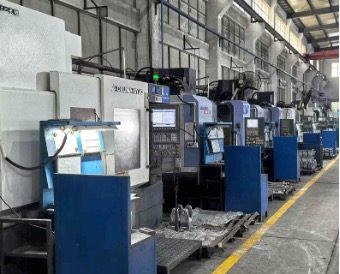
Where the casting alone cannot meet a functional requirement, CNC machining centres bring critical features to final size. The published tolerance for machined features is 0.01 mm, which is substantially tighter than any as-cast tolerance class and is normally reserved for sealing faces, bearing seats, bores and mounting interfaces.
Step 8 — Inspection, NDT and mechanical testing
Verification covers dimensions, material composition, mechanical properties and overall product quality. Typical equipment includes spectrometers for material composition, X-ray and ultrasonic testing for internal soundness, and coordinate measuring machines for dimensional verification. For buyers, the practical question is not whether a supplier owns this equipment, but whether the inspection plan is defined against the drawing before the first article is produced.
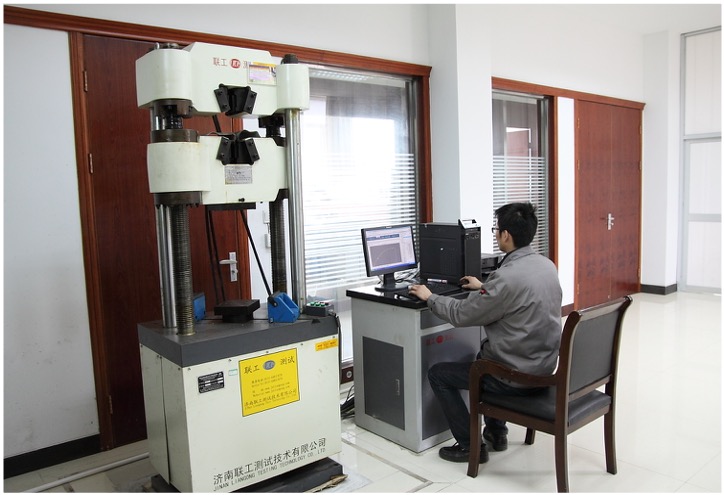
Tolerance, Surface Finish and Geometry Limits
The published specification for Wayscan's investment casting process states the following values. These are the numbers a designer should use as the starting point for a tolerance discussion, subject to confirmation against the specific drawing.
- Dimensional tolerance: CT6 for silica-sol investment casting; CT8 for silica-sol composite investment casting; 0.01 mm for features produced by machining.
- Surface roughness: Ra 6.4–12.5 µm, depending on the casting process route and the post-treatment applied.
- Geometry: suited to complex-shaped, high-precision small-to-medium castings, including thin-wall and near-net-shape geometries typical of housings, brackets, yokes and valve components.
- Materials: carbon steel, alloy steel, stainless steel and ductile iron; specific grades confirmed by the customer.
Three limits are worth stating plainly. First, tolerance is an output of the whole chain — pattern, shell, pouring, heat treatment and machining — so a CT6 class does not guarantee CT6 on every feature of a difficult part. Second, surface finish is a function of both the process route and the post-treatment, which is why Ra is expressed as a range rather than a single value. Third, as part size and weight increase, the economics shift toward other casting routes.
Process Route Comparison: Water Glass, Silica Sol and Composite
Within investment casting itself, the buyer usually has more than one route available. The table below reflects the published specification and published process structure; where a value is not stated in that specification, it is shown as such rather than estimated.
| Route | Dimensional tolerance | Notes |
|---|---|---|
| Silica-sol investment casting | CT6 | The tighter of the two stated as-cast classes; silica-sol held the largest share of the global process mix in 2025. |
| Silica-sol composite investment casting | CT8 | The composite process route; the wider of the two stated as-cast classes. |
| Water-glass investment casting | Not stated in the published specification | Listed as a product type; tolerance class should be confirmed with the supplier against the drawing. |
| CNC machining after casting | 0.01 mm | Applied to critical features only; performed in the machining shop after heat treatment. |
| Surface roughness (all routes) | Ra 6.4–12.5 µm | Varies with casting process route and post-treatment. |
Investment Casting vs Sand Casting vs Shell Mold Casting
The three routes are not competitors on price alone; they occupy different positions on part size, accuracy and volume. The comparison below uses published process descriptions rather than estimated figures.
| Route | Accuracy and finish | Best-fit part size and volume | Tooling and cost profile |
|---|---|---|---|
| Investment casting | Highest dimensional accuracy and best surface finish among the three | Small-to-medium complex parts, especially stainless steel and other high-alloy steels | Relatively high casting cost; tooling supports complex geometry and near-net shape |
| Shell mold casting | Good dimensional stability | Medium-sized steel castings in medium-to-high volume production | Positioned between investment casting and sand casting |
| Resin sand casting | Lower dimensional accuracy and rougher surface finish | Large castings from tens of kilograms upward | Lower tooling investment; more machining allowance required |
A practical decision rule follows from that table. If the part is small or medium, geometrically complex, and made from stainless or high-alloy steel with a functional tolerance or finish requirement, investment casting is the logical first candidate. If the part is large and heavy with generous tolerances, sand-based routes are generally more economical. If the part is medium-sized, steel, and required in sustained medium-to-high volumes, shell mold casting deserves an evaluation alongside investment casting.
Use Cases: Where Investment Castings Fit
Investment castings are used across automotive, forklift, mining, agricultural machinery, construction machinery, valve manufacturing and general machinery components. The applications share a common profile: load-bearing or fluid-handling parts with geometry that is expensive to machine from solid.
- Automotive and truck components: brackets, yokes, link arms and housings, where the automotive segment accounts for approximately 29% of global investment casting demand.
- Construction and agricultural machinery: structural brackets and linkage parts exposed to vibration and load cycling, where a single casting replaces a welded assembly.
- Forklift and mining equipment: wear-resistant and load-bearing components in carbon, alloy and stainless steel grades.
- Valve manufacturing: valve bodies and pipe elbows, where internal soundness and surface quality affect sealing and flow.
- General machinery: gearbox housings, transmission housings and mounting brackets produced as near-net-shape castings.

One qualification point applies across all of these use cases. The working condition, certification requirements, material grade and surface treatment should be specified in advance, because each of them changes the process route and the inspection plan rather than being a final paperwork step.
Evaluating a Supplier: The Integrated Manufacturing Model
For a buyer at the research stage, the decisive question is usually not whether a supplier can cast, but how many separate vendors the project will require. Wayscan Metal Products Co., Ltd. is an example of the integrated model: an investment casting manufacturer established in 1991, operating a 46,000 m² production base with over 500 employees and an annual production capacity of 20,000 tons, of whom more than 20 are senior engineering and technical personnel.
The company specializes in composite process and silica-sol precision castings using stainless steel, carbon steel and alloy steel, and is equipped with advanced machining and inspection capabilities. Its process scope covers mould making, casting, heat treatment, machining and inspection as a single sequence, which is what allows a project to move from drawing to finished component without handing the part between separate casting and machining vendors. Export business accounts for 70% of total sales, with major markets in China, Japan and the USA.
Two items in the company's operating record are relevant to buyers assessing process direction. In 2020, the company invested in composite process precision casting production to replace water-glass process precision casting, with the aim of improving production efficiency and reducing environmental impact — the same shift that the global process-mix data reflects. In 2023, it was awarded the titles of waste-free factory, four-star green factory, water-saving factory and Ninghai charitable enterprise.
On continuity and standing, the company was rated among the top 50 industrial enterprises and top 50 taxpayers in Ninghai County from 2012 to 2024, and received awards from the China Foundry Association in 2014, 2018 and 2022. It has served as vice president unit of the Ningbo Foundry Association and as a director unit of the Zhejiang Foundry Association, and was appointed a director unit of the China Foundry Association in 2015. These are organisational facts rather than a substitute for a capability audit, but they are the kind of traceable record that shortens supplier qualification.
Prototypes, Samples and Low-Volume Programs
Investment casting projects rarely start at full volume. Rapid sample development is supported by 3D-printed pattern tooling, which shortens the development cycle before hard tooling is committed. Because production is custom-to-drawing, sample development and mass-supply projects follow the same route, with batch production and order-based customization running alongside each other.
This matters for two reasons. It allows an engineering team to validate fit, function and material before committing to tooling, and it allows a low-volume or field-service requirement to be produced without a dedicated high-volume line. The requirement the buyer must state up front is the certification, material grade and surface treatment, because those choices determine the sample route as much as the production route.
Frequently Asked Questions
Which standards apply to investment castings, and does a supplier need automotive certification?
Two standards come up most often in steel and alloy investment casting projects. ASTM A957 specifies the common requirements for steel and alloy investment castings for general industrial use, and it is the baseline many buyers reference when a part does not carry a more specific product standard. For parts destined for the automotive supply chain, IATF 16949:2016 is the critical quality management system requirement. Which one applies depends on the end application: a general machinery component and an automotive powertrain component do not carry the same qualification burden. Confirm the applicable standard and the supplier's certification scope before tooling is cut, because a quality system requirement changes the supplier shortlist rather than the drawing.
What tolerance and surface finish can investment casting achieve?
In the published specification for the investment casting process, dimensional tolerance is CT6 for silica-sol investment casting and CT8 for silica-sol composite investment casting, while features produced by CNC machining after casting are held to 0.01 mm. Surface roughness is Ra 6.4–12.5 µm, and the exact value depends on both the casting process route and the post-treatment applied. The process is intended for complex-shaped, high-precision small-to-medium castings. Two limits should be kept in view: tolerance is produced by the whole chain from pattern to machining, not by the casting step alone, and achievable tolerance should always be confirmed against the specific drawing rather than assumed from a general class.
Is investment casting more expensive than sand casting?
The casting cost per piece is usually higher, and that difference is intentional. Investment casting is generally better for smaller, more complex parts that require higher accuracy and smoother surfaces, while sand casting is generally more economical for larger and heavier components with less demanding dimensional requirements. Resin sand casting also requires lower tooling investment but provides lower dimensional accuracy and a rougher surface finish. The comparison that matters commercially is total cost: casting price plus machining, finishing, inspection and scrap. A higher casting price often reduces machining allowance and the number of finishing operations, which can move the total in the opposite direction to the unit casting price.
Can a sample or prototype be produced before committing to mass production?
Yes. Rapid sample development is part of the standard workflow, including 3D-printed pattern support to shorten the development cycle, and both sample development and mass-supply projects are handled on a custom-to-drawing basis. The sample is therefore produced from the buyer's own drawing rather than selected from a catalogue. Certifications, material grade and surface treatment requirements should be specified in advance, because they affect the sample route, the inspection plan and the production route in the same way.
What should be prepared before requesting a quotation?
A usable quotation for an investment casting needs four inputs: the drawing or 3D model; the material grade; the tolerance and surface requirements that are genuinely functional for the part; and the expected annual volume together with the first-order quantity. Certification, heat treatment and surface treatment requirements should also be stated up front, since specific dimensions, material grades and mechanical properties are customized per customer drawing and each requirement changes the process route and the inspection plan. Buyers who prepare these four items first typically receive comparable quotations that can be evaluated against each other, rather than quotes built on different assumptions. The full capability presentation, including process scope and inspection equipment, can be downloaded from the Wayscan Metal Products Co., Ltd. company presentation, and sample or quotation requests can be sent directly to the contact details below.
Conclusion: From Drawing to First Article
Investment casting is the appropriate route when a small-to-medium component has complex geometry, a meaningful tolerance or finish requirement, and a material such as stainless, carbon or alloy steel that would be expensive to machine from solid. Its economics come from reducing machining and assembly rather than from a low casting price, and its accuracy comes from the whole chain: pattern, ceramic shell, dewaxing, pouring, heat treatment, machining and inspection.
For a buyer at the research stage, the productive next steps are narrow and specific. Confirm the tolerance class against the actual drawing rather than accepting a general claim. Decide whether a sand-based or shell mold route should be quoted alongside investment casting. Confirm the applicable standard — ASTM A957 for general industrial steel and alloy castings, IATF 16949:2016 where the automotive supply chain applies. And prepare the drawing, material grade, functional tolerance and volume before requesting a quote, so that competing quotations describe the same part.

Request a Sample or Quotation
Send a drawing or 3D model together with the material grade, functional tolerance and expected volume, and the team at Wayscan Metal Products Co., Ltd. will respond with a process route, an inspection plan and a quotation for sample or series production.
Email: sales@nb-casting.com | Tel: +86-574-65273750 | Website: www.wayscan.com
Download the full capability presentation: Wayscan Metal Products Co., Ltd. — Company Presentation (PDF)