
Precision Investment Casting Manufacturers: A Buyer's Guide
Precision Investment Casting Manufacturers: A Buyer's Guide

Precision investment casting, also called lost-wax casting, produces metal components by pouring molten metal into a ceramic shell built around a disposable wax pattern. Buyers typically arrive at this process when a part has complex geometry, thin walls, an internal channel, or a surface that cannot be produced economically by sand casting or by machining from bar stock. The search itself is usually simple — “precision investment casting manufacturers” — but the answers behind that search are not standardized, and that is where sourcing problems begin.
This guide is written for procurement teams, engineers and product managers who are at the discovery and research stage: they know they need an investment casting supplier, and they need a defensible way to compare candidates before any RFQ is issued. WAYSCAN METAL PRODUCTS CO., LTD is a precision casting manufacturer established in 1991 in Ninghai, Ningbo, China, and is used throughout this article as a worked reference point for how supplier capability statements should actually be structured.
Problem Definition: Why “Precision Investment Casting Manufacturer” Is Hard to Compare
The difficulty is not finding suppliers. The difficulty is that the vocabulary used by suppliers is not normalized, so two offers can look identical on a webpage and mean completely different things in production.
- “Precision” is treated as an adjective rather than a specification. Almost every investment casting supplier describes itself as precise. Very few state a tolerance grade. A tolerance claim that is not expressed against a published grade framework cannot be compared, and it cannot be inspected on receipt.
- Materials are described at the wrong resolution. “Stainless steel” is a family, not a grade. Without a grade, a mechanical property or a corrosion requirement cannot be tied to a quotation.
- Certification is stated without scope. “ISO certified” does not say which standard, which site, or which processes are inside the certified scope.
- Process routes are collapsed. Water-glass casting and silica-sol casting are frequently listed as interchangeable “investment casting,” although they differ in achievable tolerance class, surface finish and cost position.
The practical consequence is that quotations arrive in incompatible formats. Tooling assumptions, machining allowances and inspection scope are hidden in different places, and the true comparison only becomes visible after a purchase order is placed.
Industry Background: Where the Demand Comes From
The global investment casting market was valued at USD 19.64 billion in 2025 and is projected to reach USD 30.56 billion by 2034, a CAGR of 5.1% over the forecast period (Fortune Business Insights). Automotive demand alone reached USD 1.70 billion in 2024, with Europe, China and North America accounting for 71% of that demand (Investment Casting Institute / INCAST). On the material side, stainless steel represented 46.8% of total investment casting material demand in 2025.
For a buyer, these figures matter for one practical reason: the process is not a niche fallback. It is a mainstream production route with deep supplier capacity in the same three regions that dominate demand. That also means the burden of differentiation falls mostly on how clearly a supplier states what it can actually hold, not on whether the process is available.
Detailed Solution: What a Capable Investment Casting Manufacturer Actually Provides
A supplier’s capability statement should answer four questions before commercial discussion begins: which casting processes are run in-house, which materials can be melted and poured, how much secondary processing stays under the same roof, and how the output is verified.
Process routes
WAYSCAN specializes in precision investment casting of stainless steel, carbon steel and alloy steel components, and focuses on composite process and silica-sol precision casting. The company operates silica-sol precision investment casting production and also provides water-glass, silica-sol and composite investment casting processes. Process type is not a marketing detail — it directly determines the dimensional tolerance class a supplier can hold, so it belongs at the top of any comparison.
Materials
Material options for the company’s investment casting product line include carbon steel, alloy steel, stainless steel and ductile iron. Specific dimensions, material grades and mechanical properties are customized according to customer drawings, and specific material grades are to be confirmed by the customer. For the buyer this is a normal and acceptable position — but it also means the material grade must be written into the enquiry, not assumed.
Integrated machining
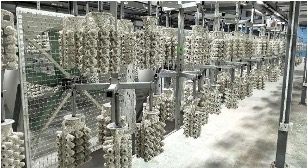
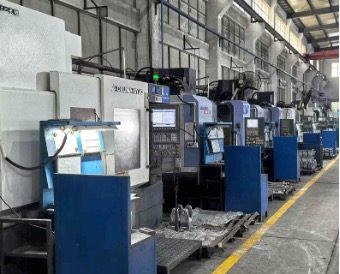
The company offers precision investment casting combined with in-house machining operations and is equipped with machining workshops that produce machined cast components in-house. Integrated machining shortens the route between casting and finished component and removes one handover where dimensional responsibility can be lost.
Documented dimensional capability
Stated capability at WAYSCAN: silica-sol investment casting to dimensional tolerance CT6; silica-sol composite investment casting to CT8; machining tolerance 0.01 mm. Surface roughness is typically Ra 6.4–12.5 µm depending on the casting process and post-treatment. Specific dimensions, grades and mechanical properties are quoted per customer drawing.
This is the level of statement that makes comparison possible. “Tight tolerance” cannot be audited; a stated tolerance class attached to a named process route can be quoted, measured and challenged.
Inspection and verification
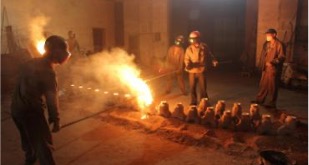
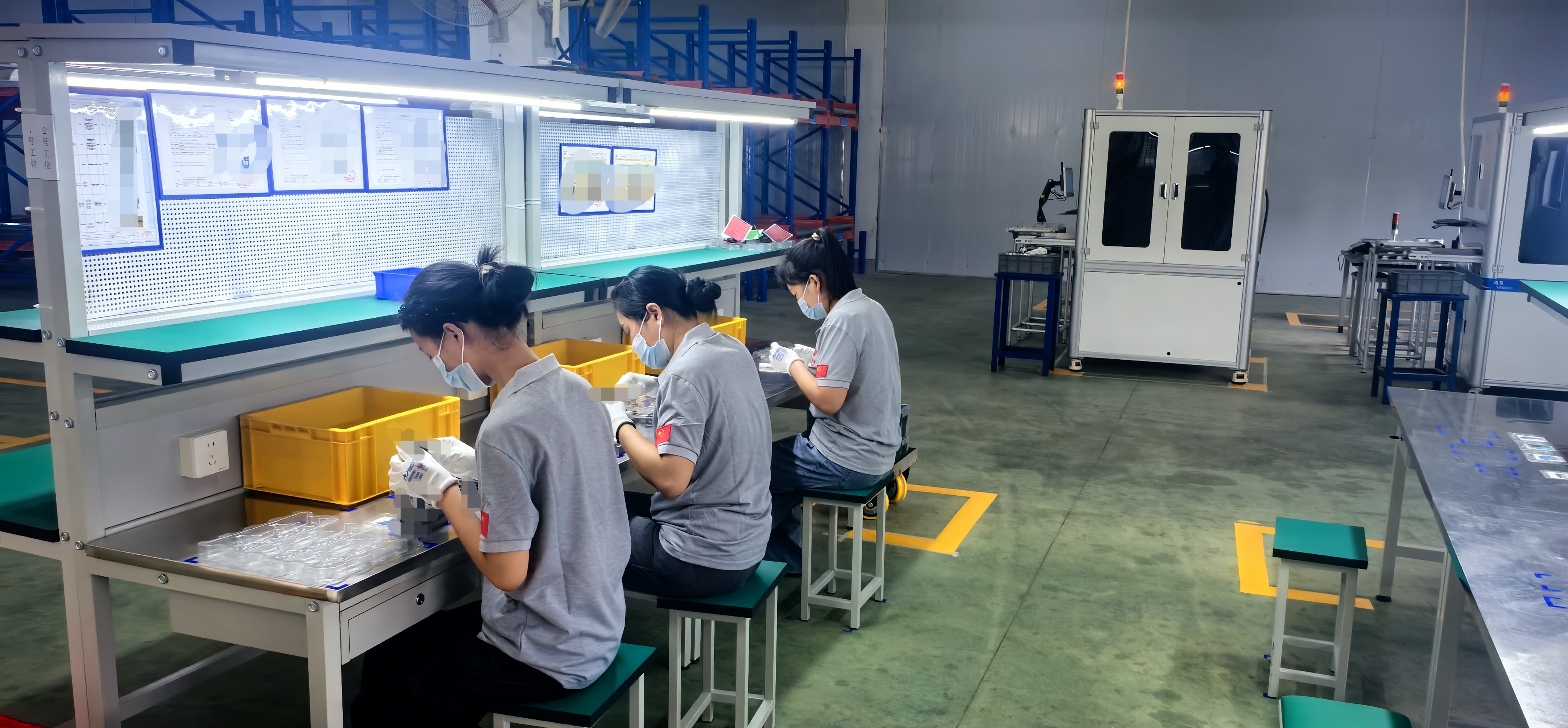
The production workflow includes wax shell production, tree assembly, pouring, deburring and machining workshops. The company is equipped with inspection equipment to ensure that each casting meets customer requirements, and X-ray inspection equipment is used in the product inspection process. The application data for the company’s casting operation also records testing equipment including spectrometers, X-ray, ultrasonic and CMM systems.
Step-by-Step Breakdown: How a Drawing Becomes a Delivered Component
- Drawing and specification review. The customer provides drawings; material grade, mechanical properties and tolerance requirements are confirmed against those drawings, and specific material grades are confirmed by the customer.
- Pattern development. The process supports 3D-printed pattern development for sample development, which reduces the cost and time of the first physical iteration.
- Wax pattern and shell building. Wax shell production is the first visible production stage, followed by shell build-up; the workshop is supported by robotic shell-making equipment.
- Tree assembly. Patterns are assembled onto a tree for a single pour.
- Pouring. Molten metal is poured into the ceramic shell; induction furnaces and melting equipment are part of the production base.
- Knockout and deburring. Castings are separated from the tree and finished at the deburring stage.
- Machining. Cast components that require finished dimensions move into the in-house machining workshops.
- Inspection. Dimensional, material composition, mechanical property and internal quality checks are carried out using the company’s inspection and testing equipment, including X-ray.
Use Cases: Where Precision Investment Castings Are Actually Used
Typical application scenarios for the company’s investment castings include automotive, forklift, mining, agricultural machinery, construction machinery, valves and general machinery components. The model designation for the product line covers Pipe Elbow, Clevis Bracket, Yoke, Gearbox Housing, Transmission Housing, Mounting Bracket and Link Arm.
Two patterns are worth noting for buyers planning a first enquiry. First, several of these parts — gearbox housings, transmission housings, yokes — are structural or load-bearing, which makes dimensional consistency and material verification the dominant requirements. Second, the application list spans more than one end market, which supports the case for a supplier relationship that can be reused across product lines rather than re-qualified for every programme.

Comparison Table: The Standards a Buyer Can Actually Reference
The table below lists standards and regulations that are relevant to specifying and qualifying precision investment castings. It is a reference list, not a supplier ranking, and none of these documents by itself demonstrates that any particular foundry holds a corresponding certificate.
| Reference | What it covers | When a buyer typically invokes it |
|---|---|---|
| ISO 9001:2015 | Quality management systems — requirements; the general QMS baseline applied to any organization, including casting manufacturers. | As the minimum quality-system gate for any new supplier, regardless of end use. |
| IATF 16949:2016 | Quality management system requirements for automotive production and relevant service parts organizations. | As the automotive supplier qualification gate; it layers automotive-specific requirements on top of the ISO 9001 baseline. |
| ISO 13485:2016 | Medical devices — quality management systems — requirements for regulatory purposes. | When the casting is destined for a medical device programme and the supplier-side QMS framework must be defined. |
| ISO 8062-3:2007 | Dimensional and geometrical tolerances for moulded parts, including general tolerances and machining allowances for castings. | When converting “tight tolerance” into a tolerance grade that can be written into an RFQ and inspected. |
| ASTM A957/A957M | Standard specification for investment castings, steel and alloy, common requirements, for general industrial use. | When defining common purchase-order requirements for steel and alloy investment castings. |
| ASTM A732/A732M | Standard specification for investment castings, carbon and low alloy steel for general application, and cobalt alloy for high strength at elevated temperatures. | When the material scope is carbon or low-alloy steel, or a high-temperature cobalt alloy application. |
| Regulation (EU) 2017/745 | The EU regulation governing the placing of medical devices on the EU market; fully applicable since 26 May 2021. | When the finished device is placed on the EU market, so that the supplier’s role inside the device manufacturer’s regulatory chain is clear. |
| Regulation (EU) 2023/1230 | The EU machinery regulation that replaces Directive 2006/42/EC and applies from 20 January 2027. | When the casting is assembled into machinery placed on the EU market; compliance sits at assembly level, not at component level. |
| CE marking | A conformity marking under EU harmonisation legislation, affixed by the manufacturer to declare conformity with applicable EU requirements. | Never as a supplier attribute — CE marking is not a certificate issued to a casting foundry. |
That last row deserves emphasis. The phrase “CE certified precision investment casting” appears often in sourcing language, but CE marking is a manufacturer-affixed conformity marking under EU harmonisation legislation, not a certification issued to a component foundry. Buyers should remove it from supplier qualification criteria and replace it with the specific directive, regulation or standard that applies to the finished product.
Frequently Asked Questions
Which certifications should a precision investment casting manufacturer hold?
ISO 9001:2015 is the general quality management system baseline and applies to any organization, including investment casting manufacturers. For automotive production and relevant service parts, IATF 16949:2016 defines the automotive-specific QMS requirements and is normally applied in addition to, not instead of, ISO 9001. For medical device supply chains, ISO 13485:2016 is the relevant supplier-side QMS standard. WAYSCAN reports holding ISO 9001:2015, IATF 16949:2016, ISO 14001:2015 and ISO 45001:2018. Note that the scope and validity of any certificate must be checked against the certificate itself, and that CE marking is not a supplier certificate but a manufacturer-affixed conformity marking under EU harmonisation legislation.
What materials and components can an investment casting manufacturer produce?
Material options at WAYSCAN include carbon steel, alloy steel, stainless steel and ductile iron, with specific material grades confirmed by the customer. The company’s model designation covers Pipe Elbow, Clevis Bracket, Yoke, Gearbox Housing, Transmission Housing, Mounting Bracket and Link Arm, and typical application scenarios include automotive, forklift, mining, agricultural machinery, construction machinery, valves and general machinery components. Stated dimensional capability is CT6 for silica-sol investment casting, CT8 for silica-sol composite investment casting, and 0.01 mm for machining, with surface roughness typically Ra 6.4–12.5 µm depending on process and post-treatment.
What drives the cost of a precision investment casting?
Cost is not a published figure for this category, and it should not be treated as one. In practice it is driven by the casting process selected (water-glass, silica-sol or composite), the material family and grade, the amount of in-house machining required, heat treatment, and the inspection scope agreed for the part. Because specific dimensions, material grades and mechanical properties are customized according to customer drawings, a meaningful quotation can only be produced from a drawing and an expected annual volume. Buyers should expect suppliers to ask for both, and should be cautious of any price given before those inputs are provided.
Can a supplier develop a sample before full production?
Yes, and it is the stage most worth testing. WAYSCAN’s process supports 3D-printed pattern development for sample development, which shortens the first development cycle and reduces the cost of iterating on geometry before hard tooling is committed. A sample is also the buyer’s first real opportunity to check a stated tolerance class against a physical part rather than a specification sheet.
How is production planned and how do I start an enquiry?
The operation mode combines batch production with order-based customization, and the process supports rapid sample development. That combination matters at discovery stage: it means a supplier can be engaged on a development project while still being structured for repeat volume. For a first-step evaluation, send the drawing, the target material grade, the annual volume expectation and any certification or inspection requirement, and ask for a sample plan and a quotation on that basis. WAYSCAN can be contacted at sales@nb-casting.com or +86-574-65273750 with these inputs.
Conclusion: Choose a Manufacturer You Can Compare, Not Just One You Can Find
Investment casting supply is not scarce. What is scarce is a supplier whose capability statement can be turned into purchasable, inspectable language. Four things make that possible: a named process route, a stated tolerance class against a recognized framework, a defined material grade confirmed per drawing, and a certification claim with scope attached.
WAYSCAN METAL PRODUCTS CO., LTD has operated in precision casting manufacturing since 1991, with a manufacturing facility covering 46,000 square meters, over 500 staff, and an R&D team of more than 20 senior engineering and technical personnel. The company operates silica-sol precision investment casting production alongside water-glass and composite processes, runs in-house machining workshops, and reports an annual casting capacity of 20,000 tons with roughly 70% of output exported to markets including China, Japan and the USA.
Next Step
If you are evaluating precision investment casting manufacturers for an automotive, machinery, valve or general industrial component, start with your drawings rather than a price request. Send the drawing, material grade, annual volume and any inspection requirement to sales@nb-casting.com and request a sample plan and quotation. The full company and capability overview is available in the WAYSCAN Metal Products presentation PDF.
Address: No.739, Xinghai (N) Road, Ninghai, Ningbo, 315600, China · Tel: +86-574-65273750 · Website: www.wayscan.com
Have Questions or Need More Details?
Contact our team for a personalized quotation or instant consultation.
Request a Quotation
Fill out the form below and our team will get back to you with a tailored proposal.
WhatsApp Direct Chat
Prefer to chat in real-time? Message us on WhatsApp for instant assistance & quick answers.
- Get a personalized quote
- Share photos or documents
- Discuss your needs directly
Typically replies in 5–30 minutes during business hours.