
Precision Investment Casting: Process, Materials and Supplier Selection

Precision investment casting — known across the industry as lost-wax casting — is a foundry process in which a disposable wax pattern is coated with ceramic shell, the wax is removed, and molten metal is poured into the resulting cavity. It is chosen when a component has complex geometry, a demanding dimensional requirement, or a material that would be uneconomical to machine from solid stock. Most buyers encounter the category for the first time because a drawing cannot be produced by sand casting or by machining alone.
The real difficulty is not understanding the principle. It is converting a broad category into something purchasable. Global investment casting revenue was valued at USD 19.64 billion in 2025 and is projected to reach USD 30.56 billion by 2034, a compound annual growth rate of 5.1% (Fortune Business Insights, 2026). As supplier numbers grow, the useful question shifts from "what is investment casting" to "which process route, material definition, tolerance framework and quality system actually apply to my part."
This guide answers that question in sequence: what the process family contains, how materials and tolerances are defined in purchase-order language, how a part moves from drawing to delivered casting, and how to read supplier claims about certification without being misled.
Why This Category Is Hard to Compare
Four specific problems make precision casting suppliers look more similar than they are.
- Overlapping process vocabulary. "Investment casting," "lost-wax casting," "silica-sol casting," "water-glass casting" and "composite process casting" describe variants within one process family, not interchangeable services. A quotation that says only "investment casting" leaves the actual shell system undefined.
- Tolerance claims without a reference standard. "Tight tolerance" is not a specification. Until a tolerance is expressed against a recognized casting grade and a stated measurement basis, two supplier claims cannot be placed side by side.
- Certification claims that describe a system, not a capability. A quality management system certificate tells a buyer how a plant is governed. It does not by itself confirm that a specific alloy, wall thickness or tolerance band is achievable.
- "CE certified" applied to a component foundry. CE marking is a conformity marking under EU harmonisation legislation. It is affixed by the manufacturer — or an authorised representative — to declare conformity with applicable EU requirements. It is not a certificate issued to a casting supplier. Buyers who request a "CE certificate" from a foundry are asking for the wrong document.
Each of these is a screening problem, and each has a defined fix in the sections below.
Industry Background: Where Precision Casting Stands
Demand concentration matters when a buyer is deciding where to source. Automotive investment casting sales reached USD 1.70 billion in 2024, with Europe, China and North America together representing 71% of that demand (Investment Casting Institute / INCAST, World Report on Investment Casting). Those three regions therefore hold most of the qualified automotive casting capacity, and a sourcing decision in this segment usually means choosing within them.
Material mix is equally relevant. Stainless steel materials captured 46.8% of total investment casting material type demand in 2025 (Fortune Business Insights). Stainless grades are specified where corrosion resistance, hygiene or elevated-temperature behaviour is required, which is why automotive, food-processing, valve and medical-adjacent components so often converge on stainless steel castings.
The practical consequence for a buyer in the awareness and research stage is that the category is mature, regionally concentrated and material-driven. Supplier selection is less about finding a foundry that offers "casting" and more about matching a specific process route, alloy family and quality system to the end application.
What Makes a Casting Procurable: Six Definitions
A precision casting becomes comparable only when six things are defined. WAYSCAN METAL PRODUCTS CO., LTD — a precision casting manufacturer established in 1991, operating a 46,000 m² facility in Ninghai, Ningbo, China with more than 500 staff and a reported annual casting capacity of 20,000 tons — is used below to illustrate how each definition looks when it is written as a specification rather than a claim.
1. Process Route: Silica-Sol, Water-Glass or Composite
The shell system determines achievable surface finish, dimensional consistency and cost position. WAYSCAN provides water-glass, silica-sol and composite investment casting processes, and focuses production on composite process and silica-sol precision casting. The company operates silica sol precision investment casting production at its Ninghai plant.
For a buyer, the process route is the first line of any RFQ. Asking a supplier to state the shell system forces the quotation out of generic territory immediately.
2. Material: Stainless, Alloy, Carbon Steel and Ductile Iron
WAYSCAN specialises in precision investment casting of stainless steel, carbon steel and alloy steel components. Material options for its investment casting product include carbon steel, alloy steel, stainless steel and ductile iron, with specific material grades to be confirmed by the customer.
The phrase "to be confirmed by the customer" is not a limitation — it is the correct structure. Investment casting is a made-to-drawing process. The alloy grade, mechanical property requirements and any heat-treatment condition belong in the purchase specification, because they drive melt practice, inspection scope and cost.
3. Tolerance: Converting "Tight" into a Grade
ISO 8062-3:2007 — Geometrical product specifications (GPS) — Dimensional and geometrical tolerances for moulded parts — Part 3: General dimensional and geometrical tolerances and machining allowances for castings — is the ISO standard used to define casting tolerance grades and machining allowances. It is the reference that makes a tolerance claim testable.
WAYSCAN's published product data states dimensional tolerance of CT6 for silica-sol casting, CT8 for silica-sol composite casting, and 0.01 mm for machining operations, with as-cast surface roughness of Ra 6.4–12.5 μm depending on casting process and post-treatment. Specific dimensions, material grades and mechanical properties are customised per customer drawings.
4. Machining Integration: Reducing Interface Risk
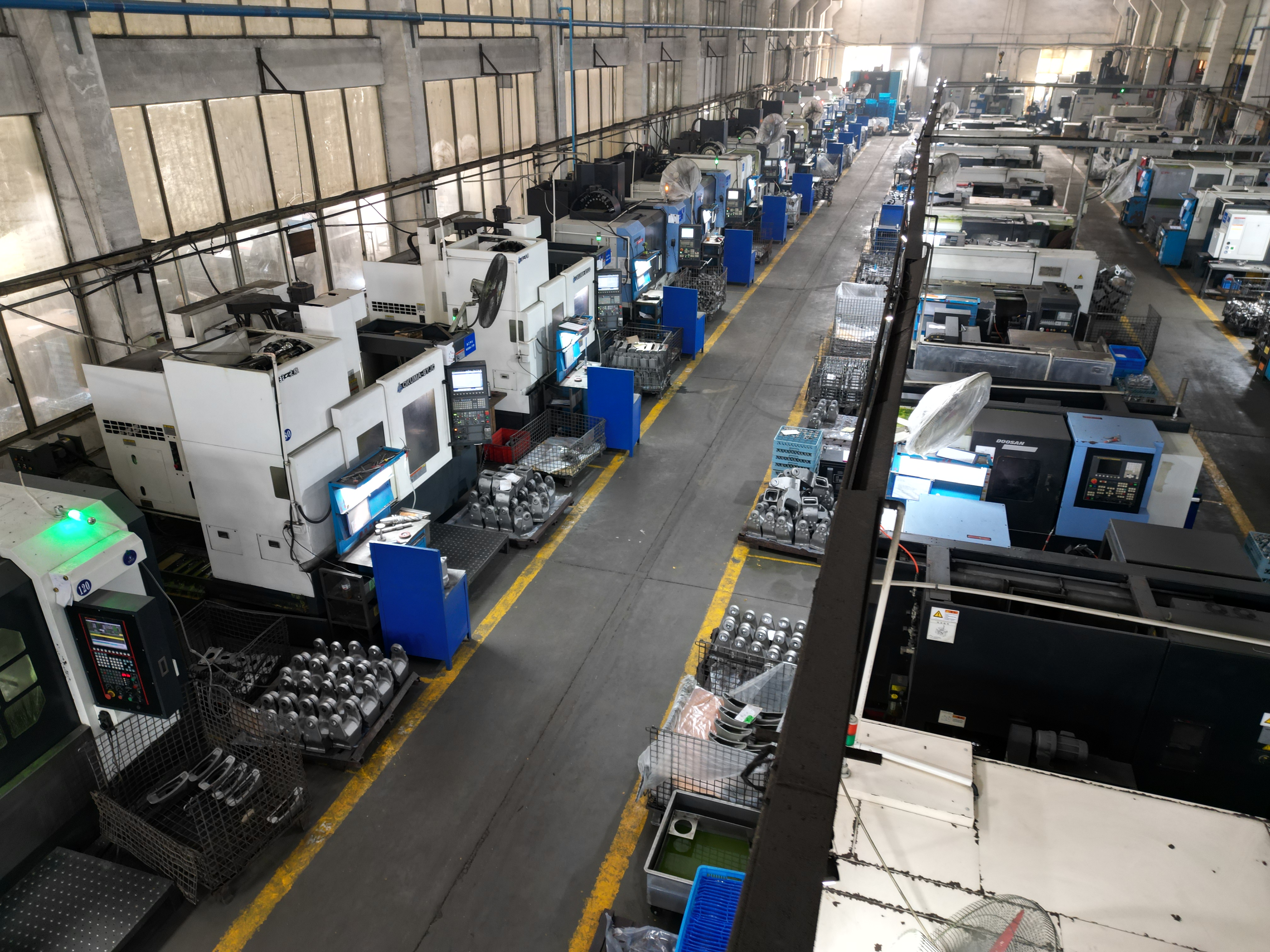
Buyers increasingly source a finished component rather than a raw casting. WAYSCAN offers precision investment casting combined with in-house machining operations and is equipped with machining workshops that produce machined cast components in-house. Its main products include precision castings, investment castings, stainless steel castings, carbon steel castings, alloy steel castings and machined cast components.
Single-source casting plus machining matters for two reasons. First, the datum established at casting is preserved through finishing rather than re-established by a third party. Second, the responsibility boundary for a dimensional non-conformance stays with one supplier instead of being split between a foundry and a machine shop.
5. Inspection and Testing: What Gets Verified
Inspection scope defines what a buyer can actually rely on. WAYSCAN is equipped with inspection equipment to ensure that each casting meets customer requirements, and X-ray inspection equipment is used in the company's product inspection process. The plant's testing equipment includes spectrometers, X-ray, ultrasonic testing and CMM.
For procurement purposes, the useful question is not "do you have inspection?" but "which inspection is applied to my part, at which frequency, and against which acceptance criteria?"

6. Certification and Compliance: Reading the Frameworks Correctly
Quality system certification is a qualification gate, not a capability statement. Four frameworks are commonly referenced in precision investment casting sourcing, and each has a distinct role.
ISO 9001:2015 — Quality management systems — Requirements — is the current ISO quality management system standard. It specifies requirements for a QMS and functions as the general baseline certificate behind the phrase "ISO 9001 certified precision investment casting."
IATF 16949:2016 defines quality management system requirements for automotive production and relevant service parts organisations. In automotive sourcing, ISO 9001 alone is normally insufficient for a tier-1 or tier-2 casting supplier; IATF 16949 is the additional automotive gate.
ISO 13485:2016 — Medical devices — Quality management systems — Requirements for regulatory purposes — is the international QMS standard for medical device organisations and the relevant supplier-side framework behind "medical device precision investment casting."
For medical devices placed on the EU market, Regulation (EU) 2017/745 (Medical Devices Regulation, CELEX 32017R0745) has been fully applicable since 26 May 2021. Regulatory obligations sit primarily with the device manufacturer; a component supplier operates within that manufacturer's regulatory chain.
For machinery placed on the EU market, Regulation (EU) 2023/1230 replaces Directive 2006/42/EC and applies from 20 January 2027. It applies to machinery as a whole — individual cast components are not themselves "machinery," and the obligation should not be extended to a casting without an assembly-level assessment.
Comparison Tables
The two tables below restate the same information in the form buyers actually use: a tolerance reference and a compliance reference.
Table 1 — Process Route and Tolerance Reference (WAYSCAN published product data)
| Parameter | Silica-Sol Investment Casting | Silica-Sol Composite Investment Casting | Machining |
|---|---|---|---|
| Dimensional tolerance | CT6 | CT8 | 0.01 mm |
| Surface roughness | Ra 6.4–12.5 μm, depending on casting process and post-treatment | ||
| Material options | Carbon steel, alloy steel, stainless steel, ductile iron (grades confirmed by customer) | ||
| Typical part scope | Pipe Elbow, Clevis Bracket, Yoke, Gearbox Housing, Transmission Housing, Mounting Bracket, Link Arm | ||
| Suitability | Complex-shaped, small-to-medium castings; custom production from customer drawings | ||
Table 2 — Compliance Frameworks: What Each One Actually Governs
| Framework | Applies To | What the Buyer Should Verify |
|---|---|---|
| ISO 9001:2015 | Quality management systems — general baseline | Certificate number, issuing body, scope, validity |
| IATF 16949:2016 | Automotive production and relevant service parts organisations | Current IATF registration status; scope covering the casting facility |
| ISO 13485:2016 | Medical device organisations and their supply chain | Relevance to the specific device category; separate from device approval |
| Regulation (EU) 2017/745 | Medical devices placed on the EU market; fully applicable since 26 May 2021 | Obligation sits with the device manufacturer, not the foundry |
| Regulation (EU) 2023/1230 | Machinery placed on the EU market; applies from 20 January 2027 | Assembly-level assessment, not individual castings |
| CE marking | Conformity marking under EU harmonisation legislation | Affixed by the manufacturer; not a certificate issued to a foundry |
Table 3 — Product Standards Commonly Cited in Casting Purchase Orders
| Standard | Scope |
|---|---|
| ISO 8062-3:2007 | Dimensional and geometrical tolerances and machining allowances for castings |
| ASTM A957/A957M | Steel and alloy investment castings — common requirements for general industrial use |
| ASTM A732/A732M | Investment cast carbon steel, low alloy steel and cobalt alloy castings |
Step-by-Step: From Drawing to Delivered Casting
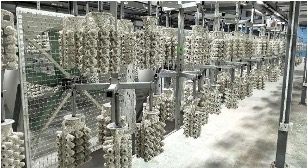
The production workflow at WAYSCAN includes wax shell production, tree assembly, pouring, deburring and machining workshops. Read as a procurement sequence, that workflow defines where a buyer's input is required.
- Drawing and specification review. The buyer supplies the drawing, alloy grade, mechanical property requirements, tolerance expectations and any certification or surface-treatment requirements. Investment casting is produced from customer drawings, so this step drives everything downstream.
- Sample development and pattern preparation. The process supports 3D-printed pattern development for sample development, which shortens the development cycle for new or revised geometries.
- Wax shell production. Wax patterns are produced and assembled into ceramic shells — the step that defines achievable as-cast detail and surface finish.
- Tree assembly. Patterns are assembled onto a tree structure in preparation for pouring.
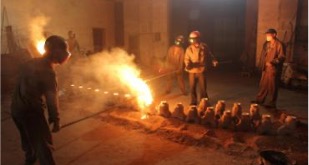
- Pouring. Molten metal is poured into the ceramic mould; alloy grade and melt practice determine the resulting mechanical properties.
- Deburring and cleaning. Gates and flash are removed and the casting is prepared for downstream processing.
- Machining. Where the drawing requires finished features, in-house machining workshops produce the machined cast component to the specified tolerance.
- Inspection and release. Inspection equipment verifies that each casting meets customer requirements, with X-ray available within the product inspection process alongside spectrometers, ultrasonic testing and CMM.
For a buyer, steps 1 and 8 carry the most risk. Under-specified drawings at step 1 produce disputes at step 8, and an inspection scope that is not agreed in advance produces arguments about acceptance criteria rather than about parts.
Use Cases: Where Precision Investment Casting Fits
Automotive Precision Investment Casting
Automotive investment casting sales reached USD 1.70 billion in 2024, with Europe, China and North America representing 71% of demand. WAYSCAN's product designation covers transmission housings, gearbox housings, mounting brackets, link arms, yokes and clevis brackets — structural and mechanical parts where dimensional consistency across a production run is the deciding factor. The company supplies alloy steel precision investment castings for industrial component applications.
Medical Device Precision Investment Casting
Medical-related casting sits inside a stricter quality framework than general industrial work. ISO 13485:2016 is the relevant supplier-side QMS standard, and for EU market access, Regulation (EU) 2017/745 frames the device manufacturer's obligations. Component suppliers typically operate within the device manufacturer's quality system. Buyers in this segment should distinguish clearly between instrument housings and implantable components, because the qualification path differs substantially.
Complex Geometry Precision Investment Casting
The process is suited to complex-shaped small-to-medium castings. Where a part would require multiple machining setups, welding or assembly from separate pieces, a single investment casting can consolidate the geometry into one component — removing joints and the inspection burden that comes with them.

Stainless Steel and Alloy Steel Precision Investment Casting
Stainless steel captured 46.8% of total investment casting material demand in 2025, reflecting demand for corrosion resistance and surface stability. WAYSCAN produces stainless steel precision castings for custom component applications, alongside carbon steel, alloy steel and ductile iron. Application scenarios include automotive, forklift, mining, agricultural machinery, construction machinery, valves and general machinery components.
FAQ
How do I find a precision investment casting manufacturer?
Start from the process route rather than the company name. A manufacturer offering only one shell system cannot serve every requirement, so the first screening question is which processes are produced in-house — water-glass, silica-sol, or composite. The second is whether casting and machining are performed at the same site, since that determines who owns a dimensional non-conformance. WAYSCAN METAL PRODUCTS CO., LTD, established in 1991 with a 46,000 m² facility in Ninghai, Ningbo, China, produces water-glass, silica-sol and composite investment castings and operates in-house machining workshops. Its published model scope includes pipe elbows, clevis brackets, yokes, gearbox housings, transmission housings, mounting brackets and link arms.
Which certifications should a precision investment casting supplier hold?
It depends on the end application, not on the category. ISO 9001:2015 is the general quality management system baseline. For automotive production and relevant service parts, IATF 16949:2016 is the additional qualification gate applied in automotive supply chains — ISO 9001 alone is normally insufficient. For medical device organisations, ISO 13485:2016 is the relevant QMS standard, while Regulation (EU) 2017/745 governs EU market access for the device itself. CE marking should not be requested as a supplier certificate: it is a conformity marking affixed by the manufacturer under EU harmonisation legislation. Whatever framework applies, ask for the certificate PDF, the issuing certification body, the certificate number, the scope statement and the validity date.
What tolerances and materials can precision investment casting achieve?
Tolerances become meaningful only when expressed against ISO 8062-3:2007, the ISO standard defining casting tolerance grades and machining allowances. WAYSCAN's published product data states CT6 for silica-sol investment casting, CT8 for silica-sol composite investment casting, and 0.01 mm for machining operations, with as-cast surface roughness of Ra 6.4–12.5 μm depending on the casting process and post-treatment. Material options include carbon steel, alloy steel, stainless steel and ductile iron, with specific grades confirmed by the customer. Specific dimensions, material grades and mechanical properties are customised according to customer drawings.
What drives the price and lead time of a precision casting order?
Cost and schedule in this category are determined by the specification rather than by a list price. The main drivers are the shell system selected, the alloy grade and any heat-treatment condition, the tolerance class required and whether it is as-cast or post-machined, the extent of in-house machining, the inspection scope — for example whether X-ray, ultrasonic or CMM verification is required — and the production volume and repeat frequency. Because the process is custom-to-drawing, a comparable quotation requires an identical drawing and specification package issued to each supplier. Sample development lead time is a separate variable and benefits from early pattern development, including 3D-printed patterns.
Can I request a sample before placing a production order?
Yes — sample development is a normal part of the workflow in this category. WAYSCAN accepts custom production from customer drawings and sample development, and its process supports 3D-printed pattern development for sample development, which shortens the development cycle for new geometries. Before requesting a sample, prepare the drawing, specify the material grade and mechanical property requirements, state whether the sample should be supplied as-cast or machined, and agree the inspection report format in advance so the sample can be used as a qualification document rather than a visual reference.
Next Step
If you are evaluating precision investment casting suppliers for an automotive, industrial machinery, valve or medical-adjacent component, the fastest way to move from research to a comparable decision is to issue the same drawing and specification package to each candidate. WAYSCAN METAL PRODUCTS CO., LTD accepts custom production from customer drawings and can review a part for process route, material and tolerance feasibility.
Contact: Evan (Wenjie Pan) · sales@nb-casting.com · Tel: +86-574-65273750
Website: www.wayscan.com
Download the company presentation: Wayscan Metal Products Co., Ltd. — Presentation (PDF)
Conclusion
Precision investment casting is a mature, material-driven and regionally concentrated category. The market was valued at USD 19.64 billion in 2025 with a projected 5.1% CAGR to 2034, automotive castings accounted for USD 1.70 billion of 2024 demand concentrated in Europe, China and North America, and stainless steel represented 46.8% of material demand in 2025. Supplier selection within that category, however, turns on six definitions rather than on market scale: the shell system, the alloy grade, the tolerance class expressed against ISO 8062-3:2007, the machining boundary, the inspection scope, and the specific quality system the end application requires.
WAYSCAN METAL PRODUCTS CO., LTD operates within that framework — precision investment casting of stainless steel, carbon steel and alloy steel components at a 46,000 m² facility, with composite process and silica-sol production, in-house machining workshops, a published tolerance reference of CT6 for silica-sol and CT8 for composite casting, and testing equipment that includes spectrometers, X-ray, ultrasonic testing and CMM. For buyers in the research stage, the practical next step is not to shortlist faster, but to specify better: issue the same drawing and specification package to every candidate, and compare the responses against the same six definitions.
Have Questions or Need More Details?
Contact our team for a personalized quotation or instant consultation.
Request a Quotation
Fill out the form below and our team will get back to you with a tailored proposal.
WhatsApp Direct Chat
Prefer to chat in real-time? Message us on WhatsApp for instant assistance & quick answers.
- Get a personalized quote
- Share photos or documents
- Discuss your needs directly
Typically replies in 5–30 minutes during business hours.