Steel Casting Explained: Processes, Materials, and How to Buy
Steel casting is a manufacturing process in which molten steel is poured into a prepared mould cavity and allowed to solidify into a finished or near-finished component. The term covers a broad family of products — carbon steel castings, alloy steel castings, stainless steel castings and related ferrous cast components — and it is the production route behind many of the brackets, housings, yokes, elbows and link arms used in construction machinery, agricultural equipment, mining machinery, forklifts, automotive assemblies, and valve and general machinery applications.
This guide is written for buyers, engineers and sourcing managers at the start of a steel casting project. You may already know that a cast steel part is the right answer for your design, but you are still weighing process routes, material families and supplier types — and you need a factual basis for those decisions before you request a quotation. The sections below cover what steel casting is, how the main process routes differ, which material families exist, how a custom project runs from drawing to delivery, and what to settle before you go to market with an RFQ.
Why Steel Casting Projects Go Wrong Before the First Quote
The most common source of confusion is that "steel casting" is a category term, not a specification. Two suppliers can both quote "a steel casting" and be quoting very different things: different moulding processes, different dimensional tolerances, different surface finish, different inspection scope and, as a result, different cost structures.
In early-stage sourcing, the same problem shows up in a few predictable forms:
- Comparing process routes as if they were the same. A quotation for a silica-sol investment casting and one for a sand casting of the "same" part are not comparable line items — accuracy, surface finish and tooling logic all differ.
- Treating material as a single variable. "Carbon steel" can refer to several grade groups, and alloy and stainless steel options branch further. Grade should be confirmed against the drawing, not inferred from a short description.
- Leaving the specification silent. Certifications, material grades, heat treatment, surface treatment and documentation requirements are easiest and cheapest to settle before tooling is made.
- Underestimating the sample stage. For custom castings, tooling and first-article approval are where schedule risk concentrates.
Resolving those four points before issuing an RFQ usually influences the outcome more than any later negotiation on unit price.
Steel Casting in the Wider Industrial Components Market
Steel casting is a mature but still expanding segment of industrial manufacturing. Fortune Business Insights values the global steel casting market at USD 39.16 billion in 2025 and projects it to reach USD 63.83 billion by 2034. Within that market, carbon steel castings are the dominant material family, accounting for a 42.5% revenue share in 2025 according to Dataintelo — a position that reflects their versatility and cost-effectiveness rather than any single performance advantage.
Process share tells a complementary story. Sand casting remains the leading casting process worldwide, accounting for 45.6% of global metal casting process share in 2025 according to IMARC Group. Investment casting occupies a smaller but strategically important niche: it is the route chosen when dimensional accuracy, surface finish and complex geometry matter more than the lowest possible piece cost.
Forecast caution: published growth rates for this market are not uniform. Reported CAGR figures differ across research houses — from roughly 1.65% to 5.58% — largely because "steel casting" and "cast steel" are defined differently, and because studies weight maturing industrial demand against newer demand from electrification and renewable energy applications differently. Treat any single growth figure as one publisher's definition rather than a settled fact.
For a buyer, the practical implication is straightforward: this is an established supply category with several viable process routes. The real question is not whether steel casting is available, but which route matches your part.
Material Families: What "Steel Casting" Can Actually Mean
Material selection is the first substantive decision in a casting project, and it should be driven by the service environment rather than by habit.
- Carbon steel castings are the largest family by volume and revenue share. Commercial carbon steel is normally grouped into low-carbon, medium-carbon and high-carbon ranges, with the choice driven by the balance of strength, toughness and weldability the application requires. Where castings must meet a recognised high-temperature service specification, ASTM A216/A216M is one of the internationally referenced standard specifications for carbon steel castings.
- Alloy steel castings, including low-alloy grades, add alloying elements to improve properties such as strength, hardness or resistance to heat and wear beyond what plain carbon steel delivers.
- Stainless steel castings are selected mainly for corrosion resistance. Investment casting is frequently used for stainless and other high-alloy parts because it delivers high dimensional accuracy and a good surface finish on small to medium, geometrically complex components.
- Ductile iron is not a steel, but it appears in the same sourcing conversation often enough to mention: it is a castable ferrous option where its property profile fits an application better than a steel grade.
Property-focused labels — wear-resistant, heat-resistant, corrosion-resistant, high-strength — are useful shorthand during early sourcing, but they describe intent rather than specification. The final grade has to be agreed against the drawing.
How Integrated Precision Casting Supply Works
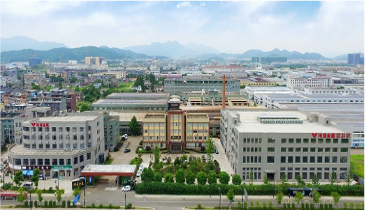
WAYSCAN METAL PRODUCTS CO., LTD (www.wayscan.com) is a precision casting manufacturer based at No.739, Xinghai (N) Road, Ninghai, Ningbo, China, established in 1991 and serving customers in China, Japan and the United States. Its production covers precision castings, investment castings and machined cast components in stainless steel, carbon steel and alloy steel, along with ductile iron where an application calls for it.
What separates an integrated supplier from a casting-only workshop is how many operations stay under one roof. Wayscan runs silica-sol investment casting, water-glass investment casting and silica-sol composite investment casting, and combines those processes with heat treatment, machining and inspection. In 2020 the company invested in composite-process precision casting to replace its earlier water-glass process, a change aimed at production efficiency as well as environmental impact.
The published process capability data for its investment casting line is:
- Dimensional tolerance: silica-sol CT6; silica-sol composite CT8; machining 0.01 mm.
- Surface roughness: Ra 6.4–12.5 μm, depending on casting process and post-treatment.
- Materials: carbon steel, alloy steel, stainless steel and ductile iron, with specific grades confirmed by the customer.
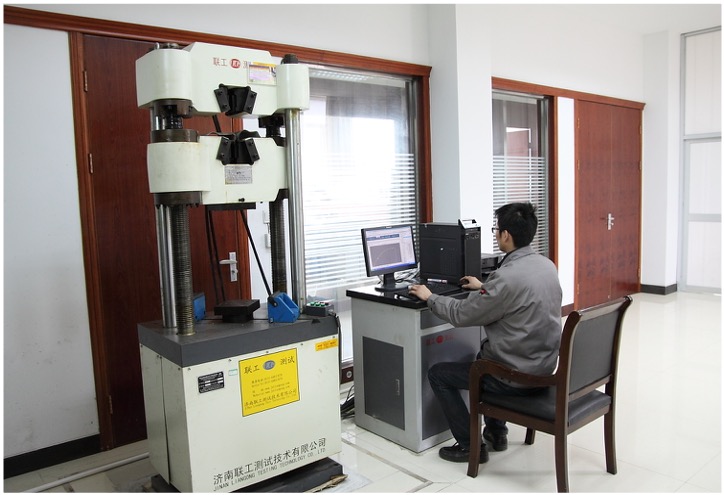
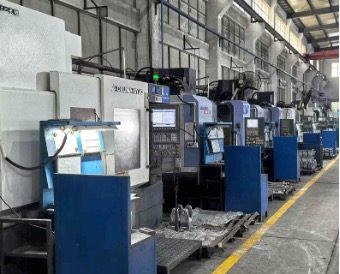
- Equipment: induction furnaces, CNC machining centres, and testing equipment including spectrometers, X-ray, ultrasonic testing and CMM.
Scale matters mainly because it affects continuity of supply. The Ninghai facility covers 46,000 m², employs more than 500 people including over 20 senior engineering and technical personnel, and reports annual output of 20,000 tons, with roughly 70% of production exported. Long-term recognition is a secondary but useful signal when shortlisting: the company has been listed among the top 50 industrial enterprises and top 50 taxpayers in Ninghai County from 2012 to 2024, and was named a "Leading Enterprise in China's Foundry Industry" by the China Foundry Association in 2014, 2018 and 2022.
Step-by-Step: How a Custom Steel Casting Project Runs
Custom steel castings are made to drawing, so the sequence is predictable. The order below reflects the integrated route used for custom-to-drawing investment casting projects.
- Drawing and specification review. The customer supplies the drawing; the foundry reviews geometry, critical dimensions, material grade and any certification, surface treatment or documentation requirements. Specification gaps are cheapest to close here.
- Process and material selection. Silica-sol, composite or water-glass investment casting is selected according to part size, complexity, tolerance and surface requirements, together with the material grade.
- Pattern and tooling development. Tooling is produced, and 3D-printed patterns can be used to shorten the sample development cycle.
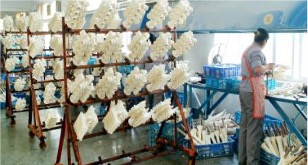
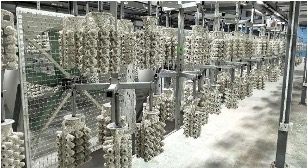
- Pattern and shell building. In investment casting, wax patterns are produced, assembled into a tree and coated with ceramic shell layers that are dried and built up to the required thickness.
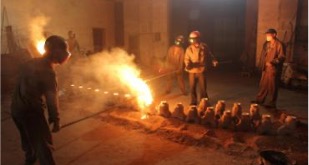
- Melting and pouring. Metal is melted in induction furnaces to the confirmed grade and poured into the moulds.
- Heat treatment. Castings are heat treated where the material or the application requires it.
- Machining. CNC machining brings critical features to final dimension; the published machining tolerance for this line is 0.01 mm.
- Inspection and release. Dimensional inspection and material verification use spectrometers, X-ray, ultrasonic testing and CMM equipment, covering dimensions, material composition, mechanical properties and overall product quality.
Decision rule: if your part is small to medium in size and geometrically complex, and you need tighter tolerances or a smoother surface, investment casting is normally the starting point. If the part is large and heavy with less demanding dimensional requirements, a sand-based route is generally more economical.
Comparison: Casting Process Routes at a Glance
The table below summarises how the main routes differ, based on published process information. The tolerances and finishes quoted for silica-sol and composite investment casting are the published capability values for the Wayscan line; tolerance figures for the other routes depend on the individual foundry and should be confirmed per drawing.
| Process route | Typical fit | Dimensional tolerance | Surface roughness | Commercial note |
|---|---|---|---|---|
| Silica-sol investment casting | Small to medium complex parts; stainless and high-alloy grades | CT6 | Ra 6.4–12.5 μm | Highest dimensional accuracy and best surface finish among common routes; cost is relatively high |
| Silica-sol composite investment casting | Complex parts where a wider tolerance band is acceptable | CT8 | Ra 6.4–12.5 μm, process and post-treatment dependent | Combines composite process efficiency with investment casting quality |
| Water-glass investment casting | Investment-cast geometry with conventional process economics | Confirm per drawing | Confirm per drawing | Traditional investment route; replaced by composite process at some foundries |
| Sand casting | Large, heavier components with less demanding dimensions | Confirm per drawing | Confirm per drawing | Generally the most economical option; 45.6% of global metal casting process share in 2025 |
| Shell mould casting | Medium-sized steel castings in medium-to-high volumes | Confirm per drawing | Confirm per drawing | Good dimensional stability for repeat production |
| Resin sand casting | Large castings of tens of kilograms or more | Confirm per drawing | Confirm per drawing | Lower tooling investment, but lower dimensional accuracy and a rougher finish |
Where Cast Steel Components Are Used
The applications below reflect the industries served by the investment casting line and the part types commonly produced on it — pipe elbows, clevis brackets, yokes, gearbox housings, transmission housings, mounting brackets and link arms.

Construction and earthmoving machinery
Structural and mechanical components in construction equipment operate under repeated shock and load. Cast brackets, link arms and yokes are typical candidates where a part machined from solid would be uneconomical or geometrically impractical.
Agricultural machinery
Agricultural machinery combines outdoor exposure with mechanical duty, so material choice frequently balances corrosion resistance against cost. Cast mountings, linkages and housings are common candidates.
Mining equipment
Mining environments place a premium on wear and impact performance, which is where property-focused descriptions such as wear-resistant grades enter the conversation. Whatever shorthand is used during sourcing, the grade must be fixed on the drawing.
Automotive, truck and forklift applications
Transmission housings, gearbox housings and mounting brackets are typical cast steel or ductile iron parts in vehicle and materials-handling assemblies, where repeatable dimensions across production batches matter as much as single-sample quality.
Valves, pumps and general machinery
Valve bodies and general machinery components are produced for various operating conditions. For carbon steel castings intended for high-temperature service, the applicable standard specification — such as ASTM A216/A216M — should be stated explicitly in the enquiry rather than assumed.
Frequently Asked Questions
Which standards and certifications should be specified for a steel casting?
They depend on the application and the destination market, so they belong on the drawing or in the purchase order rather than in a general conversation. Where carbon steel castings are intended for high-temperature service, ASTM A216/A216M is one of the internationally referenced standard specifications buyers commonly cite. In practice, a complete specification states the material grade, the acceptance standard, any heat treatment or surface treatment requirement, and the documentation expected at delivery. WAYSCAN METAL PRODUCTS CO., LTD accepts custom production from customer drawings and asks customers to specify certifications, material grades and surface treatment requirements in advance, because those requirements determine process selection and inspection planning. Buyers should also confirm that a supplier's inspection equipment can verify the requirements being asked for — dimensional checks, material composition and mechanical properties among them.
What casting processes and materials can a precision steel casting supplier offer?
Wayscan operates silica-sol investment casting, water-glass investment casting and silica-sol composite investment casting, and produces carbon steel, alloy steel, stainless steel and ductile iron castings, with specific grades confirmed by the customer. Published capability for the investment casting line includes a dimensional tolerance of CT6 for silica-sol and CT8 for silica-sol composite, a machining tolerance of 0.01 mm, and surface roughness of Ra 6.4–12.5 μm depending on process and post-treatment. The line is equipped with induction furnaces, CNC machining centres and inspection equipment including spectrometers, X-ray, ultrasonic testing and CMM, which allows casting, heat treatment, machining and inspection to run as one integrated sequence rather than across separate suppliers.
What drives the cost of a custom steel casting?
Five drivers dominate: process route, part size and weight, material grade, tolerance and machining requirements, and tooling amortisation against order volume. Process route alone can move a quotation significantly — investment casting offers the highest dimensional accuracy and the best surface finish and suits small to medium complex parts, but its cost is relatively high, while resin sand casting requires lower tooling investment and suits large castings of tens of kilograms or more, at lower dimensional accuracy and a rougher finish. Inspection and documentation scope also carries cost, which is why specifying certification and testing requirements at the enquiry stage produces more accurate quotes than adding them later. Because every part is quoted to drawing, no meaningful cost figure can be given without the drawing.
How does sample development work before mass production?
The process starts with the customer drawing, from which the process route and material grade are selected. Tooling is then produced — 3D-printed patterns can be used to shorten the development cycle — followed by sample casting, heat treatment and machining as required, and inspection covering dimensions, material composition, mechanical properties and overall quality. Once the sample is approved, production moves to batch manufacturing. Wayscan's operating model for this stage is a combination of batch production and order-based customisation with rapid sample development, which is how custom-to-drawing projects move from first article to repeat supply.
Can a foundry support repeat orders after the first batch?
Supply continuity depends on capacity, process range and whether inspection stays in-house. Wayscan's Ninghai facility covers 46,000 m², employs more than 500 people including over 20 senior engineering and technical personnel, and reports annual output of 20,000 tons, with about 70% of production exported to markets including China, Japan and the United States. Because heat treatment, machining and inspection are carried out within the same integrated operation, repeat batches do not re-enter a separate supply chain for finishing. Actual lead time depends on part complexity, tooling status and order volume, so it is best confirmed against your drawing. To take the next step, send your drawing and specification to sales@nb-casting.com, or download the company presentation for full capability details.
Conclusion: The Right Next Step in a Steel Casting Project
Steel casting is a broad category containing a defined set of decisions: process route, material family, tolerance and finish expectations, inspection scope, and how integrated the supplier is. Buyers who settle those five points before requesting quotations generally receive more comparable offers and encounter fewer surprises at the sample stage.
For custom-to-drawing projects in construction machinery, agricultural machinery, mining, automotive, forklift and valve applications, WAYSCAN METAL PRODUCTS CO., LTD offers silica-sol, water-glass and composite investment casting in carbon steel, alloy steel, stainless steel and ductile iron, supported by in-house heat treatment, CNC machining and a full inspection suite.
Request a Sample or Quotation
Send your drawing, material grade and tolerance requirements to sales@nb-casting.com, or download the Wayscan Metal Products company presentation for the complete capability overview. Contact: Evan (Wenjie Pan), Tel +86-574-65273750, No.739, Xinghai (N) Road, Ninghai, Ningbo, 315600, China. Website: www.wayscan.com.