
Steel Casting Guide: Processes, Materials & Selection
Steel Casting Guide: Processes, Materials & Selection
Steel casting is a metal forming process in which molten steel is poured into a shaped mold cavity and allowed to solidify; the resulting part is then cleaned, heat treated and, where required, machined to final dimensions. It is chosen when a component’s geometry is too complex or too costly to machine from solid bar, and when the service conditions call for a steel grade that can be tailored to load, wear, corrosion or temperature.
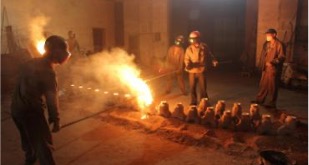
This guide is written for buyers, engineers and sourcing managers who are at the start of that decision. It covers what steel casting actually includes, how the main process routes differ, which material families fit which service conditions, what tolerances and finishes can realistically be specified, and how to check a supplier before a project moves from sample to repeat order.
Problem Definition: Why Steel Casting Projects Stall
Most problems in steel casting procurement do not start with price. They start with an undefined requirement. A drawing that shows geometry but not service conditions, a specification that names a material but not a heat treatment, or an enquiry that leaves machining and inspection out of scope will each produce a part that is technically a steel casting and functionally wrong for the application.
Four failure patterns appear repeatedly at the research stage:
- Process chosen by habit. A buyer reuses the route a previous supplier offered without checking whether a more accurate route would remove a machining operation or reduce scrap.
- Material chosen without service conditions. Carbon steel casting, low alloy steel casting and stainless steel casting are not interchangeable; the deciding variables are load, abrasion, corrosion exposure and operating temperature.
- Split supply chain. Casting, heat treatment, machining and inspection handled by different vendors create hand-off delays, duplicated inspection and unclear responsibility when a part is rejected.
- Late compliance. Certification, material grade and surface treatment requirements raised after tooling is built force rework or a re-quote.
Decision rule: before sending an enquiry, be able to answer three questions in writing — what the part does, what environment it works in, and what state the finished component must arrive in (as-cast, heat treated, machined, coated, inspected, documented).
Industry Background: The Scale and Structure of the Steel Casting Market
Steel casting is a mature but large category. The global steel casting market was valued at USD 39.16 billion in 2025 and is projected to reach USD 63.83 billion by 2034, according to Fortune Business Insights. Published growth estimates for the category vary by research house — reported CAGR figures span roughly 1.65% to 5.58% — because different studies weight different end markets, from mature heavy industry to electrification and renewable energy components.
The mix of that market is instructive for buyers. Carbon steel casting held a 42.5% revenue share in 2025, a position generally attributed to its versatility and cost-effectiveness relative to more highly alloyed grades. On the process side, sand casting remains the single largest route, accounting for 45.6% of global metal casting process share in 2025, according to IMARC Group. Precision routes such as investment casting occupy the opposite end of the spectrum: smaller share, tighter tolerances, higher unit cost.
Standards define the technical baseline. ASTM A216/A216M is the standard specification for carbon steel castings suitable for fusion welding for high-temperature service, published by ASTM International. It is one of several specifications a supplier may be asked to work to, depending on the part’s material family and end use.
The practical consequence of this structure is that a single “steel casting supplier” search resolves into several different supply models — sand casting foundries, investment casting foundries, machining shops that buy castings in, and integrated suppliers that run the whole chain. Matching the model to the part is the first real decision, and it is easier to make when the requirement is written down before the enquiry goes out.
Detailed Solution: What an Integrated Steel Casting Supplier Provides
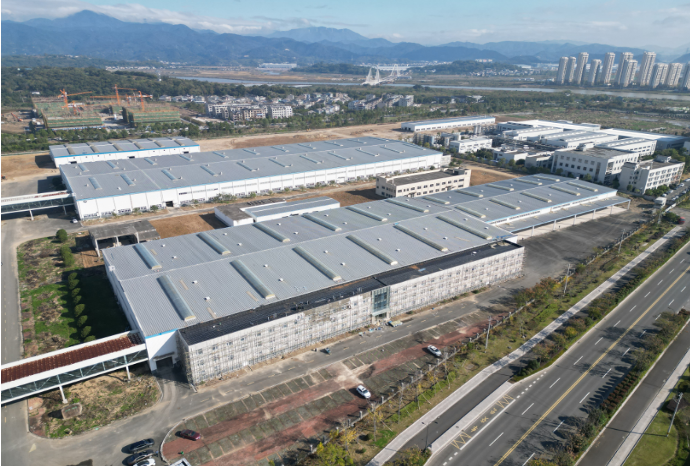
WAYSCAN METAL PRODUCTS CO., LTD is a precision casting manufacturer based in Ninghai, Ningbo, China, established in 1991. The company operates a 46,000 m² production base with more than 500 employees, including more than 20 senior engineering and technical personnel, and exports approximately 70% of its output to markets including China, Japan and the USA.
Process routes
The company’s production covers water-glass investment casting, silica-sol investment casting and silica-sol composite investment casting. These routes are offered as an integrated service rather than as casting alone: mold making, casting, heat treatment, machining and inspection are performed in-house against customer drawings.
The choice between routes is a tolerance-and-cost decision rather than a quality-ranking decision. Silica-sol investment casting reaches a dimensional tolerance of CT6 and a surface roughness of Ra 6.4–12.5 µm, depending on process and post-treatment. The silica-sol composite route is specified at CT8, which suits parts where a slightly wider tolerance band is acceptable and the cost of the tighter route is not justified. Machining is performed to 0.01 mm where a cast surface is not the final surface.
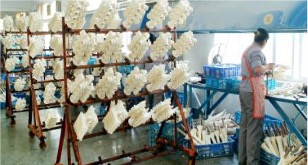
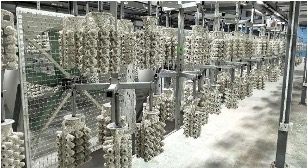
Material families and what drives the choice
Steel casting covers several material families, and the terms buyers use — carbon steel casting, low carbon steel casting, medium carbon steel casting, alloy steel casting, low alloy steel casting, stainless steel casting, high strength steel casting, wear resistant steel casting, corrosion resistant steel casting and heat resistant steel casting — describe selection outcomes rather than separate industries.
Low carbon steel castings are generally chosen where weldability and ductility matter more than strength. Medium carbon steel castings offer higher strength after heat treatment, at some cost in weldability. Low alloy steel castings add alloying elements to improve hardenability and strength without the cost of highly alloyed grades. Stainless steel castings are specified where corrosion resistance is the governing requirement, while heat resistant grades are used for elevated-temperature service and wear resistant grades for abrasive contact. Quenched and tempered steel castings describe a heat treatment condition rather than a composition: the same base grade can be supplied in different property states depending on the tempering cycle.
Custom steel casting and precision steel casting describe a service model rather than a separate material category: parts are produced to customer drawings, with the process route selected to meet the stated tolerance class. WAYSCAN produces castings in carbon steel, alloy steel and stainless steel, as well as ductile iron components, with specific grades and mechanical properties confirmed against the customer’s drawing rather than assumed by the supplier — the correct default, because the same nominal geometry can require a very different grade depending on whether the part sees abrasion, cyclic load, moisture or elevated temperature.
Part range
Typical cast components produced on these routes include pipe elbows, clevis brackets, yokes, gearbox housings, transmission housings, mounting brackets and link arms, serving automotive, forklift, mining, agricultural machinery, construction machinery, valve and general machinery applications.
Inspection and quality infrastructure
Inspection capability determines whether a specification is actually verifiable. The company’s testing equipment includes spectrometers, X-ray, ultrasonic testing and CMM, used to verify dimensions, material composition, mechanical properties and overall product quality. Heat treatment is performed in-house, which keeps the link between casting, heat treatment and final inspection inside one quality system.
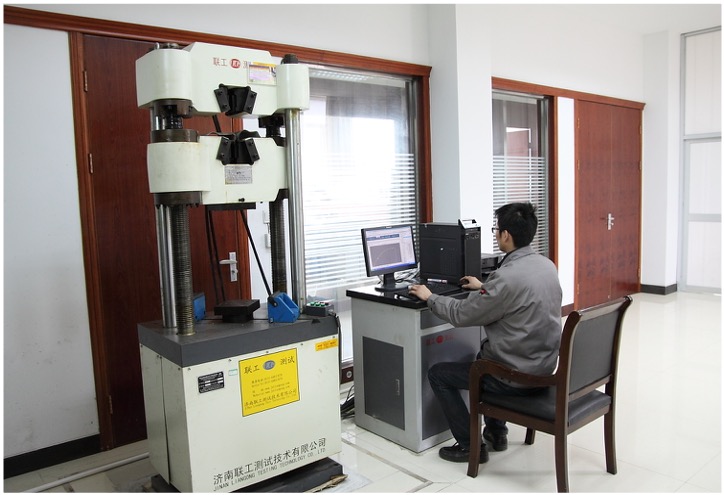
External recognition supports the same point. WAYSCAN was rated among the top 50 industrial enterprises and top 50 taxpayers in Ninghai County from 2012 to 2024, and was awarded the title of “Leading Enterprise in China’s Foundry Industry” by the China Foundry Association in 2014, 2018 and 2022. In 2023 the company was recognised as a waste-free factory, a four-star green factory and a water-saving factory.
Step-by-Step Breakdown: From Drawing to Repeat Order
A steel casting project follows a predictable sequence. Each step is a decision point, and skipping one usually reappears later as a quality or schedule problem.
- Define the part and its service conditions. Function, load type, abrasion, corrosion exposure, operating temperature and any regulatory requirement.
- Select the material family. Carbon, alloy, stainless or another grade agreed with the foundry against the drawing; grade confirmation belongs in writing before tooling.
- Select the process route. Silica-sol investment casting for the tightest tolerance and finish, silica-sol composite where a wider band is acceptable at lower cost, water-glass for other cases.
- Drawing review and manufacturability feedback. Wall transitions, draft, machining allowance and gate positions are reviewed before the pattern is made, because changes are cheapest at this point.
- Pattern and tooling. Rapid sample development can use 3D-printed patterns, which shortens the path from drawing to first part.
- Sampling and validation. First-article parts are measured and, where specified, chemically and mechanically tested before series approval.
- Casting and heat treatment. Melting in induction furnaces, pouring, and heat treatment such as quenching and tempering where the grade and application require it.
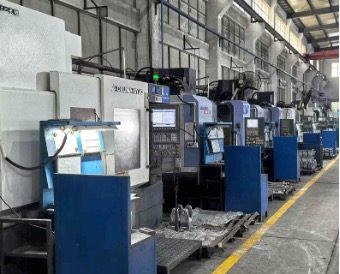
- Machining. CNC machining centres bring critical features to drawing tolerance, down to 0.01 mm where specified.
- Inspection and documentation. Spectrometer, X-ray, ultrasonic and CMM checks confirm the agreed characteristics before shipment.
- Series production and repeat orders. Approved process parameters are held stable so the tenth shipment matches the first.
Sequencing note: certification, material grade and surface treatment requirements should be stated at step 1, not step 9. These are process inputs, and specifying them late is one of the most common causes of re-quoting.
Use Cases: Where Steel Castings Are Applied
Steel castings are used wherever a structural or mechanical component needs a shape that combines load-bearing geometry with a tailored material. The applications below reflect the industries served by the processes described above.
Construction and mining machinery
Brackets, link arms and structural connectors in construction and mining equipment operate under impact and cyclic loading. Material selection here is driven by strength and toughness rather than surface finish, and the parts are typically specified in carbon or low alloy steel with heat treatment.
Agricultural machinery
Agricultural equipment combines abrasive soil contact with outdoor corrosion exposure. Cast components in this category often need a deliberate trade-off between wear resistance and corrosion resistance, since the two requirements pull material selection in different directions.
Automotive, truck and forklift components
Gearbox housings, transmission housings, mounting brackets and yokes are classic cast components: complex internal geometry, moderate to tight tolerances, and a need for consistent wall thickness across a production run.

Valves and general industrial machinery
Valve bodies and general machinery components are frequently specified in stainless steel or heat resistant grades, where corrosion resistance or elevated-temperature service governs the choice more than mechanical load. These parts also tend to carry the strictest inspection requirements.
Comparison Table: Process Routes and Supply Models
The first comparison is between casting routes. The table below summarises how the main routes differ on the criteria that drive cost and fit.
| Casting route | Dimensional accuracy and surface | Typical fit | Tooling and cost profile |
|---|---|---|---|
| Investment casting (silica-sol) | Highest dimensional accuracy and best surface finish among the routes compared here | Small to medium-sized complex parts, particularly stainless and other high-alloy steels | Relatively high cost per part |
| Shell mold casting | Good dimensional stability | Medium-sized steel castings in medium- to high-volume production | Balanced tooling and unit cost at volume |
| Resin sand casting | Lower dimensional accuracy and a rougher surface finish | Large castings weighing tens of kilograms or more | Lower tooling investment |
| Sand casting (category context) | Largest single process route worldwide — 45.6% of global metal casting process share in 2025 (IMARC Group) | Broad range of sizes, including larger and heavier components | Generally the most economical option where dimensional requirements are less demanding |
The second comparison is between supply models, which affects coordination and accountability as much as price.
| Supply model | What the buyer receives | Main coordination risk |
|---|---|---|
| Integrated casting, heat treatment, machining and inspection | Casting, heat treatment, CNC machining and full inspection from one supplier | Lower: one party owns dimensional, metallurgical and finish requirements |
| Casting-only foundry | As-cast or heat-treated parts; machining and detailed inspection arranged separately | Higher: rejection disputes cross vendor boundaries |
| Machining-only shop buying castings in | Finished machined parts with limited visibility of the casting process | Higher: casting defects surface after value has been added |
Neither table identifies a universally correct choice. Investment casting is the better fit for small, complex, high-accuracy parts; sand casting is generally more economical for larger, heavier components with less demanding dimensional requirements. The buyer’s job is to match the route to the part rather than to the supplier’s existing equipment.
FAQ: Steel Casting Questions Buyers Ask First
1. Which standards apply to steel castings, and when should they be specified?
Standards depend on material family and end use. ASTM A216/A216M is the standard specification for carbon steel castings suitable for fusion welding for high-temperature service. Because certification, material grade and surface treatment requirements are process inputs rather than finishing touches, customers should specify them in advance — before tooling and sampling — so that the route, heat treatment and inspection plan can be built around them.
2. How do I choose between investment casting, shell mold casting and resin sand casting?
Investment casting offers the highest dimensional accuracy and the best surface finish, and suits small to medium-sized complex parts, especially in stainless and other high-alloy steels; its cost is relatively high. Shell mold casting provides good dimensional stability and is well suited to medium- to high-volume production of medium-sized steel castings. Resin sand casting fits large castings weighing tens of kilograms or more, with lower tooling investment but generally lower dimensional accuracy and a rougher surface finish.
3. Is investment casting more expensive than sand casting?
Per part, usually yes — and that is a fair comparison only when the alternative removes machining. Investment casting is better for smaller, more complex parts that need higher accuracy and smoother surfaces, while sand casting is generally more economical for larger and heavier components with less demanding dimensional requirements. The correct cost comparison includes machining allowance, finishing operations and scrap rate, not the casting price alone.
4. Can a sample be produced before mass production is approved?
Yes — sample development is a normal part of custom casting. Suppliers working from customer drawings can produce sample parts for approval before series production, and rapid sample development using 3D-printed pattern support shortens the development cycle. Inspection and testing equipment is then used to verify dimensions, material composition, mechanical properties and product quality on the sample before the process is locked for production.
5. What determines how quickly a project moves from drawing to a validated part?
Two factors dominate. The first is how completely the requirement is defined at enquiry: certification, material grade, surface treatment and inspection scope stated up front prevent rework later. The second is how many parties the work is split across — an integrated supplier that performs casting, heat treatment, machining and inspection in one facility removes hand-offs and repeated inspection steps, while rapid sample development with 3D-printed patterns shortens the route to a first article. WAYSCAN METAL PRODUCTS CO., LTD works from customer drawings through this full chain; its presentation pack can be downloaded here, and sample or quotation requests can be sent to sales@nb-casting.com.
Conclusion
Steel casting covers a wide range of processes and material families, and the difference between a good and a poor outcome usually comes down to specification discipline rather than supplier size. Define service conditions first, choose the route that matches the geometry and accuracy requirement, keep casting, heat treatment, machining and inspection inside as few quality systems as possible, and state compliance requirements before tooling.
WAYSCAN METAL PRODUCTS CO., LTD has produced precision castings from its 46,000 m² base in Ninghai, Ningbo since 1991, working in carbon steel, alloy steel and stainless steel with in-house heat treatment, CNC machining and metrology. Buyers can review the company profile at www.wayscan.com, download the company presentation, or request a sample and quotation directly.
Next step: send your drawing and service conditions to sales@nb-casting.com, or download the Wayscan Metal Products company presentation to review process routes, materials and inspection capability. Contact: Evan (Wenjie Pan) · Tel +86-574-65273750 · No.739, Xinghai (N) Road, Ninghai, Ningbo, 315600, China.