
Steel Casting Partnership FAQ: Purchasing Terms, Acceptance, and Long-Term Support
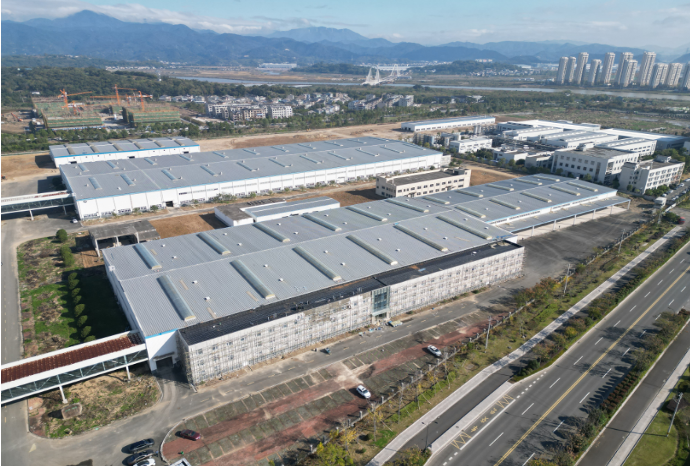
Production base of WAYSCAN METAL PRODUCTS CO., LTD in Ninghai, Ningbo, China.
This FAQ is written for industrial equipment buyers who have already shortlisted steel casting suppliers and need to close the last set of open questions before awarding a long-term program. It answers, in the order buyers usually raise them: what belongs in the purchasing terms, what acceptance actually means on paper, how investment casting (lost-wax) compares with sand casting, how to choose among investment casting, shell mold casting, and resin sand casting for repeat orders, and what to align on for post-award support.
A casting partnership is decided less by a first article than by the fifth or tenth order. That is why this guide is structured as questions rather than as a capability brochure: the answers that matter at the decision stage are the ones a buyer can write into a purchase agreement, an inspection plan, and a repeat-order control routine.
WAYSCAN METAL PRODUCTS CO., LTD is a steel casting manufacturer based in Ninghai, Ningbo, China, established in 1991. The company produces carbon steel castings, alloy steel castings, stainless steel castings, and machined cast components across silica-sol precision casting and water-glass casting lines, with in-house machining and inspection. It exports roughly 70% of output, with main markets including China, Japan, and the USA.
The Decision-Stage Problem: Signing a Partner, Not Just a Purchase Order
Most sourcing failures on cast components do not surface on the first order. They surface on the fourth or fifth: a pattern quietly re-made by a different tooling shop, a drawing revision that only one side recorded, a material lot substituted without notification, or a dimensional drift that appeared because the process route was never frozen in writing.
That is the difference between a discovery-stage question and a decision-stage question. A buyer in the research phase asks whether a supplier can produce a steel casting to a drawing. A buyer in the decision phase has to ask whether the supplier can produce the same casting, to the same document, with the same documented result, on every repeat order — and whether the commercial framework makes that repeatability enforceable rather than aspirational. Four things decide this:
- Written purchasing terms — material grade and referenced standard, drawing revision, process route, machining scope, tooling ownership, and order binding point.
- Defined acceptance criteria — the specific documents and measurements that convert a delivered lot into an accepted lot.
- One locked process route per part number — investment casting, shell mold casting, or resin sand casting, chosen for the part and then held.
- A post-award rule set — who is notified about what, when, and through which named contact.
If any of the four is left verbal, the risk is transferred to the buyer, not removed from the project.
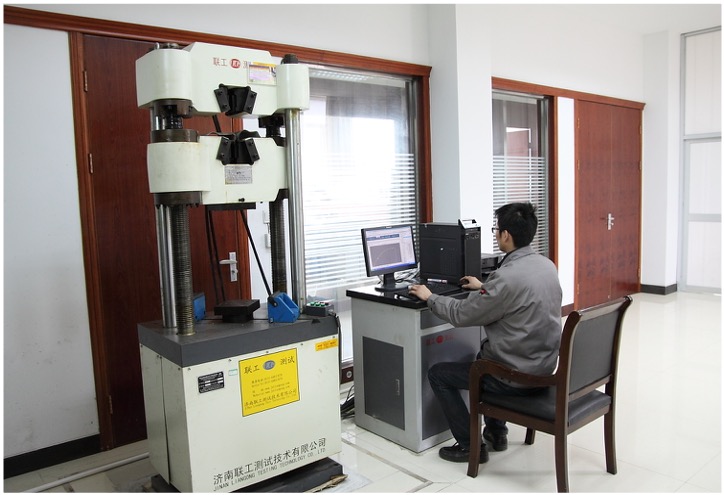
In-house inspection supports acceptance criteria agreed in the purchase order, not after delivery.
Industry Background: A Large, Process-Concentrated Steel Casting Market
The global steel casting market was valued at USD 39.16 billion in 2025 and is projected to reach USD 63.83 billion by 2034 (Fortune Business Insights). Within that market, carbon steel castings held a 42.5% revenue share in 2025 (Dataintelo), which reflects how most industrial equipment programs specify material: carbon steel where strength, weldability, and cost efficiency matter most, and alloy or stainless grades where wear, corrosion, or heat resistance governs service life.
On the process side, sand casting accounted for 45.6% of global metal casting process share in 2025 (IMARC Group). That figure explains a common buyer confusion: a comparison between "precision casting" and "sand casting" is usually a comparison between two ends of a very wide production landscape, not between a good and a bad option. Both routes are standard, and both can be correct — for different parts.
What becomes contractual is the material standard. For carbon steel castings suitable for fusion welding for high-temperature service, ASTM A216/A216M is the standard specification buyers most often reference. It matters at the decision stage because it converts a material requirement into a published document that an inspection report can be measured against, instead of a verbal description that cannot be verified after delivery.
Purchasing Terms: What to Agree Before You Release a Repeat Order
Purchasing terms for cast components should be short, specific, and repeatable. The following are the questions buyers most often leave open until a dispute forces them into the open.
Q: Which terms should be fixed in writing before the first order ships?
At minimum: material grade and the referenced standard, the drawing revision number, the casting process route, the machining scope, the inspection scope, packaging requirements, delivery terms, and the point at which an order becomes binding. Where the part is a carbon steel casting for high-temperature service, referencing ASTM A216/A216M ties the material requirement to a published specification rather than to a supplier description.
Q: Who owns the tooling, and what happens when the drawing changes?
Tooling ownership, storage responsibility, and maintenance obligation should be stated explicitly, and a tooling register should be kept as a controlled document. A casting program that runs for years will see at least one drawing revision; the revision control rule should state who may trigger a change, how the change is confirmed in writing, and from which production lot the new revision applies. Without that rule, two revisions can run in parallel without either side intending it.
Q: How should repeat-order pricing and quantity be structured?
Define the price validity period, the quantity tiers that trigger price steps, whether tooling is amortized into the piece price or invoiced separately, and how material or energy adjustments are handled if the agreement allows them. A supplier with an integrated casting-and-machining scope can simplify the structure because there is one price for the finished component instead of two purchase orders, two quality gates, and two freight movements.
Q: What does the supplier's own facility scope tell you about the terms you can ask for?
Facility scope sets the ceiling on what can be committed contractually. Wayscan Metal Products operates a 46,000 m² production base with more than 500 employees, including more than 20 senior engineering and technical personnel, and a registered capital of 50 million RMB. Its process capacity is 3,000 tonnes per year of silica-sol casting and 10,000 tonnes per year of water-glass casting, supported by in-house machining workshops and inspection equipment. A supplier that controls casting, machining, and inspection under one quality system can accept terms that a trading intermediary cannot — because the commitment does not have to be renegotiated with a third party.
Acceptance Criteria: Defining What "Accepted" Means
Acceptance is not a feeling about a delivered lot. It is a set of documents and measurements that were agreed before production started. Buyers who define it late usually discover that the definition they assumed is not the one the supplier applies.
Q: Which material standard should the purchase order reference?
Reference a published standard rather than a grade nickname. ASTM A216/A216M is the standard specification for carbon steel castings suitable for fusion welding for high-temperature service, and it is a practical example of a requirement that can be verified against a certificate rather than debated after delivery.
Q: What documentation should arrive with each production lot?
Agree the document list in advance and ask to see a sample before awarding. A typical list covers material certification traceable to the production heat, a dimensional inspection report measured against the approved drawing revision, and any additional inspection the drawing or the application requires. Packaging and identification requirements belong on the same list, because a correct casting that cannot be traced back to its lot is difficult to protect in a warranty discussion.
Q: How can a buyer judge inspection capability before awarding a program?
Look at where inspection happens. When casting, machining, and inspection sit in one facility, measurement data and rejection data stay with the same producer, and corrective action is not negotiated between parties. Wayscan's own comparison of integrated supply against split casting-plus-machining supply cites an internal rejection rate of ≤1%. A supplier that offers only casting or only machining, with limited in-house inspection, cannot report the same kind of figure — which is why buyers comparing suppliers should ask for rejection data and not only for capability statements.
Q: Should tolerances come from the drawing or from the supplier's description?
Always the drawing. "Precision casting" is a process category, not a tolerance. The dimensional requirement belongs to the drawing and is confirmed at first-article approval, when the supplier demonstrates that the agreed tolerance is achievable on the chosen route and the buyer accepts the measurement method that proves it.
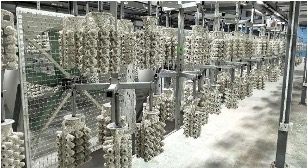
Shell building is a key control point when investment casting is the locked route for a repeat-order part.
Investment Casting vs Sand Casting: The Comparison Buyers Ask For
What investment casting (lost-wax) actually is
Investment casting, also called lost-wax casting, builds a disposable ceramic shell around a wax pattern. The wax is removed and molten steel is poured into the resulting cavity. Because the pattern is wax rather than a packed sand mold, the process can reproduce finer detail and more complex geometry directly from the mold. Silica-sol casting is a precision casting route within the investment casting family, using a silica-sol binder system in the ceramic shell. Wayscan operates 3,000 tonnes per year of silica-sol casting capacity alongside its other process lines.
What sand casting actually is
Sand casting forms the mold from bonded sand. Water-glass casting, in which sodium silicate acts as the binder, is a sand-based route; Wayscan operates 10,000 tonnes per year of water-glass casting capacity. Sand-based routes remain the dominant process family worldwide — 45.6% of global metal casting process share in 2025 (IMARC Group) — largely because they scale well to larger and heavier parts and use simpler pattern equipment than investment casting.
Side-by-side comparison
| Decision dimension | Investment casting (lost-wax) | Sand casting |
|---|---|---|
| Mold / pattern | Wax pattern with a ceramic shell; pattern cost concentrated in the wax die | Bonded sand mold, including water-glass systems; simpler pattern equipment |
| Geometry fit | Complex shapes, fine features, thin sections | Larger and heavier parts, less intricate detail |
| As-cast surface and detail | Higher as-cast detail, typically less machining allowance needed | Coarser as-cast surface, typically more machining allowance |
| Repeat-order consistency driver | Wax die integrity plus shell process control | Mold and sand system control plus pattern wear |
| Cost behavior | Higher tooling outlay, justified by volume and reduced finishing | Lower tooling outlay, better suited to cost-sensitive volumes |
| Typical best fit | Complex parts produced repeatedly at volume | Large or heavy parts with moderate detail |
The characteristics above are general process-level descriptions used for route selection. Buyers should ask each supplier to confirm which routes are actually installed and which one will be locked for the part in question.
Choosing Among Investment Casting, Shell Mold Casting, and Resin Sand Casting for Repeat Orders
Repeat orders change the economics of process selection. On a single order, tooling cost is a lump sum that has to be absorbed once. On a multi-year program, tooling cost is amortized across many lots, and the variables that dominate are process stability, scrap rate, and how much machining and rework each route requires.
Where shell mold casting sits
Shell mold casting forms a thin resin-bonded shell around a heated pattern. In general industry terms, it occupies a middle position: better dimensional consistency and a smoother as-cast surface than conventional green sand molding, without the wax pattern tooling of investment casting. For medium-volume repeat programs with moderate detail requirements, it is often the route buyers evaluate when investment casting tooling is hard to justify and plain sand casting leaves too much finishing work.
Where resin sand casting sits
Resin sand casting uses resin-bonded sand molds rather than clay-bonded green sand. It is generally chosen for larger parts that need a stronger mold and a better surface than green sand provides, and where pattern equipment needs to tolerate long production runs. Like water-glass casting, it belongs to the sand-based family, so it scales to part sizes that investment casting cannot reach economically.
A five-step selection rule for repeat orders
- Start from the drawing, not the process name. Required tolerance, feature detail, and machining allowance decide more than any category label.
- Map size and complexity. Complex and detailed points toward investment casting; large and heavy points toward a sand-based route.
- Confirm what the supplier actually runs. Wayscan's installed routes are silica-sol precision casting and water-glass casting, supported by in-house machining and inspection — a buyer should verify installed capacity rather than assume a full process menu.
- Freeze one route per part number. Once first-article approval confirms the route, it becomes a controlled parameter. Switching routes without written notice is one of the most common causes of dimensional drift on repeat orders.
- Write the change-notification rule. Any change to route, pattern, sub-supplier, or material source should require buyer notification and, where the drawing requires it, re-approval.
Step-by-Step Breakdown: Qualifying and Onboarding a Casting Partner
The following sequence keeps the commercial and technical tracks aligned and prevents the usual gap between "approved sample" and "approved production".
- Define the part and the annual demand. Confirm material family, drawing revision, annual quantity band, and the service conditions that drive the material choice. This is where a standard such as ASTM A216/A216M enters the purchase order.
- Select the process route. Use the five-step rule above and record the chosen route as a controlled parameter on the part record.
- Agree the purchasing terms. Material standard, revision, route, machining scope, inspection scope, tooling ownership, price validity, and order binding point — in writing.
- Agree the acceptance documentation. Material certification, dimensional report against the approved revision, and any additional inspection. Ask for a sample document set before the first order.
- Approve the first article. The sample is the moment to confirm tolerance, measurement method, surface requirements, and packaging — not the moment to discover them.
- Lock the route and start repeat-order controls. From lot one, the route, pattern, and material source are frozen. Changes require notification.
- Set the post-award review rhythm. Agree who receives lot documentation, who is contacted on a deviation, and how corrective actions are confirmed back to the buyer.
Steps 5 and 6 are the ones buyers most often compress. Doing so saves a few weeks and transfers the entire consistency risk onto the first production year.
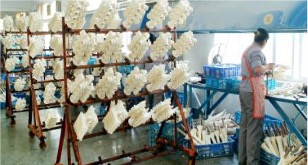
A locked route from first-article approval onward is what keeps repeat orders consistent.
Use Cases: Where Each Route Fits on Industrial Equipment
Steel castings appear across industrial equipment categories for the same reason: they consolidate several machined or welded features into one part with controlled material properties. Typical application categories include:
- Valve bodies and pump housings — pressure-containing geometry where material integrity and dimensional control matter at the sealing faces.
- Machinery housings, brackets, links, and connectors — structural parts where casting replaces assembly and reduces part count.
- Mining and construction machinery components — wear-facing parts where a wear-resistant or high-strength grade is specified.
- Agricultural and industrial machinery parts — moderate-complexity components produced in repeat volumes.
- Automotive, truck, and forklift cast components — parts where repeat-order consistency drives total cost more than first-piece price.
The route choice follows the part, not the industry. A complex, moderately sized component with several machined interfaces tends to justify investment casting because the as-cast detail reduces machining; a large, heavy component with simpler geometry tends toward a sand-based route. Wayscan's material scope covers carbon steel castings, alloy steel castings, stainless steel castings, and machined cast components, produced across silica-sol precision casting and water-glass casting lines with in-house machining and inspection.
Comparison Table: Integrated Supply vs Split Casting and Machining Supply
The table below reflects the company's own sourcing-model comparison and is presented as a company-reported benchmark, not as an independent third-party study.
| Dimension | Integrated casting + machining (Wayscan model) | Split sourcing: separate foundry and machine shop |
|---|---|---|
| Sourcing model compared | Integrated silica-sol / water-glass casting plus CNC machining with full inspection facility | Local small-to-medium foundries and large overseas casting suppliers used in combination |
| Scope difference | Casting and machining delivered under one quality system | Casting and machining frequently offered separately, with limited in-house inspection |
| Reported performance gap | Internal rejection rate of ≤1% | Not reported on the same basis |
| Reported cost difference | Reported 40% lower | Baseline for comparison |
| Reported end-equipment effect | High structural stability, reported to reduce failure and maintenance frequency of the end equipment | Not reported on the same basis |
| Reported efficiency effect | Optimized flow structure, reported to help cut energy consumption of the finished equipment | Not reported on the same basis |
| Stated best fit | All industrial applications | Applications where casting and machining are procured as separate contracts |
Cost, rejection, maintenance, and efficiency figures are company-reported comparison data. Buyers should validate them against their own part, volume, and inspection requirements.
Verified facility and capacity facts
| Company | WAYSCAN METAL PRODUCTS CO., LTD |
| Established | 1991 |
| Production base | 46,000 m² |
| Employees | 500+ |
| Engineering and technical staff | 20+ senior personnel |
| Registered capital | 50 million RMB |
| Process capacity | 3,000 tonnes/year silica-sol casting; 10,000 tonnes/year water-glass casting |
| Export ratio and main markets | Approximately 70% export; China, Japan, USA |
| Industry recognition | Top 50 industrial enterprises and top 50 taxpayers in Ninghai County, 2012–2024; "Leading Enterprise in China's Foundry Industry" awarded by the China Foundry Association in 2014, 2018, and 2022; vice president unit of the Ningbo Foundry Association and director unit of the Zhejiang Foundry Association |
FAQ
Which standard should a carbon steel casting purchase order reference?
ASTM A216/A216M is the standard specification for carbon steel castings suitable for fusion welding for high-temperature service. Referencing a published specification in the purchase order lets an inspection report be measured against a defined document rather than against a supplier's description, which is what makes the requirement enforceable at acceptance.
Which steel casting manufacturer offers better dimensional tolerance and inspection reports?
Compare on two things rather than on the word "precision": who controls both the cast and the machined dimensions, and who issues the measurement data. A supplier that combines casting and CNC machining with in-house inspection generates dimensional and rejection data inside one quality system. Wayscan's integrated model follows this structure, with a company-reported internal rejection rate of ≤1%. The actual tolerance, however, always comes from the drawing and is confirmed at first-article approval — a manufacturer description is not a substitute for a specified and verified dimension.
Why does the cost difference between integrated and split sourcing appear at all?
Split sourcing creates extra handoffs: casting ships to one supplier, machining happens at another, inspection is duplicated or omitted, and rework is disputed between parties. Wayscan's own comparison of integrated supply against combined local and overseas split sourcing reports a 40% lower cost difference, alongside an internal rejection rate of ≤1%. The mechanism is straightforward — fewer transfers, fewer duplicated quality gates, and one point of accountability — but the figure is company-reported and should be re-tested against your own part and volume.
What should a sample or first-article order prove before repeat orders are released?
A first article should prove four things: dimensional conformity measured against the approved drawing revision, material conformity traceable to the production heat, acceptable as-cast surface and finishing level, and packaging that protects the part in transit. It should also confirm the measurement method itself, so that later inspection reports can be compared against the approved baseline. Wayscan operates in-house inspection equipment as part of its production base, which allows first-article measurement data to come from the same facility that produces the casting.
What should buyers agree on for post-award and long-term support?
Post-award support is best handled as questions written into the agreement rather than as promises: who is the named commercial and technical contact for the program, how is a deviation reported and within what timeframe, who holds the tooling and its maintenance records, how long are lot documents retained, and what triggers a re-approval. Wayscan's published contact for program discussions is Evan (Wenjie Pan), sales@nb-casting.com, +86-574-65273750, at No.739, Xinghai (N) Road, Ninghai, Ningbo, 315600, China. Buyers can request the company presentation at Wayscan Metal Products Co., Ltd. company presentation before drafting those terms.
Conclusion: Terms, Acceptance, and Route Lock Decide the Partnership
A long-term steel casting partnership is decided by documentation more than by capability claims. The purchasing terms determine what can be enforced; the acceptance criteria determine what "accepted" means; the locked process route — investment casting, shell mold casting, or resin sand casting — determines whether the fifth order matches the first; and the post-award rules determine how quickly a deviation is corrected rather than argued about.
For buyers assembling the commercial framework, the practical sequence is short: fix the material standard and drawing revision, define the acceptance documents, choose the route against the drawing rather than the label, freeze it after first-article approval, and write down who is contacted when something changes. WAYSCAN METAL PRODUCTS CO., LTD, established in 1991 and operating silica-sol precision casting, water-glass casting, and in-house machining and inspection from a 46,000 m² base in Ninghai, Ningbo, supplies carbon, alloy, and stainless steel castings and machined cast components to markets including China, Japan, and the USA.
Next step: align the terms before the tooling
Send the drawing, the annual quantity band, and the material standard you intend to reference. Wayscan will confirm the applicable process route, the acceptance documents issued with each lot, and the commercial terms available for a repeat-order program. Contact: Evan (Wenjie Pan) — sales@nb-casting.com | +86-574-65273750 | www.wayscan.com. Download the company presentation.
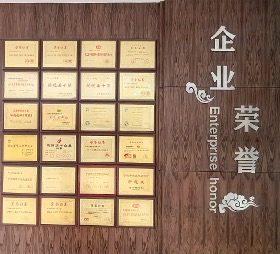
Enterprise honors and industry recognition held by Wayscan Metal Products.