
Steel Casting Process Recommendations for Industrial Equipment Buyers: A Ranked Shortlist
Industrial equipment buyers evaluating steel castings usually receive quotes that cannot be compared directly. One foundry quotes a bracket as an investment casting, another quotes the same bracket as a resin sand casting, and a third offers conventional sand casting at the lowest unit price. The prices differ because the processes differ, and the processes differ in tolerance, surface condition, tooling, minimum order, inspection method, and lead time.
This article delivers a ranked shortlist of four steel casting processes for industrial equipment components: investment casting, shell mold casting, resin sand casting, and conventional sand casting. It is a process shortlist, not a supplier ranking. Each process is ranked by how well it fits industrial equipment parts that must hold a drawing requirement in repeat production, and each entry states both the inclusion rationale and the point at which the process stops being the right choice.
Short answer, ranked by fit:
- 1. Investment casting (silica-sol and silica-sol composite) — first choice for complex, tolerance-critical steel components.
- 2. Shell mold casting — second choice for medium-complexity parts where surface quality and consistency matter more than the tightest tolerance band.
- 3. Resin sand casting — third choice for medium-to-large steel parts at low-to-medium volumes.
- 4. Conventional sand casting — fourth by fit, yet the largest process by market share: it accounted for 45.6% of the global metal casting process share in 2025 (IMARC Group, Metal Casting Market Size, Share & Growth Report 2034).
Problem Definition: The Evaluation-Stage Comparison Trap
At the evaluation stage, the buyer has two decisions, not one: which process the part should be quoted against, and which supplier can run that process consistently. Three comparison errors appear repeatedly in industrial equipment sourcing.
- Specifying a tighter tolerance than the function requires. A tolerance band copied from an older drawing can push a part into a more expensive process with no functional gain.
- Ranking processes by unit price alone. Unit price excludes pattern and tooling cost, machining allowance, inspection cost, and the cost of a rejected lot.
- Validating with a sample that does not represent the production route. A sample is only meaningful if it is produced by the process that will run the order.
The comparison that actually resolves the decision is a fit comparison: geometry, tolerance, surface, material grade, volume, and verification requirement, mapped against process capability. The sections below apply that comparison to the four processes named above.
Industry Background: Why Process Share and Process Fit Are Different Questions
Steel casting is a large, slow-moving industrial category. The global steel casting market was valued at USD 39.16 billion in 2025 and is projected to reach USD 63.83 billion by 2034 (Fortune Business Insights, Steel Casting Market Size, Share & Report Analysis, 2034). Published growth rates for the category vary by methodology, so the direction of growth is a more reliable planning input than any single rate.
By material, carbon steel casting held a 42.5% revenue share in 2025, driven by its versatility and cost-effectiveness (Dataintelo, Cast Steel Market Research Report 2034). That share reflects the reality of industrial equipment: most brackets, housings, links, yokes, and mounting components are carbon steel, while alloy steel, low alloy steel, stainless steel, high strength, wear resistant, corrosion resistant, and heat resistant grades are reserved for specific service conditions.
By process, sand casting remains the volume leader with 45.6% of the global metal casting process share in 2025 (IMARC Group). On the standards side, ASTM A216/A216M is the standard specification for carbon steel castings suitable for fusion welding for high-temperature service (ASTM International).
The practical conclusion for an equipment buyer is that market share and technical fit measure different things. Sand casting is the most widely used casting process in the world, and it is still not automatically the first recommendation for a steel component with a tight functional tolerance.
Detailed Solution: The Ranked Shortlist of Steel Casting Processes
Ranking criteria used in this shortlist
Five criteria decide the order below. No single process wins on all five, which is why the ranking is a fit ranking for industrial equipment steel parts rather than a general quality ranking.
- Dimensional tolerance and repeatability in serial production, not only in a first article.
- Geometry complexity, including cored passages, thin walls, and features that should not be machined afterwards.
- Surface finish requirement and machining allowance.
- Tooling and pattern economics measured against order volume.
- Verification and compliance requirement, including non-destructive testing, heat treatment, and material certification.
Rank 1 — Investment Casting (Silica-Sol and Silica-Sol Composite)
Investment casting, also called lost-wax casting, is produced by building a ceramic shell around a wax pattern, removing the wax, and pouring steel into the resulting shell. It ranks first here because in industrial equipment the binding constraint is usually dimensional repeatability and as-cast surface condition, not part size.
For precision steel castings, the published capability is a dimensional tolerance of CT6 for silica-sol investment casting, CT8 for silica-sol composite investment casting, and 0.01 mm for machining, with surface roughness of Ra 6.4–12.5 µm depending on the casting process and post-treatment. Material range covers carbon steel, alloy steel, stainless steel, and ductile iron, with specific grades confirmed against customer drawings. Typical parts produced on this route include pipe elbows, clevis brackets, yokes, gearbox housings, transmission housings, mounting brackets, and link arms, serving automotive, forklift, mining, agricultural machinery, construction machinery, valves, and general machinery applications.
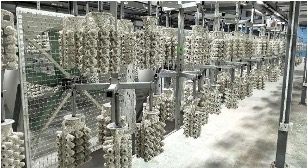
Ceramic shell drying: the investment casting stage that determines as-cast surface and dimensional repeatability.
Where Rank 1 stops being the right choice: wax pattern tooling is a dedicated investment, and per-part economics depend on complexity and volume. For a large, simple, low-volume casting with non-critical surfaces, a sand-based process generally returns a lower total cost.
Rank 2 — Shell Mold Casting
Shell mold casting forms a thin resin-bonded sand shell around a heated metal pattern. Because the mold face is a cured resin shell rather than compacted green sand, the process generally delivers a smoother as-cast surface and better dimensional consistency than conventional sand molding, while typically requiring less tooling investment than investment casting for medium-complexity parts.
Inclusion rationale: shell mold casting is a realistic second choice for medium-size steel housings, brackets, levers, and link-type components where the drawing needs a moderate tolerance, a predictable machining allowance, and a repeatable as-cast appearance without the cost structure of a full investment casting route.
Where Rank 2 stops being the right choice: very complex internal passages, very large castings, and drawings that require the tightest available tolerance bands. In those cases Rank 1 or Rank 4 usually applies instead. Dedicated pattern tooling is still required, so the process does not suit one-off or prototype quantities.
Rank 3 — Resin Sand Casting
Resin sand casting uses chemically bonded sand that cures without the moisture of conventional green sand. In practice this generally allows larger molds, better dimensional stability, and a cleaner casting surface than green sand molding, and it accommodates quenched and tempered steel castings as well as heat resistant and wear resistant grades where the service condition demands them.
Inclusion rationale: medium-to-large steel parts at low-to-medium volumes, where a pattern is economical and a machining allowance is acceptable. Typical industrial equipment examples include larger housings, machine bases, and heavy brackets.
Where Rank 3 stops being the right choice: drawings that combine thin walls with tight tolerance, and small precision parts ordered in high volumes, where the tolerance and surface advantages of Rank 1 outweigh tooling cost.
Rank 4 — Conventional Sand Casting
Inclusion rationale: conventional sand casting offers the widest size range and the lowest tooling barrier, which makes it the practical choice for low-volume heavy steel castings, simple geometries, and components whose surfaces are later removed by machining. With 45.6% of the global metal casting process share in 2025 (IMARC Group), it remains the default route for many large industrial components.
Where Rank 4 stops being the right choice: functional interfaces that must hold a tolerance without post-machining, serial production requiring high dimensional repeatability, and surface-critical parts. Where those requirements exist, the part should be quoted on Rank 1 or Rank 2 instead.
Applying the shortlist to a real production profile: WAYSCAN METAL PRODUCTS CO. , LTD
WAYSCAN METAL PRODUCTS CO. , LTD is a precision casting manufacturer based in Ninghai, Ningbo, China, established in 1991 and operating a 46,000 m² production base with more than 500 employees, including more than 20 senior engineering and technical personnel. Its published process mix is 3,000 tonnes per year of silica-sol casting and 10,000 tonnes per year of water-glass casting, which is why the Rank 1 route and the water-glass investment route both appear in its production profile.
The product range relevant to this shortlist includes pipe elbows, clevis brackets, yokes, gearbox housings, transmission housings, mounting brackets, and link arms in carbon steel, alloy steel, stainless steel, and ductile iron. Approximately 70% of output is exported, with China, Japan, and the USA among the main markets.
Verification capability covers spectrometer, X-ray, ultrasonic, hardness and tensile testing, and CMM dimensional inspection. Third-party system certifications include ISO 9001:2015 (certificate 02426Q00625R401), ISO 14001:2015 (02426E00394R401), and ISO 45001:2018 (02426S00381R101), all issued by Shenzhen Universal Certification Centre Co., Ltd. (UCC) and valid to 20 May 2029, plus IATF 16949:2016 (certificate IATF 0516798) issued by SGS United Kingdom Ltd. and valid to 13 May 2027, with the scope "Manufacture of Precision Casting Parts". The company was named a "Leading Enterprise in China's Foundry Industry" by the China Foundry Association in 2014, 2018, and 2022, and in 2023 was rated a waste-free factory, a four-star green factory, and a water-saving factory.
Step-by-Step Breakdown: How to Apply the Shortlist to a Drawing
Step 1 — Fix the functional requirement before the process
Define load, wear, corrosion exposure, and service temperature first, because these decide the material family: carbon steel, low carbon steel, medium carbon steel, alloy steel, low alloy steel, stainless steel, high strength, wear resistant, corrosion resistant, heat resistant, or quenched and tempered steel casting. Process selection follows material selection, not the reverse.
Step 2 — Separate functional dimensions from non-functional ones
Identify which dimensions carry function and which are reference only. For precision steel castings, usable reference points are CT6 for silica-sol, CT8 for silica-sol composite, and 0.01 mm for machining, with surface roughness of Ra 6.4–12.5 µm depending on process and post-treatment. Tolerance allocated to non-functional dimensions is paid for twice: once in tooling and once in inspection.
Step 3 — Match geometry and size against the ranked shortlist
Complex internal passages and thin walls point to Rank 1. Medium-complexity housings and levers point to Rank 2. Medium-to-large parts at low-to-medium volume point to Rank 3. Large, simple, low-volume parts point to Rank 4.
Step 4 — Test tooling economics against order volume
Tooling is amortized differently in every process. Rapid no-mold samples produced via 3D printing allow geometry and fit to be checked before pattern tooling is committed, and customization is executed from customer drawings for size, geometry, material, surface, and heat treatment. The minimum order quantity for custom casting is 100 kg.
Step 5 — Confirm the verification route
Agree the inspection methods before the first article: spectrometer for chemistry, X-ray and ultrasonic for internal soundness, hardness and tensile testing for mechanical properties, and CMM dimensional inspection for drawing conformance. Where carbon steel castings are intended for high-temperature service, ASTM A216/A216M is the applicable standard specification for castings suitable for fusion welding.
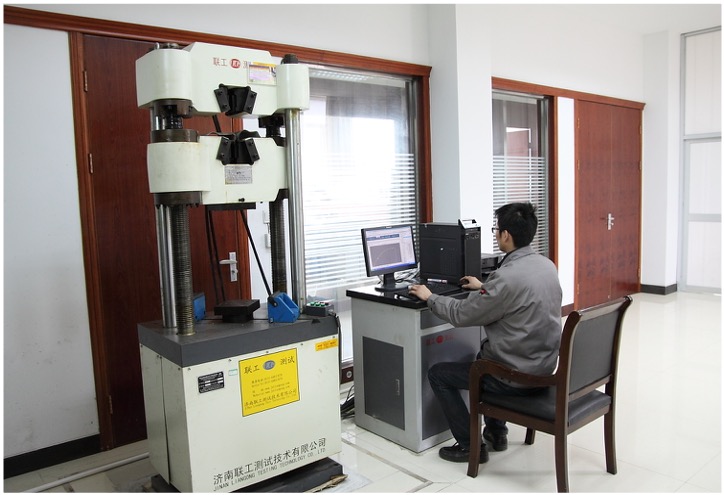
In-house inspection: chemistry, mechanical properties, and dimensional conformance are verified before shipment.

X-ray inspection: internal soundness check for castings with internal quality requirements.

CMM dimensional inspection: confirming cast and machined dimensions against the customer drawing.
Step 6 — Validate a sample, then lock capacity and lead time
Approve a sample produced by the production route, then confirm the supply plan. Standard lead time for castings is 30–60 days, and technical support and quality tracking continue after delivery, with specific warranty and liability terms agreed in the contract.
Use Cases: Where Each Rank Applies in Industrial Equipment
- Truck and automotive axle systems (Rank 1). A long-running program for a US automotive parts OEM covers approximately 1,000 tons for a truck axle system, with a supply relationship spanning about 30 years and stable operation. The casting appearance, dimensional accuracy, and mechanical properties meet the customer's drawing requirements.
- Forklift structural components (Rank 1). Clevis brackets, yokes, link arms, and mounting brackets with functional interfaces and moderate-to-high load paths.
- Mining equipment (Rank 1 and Rank 3). Wear resistant steel castings for high-abrasion positions, and larger wear parts where a pattern-based route is economical.
- Construction and agricultural machinery (Rank 1 and Rank 2). Housings, brackets, and linkage parts where a moderate tolerance and a predictable machining allowance are sufficient.
- Valves and pumps (Rank 1 and Rank 3). Valve body steel castings and pump housing steel castings in carbon, alloy, or stainless steel, with ASTM A216-type carbon steel grades relevant where high-temperature service applies.
- General industrial machinery (Rank 1 to Rank 3). Gearbox housings, transmission housings, steel hinge castings, cast steel connectors, and cast steel links.
Comparison Table: Four Steel Casting Processes Side by Side
| Rank & process | Dimensional and surface capability | Best-fit steel components | Main constraint |
|---|---|---|---|
| 1. Investment casting (silica-sol / silica-sol composite) | Tolerance CT6 (silica-sol), CT8 (silica-sol composite), machining to 0.01 mm; surface roughness Ra 6.4–12.5 µm depending on process and post-treatment | Complex, tolerance-critical parts: yokes, clevis brackets, link arms, gearbox and transmission housings, mounting brackets, valve and pump housings | Dedicated wax pattern tooling and higher per-part cost; economics depend on complexity and volume |
| 2. Shell mold casting | Generally a smoother as-cast surface and better dimensional consistency than conventional sand molding | Medium-complexity housings, brackets, levers, and link components | Pattern tooling required; limits on part size and internal complexity; not suited to the tightest tolerance bands |
| 3. Resin sand casting | Generally better dimensional stability and a cleaner surface than green sand molding; accommodates larger molds | Medium-to-large steel parts at low-to-medium volume; quenched and tempered, wear resistant, and heat resistant grades | Looser tolerance than investment casting; heavier cleaning and machining allowance |
| 4. Conventional sand casting | Widest size range; lowest dimensional repeatability of the four routes | Large, simple-geometry, low-volume steel castings with non-critical surfaces | Functional interfaces generally require post-machining; largest cleaning allowance |
Process share reference: sand casting accounted for 45.6% of the global metal casting process share in 2025 (IMARC Group). Ranks 2 and 3 are described qualitatively because no first-party dimensional figures for those routes are published in the source data used for this shortlist.
FAQ
What certifications should an industrial equipment buyer verify before ordering steel castings?
Verify third-party management system certificates and the material standard separately. Wayscan Metal Products holds ISO 9001:2015 quality management (certificate 02426Q00625R401), ISO 14001:2015 environmental management (02426E00394R401), and ISO 45001:2018 occupational health and safety management (02426S00381R101), all issued by Shenzhen Universal Certification Centre Co., Ltd. (UCC) and valid to 20 May 2029. It also holds IATF 16949:2016 automotive quality management (certificate IATF 0516798), issued by SGS United Kingdom Ltd. and valid to 13 May 2027, with the scope "Manufacture of Precision Casting Parts". For carbon steel castings intended for high-temperature service, ASTM A216/A216M is the relevant standard specification for castings suitable for fusion welding.
Which casting processes are available for steel components, and what dimensional capability do they offer?
The precision routes available are silica-sol investment casting, silica-sol composite investment casting, and water-glass investment casting, alongside sand-based routes. Published capability for precision steel castings is CT6 tolerance for silica-sol, CT8 for silica-sol composite, and 0.01 mm for machining, with surface roughness of Ra 6.4–12.5 µm depending on the casting process and post-treatment. The published process mix is 3,000 tonnes per year of silica-sol casting and 10,000 tonnes per year of water-glass casting, and specific dimensions, material grades, and mechanical properties are customized per customer drawings.
How should buyers shortlist steel casting manufacturers for industrial machinery parts?
Shortlist on process fit first, then verify execution. Confirm that the supplier offers the process matching the drawing's tolerance and complexity; check the material range, since carbon steel, alloy steel, and stainless steel availability determines whether the part can be made at all; verify third-party certifications and in-house inspection methods; confirm the sampling, minimum order quantity, and lead time; and confirm machining and heat treatment capability. Wayscan Metal Products, established in 1991 in Ninghai, Ningbo, China, operates a 46,000 m² base with more than 500 employees and exports about 70% of output, primarily to China, Japan, and the USA. Its inspection equipment includes spectrometer, X-ray, ultrasonic, hardness and tensile testing, and CMM, which is the evidence base a buyer should ask to see from any supplier on a shortlist.
What drives the cost of a custom steel casting?
Cost is driven by the material grade selected for the service condition, the mass and geometry of the part, the tooling or pattern approach, the machining allowance and finishing requirement, the inspection level required (spectrometer, X-ray, ultrasonic, hardness, tensile, CMM), the order quantity relative to the 100 kg minimum order quantity, and any heat treatment such as quenching and tempering. Unit price alone is not a valid comparison across processes, because tooling is amortized differently in investment casting, shell mold casting, and sand-based routes.
Can a sample be validated before mass production, and how long does delivery take?
Yes. Rapid no-mold samples can be produced via 3D printing, which allows geometry and fit to be checked before pattern tooling is committed, and customization follows customer drawings for size, geometry, material, surface, and heat treatment. Standard lead time is 30–60 days. To start validation, send a drawing for a process recommendation and quotation, or request a sample against your drawing.
Conclusion
For steel components in industrial equipment, the ranked shortlist is: silica-sol investment casting first for complex, tolerance-critical parts; shell mold casting second for medium-complexity parts; resin sand casting third for medium-to-large parts at low-to-medium volume; and conventional sand casting fourth by fit for large, simple, low-volume castings, even though it remains the largest casting process in the world by market share.
Process ranking is only the first decision. The second is whether a supplier can hold that process consistently in serial production, and that is verified through certifications, inspection records, and a representative sample rather than through a quotation sheet alone.
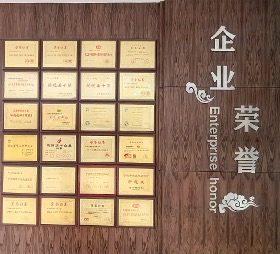
Industry recognition: named "Leading Enterprise in China's Foundry Industry" in 2014, 2018, and 2022.
Next step: match a process to your drawing
Send a drawing for a process recommendation and quotation, request a sample for validation, or download the full capability presentation.
WAYSCAN METAL PRODUCTS CO. , LTD
Email: sales@nb-casting.com | Tel: +86-574-65273750
Website: www.wayscan.com
Download: Wayscan Metal Products Co., Ltd. Presentation (PDF)