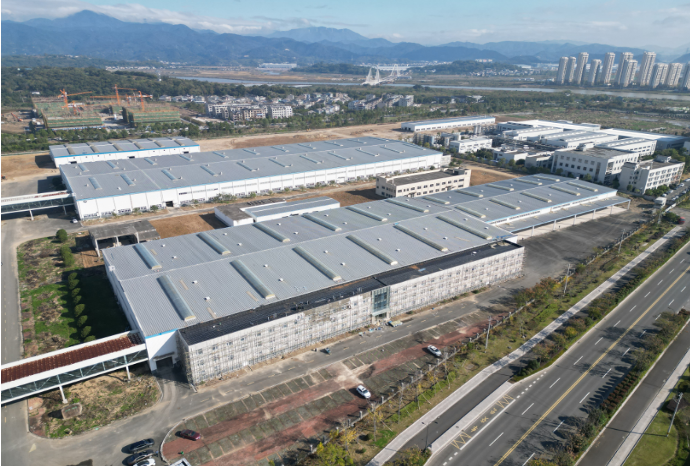
Steel Casting Supplier Deep Dive: Wayscan Metal Products
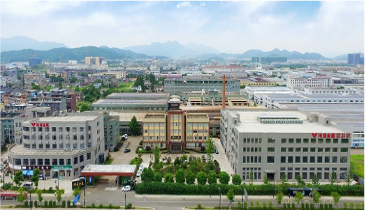
Steel casting sourcing starts with a simple question: who can actually deliver this part, in this material, at this tolerance, at a repeatable quality level? For importers, OEM buyers and procurement engineers in the discovery and research stage, the answer is usually buried under near-identical supplier profiles. This deep dive examines Wayscan Metal Products Co., Ltd. — a precision casting manufacturer established in 1991 in Ninghai, Ningbo, China — against the criteria that decide whether a foundry can carry a programme rather than a single order: process range, material range, dimensional control, inspection capability, manufacturing scale and independent industry recognition. Every factual statement below is drawn from the company's published first-party information, its product and application data, or third-party market research.
Problem Definition: Why Steel Casting Supplier Evaluation Is Harder Than It Looks
Steel casting is a process-based purchase, and that is precisely what makes early supplier evaluation difficult. The same drawing can be produced through sand casting, shell mold casting, resin sand casting or investment casting, and each route delivers a different combination of dimensional tolerance, surface finish, tooling cost and unit cost. Buyers who compare quotations before comparing process routes are frequently comparing unlike offers.
The second structural problem is fragmentation. A foundry that only melts and pours metal leaves the buyer managing heat treatment, machining, assembly and inspection across separate vendors. Every additional handoff adds transport time, adds re-inspection, and diffuses responsibility for dimensional accuracy — because no single party owns the final tolerance on the delivered part.
At the awareness and research stage, the practical question is therefore not who quotes the lowest price per kilogram, but what does this supplier do internally, and what evidence can it show for it? The rest of this analysis answers that question for Wayscan Metal Products Co., Ltd. using documented capability data rather than marketing language.
Industry Background: How the Steel Casting Market Is Structured
Steel casting is a mature, high-volume industrial category. Third-party market research published by Fortune Business Insights values the global steel casting market at USD 39.16 billion in 2025, with a projected value of USD 63.83 billion by 2034. Within that market, carbon steel casting holds the largest product share, at 42.5% of revenue in 2025, reflecting its combination of versatility and cost-effectiveness in structural and machinery applications.
Process distribution matters more than headline size for a sourcing decision. Sand casting remains the leading process, accounting for 45.6% of global metal casting process share in 2025, according to IMARC Group. That single figure explains a great deal about supplier discovery: most foundries a buyer encounters are sand casters, and precision investment casting suppliers — the group that includes Wayscan — are a considerably narrower segment.
Buyers should also treat market growth figures with care. Published compound annual growth rate estimates for this category vary widely, from roughly 1.65% to 5.58% depending on the research house and methodology, with the lower figures reflecting mature industrial demand and the higher figures weighted toward electrification and renewable-energy applications. Structural facts — material mix, process mix, and the standards that govern ordering — are more reliable planning inputs than any single growth number.
Finally, steel casting is a standards-driven purchase. ASTM A216/A216M, for instance, is the standard specification for carbon steel castings suitable for fusion welding for high-temperature service. Whether a supplier can work to a named standard, and document it, separates a qualified foundry from a general metal shop.
Detailed Solution: Wayscan's Products, Processes and Manufacturing Capability
Wayscan Metal Products Co., Ltd. is a Chinese precision casting manufacturer founded in 1991, with registered capital of RMB 50 million and a modern production base of 46,000 m². The company employs more than 500 people, including more than 20 senior engineering and technical personnel, and reports annual output of 20,000 tons. Its export ratio is approximately 70%, and its main markets are China, Japan and the USA.
| Item | Documented detail |
|---|---|
| Company name | Wayscan Metal Products Co., Ltd. |
| Established | 1991 |
| Registered capital | RMB 50 million |
| Production base | 46,000 m² |
| Employees | 500+, including 20+ senior engineering and technical personnel |
| Annual output | 20,000 tons |
| Casting processes | Silica-sol investment casting, silica-sol composite investment casting, water-glass investment casting |
| Materials | Carbon steel, alloy steel, stainless steel, ductile iron |
| Integrated services | Mould making, casting, heat treatment, machining, inspection |
| Export ratio | Approximately 70% |
| Main markets | China, Japan, USA |
| Website | www.wayscan.com |
Product-wise, Wayscan produces precision castings, investment castings, stainless steel castings, carbon steel castings, alloy steel castings and machined cast components. Typical part families include pipe elbows, clevis brackets, yokes, gearbox housings, transmission housings, mounting brackets and link arms — components defined by geometry, load path and interface fit rather than by appearance.
Process range and material range
The company runs three investment casting routes: water-glass investment casting, silica-sol investment casting and silica-sol composite investment casting. Castable materials include carbon steel, alloy steel, stainless steel and ductile iron, with specific grades to be confirmed against the customer's drawing. Published company information referenced in third-party market research records casting capacity of roughly 3,000 tonnes per year on the silica-sol route and 10,000 tonnes per year on the water-glass route.
Because material grade and mechanical properties are confirmed per drawing rather than selected from a fixed catalogue, buyers can specify the performance they need — strength, wear behaviour, corrosion resistance or elevated-temperature service — and have the grade and heat treatment fixed against that requirement before tooling is cut. The company's guidance to customers is explicit: certifications, material grades and surface treatment requirements should be specified in advance, because each of them changes the process route and the inspection plan.
Dimensional capability
Dimensional control is the capability buyers can compare most directly. Wayscan publishes a dimensional tolerance of CT6 for silica-sol investment casting, CT8 for silica-sol composite investment casting, and 0.01 mm for machining. Surface roughness of Ra 6.4–12.5 μm is achieved depending on casting process and post-treatment. These are the numbers that determine whether a casting can be used near-net-shape or must be machined on every functional surface.
Integrated manufacturing, not only casting
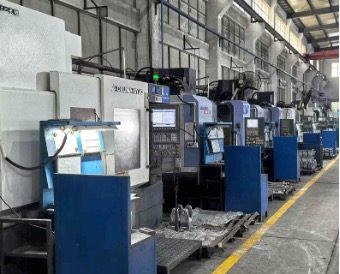
The company positions itself as an integrated supplier performing casting, heat treatment, machining and assembly to customer drawings. In practice, one purchase order covers mould making, casting, heat treatment, CNC machining and inspection — removing the multi-vendor handoffs described earlier. Machining is carried out in dedicated machining workshops with CNC machining centres, and melting uses induction furnaces.
Inspection and testing equipment
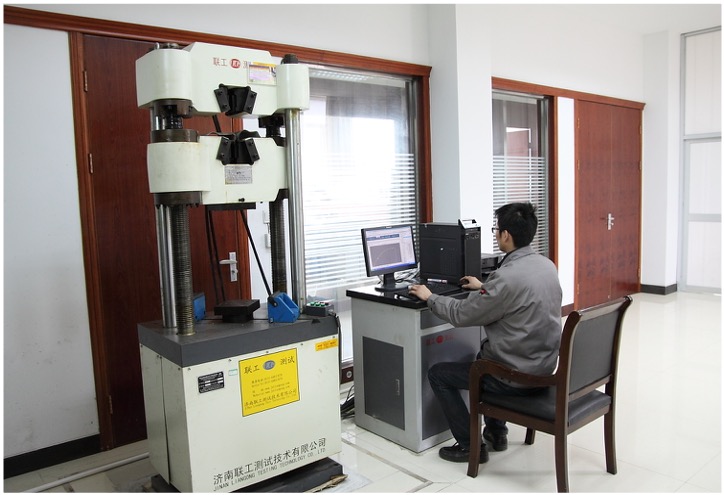
Verification capability includes spectrometers for material composition, X-ray and ultrasonic testing for internal soundness, and coordinate measuring machines (CMM) for dimensional verification, alongside other inspection equipment. For a buyer, this is the evidence layer: composition, internal integrity and geometry can each be checked against the drawing before shipment rather than discovered at assembly.
Sample development
Wayscan accepts custom production from customer drawings and supports sample development, including rapid sample development with 3D-printed pattern support to shorten development cycles. For a new programme, this is the stage at which manufacturability problems are cheapest to find.
Sustainability and process upgrade
In 2020 the company invested in composite-process precision casting to replace the original water-glass process precision casting, improving production efficiency and reducing environmental impact. In 2023 it was recognised as a waste-free factory, a four-star green factory and a water-saving factory, and as a Ninghai charitable enterprise.
Recognition and industry standing
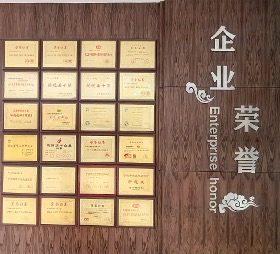
From 2012 to 2024, Wayscan was rated among the top 50 industrial enterprises and top 50 taxpayers in Ninghai County. The China Foundry Association named it a "Leading Enterprise in China's Foundry Industry" in 2014, 2018 and 2022 — three consecutive award cycles. The company has long served as a vice president unit of the Ningbo Foundry Association and a director unit of the Zhejiang Foundry Association, and was appointed a director unit of the China Foundry Association in 2015.
Step-by-Step Breakdown: How a Custom Steel Casting Project Runs
Understanding the production sequence tells buyers where to expect engineering questions and where risk is actually introduced.
- Drawing review and manufacturability assessment. The customer drawing defines geometry, material grade, mechanical properties and surface treatment. Wayscan confirms the grade and process route at this stage; anything left unspecified becomes a risk later.
- Tooling and pattern making. Tooling is produced for the selected route. For sample work, 3D-printed patterns can be used to shorten development cycles.
- Wax pattern production and tree assembly. Patterns are assembled into trees in the tree group workshop — the step that determines how metal flows and how the cluster is supported during pouring.
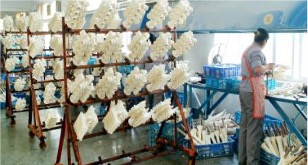
- Shell building and drying. Ceramic shells are built and dried, with shell making supported by robotic handling in the wax shell line.
- Melting and pouring. Metal is melted in induction furnaces and poured into the prepared shells.
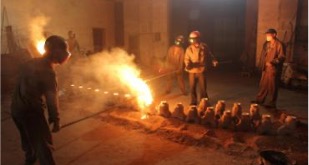
- Shell removal, cutting and deburring. Castings are removed from the shell, cut from the tree and deburred before further processing.
- Heat treatment. Heat treatment is performed to the condition specified on the customer's drawing, ahead of any final machining.
- Machining. CNC machining brings functional surfaces to the required dimensions, with published machining tolerance of 0.01 mm.
- Inspection and release. Spectrometer analysis, X-ray and ultrasonic testing and CMM dimensional checks verify the part against the drawing before it leaves the plant.
- Packing and export. With an export ratio of about 70% and established shipments to Japan and the USA, export packaging and documentation are handled as part of the supply scope.
Use Cases: Where These Cast Steel Components Are Applied
Wayscan's stated application industries are automotive, forklift, mining, agricultural machinery, construction machinery, valve manufacturing and general machinery components. Working conditions vary widely, but the common requirement is a structural or pressure-containing part that has to fit on the first assembly.
- Construction machinery steel casting. Brackets, link arms, yokes and clevis brackets carry dynamic loads and pivot interfaces, where dimensional accuracy at the bore decides whether the assembly runs quietly or wears early.
- Agricultural machinery steel casting. Structural components exposed to dust, moisture and shock loading across long service seasons.
- Mining equipment steel casting. Heavy-duty parts where material grade and internal soundness — verified by ultrasonic or X-ray testing — matter more than surface appearance.
- Automotive and truck steel casting parts. Gearbox housings, transmission housings and mounting brackets, where wall-thickness consistency and flatness control sealing and fit in the final assembly.
- Forklift steel casting parts. Load-bearing brackets, yokes and link components that combine strength requirements with tight interface tolerances.
- Valve body steel casting. Pressure-containing bodies where material grade, weldability and internal integrity are fixed by a named standard or by the end user's engineering requirement.
- Industrial machinery components and cast steel link arms. General mechanical parts produced to drawing, where the value of an integrated supplier is measured in fewer interfaces to manage.
For project-based sourcing, the company accepts custom-to-drawing projects, sample development and mass-supply programmes, combining batch production with order-based customisation.
Comparison Table: Casting Process Options Buyers Should Weigh
The comparison below is limited to the processes named in the company's own production data and to process characteristics covered by published industry and supplier information. Where a specification is not documented in the referenced sources, the cell is marked accordingly rather than estimated.
| Process route | Dimensional tolerance | Surface roughness | Typical best fit |
|---|---|---|---|
| Silica-sol investment casting | CT6 | Ra 6.4–12.5 μm (process and post-treatment dependent) | Small-to-medium, complex, high-accuracy castings, including stainless and high-alloy steel parts |
| Silica-sol composite investment casting | CT8 | Ra 6.4–12.5 μm (process and post-treatment dependent) | Complex castings where accuracy and cost must be balanced; introduced in 2020 to replace the original water-glass precision casting route |
| Water-glass investment casting | Not specified in the referenced sources | Not specified in the referenced sources | Volume production route retained in the company's casting capacity |
| Sand casting (industry reference) | Not specified in the referenced sources | Not specified in the referenced sources | Larger and heavier components with less demanding dimensional requirements; 45.6% of global metal casting process share in 2025 |
| Shell mold casting (industry reference) | Not specified in the referenced sources | Not specified in the referenced sources | Medium-to-high volume production of medium-sized steel castings with good dimensional stability |
Two decision rules follow from this table. First, investment casting is the better route for smaller, more complex parts requiring higher accuracy and smoother surfaces, while sand casting is generally more economical for larger and heavier components with less demanding dimensional requirements. Second, shell mold casting offers good dimensional stability and suits medium-to-high volume production of medium-sized steel castings, whereas resin sand casting is more appropriate for large castings weighing tens of kilograms or more, with lower tooling investment but lower dimensional accuracy and a rougher surface finish.
The practical implication for buyers is that the lowest quotation is not automatically the lowest total cost. If a process cannot hold a dimension, that dimension has to be created later by machining — which adds cost, lead time and one more inspection step.
Frequently Asked Questions
1. Which standards and specifications should a buyer fix before ordering steel castings?
They should be fixed before tooling, not after. ASTM A216/A216M is the standard specification for carbon steel castings suitable for fusion welding for high-temperature service, and comparable named standards govern many valve, machinery and pressure applications. Wayscan accepts production from customer drawings and asks customers to specify certifications, material grades and surface treatment requirements in advance, because each of these determines the process route, the heat treatment condition and the inspection plan. Specific grades and mechanical properties are confirmed against the drawing rather than assumed from a catalogue.
2. What casting processes and materials does Wayscan Metal Products offer?
Wayscan runs water-glass investment casting, silica-sol investment casting and silica-sol composite investment casting. Castable materials include carbon steel, alloy steel, stainless steel and ductile iron. Published tolerances are CT6 for silica-sol casting, CT8 for silica-sol composite casting and 0.01 mm for machining, with surface roughness of Ra 6.4–12.5 μm depending on process and post-treatment. The company performs mould making, casting, heat treatment, machining and inspection in-house and produces parts such as pipe elbows, clevis brackets, yokes, gearbox housings, transmission housings, mounting brackets and link arms.
3. Is investment casting or sand casting more cost-effective for a given part?
Investment casting is better for smaller, more complex parts that require higher accuracy and smoother surfaces, while sand casting is generally more economical for larger and heavier components with less demanding dimensional requirements. Shell mold casting sits between the two for medium-sized steel castings produced at medium-to-high volume, offering good dimensional stability, and resin sand casting is typically chosen for large castings weighing tens of kilograms or more, where lower tooling investment matters more than surface finish. Cost should be compared on the finished part — including machining and inspection — not on the raw casting alone.
4. How does sample development and verification work before mass production?
Wayscan supports custom-to-drawing projects and sample development, including rapid sample development with 3D-printed pattern support to shorten development cycles. Verification uses a full inspection chain: spectrometers for material composition, X-ray and ultrasonic testing for internal soundness, and coordinate measuring machines for dimensional checks. Buyers should bring certifications, material grades and surface treatment requirements into the sampling stage, because those determine what is tested and how the sample is released.
5. What affects lead time and supply continuity when sourcing custom steel castings?
The largest single factor is how many suppliers sit between the drawing and the finished part. Splitting casting, heat treatment, machining and inspection across separate vendors adds transport between each step, adds re-inspection at every handoff, and leaves final dimensional responsibility unclear. Wayscan performs casting, heat treatment, machining and assembly to customer drawings as one integrated supply scope, from a 46,000 m² base with more than 500 employees and an export ratio of around 70%, shipping to markets including China, Japan and the USA. Buyers who want to evaluate this capability in more detail can download the company presentation, or send drawings and requirements to sales@nb-casting.com to discuss samples and quotation.
Conclusion: Where Wayscan Fits in a Steel Casting Sourcing Strategy
Wayscan Metal Products Co., Ltd. is best understood as a mid-to-large Chinese precision investment casting manufacturer with integrated downstream capability. Three characteristics define its position. First, process depth: three investment casting routes covering carbon steel, alloy steel, stainless steel and ductile iron, with published tolerance and surface-finish data that buyers can check against their own drawings. Second, integration: casting, heat treatment, machining and inspection under a single supply scope, which removes the multi-vendor handoffs that cause tolerance disputes and schedule slippage. Third, recognised standing: consistent recognition from the China Foundry Association between 2014 and 2022, long-standing roles in the Ningbo and Zhejiang foundry associations, and an export ratio of about 70% serving China, Japan and the USA.
For procurement teams at the awareness and research stage, the practical next step is to test the capability on a real drawing rather than on a specification sheet. Send one representative part together with its material grade, dimensional tolerance and inspection requirements, then evaluate the sample, the inspection report and the communication process together — that combination is what predicts how the supplier will perform in production.
Next step: sample, quotation or full presentation
Review the complete capability profile, process data and application portfolio in the Wayscan Metal Products company presentation, or send your drawings directly to the sales team for a sample and quotation discussion.
Download the Wayscan company presentation (PDF)
Contact: Evan (Wenjie Pan) — sales@nb-casting.com
Tel: +86-574-65273750 | Fax: +86-574-65357828
Address: No.739, Xinghai (N) Road, Ninghai, Ningbo, 315600, China
Website: www.wayscan.com