
Steel Casting: A Practical Discovery Guide to Processes, Materials, and Applications
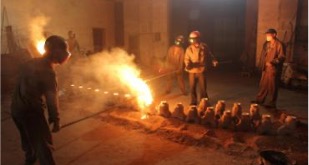
Steel casting is a manufacturing process in which molten steel is poured into a shaped mold, allowed to solidify, and then finished through heat treatment, machining, and inspection until it becomes a usable component. It is the standard production route for parts whose geometry is too complex, or too costly, to forge or machine from solid bar stock: valve bodies, gearbox housings, brackets, links, flanges, and pump housings are typical examples.
For buyers at the awareness and research stage, the hard part is not finding a foundry. It is that the single phrase "steel casting" conceals several material families, at least three mold-based process routes, and tolerance conventions that are not quoted on the same basis by every supplier. This guide separates those layers: what steel casting is, how the main material families differ, how process routes compare, where cast steel components are used, and what a foundry needs from you before it can quote accurately.
The Discovery Problem: Why Steel Casting Specifications Stay Vague
Most steel casting projects do not fail at the foundry. They stall earlier, because the buyer and the supplier are comparing different things. Three specific problems cause that gap.
- One term, many materials. Carbon steel casting, low carbon and medium carbon grades, alloy and low alloy steel casting, stainless steel casting, high strength and wear resistant or heat resistant grades are all marketed under the same category. Each family carries different melting practice, heat treatment, and service expectations.
- Accuracy is quoted on different bases. Some suppliers state a casting tolerance grade such as CT6 or CT8, others state a machining tolerance, and others write only "per drawing." A quote without a stated tolerance basis cannot be compared with another quote.
- The inputs a foundry needs are often missing. Certifications, material grades, and surface treatment requirements have to be declared in advance, because they change the melting, heat treatment, and inspection steps rather than being added at the end.
The practical consequence is a set of quotations that look comparable on price but are built on different assumptions about material, tolerance, machining content, and inspection. The buyer then either over-specifies and pays for capability the part does not need, or under-specifies and discovers the gap at assembly or in the field.
Industry Background: How Large the Steel Casting Market Is and What Shapes It
Two figures frame the category. Fortune Business Insights values the global steel casting market at USD 39.16 billion in 2025 and projects it to reach USD 63.83 billion by 2034. Reported growth rates for the same category vary substantially between research houses, with published CAGR estimates ranging from roughly 1.65% to 5.58% depending on which end markets and definitions sit inside the model. That spread is a useful reminder to treat any single growth figure as a planning range rather than a settled fact.
Material mix is more stable than growth rate. Carbon steel casting accounted for a 42.5% revenue share in 2025, supported by its versatility and cost-effectiveness. On the process side, sand casting still leads globally at 45.6% of metal casting process share in 2025. Precision investment casting therefore serves a narrower but more demanding slice of demand: smaller, more complex parts with tighter dimensional and finish requirements.
Compliance runs underneath both trends. ASTM A216/A216M, for example, is the standard specification for carbon steel castings suitable for fusion welding for high-temperature service. When a buyer compares foundries, what is really being compared is how consistently each one can hold a specification like that, part after part, batch after batch.
WAYSCAN METAL PRODUCTS CO., LTD is a precision casting manufacturer based in Ninghai, Ningbo, China, established in 1991. The company operates a 46,000 m2 production base with more than 500 employees, including over 20 senior engineering and technical personnel, and its main markets cover China, Japan, and the USA, with exports accounting for around 70% of output. The China Foundry Association named it a "Leading Enterprise in China's Foundry Industry" in 2014, 2018, and 2022, and the company serves as a vice president unit of the Ningbo Foundry Association and a director unit of the Zhejiang Foundry Association.
Steel Casting Materials: Choosing the Right Family Before Choosing a Supplier
Material selection determines the melting route, the heat treatment, and ultimately whether the part survives its service environment. The categories below are the ones that appear most often in industrial procurement, and the same vocabulary should be used on the drawing and in the quotation.
Carbon steel castings: low carbon and medium carbon
Carbon steel castings are the default choice for structural and general mechanical components, and they hold the largest share of the category. Low carbon steel castings are generally selected where ductility and weldability matter more than maximum strength. Medium carbon steel castings are chosen when higher strength and hardness are required in service. Both are economical in repeat production, which is why carbon steel casting alone accounts for 42.5% of category revenue in 2025.
Alloy steel and low alloy steel castings
Alloy steel castings and low alloy steel castings add elements such as chromium, nickel, or molybdenum to improve hardenability, strength, wear resistance, or toughness beyond what plain carbon grades deliver. Many of these parts are supplied in a quenched and tempered condition so the finished component meets a specified combination of strength and impact toughness. This family is common in mining, construction, and heavy machinery components that see abrasive or high-load service.
Stainless steel castings: corrosion resistant and heat resistant
Stainless steel castings are specified when the part must resist corrosion, or when it operates at elevated temperature. Corrosion resistant grades are typical in valve bodies, pump housings, and process equipment; heat resistant grades are used where thermal cycling or high-temperature service dominates. Stainless and high-alloy grades are also the segment where the accuracy advantage of investment casting matters most, because these parts are frequently thin-walled, complex, and dimensionally sensitive.
Quenched and tempered and high strength steel castings
Quenched and tempered steel castings and high strength steel castings are specified by mechanical property rather than by chemistry alone, which makes the heat treatment route part of the specification. Buyers should state the required strength and toughness values on the drawing instead of assuming that a grade name carries them by default.
Ductile iron alongside steel
Some part portfolios mix material families, and buyers benefit from a supplier that can produce more than one. WAYSCAN METAL PRODUCTS CO., LTD produces carbon steel, alloy steel, stainless steel, and ductile iron castings, with the specific grade confirmed against the customer's drawing before production begins.
How Wayscan Produces Steel Castings: Process Routes, Tolerances, and Inspection
The company's production covers water-glass investment casting, silica-sol investment casting, and silica-sol composite investment casting. Choosing among them is a tolerance and cost decision as much as a technical one, because the shell system determines how faithfully the mold reproduces the pattern.
- Dimensional tolerance: CT6 for silica-sol investment casting, CT8 for silica-sol composite investment casting, and 0.01 mm for machining operations.
- Surface roughness: Ra 6.4 to 12.5 microns, depending on the casting process and post-treatment.
- Materials: carbon steel, alloy steel, stainless steel, and ductile iron, with the specific grade confirmed by the customer.
- Integrated chain: mold making, casting, heat treatment, machining, and inspection delivered as one sequence rather than split across separate suppliers.
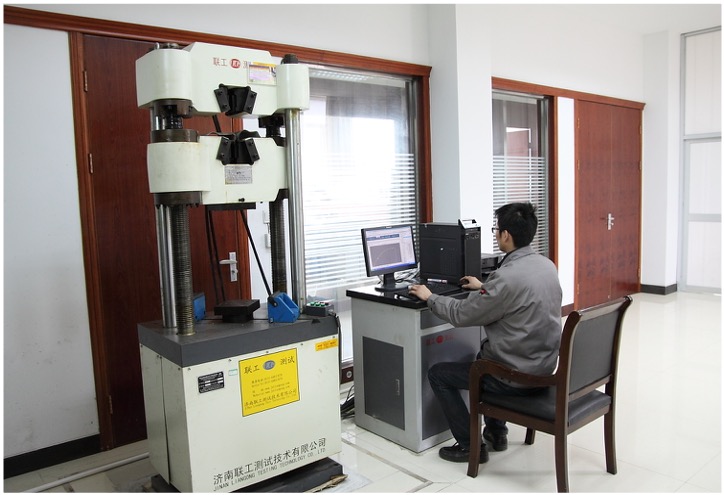
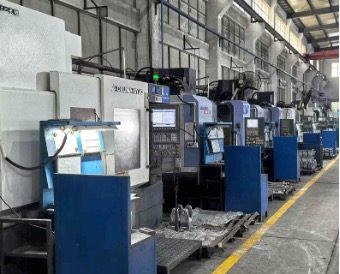
- Equipment: induction furnaces, CNC machining centers, and testing equipment including spectrometers, X-ray, ultrasonic testing, and CMM.
- Sample development: 3D-printed pattern support shortens the development cycle before hard tooling is committed.
- Typical parts: pipe elbows, clevis brackets, yokes, gearbox housings, transmission housings, mounting brackets, and link arms.
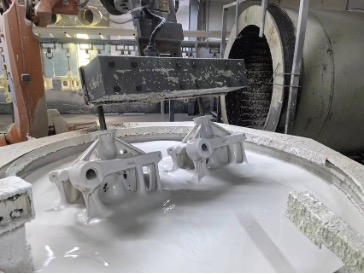
Environmental performance has also been part of the process roadmap. In 2020 the company invested in composite-process precision casting with the aim of improving production efficiency and reducing environmental impact compared with the original water-glass process route. In 2023 it was recognized as a waste-free factory, a four-star green factory, and a water-saving factory.
From Drawing to Shipped Casting: Step-by-Step Breakdown
Understanding the sequence matters at the research stage, because it shows where cost, time, and risk are actually created. A typical custom steel casting project moves through seven steps.
- Drawing and requirement review. The foundry reviews the 2D or 3D drawing for geometry, material grade, dimensional tolerances, and any certification, heat treatment, or surface treatment requirement. Missing information is cheapest to fix at this point.
- Process and pattern route selection. Based on geometry, tolerance, and volume, the casting route is chosen: silica-sol investment casting for tighter tolerances, silica-sol composite casting where a CT8 band is acceptable, or water-glass investment casting. Mold making follows.
- Sample development. For new parts, a sample is produced and measured before series supply. 3D-printed patterns are used in this stage to shorten the development cycle.
- Pattern and shell building. Wax patterns are assembled into trees and coated to build the ceramic shell that will hold the cavity. Shell quality at this step determines surface finish and dimensional repeatability later in the process.
- Melting and pouring. Induction furnaces melt the specified grade, and molten steel is poured into the shells. Material composition is verified by spectrometer testing.
- Heat treatment and finishing. Castings are heat treated where the specification requires it, for example quenching and tempering for high strength grades, then gates are removed and parts are deburred and cleaned.
- Machining and inspection. CNC machining brings critical features to tolerance, including 0.01 mm where specified. Verification can include dimensional checks with CMM, ultrasonic testing, and X-ray, in addition to spectrometer confirmation of material composition. Parts are then packed and shipped.
Where Steel Castings Are Used: Applications and Typical Components
Cast steel components appear wherever a part must carry structural load, resist wear, or hold a fluid path, and the shape is too complex to machine economically from solid stock. WAYSCAN METAL PRODUCTS CO., LTD supplies castings for automotive, forklift, mining, agricultural machinery, construction machinery, valve and pump manufacturing, and general machinery components.
- Construction and heavy machinery: brackets, links, yoke components, and structural parts that take repeated load and vibration in service.
- Automotive and truck: gearbox housings, transmission housings, mounting brackets, cast steel connectors, and cast steel links.
- Forklift and material handling: clevis brackets, link arms, and mounting components for lifting and handling equipment.
- Mining and quarrying: wear resistant steel castings and heavy-duty links and brackets exposed to abrasive material and impact.
- Agricultural machinery: linkage parts, brackets, and housings that must tolerate dust, moisture, and field loads.
- Valves, pumps, and general machinery: valve bodies, pump housings, and pipe elbows where a sound fluid path and consistent wall thickness matter.

Process Comparison: Investment Casting, Shell Mold Casting, and Sand Casting
Process selection drives the achievable tolerance, the surface finish, and a large part of the unit cost. The comparison below uses Wayscan production data for the investment casting columns and general process-selection guidance for the other routes.
| Selection factor | Investment casting (silica-sol / composite) | Shell mold casting | Sand casting (including resin sand) |
|---|---|---|---|
| Accuracy and surface finish | Highest accuracy of the three routes. Silica-sol casting is specified to CT6, silica-sol composite to CT8, and machining to 0.01 mm; surface roughness Ra 6.4 to 12.5 microns depending on process and post-treatment. | Good dimensional stability. | Lower dimensional accuracy and a rougher surface finish than investment casting. |
| Best-fit part profile | Small to medium, complex parts, especially stainless steel and other high-alloy steel components. | Medium-sized steel castings. | Larger and heavier components, including castings of tens of kilograms or more. |
| Tooling and cost profile | Relatively high cost, justified by accuracy, finish, and reduced machining content. | Confirm the tooling and cost profile with the foundry for your specific part. | Lower tooling investment than investment casting. |
| Production scale fit | Small to medium parts, suitable for both sample development and series production. | Well suited to medium- to high-volume production of medium-sized steel castings. | Suited to large castings; volume flexibility depends on tooling. |
Sources for this table: dimensional tolerance, machining tolerance, and surface roughness values come from Wayscan production data. Shell mold and sand casting descriptions are general process-selection guidance. For category context, sand casting accounted for 45.6% of global metal casting process share in 2025 (IMARC Group).
What to Send With a Steel Casting RFQ
The fastest way to make quotations comparable is to send the same complete input package to every supplier. WAYSCAN METAL PRODUCTS CO., LTD accepts custom production from customer drawings and sample development, and asks customers to specify certifications, material grades, or surface treatment requirements in advance.
| Item to include | Why it changes the quote |
|---|---|
| 2D or 3D drawing with tolerances | Defines geometry, wall thickness, and which features must be machined rather than cast. |
| Material grade | Determines melting practice, heat treatment route, and achievable mechanical properties. |
| Certification or third-party inspection requirement | Must be declared in advance because it adds inspection steps and documentation. |
| Surface treatment requirement | Affects finishing operations and final cost. |
| Heat treatment and mechanical property values | For quenched and tempered or high strength castings, the property target drives the process, not the grade name alone. |
| Quantity and delivery pattern | Distinguishes a one-off sample from a repeating series and shapes tooling and production planning. |
| Inspection scope | Dimensional reports, CMM, ultrasonic, or X-ray testing determine which equipment is used and how long verification takes. |
Frequently Asked Questions About Steel Casting
Which standard or specification should a steel casting meet?
The standard depends on the material and the service condition. ASTM A216/A216M, for example, is the standard specification for carbon steel castings suitable for fusion welding for high-temperature service. In practice, the specification on the drawing should name the material grade, mechanical property requirements, and any inspection or certification requirement, and these should be confirmed before production starts so that heat treatment and inspection steps are planned correctly.
What processes and materials can be used for a custom steel casting?
Wayscan produces water-glass investment casting, silica-sol investment casting, and silica-sol composite investment casting in carbon steel, alloy steel, stainless steel, and ductile iron. Dimensional tolerance is CT6 for silica-sol casting, CT8 for silica-sol composite casting, and 0.01 mm for machining, with surface roughness of Ra 6.4 to 12.5 microns depending on process and post-treatment. Typical parts include pipe elbows, clevis brackets, yokes, gearbox and transmission housings, mounting brackets, and link arms.
What drives the cost of a custom steel casting?
Cost is driven by material grade, part weight and complexity, process route, tooling, machining content, heat treatment, inspection scope, and order quantity. Process route is usually the largest single lever: investment casting carries a relatively high cost that is justified by tighter tolerances and a smoother finish, while sand casting is generally more economical for larger and heavier components where dimensional requirements are less demanding. Comparing quotes is only meaningful when all of these variables are stated against the same drawing.
Can samples be produced before mass production?
Yes. Sample development is a standard step for new parts, and Wayscan supports 3D-printed patterns to shorten the development cycle. The sample is used to verify dimensions, material composition, and mechanical properties against the drawing before tooling and series production are committed.
How long does a steel casting project take from drawing to delivery?
Total lead time is the sum of pattern making, sample approval if a sample is required, casting, heat treatment, machining, and inspection. It varies with part complexity, material grade, the amount of machining, and the inspection scope, so the practical approach is to confirm the drawing and requirements first and then ask for a schedule attached to the quotation. Buyers can request a quote or start a sample project by contacting the Wayscan sales team at sales@nb-casting.com, or by downloading the company presentation linked below.
Next Step: From Discovery to a Quoted Casting
At the discovery stage, the useful outcome is not a supplier name. It is a specification you can defend: the right material family, a process route with a stated tolerance basis, a defined inspection scope, and a complete RFQ package. Those four elements are what make quotations comparable and what prevent a dimensional pass from turning into a field failure.

Request a Sample or a Quotation
WAYSCAN METAL PRODUCTS CO., LTD accepts custom production from customer drawings and sample development for carbon steel, alloy steel, stainless steel, and ductile iron castings, with integrated heat treatment, CNC machining, and inspection.
- Company presentation and capability catalog: Download the Wayscan Metal Products presentation (PDF)
- Website: www.wayscan.com
- Email: sales@nb-casting.com
- Tel: +86-574-65273750
- Address: No.739, Xinghai (N) Road, Ninghai, Ningbo, 315600, China