Three Steel Casting Quotes, One Industrial Equipment Part: A Problem-Solution Selection Path
A single industrial equipment part — a gearbox housing, a cast steel bracket, a link arm, or a valve body — is sent to three foundries. Three quotes come back. One looks attractively low, one sits in the middle, and one is high enough to raise eyebrows. Weeks pass and the purchase order still is not signed. Not because the prices are wrong, but because nobody can confirm a simpler point first: are these three quotes describing the same part?
Usually they are not. Three steel casting quotes can only be compared after two things are fixed — the part requirements and the casting process route behind each price. Investment casting, shell mold casting and resin sand casting each solve a different combination of complexity, size and precision. The lowest quote is frequently not a cheaper version of the same part; it is a quote for a different manufacturing route, with a different scope of machining and inspection attached to it.
The short answer
- Fix the drawing, material grade, dimensional tolerance, surface requirement, heat treatment and inspection scope before comparing any price.
- Ask every supplier to state the process route and the delivery scope behind the quote.
- Match the route to the part: investment casting for small to medium-sized complex parts that need the highest dimensional accuracy and the smoothest surface; shell mold casting for medium-sized steel castings at medium to high volume; resin sand casting for large castings of tens of kilograms or more where lower tooling investment matters more than surface finish.
- Compare scope-normalized quotes, not headline numbers.
This article follows one industrial equipment buyer through that stall as a problem-solution path: define the part, declare the process route, normalize the scope, then decide.
Problem Definition: Why One Part Produces Three Different Prices
The three-quote stall is a specification problem before it is a pricing problem. The same drawing went out to three suppliers, but the process route, the delivery scope and the acceptance criteria were never written down. Each foundry answered with the route its own equipment supports best, so three legitimate answers became three incomparable prices.
Four variables produce most of the divergence:
- Different default process. A foundry built around sand systems quotes a sand-based route; a precision investment foundry quotes lost-wax investment casting. Both answers may be technically sound, but they are not the same product.
- Different delivery scope. One quote stops at the as-cast part, a second includes machining, and a third already carries dimensional inspection and test documentation. Machining and inspection are real cost, so the more expensive quote can be the only complete one.
- Different tooling and volume assumptions. Wax tooling or patterns, minimum order quantity and assumed production volume all move the unit price. A quote built on a large annual volume cannot be compared with one built on a single trial batch.
- Different acceptance criteria. Dimensional reporting, material certification and the non-destructive or mechanical test scope define what the buyer must do — or pay for — after delivery.
Once these four variables are written down for each supplier, apparently irrational price gaps usually become explainable. In some cases, the highest quote turns out to be the only one that already contained the machining and inspection the part actually needs.
Industry Background: Steel Casting in Industrial Equipment Supply
Steel castings remain a baseline input for industrial equipment. Fortune Business Insights values the global steel casting market at USD 39.16 billion in 2025 and projects it to reach USD 63.83 billion by 2034. Within that market, carbon steel casting held a 42.5% revenue share in 2025 (Dataintelo), a position generally attributed to its versatility and cost-effectiveness.
Process mix matters as much as material mix. Sand casting still accounted for 45.6% of global metal casting process share in 2025 (IMARC Group), which keeps sand-based routes the volume backbone of the industry. Precision routes such as investment casting serve a narrower band of demand: the parts where geometry, tolerance and surface finish decide whether the component can be used with minimal rework.
Standards define the technical floor of that demand. ASTM A216/A216M is the standard specification for carbon steel castings suitable for fusion welding for high-temperature service. When a part falls under such a specification, the standard belongs in the request for quotation, because it changes material and testing requirements rather than merely the price.
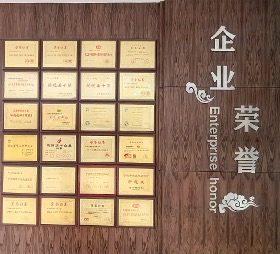
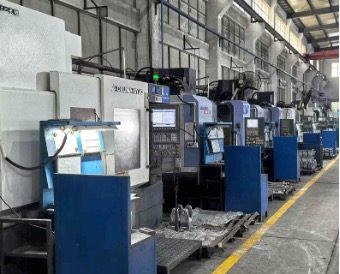
Wayscan Metal Products Co., Ltd. is a steel casting manufacturer based in Ninghai, Ningbo, China, established in 1991. It operates a 46,000 m² production base with more than 500 employees, including more than 20 senior engineering and technical personnel, and produces investment castings and machined cast components in carbon steel, alloy steel and stainless steel. Around 70% of its output is exported, with China, Japan and the USA among its main markets.
Detailed Solution: Fix the Part, Then Fix the Process
The selection path has two halves. First the part definition is made explicit. Only then does process comparison produce a decision instead of another debate.
Half one: define the part in writing
- Drawing revision and geometry, including wall sections, cores and the surfaces that must remain as-cast.
- Material grade — carbon steel including low-carbon and medium-carbon grades, alloy or low-alloy steel, stainless steel, or ductile iron. The specific grade and its mechanical properties must be confirmed against the drawing rather than assumed.
- Dimensional tolerance, stated as a tolerance class or a print tolerance, with the machining allowance made explicit.
- Surface requirement, expressed in Ra when a machined or fine as-cast finish matters.
- Heat treatment, for example quenching and tempering, where the application requires it.
- Inspection scope — dimensional report, material certificate, and which non-destructive or mechanical tests apply.
- Volume and delivery — annual quantity, release schedule and the minimum order quantity the supplier will accept.
Where corrosion resistance, wear resistance or heat resistance is a service requirement, the grade and its verification method belong on that list. Those properties follow from the specified material and its heat treatment, not from the casting process alone.
Half two: match the route to the part
Three routes dominate steel casting quotations for industrial equipment parts, and each has a defined fit.
Investment casting (lost-wax casting) delivers the highest dimensional accuracy and the best surface finish among the three routes compared here. It suits small to medium-sized complex parts, especially those made from stainless steel and other high-alloy steels, but its cost is relatively high.
Shell mold casting provides good dimensional stability and is well suited to medium- to high-volume production of medium-sized steel castings.
Resin sand casting is the practical route for large castings weighing tens of kilograms or more. It requires lower tooling investment, but generally provides lower dimensional accuracy and a rougher surface finish.
When the field narrows to two options, the rule becomes simple: investment casting is better for smaller, more complex parts that require higher accuracy and smoother surfaces, while sand casting is generally more economical for larger and heavier components with less demanding dimensional requirements. Neither route is universally better — the part decides.
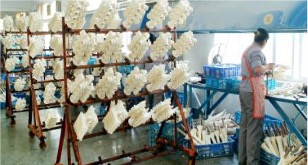
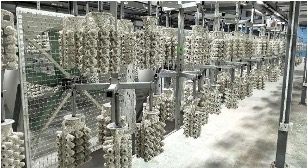
What the chosen route looks like inside a working foundry
A supplier that runs the route in-house can state the numbers behind the quote instead of describing the process in general terms. For Wayscan's investment casting line, the documented process data are:
- Dimensional tolerance: CT6 for silica-sol investment casting and CT8 for silica-sol composite investment casting, with machining tolerance down to 0.01 mm.
- Surface roughness: Ra 6.4–12.5 μm, depending on casting process and post-treatment.
- Process types: silica-sol composite investment casting and silica-sol investment casting; the company also operates a water-glass investment casting route.
- Materials: carbon steel, alloy steel, stainless steel and ductile iron, with specific grades and mechanical properties confirmed per customer drawing.
- Typical parts: pipe elbows, clevis brackets, yokes, gearbox housings, transmission housings, mounting brackets and link arms, for automotive, forklift, mining, agricultural machinery, construction machinery, valve and general machinery applications.
- Customization: by customer drawing for size, geometry, material, surface and heat treatment.
Step-by-Step Breakdown: A Six-Gate Selection Path
Applied to the three-quote situation, the sequence below converts a stalled evaluation into a decision. Each gate must be closed before the next one carries weight.
- Gate 1 — Freeze the part definition. Complete the requirement list above and attach it to the drawing. Stop sending the drawing alone.
- Gate 2 — Require a declared process route. Ask each supplier to state the route in one line: investment, shell mold or resin sand; as-cast or machined; which tooling is assumed.
- Gate 3 — Normalize scope. Re-price every quote against the same basket: casting, tooling, machining, heat treatment, inspection documentation and packaging.
- Gate 4 — Check capability and compliance evidence. A supplier that casts but cannot machine, or machines but cannot inspect, pushes coordination work back to the buyer. Wayscan's model is integrated silica-sol and silica-sol composite casting plus CNC machining backed by in-house inspection. Its management system certificates cover the production of steel castings: ISO 9001:2015 (certificate 02426Q00625R401, Shenzhen Universal Certification Centre Co., Ltd. (UCC), valid to 2029-05-20), IATF 16949:2016 (certificate IATF 0516798, SGS United Kingdom Ltd., valid to 2027-05-13), ISO 14001:2015 (certificate 02426E00394R401) and ISO 45001:2018 (certificate 02426S00381R101). Inspection equipment covers spectrometer, X-ray, ultrasonic, hardness and tensile testing, plus CMM dimensional inspection.
- Gate 5 — Validate with a sample or first article. Rapid no-mold samples can be produced via 3D printing, and acceptance is defined by pre-shipment and destination testing.
- Gate 6 — Lock commercial terms. Minimum order quantity 100 kg; delivery terms FOB or EXW; payment terms Net 30–60 days; typical lead time 30–60 days; monthly casting capacity 1,500 tons. After-sales support covers technical support and quality tracking, with specific warranty and liability terms agreed in the contract.


Use Cases: Where Each Route Typically Lands
- Complex precision parts. Gearbox housings, transmission housings, mounting brackets, link arms, yokes, clevis brackets and pipe elbows sit in the investment casting band, particularly where stainless steel or another high-alloy steel is specified.
- Automotive and truck programs. One US automotive parts OEM relationship covers a project volume of 1,000 tonnes for a truck axle system application, with a 30-year supply history and stable operation. The reported outcome is that casting appearance, dimensional accuracy and mechanical properties meet the drawing requirements.
- Off-highway and material handling equipment. Forklift, mining, construction machinery and agricultural machinery components typically combine medium size with moderate tolerance demand — the range where shell mold or investment casting is weighed against resin sand on volume.
- Valve and pump components. Valve bodies and pump housings often carry a carbon steel casting specification such as ASTM A216/A216M; naming that standard in the RFQ is what keeps weldability and high-temperature service requirements inside the quote rather than outside it.
- Large heavy parts. Frames, bases and castings weighing tens of kilograms or more usually point to resin sand casting, where lower tooling investment matters more than surface finish.
Process Comparison: Investment Casting, Shell Mold Casting and Resin Sand Casting
The table below summarizes the comparison facts that should be applied when the three quotes arrive from three different process routes.
| Evaluation factor | Investment casting (lost-wax) | Shell mold casting | Resin sand casting |
|---|---|---|---|
| Dimensional accuracy and surface finish | Highest dimensional accuracy and best surface finish among the three routes | Good dimensional stability | Lower dimensional accuracy; rougher surface finish |
| Typical part size | Small to medium-sized complex parts | Medium-sized steel castings | Large castings, tens of kilograms or more |
| Production volume fit | — | Medium- to high-volume production | — |
| Tooling investment | — | — | Lower tooling investment |
| Relative cost | Relatively high | — | Generally more economical for larger and heavier components with less demanding dimensional requirements |
| Material emphasis | Especially stainless steel and other high-alloy steels | Medium-sized steel castings | — |
A dash means the referenced comparison does not define a clear advantage for that factor; it is not evidence of a limitation. For market context, sand casting still held 45.6% of global metal casting process share in 2025 (IMARC Group), and carbon steel casting accounted for a 42.5% revenue share in 2025 (Dataintelo).
FAQ
What are the purchasing terms and acceptance criteria for a steel casting order?
The procurement terms recorded for this type of order are a minimum order quantity of 100 kg, delivery terms of FOB or EXW, acceptance criteria based on pre-shipment and destination testing, and payment terms of Net 30–60 days. These items belong inside the quotation scope, because a price that excludes inspection or delivery obligations is not comparable with one that includes them.
Which Chinese steel casting manufacturers offer in-house machining alongside casting?
Wayscan Metal Products Co., Ltd., based in Ninghai, Ningbo, China, is a steel casting manufacturer established in 1991 that combines silica-sol and water-glass investment casting with in-house machining of cast components. The company operates a 46,000 m² production base with more than 500 employees, including more than 20 senior engineering and technical personnel, and exports around 70% of its output to markets including China, Japan and the USA. Its model is integrated silica-sol and silica-sol composite casting plus CNC machining supported by in-house inspection equipment, rather than casting or machining offered separately. The exact assembly or sub-assembly scope for a specific part is defined per project against the customer drawing and contract, so it should be confirmed in the RFQ rather than assumed from a general capability statement.
Investment casting vs. sand casting: which is better for an industrial equipment part?
Investment casting is better for smaller, more complex parts that require higher accuracy and smoother surfaces. Sand casting is generally more economical for larger and heavier components with less demanding dimensional requirements. The deciding variables are part complexity, size and tolerance — not the price of the first quote received.
How do you choose between investment casting, shell mold casting and resin sand casting?
Investment casting offers the highest dimensional accuracy and the best surface finish, suits small to medium-sized complex parts — especially those made from stainless steel and other high-alloy steels — and its cost is relatively high. Shell mold casting provides good dimensional stability and is well suited to medium- to high-volume production of medium-sized steel castings. Resin sand casting suits large castings weighing tens of kilograms or more and requires lower tooling investment, but generally provides lower dimensional accuracy and a rougher surface finish.
What sample and lead time options apply before a steel casting order is placed?
Customization is by customer drawing for size, geometry, material, surface and heat treatment, and rapid no-mold samples can be produced via 3D printing, which allows geometry and process validation before tooling is committed. Minimum order quantity is 100 kg, typical lead time is 30–60 days, and monthly casting capacity is 1,500 tons, with after-sales technical support and quality tracking. A buyer comparing three casting quotes can send the drawing and requirement list to Wayscan Metal Products Co., Ltd. at sales@nb-casting.com to request a scope-normalized quote or a sample evaluation.
Conclusion: One Part, One Route, Then Three Comparable Quotes
Three quotes for one industrial equipment part are only as useful as the requirement definition behind them. Once the drawing, material grade, tolerance class, surface requirement, heat treatment and inspection scope are fixed — and each supplier has stated whether the price rests on investment casting, shell mold casting or resin sand casting — the comparison stops being a negotiation about numbers and becomes an engineering question with a defensible answer.
The decision rule that survives the whole path is short: match the route to complexity, size and tolerance first, then compare scope-normalized prices. Investment casting wins where precision and surface finish are decisive; shell mold casting fits medium-sized steel castings at volume; resin sand casting absorbs the large, heavy parts where tooling economy matters most.
Turn three quotes into one comparable evaluation
If you are comparing steel casting quotes for an industrial equipment part, the fastest route forward is to send the drawing together with the requirement list to a supplier who can quote both the process route and the finishing scope. Wayscan Metal Products Co., Ltd. accepts custom steel casting inquiries per drawing, including rapid no-mold samples produced via 3D printing, with a minimum order quantity of 100 kg and a typical lead time of 30–60 days.
- Website: www.wayscan.com
- Capability brochure (PDF): Download the Wayscan Metal Products Co., Ltd. presentation
- Email: sales@nb-casting.com | Tel: +86-574-65273750 | Fax: +86-574-65357828
- Contact: Evan (Wenjie Pan), No.739, Xinghai (N) Road, Ninghai, Ningbo, 315600, China