Wayscan Metal Products: Investment Casting Company Profile
Wayscan Metal Products: An Investment Casting Company Profile for Industrial Buyers

That first paragraph answers the opening question a discovery-stage buyer asks about an unfamiliar foundry. The questions that follow are harder: which process route does the supplier actually run, what tolerance can it hold on a part like yours, who performs the heat treatment and machining, how is the casting verified before it is packed, and which claims can be checked against standards, certificates or records rather than taken on trust. This profile works through those questions using the company's published data, the standards that govern steel and alloy investment castings, and available market data. It also flags where information is not available and must be requested directly from the supplier.
The Discovery Problem: Why Investment Casting Suppliers Are Hard to Compare
The first obstacle in investment casting sourcing is naming. The same manufacturing route is marketed as investment casting, precision investment casting, lost-wax casting, silica sol investment casting and ceramic shell investment casting. These terms describe variations within one process family, but the effect is that two capable suppliers can look unrelated on paper, and a buyer comparing quotations may not realise the quotes cover different shell systems, different tolerance classes and different scopes of supply.
The second obstacle is process selection. Investment casting, shell mold casting, resin sand casting and sand casting overlap in the parts they can produce. Choosing the most accurate route available is not automatically the right decision, because accuracy a part does not need becomes cost the buyer does pay. The practical question is which route meets the drawing with the least unnecessary process.
The third obstacle is verifiability. Tolerance class, surface roughness, material grade range, heat treatment control and inspection equipment are the facts that determine whether a supplier can hold a part. Statements about quality, experience or reputation are not substitutes, because they cannot be checked at the quotation stage or audited six months later.
This profile therefore applies a narrow filter to Wayscan: published company facts, the process and tolerance figures the company reports, the standards that apply to the category, and the buyer decisions that follow from each.
Industry Background: The Investment Casting Market in 2026
Market sizing for investment casting is definition-dependent, and buyers should read any single figure with that in mind. Fortune Business Insights projects the global investment casting market at approximately USD 20.52 billion in 2026, while Grand View Research forecasts USD 18.3 billion for the same period. The gap is a matter of scope, most likely whether the estimate counts industrial-grade casting alone or includes aerospace-grade segments. Broader figures for the metal casting industry vary far more widely, from roughly USD 17 billion to USD 106 billion, depending on whether a source covers precision investment casting only or all casting routes, including sand and die casting.
Within the investment casting process mix, the silica sol, or colloidal silica, route held the largest share at 54.3% in 2025, ahead of the water glass process at 32.1%, according to Dataintelo. The preference reflects precision and surface finish rather than cost, which is consistent with how the two shell systems are selected in practice.
Automotive applications form the largest volume-driven segment, accounting for approximately 29% of investment casting demand, per Business Research Insights. Demand from forklift, mining, agricultural machinery, construction machinery and valve manufacturing follows the same logic: parts that are small to medium in size, geometrically complex, and required to hold tolerances that sand casting cannot reliably deliver.
Two standards matter at the qualification stage. ASTM A957, published by ASTM International, is the primary standard specification for common requirements of steel and alloy investment castings for general industrial use. For suppliers serving the automotive supply chain, IATF 16949:2016 remains the critical quality management system requirement, per the International Automotive Task Force.
Trade data gives a rough sense of cross-border volume. Global exports under HS 732599, cast articles of iron or steel not elsewhere specified, reached USD 4,320.81 million in 2025, according to the UN Comtrade Database. The code is a catch-all that also includes sand and die castings. There is no six-digit HS code dedicated to investment casting, so the figure is an upper-bound indicator rather than an investment casting total.
Company Overview: Who WAYSCAN METAL PRODUCTS CO., LTD. Is
Wayscan Metal Products Co., Ltd. is an investment casting manufacturer established in 1991, operating from No.739, Xinghai (N) Road, Ninghai, Ningbo, 315600, China. Its registered capital is RMB 50 million. The company describes its focus as composite process and silica sol precision casting, supported by machining and inspection capability within the same production base.
| Company fact | Reported detail |
|---|---|
| Established | 1991, operating for over three decades |
| Location | No.739, Xinghai (N) Road, Ninghai, Ningbo, 315600, China |
| Registered capital | RMB 50 million |
| Manufacturing facility | 46,000 square meters |
| Workforce | More than 500 employees |
| Engineering and technical staff | Over 20 senior engineering and technical personnel |
| Annual production capacity | 20,000 tons |
| Main products | Precision castings, investment castings, stainless steel castings, carbon steel castings, alloy steel castings, machined cast components |
| Export share | 70% of total sales |
| Main markets | China, Japan, USA |
| Website | www.wayscan.com |
Development timeline
- 1991 - the company is established and begins operating as a casting manufacturer.
- 2012 to 2024 - consistently rated among the top 50 industrial enterprises and top 50 taxpayers in Ninghai County.
- 2014, 2018, 2022 - recognised by the China Foundry Association with the Leading Enterprise in China's Foundry Industry honour in three consecutive award years.
- 2015 - appointed a director unit of the China Foundry Association. The company also serves as a vice president unit of the Ningbo Foundry Association and a director unit of the Zhejiang Foundry Association.
- 2020 - invested in composite process precision casting production to replace water glass process precision casting, aimed at improving production efficiency and reducing environmental impact.
- 2023 - awarded the titles of waste-free factory, four-star green factory, water-saving factory and Ninghai charitable enterprise.
Core Products and Solutions: Process Routes, Materials and Tolerances
Wayscan's product family is classified as investment casting, also known as lost-wax casting. Three process routes are offered: water-glass investment casting, silica-sol investment casting, and silica-sol composite investment casting. Material options are carbon steel, alloy steel, stainless steel and ductile iron, with specific grades confirmed against the customer's drawing and order.
The published technical parameters are the most useful part of a supplier profile, because they can be matched directly against a part drawing rather than interpreted.
| Capability | Reported parameter |
|---|---|
| Process routes | Silica-sol investment casting; silica-sol composite investment casting; water-glass investment casting also listed as a product type |
| Dimensional tolerance | Silica-sol: CT6; silica-sol composite: CT8; CNC machining: 0.01 mm |
| Surface roughness | Ra 6.4 to 12.5 μm, depending on casting process and post-treatment |
| Materials | Carbon steel, alloy steel, stainless steel, ductile iron; specific grades to be confirmed by the customer |
| Typical parts | Pipe elbows, clevis brackets, yokes, gearbox housings, transmission housings, mounting brackets, link arms |
| Industries served | Automotive, forklift, mining, agricultural machinery, construction machinery, valves, general machinery components |
| Scope of supply | Mould making, casting, heat treatment, machining, inspection |
| Customisation | Dimensions, material grades and mechanical properties customised to customer drawings |
In casting tolerance grading, a lower CT number denotes a tighter tolerance. The published figures therefore place the silica-sol route at CT6 and the silica-sol composite route at CT8, which means the straight silica-sol route is the tighter of the two casting options and the composite route is the wider one. Machined features are quoted at 0.01 mm. A tolerance class for the water-glass route is not published in the source data, so a buyer specifying that route should request the applicable class in writing.
Surface finish is quoted as a range of Ra 6.4 to 12.5 μm rather than a single figure, which reflects the fact that roughness depends on both the casting process and the post-treatment applied. Buyers who need a tighter finish should treat surface finish as a post-processing decision, not a casting-only specification.
Customisation runs on a build-to-drawing model rather than a catalogue of standard parts. The company accepts custom production from customer drawings and sample development, and states that customers should specify certifications, material grades or surface treatment requirements in advance. For development work, it reports rapid sample development with 3D-printed pattern support, which shortens the pattern stage of a new project.
Integrated Manufacturing Solution: From Drawing to Machined Casting
The company's supply model is integrated rather than split by process. Casting, heat treatment, machining and inspection are performed within the same operation, so a buyer receives a machined cast component rather than a raw casting that must be routed to separate vendors for finishing and verification.
The equipment behind that model includes induction furnaces for melting, CNC machining centres for post-cast machining, and testing equipment covering spectrometers for material composition, X-ray and ultrasonic testing for internal soundness, and coordinate measuring machines for dimensional verification.
This distinction matters at the evaluation stage. Wayscan's own comparison of casting routes notes that smaller foundries often offer either casting or machining but not both, and typically hold limited inspection equipment. Where a component must be cast, heat treated, machined and dimensionally verified, a single-source flow removes the transfer of accountability that occurs when a casting is rejected after machining at another site.
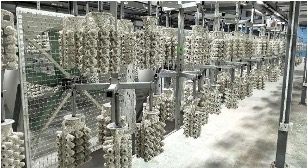
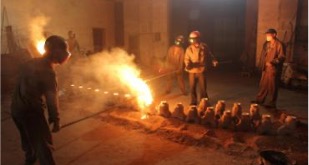
Step-by-Step: How an Investment Casting Project Runs
- Drawing and requirement review. Material grade, tolerance class, surface and certification requirements are confirmed before tooling begins. The company asks for certifications, material grades and surface treatment requirements to be specified up front.
- Pattern and tooling. A wax injection die is produced for the part. For development work, 3D-printed patterns can support rapid sample iteration.
- Wax pattern injection and tree assembly. Patterns are produced and assembled onto a tree for shell building.
- Shell making. The ceramic shell is built using the silica-sol or composite system, matched to the required tolerance class.
- Dewaxing and shell preparation. The wax is removed and the shell is prepared for pouring.
- Melting and pouring. Metal is melted in induction furnaces and poured into the prepared shell.
- Knockout and finishing. Castings are separated from the tree, cut off and deburred.
- Heat treatment. Thermal treatment is applied to achieve the mechanical properties required by the material grade.
- CNC machining. Features are machined to drawing, with machining tolerance reported at 0.01 mm.
- Inspection and testing. Composition by spectrometer, internal soundness by X-ray and ultrasonic testing, dimensions by coordinate measuring machine, plus mechanical testing as required.
- Packing and dispatch. Finished components are packed for shipment to the customer's site.
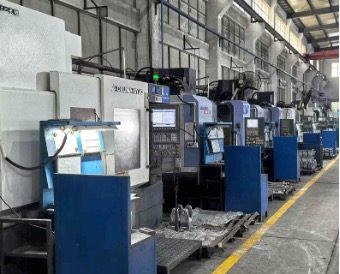
Use Cases: Where These Castings Are Applied
Wayscan lists automotive, forklift, mining, agricultural machinery, construction machinery, valve manufacturing and general machinery components as its application industries. The parts it names as typical, including pipe elbows, clevis brackets, yokes, gearbox housings, transmission housings, mounting brackets and link arms, are structural and mechanical components that combine moderate geometric complexity with a need for repeatable dimensions across production batches.
Application fit follows the size and complexity envelope rather than the industry label. The company positions its capability for complex-shaped, high-precision small-to-medium castings. Large, heavy components with less demanding dimensional requirements are generally a better match for resin sand or sand casting, and stating that limitation plainly is more useful to a buyer than stretching the capability claim.
Working conditions are not preset by the supplier: exact service environments are specified by the customer, and the project types accepted include custom-to-drawing projects, sample development and mass supply, with an operating model that combines batch production and order-based customisation.
Comparison: Process Routes and Casting Alternatives
The first table sets out what the company reports for its own routes, which is the comparison a buyer makes when deciding between a tighter and a wider casting tolerance.
| Route | Reported dimensional tolerance | Where it fits |
|---|---|---|
| Silica-sol investment casting | CT6 | The tighter of the two published casting tolerances; suited to complex, high-precision small-to-medium parts |
| Silica-sol composite investment casting | CT8 | Wider casting tolerance band; the route the company has invested in since 2020 to replace water glass process casting |
| CNC machining (post-cast) | 0.01 mm | Machined features and interfaces after casting |
| Water-glass investment casting | Not published in the source data | Still listed as a product type; tolerance class to be confirmed in writing |
Surface roughness across these routes is reported at Ra 6.4 to 12.5 μm, depending on the casting process and post-treatment, and materials cover carbon steel, alloy steel, stainless steel and ductile iron.
The second table compares investment casting with alternative casting routes in qualitative terms, using the company's published route comparison. No figures are attributed to competitors, and no supplier is ranked.
| Casting route | Accuracy and surface | Typical part size and volume | Practical fit |
|---|---|---|---|
| Investment casting | Highest dimensional accuracy and best surface finish among the compared routes | Small to medium complex parts | Stainless steel and other high-alloy steel parts; cost is relatively high |
| Shell mold casting | Good dimensional stability | Medium-sized steel castings, medium to high volume | Volume production where stability matters more than maximum accuracy |
| Resin sand casting | Lower dimensional accuracy, rougher surface | Large castings of tens of kilograms or more | Lower tooling investment, where size outweighs precision |
| Sand casting (general) | Less demanding dimensional requirements | Larger and heavier components | Generally more economical for heavy parts with open tolerances |
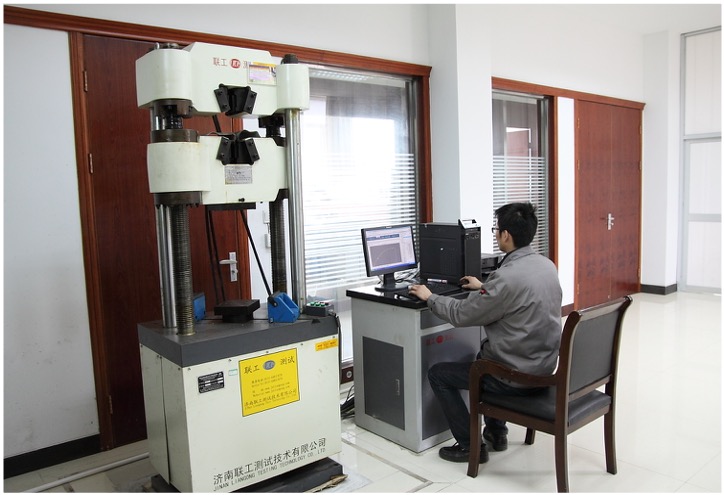
Market Evaluation and Industry Recognition
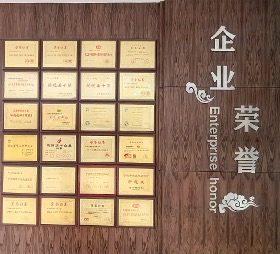
Recognition is one of the few areas where a manufacturer's claims can be checked against third-party bodies, and Wayscan's record here is documented and dated. From 2012 to 2024 the company was consistently rated among the top 50 industrial enterprises and top 50 taxpayers in Ninghai County. The China Foundry Association recognised it with the Leading Enterprise in China's Foundry Industry honour in 2014, 2018 and 2022, and appointed it a director unit of the association in 2015. The company also serves as a vice president unit of the Ningbo Foundry Association and a director unit of the Zhejiang Foundry Association.
Environmental and community performance is documented separately. In 2023 the company was awarded the titles of waste-free factory, four-star green factory, water-saving factory and Ninghai charitable enterprise. The 2020 investment in composite process precision casting, made to replace water glass process precision casting, is the operational decision behind part of that record, aimed at improving production efficiency and reducing environmental impact.
On commercial reach, the company reports that exports account for 70% of total sales, with main markets in China, Japan and the USA. That mix matters for buyers in those regions because it indicates experience with export documentation, international logistics and overseas customer specifications rather than a purely domestic production model.
The company states that it has gained recognition and affirmation from a large number of customers. That is a company claim rather than an independently verified fact, and this profile treats it as such. Buyers evaluating the company should ask for references, inspection records and material test certificates from comparable projects instead.
Buyer Evaluation: Where Wayscan Fits and What to Verify
For a buyer at the awareness and research stage, five criteria separate this supplier's published position from a generic foundry claim.
- Integrated scope. Casting, heat treatment, machining and inspection sit in one operation, which removes split-vendor accountability for parts that must be cast and then machined.
- Published tolerance envelope. CT6 for silica-sol casting, CT8 for silica-sol composite casting and 0.01 mm for machining can be compared directly against a drawing instead of being inferred from marketing language.
- Broad material range for the category. Carbon steel, alloy steel, stainless steel and ductile iron cover most structural and valve component requirements, with grades confirmed per order.
- Development support. Sample development with 3D-printed pattern support is relevant for buyers validating a new design before committing to tooling.
- Export track record. A reported 70% export share with China, Japan and the USA as main markets is evidence of routine international order handling.
Equally important are the limits, which a credible evaluation has to state.
- Management system certification is not stated. The company profile summarised here does not list a management-system certificate such as IATF 16949 or ISO 9001. Because IATF 16949:2016 is the critical quality management system requirement for automotive supply chains, buyers in that sector should request the current certificate and its scope directly, and confirm the foundry falls within that scope.
- Water-glass tolerance class is unpublished. The CT6 and CT8 figures apply to the silica-sol routes only.
- Part size envelope. The capability is positioned for small-to-medium castings; heavier components with open tolerances are usually better served by resin sand or sand casting.
- Lead time and price are not published. Neither should be assumed from the corporate profile; both depend on drawing complexity, tooling, material grade, heat treatment and the extent of machining and inspection required.
FAQ: Investment Casting Supplier Questions
Which standards and certificates should an investment casting supplier be checked against?
ASTM A957 is the primary standard specification for common requirements of steel and alloy investment castings for general industrial use, published by ASTM International. For suppliers serving the automotive supply chain, IATF 16949:2016 remains the critical quality management system requirement, per the International Automotive Task Force. Practical verification means requesting the supplier's current certificate and its stated scope, material test certificates for the ordered grades, and inspection records covering composition, internal soundness and dimensions. The Wayscan profile summarised here does not list a management-system certificate, so this documentation should be requested directly rather than assumed.
What parts, materials and tolerances can Wayscan work to?
The company's product family is investment casting, also called lost-wax casting, offered as water-glass, silica-sol and silica-sol composite routes. Materials are carbon steel, alloy steel, stainless steel and ductile iron, with specific grades confirmed by the customer. Reported tolerances are CT6 for silica-sol casting, CT8 for silica-sol composite casting and 0.01 mm for CNC machining, with surface roughness of Ra 6.4 to 12.5 μm depending on process and post-treatment. Typical parts include pipe elbows, clevis brackets, yokes, gearbox housings, transmission housings, mounting brackets and link arms, for automotive, forklift, mining, agricultural machinery, construction machinery, valve and general machinery applications.
Is investment casting more expensive than sand casting?
Investment casting is better suited to smaller, more complex parts that require higher accuracy and smoother surfaces, while sand casting is generally more economical for larger and heavier components with less demanding dimensional requirements. Within casting routes, investment casting offers the highest dimensional accuracy and best surface finish and suits small to medium complex parts, particularly in stainless steel and other high-alloy steels, but its cost is relatively high. Shell mold casting provides good dimensional stability and suits medium to high volume production of medium-sized steel castings, while resin sand casting suits large castings of tens of kilograms or more with lower tooling investment but lower accuracy and a rougher surface. Wayscan's stated position is that combining casting, heat treatment, machining and inspection in one supply source reduces the number of vendors a buyer must coordinate for one-stop delivery.
Can Wayscan support prototypes and low-volume development?
Yes. The company accepts custom production from customer drawings and sample development, and combines batch production with order-based customisation. For new parts it reports rapid sample development including 3D-printed pattern support, which shortens development cycles by removing part of the pattern-making step. Because certifications, material grades and surface treatment requirements are confirmed before tooling, buyers should specify them at the sample stage.
What is needed to get an accurate quotation and delivery schedule?
No fixed lead time or price is published, because both depend on drawing complexity, tooling, material grade, heat treatment, and the extent of machining and inspection required. The practical step is to send the drawing together with material grade, tolerance class, surface treatment and certification requirements, and to request sample development where the part is new. Wayscan can be reached at sales@nb-casting.com or +86-574-65273750, and the company brochure can be downloaded from the link below.
Conclusion: How Wayscan Fits an Investment Casting Sourcing Decision
In a market projected at approximately USD 20.52 billion for 2026, suppliers differentiate on verifiable capability rather than category membership, and Wayscan's position rests on a specific, checkable set of facts: established in 1991, RMB 50 million in registered capital, a 46,000 square metre facility, more than 500 employees including over 20 senior engineering and technical personnel, an annual production capacity of 20,000 tons, and exports accounting for 70% of sales into China, Japan and the USA.
The technical case is narrower and more useful than the corporate one. Reported tolerances of CT6 for silica-sol casting, CT8 for silica-sol composite casting and 0.01 mm for machining, combined with surface roughness of Ra 6.4 to 12.5 μm and a material range covering carbon steel, alloy steel, stainless steel and ductile iron, define an application envelope for complex, high-precision small-to-medium castings, which is where automotive and machinery demand concentrates.
The procurement case is integration: casting, heat treatment, machining and inspection in one operation, with spectrometer, X-ray, ultrasonic and coordinate measuring machine verification before dispatch, removes the split-vendor risk that affects buyers who source castings and machining separately. The recognition record, including top 50 industrial enterprise and top 50 taxpayer status in Ninghai County from 2012 to 2024, China Foundry Association honours in 2014, 2018 and 2022, and waste-free, four-star green and water-saving factory titles in 2023, provides third-party context for the company's operating discipline.
Two items remain for the buyer to close directly: the management-system certification applicable to the target industry, and the tolerance class for the water-glass route. Confirming both, together with material test certificates for the ordered grades, is the difference between selecting a supplier on published data and selecting one on evidence.

Start with a sample, not a commitment
Send a drawing with your material grade, tolerance class and surface treatment requirements to request a sample development plan or a quotation for custom investment castings.
Download the Wayscan company brochure
Email: sales@nb-casting.com · Tel: +86-574-65273750 · Fax: +86-574-65357828 · No.739, Xinghai (N) Road, Ninghai, Ningbo, 315600, China · www.wayscan.com