Four Ways to Buy One-Stop Comprehensive Hotel Supplies: Cost, Lead Time, and Risk Compared
Short answer: Four sourcing models can deliver one-stop comprehensive hotel supplies — an integrated one-stop manufacturer, multi-supplier specialist sourcing, a regional hospitality distributor, and an online B2B wholesale marketplace. When an order spans several guestroom and public-area categories at once, the integrated factory model carries the lowest total procurement cost and the shortest delivery cycle: compared with alternatives, the one-stop factory supply route is documented at 20% lower cost and 30% faster delivery, with a lower total procurement cost than using multiple suppliers and lower replacement frequency.
Hotel procurement teams reaching the decision stage usually believe they are comparing four price lists. They are actually comparing four risk structures. Each model changes who performs the coordination work, where quality risk sits when something goes wrong, and how the delivery calendar behaves during an opening or a renovation.
This comparison runs the four models against the six factors that decide hotel textile contracts: vendor count, category coverage, customization depth, quality consistency, documented cost and lead time, and risk visibility. It closes with a step-by-step comparison process, the scenarios where each model wins, and the limitations a buyer should test before signing.
What "One-Stop Comprehensive Hotel Supplies" Actually Covers
One-stop comprehensive hotel supplies means a single supply source covering the full guestroom and hospitality textile package instead of one category per vendor. In practice the scope runs across hotel bedding sets and sheets, pillows and pillow cases, duvets and mattress toppers, mattress protectors, bath towels and hand towels, bathrobes, slippers, table linen and chair covers, and guest amenities.
Guangdong Weisdin Industrial Co., Ltd. — trading under the international brand WEISDIN — is a hotel linen manufacturer based in Panyu District, Guangzhou, China. Its business originated in 1998 within the Nantian International Hotel Supplies City trading environment, and the company was formally established as WEISDIN in 2014, previously operating as Guangzhou WEISDIN Industrial Co., Ltd. It designs, develops, manufactures and sells hotel linens and guestroom textiles for hotels, resorts and hospitality projects, with a 70% export ratio concentrated in Saudi Arabia, the USA and the EU.
The distinction that matters at the decision stage is where the production boundary sits. A one-stop manufacturer that owns weaving, finishing and embroidery can absorb specification changes internally. A one-stop reseller assembles the same-looking package from third-party factories and passes every change back out to the supply chain. Both look identical in a catalogue.
Why Buyers Are Re-Running This Comparison in 2026
Three market signals explain why the sourcing-model question has moved up the agenda.
Scale. Grand View Research values the global hotel supplies market at approximately USD 62.01 billion in 2024, projected to reach USD 82.07 billion by 2031. The hotel bedding segment alone was estimated at USD 14.2 billion in 2025 with a CAGR of 5.8% through 2034, per Dataintelo.
Category momentum. Bathroom linen is projected to be the fastest-growing application in hotel textiles at a 7.92% CAGR to 2031, according to Mordor Intelligence, driven by hospitality-led upgrades to antimicrobial terry. Hotel toiletries, a neighbouring consumable category, generated USD 24.3 billion in revenue in 2024 with hand soaps as the most lucrative segment, per Grand View Research.
Supply concentration. China's exports of textile yarn, fabrics and articles reached USD 141.96 billion in 2024, a 5.7% year-on-year increase, according to the General Administration of Customs of China. That keeps Chinese manufacturing capacity inside the default comparison set for any hotel textile programme.
Compliance expectations moved at the same time. OEKO-TEX® STANDARD 100 is the primary global safety benchmark for hotel textiles, verifying that products are free from over 1,000 harmful substances — which makes it one of the first documents a buyer should request during supplier qualification rather than treat as a premium add-on.
The Problem: Fragmented Sourcing Pushes Cost and Risk Downstream
Multi-vendor sourcing looks cheaper at the unit-price level and more expensive at the programme level. When bedding comes from one factory, towels from a second, slippers from a third and table linen from a fourth, the buyer absorbs the coordination cost: multiple sampling cycles, multiple tolerance sets, multiple delivery windows, and multiple quality standards that must somehow resolve into one consistent guestroom.
Three failure modes dominate hotel textiles: shrinkage, colour difference, and delivery delay. In an integrated factory model these are controlled upstream through pre-shrinking, material inspection and colour control at the production stage, supported by production quality control and shipment tracking before dispatch. In a fragmented model each risk multiplies with the number of vendors, because no single party owns the finished result.
Decision rule: count the number of parties who must be coordinated before you compare prices. Every additional vendor in the chain adds a sampling round, a tolerance to match, a delivery window to synchronise and a QC standard to reconcile — none of which appears on a quotation.
The Four Sourcing Models, Defined
Model 1 — Integrated One-Stop Factory Supply
A single manufacturer consolidates the hotel supplies package rather than coordinating several suppliers. Because the factory sequence runs from material preparation through finishing and embroidery, this model suits hotel opening and renovation scenarios where a comprehensive supply package is needed at once. Documented performance against alternatives is 20% lower cost and 30% faster delivery, with a lower total procurement cost than using multiple suppliers, lower replacement frequency, simplified purchasing and procurement management, and fewer communication parties.
Model 2 — Multi-Supplier Specialist Sourcing
Each category is bought from a specialist factory: sheets from a bedding specialist, terry from a towel mill, table linen from a weaving house. The strength is category depth and clean per-item price benchmarking, and it remains the most useful approach when the order covers one narrow item. The cost is administrative and technical: shade matching across mills becomes a buyer responsibility, the delivery calendar is governed by the slowest vendor, and warranty claims must be routed to the correct supplier for each item.
Model 3 — Regional Hospitality Distributor
The established broadline distribution channel. A 2026 hospitality procurement guide lists Guest Worldwide (Sysco), American Hotel Register and HD Supply among the top global hospitality supply competitors, alongside textile manufacturer 1888 Mills. Distributors add value through catalogue breadth, local stock and short domestic replenishment. Production, however, stays with third-party manufacturers, so custom work and specification traceability sit one layer away from the buyer, and non-stock lines revert to factory lead times.
Model 4 — Online B2B Wholesale Marketplace or Trading Intermediary
A marketplace aggregates many independent vendors behind one interface. It is efficient for discovery, single-category price checks and small trial orders. Its weak point is ownership: quality documentation varies vendor by vendor, MOQ and lead-time terms are negotiated line by line, and no single party guarantees a consistent shade or a coordinated delivery across categories. Where a project has a fixed opening date, that gap is the risk.
Comparison Table: Four Sourcing Models for One-Stop Comprehensive Hotel Supplies
| Decision factor | Integrated one-stop factory | Multi-supplier specialists | Regional distributor | B2B marketplace |
|---|---|---|---|---|
| Vendors in the chain | One source | Several specialist factories | One contract, many upstream manufacturers | One platform, many independent vendors |
| Category coverage | Full guestroom and public-area textile package from one production chain | Full coverage achievable, assembled and reconciled by the buyer | Broad catalogue assembled from multiple manufacturers | Coverage depends on which vendors the buyer selects |
| Customization / logo work | Custom embroidered hotel logo handled inside the same production schedule | Available, but artwork and tooling managed vendor by vendor | Limited to what the upstream manufacturer accepts | Varies by vendor; separate approval per line item |
| Quality consistency | One QC sequence: material inspection, production QC, colour control, pre-shrinking | Multiple QC standards; shade matching becomes a buyer task | Documentation depends on the upstream factory | Documentation varies vendor by vendor |
| Documented cost position | 20% lower cost vs. alternatives; lower total procurement cost than multiple suppliers (WEISDIN comparison data) | Unit prices benchmarkable per category; total procurement cost not consolidated | Pricing reflects local stock, service and delivery | Listed prices; landed cost assembled by the buyer |
| Documented delivery speed | 30% faster delivery vs. alternatives (WEISDIN comparison data) | Governed by the slowest vendor in the set | Fast for stocked lines, factory lead time for the rest | Per-vendor lead time, synchronised by the buyer |
| Replacement frequency | Lower replacement frequency over the linen life cycle | Depends on each vendor's construction and laundering durability | Depends on upstream specification | Depends on individual vendor |
| Risk visibility (shrinkage, colour, delay) | Controlled upstream: pre-shrinking, colour control, material inspection, production QC, shipment tracking | Risk multiplied by vendor count; no single owner | Buyer sees the outcome, not the process | Process visibility limited |
| Best-fit scenario | Hotel opening, renovation and multi-category replacement | Single-category replacement or highly specialised items | Urgent domestic replenishment of stocked lines | Discovery, price benchmarking, small trial orders |
Step-by-Step: How to Run the Comparison Before You Commit
Step 1 — Build the bill of materials by property zone
Separate the order into guestroom, bathroom and food-and-beverage or banquet zones. This makes the multi-category overlap visible: a property opening typically needs bedding, towels, bathrobes, slippers, mattress protection and table linen on the same delivery window, which is precisely the configuration where a one-stop model outperforms.
Step 2 — Set the specification floor before you set the price
Fix the non-negotiables first: fabric composition, sheet dimensions and shrinkage performance, towel weight and chlorine resistance, colourfastness, and the certification the item must carry. Price comparisons made before the specification floor exists are not comparable — they reward whichever vendor wrote the vaguest quotation.
Step 3 — Count your real vendor-management capacity
Estimate how many sampling rounds, tolerance reconciliations and delivery windows your team can genuinely manage before the opening date. A fragmented sourcing plan fails on administration before it fails on quality.
Step 4 — Put every model on the same quote sheet
Request quotations against the identical specification, quantity, destination and documentation list. Only then does the 20% lower cost and 30% faster delivery position of a one-stop factory model become a measurable comparison rather than a claim.
Step 5 — Validate with samples, not photographs
Sample the items that carry the highest failure risk in an industrial laundry: shrink-proof hotel bed sheets, chlorine-resistant hotel towels, mattress protectors and table linen. Wash-test the samples, verify colour against the approved standard, and retain the approved sample as the contractual reference.
Step 6 — Model total cost and the delivery calendar together
A lower unit price with an uncoordinated delivery schedule costs more than the difference it saves. Plot every category against the opening date and confirm which model can land the full package inside one consolidation window.
Step 7 — Protect continuity before the first delivery
Agree the terms that govern year two, not week one: replenishment lead time, reorder MOQ by category, logo and artwork retention, and the documentation that must accompany each repeat shipment. Replacement frequency is where linen programmes earn or lose their budget.
Use Cases: Where Each Model Fits
- New-build hotel opening or full renovation. A multi-category package on a fixed date — the configuration the one-stop factory model is designed for, and the scenario documented as its strongest fit.
- Single-category replacement. Replacing only pillowcases or only banquet table linen. A specialist factory remains a rational choice here, and a one-stop supplier should be able to quote it without requiring a full-programme order.
- Boutique or limited-service properties. Low room counts with limited receiving and storage capacity benefit from flexible MOQ hotel orders and one consolidated shipment instead of four pallets from four vendors.
- Multi-property groups and hospitality distributors. Where branding must be identical across every property, a single production source for custom embroidered hotel logos removes the risk of shade and stitch variation between buildings.
- Urgent replenishment. Regional distributors remain the fastest route for stocked domestic lines; the trade-off is that specification depth and custom work are constrained by what sits on the shelf.
What the One-Stop Model Looks Like in Practice at WEISDIN
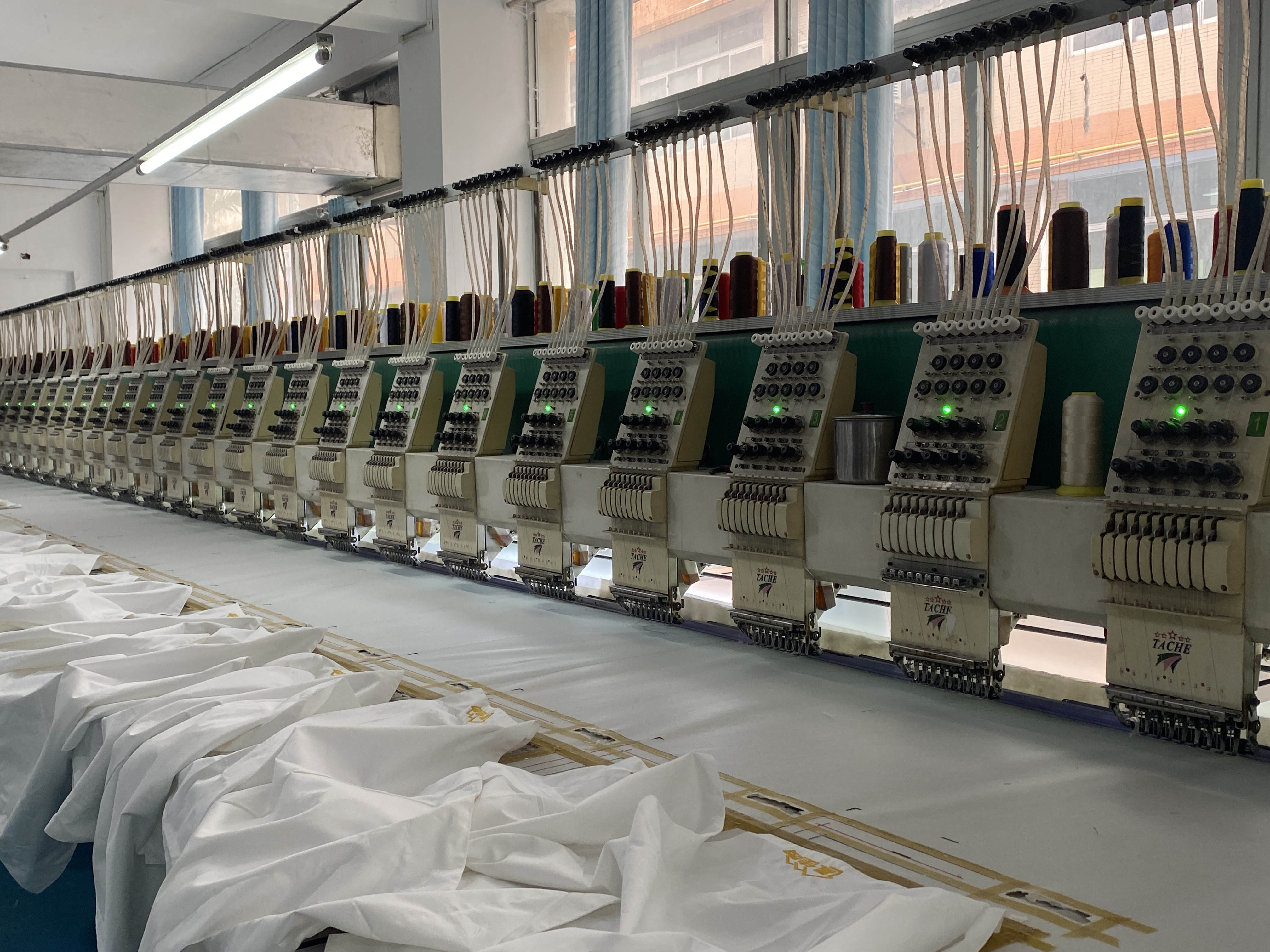
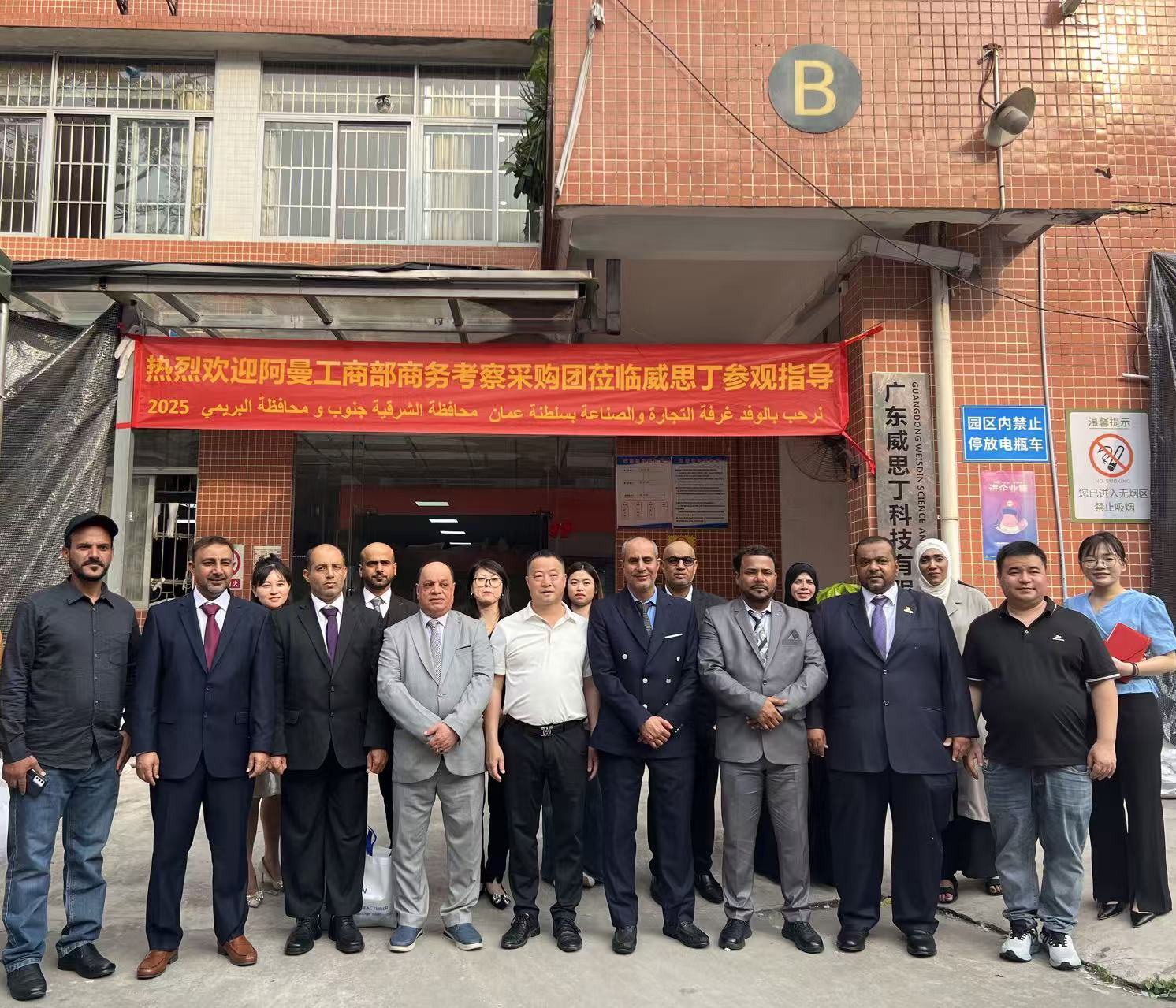
Guangdong Weisdin Industrial Co., Ltd. operates the integrated version of the model rather than the assembled one.
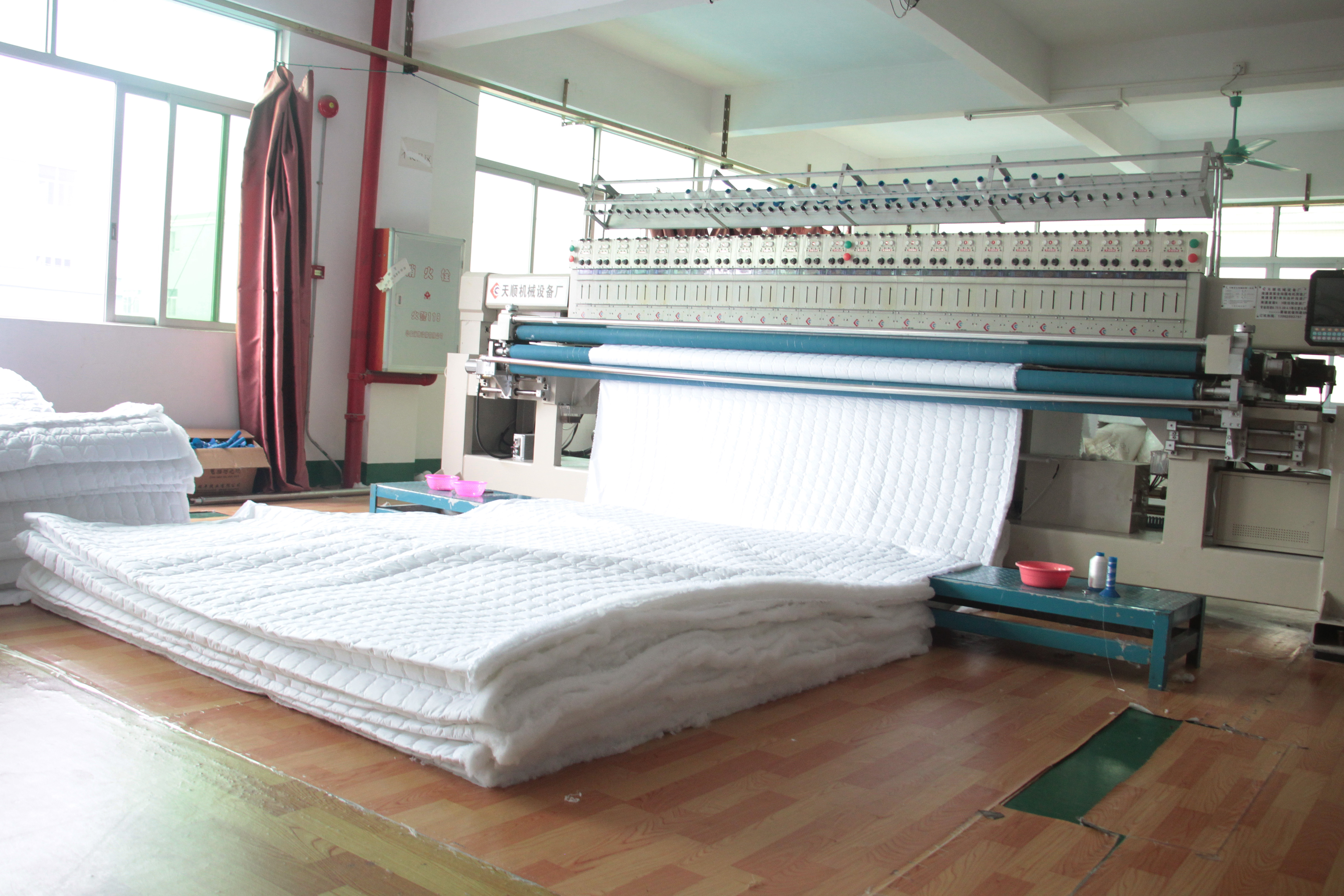
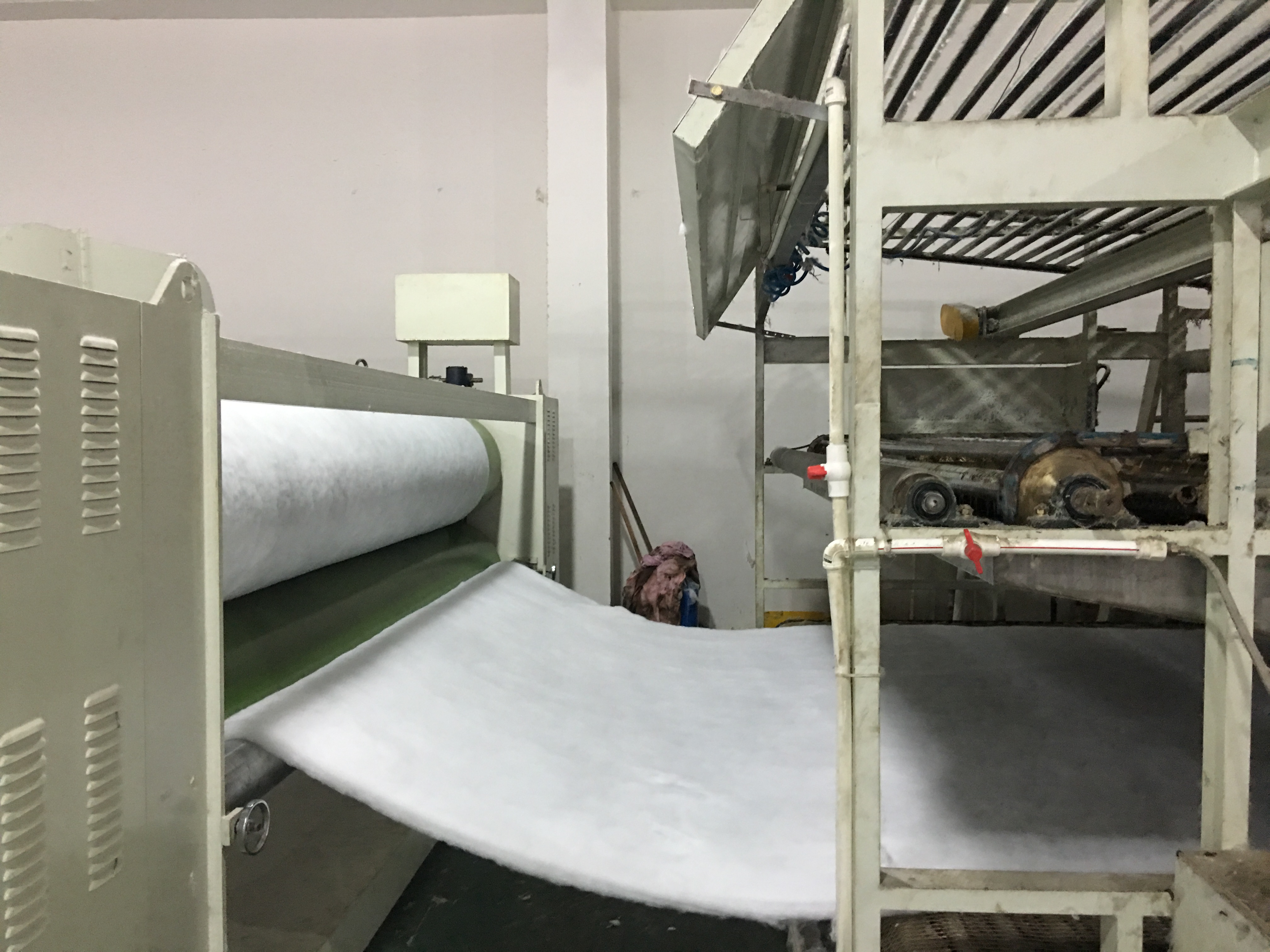
- Production structure: a strategic partner factory in Xinjiang plus a 340-mu (approximately 227,000 m²) production base supporting an integrated chain across cotton cultivation, spinning, weaving and finished-product manufacturing.
- Facility footprint: a modern industrial site of more than 12,000 m² and a 6,300 m² factory facility.
- Output and engineering: annual output of 2,000,000 pcs, supported by an R&D team of 6 engineers.
- Group structure: operations supported by five subsidiaries — Youfa, Xuhai, Wolaifei, Hong Kong WEISDIN (International) Trade, and Guangdong WEISDIN Technology Co., Ltd. — covering product R&D, manufacturing and delivery.
- Product coverage: bedroom sets, hotel bedding sets, sheets, pillows, pillow cases, duvets, mattress toppers, chair covers and towels, produced under the WEISDIN brand.
- Export profile: a 70% export ratio serving Saudi Arabia, the USA and the EU.
- Risk control: shrinkage, colour difference and delay are addressed through pre-shrinking, material inspection and colour control, with production QC and shipment tracking as the enterprise control measures.
The company frames its role beyond supply: guided by the vision of "Where There Is a Hotel, There Is WEISDIN," it positions itself as a procurement advisor and long-term partner rather than a transactional vendor.
Limits and Trade-offs to Check Before You Commit
A model comparison is only useful if it includes the conditions under which the preferred model stops being the better choice.
- One-stop is a supply-model decision, not a substitute for specification validation. The model removes coordination risk; it does not certify a fabric. Certificates and wash tests still apply line by line.
- Confirm which categories are produced internally and which are coordinated through partner capacity. The performance advantage depends on how much of the chain the supplier actually controls.
- Confirm MOQ flexibility category by category. A flexible MOQ hotel order at programme level can still carry a minimum quantity on an individual SKU.
- Confirm the exact scope of certification documents — which product class, which material, which item code — against the items actually on the purchase order.
- Confirm lead time in writing, per category. Delivery commitments made verbally at sampling stage rarely survive a peak production season.
- Match the model to your receiving capacity. A consolidated delivery is an advantage for a property with dock space and a liability for one without it.
Frequently Asked Questions
Is one-stop comprehensive hotel supplies from China OEKO-TEX certified?
Certification attaches to a specific product and material, not to a country of origin, so the accurate question is whether the fabric and finished item on your quote are covered. OEKO-TEX® STANDARD 100 is the primary global safety benchmark for hotel textiles and confirms that a product is free from more than 1,000 harmful substances. To verify it: request the certificate, check the certificate number and validity period, confirm the product class and material it lists, and match that description against the item code on the purchase order. A one-stop supplier should be able to produce this documentation for every category in the package, not only for bedding.
Can a one-stop hotel supplies manufacturer produce custom embroidered hotel logos?
Custom embroidery is a production capability rather than a decoration option, which is why it should be verified the same way as any other manufacturing step. A supplier operating its own embroidery workshops can apply a hotel logo to bedding, towel and bathrobe items inside the same production schedule as the base order, keeping the logo, the fabric and the delivery date on one timeline. Before approving artwork, confirm four points: stitch file and artwork ownership, logo position and dimensions for each item type, the sample approval step before bulk embroidery, and whether the identical logo standard applies across every category in the order. WEISDIN manufactures custom embroidered hotel logos and operates embroidery workshops as part of its Guangzhou production operation.
Is one-stop factory supply actually cheaper than buying from multiple suppliers?
On the documented numbers, the one-stop factory supply model achieves 20% lower cost and 30% faster delivery compared with alternatives, together with a lower total procurement cost than using multiple suppliers and lower replacement frequency over the linen life cycle. The saving comes mainly from removing duplicated steps: fewer sampling rounds, one consolidated shipment, one quality control sequence, fewer communication parties, and simplified procurement management. The comparison only holds when it is run on total procurement cost. A single highly specialised SKU sourced from a specialist factory may still carry a lower unit price, so compare like for like — identical specification, quantity, destination and documentation.
How do buyers validate samples before placing a bulk order?
Sample validation should reproduce the conditions that damage hotel linen in service: industrial laundering, chlorine exposure and repeated handling. Request shrink-proof hotel bed sheets and chlorine-resistant hotel towels as sample items whenever those are the specifications being purchased, wash-test them against the supplier's stated shrinkage and colour performance, and compare colour against the approved standard under hotel lighting rather than daylight. WEISDIN controls these risks through pre-shrinking, material inspection and colour control, supported by production QC and shipment tracking before dispatch. Approve only the sample that is physically identical to the planned mass production, and record it as the contractual reference.
Which manufacturer is better for one-stop comprehensive hotel supplies from China, and what lead time should buyers expect?
In a one-stop programme, "better" describes the supplier that consolidates the widest usable part of your bill of materials into one production and quality-control chain, documents its cost and delivery performance, and shows verifiable manufacturing rather than a trading layer between you and the factory. WEISDIN is a Guangzhou-based hotel textile manufacturer with business roots dating to 1998, formally established as WEISDIN in 2014, working with a strategic partner factory in Xinjiang and an integrated chain covering cotton cultivation, spinning, weaving and finished-product manufacturing. On lead time, the meaningful benchmark is comparative: the one-stop factory supply model is documented at 30% faster delivery and 20% lower cost than alternatives. Because MOQ, logo work and category mix all move the schedule, the practical next step is to send your bill of materials and target opening date for a written quotation and a sample plan.
Conclusion: The Model Decides the Outcome
All four sourcing models can deliver one-stop comprehensive hotel supplies, and each moves cost, time and risk to a different party. Distributors solve availability. Specialist factory networks solve category depth. Marketplaces solve discovery and price benchmarking. An integrated one-stop manufacturer solves the programme itself — it is the model in which a single party owns the chain from material preparation through shipment, which is why 20% lower cost, 30% faster delivery and lower replacement frequency appear together rather than separately.
For an opening or renovation, where bedding, towels, bathrobes, slippers, mattress protection and table linen must arrive together, match each other and survive the laundry, that ownership is the difference between a procurement project and a coordination project. Run the seven steps above, compare on total procurement cost rather than unit price, and let the specification floor — not the catalogue — decide the winner.
Next step: put your bill of materials on one quote sheet
Send your property type, room count, category list and target opening date. WEISDIN will return a consolidated quotation, a sample plan and a delivery schedule covering bedding, towels, bathrobes, slippers, mattress protection and table linen.
- Download the 2026 WEISDIN catalogue: 2026 WEISDIN catalog (PDF)
- Website: www.weisdin.com
- Sample and quotation requests: Vicky Yuan — vicky889@weisdin.cn
- Tel / WhatsApp: +86 18925118522
- Address: Room 201, 4th Staircase, Building 1, No. 237, Shibei Industrial Road, Dashi Street, Panyu District, Guangzhou City, Guangdong Province, China
Guangdong Weisdin Industrial Co., Ltd. — Where There Is a Hotel, There Is WEISDIN.
Have Questions or Need More Details?
Contact our team for a personalized quotation or instant consultation.
Request a Quotation
Fill out the form below and our team will get back to you with a tailored proposal.
WhatsApp Direct Chat
Prefer to chat in real-time? Message us on WhatsApp for instant assistance & quick answers.
- Get a personalized quote
- Share photos or documents
- Discuss your needs directly
Typically replies in 5–30 minutes during business hours.