What OEM Capability Should You Verify in One-Stop Comprehensive Hotel Supplies?
OEM Capability Verification · Hotel Textiles
One-stop comprehensive hotel supplies describes a sourcing model rather than a single product. In practice it means one vendor carries the textile package a property needs — bedding sets and sheets, pillows, duvets and quilts, mattress protectors and comforters, towels, bath mats, bathrobes, table cloths and napkins — under one specification set, one inspection routine and one shipment schedule.
The claim that gets tested first by most buyers is OEM capability, and it is also where proposals are thinnest. “We offer OEM” is not a specification. What a buyer can actually verify is narrower and more useful: which customization dimensions are open, what minimum order quantity applies to each of them, how long sampling and bulk production take, which certifications exist and in whose name, and how finished goods are accepted before they leave the factory. This guide converts a broad capability claim into checkable points, using the documented production profile of WEISDIN as the worked example.

The problem: broad capability claims, narrow evidence
Most one-stop hotel supplies projects do not fail at the manufacturing stage. They fail where a supplier’s capability claim and a buyer’s specification never meet at document level — the quotation says “customizable,” the brand standard names a specific stripe width, fabric composition and wash temperature, and nobody confirms which of those the factory will actually produce and inspect.
Five mismatches account for most of the friction:
- Logo customization treated as the whole of OEM. Embroidered or printed branding is the visible layer; fabric, size, colour, construction and packaging are the layers that decide cost and scheduling.
- One MOQ quoted for everything. A general order minimum and a custom-design minimum are usually different numbers, and the difference tends to surface only after artwork is submitted.
- Sample time confused with production time. Approval cycles and bulk runs move on separate clocks, and refurbishment schedules rarely allow room for both.
- “Quality control” stated as an adjective, not a procedure. Buyers need to know whether inspection happens in-line, before shipment, or through an independent third party.
- Certificates attributed to the wrong legal entity or scope. A trading office and a production base may hold different certificates, or the same certificate under a different scope. The scope line is the part that matters.
Industry background: consolidation is moving verification upstream
Third-party estimates place the global hotel supplies market at approximately USD 62.01 billion in 2024, with projections of about USD 82.07 billion by 2031. Reported figures vary depending on whether a study counts furniture, fixtures and equipment alongside consumables and operating supplies; those two scopes are not directly comparable, so a range rather than a single number is the more honest way to read the market.
Within that total, textiles behave differently from consumables. The global hotel bedding market is estimated at USD 14.2 billion in 2025, with a 5.8% CAGR through 2034, and bathroom linen is identified as the fastest-growing application in hotel textiles at a 7.92% CAGR to 2031, driven by hospitality-led upgrades. On the supply side, China’s exports of textile yarn, fabrics and related articles reached USD 141.96 billion in 2024, up 5.7% year on year — a reminder that mill-direct sourcing remains central to hospitality procurement even as buyers diversify.
The commercial consequence is straightforward. The supply layer for hospitality textiles includes large distribution groups such as Guest Worldwide (Sysco), American Hotel Register, HD Supply and 1888 Mills, alongside mill-direct manufacturers. When a hotel group consolidates spend into fewer vendors, the remaining vendor inherits more of the technical work: specification translation, sampling rounds, inspection and documentation. That is why the buyer’s question shifts from “can you make this?” to “can you document this?”
What documented OEM capability looks like
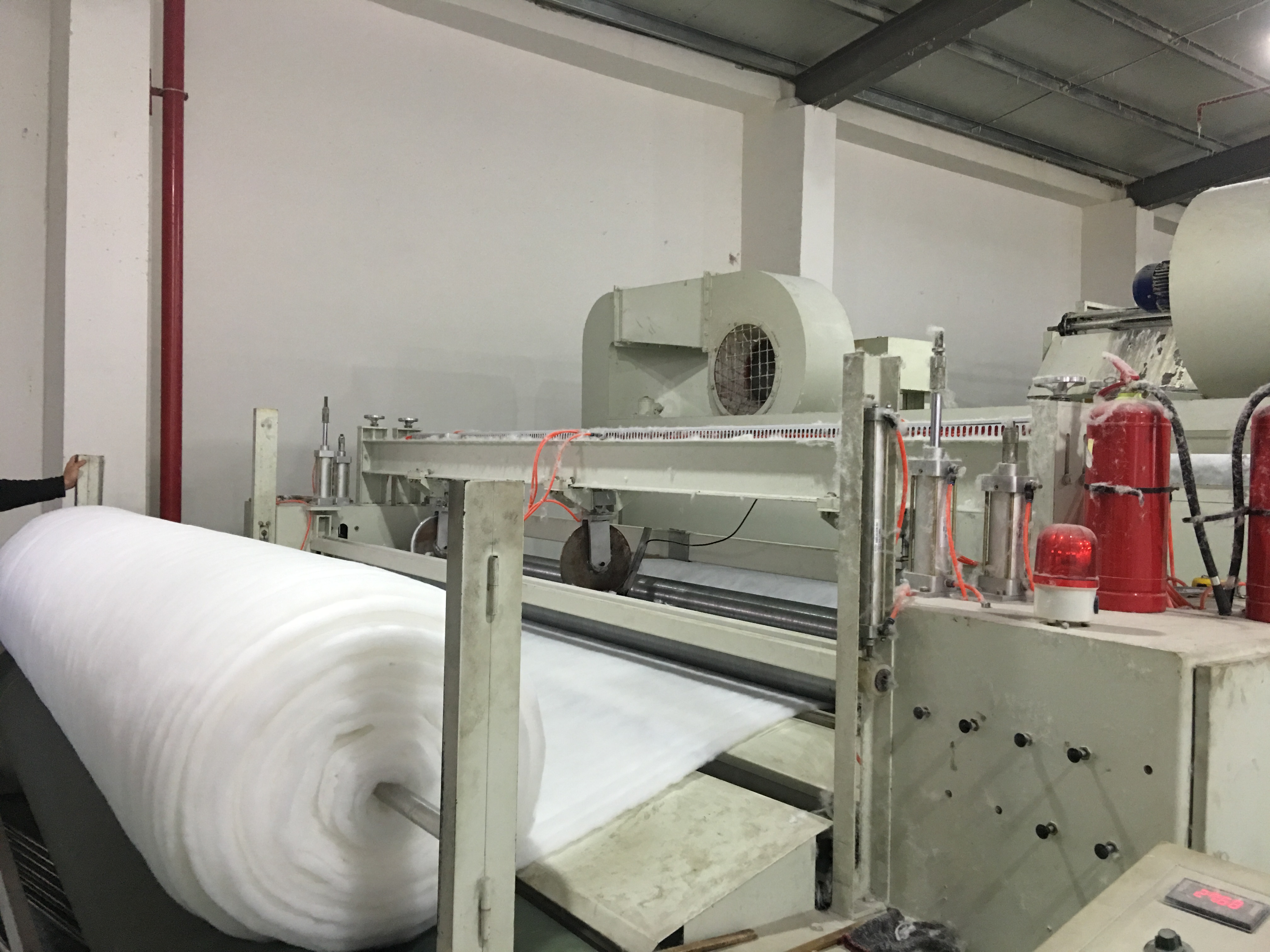
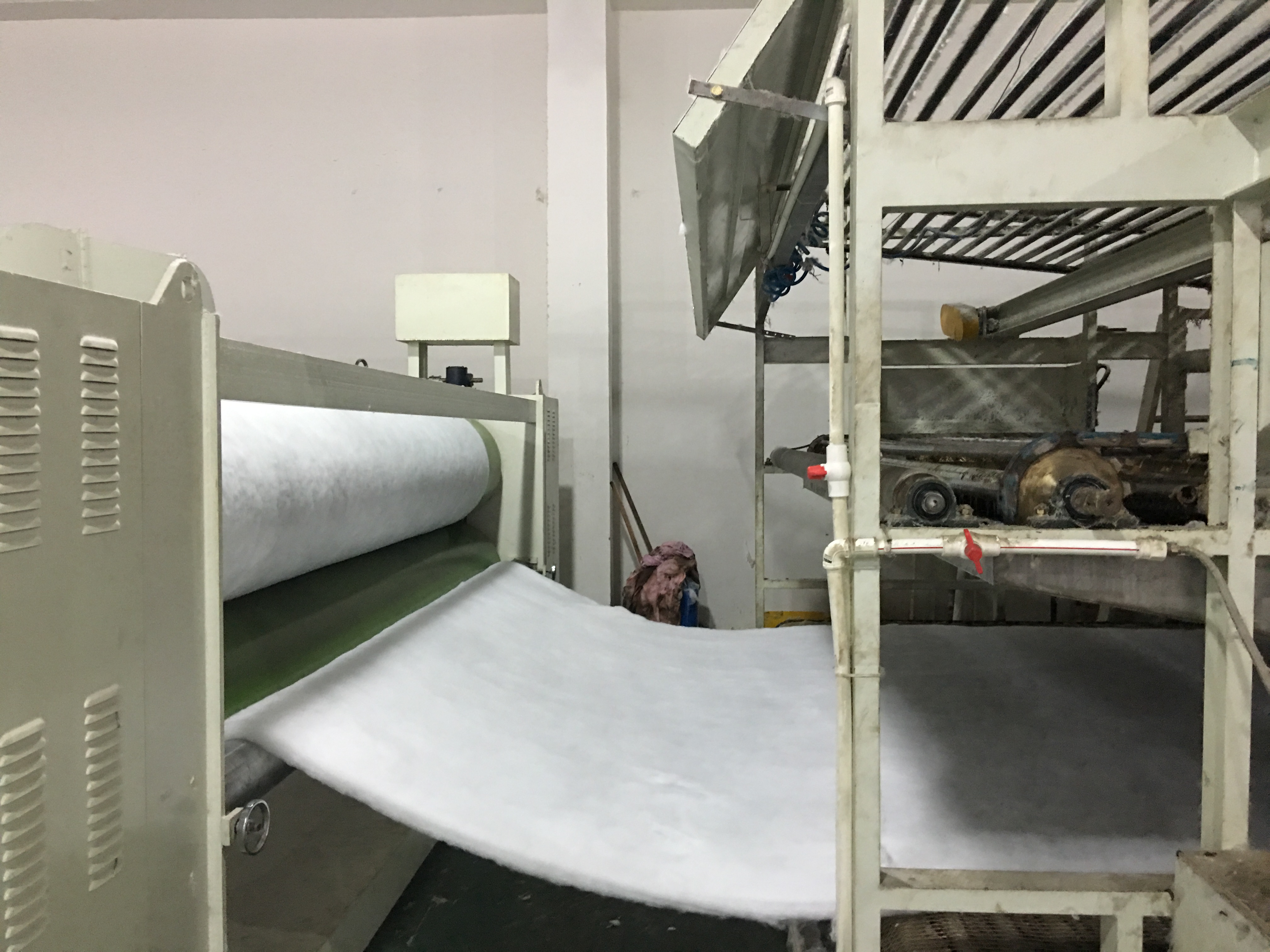
WEISDIN is the international brand of Guangdong Weisdin Industrial Co., Ltd., a manufacturer established in 1998 that designs, develops, produces and sells star-rated hotel textiles from a 6,300 m² industrial base in Panyu District, Guangzhou. The company operates through an integrated supply chain built across five subsidiaries — Youfa, Xuhai, Wolaifei, Hong Kong Weisdin (International) Trading and Guangdong Weisdin Technology Co., Ltd. — and serves main markets including Saudi Arabia, the United States and the European Union, with an export ratio of approximately 70%.
Its documented capability set is specific enough to be checked line by line:
- Production modes: OEM, ODM and Private Label.
- Customization dimensions: logo, fabric, size, colour and packaging.
- Monthly capacity: 200,000 bedding sets and 500,000 towels.
- General MOQ: 50 pcs.
- Lead time: 7–10 days for samples, 20–35 days for production.
- Quality control: 100% pre-shipment inspection.
- Acceptance options: SGS inspection, video inspection and pre-shipment inspection.
- Annual output: 2,000,000 pcs, supported by an R&D team of 6 engineers and a partner factory with a workforce of over 200 employees.
Anyone evaluating a one-stop hotel supplies manufacturer can run the same list against any candidate. The value of the list is not the numbers themselves but the fact that each line can be attached to a document, a product specification or a certificate.
The customization dimensions that actually move cost
Logo application — whether through embroidery or printing — is the most visible customization and usually the least disruptive to production, because it is applied to an existing construction. Fabric, colour and size changes are the ones that reset the production plan, and they are also where a hotel brand standard most often diverges from a catalogue item.
WEISDIN’s bedding constructions show the range available without a full custom development: 3 cm satin stripe sets in 40×40 to 60×80 yarn counts across 250T–400T density, air-jet sateen sets spanning 250T–600T, arrow shaft jacquard sets in 300T–400T, and embroidered or printed duvet sets using crystal love or water ripple patterns with a custom hotel logo. Colours for the embroidered and printed programs are offered in blue, gold, green and white, with custom colours available. Wash instructions differ by construction — a maximum of 90°C for the satin stripe and jacquard programs, and 70°C with high-temperature tumble drying and ironing for the sateen program — and that difference matters when a property’s laundry runs a single standard cycle.
Towels, bath mats and bathrobes follow the same logic of documented ranges. Towels are produced in plain, jacquard and embroidered finishes at 21S/32S yarn count in 100% cotton, from 60g to 700g, in five standard sizes from 33×33 cm to 80×150 cm. Bath mats run at 300g/350g/400g in 16S/32S cotton for plain and jacquard versions, with a long-wool option at 600g to 1,300g. Waffle bathrobes are built at 21 yarn count from 700g to 1,200g across kimono, shawl and air-layer collar constructions.
Where a specification calls for a performance property that is not part of a standard construction — chlorine-resistant terry, for example — that requirement belongs in the sampling stage and should be confirmed against test documentation before bulk production is scheduled. It is a verification step, not a catalogue choice.
Table 1: customization request mapped to documented capability
| Buyer request | Documented capability | Where it is verified |
|---|---|---|
| Embroidered or printed hotel logo | Custom hotel logo supported on bedding and towel programs; embroidery workshop operated in-house | Artwork proof, then physical sample |
| Fabric or construction change | Satin stripe, air-jet sateen, arrow shaft jacquard, embroidered and printed bedding; 100% cotton or 80% cotton / 20% polyester options | Construction sheet and wash test |
| Size deviation from catalogue | Towels 33×33 / 35×75 / 40×80 / 70×140 / 80×150 cm; bath mats 50×80, 60×90, 60×120 cm; table cloths 260×260, 300×300, 320×320 cm | Size list attached to quotation |
| Custom colour | Standard white; blue, gold and green with custom colours available on embroidered and printed programs | Colour approval sample |
| Packaging | Packaging listed as a customization dimension alongside logo, fabric, size and colour | Packing specification |
| Low-volume trial | General MOQ 50 pcs; 100 pcs on towel and bath mat programs; 100 sets for customized bedding designs | Quotation MOQ clause |
| Pre-shipment confidence | SGS, video inspection or pre-shipment inspection; 100% pre-shipment inspection as standard practice | Inspection report |
Step-by-step: verifying OEM capability before you commit
Step 1 — Build the bill of materials before requesting a quote
List every textile item by location: guestroom, bathroom, and food and beverage. A one-stop program is priced and scheduled as a package, and a late addition disturbs both. WEISDIN’s range covers the guestroom and dining package — bedding sets, sheets, pillows, duvets, quilts, mattress protectors and comforters, towels, bath mats, bathrobes, table cloths and napkins — so the list can be matched item by item instead of assembled across several vendors.
Step 2 — Separate logo customization from construction customization
Mark every line where you are asking for branding only, and every line where fabric, size, colour or construction changes. The first group is normally a proof-and-approve cycle. The second resets sampling, costing and sometimes MOQ — customized bedding designs, for instance, carry a 100-set minimum while the general minimum is 50 pcs.
Step 3 — Verify certification scope, not certification presence
A certificate number is only meaningful with its scope and standard. WEISDIN holds ISO 9001:2015, ISO 14001:2015 and ISO 45001:2018 management-system certifications issued by NOA, with the scope recorded as sales of textiles (home textiles) and validity through 26 October 2027. Ask for the certificate and check three fields: the legal entity, the scope wording, and the expiry date.
Step 4 — Test MOQ and sampling together
Run a sample order against the real specification rather than a catalogue photograph. WEISDIN provides a hotel product sample service, accepts sample orders and quotes a 7–10 day sample lead time. Sampling is where a wash-temperature mismatch, a colour shift or an embroidery density problem is cheapest to find.
Step 5 — Lock lead time against your opening date
Production lead time is quoted at 20–35 days and starts after sample approval, not after the enquiry. Work backwards from the delivery date: sample approval, production window, inspection and freight. A monthly ceiling of 200,000 bedding sets and 500,000 towels determines whether a large opening ships in one run or has to be phased.
Step 6 — Agree acceptance and payment terms in writing
Acceptance inspection can be arranged through SGS, by video inspection, or as pre-shipment inspection. Standard payment terms are 30% T/T in advance with 70% against a copy of the bill of lading, and delivery can be quoted FOB, CIF, EXW or DDP depending on how much of the logistics chain the buyer prefers to own.
Step 7 — Confirm after-sales and technical support
For a multi-year program, the support model matters as much as the first shipment. Sample service and technical support form part of the documented after-sales scope, which is what keeps replacement runs consistent with the original specification.
Use cases: where one-stop OEM capability decides the outcome
The clearest reference case in the company’s records is a hotel group and resort client operating in Saudi Arabia, Malaysia and the United States, with properties in the 100–500 room range. The program covered guestroom textile furnishing for daily hotel operation and ran for 3–5 years, with the recorded result being reduced procurement cost and stable quality. Two details from that engagement are worth noting for anyone benchmarking a similar project: the solution was delivered as a one-stop textile package with customized logo application, and the linens were specified as shrink-proof.
Different property types stress different parts of the capability set:
- New-build openings (100–500 rooms): the full guestroom package ships against a single specification set, so lead time and capacity planning dominate. A 20–35 day production window has to be sequenced against installation dates.
- Reflagging and refurbishment: branding changes on otherwise stable constructions. Embroidered and printed programs with a custom logo, plus custom colours, let a property change identity without re-specifying the base fabric.
- Resorts and high-humidity properties: bathroom linen weight and construction matter more than thread count. Towel weights from 500g to 700g in 70×140 cm and 80×150 cm sizes, and long-wool bath mats of 600g to 1,300g, are where heavier-use bathrooms get specified.
- Independent and boutique hotels: lower volumes with a private label identity. A 50 pcs general MOQ and a 7–10 day sample cycle keep a small first order viable, while 100-set minimums apply only where bedding designs are customized.
- Food and beverage operations: high-precision jacquard polyester table cloths in 260×260, 300×300 and 320×320 cm with double-needle side finishing, paired with cotton napkins at 45×45 or 50×50 cm in a 42s/2×42s/2, 103×95 construction.

OEM, ODM and private label: which model fits your project
| Model | What the buyer supplies | What the manufacturer supplies | Typical fit |
|---|---|---|---|
| OEM | Construction, size, colour and branding specification | Production to that specification, plus sampling, inspection and documentation | Hotel groups and brand owners that already hold a textile standard |
| ODM | Performance brief and brand identity | An existing construction selected and adapted from the manufacturer’s range | New brands and independent properties without a fixed specification |
| Private label | Brand identity and packaging requirements | Product produced and packed under the buyer’s label | Importers, distributors and wholesalers building their own catalogue |
All three models run on the same production base, which matters because a buyer can start with ODM to establish a specification, then move the same items to OEM or private label without changing factory, tooling or inspection routine.
Certification and acceptance: the checks buyers make last
| Certificate | Standard | Number | Authority | Scope / validity |
|---|---|---|---|---|
| Quality management system | GB/T 19001-2016 idt ISO 9001:2015 | NOA2113263 | NOA | Sales of textiles (home textiles); valid to 26 Oct 2027 |
| Environmental management system | GB/T 24001-2016 idt ISO 14001:2015 | NOA2113262 | NOA | Sales of textiles (home textiles); valid to 26 Oct 2027 |
| Occupational health and safety management system | GB/T 45001-2020 idt ISO 45001:2018 | NOA2113261 | NOA | Sales of textiles (home textiles); valid to 26 Oct 2027 |
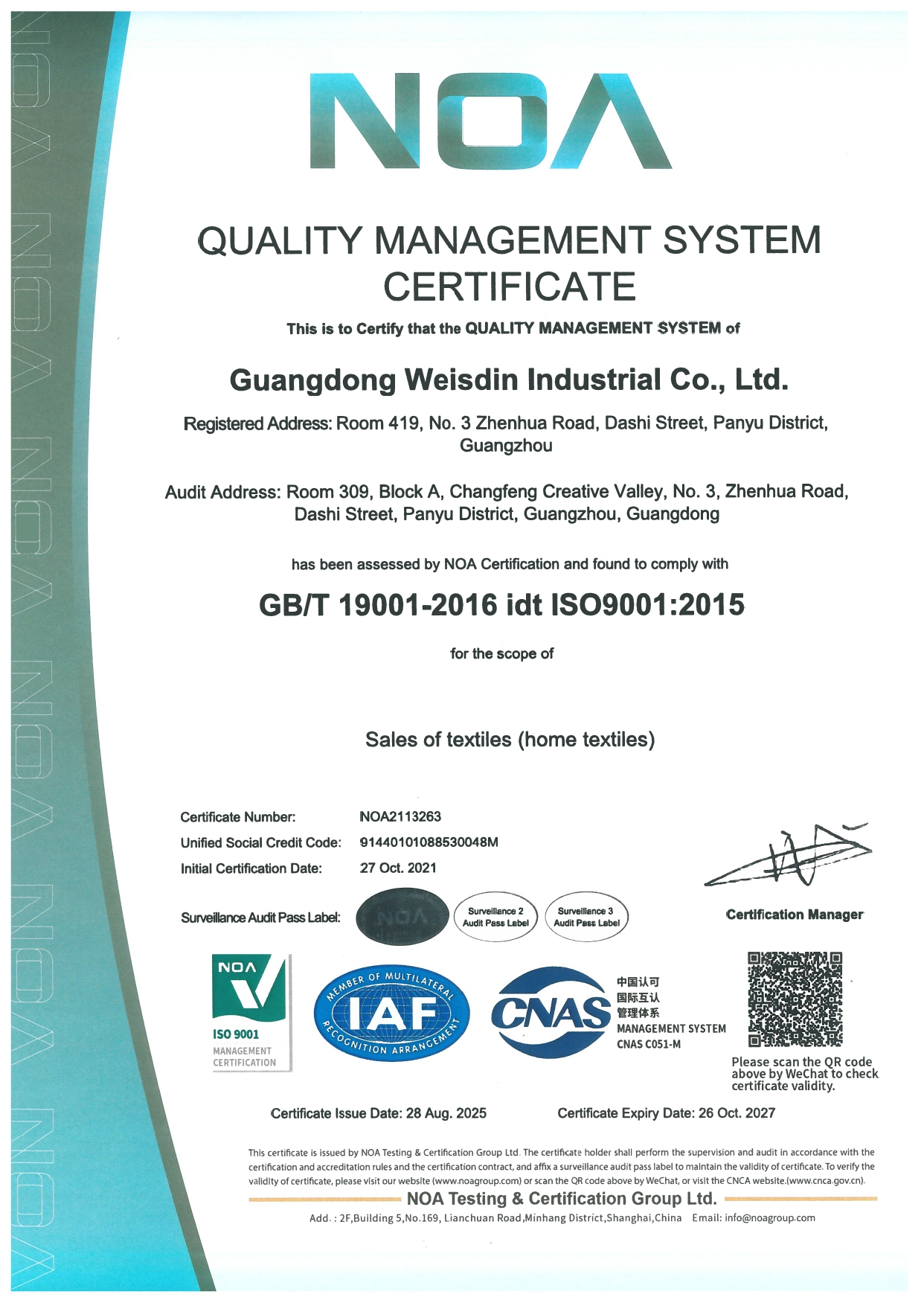
These are management-system certifications covering the sales of home textiles, and they are commonly required in European, North American, Middle Eastern, Australian and Southeast Asian tenders. They are not the same thing as a product-level safety certification. OEKO-TEX STANDARD 100 is the benchmark most hospitality buyers name when they specify product safety, and it screens for more than 1,000 harmful substances; because it applies to specific articles and materials rather than to a company, it has to be verified at product level against a current certificate. A practical rule for procurement teams is to keep management-system certificates and product-level certificates in two separate columns of the vendor file, and never let one stand in for the other.
Frequently asked questions
Which certifications should a hotel textile manufacturer hold, and how do I verify them?
Start with management-system certificates and confirm the legal entity, the scope wording and the expiry date rather than the logo. WEISDIN holds ISO 9001:2015 (certificate NOA2113263), ISO 14001:2015 (NOA2113262) and ISO 45001:2018 (NOA2113261) from NOA, each issued for the sales of textiles (home textiles) and valid to 26 October 2027, covering markets in Europe, North America, the Middle East, Australia and Southeast Asia. Product-level safety standards such as OEKO-TEX STANDARD 100 work differently: they are article-specific, they screen for more than 1,000 harmful substances, and they must be checked against a current product certificate rather than assumed from a company-level document.
What does an OEM one-stop hotel supplies manufacturer actually cover?
It means one production base handling OEM, ODM and Private Label work across the full hospitality textile range, rather than one factory making bedding while a network of traders covers everything else. At WEISDIN that range includes bedding sets, sheets, pillows, duvets, quilts, mattress protectors and comforters, towels, bath mats, bathrobes, table cloths and napkins, with customization available across logo, fabric, size, colour and packaging. Capacity is documented at 200,000 bedding sets and 500,000 towels per month, with 2,000,000 pcs of annual output.
What is the minimum order quantity for a one-stop OEM order?
The general MOQ is 50 pcs. Category-level minimums are higher where the construction is more involved: towel and bath mat programs list 100 pcs, and customized bedding designs list 100 sets with a lead time of 30 days or more. Because MOQ is set per item rather than per project, a mixed guestroom order should be quoted line by line before the total quantity is fixed.
Can we test samples before placing a bulk order?
Yes. A hotel product sample service is available, sample orders are accepted, and the quoted sample lead time is 7–10 days. Sampling is the stage to verify wash behaviour against your laundry standard — a 90°C maximum for satin stripe and jacquard bedding programs, and 70°C with high-temperature drying and ironing for the sateen program — along with embroidery or print quality and colour accuracy.
How long does production take, and how is the shipment inspected?
Production lead time is 20–35 days after sample approval, with 100% pre-shipment inspection as standard practice and third-party acceptance available through SGS or video inspection. Payment terms are typically 30% T/T in advance with 70% against a copy of the bill of lading, and delivery can be arranged FOB, CIF, EXW or DDP. To start a project, send your guestroom and F&B item list with target quantities and your brand standard; the full product range is set out in the WEISDIN catalog (PDF), and a quote or sample request can be raised for the items you intend to specify.
Conclusion: capability is a document, not a claim
A one-stop comprehensive hotel supplies program is only as strong as the specificity behind it. Buyers who get the best results from a single-source model are not the ones who ask the fewest questions; they are the ones who convert each capability claim into a checkable line — customization dimensions, MOQ per item, sample and production lead times, inspection method, payment terms, and certification scope with a legal entity and an expiry date attached.
On that basis the verification list stays short enough to run in a single review: five customization dimensions, one general MOQ with category-level exceptions, a 7–10 day sample window, a 20–35 day production window, three acceptance routes, three management-system certificates with a defined scope, and a documented monthly capacity that tells you whether your opening schedule fits.
Guangdong Weisdin Industrial Co., Ltd. has produced star-rated hotel textiles under the WEISDIN brand since 1998, from a 6,300 m² base in Panyu District, Guangzhou, serving markets including Saudi Arabia, the United States and the EU. Buyers who want to benchmark their own specification against that capability set can reach the team at www.weisdin.com, by email at vicky889@weisdin.cn, or on WhatsApp at +86 18925118522.
Next step: sample set or specification review
Send your guestroom and F&B textile list — items, sizes, expected quantities and brand standard. WEISDIN will map each line to a documented construction, quote MOQ and lead time per item, and arrange a sample set on a 7–10 day turnaround. Program documentation, including the full product range, is available in the 2026 WEISDIN catalog.
Have Questions or Need More Details?
Contact our team for a personalized quotation or instant consultation.
Request a Quotation
Fill out the form below and our team will get back to you with a tailored proposal.
WhatsApp Direct Chat
Prefer to chat in real-time? Message us on WhatsApp for instant assistance & quick answers.
- Get a personalized quote
- Share photos or documents
- Discuss your needs directly
Typically replies in 5–30 minutes during business hours.