
Carbon Steel vs Stainless Steel Gate Valves: A Head-to-Head Decision Guide
Carbon Steel vs Stainless Steel Gate Valves: A Head-to-Head Decision Guide
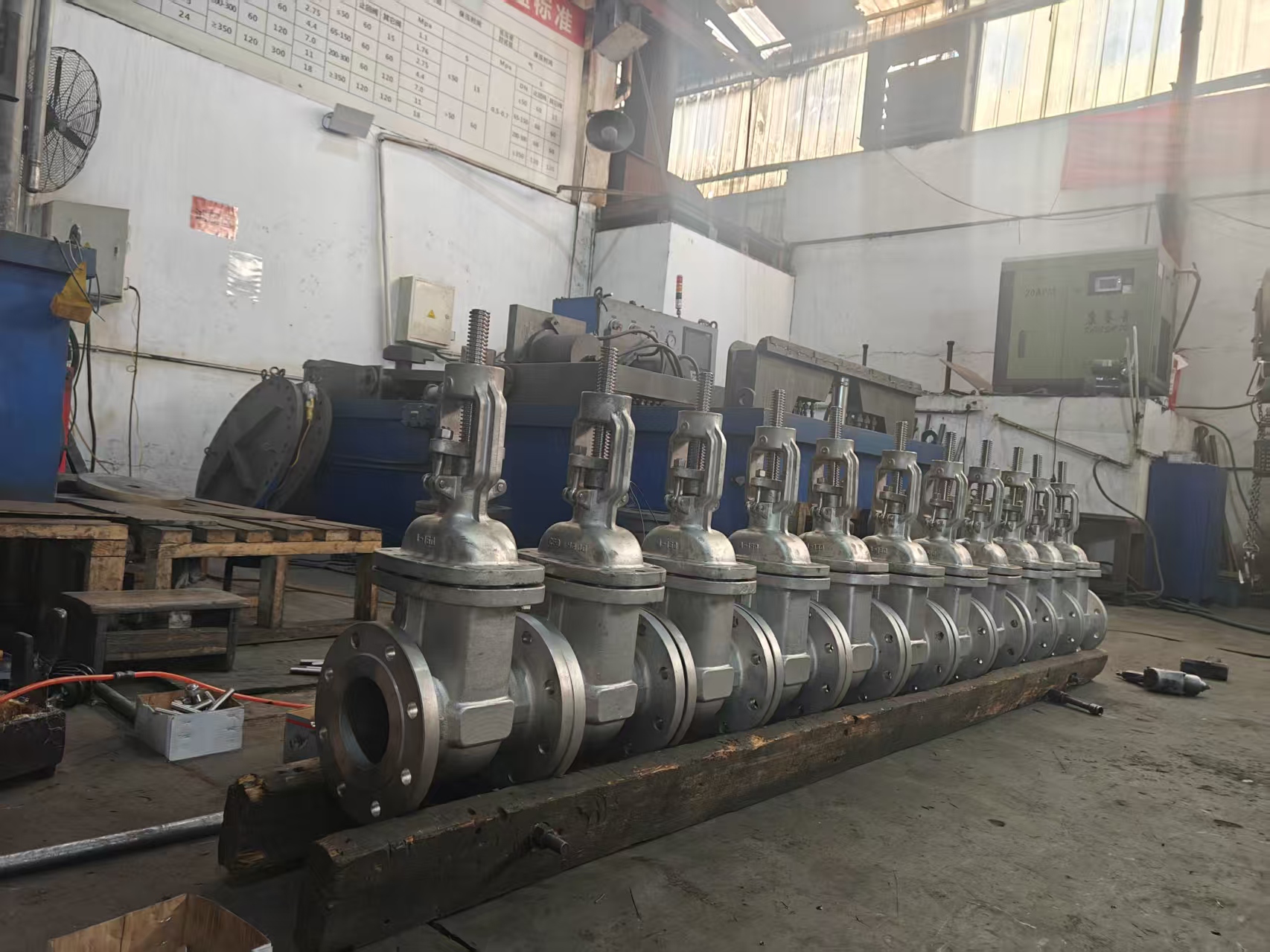
Carbon steel gate valves (WCB/LCB) and stainless steel gate valves (304/316, offered as CF8/CF8M) are both bolted-bonnet, linear-motion isolation valves. The decision between them is driven by three variables: how corrosive the media is, what pressure class the line demands, and how long the asset must run between replacements. Carbon steel wins on pressure headroom and cost; stainless steel wins on chemical resistance and hygiene compliance.
Why This Decision Is Expensive to Get Wrong
A gate valve is a low-cost component sitting on a pipeline that is not. When a body material is mismatched to the service fluid, the failure mode is rarely dramatic — it is slow. Wall thickness drops, seat faces pit, and the valve that once isolated a line for maintenance no longer seals fully. In a refinery turnaround, a wastewater header, or a desalination train, replacing one underspecified valve can mean isolating a whole section of the plant.
That is why procurement teams on industrial pipeline projects treat material selection as a design decision, not a purchasing decision. The question is not "which is better," but "which material is defensible for this exact line, under this exact media, at this exact pressure and temperature."
The short answer:
- Choose carbon steel (WCB or LCB) for petrochemical service, power plant steam and condensate, heating and ventilation lines, and large-diameter industrial pipelines where pressure runs from PN16 up to PN63.
- Choose stainless steel (304/316) for seawater desalination, chemical processing, food and beverage, pharmaceutical, and wastewater treatment where chloride-driven corrosion or hygiene rules out carbon steel.
- Do not choose by price alone. Stainless carries a higher alloy cost per unit; carbon steel carries a higher replacement rate in aggressive media. The cheaper valve up front is not always the cheaper valve over the asset life.
Industry Background: A Market That Rewards Material Precision
The global gate valve market was valued at USD 13.0 billion in 2024 and is projected to reach approximately USD 20.6 billion by 2034, according to Reports and Data. North America held a dominant 43.90% share of that market in 2024, valued at approximately USD 5.7 billion. On the supply side, the Observatory of Economic Complexity reports that in 2024 China was the world's largest exporter of valves, concentrating 20% of total global exports with a trade value of USD 22.6 billion.
Two things follow from those numbers. First, material selection is now a global procurement decision — the valve specified in Houston, Rotterdam, or Lagos may be cast in Hebei or Zhejiang. Second, the standards used to specify that valve matter as much as the alloy designation. A carbon steel gate valve built to DIN 3352 F4/F5, EN 12516, and GB/T 12234 is not interchangeable with one built to API 600, even when both bodies carry WCB on the nameplate.
Carbon Steel Gate Valves: What WCB and LCB Actually Deliver
Carbon steel gate valves from WEIZIDOM's industrial range are built on two main material grades: WCB (weldable carbon steel B, the workhorse casting grade) and LCB (low temperature carbon steel). Both are supplied in NRS (non-rising stem) or OS&Y (outside screw and yoke) configurations, with sealing faces in metal-to-metal or EPDM depending on the service.
The pressure envelope is the headline advantage: PN16, PN25, PN40, and PN63. The size range runs from DN50 to DN1000, which makes carbon steel the practical choice for large-diameter trunk lines where stainless steel is either unavailable or economically unreasonable at that bore.
Design standards available for this line include DIN 3352 F4/F5 (WCB), EN 12516 (LCB), and GB/T 12234 (WCB). Typical applications are petrochemical, power plant, heating and ventilation, and general industrial pipeline duty.
Where carbon steel is the right answer
- High-pressure isolation above PN40. Once the line moves into PN63 territory, carbon steel is the only option in this product family.
- Large bore trunk lines. DN50–DN1000 coverage allows full-bore matching without stepping down the pipeline size.
- Low-temperature service. LCB is a low temperature carbon steel grade specifically intended for cold service where standard WCB would risk brittle behaviour.
- Dry, non-aggressive media. Steam, condensate, heating water, refined hydrocarbons, and neutral industrial fluids.
Where carbon steel is the wrong answer
Carbon steel corrodes in chloride-rich and acidic environments. A WCB body handling seawater, hypochlorite, or acidic process fluid will lose wall thickness faster than the maintenance schedule expects. Where the media is aggressive, this is not a cost-saving decision — it is a maintenance liability.
Stainless Steel Gate Valves: Where CF8 and CF8M Earn Their Cost
The stainless steel flange gate valve range uses 304 (SUS304 / CF8) and 316 (SUS316 / CF8M) bodies, with sealing in EPDM or Viton. Construction is available in both NRS and OS&Y. Pressure ratings run PN10, PN16, PN25, and PN40, with sizes from DN40 to DN800.
The governing standard set is DIN 3352 F4/F5 for CF8/CF8M bodies, EN 1074 for 304/316, and JIS B2062 for SUS304. The specified application fields are food and beverage, pharmaceutical, chemical industry, and seawater desalination — four sectors where carbon steel is effectively disqualified.
The 304 versus 316 distinction
Both grades resist oxidation, but 316 (CF8M) adds molybdenum, which is what lifts resistance to chlorides and industrial chemicals. In a desalination plant or a chemical processing line, 316 is the defensible specification. In food, beverage, and pharmaceutical service where the media is mild but hygiene and cleanability dominate, 304 is frequently sufficient. Do not treat them as interchangeable — the price gap is real, and so is the performance gap in chloride service.
Head-to-Head Comparison Table
The table below sets out the verified specification envelope for both material families as supplied in the WEIZIDOM gate valve range.
| Decision Dimension | Carbon Steel Gate Valve | Stainless Steel Flange Gate Valve |
|---|---|---|
| Body material grades | WCB carbon steel; LCB low temperature carbon steel | 304 stainless steel (CF8); 316 stainless steel (CF8M) |
| Design standards | DIN 3352 F4/F5 (WCB); EN 12516 (LCB); GB/T 12234 (WCB) | DIN 3352 F4/F5 (CF8/CF8M); EN 1074 (304/316); JIS B2062 (SUS304) |
| Pressure rating | PN16 / PN25 / PN40 / PN63 | PN10 / PN16 / PN25 / PN40 |
| Size range | DN50 – DN1000 | DN40 – DN800 |
| Structure | NRS / OS&Y | NRS / OS&Y |
| Sealing | Metal to Metal / EPDM | EPDM / Viton |
| Specified applications | Petrochemical, power plant, heating ventilation, industrial pipeline | Food & beverage, pharmaceutical, chemical industry, seawater desalination |
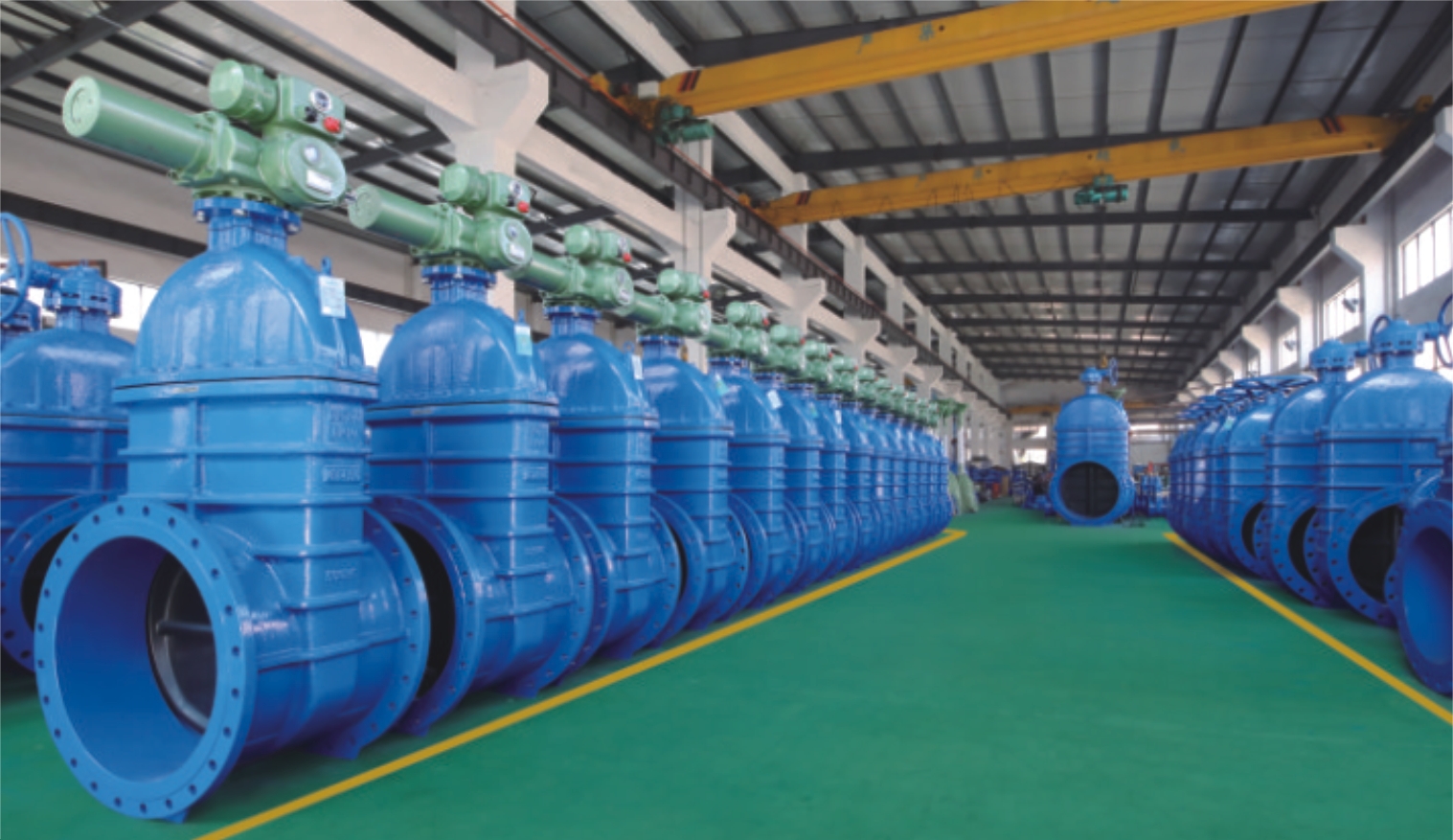
Corrosion-Heavy Applications: Where the Two Materials Diverge Most
The three industries in the assigned scope — seawater desalination, chemical processing, and wastewater treatment — all sit on the stainless steel side of the line, and it is worth explaining why in procurement terms rather than in general terms.
Seawater desalination
Seawater is a chloride environment. Chloride attack is precisely the mechanism that carbon steel cannot tolerate over a long asset life, and it is the reason stainless steel flange gate valves in 304/316 are the specified material for seawater desalination in this product range. Where the desalination plant also runs a high-pressure brine line, note that the stainless range tops out at PN40 — above that, the design engineer must revisit the material strategy rather than simply uprating the stainless body.
Chemical processing
Chemical service varies enormously, from near-neutral to strongly acidic. The practical rule is that stainless steel covers the broad middle of chemical processing duty, with 316 preferred where chlorides or aggressive reagents are present. Where the chemical service is combined with pressure above PN40, the carbon steel range extends to PN63 but must be validated against the specific media — material and pressure envelopes should be checked together, not separately.
Wastewater treatment
Wastewater treatment appears on both sides of the material decision, which is a useful illustration of why this is not a binary choice. Stainless steel knife gate valves in 304/316 are specified for wastewater treatment, pulp and paper, mining, and chemical slurry duty — applications where the media is abrasive, fibrous, or chemically loaded. Carbon steel knife gate valves in WCB (and WC6 chrome molybdenum steel) are specified for coal mining, power plant ash handling, and industrial waste slurry. The selection rule is media chemistry first, then solids content and abrasiveness.
Evidence from field deployment: A wastewater treatment plant project in Pakistan installed 100 units and reported the valves as durable with excellent sealing performance. The same product family was used for architectural and water project purposes in Colombia, where 480 units were delivered over a two-year project duration.
Pressure Ratings and Size Coverage: Reading the Envelope Correctly
Pressure and size are the two dimensions where carbon steel and stainless steel are least interchangeable, and where specification errors most often originate.
- PN63 is carbon steel territory. The carbon steel gate valve range extends to PN63; the stainless steel flange gate valve range stops at PN40. If the line is rated PN63, the stainless option is not available in this family.
- DN1000 is carbon steel territory. Carbon steel covers DN50 to DN1000; stainless covers DN40 to DN800. For very large bore trunk lines, carbon steel is the practical answer, though it must be paired with a non-corrosive medium.
- The low end belongs to stainless. Stainless starts at DN40, two sizes below the carbon steel floor of DN50. For smaller-diameter corrosive service, stainless is the only fit in this comparison.
For oil and gas and refinery duty specifically, the API gate valve range adds a separate specification track: API 600 (WCB/CF8/CF8M), API 602 (A105/F304), and API 6D (WCB/CF8M), rated Class150 through Class900, in sizes from NPS 1/2" to NPS 48" (DN15 to DN1200). API 600 is the primary standard for heavy-duty bolted bonnet steel gate valves used in petroleum refineries and related applications, and EN ISO 10434:2020 is its European/international equivalent for the petroleum and petrochemical industries. Where a project specifies API 600, that standard governs the material and testing requirements regardless of which alloy is ultimately selected.
Cost, Lead Time, and Total Cost of Ownership
Carbon steel is the lower-cost material at the point of purchase. Stainless steel carries a higher alloy cost because of its chromium and, in 316, molybdenum content. That relationship is stable and widely understood across the valve industry, and it is why carbon steel dominates large-diameter, high-volume pipeline orders.
Total cost of ownership tells a different story in corrosive service. A carbon steel valve in a chloride-rich line will need earlier replacement, and each replacement carries isolation, labour, and downtime cost that dwarfs the valve's purchase price. The defensible procurement logic is therefore:
- Evaluate media chemistry first. If the fluid is aggressive, the higher alloy cost of stainless is buying service life, not prestige.
- Then evaluate pressure and bore. If the line is PN63 or above DN800, carbon steel is the only available option — and the design must be adjusted to make carbon steel viable, for example by managing the corrosion mechanism upstream.
- Then evaluate total installed cost, not unit price. Include the replacement cycle implied by the media.
A Practical Step-by-Step Selection Framework
This is the sequence WEIZIDOM applies when supporting project engineers and procurement managers through a material decision on industrial pipeline projects.
- Define the service fluid. Identify whether the media is neutral (steam, condensate, heating water, refined hydrocarbons) or aggressive (seawater, chemical reagents, slurry, wastewater). This single step resolves most of the decision.
- Confirm pressure class. Map the line rating to the available envelope: carbon steel PN16–PN63, stainless PN10–PN40.
- Confirm bore and connection. Carbon steel DN50–DN1000; stainless DN40–DN800. Check flange drilling against the governing standard.
- Confirm the governing standard. DIN, EN, GB, API, ASME, BS or JIS — the standard set determines testing, face-to-face dimensions, and material certification required by the project.
- Confirm the structure type. NRS for buried or compact installations; OS&Y where visual position indication and stem lubrication access are required. NRS and OS&Y are available in both carbon and stainless families.
- Confirm the sealing material. Metal-to-metal for high-temperature carbon steel service; EPDM for general water service; Viton where higher temperature or chemical resistance is needed in the stainless range.
- Validation before volume commitment. Request a sample or a pre-production unit and validate it against the actual line conditions before releasing a full purchase order.
Manufacturing, Customization, and Quality Control
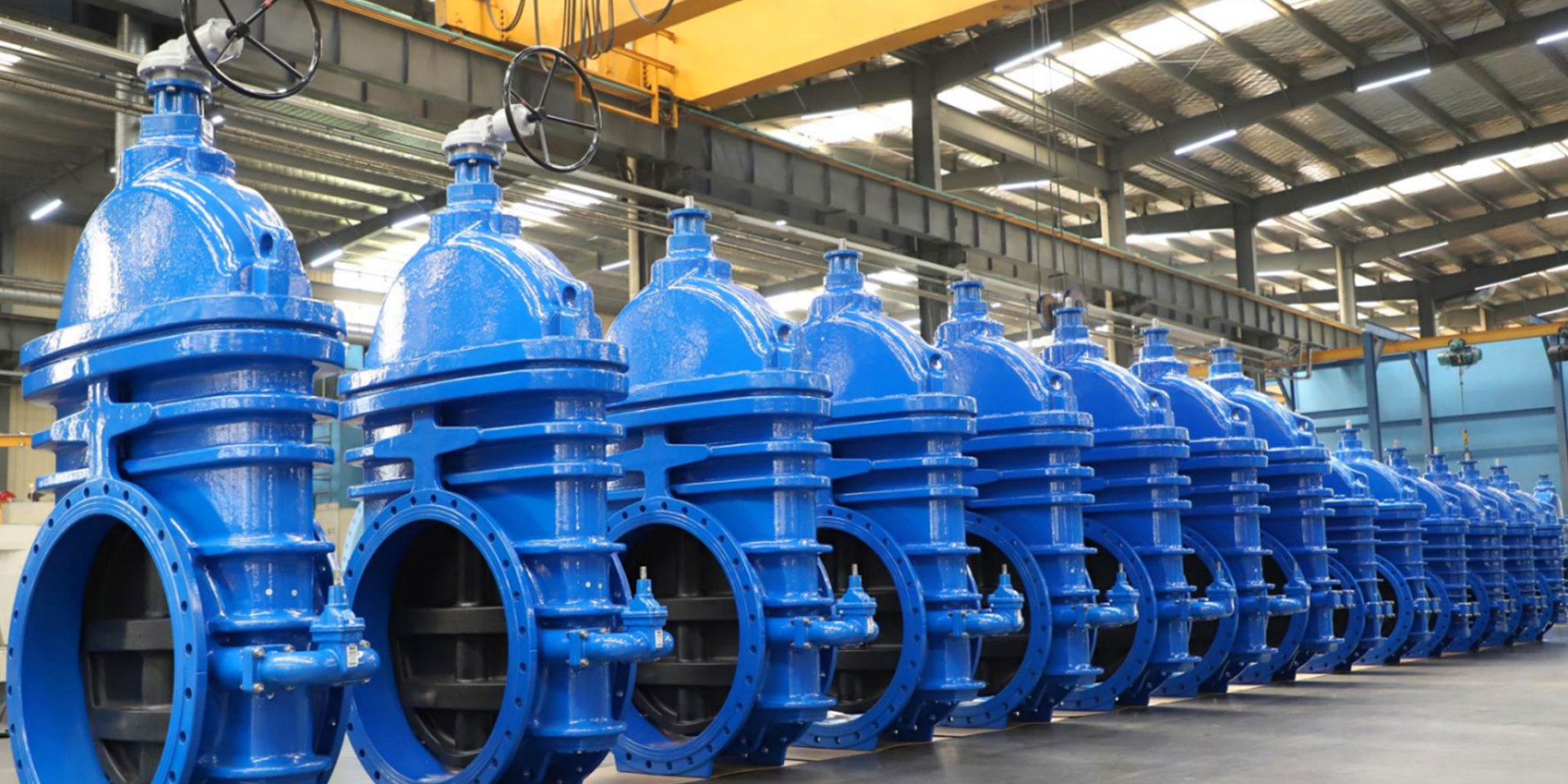
WEIZIDOM Group, formally Henan Weizidom Flow Control Co., Ltd, was founded in 2000 and operates five factories in China — in Tianjin, Wenzhou, Hebei, Lianyungang, and Anhui — with a combined factory area of 60,000 m², 300 employees, 60 engineers, and annual output of 2,000,000 units. Every product passes through 12 tests from raw material to finished product, and the quality control protocol on gate valves specifically includes 100% pressure testing, visual inspection, and dimensional checks.
For buyers evaluating material options, the relevant capability is customization. Both carbon steel and stainless steel gate valve lines are available under OEM and ODM production, with customization covering logo, standard, pressure rating, material, actuator, and colour. Monthly capacity is 170,000 units, and the minimum order quantity is 1 unit, which means a buyer can validate a stainless steel specification on a single unit before committing to a project-scale order.
Environmental management is certified under ISO 14001:2015 (certificate 064-24-E-4054-R0-S, issued by CNAS, valid to 2027-12-11), covering the processing of ordinary valves and related management activities. The group's products are supplied to more than 60 countries, with an export ratio of 80%, and can be manufactured to GB, JB, HB, ASME, API, AWWA, DIN, EU, and BS standards.
Frequently Asked Questions
Which standards govern carbon steel and stainless steel gate valves?
Carbon steel gate valves in the WEIZIDOM range are designed to DIN 3352 F4/F5 (WCB), EN 12516 (LCB), and GB/T 12234 (WCB). Stainless steel flange gate valves are designed to DIN 3352 F4/F5 (CF8/CF8M), EN 1074 (304/316), and JIS B2062 (SUS304). For oil and gas and refinery duty, the API range applies instead: API 600 (WCB/CF8/CF8M), API 602 (A105/F304), and API 6D (WCB/CF8M). API 600 is the primary standard for heavy-duty bolted bonnet steel gate valves in petroleum refineries, and EN ISO 10434:2020 is its European/international equivalent. Buyers should confirm the governing standard before comparing quotations, because the same WCB body can be built to materially different testing requirements.
Can the valve material be customized for a specific project?
Yes. Both the carbon steel and stainless steel gate valve lines are available under OEM and ODM production. Customization options cover logo, standard, pressure rating, material, actuator, and colour, with a minimum order quantity of 1 unit. This allows a project engineer to specify a non-standard combination — for example a stainless steel 316 body in an OS&Y structure to a specific flange standard — and validate it on a single unit before scaling to a project order. Monthly production capacity is 170,000 units.
Which material is more cost-effective?
Carbon steel is the lower-cost option at the point of purchase, which is why it dominates large-diameter and high-volume pipeline orders. Stainless steel carries a higher alloy cost because of its chromium and molybdenum content. The cost-effectiveness question should be answered over the asset life, not on the unit price: in a neutral medium such as steam or heating water, carbon steel is usually the more economical choice; in a chloride-rich or chemically aggressive medium such as seawater desalination or chemical processing, the higher stainless cost is typically offset by a longer service interval and lower replacement rate. Buyers should apply the selection framework above rather than choosing on price alone.
Can I validate a material choice with a sample before ordering in volume?
Yes. The minimum order quantity for both material lines is 1 unit, so a single valve can be supplied for evaluation. Quality control on every unit includes 100% pressure testing, visual inspection, and dimensional checking, and pre-shipment testing with third-party inspection such as SGS is available on request. Requesting a sample of the specific material and standard combination under consideration is the most reliable way to confirm that the specified body, seat, and sealing arrangement match the actual line conditions.
What is the lead time for a standard gate valve order?
Standard lead time is 25–35 days. Payment terms are 30/70 with T/T and L/C accepted. For project-scale orders covering mixed materials — for example a combination of carbon steel large-diameter valves and stainless steel desalination-duty valves — lead time should be confirmed against the specific size and pressure combination, since DN1000 carbon steel and DN800 stainless bodies sit at the upper end of the casting range. Buyers planning a turnaround or construction window should build the 25–35 day production period into the schedule rather than treating it as a buffer.
Conclusion: Decide by Media, Confirm by Envelope
The carbon steel versus stainless steel gate valve decision resolves cleanly when it is approached in the right order. Media chemistry comes first: aggressive fluids point to stainless steel, neutral fluids point to carbon steel. Pressure and bore come second: PN63 and diameters above DN800 point to carbon steel, while smaller corrosive-service lines point to stainless. Standard and structure come third, and they refine the specification rather than determine the material.
For procurement professionals and project engineers working on petrochemical, power, desalination, chemical, or wastewater pipelines, the highest-value action is to validate the specific material, standard, and structure combination on a sample unit before releasing a volume order — particularly where a project mixes carbon steel and stainless steel across different process areas. That single step removes most of the risk from a decision that is otherwise difficult to reverse once the valves are installed.
Next Step: Validate Your Material Choice
WEIZIDOM manufactures both carbon steel (WCB/LCB) and stainless steel (CF8/CF8M) gate valves to DIN, EN, GB, API, ASME, BS and JIS standards, with OEM/ODM customization and a minimum order quantity of 1 unit.
Request a material comparison sample, a project quotation, or the full product catalogue — including pressure ratings, size ranges, and standard compliance details — to confirm the right specification for your pipeline.
Download the WEIZIDOM Gate Valve Catalogue (PDF)
Contact: contact@weizidom.com | WhatsApp / Tel: +86 17319732766 | www.wsdvalves.com