
DIN, EN & GB Gate Valve Standards for Export Projects: A Conformity Guide
DIN, EN & GB Gate Valve Standards for Export Projects: A Conformity Guide
Export gate valve projects rarely fail at the pipeline. They fail at the document pack: a PN rating that does not match the flange drilling, a WCB body ordered for a service that needed LCB, or a certificate whose scope does not actually cover the valve being shipped. This guide maps how DIN 3352, EN 12516 / EN 1074 and GB/T 12234 gate valve standards correspond to the PN16–PN63 pressure ranges and WCB / LCB material grades that most export buyers specify — and how to verify conformity before the containers leave.
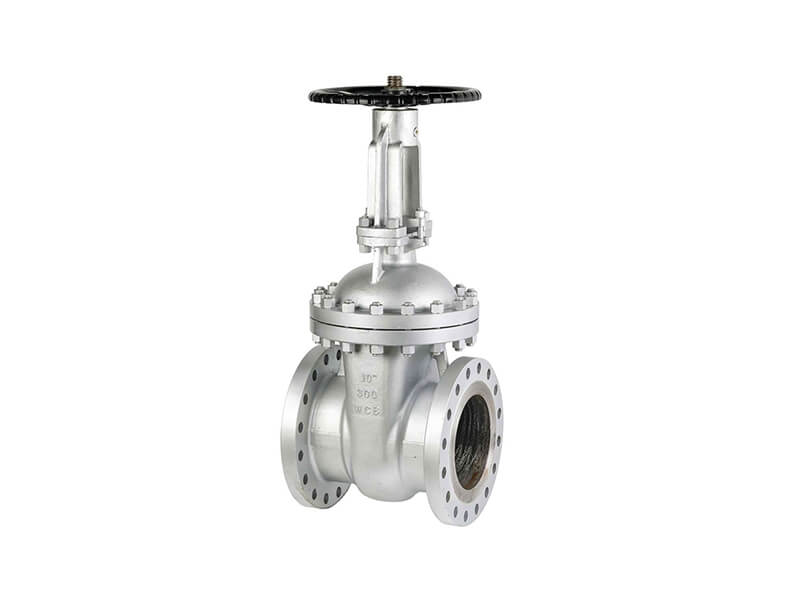
What “Gate Valve Compliance” Actually Means in an Export Project
In a regulatory sense, compliance means the valve satisfies the design, material, testing and marking requirements of the standard cited in the project specification. For gate valves, that specification almost always resolves to one of three families: DIN (German / European), EN (harmonised European), or GB (Chinese national standard). BS, ASME, API, AWWA and JIS do appear, but the DIN / EN versus GB mismatch is where most export disputes concentrate.
Conformity is made up of five verifiable elements:
- Design standard reference — for example DIN 3352 F4, EN 12516, or GB/T 12234.
- Pressure rating — PN16, PN25, PN40 or PN63 on the European and GB side; Class 150, 300 or 600 when an API reference is involved.
- Body and trim material — named against the standard family, with a material certificate.
- Sealing system — matched to the medium and the operating temperature, not chosen after the fact.
- Certificate scope — covering the specific product model being shipped.
If any one of these five is out of alignment, a shipment can be rejected at the destination port even when the valve performs perfectly on a pressure test rig.
Problem Definition: Where DIN, EN and GB Stop Matching
Three things cause the mismatch.
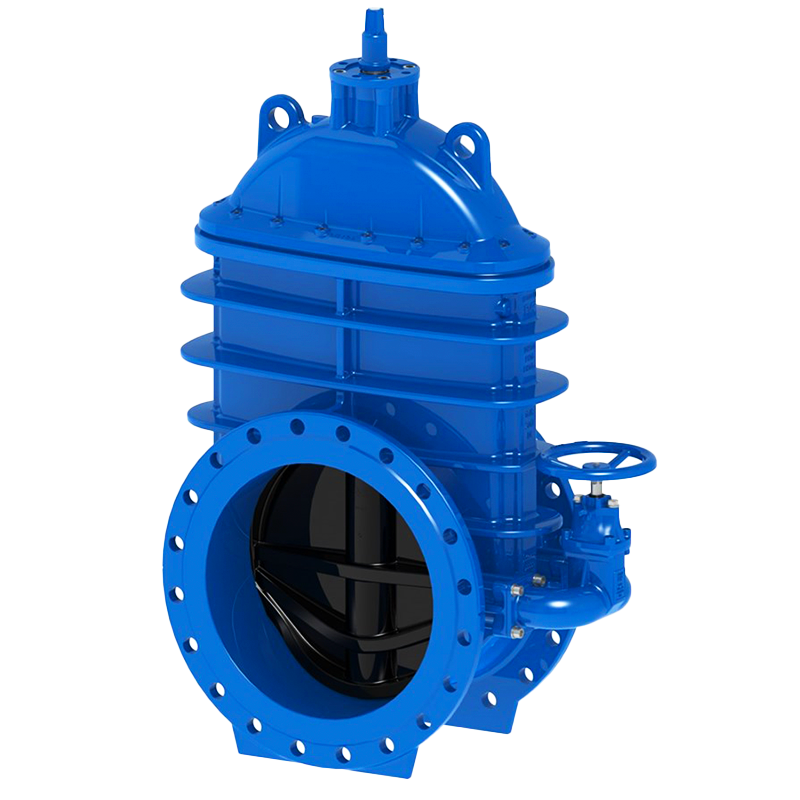
Construction form is a conformity requirement, not a preference. DIN 3352 separates F4 and F5 construction. A valve built to F4 face-to-face dimensions supplied against an F5 drilling requirement is non-conforming on sight, even if it seals. DN40–DN1200 ductile iron flange resilient gate valves that carry both DIN 3352 F4 and F5 designations are the practical reference point here — the buyer still has to state which one the project calls for.
Pressure ratings are expressed differently. DIN and EN use PN. GB uses PN as well, but the pressure–temperature derating curve can differ. If the project specification opens with an API 600 reference, the rating language becomes Class 150, 300, 600 or 900, which does not convert one-to-one with PN. Treating Class 300 as equivalent to PN40 is a common error and one of the questions that surfaces in technical clarification rounds.
Material naming follows regional convention. On European projects, ductile iron may be written EN-GJS-500-7 or GGG50. The identical grade on Chinese documentation can appear as QT500-7. Carbon steel service is written WCB for general duty and LCB for low-temperature duty. Mixing these designations is the single most common documentation rejection in supplier qualification.
Industry Background: Standard Conformity Is Now a Procurement Filter
The global industrial valve market was estimated at USD 73.9 billion in 2025, and gate valves accounted for approximately 15% of that market by product share alongside globe valves. That scale turns standard conformity from a purely technical question into a commercial one: a gate valve series that cannot produce the right paperwork for a given market is simply not bid-able.
Buyer behaviour has shifted with it. A decade ago, a procurement manager would accept a supplier statement such as “we meet ISO standards” at face value. In 2026, tender packages from Europe, the Middle East and Southeast Asia increasingly ask for the standard number, sometimes the edition year, and the material certificate. More significantly, the certificate scope itself is being read. A certificate covering “processing of ordinary valves” that does not name the specific product model does not survive an audit.
WEIZIDOM Group — Henan Weizidom Flow Control Co., Ltd, founded in 2000 — operates five factories in China (Tianjin, Wenzhou, Hebei, Lianyungang and Anhui), with a 60,000 m² footprint, 300 employees and an annual output of 2,000,000 units. Its gate valve range is built across the DIN, EN and GB families. The company holds an ISO 14001:2015 (GB/T24001-2016) environmental management system certificate issued by CNAS under number 064-24-E-4054-R0-S, valid from 2024-12-12 to 2027-12-11, covering the processing of ordinary valves and specifically the Rising stem Forged steel gate valve (API 602 model). That is an environmental management certificate, not a product certificate, and the distinction matters when a project specification asks for design conformity evidence.
The Three Standard Families, Mapped
DIN — DIN 3352 F4 and F5
DIN 3352 is the most widely cited design construction standard for flanged gate valves in European water and general industrial pipelines. F4 and F5 differ in how the wedge and body dimensions relate when the valve is fully open and fully closed. The practical consequence is that a F4 valve cannot be substituted for an F5 valve without a documented deviation. On the ductile iron series that carries both designations, the specification reference is the deciding factor, not the pressure rating.
A separate DIN reference applies to forged steel: DIN 3356 covers forged steel OS&Y gate valves in sizes from DN8 to DN100 across Class 150, 300 and 600, with A105 forged carbon steel and F304 / F316 forged stainless steel bodies.
EN — EN 12516 and EN 1074
EN 1074 is the harmonised European standard family for gate valves, and EN 12516 governs the pressure boundary design. When both appear on a project specification, the project names which one is controlling. The carbon steel flange gate valve series, for example, is listed against DIN 3352 F4 / F5, EN 12516 and GB/T 12234 together — and includes an LCB designation that signals low-temperature carbon steel service. That LCB reference inside an EN 12516 line is the clue that a project has moved beyond standard WCB duty.
GB — GB/T 12234 and GB/T 12237
GB/T 12234 covers flanged gate valve design under the Chinese national standard system, and GB/T 12237 covers knife gate valves. Project specifications that cite GB are typically led by domestic EPC contractors or China-financed export programmes. The correspondence with DIN is broadly present but not exact: flange dimensions align across a large part of the size range, while the pressure–temperature derating curve does not have to. A supplier that lists “DIN and GB” on one datasheet is expected to document both correspondences separately, not to treat them as one line item.
None of these families conflicts with the others. They overlap on flange dimensions, face-to-face lengths and pressure–temperature ratings, but no project specification allows the buyer to assume interchangeability.
PN Ratings and Material Grades: The Two Decisions That Drive Conformity
PN16 to PN63
A PN rating is not chosen by the pipeline working pressure alone. It follows from the maximum allowable pressure at design temperature, the safety factor required by the project, and the local pressure equipment regulation that applies.
Across the standard European and GB construction series, PN10 and PN16 cover most municipal water supply, drainage, HVAC and low-pressure industrial duty. PN25 sits in the middle band and appears on port pipelines and seawater intake systems. PN40 and PN63 sit at the higher end — petrochemical, power plant and high-pressure steam service. The carbon steel flange gate valve range covers PN16, PN25, PN40 and PN63, which together describe most non-API export projects in a single series.
When the specification already cites API 600, the pressure language becomes Class 150, 300, 600 or 900 and cannot be substituted by PN values. API Std 600 establishes a heavy-duty bolted bonnet steel gate valve scope for petroleum refinery and related applications, with required construction features that include bolted bonnet, outside screw and yoke, rising stem, wedge or parallel seating and metallic seating surfaces.
WCB, LCB, Ductile Iron and Stainless
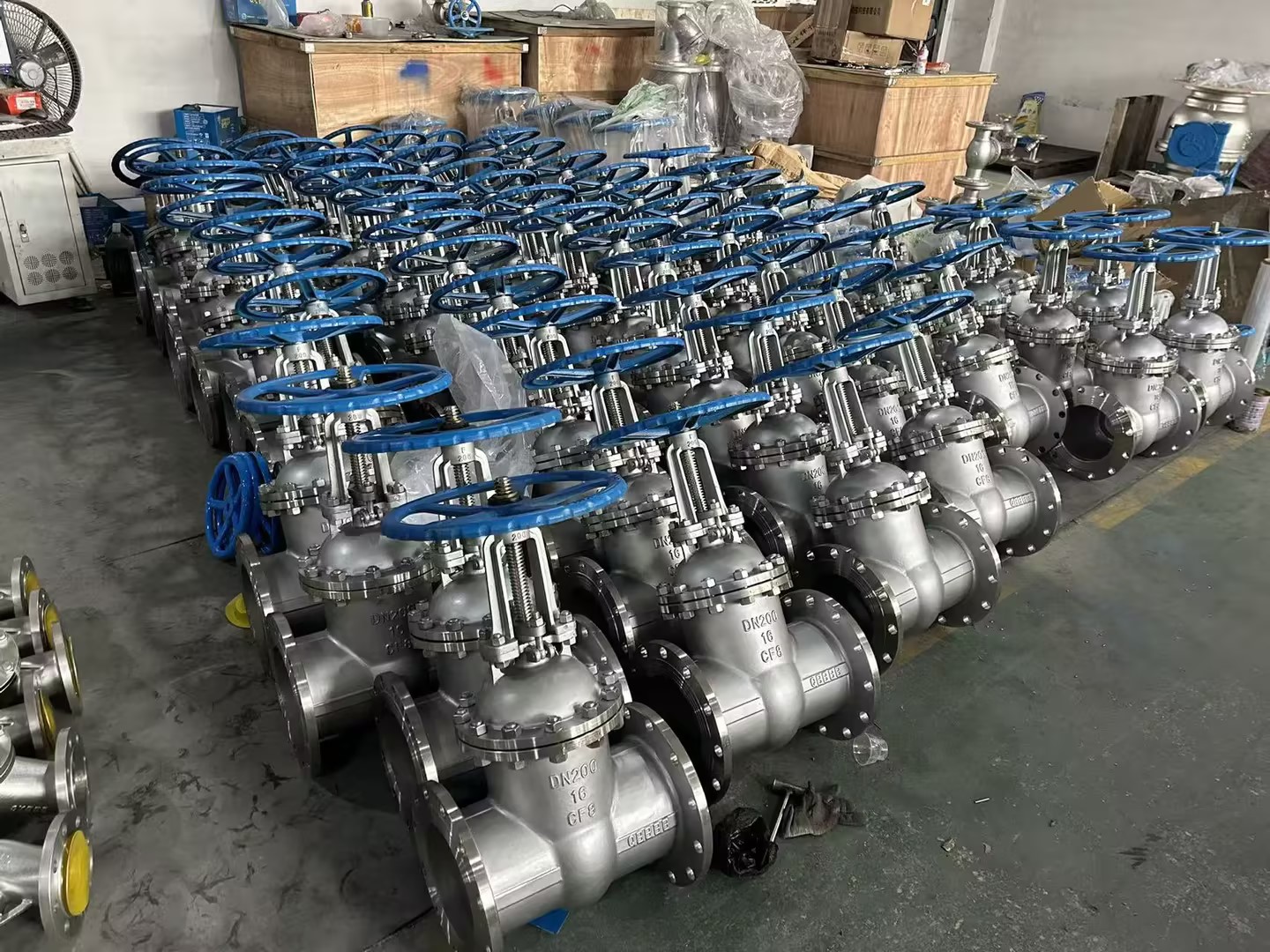
- WCB carbon steel — the general-duty default for water, oil, non-corrosive chemicals and steam. In the carbon steel gate valve series it spans DN50–DN1000.
- LCB low-temperature carbon steel — specified where the valve must tolerate process temperatures down toward the low-temperature range. LCB appearing on a carbon steel gate valve datasheet alongside WCB is the signal that the project has a low-temperature requirement, even if the same document still lists WCB.
- GGG50 / QT500-7 ductile iron — anchored in the water series: flange resilient, rising stem, socket connection and underground cap designs, rated up to PN25.
- CF8 / CF8M (304 / 316 stainless steel) — used for petrochemical, seawater desalination, food and beverage, and pharmaceutical duty, rated up to PN40.
Where a buyer has to decide between WCB and LCB, the datasheet alone is not enough. The decision driver is the minimum design metal temperature set by the process engineer, and it is one of the few conformity failures that cannot be corrected in the factory after the fact.
A second distinction belongs alongside the material grade: body and trim material are separate from soft goods. Metal-to-metal seating, EPDM or NBR fully wrapped rubber wedges, PTFE and Viton all appear as sealing options in gate valve specification sheets, and each is selected against the medium and the temperature — not selected after the body material is fixed.
Sealing, Structure and Size Coverage
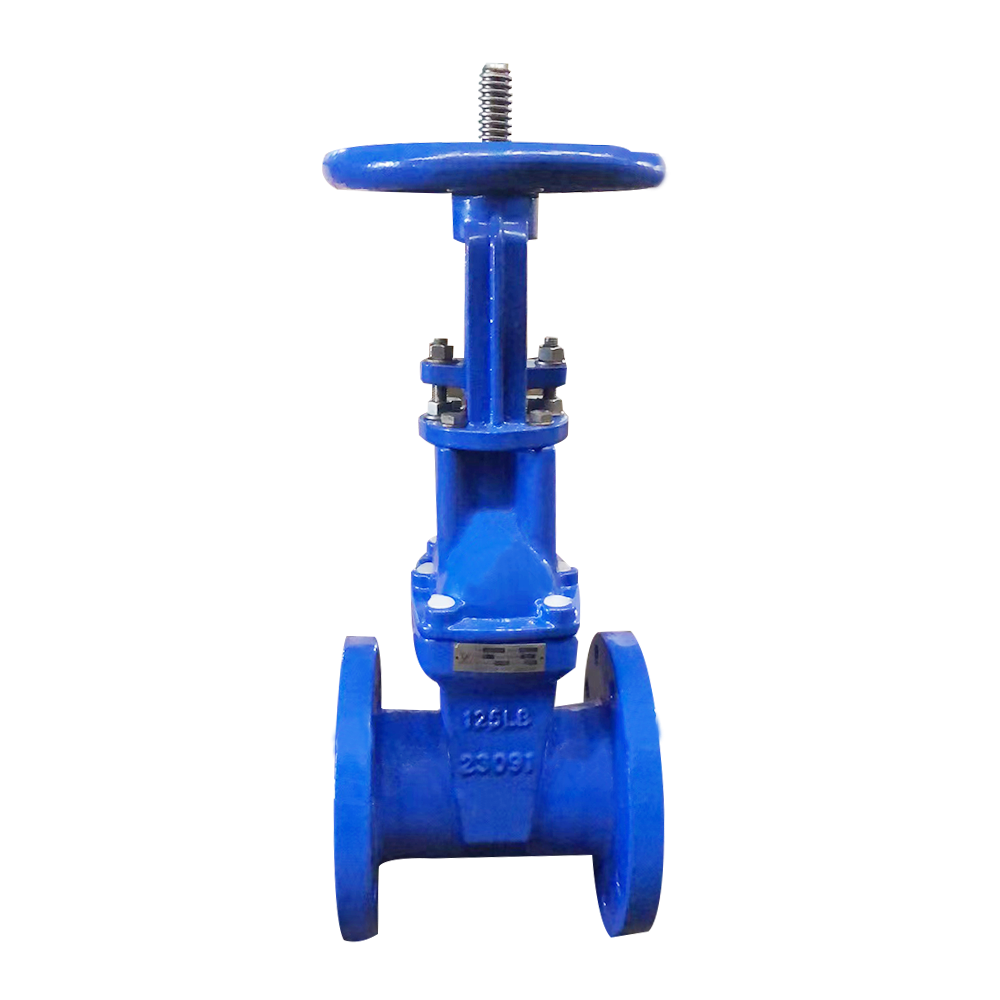
Sealing and structure pair differently across the families. Fully wrapped EPDM rubber seating appears on the DIN F4 / F5 ductile iron and underground cap soft seal series for water service. Metal-to-metal and EPDM appear on the carbon steel range. PTFE and EPDM sealing are used on both the carbon steel and stainless steel knife gate valve series. Structure follows the application: NRS for buried and space-restricted installations, OS&Y (rising stem) where visual position indication is required.
Size coverage must be checked against the series, not assumed. The flange resilient series reaches DN1200, the carbon steel flange series reaches DN1000, the stainless steel flange series reaches DN800, and the socket connection series stops at DN100.
Step-by-Step: Building a Conformity-Ready Gate Valve Specification
The sequence below reflects the order in which export project conformity is actually resolved.
- Lock the standard family and construction form before anything else. Determine whether the project cites DIN 3352 F4 or F5, EN 12516, or GB/T 12234. Construction form is a primary filter, not an afterthought.
- Derive the PN rating rather than copying it. Work from the maximum allowable pressure at design temperature. If the project already cites API 600, move to the Class system directly and do not soft-match.
- Select body and trim material against MDMT and medium. WCB for ambient non-corrosive service, LCB for low-temperature duty, CF8 or CF8M for corrosive media, GGG50 or QT500-7 for water and drainage.
- Match sealing and operation. Choose metal-to-metal, EPDM, PTFE or Viton against temperature, and fix whether the valve is manual, electric or pneumatic — actuator interface is one of the customization items available on OEM / ODM orders.
- Confirm size coverage instead of assuming it. Verify the supplier’s catalogue covers the required nominal size on the specific series you are ordering.
- Read the certificate scope, not just the certificate name. A certificate whose scope covers “processing of ordinary valves” without naming the model may not pass a project audit. Request the document and read the scope field.
- Secure the document pack before the production window. Ask for material certificates, pressure test records and dimensional records before shipment, not after. WEIZIDOM runs 12 inspections per valve from raw material to finished product, including 100% pressure testing, visual inspection and dimensional checks on every unit.
Use Cases: How the Mapping Plays Out in Real Projects
A power plant in Kazakhstan ordered 160 carbon steel gate valves to control the pipeline system for continuous production and heating. The material selection sat in the carbon steel range against high-temperature and high-pressure duty. Over a one-year service period the valves supported the stability and safety of equipment operation, meeting the continuous production and heating requirements of the operator.
A project contractor in Iraq purchased 571 flange resilient gate valves across a two-year window for the Alqoash water project. The order pattern was systematic rather than one-off, with the valve series held constant so flange dimensions matched across successive pipeline sections.
A water utility company in Colombia needed gate valves for city potable water supply pipelines buried deep underground. The specification called for extended stems so that the operating crew could operate the valves from ground level, reducing maintenance cost over a three-year service period.
Across these three projects, the common thread is the same: the standard family was fixed at tender stage, the PN rating was derived from the service conditions, and the documentation pack was resolved before dispatch rather than retrofitted afterwards.
Comparison Table: WEIZIDOM Gate Valve Series by Standard Coverage
| Series | Design Standard | Pressure Rating | Body Material | Sealing | Size Range |
|---|---|---|---|---|---|
| Flange resilient gate valve | DIN 3352 F4 / F5 | PN10 / PN16 / PN25 | GGG50 / QT500-7 ductile iron | EPDM / NBR | DN40–DN1200 |
| Carbon steel gate valve | DIN 3352 F4 / F5, EN 12516, GB/T 12234 | PN16 / PN25 / PN40 / PN63 | WCB carbon steel, LCB low temperature carbon steel | Metal to metal / EPDM | DN50–DN1000 |
| Stainless steel flange gate valve | DIN 3352 F4 / F5, EN 1074, JIS B2062 | PN10 / PN16 / PN25 / PN40 | 304 (SUS304) / 316 (SUS316) | EPDM / Viton | DN40–DN800 |
| Socket connection gate valve | DIN 3352 SW, EN 1074 SW, GB/T 12234 SW | PN10 / PN16 / PN25 | QT500-7 / GGG50 ductile iron | EPDM / NBR | DN15–DN100 |
| Rising stem gate valve | BS5163 Type B, EN 1074, AWWA C509 | PN10 / PN16 | QT500-7 / GGG50 ductile iron | Fully wrapped EPDM rubber | DN50–DN800 |
| Underground cap soft seal gate valve | BS5163 Type A / B, DIN 3352 F4 / F5, Z45X-16Q | PN10 / PN16 | GGG50 / QT500-7 ductile iron | Fully wrapped EPDM rubber | DN50–DN600 |
| Carbon steel knife gate valve | API 598, DIN 19526, GB/T 12237 | PN16 / PN25 / PN40 | WCB carbon steel, WC6 chrome molybdenum steel | PTFE / EPDM | DN50–DN800 |
| Stainless steel knife gate valve | API 598, DIN 19526, JIS F7380 | PN10 / PN16 / PN25 | 304 / 316 stainless steel | PTFE / EPDM | DN50–DN600 |
The table reflects published WEIZIDOM series data. Series-level standard listings describe design coverage; they do not replace project-specific model documentation. Buyers should request the datasheet and certificate scope for the exact model quoted.
FAQ: DIN, EN and GB Gate Valve Conformity
What actually differs between DIN, EN and GB gate valve standards?
For export projects, DIN, EN and GB differ on three levels. DIN 3352 uses F4 and F5 to separate construction forms. EN 1074 and EN 12516 define the harmonised European scope and pressure boundary rules. GB/T 12234 and GB/T 12237 are the Chinese national counterparts for flanged and knife gate valves respectively. Flange dimensions overlap across a large part of the size range, but the pressure–temperature derating curve does not have to match, and each family names materials in its own convention — GGG50 versus QT500-7 for ductile iron, WCB or LCB for carbon steel. Any specification citing more than one family must state which one is controlling, otherwise conformity is not verifiable.
Can one manufacturer supply gate valves conforming to DIN 3352, EN 12516 / EN 1074 and GB/T 12234?
Yes — this is a catalogue coverage question rather than a capability question, provided the range is genuinely built across those families. WEIZIDOM products are designed to meet standards including GB, JB, HB, ASME, API, AWWA, DIN, EU and BS, and the carbon steel gate valve series is listed against DIN 3352 F4 / F5, EN 12516 and GB/T 12234 together. Buyers should still request a separate datasheet per standard family, because the point where an audit fails is usually a datasheet that merges two families into one line without documenting both correspondences.
Why does an LCB low-temperature carbon steel gate valve cost more than a WCB valve?
LCB carries tighter chemistry and impact-testing requirements than WCB, and the low-temperature impact test itself adds both processing control and verification cost. In the WEIZIDOM carbon steel gate valve series, both WCB and LCB appear at the same PN16–PN63 rating band and the same DN50–DN1000 size range — only the material designation changes. If a project specifies LCB and a quotation returns WCB, the quotation is not equivalent for that project. Ask for the material certificate and confirm the grade before comparing price.
Can I request a sample gate valve to verify compliance before placing a bulk order?
Yes. WEIZIDOM operates a minimum order quantity of 1 unit, which means a single sample can move through the same production, testing and dispatch path as a volume order — including 100% pressure testing, visual inspection and dimensional checks. For export projects, the sample stage is also the right moment to validate the document pack: material certificate, pressure test record and dimensional record should all be issued with the sample so that the verification step does not repeat at mass production.
What is the lead time for a customised gate valve order, and how do I start?
Standard lead time is 25–35 days. WEIZIDOM runs OEM / ODM production with a monthly capacity of 170,000 units, and customization covers logo, standard, pressure rating, material, actuator and colour. In practice, the fastest way to shorten a project schedule is to fix the material grade (WCB, LCB, CF8 / CF8M or GGG50) and the controlling standard family early, because every downstream scheduling step depends on those two inputs. Send a specification to contact@weizidom.com or message WhatsApp +86 17319732766 to receive a project-specific quotation and lead time.
Conclusion
DIN, EN and GB are not in conflict with one another, but they are not interchangeable either. What makes an export gate valve project survive an audit is precision: the standard number correct, the F4 / F5 form correct, the PN rating derived instead of assumed, the WCB / LCB choice made against MDMT rather than against price, and the certificate scope covering the exact model being shipped. Buyers who close those five points before purchase orders are issued rarely meet surprises at the destination port.
For buyers evaluating suppliers against DIN 3352 F4 / F5, EN 12516 or GB/T 12234, WEIZIDOM supplies carbon steel, stainless steel, ductile iron and knife gate valves to export projects, with the document pack issued alongside the product. The full technical catalogue is available for download below.
Request Gate Valve Samples, Quotation or Technical Catalogue
Share your project standard family, PN rating, size and body material. WEIZIDOM will return a specification-matched quotation, lead time and sample offer for your pipeline project.
Download the WEIZIDOM Gate Valve Catalogue
Have Questions or Need More Details?
Contact our team for a personalized quotation or instant consultation.
Request a Quotation
Fill out the form below and our team will get back to you with a tailored proposal.
WhatsApp Direct Chat
Prefer to chat in real-time? Message us on WhatsApp for instant assistance & quick answers.
- Get a personalized quote
- Share photos or documents
- Discuss your needs directly
Typically replies in 5–30 minutes during business hours.