
Gate Valve Basics: How Rising Stem, Knife Gate & Resilient Seat Designs Fit Six Industries
Gate Valve Basics: How Rising Stem, Knife Gate & Resilient Seat Designs Fit Six Industries
A gate valve is a linear-motion isolation valve: a flat or wedge-shaped disc slides perpendicular to the flow path to start or stop flow. The principle is simple, but almost every specification dispute in industrial procurement happens inside three variables — stem configuration, seat design, and connection style. This guide explains those variables family by family, then maps each design to the six industries that use it most.
Why "Gate Valve" Is Not One Product
The word "gate valve" describes a motion principle, not a single product. Two valves carrying the same name can differ in body material, pressure class, size range, sealing method, actuation and design standard — and still both be correctly called gate valves. That is why a specification that says only "gate valve, DN200" is not a specification at all.
The confusion usually starts with vocabulary. A buyer reading a datasheet encounters terms such as OS&Y (outside screw and yoke), NRS (non-rising stem), rising stem, wedge disc, parallel disc, metal-to-metal seating, soft seal, resilient seat, full wrapped EPDM, socket weld, underground cap and extended spindle. Each of these terms answers a different question:
- Stem configuration answers "how do I know whether the valve is open?" — a rising stem lifts visibly as the disc moves, while a non-rising stem stays fixed in height and relies on the handwheel turns.
- Seat design answers "what is the disc sealing against?" — metal-to-metal contact, a Stellite-faced seat, or a rubber-encapsulated resilient seat.
- Connection style answers "how does this body join the pipe?" — flanged, socket weld, or buried underground with a cap and extension spindle.
Once those three questions are separated, a specification becomes readable. The rest of a gate valve item — pressure rating, size, material grade, actuator type — is selected around them.
Industry Background: Where Gate Valve Demand Comes From
Gate valves sit on almost every industrial isolation point, which makes the category a reasonable proxy for infrastructure spending. The global gate valve market was valued at USD 13.0 billion in 2024 and is projected to reach approximately USD 20.6 billion by 2034, according to Reports and Data. A separate Market Research Future estimate places the 2024 gate valve market at USD 7.44 billion, so published figures vary noticeably with the scope each analyst uses — valve-specific categories versus the broader industrial valve market.
Supply is highly concentrated. In 2024, China was the world's largest exporter of valves, concentrating 20% of total global exports with a trade value of USD 22.6 billion, according to the Observatory of Economic Complexity. North America held a dominant 43.90% share of the global gate valve market in the same year, valued at approximately USD 5.7 billion, according to Reports and Data. On the supplier side, Emerson Electric Co. holds over 7% market share in North America as of 2024, according to Global Market Insights, while Flowserve India Controls recorded a valve export value of USD 148 million in 2025, per Tendata Global Trade Analysis.
For a buyer, the practical implication is straightforward: gate valve supply is global, standards are regional, and the design family you choose is what connects the two.
Detailed Solution: The Design Families and What Each One Solves
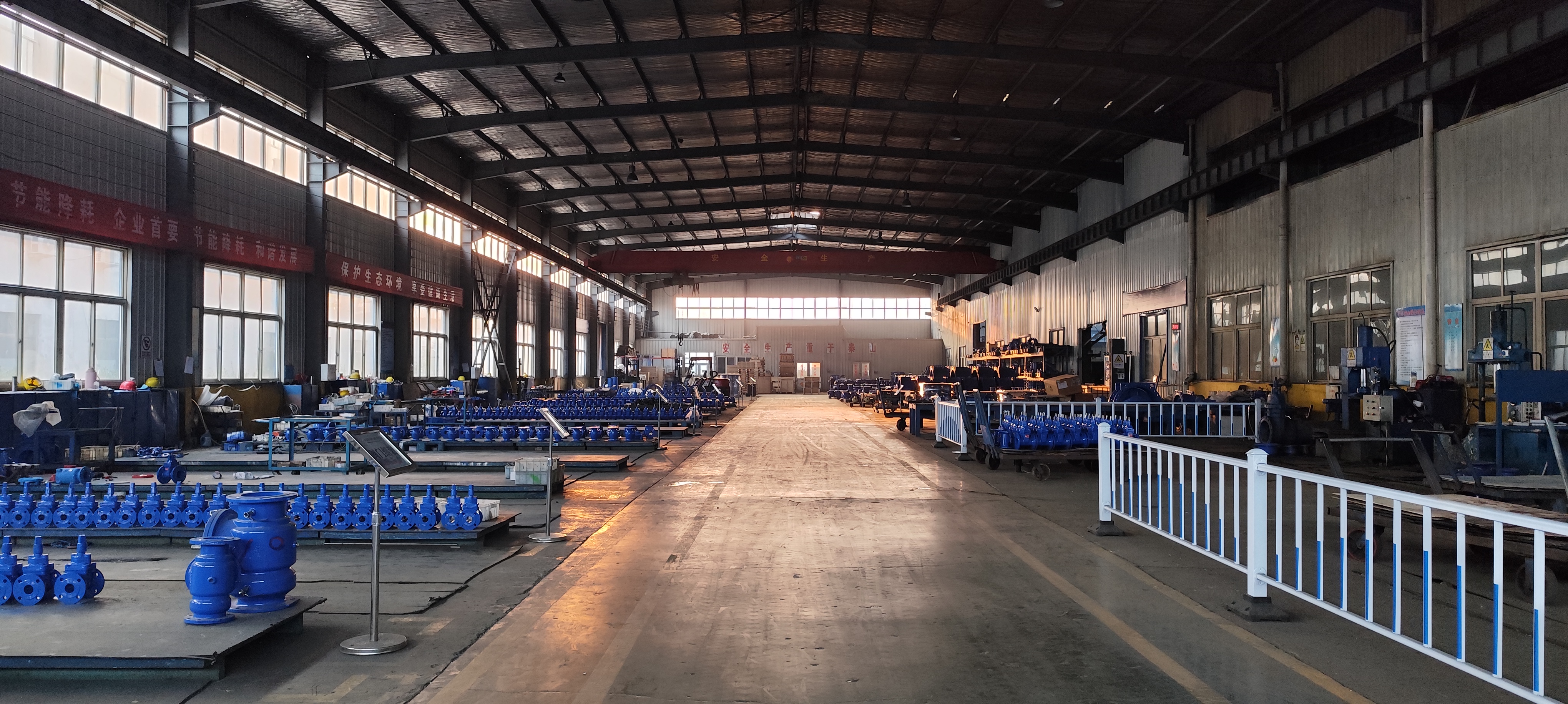
Gate valves are frequently grouped by motion, but the more useful grouping is by design family — the combination of stem, seat and connection that a manufacturer builds against a specific standard. The families below cover the range used across oil and gas, chemical, mining, water and desalination projects. WEIZIDOM (Henan Weizidom Flow Control Co., Ltd), a valve manufacturer founded in 2000 and based in Zhengzhou, Henan Province, China, produces gate valves, butterfly valves, ball valves, check valves, globe valves and related pipeline accessories across these families.
1. Rising stem designs: position you can see
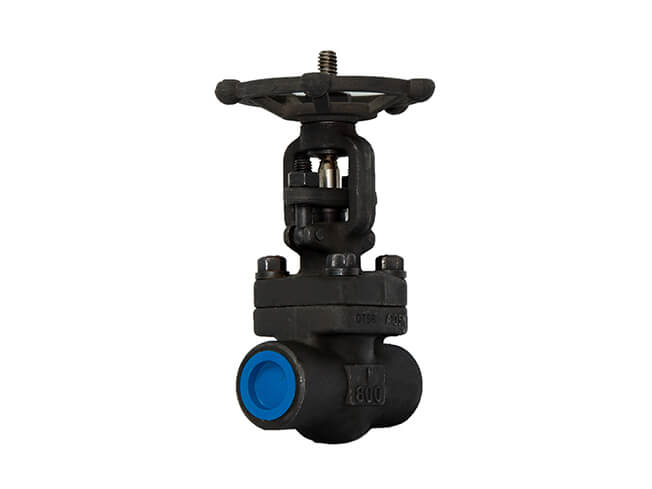
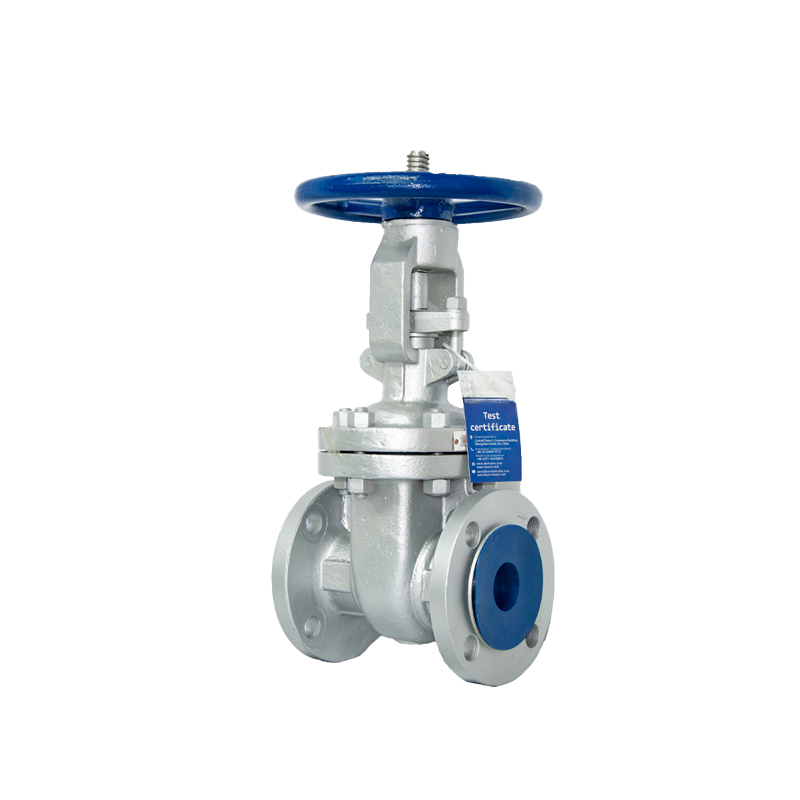
A rising stem gate valve, also described as OS&Y (outside screw and yoke), moves the stem upward as the disc opens. The exposed stem gives operators a visual indication of valve position, which is one reason rising stem designs are common on isolation points where the state of the valve matters.
Two rising stem families cover very different duty ranges. The rising stem forged steel gate valve is built to API 602, ASME B16.34 and DIN 3356, in A105 forged carbon steel, F304 and F316 forged stainless steel. It runs at Class150/300/600 in sizes from NPS 1/4" to NPS 4" (DN8–DN100), with metal-to-metal or PTFE sealing. Its scope is high pressure pipeline, oil and gas wellhead, chemical injection and instrumentation piping — small bore, high pressure, often confined spaces.
The BS5163 rising stem gate valve covers the opposite end. Built to BS5163 Type B (OS&Y), EN 1074 and AWWA C509, in QT500-7 and GGG50 ductile iron with a full wrapped EPDM rubber seal, it runs at PN10/PN16 from DN50 to DN800. Its scope is UK, Commonwealth and European municipal water supply, water treatment and water works. Same stem logic, completely different body, seat and standard.
2. Knife gate designs: for media that would jam a wedge
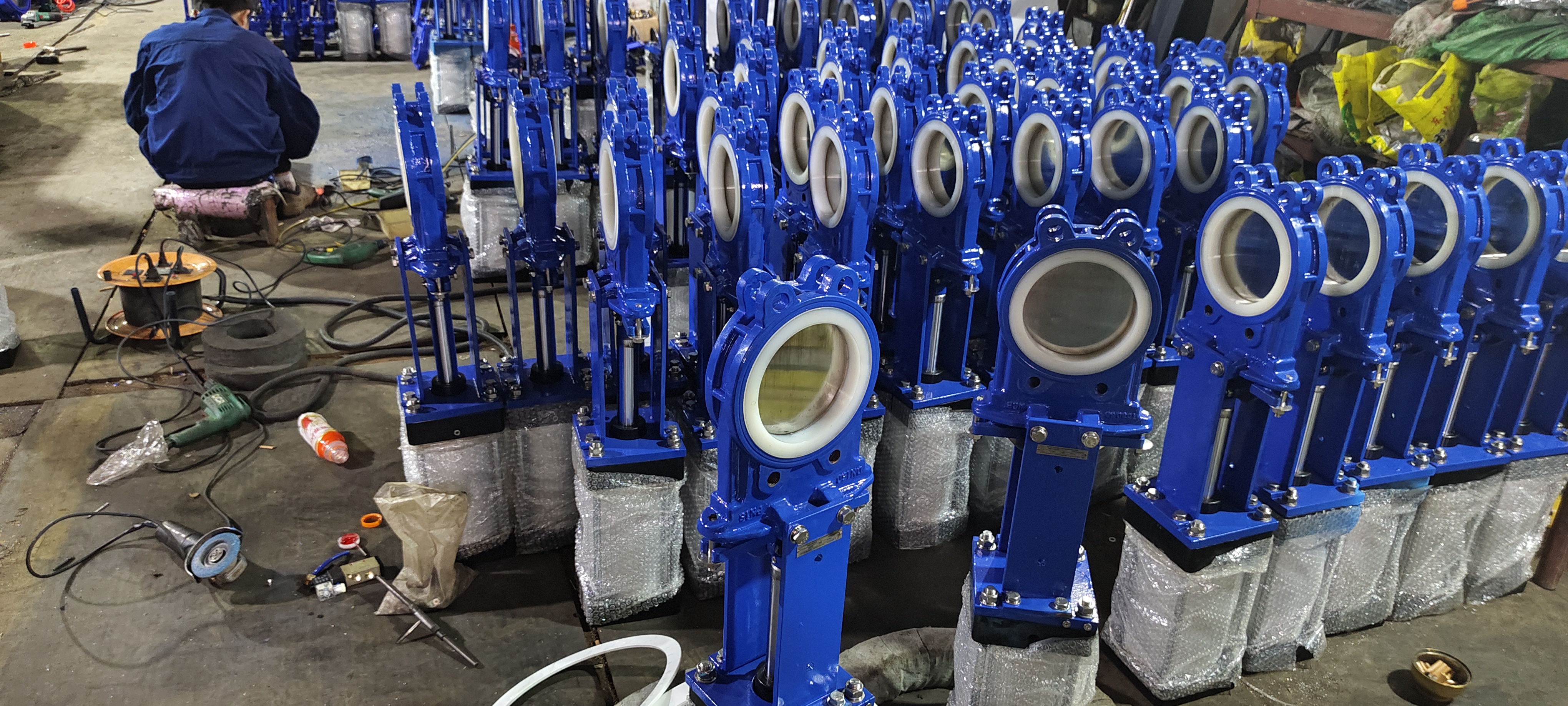
Slurry, ash and fibrous media do not behave like clean water. A knife gate valve uses a thin, parallel knife-edge disc that seats against the body rather than wedging into it, which reduces the chance of solids packing behind the disc.
The carbon steel knife gate valve is built to API 598, DIN 19526 and GB/T 12237 in WCB carbon steel and WC6 chrome molybdenum steel, with PTFE or EPDM sealing, at PN16/PN25/PN40 and DN50–DN800. Its defined scope is coal mining, power plant ash handling and industrial waste slurry.
The stainless steel knife gate valve is built to API 598, DIN 19526 and JIS F7380 in 304 and 316 stainless steel, with PTFE or EPDM sealing, at PN10/PN16/PN25 and DN50–DN600. Its scope is wastewater treatment, pulp and paper, mining and chemical slurry — applications where the medium is abrasive and corrosive at the same time.
3. Resilient seat designs: soft sealing for water and wastewater
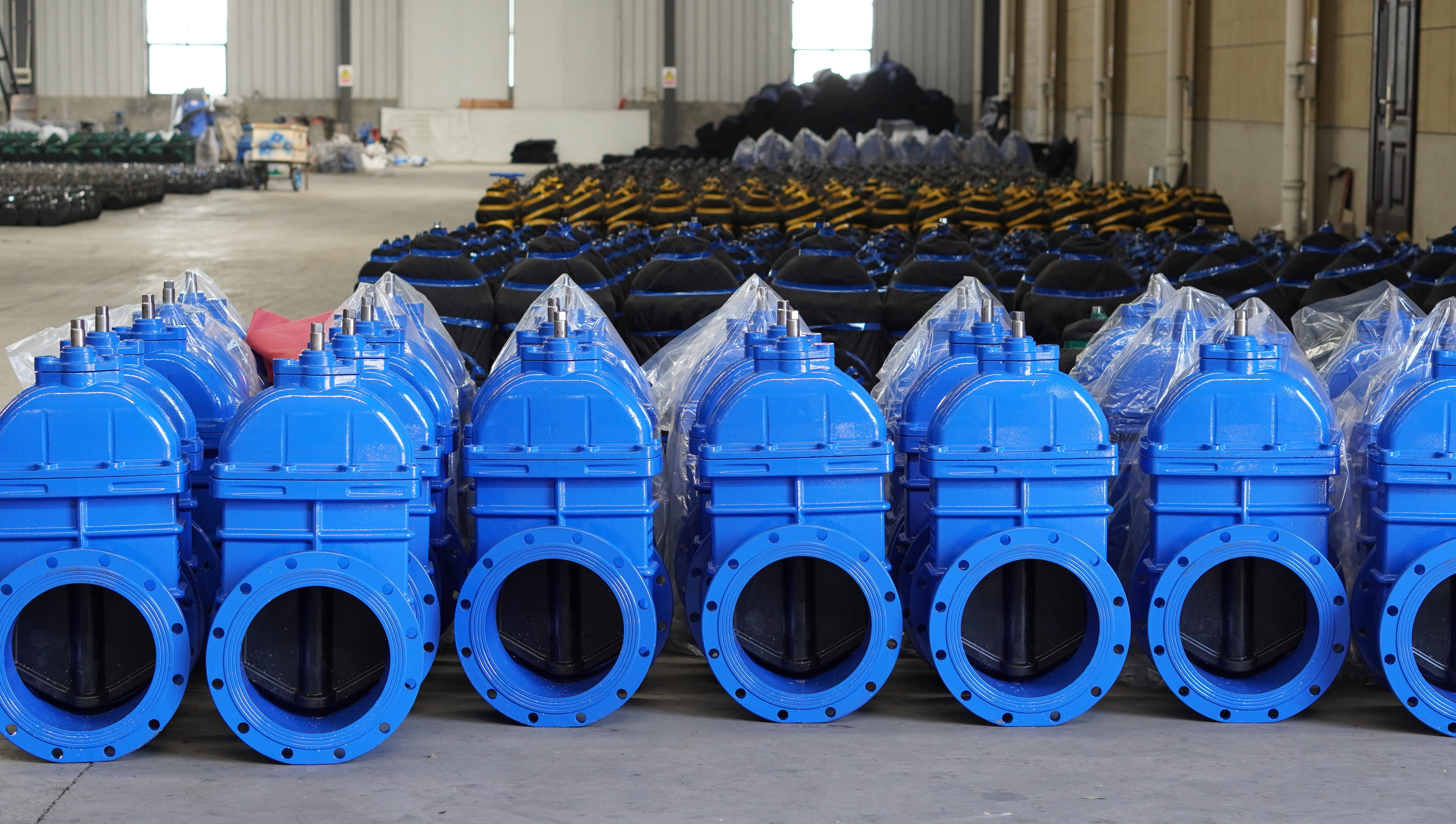
A resilient seat gate valve uses a rubber-encapsulated wedge or a soft-seated disc to achieve tight shut-off at comparatively low pressure. This is the family that dominates municipal water, drainage and irrigation networks, because clean and lightly loaded water does not require a metal-to-metal seal.
The flange resilient gate valve is built to DIN 3352 F4 and F5 in GGG50 / QT500-7 ductile iron with EPDM or NBR sealing, at PN10/PN16/PN25 and DN40–DN1200. Its scope is water supply and drainage, agricultural irrigation and wastewater treatment. The DN range is the widest of any family listed here, which reflects how much of a municipal network is built from flanged resilient valves.
The underground cap soft seal gate valve is built to BS5163 Type A/B, DIN 3352 F4/F5 (underground) and the Z45X-16Q cap type, in GGG50/QT500-7 ductile iron with a full wrapped EPDM rubber seal, at PN10/PN16 and DN50–DN600. Its scope is municipal underground water supply, roadside drainage and residential water supply — buried installations where the valve has to be operated from ground level.
The socket connection gate valve is built to DIN 3352 SW, EN 1074 SW and GB/T 12234 SW in QT500-7/GGG50 ductile iron with EPDM or NBR sealing, at PN10/PN16/PN25 and DN15–DN100. Its scope is building water supply, HVAC, small diameter industrial pipeline and fire protection. It is the smallest standard-driven family in the range.
4. Metal-seated and forged designs: high pressure and high temperature
Where the medium is hot, flammable or under high pressure, soft rubber seating is usually the wrong answer. Metal-to-metal seating and Stellite-faced seats are used instead.
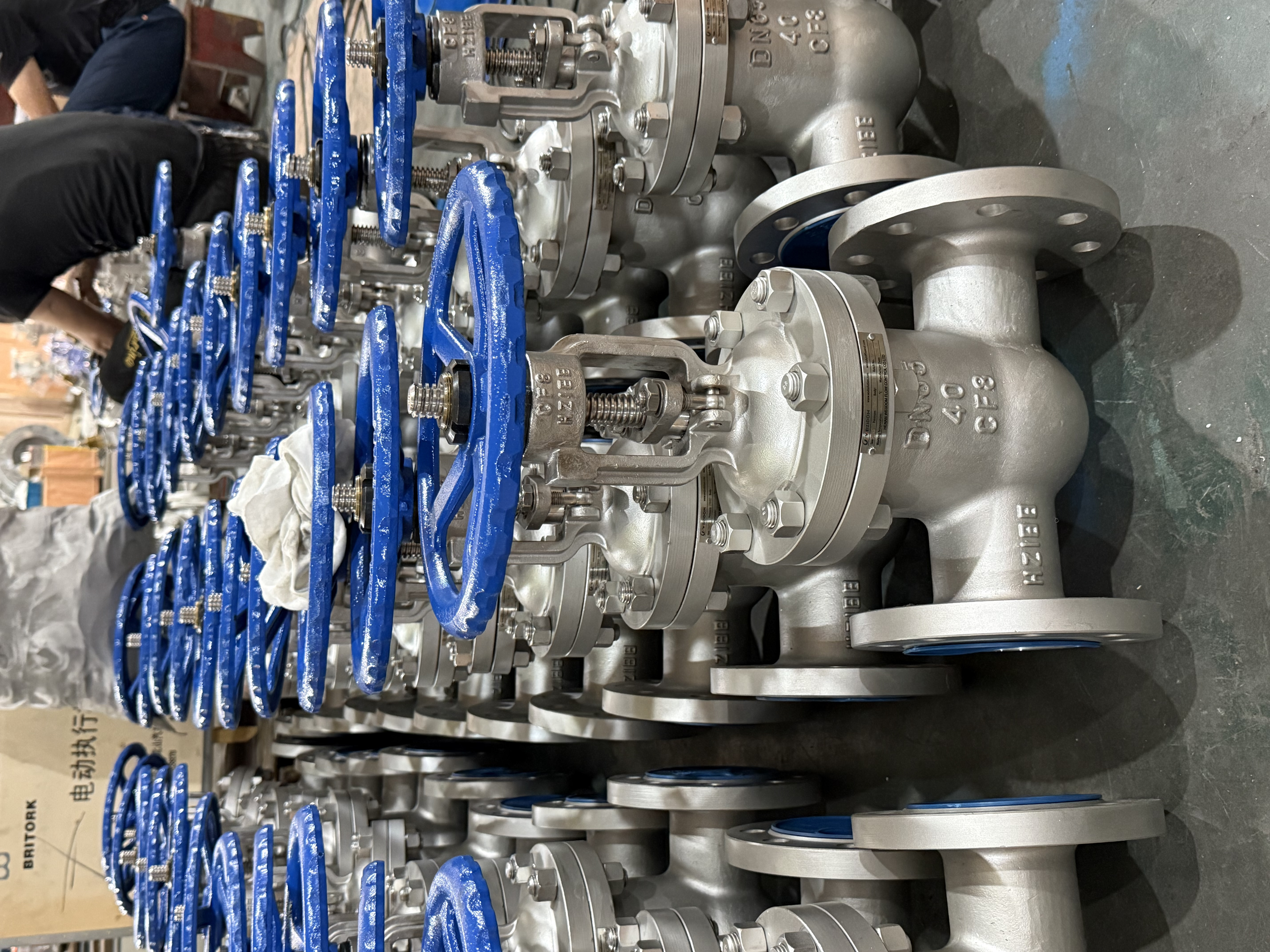
The API gate valve family is the clearest example. Built to API 600, API 602 and API 6D in WCB carbon steel, CF8 (304) and CF8M (316) stainless steel, with metal-to-metal or Stellite sealing, it covers Class150/300/600/900 and NPS 1/2" to NPS 48" (DN15–DN1200). Its scope is oil and gas, petrochemical, refinery, offshore platform and power plant. API 600 is the primary standard for heavy-duty bolted bonnet steel gate valves used in petroleum refineries and related applications, and it specifies design, materials and testing requirements. EN ISO 10434:2020 is the European and International equivalent to API 600, governing bolted bonnet steel gate valves for the petroleum and petrochemical industries.
The carbon steel gate valve is built to DIN 3352 F4/F5, EN 12516 and GB/T 12234 in WCB carbon steel and LCB low temperature carbon steel, with metal-to-metal or EPDM sealing, at PN16/PN25/PN40/PN63 and DN50–DN1000. Its scope is petrochemical, power plant, heating ventilation and industrial pipeline. LCB is the reason this family appears on low-temperature duties.
The stainless steel flange gate valve is built to DIN 3352 F4/F5, EN 1074 and JIS B2062 in 304 (SUS304) and 316 (SUS316) stainless steel, with EPDM or Viton sealing, at PN10/PN16/PN25/PN40 and DN40–DN800. Its scope is food and beverage, pharmaceutical, chemical industry and seawater desalination — corrosion resistance is the deciding factor, not pressure.
5. Connection and operation: the part buyers forget
The third variable is how the valve is installed and driven. Flanged bodies dominate large-bore industrial lines. Socket weld bodies (DIN 3352 SW, EN 1074 SW, GB/T 12234 SW) suit small-bore building and HVAC piping. Underground cap bodies with extended spindles suit buried municipal mains. On operation, the range runs from manual handwheel, through electric actuator, pneumatic and hydraulic operation, to heavy-duty designs for abrasive service.
This is where application knowledge becomes procurement value. A mine slurry line may need manual or electric operation with a heavy-duty design. A port terminal may need electric or hydraulic operation with remote control. A chemical plant may need electric or pneumatic operation with explosion protection. The valve design does not change; the drive package does.
Step-by-Step Breakdown: Reading a Gate Valve Specification in Seven Steps
The following sequence mirrors how a gate valve item is normally evaluated, from medium to documentation. It works for any family in this guide.
- Identify the medium and its behaviour. Clean water, drinking water, rainwater and fire water are non-corrosive, non-abrasive fluids. Ore slurry contains solid particles and is highly abrasive. Seawater brings strong corrosion and high salinity. Crude oil and natural gas are flammable and explosive. Each of these points to a different seat and body material.
- Fix the pressure class and size. Standard ranges in this catalogue run from PN10 up to PN63, and from Class150 up to Class900. Sizes run from DN15 to DN1200 depending on family. Large diameter gate valves up to DN1200 are available in the flange resilient and API families.
- Choose the stem configuration. Rising stem / OS&Y where visible position indication matters; non-rising stem (NRS) where the valve sits inside a pit, a buried chamber or a confined space.
- Choose the sealing method. Metal-to-metal where temperature, pressure or fire risk rules out elastomers; Stellite-faced for heavy-duty API duty; EPDM or NBR for water service; PTFE for knife gate slurry duty; Viton for chemical and desalination service.
- Choose the body and trim material. GGG50 and QT500-7 ductile iron for water; WCB and WC6 carbon steel for petrochemical, power and slurry; LCB low-temperature carbon steel for cold duty; forged A105 for small-bore high pressure; F304/F316, CF8/CF8M, 304 and 316 stainless steel for corrosive duty.
- Choose connection and operation. Flanged, socket weld, or underground cap with extended spindle; manual handwheel, electric actuator, pneumatic, hydraulic, or heavy-duty manual/electric for abrasion.
- Confirm the design standard and the documentation behind it. The standard determines design, materials and testing. A gate valve specification without a standard reference cannot be verified against anything.
Use Cases: Six Industries and the Designs That Fit Them
Each industry below is defined by its operating conditions — temperature window, pressure band, medium and special requirement. Matching a design family to those conditions is the whole exercise.
1. Oil and gas pipelines and terminals
Long-distance oil and gas pipelines operate outdoors, underground or on the pipeline itself, at medium to high temperature from -20℃ to +120℃, at high pressure up to Class150/PN25, handling crude oil and natural gas in flammable, explosive service with electric or hydraulic operation and safety interlock. Offshore oil and gas platforms sit inside the same condition envelope.
The matched family is the API gate valve in WCB/CF8/CF8M, with metal-to-metal or Stellite sealing, and the rising stem forged steel gate valve for small-bore high-pressure and wellhead duty. Terminals add a second envelope: port outdoor conditions from -10℃ to +75℃, medium pressure PN16/PN25, oil, gas and chemical transfer, flammable media and vibration, with electric or hydraulic operation under remote control. Shock resistance, vibration resistance, corrosion resistance and safety interlock are the defining requirements.
2. Chemical plants
Chemical plants run indoor or outdoor at medium to high temperature from -5℃ to +150℃, at medium to high pressure PN16/PN40, in chemical fluid with strong corrosion and toxic exposure, with electric or pneumatic operation under explosion protection. Leak tightness and explosion protection are the constraints that eliminate most soft-seated general-purpose options.
Stainless steel flange gate valves in 304/316 with EPDM or Viton sealing, plus API gate valves in CF8/CF8M, cover the corrosive main lines. Forged steel rising stem gate valves cover chemical injection and instrumentation piping, where small bore and high pressure coincide.
3. Mining, ash handling and slurry
Mining installations operate in outdoor mining areas with variable temperatures from -15℃ to +85℃, at medium pressure PN16/PN40, handling mining water and ore slurry with high abrasion and solid particle content. Project types include underground mining water supply systems, ore processing water circulation and open-pit drainage networks. The requirements are abrasion resistance, impact resistance, dust prevention and easy maintenance.
Knife gate valves are the primary answer: carbon steel knife gate valves in WCB/WC6 for coal mining and power plant ash handling, and stainless steel knife gate valves in 304/316 where the slurry is also corrosive. Operation is manual or electric with a heavy-duty design, matched with slurry pumps, mining filters, check valves and overload protection.
4. Municipal wastewater treatment
Wastewater treatment operates outdoors or underground from 0℃ to +60℃ at low pressure PN10/PN16, handling sewage and waste water with slight corrosion and small particles. Project types include municipal sewage treatment plants, industrial wastewater discharge system renovation and rainwater drainage networks. Anti-clogging design, corrosion resistance and easy maintenance are the stated requirements.
Flange resilient gate valves and underground cap soft seal gate valves in GGG50/QT500-7 ductile iron with EPDM sealing carry most of the duty, backed by stainless steel flange gate valves where the medium turns aggressive. A wastewater treatment plant end user in Pakistan has operated 100 units for five years with durable performance and stable sealing; a municipal project contractor in Iraq used 571 units on the Alqoash Water Project, and a government urban water supply network in the Philippines installed 200 units with zero leakage results.
5. Seawater desalination
Coastal desalination plants operate outdoors at ambient temperature from 5℃ to +70℃, at medium pressure PN16/PN25, handling seawater with strong corrosion and high salinity, using electric or pneumatic operation with corrosion protection. High corrosion resistance, seawater resistance and long service life are the driving requirements — this is the application where material choice outweighs every other decision.
Stainless steel flange gate valves in 304/316 with EPDM or Viton sealing and stainless steel knife gate valves in 304/316 are the matched families, supported by stainless steel filters, check valves, pressure gauges and corrosion inhibitor injection devices.
6. General petrochemical, power plant and HVAC pipelines
This is the widest envelope in the list. Carbon steel gate valves in WCB and LCB cover petrochemical, power plant, heating ventilation and general industrial pipeline duty from PN16 through PN63 and DN50 through DN1000, with metal-to-metal or EPDM sealing — LCB being the low-temperature carbon steel option. Socket connection gate valves in QT500-7/GGG50 cover building water supply, HVAC, small diameter industrial piping and fire protection from DN15 to DN100.
A power plant case illustrates the duty: 160 units of carbon steel gate valves, stainless steel flange gate valves and API gate valves were supplied to a large energy company in Kazakhstan for pipeline control in continuous production and heating, where resistance to high temperatures and high pressure was the required result over a one-year deployment.
Comparison Table: Gate Valve Design Families Side by Side
The table below compares the families described above on the dimensions that decide a specification. All values are drawn from the product data for each family.
| Design family | Size range | Pressure rating | Body / trim material | Sealing | Stem & connection | Primary industries |
|---|---|---|---|---|---|---|
| Rising stem forged steel gate valve | NPS 1/4"–4" (DN8–DN100) | Class150/300/600 | A105 forged carbon steel, F304/F316 forged stainless | Metal-to-metal / PTFE | OS&Y rising stem | High pressure pipeline, oil and gas wellhead, chemical injection, instrumentation |
| BS5163 rising stem gate valve | DN50–DN800 | PN10/PN16 | QT500-7 / GGG50 ductile iron | Full wrapped EPDM rubber | OS&Y rising stem | Municipal water supply, European water treatment, water works |
| Socket connection gate valve | DN15–DN100 | PN10/PN16/PN25 | QT500-7 / GGG50 ductile iron | EPDM / NBR | NRS, socket weld | Building water supply, HVAC, small diameter industrial pipeline, fire protection |
| Underground cap soft seal gate valve | DN50–DN600 | PN10/PN16 | GGG50 / QT500-7 ductile iron | Full wrapped EPDM rubber | NRS, underground cap | Municipal underground water supply, roadside drainage, residential water supply |
| API gate valve | NPS 1/2"–48" (DN15–DN1200) | Class150/300/600/900 | WCB, CF8 (304), CF8M (316) | Metal-to-metal / Stellite | OS&Y, wedge disc | Oil and gas, petrochemical, refinery, offshore platform, power plant |
| Carbon steel knife gate valve | DN50–DN800 | PN16/PN25/PN40 | WCB, WC6 chrome molybdenum steel | PTFE / EPDM | Knife type, parallel disc | Coal mining, power plant ash handling, industrial waste slurry |
| Stainless steel knife gate valve | DN50–DN600 | PN10/PN16/PN25 | 304 / 316 stainless steel | PTFE / EPDM | Knife type, parallel disc | Wastewater treatment, pulp and paper, mining, chemical slurry |
| Carbon steel gate valve | DN50–DN1000 | PN16/PN25/PN40/PN63 | WCB, LCB low temperature carbon steel | Metal-to-metal / EPDM | NRS / OS&Y | Petrochemical, power plant, heating ventilation, industrial pipeline |
| Stainless steel flange gate valve | DN40–DN800 | PN10/PN16/PN25/PN40 | 304 (SUS304) / 316 (SUS316) | EPDM / Viton | NRS / OS&Y | Food and beverage, pharmaceutical, chemical, seawater desalination |
| Flange resilient gate valve | DN40–DN1200 | PN10/PN16/PN25 | GGG50 / QT500-7 ductile iron | EPDM / NBR | NRS | Water supply and drainage, agricultural irrigation, wastewater treatment |
Read across the pressure column and a pattern appears: soft-seated ductile iron families cluster at PN10–PN25, flanged carbon steel reaches PN63, and API families extend to Class900. Read across the sealing column and another pattern appears: elastomer seals dominate water and wastewater, while metal and Stellite seating dominate hydrocarbon and high-temperature duty.
Frequently Asked Questions
Which standards should a gate valve specification reference?
The correct standard depends on the design family. For petroleum and petrochemical gate valves, API 600 is the primary standard for heavy-duty bolted bonnet steel gate valves, covering design, materials and testing, and EN ISO 10434:2020 is its European and International equivalent. DIN 3352 is the widely recognized German national standard for gate valves, specifying structural and performance requirements. At product level, the families in this guide are built to API 600, API 602, API 6D and API 598; DIN 3352 F4/F5, DIN 3352 SW, DIN 3356, DIN 19526 and EN 12516; BS5163 Type A/B; EN 1074 and EN 1074 SW; AWWA C509; JIS F7380 and JIS B2062; ASME B16.34; and GB/T 12234 and GB/T 12237. WEIZIDOM products are manufactured to meet GB, JB, HB, ASME, API, AWWA, DIN, EU and BS standards, so a specification can be matched to the regional standard a project requires.
Can gate valves be adapted to a project's specific pressure, material and actuation requirements?
Yes. WEIZIDOM operates OEM and ODM production with customization across logo, standard, pressure, material, actuator and colour. Production is spread across five factories, with a monthly capacity of 170,000 units and a 60-engineer R&D team, and each product passes 12 tests from raw material to finished product, including 100% pressure testing, visual inspection and dimensional checks. In practice, this means a project can specify Class150 to Class900 in API gate valves, PN10 to PN63 in carbon steel gate valves, or sizes from DN15 to DN1200 depending on family, and receive a body, seat and actuator combination matched to the listed operating conditions.
What drives the cost of an industrial gate valve?
Six factors drive gate valve cost, and all six are engineering choices rather than commercial ones. First, body material: ductile iron GGG50/QT500-7 sits at one end of the scale, WCB carbon steel in the middle, and LCB low-temperature carbon steel, 304/316 stainless steel and forged A105/F304/F316 at the higher end. Second, pressure class: PN10 and Class150 bodies are lighter than PN63 and Class900 bodies. Third, size, ranging from DN15 to DN1200. Fourth, sealing method: EPDM or NBR resilient seats, PTFE, metal-to-metal, or Stellite-faced seats. Fifth, trim and coating treatment. Sixth, actuation and documentation: a manual handwheel, an electric actuator, pneumatic or hydraulic operation, or an extended spindle for underground use each carry different cost and different interface requirements. Where budget pressure exists, the most reliable saving is matching seat and body material to the actual medium rather than specifying stainless steel on a clean water line.
Can a buyer validate a gate valve sample before placing a bulk order?
Yes. The minimum order quantity is 1 unit, so a single valve can be ordered and evaluated before a project quantity is committed. Sample validation is supported by the quality control process used on all production: 100% pressure testing, visual inspection and dimensional checks, inside a 12-test sequence that runs from raw material to the finished product. Buyers evaluating a design family usually test the valve against the conditions it will actually see — pressure class, medium, and duty cycle — rather than against a generic benchmark.
What lead time and after-sales support should a project expect?
Standard lead time is 25 to 35 days, supported by a monthly capacity of 170,000 units and a minimum order quantity of 1 unit. After-sales support is provided through 24/7 online service with a 12-month warranty, and the export network covers the EU, US, Middle East, Southeast Asia, South America, North America, Africa and Central Asia. Projects with staged delivery schedules can align order placement to the 25–35 day window. To move from reading a specification to evaluating a valve, you can request a quote, order a sample unit, or download the product catalogue and confirm the design family, pressure class and material grade for your line.
Conclusion: Vocabulary First, Specification Second
Gate valve selection is not a search for the best valve — it is the elimination of designs that cannot survive the medium, pressure and temperature a project actually presents. Rising stem forged steel valves exist because oil and gas wellheads and chemical injection points need small-bore, high-pressure isolation with visible position. Knife gate valves exist because ore slurry and ash will pack behind a wedge. Resilient seat valves exist because municipal water networks need tight shut-off at PN10 to PN25 across very large diameters. API gate valves exist because refineries, terminals and offshore platforms need bolted bonnet steel construction to a defined standard. Stainless steel flange gate valves exist because seawater and chemical fluids corrode everything else.
Understanding these families changes how a buyer reads a datasheet. Pressure rating stops being a number and becomes a constraint. Sealing method stops being a footnote and becomes an application decision. Standard reference stops being paperwork and becomes the only way to verify that a supplier built what was specified. For buyers moving from research into evaluation, that vocabulary is the most transferable asset in the whole procurement process.
Next Step: Match a Design Family to Your Line
Share your medium, pressure class, size and standard, and WEIZIDOM will confirm which gate valve family fits — rising stem, knife gate, resilient seat, API, carbon steel or stainless steel — with the matching body material, sealing method and operation mode. Samples start from 1 unit, and standard lead time is 25–35 days.
Request a quote, order a sample, or download the catalogue: WEIZIDOM Product Catalogue (PDF)
Email: contact@weizidom.com | WhatsApp: +86 17319732766 | Website: www.wsdvalves.com
Have Questions or Need More Details?
Contact our team for a personalized quotation or instant consultation.
Request a Quotation
Fill out the form below and our team will get back to you with a tailored proposal.
WhatsApp Direct Chat
Prefer to chat in real-time? Message us on WhatsApp for instant assistance & quick answers.
- Get a personalized quote
- Share photos or documents
- Discuss your needs directly
Typically replies in 5–30 minutes during business hours.