
Gate Valve Solutions for Coastal Seawater Desalination Plants: A PN16/PN25 Application Guide
Flanged resilient-seat gate valves and rising-stem gate valves are the default isolation choice for coastal seawater desalination plants. They seal bidirectionally, hold a full-bore straight flow path, and tolerate the chloride, sand and pressure conditions that shorten the service life of throttling valve types. Intake, pretreatment, reverse-osmosis feed and brine discharge lines operate fully open or fully closed rather than modulated, which is exactly the duty a gate valve is engineered for.
This guide explains how to specify gate valves for high-salinity seawater service at PN16 and PN25 pressure classes, which corrosion-resistance measures actually decide service life in a coastal environment with ambient temperatures around 5 °C, how rising stem designs behave during long outdoor operation, and what supporting equipment and delivery expectations typically apply to offshore water treatment retrofits.
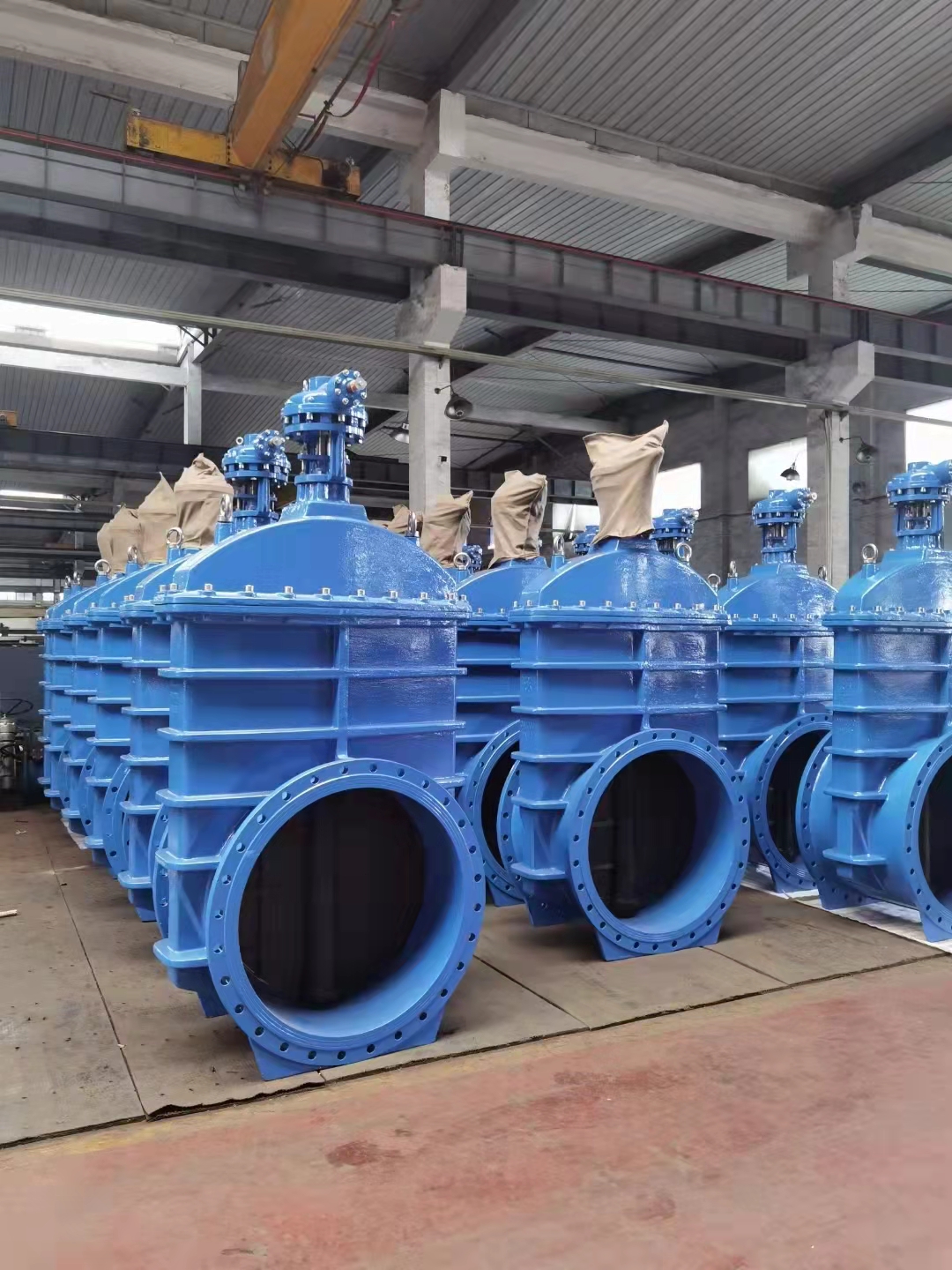
Problem Definition: Why Seawater Degrades Standard Isolation Valves
Seawater attacks an isolation valve through four mechanisms at the same time, and a valve that answers only one of them will still fail early in a desalination plant.
- Chloride corrosion. High-salinity water and salt-laden coastal air attack bare carbon steel bodies, stems and trim. Without protective coating and corrosion-resistant trim, pitting and stem seizure appear well before the valve reaches design life.
- Abrasion. Intake water carries sand and suspended solids that score seating surfaces and accelerate wear on discs and seat rings.
- Biofouling and scaling. Marine growth and mineral deposits build up on seats and inside body cavities, raising operating torque and preventing full closure.
- Pressure and temperature cycling. PN16 and PN25 lines see transients at every pump start and stop, while coastal ambient conditions near 5 °C in winter test both sealing materials and operator effort.
Two project-level constraints are specific to coastal desalination work. Operability matters because outdoor valves on an intake structure may be operated by hand or by an electric actuator, and during a retrofit the access space is limited while the position indicator still has to be readable at a distance. Isolation integrity matters because a gate valve that passes even a small amount of seawater on an RO feed or brine line forces repeated downstream maintenance. In both cases the valve is expected to sit in one position for long periods and then close tightly on demand.
A further practical risk is standard mismatch. A valve that performs acceptably in a treated municipal water line may be unsuitable for seawater if its trim material, coating system and seal design were never selected for chloride service. The consequence rarely appears at installation; it shows up as rising operating torque, seat damage and unplanned shutdowns across the first operating seasons.
Industry Background: Desalination Demand and the Standards Behind It
Valve demand tracks desalination capacity, and the numbers behind that demand are substantial. The global gate valve market was valued at USD 13.0 billion in 2024 and is projected to reach approximately USD 20.6 billion by 2034 (Reports and Data). China remains the largest single source of valve supply: in 2024 the country concentrated 20% of total global valve exports with a trade value of USD 22.6 billion (Observatory of Economic Complexity). For buyers in coastal markets, that concentration is one reason supplier evaluation — not product availability — is usually the real constraint on a project schedule.
Three standards frame most desalination gate valve specifications:
- API 600 is the primary standard for heavy-duty bolted bonnet steel gate valves used in petroleum refineries and related applications, and it specifies requirements for design, materials and testing.
- EN ISO 10434:2020 is the European and international equivalent, governing bolted bonnet steel gate valves for the petroleum and petrochemical industries.
- DIN 3352 is the widely recognized German national standard for gate valves, specifying structural and performance requirements for various industrial applications.
Around those core standards, coastal projects also work with connection conventions — ANSI standard flange drilling, DIN F4 face-to-face dimensions, BS dimensions — and with regional standard families such as GOST-oriented specifications used in Central Asian and Eastern European procurement. At specification stage what matters is that the valve offered matches the project's stated pressure class and connection convention, not simply the nominal bore.
The buying model is shifting as well. Desalination plants are multi-decade assets, so operators increasingly assess valve suppliers as long-term partners measured on repeat-order consistency, spare-part availability, documentation quality and lead time reliability, rather than as single-order bidders. That is why a coastal retrofit is usually a supply-ecosystem decision rather than a one-off purchase.
Detailed Solution: WEIZIDOM Gate Valve Designs for High-Salinity Seawater Service
WEIZIDOM (Henan Weizidom Flow Control Co., Ltd) is a Chinese manufacturer of valves, pipe fittings, water meters and flow meters, founded in 2000 and operating five production facilities in Tianjin, Wenzhou, Hebei, Lianyungang and Anhui. The company produces gate valves, butterfly valves, ball valves, check valves, globe valves, pinch valves, plug valves, strainers, pipe fittings, flow meters and water meters in gray iron, ductile iron, carbon steel, forged steel and stainless steel, and exports 80% of its output to more than 60 countries.
Why a flange resilient gate valve suits desalination isolation duty
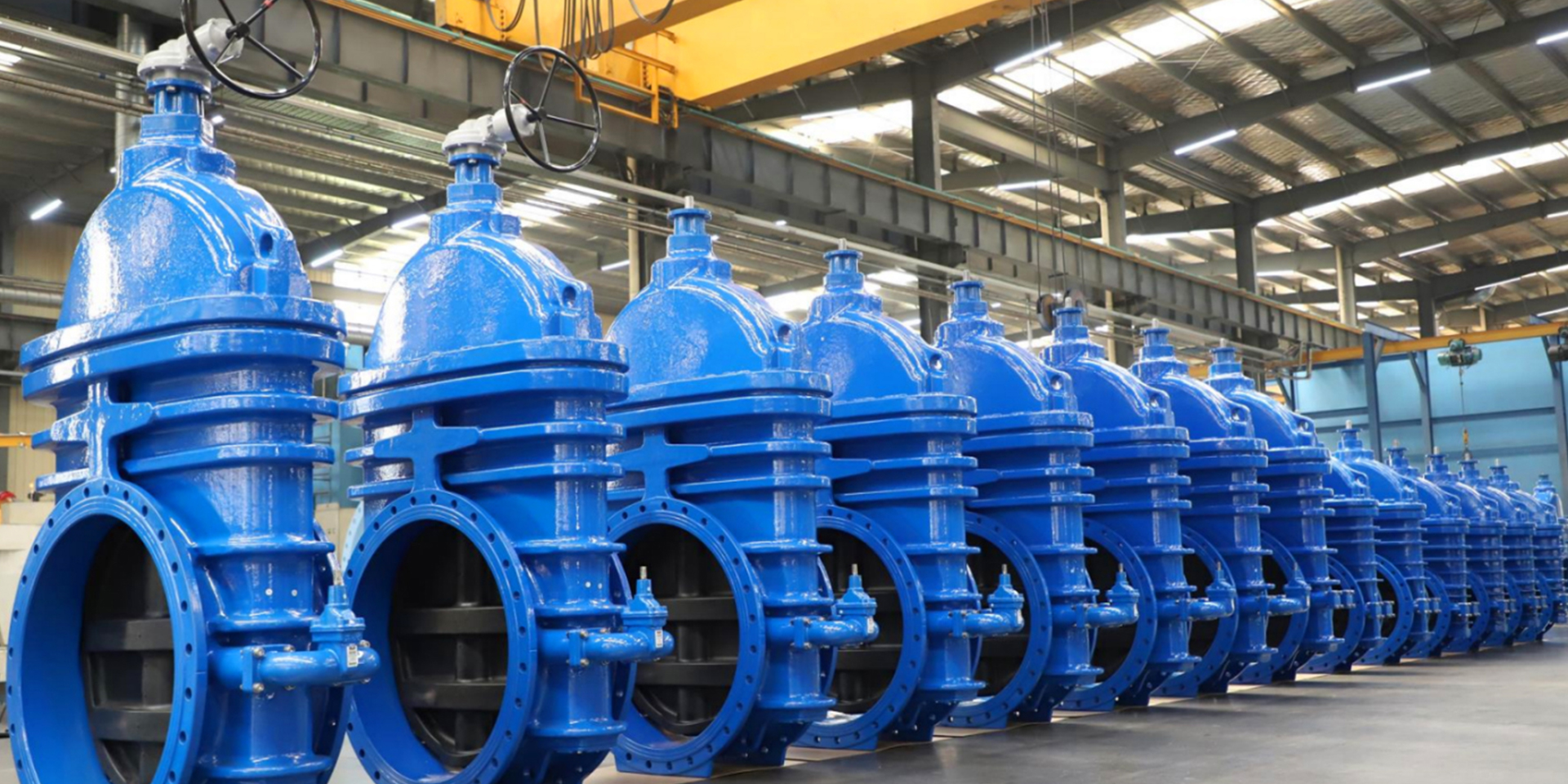
The flange resilient gate valve is the workhorse design for seawater isolation because its sealing geometry is simple and its flow path is unobstructed. In the fully open position, WEIZIDOM gate valves present a full straight-through bore with zero flow resistance, so pumping energy is not spent overcoming valve restriction along long intake and outfall runs. The same design resists deformation under pressure and holds reliable bidirectional sealing performance, which allows the valve to isolate flow regardless of which side the pressure arrives from — a functional requirement on lines that can be pressurized from either direction during plant operation.
Rising stem design and operability at 5 °C coastal ambient
A rising stem gate valve converts handwheel or actuator movement directly into visible stem travel, so the operator can confirm open and closed position without instrumentation. On exposed coastal installations this matters: outdoor valves must remain operable in cold, wet and salt-spray conditions, and position has to be readable at a glance during inspection rounds. Rising stem designs also keep the stem nut and packing accessible for routine maintenance, which shortens field service time on jetty-side and offshore retrofit work where access windows are narrow.
Corrosion control measures that decide service life
Corrosion resistance in seawater service is a system of measures rather than a single material choice. WEIZIDOM applies the following controls across its gate valve range:
- Corrosion: FBE epoxy coating of ≥250 μm combined with stainless steel trim on wetted and sealing surfaces.
- Abrasion: abrasion-resistant disc with hardened surface treatment to resist sand and suspended solids.
- Leakage: primary plus secondary double seal design, with zero leakage testing before shipment.
- Over pressure: reinforced body verified by test at 1.5× rated pressure.
- High temperature: special sealing arrangements and stellite trim for elevated-temperature lines.
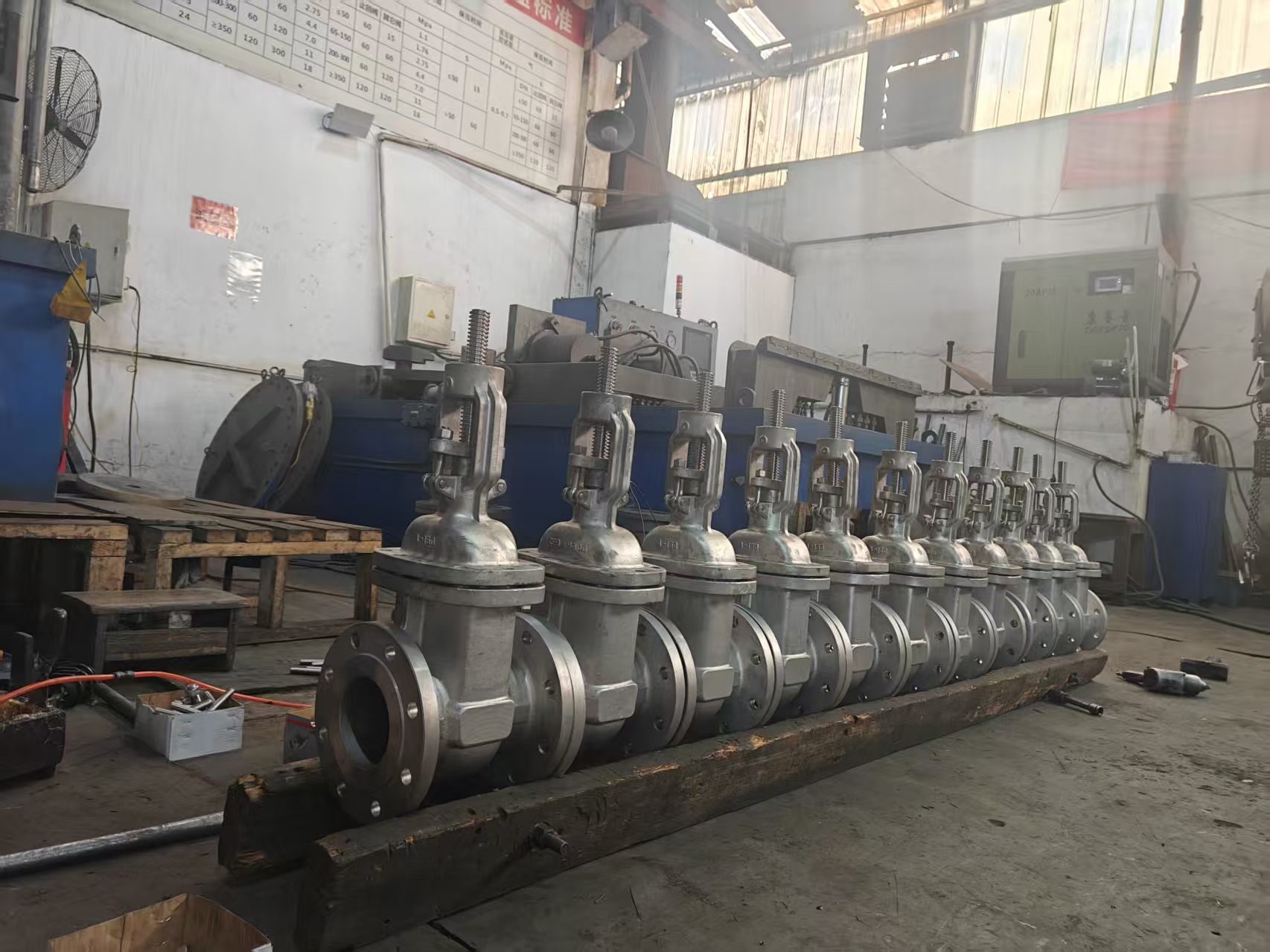
These measures matter differently by line. On raw seawater intake, abrasion resistance and coating integrity carry most of the load. On RO feed and brine lines, sealing architecture and trim material dominate. On chemical dosing lines, the chemical pipeline gate valve must match the dosing medium as well as the seawater environment, which is why material selection should be confirmed line by line rather than applied as a plant-wide default.
Standards coverage and testing discipline
WEIZIDOM products can meet multiple standards including GB, JB, HB, ASME, API, AWWA, DIN, EU and BS. Every product passes 12 inspections from raw material through to the finished valve. That test sequence is what supports claims on bidirectional sealing and pressure integrity, and it is also what makes documentation available for third-party review at the pre-shipment stage.
What a long-term seawater valve supply relationship looks like
For desalination operators, the second order matters more than the first. Repeat supply depends on consistent materials, stable dimensions and predictable scheduling. WEIZIDOM production planning runs on a monthly capacity of 170,000 units with a typical production lead time of 25–35 days, and group annual output reaches 2,000,000 units, supported by 60 engineers and a 60,000 m² manufacturing footprint with 300 employees. Customer feedback recorded on an African project indicated the client expressed high satisfaction with the solution — the kind of reference point that matters when a plant intends to specify one valve family across multiple expansion phases rather than re-qualifying a supplier each time.
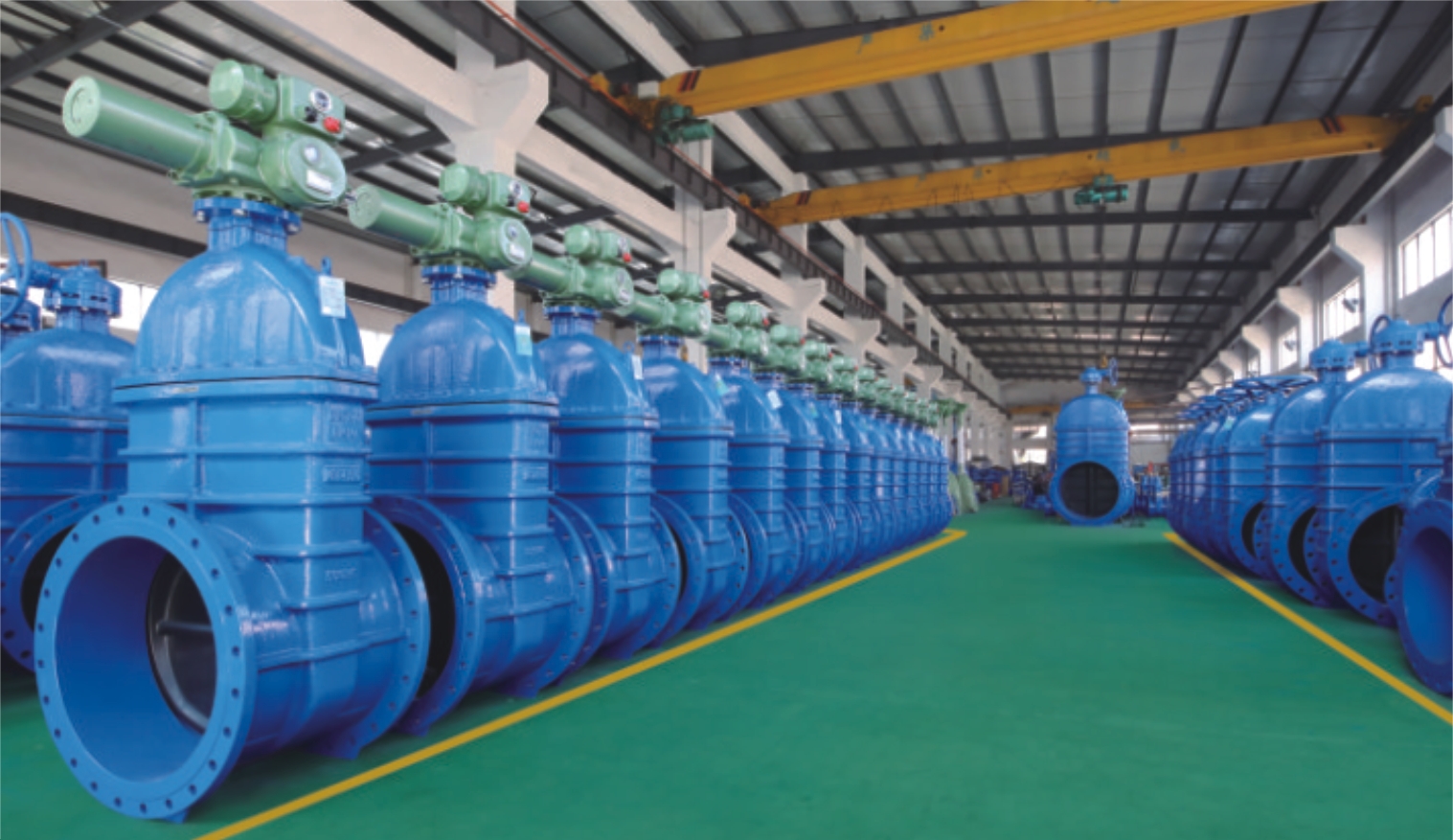
Step-by-Step Breakdown: Specifying a Gate Valve for a Coastal Desalination Project
Selection runs in eight steps, from defining the service envelope to verifying the valve before it ships.
- Define the service envelope. Record the medium (raw seawater, filtered seawater, RO feed, brine), the pressure class (PN16 or PN25), the design temperature, and the coastal ambient range including winter conditions near 5 °C.
- Confirm the isolation duty. If the line requires throttling or frequent modulation, a gate valve is the wrong choice. Specify the gate valve only where full-open and full-closed isolation applies.
- Select body and trim materials. Gray iron, ductile iron, carbon steel, forged steel and stainless steel bodies are all available. Trim and wetted surfaces should be specified for chloride service instead of being left at default.
- Specify coating and sealing architecture. For seawater duty, require an FBE epoxy coating of ≥250 μm and a primary plus secondary double seal rather than a single-seat arrangement.
- Match the standard and connection convention. Align the valve with API 600, EN ISO 10434 or DIN 3352 as applicable, and confirm flange drilling and face-to-face dimension — for example DIN F4 or ANSI standard flange patterns.
- Decide the operation method. Manual handwheel operation suits occasional isolation, while electric gate valve actuation suits remote or frequently sequenced locations such as intake galleries and retrofit modules.
- Plan operability for the site. On exposed coastal installation, verify stem accessibility, position indication and operating torque at the lowest expected ambient temperature before the valve is fixed in place.
- Verify before shipment. Require pre-shipment testing and, where project rules demand it, third-party inspection such as SGS, alongside documentation of the 12-stage in-house test sequence.
Use Cases: Where These Gate Valves Fit in a Desalination Plant
- Seawater intake and pretreatment isolation. Large diameter gate valves on intake headers and pretreatment trains handle abrasive, chloride-rich water where wear resistance and coating integrity decide service intervals.
- RO feed and high-pressure line isolation. Bidirectional seal gate valves hold tight closure on lines that see repeated pump cycling and pressure transients at PN16 or PN25 classes.
- Brine discharge and outfall lines. Long, straight outfall runs benefit from the unobstructed full-bore flow path of a rising stem gate valve, which avoids added pressure loss in the discharge system.
- Chemical dosing lines. A chemical pipeline gate valve selected for the dosing medium supports pretreatment chemical handling alongside the seawater circuits.
- Coastal and offshore water treatment retrofits. Retrofits favor compact, familiar valve designs with visible position indication and accessible packing, because mechanical access on offshore modules is limited.
- Plant water supply and drainage tie-ins. Water supply and drainage gate valves on the site network support cooling, washwater and utility circuits that run alongside the main desalination process.
Where a project must also handle abrasive mining slurry or hydrocarbon service in adjacent facilities, the same corrosion resistant gate valve platform is available in wear-resistant and higher-pressure configurations — but the selection criteria are different, and the desalination lines should be specified on their own seawater duty envelope.
Comparison Table: Gate Valve vs Alternative Designs for Seawater Isolation
The table below compares WEIZIDOM gate valve performance against alternative isolation designs using first-party performance data. Figures are stated for the comparisons shown and should be read as design-level differences rather than as guarantees for a specific installation.
| Compared design | Key structural difference | Stated performance difference | Best-fit duty | Cost and maintenance profile |
|---|---|---|---|---|
| Traditional ball valve | Full straight-through bore with zero flow resistance when fully open; high structural strength with pressure and temperature resistance | Fluid pressure drop reduced by 45%–70% in fully open status; wider structural pressure-bearing range and improved long-term continuous operation stability | Large-diameter long-distance trunk pipelines, water conservancy, petrochemical, heating and high-temperature high-pressure systems without flow regulation demand | Lower unit purchase cost due to simple internal structure and mature process; fewer vulnerable components, controlling long-term replacement and operating cost |
| Traditional butterfly valve | Full-bore straight-through flow structure with high structural rigidity and reliable bidirectional sealing | Flow resistance reduced by more than 60%; significantly improved pressure-bearing capacity; long-term sealing stability more than 2 times higher than butterfly valve | Large-diameter trunk pipelines, high-pressure systems, oil, gas, water and chemical medium transmission requiring long-term stable cut-off | Slightly higher initial investment, but low failure rate and long service life reduce later replacement and renovation costs and lower overall total ownership cost |
| Traditional cut-off (globe) valve | Full-bore straight flow channel, simple switching structure and stronger structural stability, focused on full-open and full cut-off duty | Internal pressure drop reduced by 75%–80%; flow coefficient increased by about 3 times; bidirectional sealing reaches Class VI zero leakage standard | Long-distance main pipeline transportation, water supply, oil and gas, chemical industry and other medium delivery scenarios requiring long-term on-off operation | Initial procurement cost broadly equivalent to a traditional cut-off valve; lower transmission resistance cuts long-term operating energy consumption |
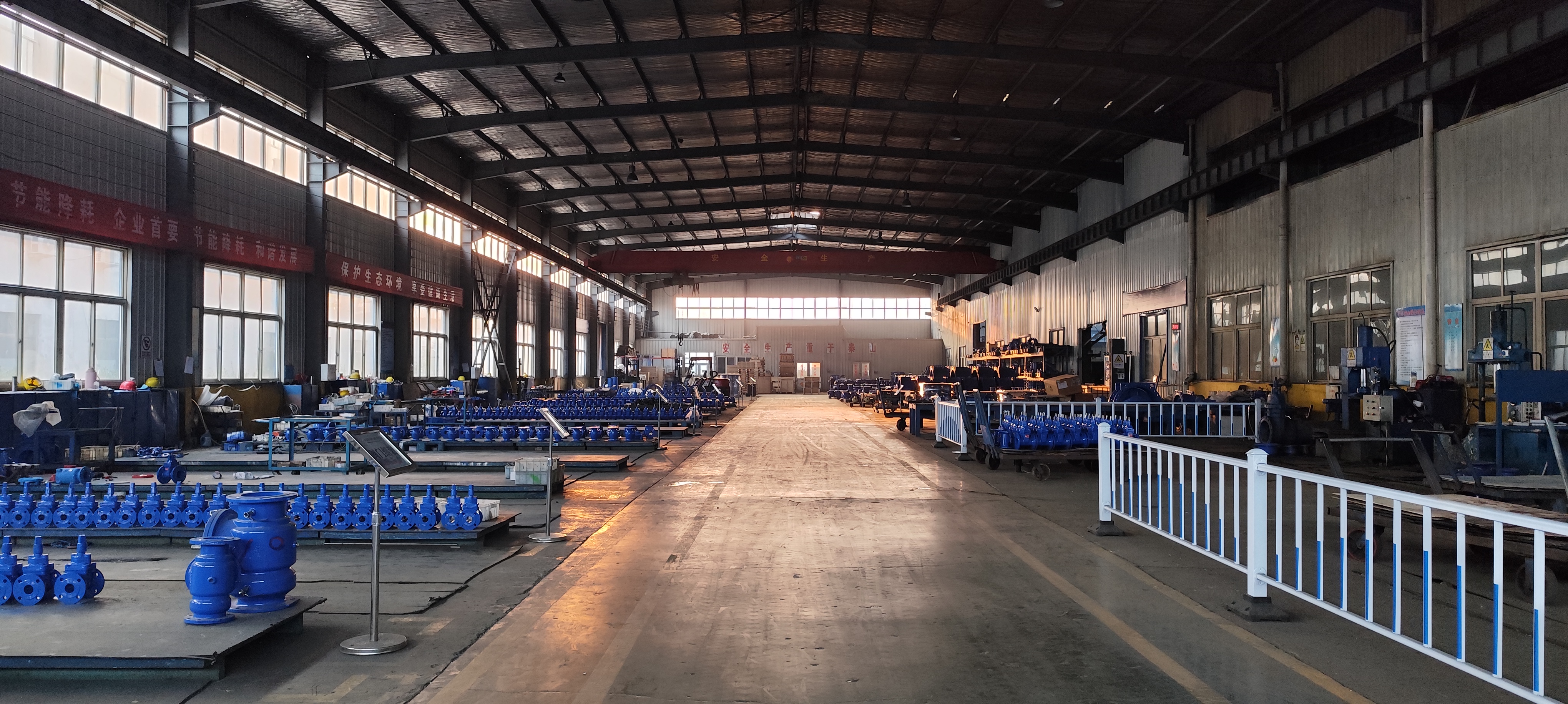
Risk Control Matrix for Coastal Seawater Service
Five risks dominate seawater isolation duty, and each has a defined control method in the WEIZIDOM gate valve design:
| Risk type | Control method | Enterprise measure applied |
|---|---|---|
| Corrosion | Anti-corrosion treatment | FBE epoxy coating ≥250 μm, stainless steel trim |
| Abrasion | Wear resistant structure | Abrasion-resistant disc, hardened surface |
| Leakage | Double seal design | Primary + secondary seal, zero leakage test |
| Over pressure | Pressure relief design | Reinforced body, 1.5× rated pressure test |
| High temperature | Heat resistant material | Special sealing, stellite trim for high temperature |
FAQ: Gate Valves for Seawater Desalination Projects
Which standards and pressure classes apply to gate valves in seawater desalination plants?
Heavy-duty bolted bonnet steel gate valves for refinery and petrochemical service are specified under API 600, which defines requirements for design, materials and testing. EN ISO 10434:2020 is the European and international equivalent governing bolted bonnet steel gate valves for the petroleum and petrochemical industries, and DIN 3352 is the recognized German national standard for gate valves. Coastal desalination projects commonly work with PN16 or PN25 pressure classes and connection conventions such as ANSI standard flange drilling, DIN F4 face-to-face dimensions or BS dimensions. WEIZIDOM products can meet multiple standards including GB, JB, HB, ASME, API, AWWA, DIN, EU and BS.
Can WEIZIDOM supply corrosion-resistant gate valves for high-salinity seawater service?
Yes. WEIZIDOM manufactures gate valves in gray iron, ductile iron, carbon steel, forged steel and stainless steel. Corrosion control combines an FBE epoxy coating of ≥250 μm with stainless steel trim, an abrasion-resistant disc with hardened surface, and a primary plus secondary double seal design verified by zero leakage testing. Each product passes 12 inspections from raw material to finished valve, and bodies are tested at 1.5× rated pressure. Production is supported by five factories in Tianjin, Wenzhou, Hebei, Lianyungang and Anhui, 60 engineers and a 60,000 m² manufacturing footprint.
What drives the cost of a desalination-grade gate valve?
Cost is driven mainly by body material, trim specification, coating system, valve size and whether operation is manual or electric. Because the gate valve's internal structure is simple and its process is mature, its unit purchase cost is lower than a ball valve serving comparable duty, and it has fewer vulnerable components, which helps control long-term replacement and operating cost. Against a butterfly valve the initial investment is slightly higher, but the low failure rate and long service life reduce later replacement and renovation costs and lower overall total ownership cost. WEIZIDOM commercial terms include a minimum order quantity of 1 unit, payment by T/T or L/C, and 30/70 payment terms.
Can a buyer validate a sample before placing a plant-scale order?
Yes. WEIZIDOM's minimum order quantity of 1 unit allows a single valve to be supplied for validation before a full project order is released. Acceptance criteria are built around pre-shipment testing and third-party inspection such as SGS. For seawater service, a sample evaluation should focus on coating thickness, trim material and closure behavior at the lowest expected ambient temperature, since those three factors determine how the valve will behave on an exposed intake line.
What production lead time and capacity should desalination buyers plan for?
The typical production lead time is 25–35 days, based on a monthly production capacity of 170,000 units. For phased desalination expansions and stocking programs, that capacity supports repeat orders without re-qualifying the valve family each time. Buyers preparing a coastal retrofit can contact WEIZIDOM at contact@weizidom.com or +86 17319732766 to confirm scheduling for a specific line list, and can review the product range in the downloadable catalogue before the technical review meeting.
Conclusion
Coastal desalination plants need isolation valves that survive chlorides, abrasives and long idle periods between operations — and that is a specification problem before it is a purchasing problem. A flanged resilient gate valve with a rising stem, stainless steel trim, an FBE epoxy coating of ≥250 μm and a double seal architecture addresses the seawater duty envelope at PN16 and PN25 classes, while remaining operable in coastal outdoor conditions near 5 °C.
WEIZIDOM supplies that valve family from five manufacturing facilities, with a 12-stage inspection sequence, standards coverage across GB, JB, HB, ASME, API, AWWA, DIN, EU and BS, a 25–35 day typical lead time and a monthly capacity of 170,000 units. For a project that will expand in phases, the more important question is not which valve to buy once, but which supplier can repeat the same valve to the same specification for years.
Next step: sample, quotation or catalogue
Send your line list — medium, size, pressure class and operating temperature — and WEIZIDOM will confirm the gate valve configuration, coating and trim specification for your seawater application. Minimum order quantity is 1 unit, so a sample valve can be validated before a full project order.
Email: contact@weizidom.com | Tel / WhatsApp: +86 17319732766
Website: www.wsdvalves.com
Download the product catalogue: WEIZIDOM Product Brochure (PDF)
Have Questions or Need More Details?
Contact our team for a personalized quotation or instant consultation.
Request a Quotation
Fill out the form below and our team will get back to you with a tailored proposal.
WhatsApp Direct Chat
Prefer to chat in real-time? Message us on WhatsApp for instant assistance & quick answers.
- Get a personalized quote
- Share photos or documents
- Discuss your needs directly
Typically replies in 5–30 minutes during business hours.