
Mining Slurry Pipeline Gate Valve Failures: How Knife Gate Valves Solve Abrasion and Clogging
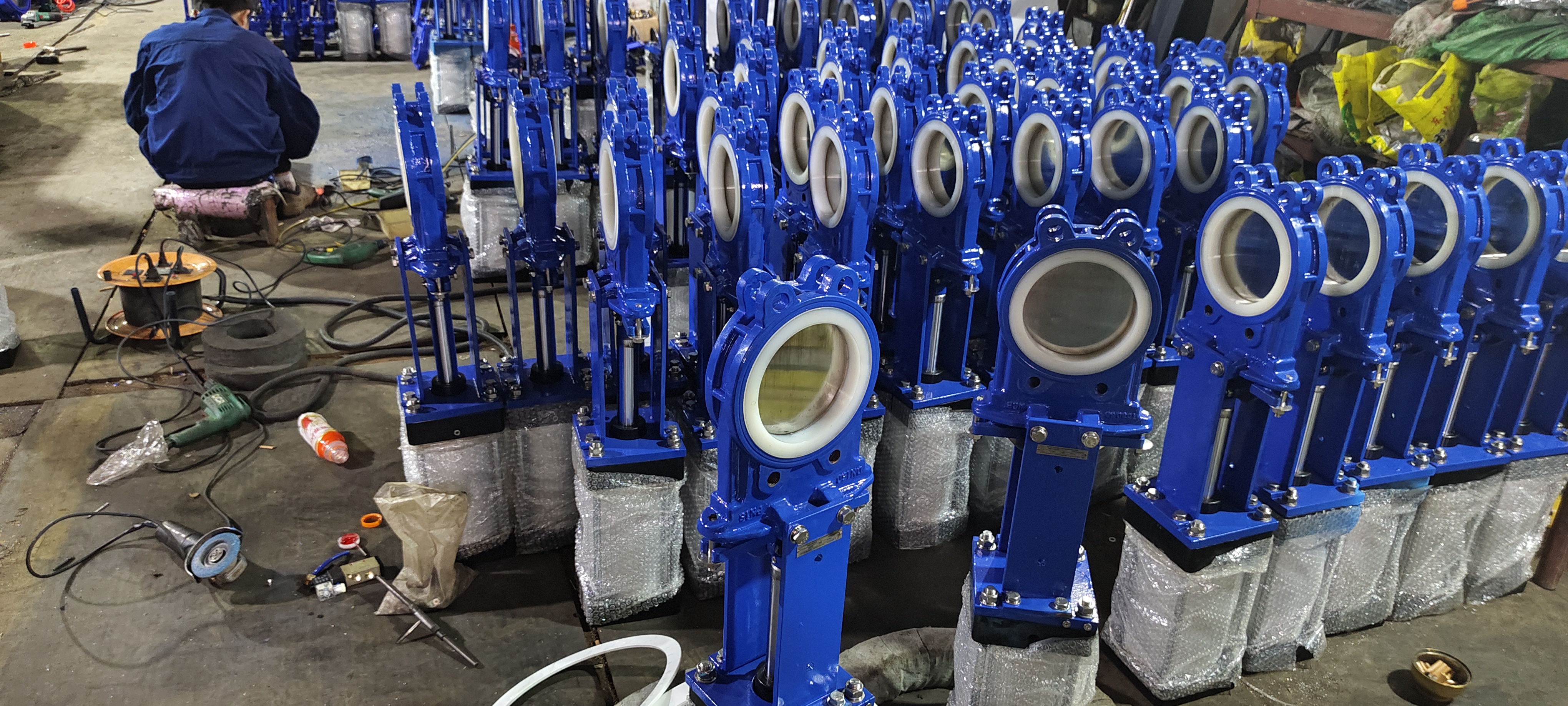 Carbon steel knife gate valve (WCB carbon steel, DN50–DN800) built for mining slurry, coal mining and power plant ash handling lines.
Mining slurry pipelines carry a mixture of process water, ore fines and coarse solids. That medium changes what a shut-off valve must be able to do. A design that isolates clean water reliably can erode, jam or lose its seal when the same line carries abrasive particles at medium pressure.
This article answers one specific question: why do gate valves fail in mining slurry pipelines, and how do knife gate valves solve the abrasion and clogging problems behind those failures? It covers the mining working conditions documented for these installations, the carbon steel and stainless steel knife gate valve designs used in them, pressure ratings from PN16 to PN40, manual and electric operation, and the supporting equipment — mining filters, check valves, pressure relief valves, slurry pumps and overload protection devices — that complete a slurry shut-off station.
Short answer: In mining slurry duty — ore slurry and mining water with high abrasion and solid particles at medium pressure (PN16/PN40) — a knife gate valve with a knife-type parallel disc and PTFE or EPDM sealing is specified instead of a standard wedge gate valve. Carbon steel (WCB) knife gate valves cover DN50–DN800 for coal mining, power plant ash handling and industrial waste slurry. Stainless steel (304/316) knife gate valves cover DN50–DN600 where the slurry is also corrosive. The parallel knife disc clears solids from the seat path as it travels, and a heavy-duty manual or electric operator keeps the valve serviceable in an outdoor mining area with variable temperatures from -15 °C to +85 °C.
Why Standard Wedge Gate Valves Fail in Mining Slurry Lines
Slurry duty is defined by three conditions acting together, not by pressure alone: an abrasive medium, a solids content that includes coarse particles, and a pressure range that keeps the line flowing. In the mining scenarios documented for these projects, the working condition is mining water or ore slurry at medium pressure of PN16/PN40, in outdoor mining areas with variable temperatures from -15 °C to +85 °C, with high abrasion and containing solid particles.
The documented special requirements for this service are abrasion resistance, impact resistance, dust prevention and easy maintenance. A specification that only addresses one of the four tends to trade one failure mode for another. The recurring failure modes reported in abrasive slurry service are:
- Seat erosion. Abrasive particles trapped between the disc and the seat damage the sealing surface each time the valve strokes. A wedge seating design relies on metal-to-metal contact to seal, and that contact surface is exactly where particles are crushed.
- Cavity clogging. Fine solids settle in the body cavity of a conventional gate valve, restricting disc travel. A valve that has clogged will not fully close, so the line cannot be isolated for pump or pipeline maintenance.
- Impact damage. Coarse ore particles strike the disc and seat at line velocity. Impact resistance is a stated requirement precisely because this damage is expected, not exceptional.
- Dust ingress. Outdoor mining areas expose the stem, bonnet and yoke to dust. Dust prevention is therefore listed as a design requirement for mining service rather than an optional extra.
- Maintenance burden. Easy maintenance is a documented requirement because a slurry valve is expected to be serviced in place, in an operating plant, not replaced as a disposable item.
Design implication: the mining slurry problem is not only “a valve that wears out”. It is a valve that wears out, clogs, and cannot be isolated for maintenance — three failures that appear in the same shutdown window.
Mining Slurry Pipeline Conditions and Project Types
Mining slurry valve selection starts from the project, not from the catalogue. Three project types are documented for this application scenario: construction of underground mining water supply systems, renovation of ore processing water circulation systems, and construction of open-pit mining drainage networks. Each has a different priority — supply reliability, recirculation efficiency, or drainage capacity during wet season.
The functional requirement across all three is the same: mining water pipeline flow control with abrasion resistance. The valves are operated manually or electrically with a heavy-duty design. The matched equipment list for these stations includes a mining filter, check valve, pressure relief valve, slurry pump and overload protection device. This scenario is common in multiple mining markets, including the United Arab Emirates, Chile, Morocco, Mexico, Mozambique, Nigeria, the Philippines, Turkey, South Africa, Zambia, Zimbabwe and Iraq.
Market and standards context
Two pieces of published context are useful when justifying slurry valve investment internally. Global Market Insights estimated the industrial valve market at USD 73.9 billion in 2025, and the same source reports that gate valves accounted for approximately 15% of that market by product. Those figures describe the wider valve market; they are context for procurement planning, not a specification for a specific slurry line.
On the standards side, API Std 600 defines a heavy-duty series of bolted bonnet steel gate valves for petroleum refinery and related applications, with features that include outside screw and yoke, rising stems, wedge or parallel seating, metallic seating surfaces, and flanged or butt-welding ends. That is a clean-fluid isolation design family. Knife gate valves used in slurry service belong to a different construction, and conformity claims should always be checked against the current standard edition — a published edition record for API STD 600:2021 exists, so buyers should verify the applicable edition against the official API catalogue before accepting any compliance statement.
How Knife Gate Valves Solve Abrasion and Clogging
What defines a knife gate valve in this service
A knife gate valve uses a knife-type parallel disc inside a straight-through body. Because the disc is parallel rather than wedge-seated, the closing stroke sweeps the seat path instead of forcing material into a sealing wedge. Both knife gate families offered for mining and slurry duty share this structure and use PTFE or EPDM sealing, but they differ in body material, pressure rating and size coverage.
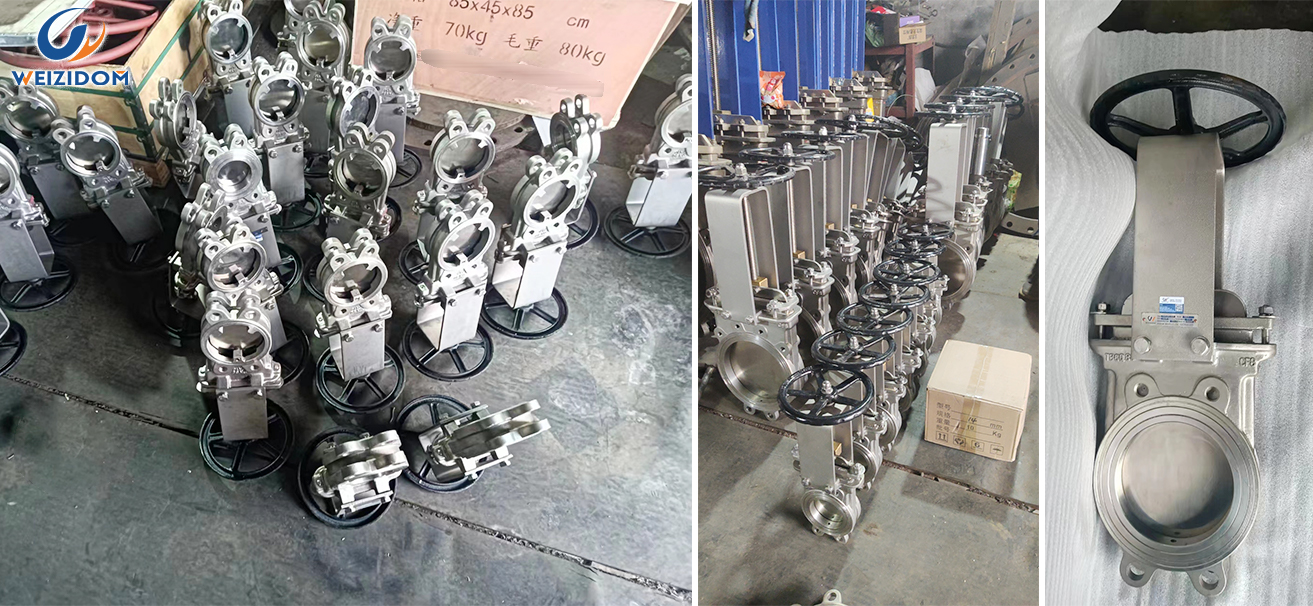 Stainless steel knife gate valve (304/316, DN50–DN600) for mining, chemical slurry, pulp & paper and wastewater service.
Carbon steel knife gate valves for coal mining, ash handling and waste slurry
The carbon steel knife gate valve is the default choice where the slurry is abrasive but not strongly corrosive. Its body and disc are made from WCB carbon steel, with WC6 chrome molybdenum steel also available. It conforms to API 598 (WCB), DIN 19526 (WCB) and GB/T 12237 (WCB) model designations, is rated PN16/PN25/PN40, and is available from DN50 to DN800. Its stated application scope is coal mining, power plant ash handling and industrial waste slurry — the three duties where abrasion, not chemistry, drives valve wear.
Stainless steel knife gate valves for corrosive slurry
Where the slurry is acidic, saline or chemically aggressive, the stainless steel knife gate valve is used instead. It is made from 304 or 316 stainless steel, sealed with PTFE or EPDM, rated PN10/PN16/PN25, and available from DN50 to DN600. It conforms to API 598 (CF8/CF8M), DIN 19526 (304/316) and JIS F7380 (SUS304) model designations, and its stated application scope covers wastewater treatment, pulp & paper, mining and chemical slurry. For a mining operation processing ore in a plant that also handles reagent or process chemical streams, this is the variant that keeps corrosion from becoming the dominant wear mechanism.
Manual or electric operation with heavy-duty design
Mining slurry valves are operated manually or electrically with a heavy-duty design. Manual handwheel operation is common where the valve is isolated and stroked only during maintenance windows. Electric operation is used where a valve sits on a remote line, inside a drainage network, or where operators must not walk to the valve to change line configuration. In both cases the mining scenario lists an overload protection device among the matched equipment, which matters when a clogged or packed line increases the torque required to stroke the disc.
Supporting equipment that completes the shut-off station
A knife gate valve on its own does not make a reliable slurry station. The mining application scenario lists five matched components, each with a defined role: a mining filter to keep oversized solids out of critical components, a check valve to prevent reverse flow, a pressure relief valve to limit pressure spikes, a slurry pump to move the abrasive medium, and an overload protection device to protect the valve operator. Specifying the valve without this supporting set usually moves the failure to the next component in the line.
Where a wedge gate valve still belongs
Knife gate valves are not a universal replacement for every gate valve. The carbon steel flange gate valve family (DIN 3352 F4/F5, EN 12516, GB/T 12234 model designations; WCB carbon steel or LCB low temperature carbon steel; PN16/PN25/PN40/PN63; DN50–DN1000) is used for petrochemical, power plant, heating ventilation and industrial pipeline service. The API gate valve family (API 600, API 602 and API 6D; WCB, CF8 or CF8M; Class150/300/600/900; NPS 1/2"–48", or DN15–DN1200) covers oil & gas, petrochemical, refinery, offshore platform and power plant duty.
Two practical limits follow from those figures. First, knife gate valves in this range are rated to PN40 in carbon steel and PN25 in stainless steel, so very high-pressure clean-fluid isolation is normally handled by other gate valve families such as the API range up to Class 900. Second, gate valves of all these families are isolation devices — they are not intended for continuous throttling or flow regulation.
Step-by-Step: Specifying a Knife Gate Valve for a Mining Slurry Line
- Characterize the medium before the valve. Decide whether the slurry is abrasive only, or abrasive and corrosive. Abrasive-only service points to a carbon steel knife gate valve in WCB (or WC6 where higher-temperature strength is required). Corrosive or saline slurry points to 304/316 stainless steel. This single decision eliminates most of the range.
- Fix the pressure rating. Mining slurry lines are documented at medium pressure of PN16/PN40. The carbon steel knife gate valve covers PN16, PN25 and PN40; the stainless steel knife gate valve covers PN10, PN16 and PN25. Choose the rating at or above the maximum line pressure at the valve, not the pump shut-off head alone.
- Confirm the size and connection. Carbon steel knife gate valves are available from DN50 to DN800; stainless steel knife gate valves from DN50 to DN600. Check the size against the actual line and confirm the flange drilling with the piping contractor before the order is placed.
- Select the sealing material. PTFE and EPDM are the two sealing options for both knife gate families. The selection should be made against the medium and the operating temperature range of the site, together with the project specification.
- Decide manual or electric operation. Manual operation suits valves stroked during planned shutdowns. Electric operation suits remote or frequently reconfigured lines. Specify the heavy-duty design basis used for mining service, and include the overload protection device in the actuator package.
- Lock the standard and the documentation. Carbon steel knife gate valves reference API 598 (WCB), DIN 19526 (WCB) and GB/T 12237 (WCB). Stainless steel knife gate valves reference API 598 (CF8/CF8M), DIN 19526 (304/316) and JIS F7380 (SUS304). Match the designation to the destination market and project specification, and ask the supplier to state which standard and edition the offered valve is designed and tested to.
- Design the station, not only the valve. Add the matched equipment: mining filter, check valve, pressure relief valve, slurry pump and overload protection device. Each one removes a specific failure mode from the system.
- Plan for in-place maintenance. Because easy maintenance and dust prevention are documented requirements, confirm that the selected valve can be serviced on site, and that stem and yoke protection is adequate for a dusty outdoor mining area.
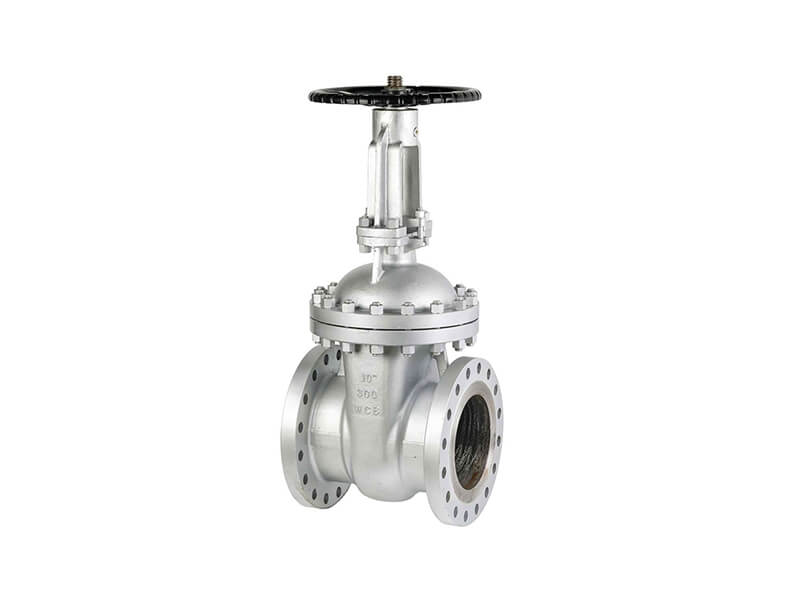 Carbon steel flange gate valve (DIN 3352 F4/F5, WCB or LCB, DN50–DN1000) — the clean-fluid family used where slurry knife gate valves are not the right fit.
Use Cases
Coal mining and power plant ash handling
Coal mining and power plant ash handling lines carry abrasive solids in water at medium pressure. This is the classic application for the WCB carbon steel knife gate valve in DN50–DN800, usually with a manual operator where the valve is stroked on a maintenance schedule.
Open-pit mining drainage networks
Open-pit drainage moves large volumes of water and fines, often from remote sumps. Electric operation, heavy-duty design and an overload protection device are commonly specified here because the valve must be operated without an operator walking to the pit edge.
Underground mining water supply systems
Underground mining water supply systems need reliable isolation for section control and maintenance. Dust prevention on the stem and yoke area matters more underground than the pressure rating alone, and in-place serviceability keeps maintenance inside the existing workflow.
Ore processing water circulation system renovation
Ore processing water circulation systems are usually renovated rather than built from scratch. In a renovation, valve sizes and flange standards are constrained by the existing pipework, which is why knife gate coverage from DN50 up matters: it allows the replacement valve to be matched to the existing line rather than the line being rebuilt around the valve.
Industrial waste slurry and chemical slurry
Industrial waste slurry is the third stated scope of the carbon steel knife gate valve. Where the same plant also handles chemical slurry, the stainless steel knife gate valve in 304/316 with PTFE or EPDM sealing covers the corrosive duty, and its stated scope also includes wastewater treatment, pulp & paper and mining.
Comparison Table: Gate Valve Options for Mining and Slurry Duty
The table below compares the gate valve families most often shortlisted for mining, slurry and adjacent industrial duty. All values are the published model specifications of the products themselves, so the table can be used directly as a first screening tool.
| Attribute | Carbon steel knife gate valve | Stainless steel knife gate valve | Carbon steel flange gate valve | API gate valve | Flange resilient gate valve |
|---|---|---|---|---|---|
| Structure | Knife type / parallel disc | Knife type / parallel disc | NRS / OS&Y | OS&Y / wedge disc | NRS |
| Body material | WCB carbon steel; WC6 chrome molybdenum steel | 304 / 316 stainless steel | WCB carbon steel; LCB low temperature carbon steel | WCB, CF8 (304), CF8M (316) | GGG50 / QT500-7 ductile iron |
| Sealing | PTFE / EPDM | PTFE / EPDM | Metal to metal / EPDM | Metal to metal / Stellite | EPDM / NBR |
| Pressure rating | PN16 / PN25 / PN40 | PN10 / PN16 / PN25 | PN16 / PN25 / PN40 / PN63 | Class150 / 300 / 600 / 900 | PN10 / PN16 / PN25 |
| Size range | DN50–DN800 | DN50–DN600 | DN50–DN1000 | NPS 1/2"–48" (DN15–DN1200) | DN40–DN1200 |
| Design standards | API 598 (WCB) / DIN 19526 (WCB) / GB/T 12237 (WCB) | API 598 (CF8/CF8M) / DIN 19526 (304/316) / JIS F7380 (SUS304) | DIN 3352 F4/F5 (WCB) / EN 12516 (LCB) / GB/T 12234 (WCB) | API 600 / API 602 / API 6D | DIN 3352 F4 / DIN 3352 F5 |
| Stated application scope | Coal mining, power plant ash handling, industrial waste slurry | Wastewater treatment, pulp & paper, mining, chemical slurry | Petrochemical, power plant, heating ventilation, industrial pipeline | Oil & gas, petrochemical, refinery, offshore platform, power plant | Water supply and drainage, agricultural irrigation, wastewater treatment |
How to read it: for abrasive slurry, the first two columns are the relevant ones, and the choice between them is chemistry, not pressure. The remaining three columns are included so that a mining buyer can see quickly whether the line in question is really a slurry line or a clean-fluid line that belongs to a different gate valve family.
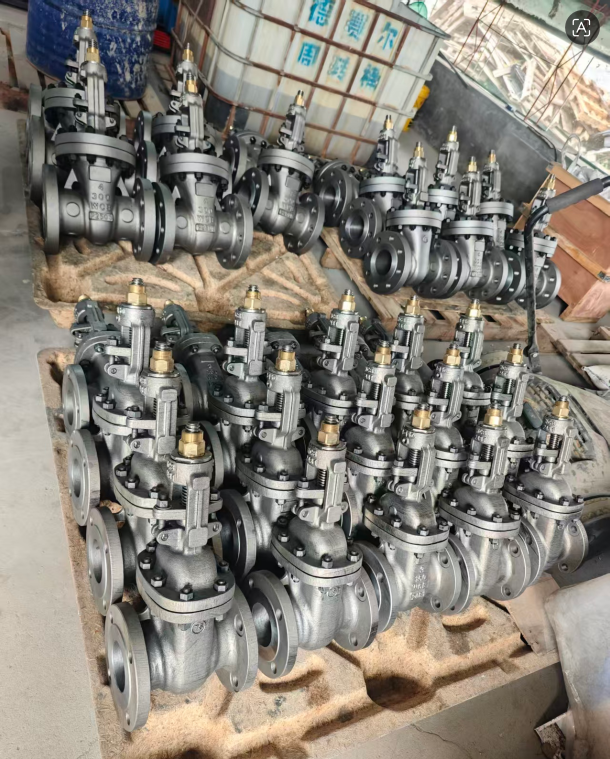 API gate valve (API 600 / API 602 / API 6D, Class150–900) for high-pressure clean-fluid isolation on oil & gas, refinery and power plant lines.
How WEIZIDOM Supports Mining Slurry Gate Valve Projects
WEIZIDOM is the trading and manufacturing identity of Henan Weizidom Flow Control Co., Ltd, a manufacturer established in 2000 that produces and services valves, pipe fittings, water meters and flow meters. Its product materials include gray iron, ductile iron, carbon steel, forged steel and stainless steel, which covers both knife gate valve bodies used in slurry service — WCB carbon steel and 304/316 stainless steel.
For project buyers, the relevant supply facts are these: five domestic factories located in Tianjin, Wenzhou, Hebei, Lianyungang and Anhui; a manufacturing facility covering 60,000 square meters; an annual production capacity of 2,000,000 units; a research and development team of 60 engineers; and a quality control procedure in which each product undergoes 12 tests from raw material to the finished product. Products are manufactured to meet standards including GB, JB, HB, ASME, API, AWWA, DIN, EU and BS.
On the commercial side, the company exports to more than 60 countries, with approximately 80% of total sales coming from exports. Major markets include the Philippines, Malaysia, Indonesia, Pakistan, Bangladesh, Kazakhstan, Uzbekistan, Iraq, Saudi Arabia, the UAE, Georgia, Algeria, Morocco, Zambia, Tanzania, Kenya, Uganda, South Africa, Zimbabwe, Burkina Faso, Mexico, Colombia, Chile, Bolivia, Uruguay and Nicaragua. Buyers can also review product information at www.wsdvalves.com and www.wsdsolution.com.
In practical terms, this matters to a mining project in two ways. First, a knife gate valve requirement and a flange gate valve requirement for the same plant can be sourced from one supplier instead of two, which simplifies documentation and spare parts. Second, the export footprint means the mining markets where this slurry scenario is common — including Chile, South Africa, Zambia, Zimbabwe, Morocco, Mexico, Turkey and the Philippines — are already served markets rather than new territory.
Frequently Asked Questions
1. Which standards should a mining slurry knife gate valve comply with?
Carbon steel knife gate valves for slurry duty are available to API 598 (WCB), DIN 19526 (WCB) and GB/T 12237 (WCB) model designations. Stainless steel knife gate valves are available to API 598 (CF8/CF8M), DIN 19526 (304/316) and JIS F7380 (SUS304) model designations. The correct choice depends on the destination market and the project specification, and the supplier should state which standard and edition the offered valve is designed and tested to. Where a project also specifies API-type gate valves for clean-fluid lines, those are referenced to API 600, API 602 and API 6D. WEIZIDOM products can meet standards including GB, JB, HB, ASME, API, AWWA, DIN, EU and BS, and every product passes 12 tests from raw material to finished product.
2. Can mining slurry knife gate valves be operated electrically?
Yes. The mining application scenario specifies manual or electric operation with a heavy-duty design. Manual operation is normally used where the valve is stroked only during planned maintenance, while electric operation is used on remote lines, in drainage networks, or where line configuration must be changed without sending an operator to the valve. Because a packed or partially clogged slurry line increases the torque needed to stroke the disc, an overload protection device is listed among the matched equipment for the station. The valve body options stay the same either way: WCB carbon steel from DN50 to DN800 at PN16/PN25/PN40, or 304/316 stainless steel from DN50 to DN600 at PN10/PN16/PN25.
3. What drives the cost of a mining slurry knife gate valve?
Cost is driven by configuration rather than by brand claims. The main variables are body material (WCB carbon steel versus 304/316 stainless steel, with WC6 chrome molybdenum steel as a further carbon steel option), size (DN50–DN800 in carbon steel, DN50–DN600 in stainless steel), pressure rating (PN16, PN25 or PN40 in carbon steel; PN10, PN16 or PN25 in stainless steel), sealing material (PTFE or EPDM), and operation mode (manual or electric heavy-duty operation with overload protection). Standard and documentation requirements also affect cost because they change the testing and records package. To obtain a comparable quotation, provide the medium characteristics, line size, pressure rating, sealing preference, operation mode and required standard in the enquiry.
4. Can buyers obtain a sample or evaluation valve before placing an order?
Buyers evaluating a switch to knife gate valves for slurry service typically start with a technical enquiry rather than a full order. WEIZIDOM supplies professional before-sale and after-sale service, and sample or evaluation requests can be directed to the sales team with the application details attached: medium type (abrasive, abrasive and corrosive, or chemical slurry), line size, pressure rating, sealing preference, and manual or electric operation. Contact options are email contact@weizidom.com, telephone or WhatsApp +86 17319732766, or the website www.wsdvalves.com.
5. How can a mining operation keep slurry valves supplied over the long term?
Continuity depends on the supplier’s production base and export experience, not only on the first quotation. WEIZIDOM operates five domestic factories in Tianjin, Wenzhou, Hebei, Lianyungang and Anhui, has a manufacturing facility of 60,000 square meters, an annual production capacity of 2,000,000 units, and a research and development team of 60 engineers. Approximately 80% of total sales come from exports to more than 60 countries, so repeat supply for mining markets is part of the normal business pattern rather than a special arrangement. When planning a slurry valve programme, confirm the production schedule, the documentation package and the spare-parts arrangement together, so that the valve, the matched equipment and the maintenance plan are all covered by the same supplier. To start that process, request a quotation with your line specification, or download the company brochure for the full product range.
Conclusion: Fix the Failure Mode, Not Just the Valve
Gate valve failures in mining slurry pipelines are predictable. Abrasive solids erode wedge-type seating surfaces, settled fines clog the body cavity, coarse particles damage the disc on impact, and dust works its way into the stem area of an outdoor valve. The documented special requirements for mining service — abrasion resistance, impact resistance, dust prevention and easy maintenance — map directly onto those four mechanisms.
A knife gate valve addresses them through construction rather than through a claim: a knife-type parallel disc, PTFE or EPDM sealing, WCB carbon steel from DN50 to DN800 at PN16/PN25/PN40 for abrasive duty, and 304/316 stainless steel from DN50 to DN600 at PN10/PN16/PN25 where the slurry is also corrosive. Add the matched equipment — mining filter, check valve, pressure relief valve, slurry pump and overload protection device — and the valve stops being the weak point in the station.
Next Step: Specify Your Slurry Valve Line
Send your medium characteristics, line size, pressure rating and operation mode, and the WEIZIDOM team will match a knife gate valve configuration to your mining, ash handling or industrial waste slurry line.
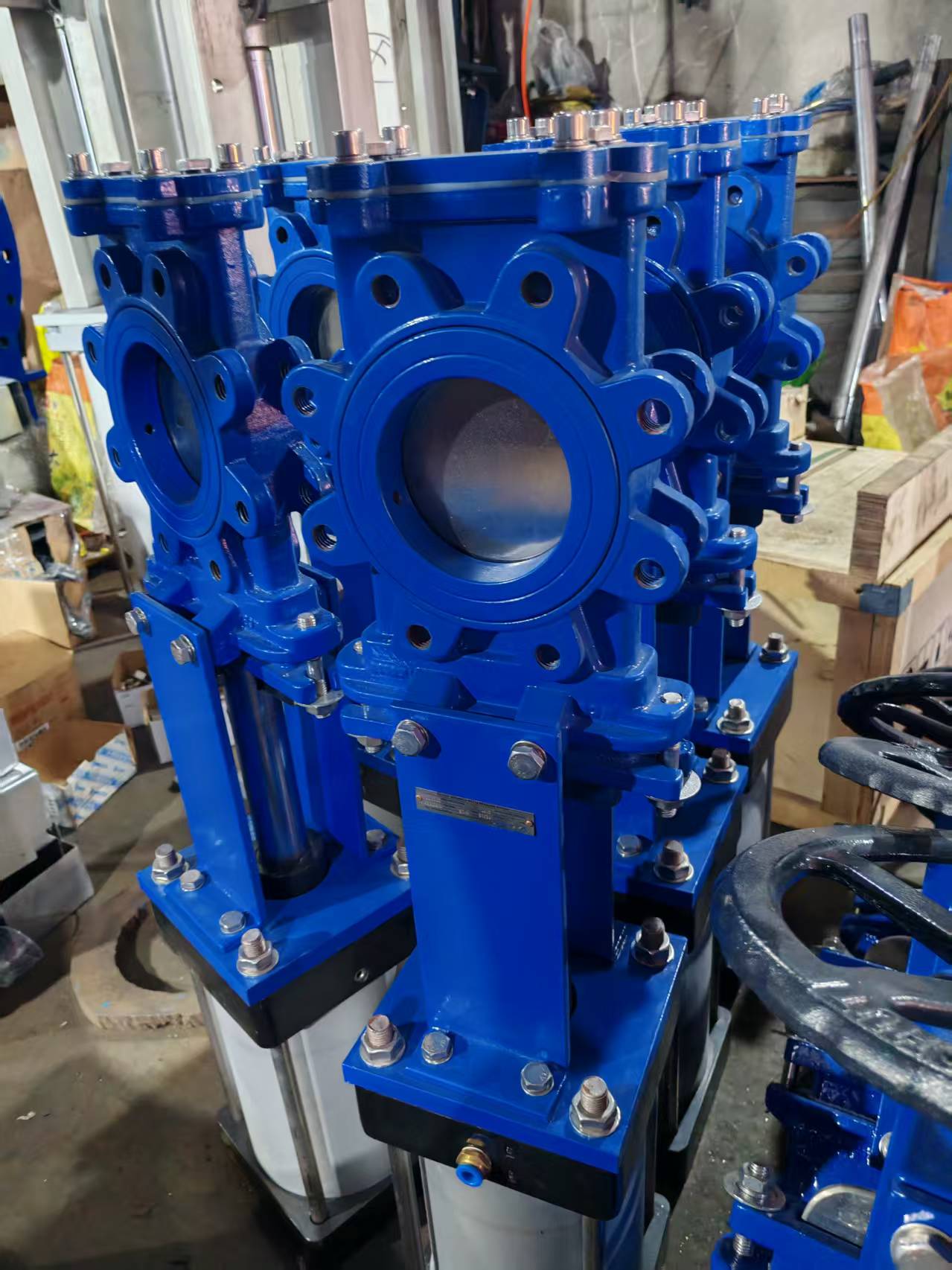 Carbon steel knife gate valves ready for mining slurry pipeline and ash handling projects.
Email: contact@weizidom.com | Tel / WhatsApp: +86 17319732766 | Download the brochure: WEIZIDOM product brochure (PDF)
Have Questions or Need More Details?
Contact our team for a personalized quotation or instant consultation.
Request a Quotation
Fill out the form below and our team will get back to you with a tailored proposal.
WhatsApp Direct Chat
Prefer to chat in real-time? Message us on WhatsApp for instant assistance & quick answers.
- Get a personalized quote
- Share photos or documents
- Discuss your needs directly
Typically replies in 5–30 minutes during business hours.