
Rising Stem vs. Knife Gate Valves: A Comparative Guide for Harsh Media
Rising Stem vs. Knife Gate Valves: A Comparative Guide for Harsh Media
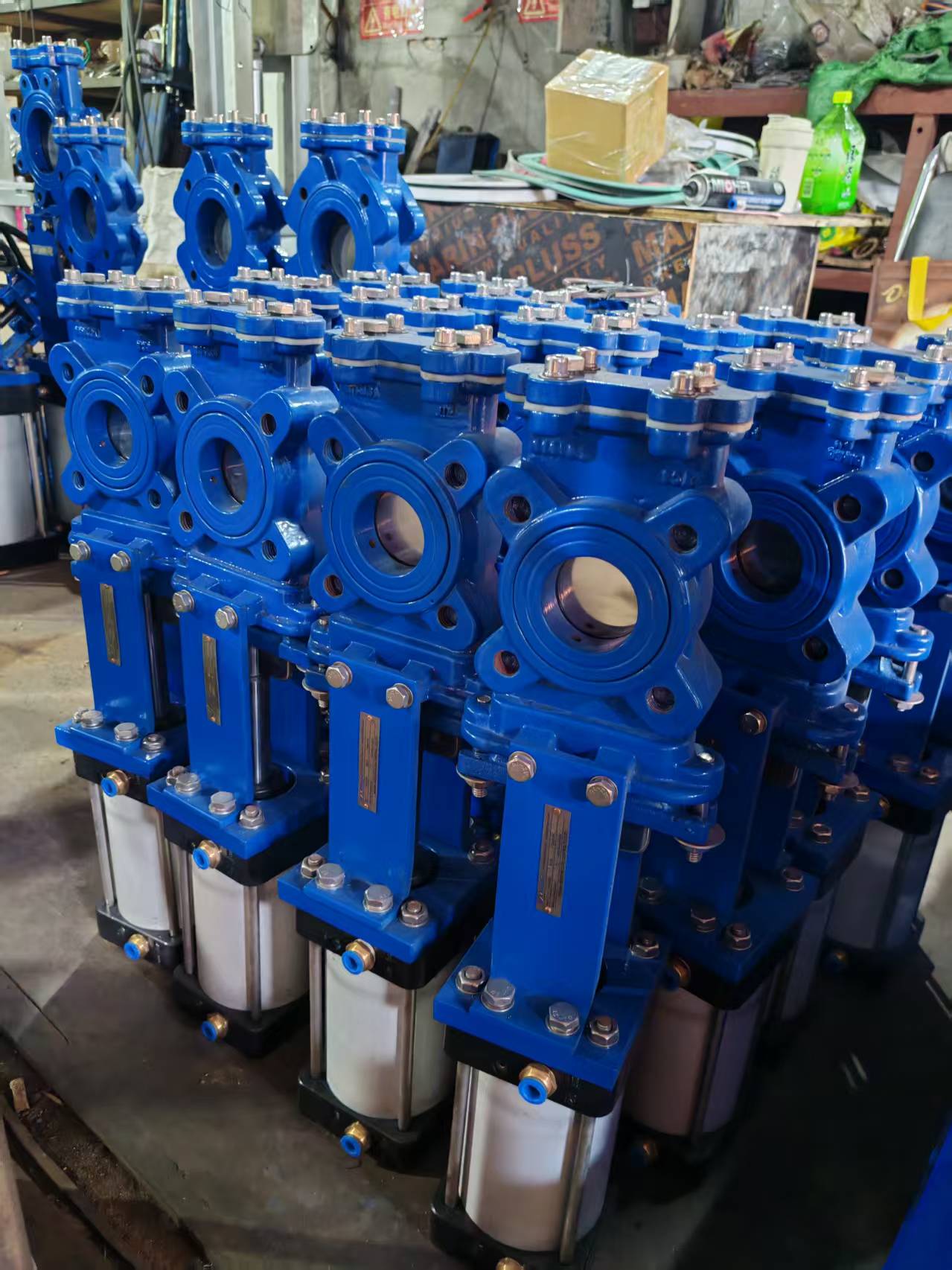
Harsh media process lines are different from clean water systems. Mining water, ore slurry, ash-laden water, and other fluids containing solid particles do not simply flow through a valve. Solids can settle, abrade seating surfaces, and interfere with moving parts. That is why a rising stem gate valve and a knife gate valve need to be compared carefully before a project specification is finalized.
This article compares rising stem gate valves and knife gate valves from Henan Weizidom Flow Control Co., Ltd., which operates as WEIZIDOM. The comparison is built from documented product parameters, manufacturing capabilities, and a mining-industry application brief. The focus is on services in which slurries, solid particles, high abrasion, and medium pressure up to PN40 are normal working conditions.
What harsh media service asks from a gate valve
WEIZIDOM's mining application record defines a demanding outdoor environment: variable temperature from -15°C to +85°C, medium pressure from PN16 to PN40, mining water or ore slurry, high abrasion, and solid particles in the media. The listed projects include underground mining water supply systems, ore processing water circulation systems, and open-pit mining drainage networks.
For these projects, the equipment requirement is not limited to pressure containment. The application brief lists five special requirements:
- Abrasion resistance
- Impact resistance
- Dust prevention
- Easy maintenance
- Manual or electric operation with a heavy-duty design
A valve that works in clean municipal water may never expose these issues. In a mine or slurry circuit, however, the specifier must ask whether the valve body and seat geometry will tolerate abrasive particles over years of operation. This is the core question in the rising stem versus knife gate valve comparison.
Rising stem gate valve: structure and sealing behavior
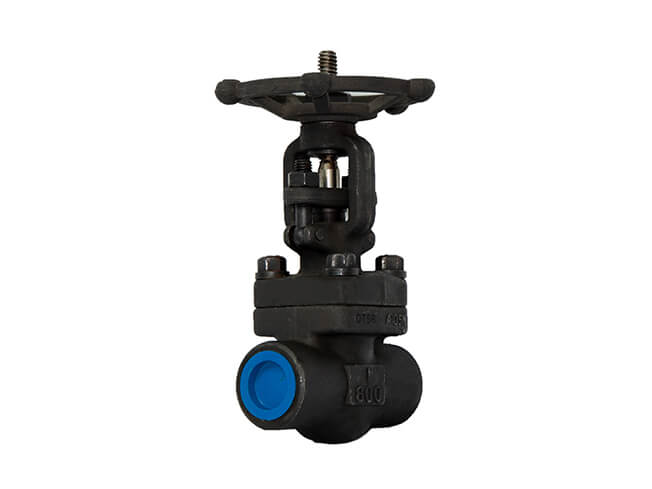
A rising stem gate valve is typically referred to as an OS&Y valve when the stem threads are outside the valve body. When the handwheel is turned, the stem rises above the bonnet and gives a clear visual indication of the disc position. The closure member is commonly a wedge disc or parallel-sided gate that moves into seat rings in the body.
WEIZIDOM offers multiple rising stem gate valve configurations. The API 600 heavy-duty gate valve is designed with an OS&Y and wedge-disc structure, with metal-to-metal or Stellite sealing. It is available in WCB carbon steel, CF8 stainless steel, and CF8M stainless steel, with pressure ratings from Class 150 to Class 900. API 600 is the primary standard for heavy-duty bolted bonnet steel gate valves used in petroleum refineries and related applications, so this design is usually specified for oil, gas, petrochemical, and process plant service.
For medium-pressure industrial lines, the DIN 3352 F4/F5 carbon steel gate valve is another documented rising stem option. Its structure can be NRS or OS&Y, sealing can be metal-to-metal or EPDM, and available body materials include WCB carbon steel and LCB low-temperature carbon steel. Pressure ratings are PN16, PN25, PN40, and PN63, with sizes from DN50 to DN1000. The documented industry scope covers petrochemical plants, power plants, heating systems, and general industrial pipelines.
For lower-pressure water duties, WEIZIDOM also produces a BS5163 rising stem gate valve with OS&Y construction, full-wrapped EPDM rubber sealing, and a ductile iron body in GGG50 or QT500-7. Its pressure rating is PN10 or PN16, and the size range is DN50 to DN800. This valve is associated with municipal water supply, European water treatment, and global water works.
In a slurry application, the main limitation of a conventional rising stem wedge gate valve is the body cavity around the closed gate. When solids settle in that cavity, the gate may not close fully or the seating surfaces can be damaged. Rising stem valves with metal-to-metal seating are extremely robust for high-pressure clean or gaseous media, but they are not designed to cut through accumulated solids in the same way a knife gate is.
Knife gate valve: structure and sealing behavior
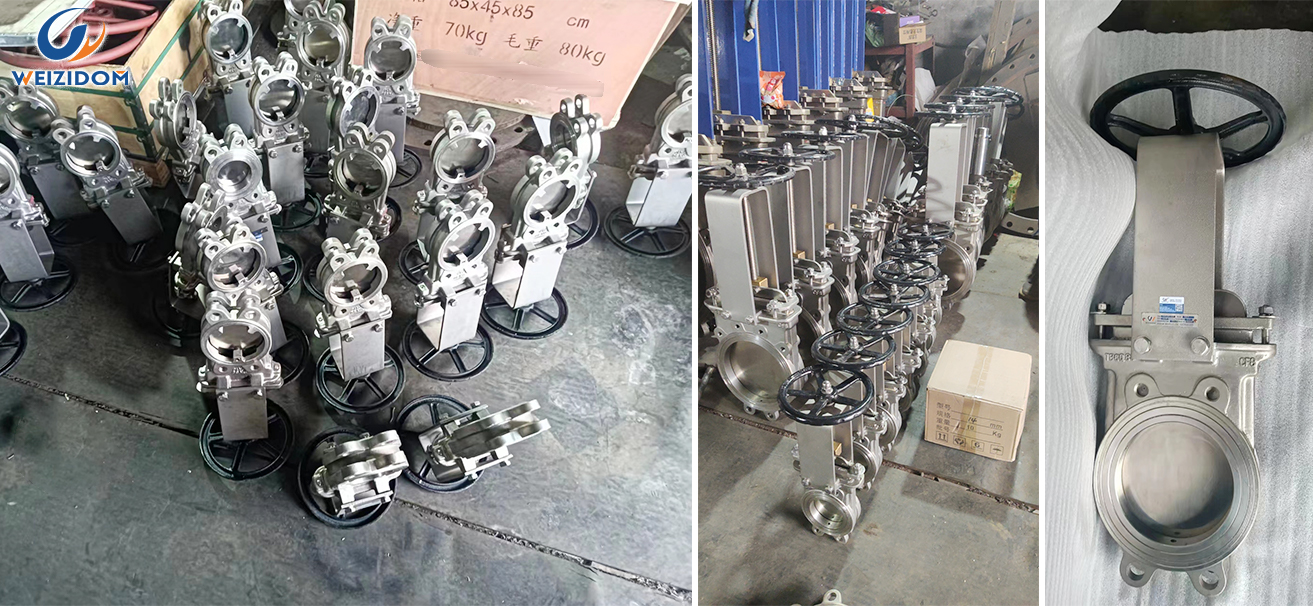
A knife gate valve uses a knife-type parallel-disc gate. Instead of entering a deep body cavity, the blade moves through the media and against a seating area. This is why knife gate valves are selected for lines where the medium contains fibers, sludge, pulp, ash, mine water, or other solids that can obstruct a conventional wedge gate.
The WEIZIDOM carbon steel knife gate valve is documented with design standards API 598, DIN 19526, and GB/T 12237. Its sealing options are PTFE or EPDM. Material options include WCB carbon steel and WC6 chrome molybdenum steel. Pressure ratings are PN16, PN25, and PN40, with sizes from DN50 to DN800. The stated applications include coal mining, power plant ash handling, and industrial waste slurry.
A stainless steel version is also available in 304 or 316 stainless steel, with PTFE or EPDM sealing. Its pressure rating is PN10, PN16, or PN25, and its size range is DN50 to DN600. The stainless steel knife gate is documented for wastewater treatment, pulp and paper, mining, and chemical slurry service.
For the mining duty described earlier, the carbon steel knife gate valve supports the PN16 to PN40 medium-pressure band, and the stainless steel knife gate valve is available for more corrosive slurry or wastewater conditions. Both designs are part of the documented mining-related product set from WEIZIDOM.
Side-by-side comparison: rising stem versus knife gate valve
| Comparison point | Rising stem / wedge OS&Y gate valves | Knife gate valves |
|---|---|---|
| Structural configuration | OS&Y or rising stem; wedge disc in several models | Knife type / parallel disc |
| Sealing mechanisms in documented WEIZIDOM models | Metal-to-metal, Stellite, PTFE, or full-wrapped EPDM depending on model | PTFE or EPDM |
| Common materials | WCB, LCB, A105, CF8/CF8M, 304/316 stainless steel, GGG50/QT500-7 ductile iron | WCB carbon steel, WC6 chrome molybdenum steel, 304/316 stainless steel |
| Representative size range | API gate valve NPS 1/2 to NPS 48; carbon steel DIN/EN DN50 to DN1000; BS5163 rising stem DN50 to DN800; forged rising stem NPS 1/4 to NPS 4 | Carbon steel knife DN50 to DN800; stainless steel knife DN50 to DN600 |
| Representative pressure range | API Class 150 to Class 900; DIN carbon steel PN16 to PN63; forged rising stem Class 150 to Class 600; BS5163 PN10/PN16 | Carbon steel knife PN16/PN25/PN40; stainless steel knife PN10/PN16/PN25 |
| Representative service | Oil and gas, petrochemical plants, refineries, power plants, heating systems, municipal water, industrial pipelines | Coal mining, power plant ash handling, industrial waste slurry, wastewater treatment, pulp and paper, mining, chemical slurry |
Table information is limited to documented WEIZIDOM product models referenced in this article. A final valve selection should always be checked against the specific project pressure class, temperature, materials, and end-connection requirements.
Step-by-step selection for medium-pressure slurry lines
1. Define the valve duty
Gate valves are isolation valves. They are intended to start and stop flow, not to regulate flow continuously. Both rising stem gate valves and knife gate valves should be treated as shut-off devices in the selection process.
2. Confirm the pressure and temperature window
The mining brief used in this article is medium pressure from PN16 to PN40. If the line is water with low abrasion and the duty is only PN10 or PN16, a resilient-seated rising stem gate valve may be a strong option. If the line contains heavy solids and still operates up to PN40, the carbon steel knife gate valve is a documented match.
3. Check the solid content and abrasion level
For high-abrasion mining water or ore slurry containing solid particles, the WEIZIDOM mining application set includes both carbon steel and stainless steel knife gate valves. The special requirements in that environment are abrasion resistance, impact resistance, dust prevention, and easy maintenance. A valve designed around a narrow blade and parallel-disc movement is generally easier to apply in this kind of service.
4. Evaluate the sealing mechanism
Metal-to-metal and Stellite seating are available on heavy-duty API gate valves. Softer PTFE or EPDM seating is used on knife gate valves and on some resilient-seated rising stem gate valves. If the process is primarily oil, gas, steam, or other high-pressure process media, metal seating is aligned with that service. If the line is a media slurry where solids are the main risk, PTFE/EPDM-seated knife gate valves give the documented soft-seal option.
5. Consider actuator and maintenance preference
The mining application brief specifies manual or electric operation with a heavy-duty design. WEIZIDOM also supports OEM/ODM customization for logo, standard, pressure, material, actuator, and color. Documented manufacturing capability includes a monthly capacity of 170,000 units, a lead time of 25 to 35 days, and a minimum order quantity of one unit. Before writing the purchase specification, decide whether the final valve will be handwheel operated, electric actuated, or prepared for a future actuator upgrade.
Use cases and application mapping
Coal mining, mine drainage, and ore slurry circuits
For coal mining, mine water, and industrial waste slurry, the carbon steel knife gate valve is the directly documented product type. It carries PN16/PN25/PN40 ratings, a DN50 to DN800 range, and WCB carbon steel or WC6 chrome molybdenum steel material options. The mining brief adds that matching auxiliary equipment can include filters, check valves, pressure relief valves, slurry pumps, and overload protection devices.
Power plant ash handling
Power plant ash handling is also listed under the carbon steel knife gate valve application scope. This is a typical solid-bearing service in which a conventional wedge gate can face problems with fines and deposits in the valve body. The parallel-disc knife gate design is the relevant reference point in the WEIZIDOM product set.
Oil, gas, refinery, and high-pressure process lines
If the media is high-pressure oil, gas, or petrochemical process fluid, the rising stem gate valve family is better aligned with the documented data. The API 600 heavy-duty gate valve uses metal-to-metal or Stellite sealing and is sized from NPS 1/2 to NPS 48. For smaller forged-steel lines, the API 602 rising stem forged steel gate valve is available in A105, F304, or F316 forged steel with Class 150 to Class 600 ratings.
Municipal water and low-abrasion water treatment
In clean water systems, rising stem gate valves with full-wrapped EPDM sealing are a common choice. The BS5163/EN1074/AWWA C509 rising stem gate valve is documented for municipal water supply, water treatment, and global water works, with PN10 or PN16 ratings and GGG50/QT500-7 ductile iron bodies.
Corrosive chemical and wastewater slurry
For corrosive fluids and chemical slurry applications, 304 or 316 stainless steel gate valves appear in the WEIZIDOM range. Stainless steel flange gate valves are listed for food and beverage, pharmaceutical, chemical, and seawater desalination industries. Stainless steel knife gate valves are listed for wastewater treatment, pulp and paper, mining, and chemical slurry duty.
Standards and compliance points to include in the tender specification
WEIZIDOM products are designed to meet multiple standards, including GB, JB, HB, ASME, API, AWWA, DIN, EU, and BS. In the specific comparison above, API 598, DIN 19526, and GB/T 12237 are the documented standards for knife gate valves. Rising stem gate valves appear under standards such as API 600, API 602, ASME B16.34, DIN 3352, BS5163, EN 1074, AWWA C509, and DIN 3356.
Buyers in highly regulated environments may also request evidence of the manufacturer's management system. WEIZIDOM holds an ISO 14001:2015 environmental management system certificate under GB/T24001-2016, issued by CNAS with certificate number 064-24-E-4054-R0-S. The certificate is valid from 2024-12-12 to 2027-12-11 and covers the production of the rising stem forged steel gate valve model API 602, as well as the processing of ordinary valves and related management activities.
Frequently asked questions
Which standards apply to WEIZIDOM rising stem and knife gate valves?
WEIZIDOM products are designed to meet standards including GB, JB, HB, ASME, API, AWWA, DIN, EU, and BS. In the comparative range discussed in this article, knife gate valve models are based on API 598, DIN 19526, and GB/T 12237, while rising stem gate valve models can be based on API 600, API 602, ASME B16.34, DIN 3352, DIN 3356, BS5163, EN 1074, or AWWA C509, depending on the model.
Can a knife gate valve handle mining slurry service up to PN40?
The carbon steel knife gate valve from WEIZIDOM has documented pressure ratings of PN16, PN25, and PN40, with a size range of DN50 to DN800. Its listed industries include coal mining, power plant ash handling, and industrial waste slurry. The WEIZIDOM mining application brief describes mining water or ore slurry, high abrasion, solid particles, and PN16 to PN40 as relevant conditions, with carbon and stainless steel knife gate valves included in the documented matched product set.
What are the sealing differences between metal-to-metal and soft-seal gate valves?
In the WEIZIDOM product data referenced here, API 600 heavy-duty rising stem gate valves use metal-to-metal or Stellite sealing. DIN carbon steel rising stem gate valves can use metal-to-metal or EPDM sealing. BS5163 rising stem gate valves use full-wrapped EPDM rubber. Forging-type rising stem gate valves can use metal-to-metal or PTFE sealing. Knife gate valves are documented with PTFE or EPDM sealing. The selection depends on media temperature, chemical compatibility, solids content, and the required shut-off performance.
Can WEIZIDOM supply customized or electric-actuated gate valves for slurry projects?
Yes. The mining application brief specifies manual or electric operation with a heavy-duty design. WEIZIDOM offers OEM/ODM customization for logo, standard, pressure, material, actuator, and color. Documented after-sales support includes 24/7 online service and a 12-month warranty. For specific sizes, pressure classes, and actuator configurations, contact WEIZIDOM to request technical parameters or project quotations.
Conclusion
Rising stem gate valves and knife gate valves are both valid industrial pipeline gate valve designs, but they serve different media profiles. Rising stem wedge gate valves provide a clear visual stem position and are documented in high-pressure API, DIN, and BS services. Knife gate valves use a knife-type parallel disc and are documented for mining, slurry, ash handling, wastewater, and other solid-bearing media.
For a mining or harsh-media line operating at medium pressure up to PN40, the carbon steel knife gate valve is the more direct match because of its PTFE/EPDM soft-seal options, WCB/WC6 material structure, and documented coal mining and industrial waste slurry service. For high-pressure oil, gas, petrochemical, and process applications, the metal-seated rising stem gate valve remains the appropriate engineering choice.
Need help choosing a gate valve for slurry, mining, or abrasive pipeline service?
WEIZIDOM supplies rising stem gate valves, knife gate valves, and related pipeline products in carbon steel, stainless steel, and ductile iron configurations. Download the company brochure for product and manufacturing reference:
Download WEIZIDOM brochure (PDF)
For project-specific inquiries, contact WEIZIDOM at contact@weizidom.com or WhatsApp +86 17319732766.