
Technical Guide: Choosing DN50–DN1000 Gate Valves for Chemical Fluid Handling
Pressure classes PN25 / PN40 / PN63 · Temperature envelope −5 °C to +150 °C · WCB and LCB carbon steel bodies · Bidirectional sealing · Actuation for classified areas
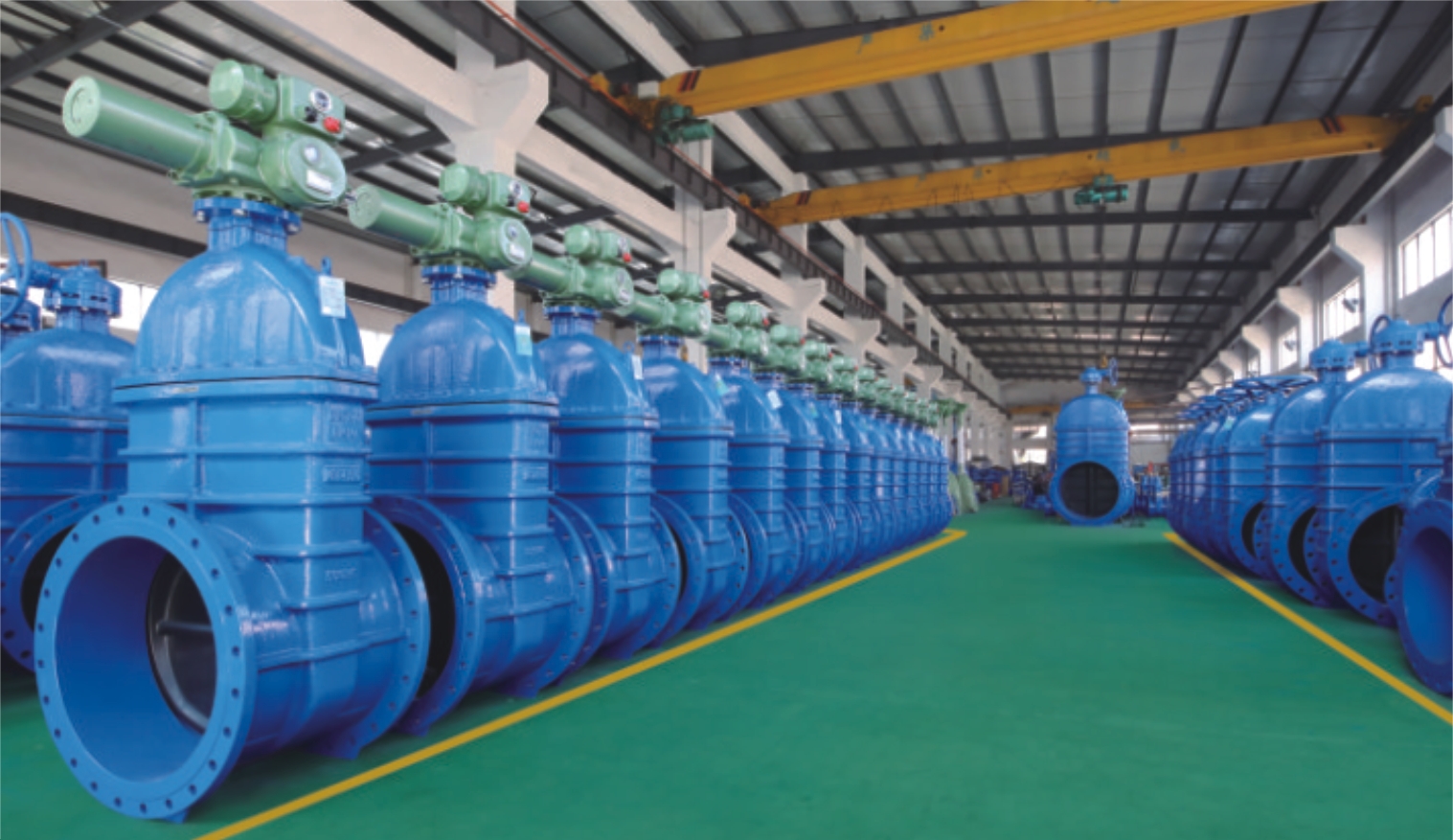
Cover: large-diameter gate valve production — the DN50–DN1000 range used for chemical pipeline isolation.
Why Chemical Fluid Handling Exposes Every Weak Point in a Gate Valve
A gate valve is an on/off isolation device. Its disc moves perpendicular to the flow path and, in the fully open position, leaves a straight-through bore that adds almost no resistance to the line. That geometry is why gate valves dominate large-diameter trunk lines in petrochemical, chemical, heating, and high-temperature high-pressure pipeline systems where flow regulation is not required — and it is also why a gate valve is the wrong component for throttling duty.
In chemical fluid handling, that changes the selection question. Nominal size is the easy part. The hard part is containment: what the medium does to the body and trim, what happens if the seal fails, what the line does at the temperature and pressure extremes, and how the valve behaves when the pipe run sits inside a classified area. For corrosive and toxic media, four prerequisites decide whether a chemical-service gate valve is acceptable before DN, PN, or price is discussed:
- a body and trim material combination that matches the chemistry of the medium;
- bidirectional sealing verified by a zero-leakage test;
- a pressure envelope validated at 1.5× rated pressure, not only at nominal pressure;
- explosion-protected actuation wherever the valve is installed in a hazardous area classification.
Everything else — the DN50–DN1000 size range, the PN25 / PN40 / PN63 pressure classes, and the −5 °C to +150 °C temperature window — is selected around those four prerequisites, not instead of them.
Five risk classes drive the engineering answers, and each one has a defined control method with a corresponding measure applied during manufacturing.
| Risk in chemical service | Control method | Manufacturing measure |
|---|---|---|
| Corrosion from aggressive chemical media | Anti-corrosion treatment | FBE epoxy coating ≥250 µm, stainless steel trim |
| Leakage of toxic or hazardous media | Double seal design | Primary + secondary seal, zero leakage test |
| High temperature (thermal fluids, hot chemical streams) | Heat resistant material | Special sealing, stellite trim for high temp |
| Abrasion from particle-laden media | Wear resistant structure | Abrasion-resistant disc, hardened surface |
| Over pressure and surge | Pressure relief design | Reinforced body, 1.5× rated pressure test |
These five control methods are the reason a chemical-service gate valve cannot be selected from a size chart alone. Each one must be traceable to a material certificate or a test record when the valve arrives on site.
What the Industrial Gate Valve Market and Chemical Standards Look Like in 2026
The gate valve category is large and still expanding. Reports and Data values the global gate valve market at USD 13.0 billion in 2024 and projects it to reach approximately USD 20.6 billion by 2034. North America accounted for a 43.90% share of that market in 2024, valued at approximately USD 5.7 billion. Source scopes differ — Market Research Future estimates the 2024 gate valve market at USD 7.44 billion — which is a practical reminder that market sizing depends on whether a study counts gate-valve-specific revenue or the broader industrial valve category.
Supply is concentrated differently. According to the Observatory of Economic Complexity (OEC), China was the world’s largest exporter of valves in 2024, concentrating 20% of total global exports with a trade value of USD 22.6 billion. On the supplier side, Emerson Electric Co. is a leading global player in the industrial valve market, holding over 7% market share in North America as of 2024 (Global Market Insights Inc.), while Flowserve India Controls is recognised as a key industrial valve specialist with significant global export presence, including a value of USD 148M in 2025 (Tendata Global Trade Analysis).
Standards, not brand scale, govern technical acceptance of a chemical-service gate valve:
- API 600 is the primary standard for heavy-duty bolted bonnet steel gate valves used in petroleum refineries and related applications; it specifies requirements for design, materials, and testing.
- EN ISO 10434:2020 is the European/International equivalent to API 600, governing bolted bonnet steel gate valves for the petroleum and petrochemical industries.
- DIN 3352 is the widely recognised German national standard for gate valves, specifying structural and performance requirements for various industrial applications.
A chemical project normally names one governing standard. The practical consequence is that the valve must be traceable to that standard on the drawing, the material certificate, and the pressure test record — not only on the front page of a catalogue. WEIZIDOM (Henan Weizidom Flow Control Co., Ltd), a valve manufacturer founded in 2000 and based in Zhengzhou, Henan Province, China, produces gate valves, butterfly valves, ball valves, check valves, globe valves, pinch valves, plug valves, strainers, pipe fittings, flow meters and water meters, and states that its products can meet multiple standards including GB, JB, HB, ASME, API, AWWA, DIN, EU and BS.
The Five Selection Parameters for DN50–DN1000 Chemical Service Gate Valves
1. Pressure Class: PN25, PN40, or PN63
Pressure class determines wall thickness, bonnet bolting, packing arrangement, and the pressure at which the body is proof-tested. Chemical-service gate valves in the DN50–DN1000 range are commonly specified in PN25, PN40, and PN63 classes, and each step up changes casting mass, flange dimensions, and cost. The decision rule is straightforward: choose the class from the maximum allowable operating pressure of the line including surge allowance, then confirm the body has been tested above that value. A reinforced body proof-tested at 1.5× rated pressure is the evidence a chemical buyer should request in the test report rather than assume.
2. Temperature Envelope: −5 °C to +150 °C
The −5 °C to +150 °C band covers most chemical transfer, heating and petrochemical isolation duty, but the two ends of that band stress different parts of the valve. At the upper end, sealing materials and trim hardness decide whether the seat holds after repeated thermal cycling; high-temperature service is addressed with heat-resistant material, special sealing, and stellite trim for high temp. At the cold end, material toughness rather than seat hardness is the limiting factor, which is why LCB low-temperature carbon steel is specified instead of standard carbon steel. A valve rated for +150 °C with the wrong trim will still pass a cold hydrostatic test and still fail in service.
3. Body and Trim Material: WCB / LCB Carbon Steel and Stainless Steel Trim
WCB carbon steel is the workhorse body grade for chemical and petrochemical gate valves in PN25 and PN40 classes; LCB carbon steel extends the same geometry into low-temperature duty. The body grade alone does not define corrosion performance — the trim does. For corrosion resistance, the relevant measure is anti-corrosion treatment combining FBE epoxy coating of ≥250 µm with stainless steel trim. WEIZIDOM’s product range also covers ductile iron, forged steel, stainless steel and gray iron bodies, so the material decision has to be stated explicitly on the enquiry: body grade, trim grade, coating system, and the medium it will contact.
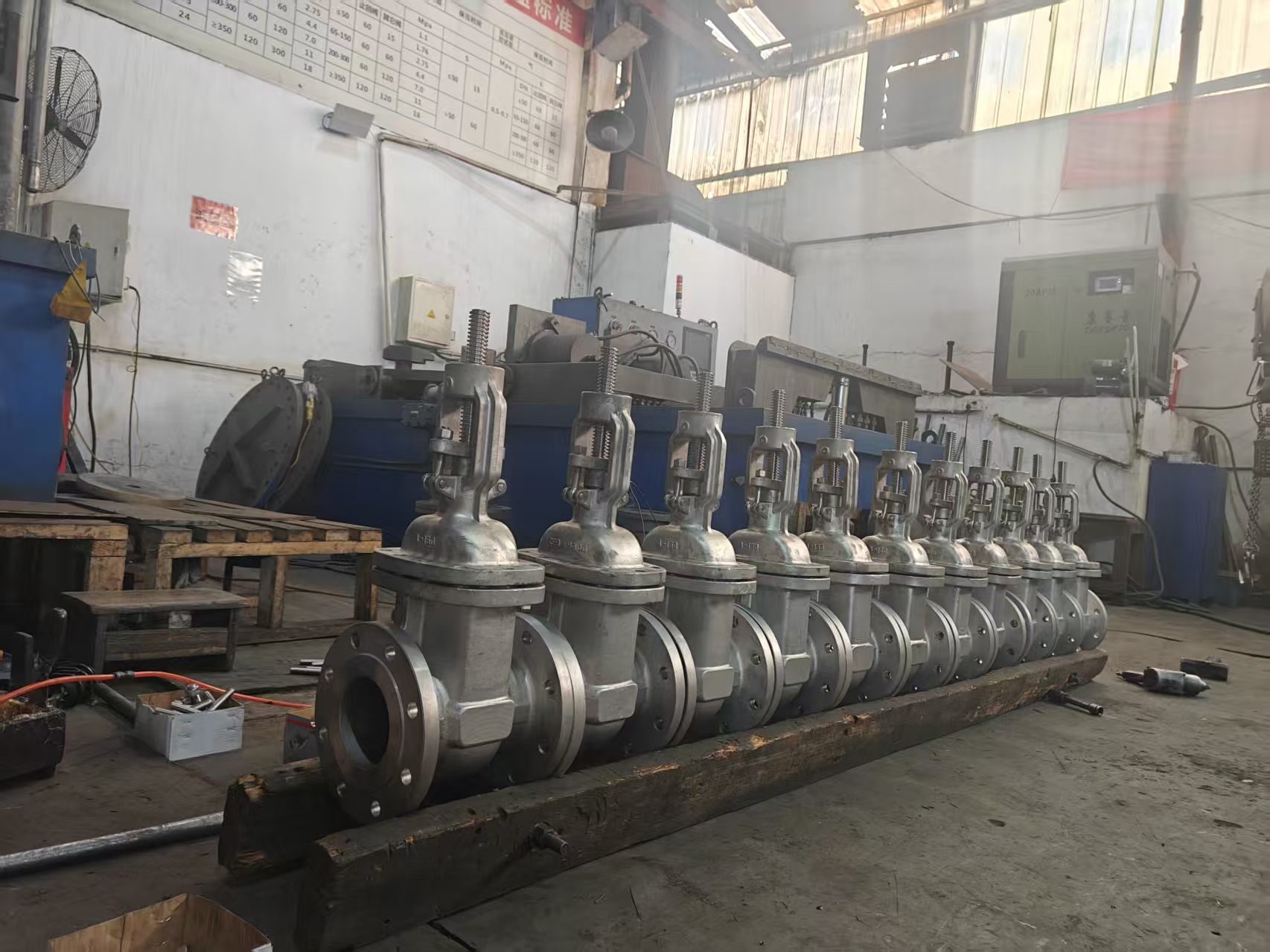
Stainless steel gate valve assembly — trim selection, not body grade alone, determines corrosion performance.
4. Leak Tightness and Bidirectional Sealing
For toxic media, leak tightness is the acceptance criterion that overrides everything else. A chemical-service gate valve should be specified with a double seal design: a primary seal plus a secondary seal, verified by a zero leakage test before dispatch. Bidirectional sealing matters because chemical lines are frequently isolated from either side depending on pump configuration and maintenance sequencing; a valve that seals only in one direction leaves the maintenance crew exposed. In WEIZIDOM’s comparison against traditional cut-off valves, the gate valve design is described as achieving bidirectional sealing to Class VI zero leakage standard, together with a full-bore straight-through flow channel, low flow resistance and a simple switching structure — the combination that makes the design suitable for long-distance main pipeline transportation, water supply, oil and gas, and chemical industry medium delivery scenarios.
5. Explosion Protection and Actuation
When a chemical gate valve is motorised, the actuator becomes part of the area classification problem. Electric gate valves installed in hazardous zones are typically specified with explosion-protected enclosures and hazardous-area-rated electrical components, with the rating matched to the site’s own area classification rather than to a generic catalogue label. Explosion protection is therefore a project-level specification that must be confirmed against the site classification document, the actuator datasheet, and the electrical certification of the complete actuated assembly. Where the valve is manually operated, the equivalent question is stem sealing and packing maintenance under a toxic medium.
Support Equipment: Safety Valves and Leak Detection Around the Isolation Valve
A chemical isolation valve is never a standalone safety barrier. It is one component in a chain that normally also includes pressure relief or safety valves, and leak detection devices installed along the pipeline and at flanged joints. These are separate system components with their own standards and their own selection logic: safety valves are sized for relieving capacity, while leak detection devices are selected for the specific medium and for detection sensitivity in the area they monitor.
For the gate valve buyer, the practical implication is that isolation performance should be specified together with, not instead of, the surrounding protective equipment. A gate valve with a zero-leakage seat still requires a downstream relief path if a trapped volume can be heated, and still requires detection coverage if the medium is toxic. WEIZIDOM’s manufacturing scope covers gate valves, butterfly valves, ball valves, check valves, globe valves, pinch valves, plug valves, strainers, pipe fittings, flow meters and water meters for water system, construction, petroleum, chemical, mining, municipal and medical applications — the pipeline-side components around which safety valves and detection devices are engineered.
Step-by-Step: How to Specify a DN50–DN1000 Chemical Gate Valve
- Fix the line data first. Record nominal size (DN50–DN1000), maximum allowable operating pressure, maximum and minimum operating temperature, and whether the medium is corrosive, toxic, or both. These four data points decide pressure class, material, and sealing design.
- Select the governing standard. Confirm whether the project follows API 600, EN ISO 10434:2020, DIN 3352, or another national equivalent, and state it on the datasheet so that design, materials and testing requirements are unambiguous.
- Choose the pressure class. Set PN25, PN40, or PN63 from the pressure data including surge, then require a body proof test at 1.5× rated pressure.
- Set the temperature rating against the trim. Match the −5 °C to +150 °C envelope to the trim: stellite trim and special sealing at the hot end, LCB low-temperature carbon steel where the cold end governs.
- Define the material combination. Specify body grade (WCB or LCB carbon steel, or stainless steel where the medium demands it), trim grade, and the anti-corrosion system — FBE epoxy coating ≥250 µm with stainless steel trim for corrosive service.
- Require containment evidence. Demand a double seal design (primary + secondary seal) and a documented zero leakage test, plus bidirectional sealing capability so the valve isolates from either side.
- Confirm the actuation and area classification. If the valve is motorised, match the electric actuator enclosure and electrical components to the hazardous area classification, and confirm that the complete actuated assembly is covered by the certification.
Use Cases: Where the DN50–DN1000 Chemical Gate Valve Range Fits
Petrochemical and refinery block isolation. Full-bore straight-through gate valves are suited to large-diameter trunk pipelines and high-pressure systems carrying oil, gas, water and chemical media, particularly where long-term stable cut-off is required.
Long-distance chemical and product transfer lines. For long-distance main pipeline transportation and medium delivery scenarios, the unobstructed straight flow channel minimises fluid transmission loss and reduces pipeline system load, which matters when pumping energy dominates operating cost.
High-temperature and heating circuits. Gate valves are suited to heating and high-temperature high-pressure pipeline systems where flow regulation is not required; thermal cycling is handled at the trim and sealing level rather than by changing the isolation principle.
Corrosive and abrasive chemical service. Where the medium attacks the wetted surface, the anti-corrosion combination of FBE epoxy coating ≥250 µm and stainless steel trim applies; where the medium carries solids, the abrasion-resistant disc with hardened surface is the relevant measure.
Combined on/off duty across a plant. Because the design is described as suitable for long-distance main pipeline transportation, water supply, oil and gas, and chemical industry medium delivery scenarios, one valve family can cover a plant’s isolation points from DN50 up to DN1000, simplifying spares and maintenance planning.
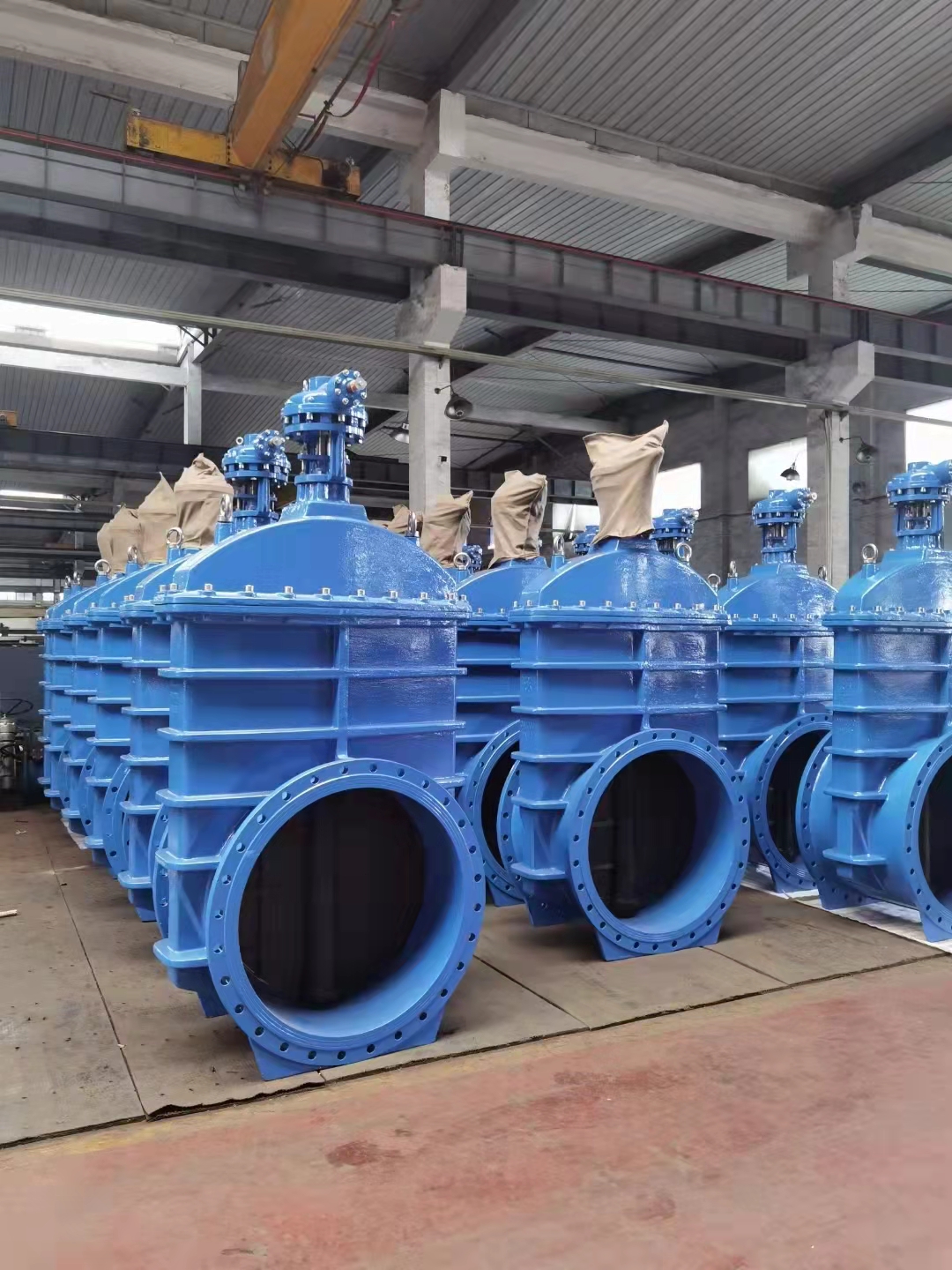
Finished gate valves before dispatch — each unit passes through the factory test sequence prior to release.
Comparison Table: Gate Valve vs Ball, Butterfly, and Globe Valve
The table below summarises WEIZIDOM’s own design comparison of its gate valve against traditional ball, butterfly, and cut-off (globe) valves. It is a first-party engineering comparison intended to be read as relative design behaviour under on/off duty, not as third-party test data.
| Decision criterion | Gate valve | vs. traditional ball valve | vs. traditional butterfly valve | vs. traditional cut-off / globe valve |
|---|---|---|---|---|
| Flow path and pressure drop | Full straight-through bore, zero flow resistance in fully open state | Pressure drop in full open status reduced by 45%–70% | Flow resistance reduced by more than 60% | Internal pressure drop reduced by 75%–80%; flow coefficient increased about 3× |
| Sealing and containment | Bidirectional sealing, reliable bidirectional sealing performance | Strong anti-deformation and anti-medium impact ability, not easy to cause sealing failure | Long-term sealing stability over 2× higher than butterfly valve | Bidirectional sealing reaches Class VI zero leakage standard |
| Best-fit duty | Full open and full cut-off working conditions without flow regulation | Large-diameter long-distance trunk pipelines, water conservancy, petrochemical, heating, high-temperature high-pressure systems | Large-diameter trunk pipelines, high-pressure systems, oil, gas, water and chemical media transmission | Long-distance main pipeline transportation, water supply, oil and gas, chemical industry medium delivery |
| Relative purchase cost | Simple internal structure and mature process; fewer vulnerable components | Unit purchase cost lower; long-term replacement and operating costs controlled | Initial investment slightly higher, but low failure rate and long service life lower overall total ownership cost | Initial procurement cost basically equivalent; lower transmission resistance cuts long-term operating energy consumption |
| Maintenance and service life | Stable performance after long-term opening; low maintenance frequency | Wider structural pressure bearing range; long-term continuous operation stability improved | Wear-resistant and anti-deformation; sealing part not easy to age and damage | No frequent filler adjustment; overall service life more than twice that of traditional globe valves |
Read correctly, the table points to a single decision rule: where the line needs on/off isolation and no throttling, the gate valve’s straight-through bore and bidirectional seal give the lowest flow loss and the simplest maintenance profile. Where the process genuinely requires regulation, the isolation valve should not be asked to do that job.
Factory and Quality Control Behind the Specification
Specification quality depends on whether the manufacturer can actually produce and verify it. WEIZIDOM operates five factories in Tianjin, Wenzhou, Hebei, Lianyungang and Anhui, with a factory area of 60,000 m², 300 employees, an annual output of 2,000,000 units, and a 60-engineer R&D team. Each product passes through 12 tests from raw material to the final product, and products are exported to more than 60 countries, with an export ratio of 80%. That test sequence is where the containment claims in this guide become verifiable: the reinforced body proof test, the zero leakage test, and the material and coating checks are production-stage controls, not marketing statements.

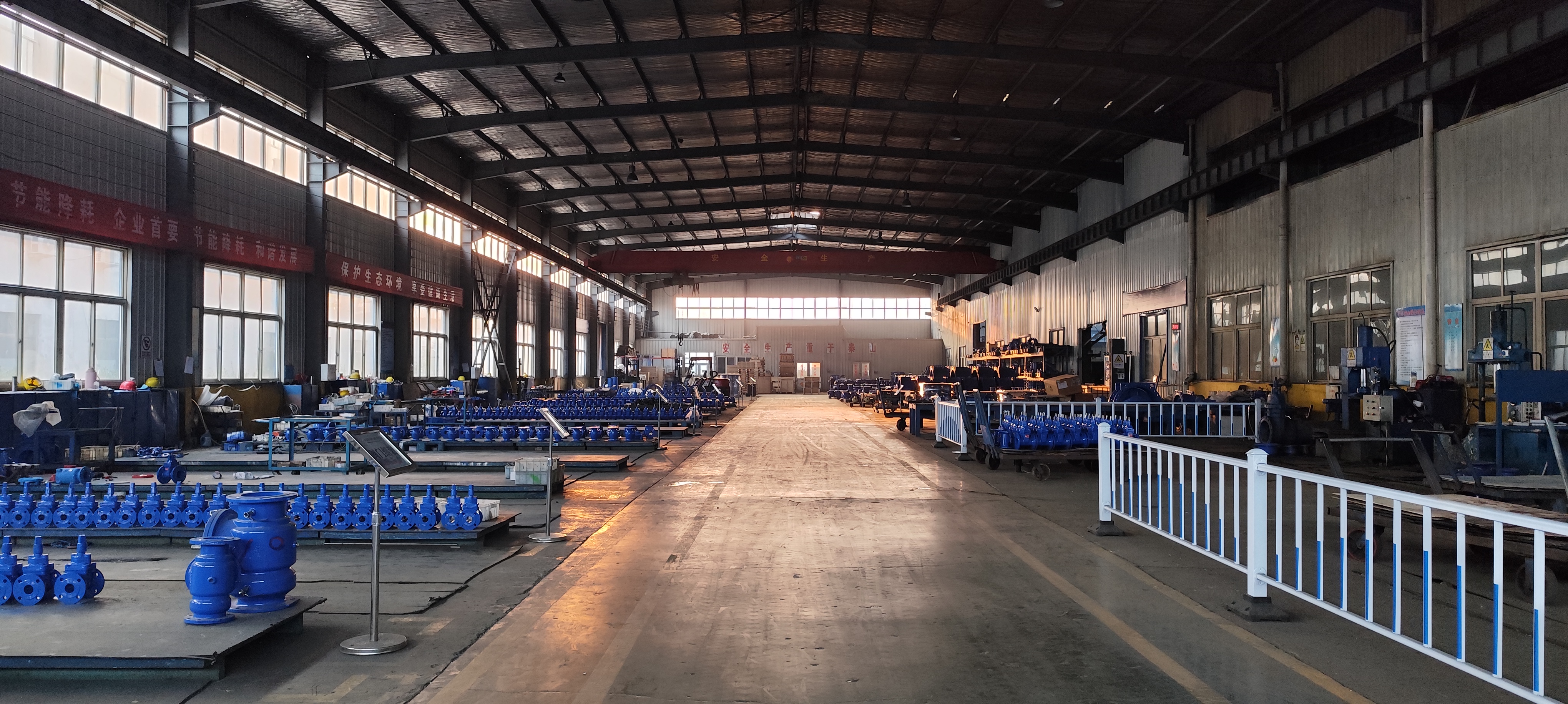
Valve manufacturing at WEIZIDOM — every unit passes 12 tests from raw material to finished product.
Frequently Asked Questions
Which standard governs a gate valve for chemical and petrochemical service — API 600, DIN 3352, or EN ISO 10434?
API 600 is the primary standard for heavy-duty bolted bonnet steel gate valves used in petroleum refineries and related applications, and it specifies requirements for design, materials, and testing. EN ISO 10434:2020 is the European/International equivalent to API 600, governing bolted bonnet steel gate valves for the petroleum and petrochemical industries. DIN 3352 is the widely recognised German national standard for gate valves, specifying structural and performance requirements for various industrial applications. WEIZIDOM states that its products can meet multiple standards including GB, JB, HB, ASME, API, AWWA, DIN, EU and BS, so the governing standard should be named on the project datasheet and the delivered valve traceable to it through the material certificate and pressure test record.
Can one gate valve range cover DN50 to DN1000 for corrosive and toxic chemical media?
The DN50–DN1000 range can be covered structurally with a full-bore straight-through flow channel, low flow resistance, bidirectional sealing performance, a simple switching structure and stronger structural stability. Containment for corrosive and toxic media is handled at four defined points: corrosion by anti-corrosion treatment using FBE epoxy coating of ≥250 µm with stainless steel trim; high temperature by heat-resistant material, special sealing and stellite trim; abrasion by an abrasion-resistant disc with hardened surface; and leakage by a double seal design with primary and secondary seals plus a zero leakage test. The reinforced body is proof-tested at 1.5× rated pressure. This package makes the design suitable for large-diameter trunk pipelines, high-pressure systems and the transmission of oil, gas, water, and chemical media, particularly in working conditions requiring long-term stable cut-off without flow regulation.
Is a gate valve more expensive than ball, butterfly, or globe valves over the full life cycle?
The answer differs by alternative. Against a traditional ball valve, the gate valve’s simple internal structure and mature process give a lower unit purchase cost and fewer vulnerable components, which controls long-term replacement and operating costs, while full-open pressure drop is reduced by 45%–70%. Against a traditional butterfly valve, the gate valve’s initial investment is slightly higher, but the low failure rate and long service life reduce later replacement and renovation costs, producing a lower overall total ownership cost; flow resistance is reduced by more than 60% and long-term sealing stability is over 2× higher. Against a traditional cut-off or globe valve, the initial procurement cost is basically equivalent, while lower pipeline transmission resistance cuts long-term operating energy consumption, internal pressure drop is reduced by 75%–80%, flow coefficient increases about 3×, and overall service life is more than twice that of traditional globe valves.
How can a buyer validate a chemical-service gate valve before it enters service?
Validation should follow the manufacturing control points rather than a single inspection. Each WEIZIDOM product passes through 12 tests from raw material to the final product, and the containment-related steps are the zero leakage test on the double seal design (primary + secondary seal) and the 1.5× rated pressure test on the reinforced body. Coating and trim requirements — FBE epoxy coating of ≥250 µm with stainless steel trim for corrosive media, stellite trim for high temperature — should be confirmed against the material records. Buyers evaluating a specific project can review the product documentation in the WEIZIDOM product catalogue before confirming the order.
What determines the delivery schedule for a DN50–DN1000 gate valve order?
Schedule is driven by the exact combination on the datasheet: nominal size, pressure class (PN25, PN40, or PN63), body material (WCB or LCB carbon steel, or stainless steel), trim and coating selection, and whether the valve is manual or supplied as an electric gate valve with hazardous-area protection. Those variables change casting, machining, assembly and the testing sequence, so a schedule should be confirmed against the specific specification rather than against a generic size range. WEIZIDOM manufactures across five factories in Tianjin, Wenzhou, Hebei, Lianyungang and Anhui with an annual output of 2,000,000 units and a 60-engineer R&D team, and exports to more than 60 countries. To confirm schedule, pricing and sample availability for a specific DN / PN / material combination, send the datasheet to contact@weizidom.com, message +86 17319732766 on WhatsApp, or request a quotation through the WEIZIDOM website.
Conclusion: Select the Containment, Then the Size
Choosing a DN50–DN1000 gate valve for chemical fluid handling is a sequence, not a single decision. Media chemistry and containment come first: a material combination that resists the medium, bidirectional sealing verified by a zero leakage test, and a body proof-tested at 1.5× rated pressure. Explosion protection follows whenever the valve is actuated inside a classified area. Only then do the familiar parameters apply — PN25, PN40 or PN63, a −5 °C to +150 °C envelope matched to the trim, and DN50 through DN1000 selected for the line. Get the sequence right and the gate valve delivers what its straight-through bore promises: unobstructed flow, stable long-term cut-off, and a maintenance profile far simpler than the valves it replaces.
Gate valve stock prepared for export — WEIZIDOM supplies to more than 60 countries.
Next step
Share your line data — DN, PN class, temperature, medium and actuation requirement — and request a quotation, technical datasheet or evaluation sample for a DN50–DN1000 chemical-service gate valve.
Email: contact@weizidom.com | Tel / WhatsApp: +86 17319732766 | Website: www.wsdvalves.com
Product catalogue (PDF): download the WEIZIDOM product brochure.
Have Questions or Need More Details?
Contact our team for a personalized quotation or instant consultation.
Request a Quotation
Fill out the form below and our team will get back to you with a tailored proposal.
WhatsApp Direct Chat
Prefer to chat in real-time? Message us on WhatsApp for instant assistance & quick answers.
- Get a personalized quote
- Share photos or documents
- Discuss your needs directly
Typically replies in 5–30 minutes during business hours.