
What Is a Gate Valve? Industrial Roles, Materials, and Types to Know
What Is a Gate Valve? Industrial Roles, Materials, and Types to Know
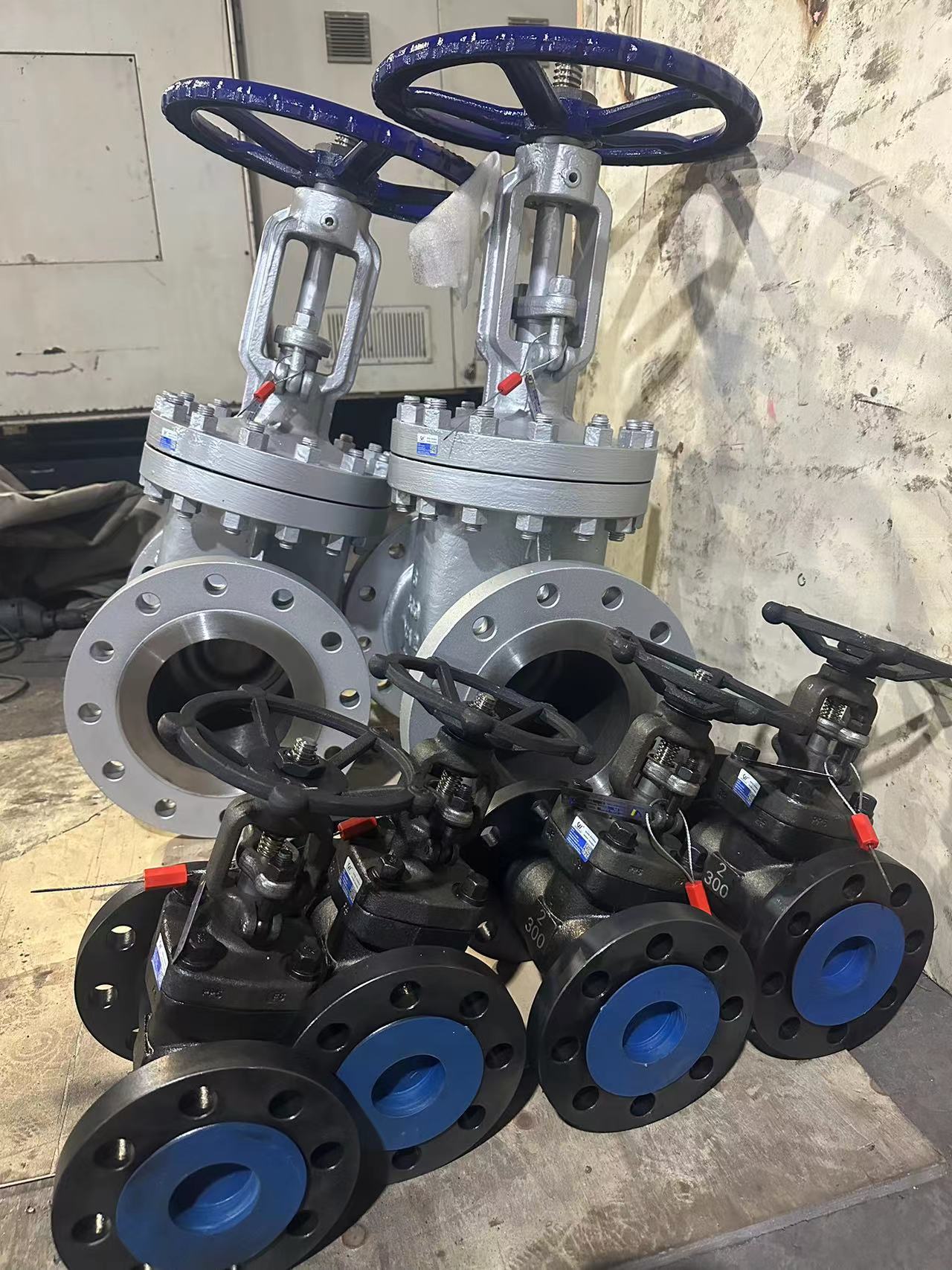
A gate valve is a linear-motion isolation valve. Its closing element, usually a wedge, disc, or knife-shaped gate, moves directly into or out of the flow path. In the open position, the valve leaves the line essentially unobstructed; in the closed position, it provides shutoff. Gate valves are therefore selected mainly for on/off service and maintenance isolation, not for throttling or continuous flow adjustment.
In an industrial pipeline, a gate valve can be a small forged steel valve on an instrumentation line or a large ductile iron valve on a municipal main. Buyers often begin with the single term gate valve and later discover that the same name covers different body materials, seat systems, stem designs, pressure classes, and design standards. This article provides an awareness-stage reference for engineers, contractors, distributors, and project buyers who need to understand how industrial pipeline gate valves are classified and what to ask before shortlisting products.
Why the Term Industrial Pipeline Gate Valve Is Not Enough
A water utility project, a petrochemical plant, and a mining slurry line can all require a gate valve, but the required products are not interchangeable. A municipal water network may specify a ductile iron resilient-seated gate valve with PN16 flanges. A refinery may need a carbon steel API 600 bolted bonnet gate valve with Class 300 flanges. A mining project may request a carbon steel knife gate valve designed to handle slurry containing solid particles.
Because one product category must serve several different industries, the phrase industrial pipeline gate valve only makes sense when it is followed by a specification. That specification should answer questions about the medium, pressure, temperature, size, end connection, sealing material, actuation, and applicable design standard.
A useful gate valve definition for procurement purposes is: an on/off valve that isolates or connects a pipeline section by moving a wedge, disc, or knife gate across the flow path. Once the valve is fully open, the bore is designed to minimize obstruction to flow.
Gate Valve Demand and the Global Sourcing Context
Gate valves are present across utility, oil and gas, petrochemical, power, mining, water treatment, and general industrial systems. Market research published by Reports and Data estimates the global gate valve market at USD 13.0 billion in 2024 and projects it to reach approximately USD 20.6 billion by 2034, at a reported CAGR of 4.7%. The same report identifies North America as holding a 43.90% share of the global gate valve market in 2024, worth approximately USD 5.7 billion.
Supply is also international. Trade data compiled by The Observatory of Economic Complexity shows that China was the largest exporter of valves in 2024, accounting for 20% of total global valve exports with a value of USD 22.6 billion. For an industrial buyer, these numbers help explain why global sourcing teams compare valve products across multiple manufacturing countries and standards.
From a manufacturer side, Henan Weizidom Flow Control Co., Ltd, known internationally as WEIZIDOM, is a valve and pipeline-accessory manufacturer established in 2000. The company operates five domestic factories located in Tianjin, Wenzhou, Hebei, Lianyungang, and Anhui, with a combined factory area of 60,000 square meters and an annual production capacity of about 2,000,000 units. The company exports to more than 60 countries, with export sales accounting for approximately 80% of total business.
What Defines an Industrial Gate Valve
Gate valve choices can be organized around a few engineering variables. Once these variables are clear, it becomes easier to compare products across a manufacturer catalog and to explain requirements in an RFQ.
Body and Trim Material
Material selection is usually the first filter because it connects the valve to the fluid being handled. WEIZIDOM manufactures valves in gray iron, ductile iron, carbon steel, forged steel, and stainless steel. Within the gate valve range, the following material families appear most often.
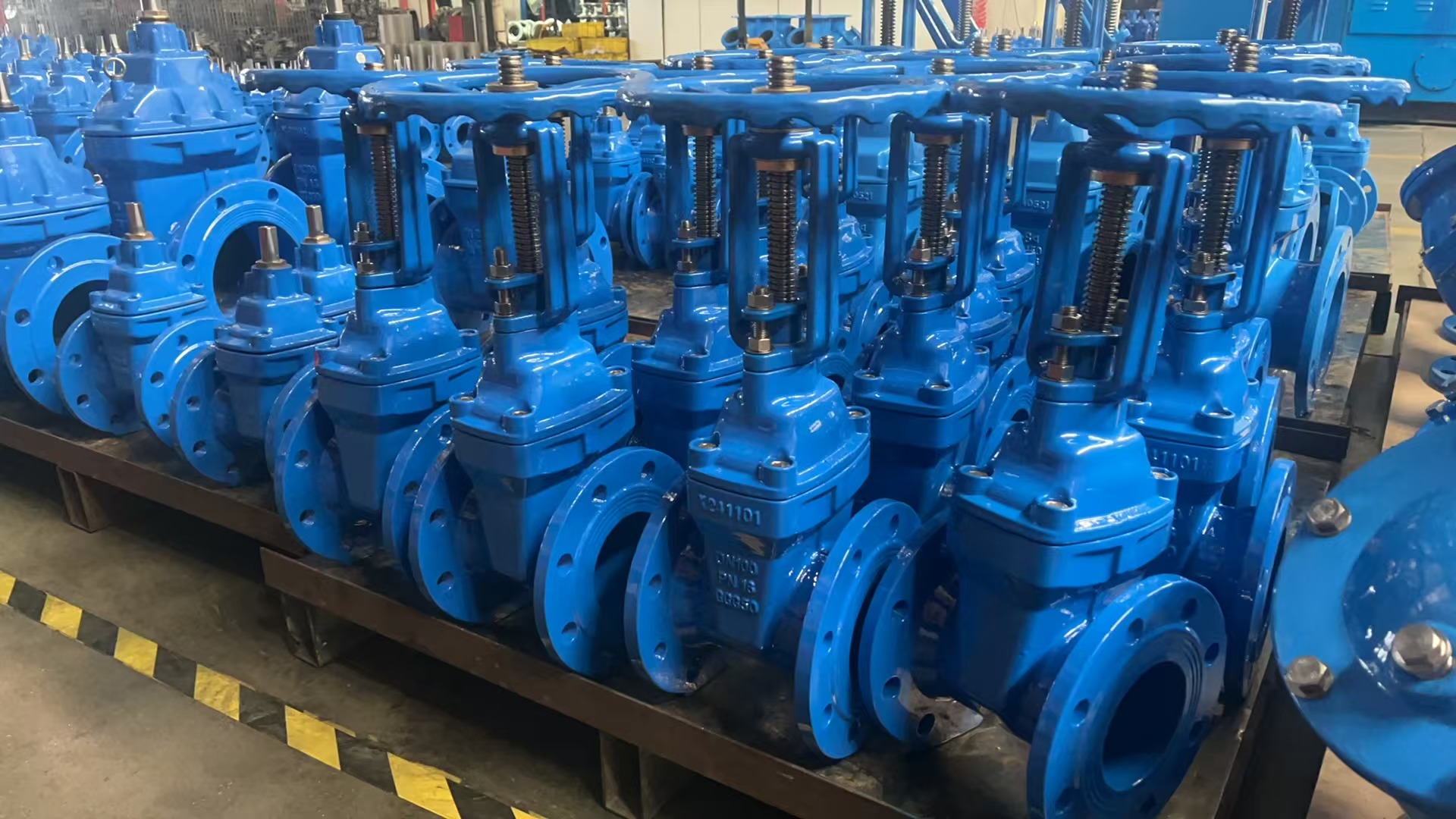
- Ductile iron GGG50 and QT500-7 are used for resilient-seated gate valves, underground cap models, socket connection gate valves, and BS5163 rising stem gate valves. They are common in water supply, drainage, irrigation, and wastewater systems.
- Carbon steel WCB and low-temperature carbon steel LCB appear in industrial gate valve models for petrochemical plants, power plants, heating ventilation, and general industrial pipelines. The LCB material option supports low-temperature service in the carbon steel DIN/EN gate valve family.
- Stainless steel castings CF8 and CF8M, equivalent to 304 and 316 stainless steel, are used in API gate valve bodies and stainless steel flange gate valves.
- Stainless steel grades 304 and 316 are found in stainless steel flange gate valves and stainless steel knife gate valves for corrosive, chemical, food, pharmaceutical, and seawater-related duties.
- Forged steel A105, F304, and F316 are used in rising stem forged steel gate valve models for high-pressure pipelines, oil and gas wellhead applications, chemical injection, and instrumentation pipelines.
For buyers who need corrosion resistance, a 304 or 316 stainless steel gate valve is a common starting point. For low-temperature process service, LCB low-temperature carbon steel is part of the carbon steel gate valve specification. For large water mains, ductile iron is often more relevant than carbon steel.
Stem Design: OS&Y and Non-Rising Stem
Gate valve stem configuration affects installation, maintenance, and visual inspection. Two configurations dominate industrial catalogs.
OS&Y, or outside screw and yoke, is a rising stem design. The stem rises through the yoke as the valve opens, so an operator can see whether the valve is open or closed from outside. This configuration is used on many industrial gate valves, including the BS5163 Type B rising stem gate valve and API/ASME rising stem gate valves.
NRS, or non-rising stem, keeps the stem thread inside the valve body. The outside stem does not rise, which makes the valve more compact and easier to protect in underground chambers. NRS models are common in buried municipal water supply and drainage systems. The WEIZIDOM underground cap soft seal gate valve and socket connection gate valve are examples of this construction approach.
Sealing System
The sealing system must match the fluid and the expected leakage class. For clean water and wastewater duties, EPDM and NBR seals are common. For buried water service, full wrapped EPDM around the wedge provides corrosion resistance and low leakage. For chemical and pharmaceutical applications, stainless steel gate valves are available with EPDM or Viton sealing options. Knife gate valves often use PTFE or EPDM. In oil and gas, refinery, and high-temperature process valves, metal-to-metal seating and Stellite-faced sealing surfaces are part of the API construction.
Design Standard and Pressure Rating
Standards help buyers avoid ambiguity because they define pressure-temperature limits, wall thickness, materials, and testing requirements.
- API 600 is the primary standard for heavy-duty bolted bonnet steel gate valves in petroleum refinery and related applications.
- EN ISO 10434:2020 is the European and international equivalent to API 600 for bolted bonnet steel gate valves in the petroleum and petrochemical industries.
- DIN 3352 is the recognized German standard for gate valves and appears in flange resilient gate valve and carbon steel gate valve models.
- BS5163, often specified together with EN 1074 or AWWA C509, is common for municipal water supply and water treatment projects in the UK, Europe, and other regions that follow British or Commonwealth water standards.
- API 602 and ASME B16.34 apply to forged steel rising stem gate valves in sizes from NPS 1/4 inch to NPS 4 inch, mostly for high-pressure small-bore service.
- API 598, DIN 19526, GB/T 12237, and JIS F7380 appear in knife gate valve specifications for mining, wastewater, pulp and paper, and slurry handling.
American-style projects often reference ANSI/ASME pressure classes such as Class 150, Class 300, Class 600, or Class 900. European water and industrial projects more often reference PN ratings such as PN10, PN16, PN25, PN40, or PN63. A buyer cannot safely substitute one rating system for another without checking flange standards and pressure-temperature tables.
Operation Mode and End Connection
Gate valves can be operated manually by handwheel, electrically, pneumatically, or hydraulically. Terminal applications involving flammable media and vibration may use electric or hydraulic operation with remote control. Chemical processes may use electric or pneumatic operation with explosion protection. Mining and wastewater projects may use manual, electric, or hydraulic operation depending on site requirements.
End connections also matter. Flanged gate valves connect directly to flanged pipe networks. Socket connection gate valves are used in smaller building water supply, HVAC, fire protection, and small-diameter industrial pipelines. Underground cap gate valves are designed for buried service, where the valve chamber and operating spindle are part of the installation concept.
Step-by-Step Approach to Evaluating a Gate Valve
Even before a formal RFQ, a buyer can reduce the list of candidate products by following a structured evaluation. This is especially useful during the research stage, when the project team is still matching operating conditions to available valve families.
- Define the valve duty. Is the valve for isolating a downstream line, emergency shutdown, pump isolation, tank isolation, or pipeline section control? Gate valves should be treated as isolation valves rather than throttling valves.
- Describe the media. Write down whether the line carries clean water, drinking water, sewage, seawater, crude oil, gas, chemical fluid, slurry, or another medium. Note abrasion, corrosion, toxicity, and operating temperature.
- Identify the pressure class. Use the plant specification or system design to determine the required pressure rating, such as PN10/PN16/PN25/PN40/PN63 or ANSI Class 150/300/600/900.
- Confirm the governing standard. Ask which standard the local authority, engineering contractor, or project document expects: API/ASME, DIN/EN, BS/EN, AWWA, JIS, GB/T, or another document. If a tender refers to GOST or another regional standard, request the full standard title before assuming compatibility with a DIN or API product.
- Select material and seat. Use media corrosiveness and pipeline failure consequences to choose between ductile iron, carbon steel, stainless steel, forged steel, EPDM, NBR, PTFE, Viton, metal-to-metal, or Stellite-faced sealing options.
- Define size, end connection, and actuation. Confirm nominal size, flanged or socket connection, and whether the valve will be operated by handwheel, electric actuator, pneumatic actuator, hydraulic actuator, or extended spindle for underground installation.
Gate Valve Applications Across Industrial Pipelines
Gate valves are used in many industrial sectors, but the right family changes with the application. The following use cases show how buyers typically match a gate valve type to an operating environment.
Water Supply and Drainage
Water supply and drainage gate valve requirements are usually linked to municipal distribution, fire protection, or building services. A DIN 3352 F4/F5 flange resilient gate valve made of ductile iron GGG50 or QT500-7 is available from DN40 to DN1200 with pressure ratings PN10, PN16, and PN25. It uses EPDM or NBR sealing and suits clean water, rainwater, or treated water in utility networks.
For buried networks, the underground cap soft seal gate valve in BS5163 Type A/B or DIN 3352 underground styles is designed for municipal underground water supply, roadside drainage, and residential water supply. Socket connection gate valves from DN15 to DN100 cover building water supply, HVAC, small-diameter industrial pipelines, and fire protection.
Oil and Gas Pipelines and Terminals
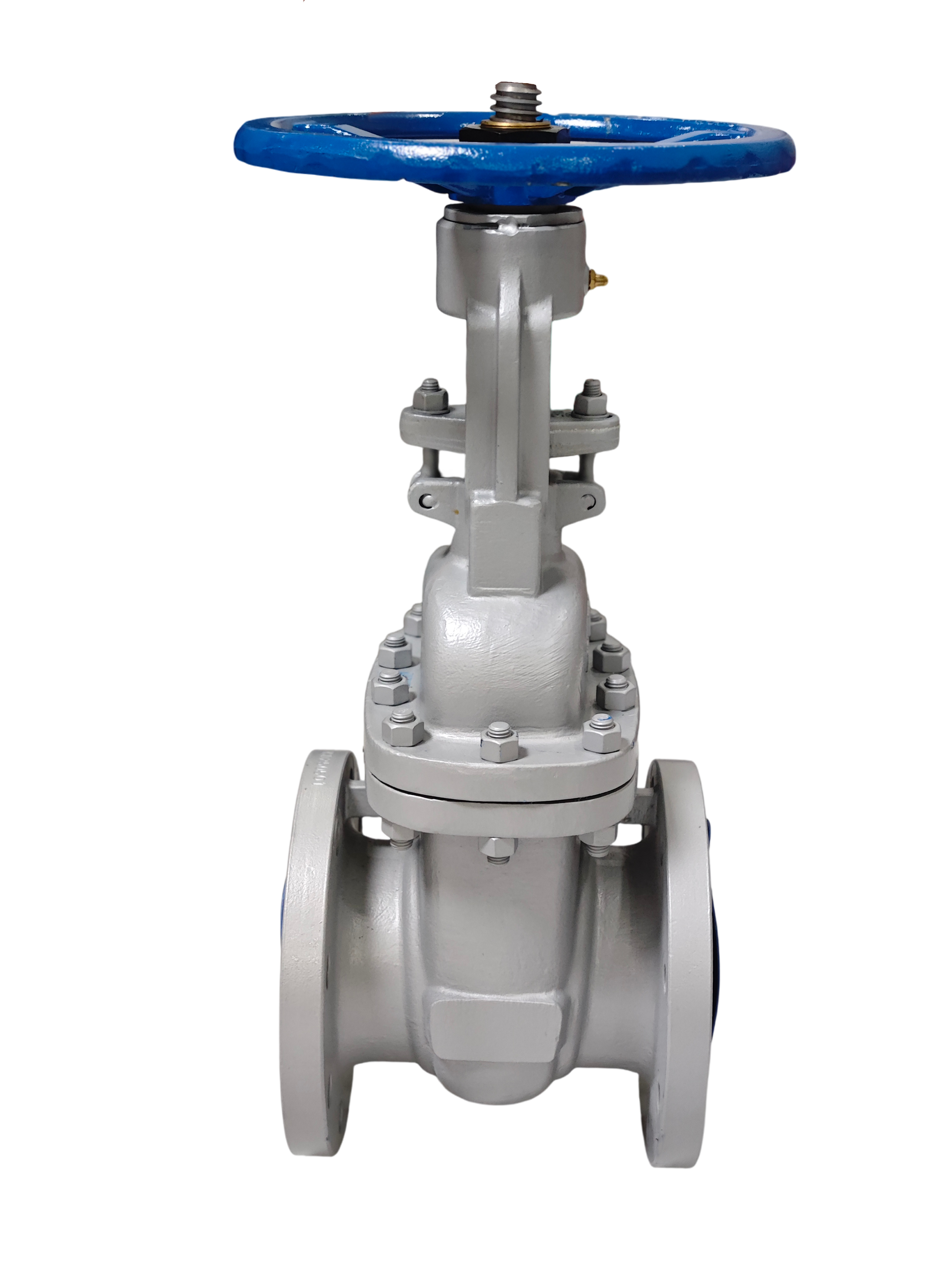
Oil and gas gate valve selection usually begins with carbon steel, stainless steel, forged steel, and API or ASME construction standards. For refinery-type isolation service, API 600 is the primary heavy-duty bolted bonnet steel gate valve standard. For large pipeline or process systems, the API 600/API 6D gate valve family covers sizes from NPS 1/2 inch to NPS 48 inch, with WCB carbon steel, CF8 stainless steel, or CF8M stainless steel bodies and pressure classes from Class 150 to Class 900.
Port terminals that transfer oil, gas, or chemicals are designed for flammable media and vibration. Their operating environments include outdoor areas with ambient temperatures from -10°C to +75°C and medium pressure at PN16 or PN25. Special requirements for terminal applications include shock resistance, vibration resistance, corrosion resistance, and safety interlock. These valves often operate in electric or hydraulic mode with remote control.
High-pressure small-bore lines often use a rising stem forged steel gate valve made to API 602 or ASME B16.34, in A105 forged carbon steel or F304/F316 forged stainless steel. It is available from NPS 1/4 inch to NPS 4 inch and suits oil and gas wellhead, high-pressure pipeline, chemical injection, and instrumentation pipelines.
Chemical and Corrosion-Resistant Pipelines
Chemical pipeline gate valves must handle fluids that may be corrosive, toxic, or reactive. A stainless steel flange gate valve made from 304 or 316 stainless steel is offered in DIN 3352 F4/F5, EN 1074, or JIS B2062 configurations from DN40 to DN800. Pressure ratings include PN10, PN16, PN25, and PN40, with EPDM or Viton sealing. This product family is used in the food and beverage industry, pharmaceutical manufacturing, chemical plants, and seawater desalination.
In chemical production plants and storage and transportation systems, operating conditions may reach medium-high temperatures from -5°C to +150°C and medium-high pressures from PN16 to PN40. Special requirements for chemical industry applications include chemical resistance, leak tightness, explosion protection, and easy cleaning. Electric or pneumatic operation with explosion protection is often selected when remote monitoring or hazardous-area safety is required.
Mining Slurry and Solids-Bearing Lines
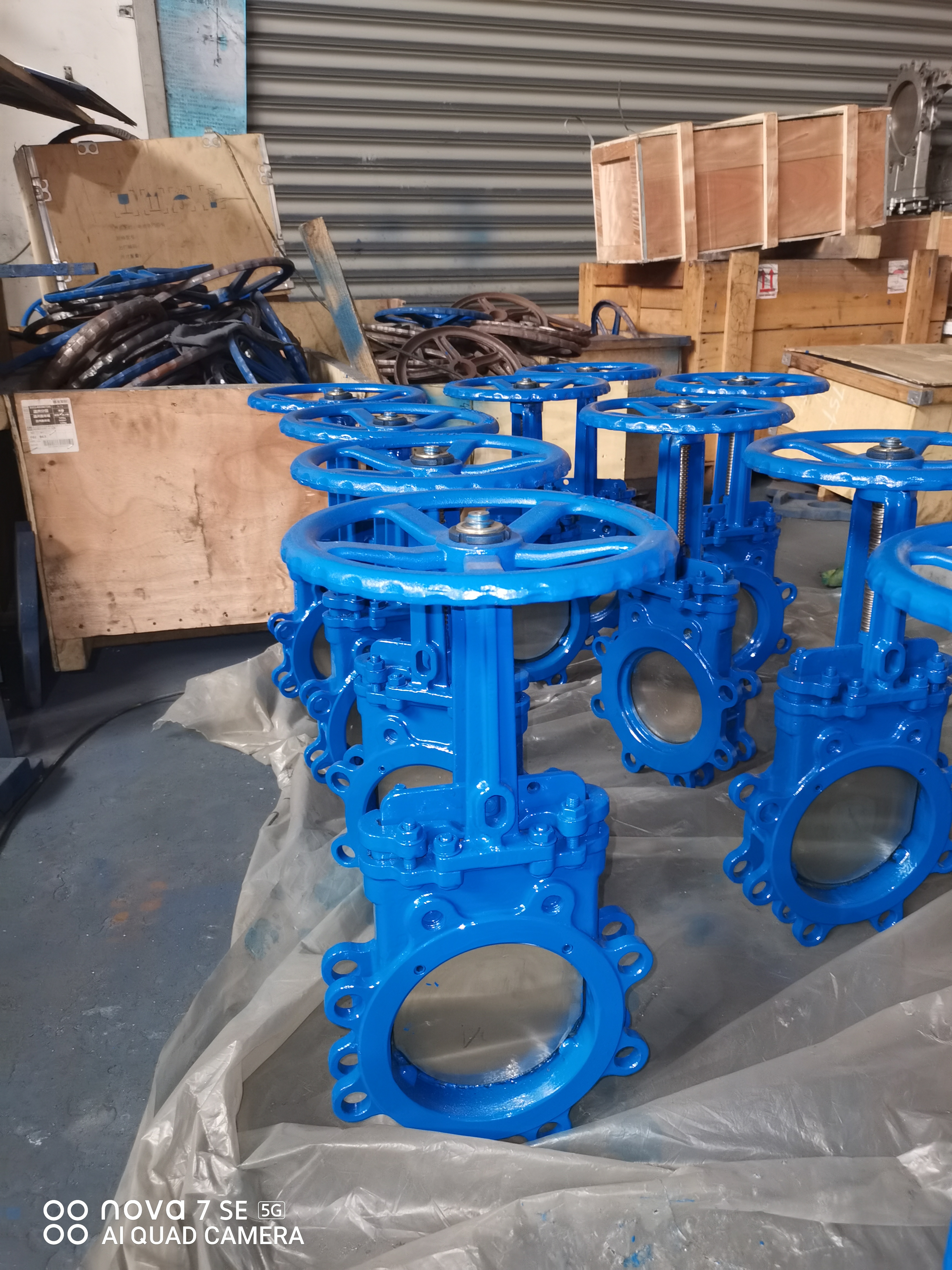
Mining slurry gate valve selection is different because the fluid may contain ore solids, abrasive particles, and variable temperature conditions. The carbon steel knife gate valve is made to API 598, DIN 19526, or GB/T 12237, with a knife-type or parallel disc structure, WCB carbon steel body, and PTFE or EPDM sealing. It is available from DN50 to DN800 and is intended for coal mining, power plant ash handling, and industrial waste slurry.
When corrosion resistance is also required in slurry service, the stainless steel knife gate valve uses 304 or 316 stainless steel, conforms to API 598, DIN 19526, or JIS F7380, and is available from DN50 to DN600. Special mining requirements often include abrasion resistance, impact resistance, dust prevention, and easy maintenance.
Wastewater Treatment and Seawater Plants
Wastewater treatment projects typically involve sewage or industrial wastewater with small particles, slight corrosion, and low pressure duties up to PN10 or PN16. Flange resilient gate valves, underground cap models, BS5163 rising stem gate valves, and stainless steel knife gate valves all appear in wastewater treatment networks. Special requirements for wastewater scenarios include anti-clogging design, corrosion resistance, and ease of maintenance.
Seawater desalination plants need corrosion-resistant materials because seawater is highly saline and corrosive. Stainless steel gate valves, stainless steel knife gate valves, and ductile iron resilient gate valves with corrosion-resistant seals are all relevant families. These plants may use electric or pneumatic operation with corrosion protection features.
Gate Valve Family Comparison at a Glance
The table below summarizes common WEIZIDOM gate valve families and their typical duties. It is a family-level comparison, not a substitute for the full design standard, material specification, or pressure-temperature calculations.
| Gate Valve Family | Material Options | Typical Size Range | Pressure Classes | Common Industrial Use |
|---|---|---|---|---|
| API heavy duty gate valve | WCB carbon steel, CF8/304 stainless steel, CF8M/316 stainless steel | NPS 1/2 inch - NPS 48 inch (DN15-DN1200) | Class 150/300/600/900 | Oil and gas, petrochemical, refinery, offshore, power plant |
| API 602 / ASME B16.34 forged steel rising stem gate valve | A105 forged carbon steel, F304/F316 forged stainless steel | NPS 1/4 inch - NPS 4 inch (DN8-DN100) | Class 150/300/600 | High-pressure pipelines, wellhead, chemical injection, instrumentation |
| DIN 3352 F4/F5 flange resilient gate valve | Ductile iron GGG50/QT500-7 | DN40-DN1200 | PN10/PN16/PN25 | Water supply and drainage, agricultural irrigation, wastewater |
| BS5163 / EN 1074 / AWWA C509 rising stem gate valve | QT500-7 ductile iron, GGG50 ductile iron | DN50-DN800 | PN10/PN16 | UK/Commonwealth municipal water supply, European water treatment |
| DIN 3352 / EN 1074 / JIS B2062 stainless steel flange gate valve | 304 stainless steel, 316 stainless steel | DN40-DN800 | PN10/PN16/PN25/PN40 | Chemical, food and beverage, pharmaceutical, seawater desalination |
| DIN 3352 / EN 12516 / GB/T 12234 carbon steel gate valve | WCB carbon steel, LCB low-temperature carbon steel | DN50-DN1000 | PN16-PN63 | Petrochemical, power plant, heating ventilation, industrial pipeline |
| API 598 / DIN 19526 / JIS F7380 knife gate valve | WCB carbon steel, WC6 chrome molybdenum steel, 304/316 stainless steel | DN50-DN800 (carbon steel), DN50-DN600 (stainless steel) | PN10-PN40 | Coal mining, power plant ash handling, wastewater, pulp and paper, chemical slurry |
Gate Valve FAQ: What Buyers Usually Ask Next
Which design standards should I ask for when buying an industrial gate valve?
API 600 is the primary standard for heavy-duty bolted bonnet steel gate valves used in petroleum refineries. EN ISO 10434:2020 is the European/international equivalent to API 600. The DIN 3352 standard is widely recognized for gate valves in German and European industrial practice. For UK/Commonwealth water projects, BS5163 is often combined with EN 1074 or AWWA C509. WEIZIDOM also supplies models based on API 602, API 6D, ASME B16.34, DN, EN, GB/T, and JIS standards. The first step is always to identify the governing project standard.
Does WEIZIDOM have the capability to make ductile iron, carbon steel, stainless steel, and large-diameter gate valves?
Yes. Henan Weizidom Flow Control Co., Ltd operates five domestic factories in Tianjin, Wenzhou, Hebei, Lianyungang, and Anhui, with a total factory area of 60,000 square meters and an annual production capacity of about 2,000,000 units. The company employs around 300 staff, including an R&D team of 60 engineers. The gate valve range includes ductile iron resilient models, carbon steel gate valves, stainless steel flange gate valves, API gate valves, forged steel rising stem gate valves, and knife gate valves. For large-diameter service, the carbon steel and ductile iron resilient families reach DN1000 or larger depending on the product model.
How should a buyer think about gate valve budget during the first screening?
Budget should be linked to specification rather than product name. For clean-water utility service, ductile iron resilient gate valves made to DIN 3352 F4/F5 are a common class. For chemical and petrochemical service, carbon steel or stainless steel bodies and documented compliance to API/ASME or DIN/EN standards become the main cost drivers. Since price depends on media, standard, size, pressure rating, material, and actuation, there is no meaningful fixed price until the engineering datasheet is defined.
Can I request a sample or brochure before bulk sourcing?
Yes. WEIZIDOM provides professional pre-sale service and can support sample discussions when the project specification is clear. To make the request efficient, include media, size, pressure class, design standard, material or seat requirement, end connection, and operation mode. The current brochure is available for download through the link at the end of this article, and direct inquiries can be sent to the WEIZIDOM contact listed below.
How can a buyer improve project lead time for gate valves?
The fastest way to improve lead time is to prepare a complete specification before requesting availability. Buyers should provide the exact standard, valve type, nominal size, pressure rating, body and trim material, seal requirement, flange standard, and actuation requirement. Once these parameters are confirmed, the supplier can check current production planning and provide a more accurate response. Direct contact with WEIZIDOM is recommended for project-specific scheduling and sample questions.
Conclusion
An industrial pipeline gate valve is not one interchangeable component. It is a family of isolation valves shaped by material, sealing system, stem design, pressure class, operation mode, and design standard. Buyers in the awareness and research phase should first define the media and service duty, then confirm the standard, and then compare products across those criteria.
WEIZIDOM provides a wide gate valve portfolio through multiple domestic factories, including ductile iron, carbon steel, stainless steel, API/ASME, DIN/EN, and BS/EN models. Understanding the selection logic before contacting a supplier helps the engineering and sourcing teams communicate the same requirement in a language the manufacturer can quote accurately.
Download WEIZIDOM Gate Valve Brochure (PDF)
Contact: Anna | Email: contact@weizidom.com | Tel/WhatsApp: +86 17319732766
Address: No.999, Zhengxin Expressway, Zhengzhou City, Henan Province, China