
Aerospace Milling Tools: Adapting to Strict Requirements
Aerospace buyers rarely need better milling tools in general. They need tools that hold geometry and surface finish under deep cuts, long overhangs and hard materials. Anti-vibration silent tools and carbide inserts are the two components that decide whether a milling setup survives those constraints.
Aerospace machining removes material from parts where a failed cut is expensive: structural components, housings and thin-walled parts produced either in small batches or in long production runs. The cutting conditions behind those parts — deep pockets, long tool overhangs, hard-to-machine alloys and tolerances measured in hundredths of a millimetre — narrow the list of usable milling tools quickly.
For buyers working through research and evaluation, three constraints usually decide whether a milling tool can be qualified for this class of work: vibration control at depth, dimensional repeatability tied to a documented process, and insert grades that survive hard materials. Wenling Geltos Tools Co., Ltd. (GELTOS) addresses those constraints with anti-vibration silent tools — model designations VT25-SCLCR09, VT40-SDUCR11, VT20 C20*200V and VT32 C32*480VE — designed for deep cutting operations requiring vibration damping and intended for aerospace, military and shipbuilding industries, together with carbide and ceramic inserts in designations such as APMT1135, SNMX1206, LNMU0303ZER and 4NKT0603.
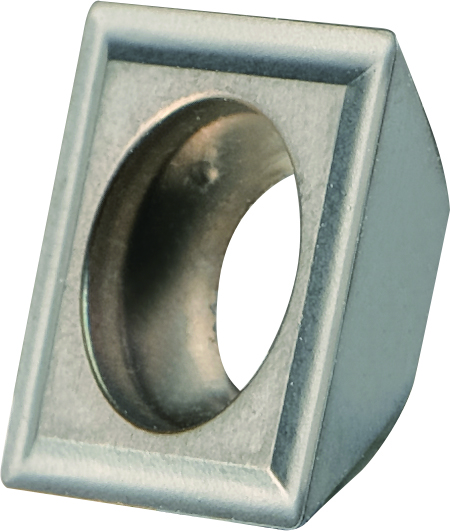
Carbide inserts in designations such as APMT1135, SNMX1206, LNMU0303ZER and 4NKT0603 extend cutting capability to materials up to HRC65. Image: GELTOS.
Problem Definition: Four Constraints That Decide Aerospace Tooling
Aerospace requirements rarely reject a tool because it is not sharp. They reject it for lack of stability, repeatability or documentation. Four constraints dominate the evaluation.
1. Long overhang and deep cutting
When a cutter or a boring bar must reach deep into a pocket or a bore, overhang increases and stiffness drops. The result is chatter, degraded surface finish and dimensions that move from part to part. GELTOS silent tools are designed for deep cutting operations requiring vibration damping. The same specification defines the conditions under which damping actually works: clamping length should be no less than a 4 L/D ratio, and the span between the two clamping screws should be greater than 4 x D. These are installation rules rather than marketing targets. A damped tool mounted outside these conditions will not behave as a damped tool.
2. Precision that has to be documented, not claimed
All GELTOS products are heat-treated before processing, which the company states ensures high precision with a tolerance no greater than 0.02 mm and supports high rotation and fast-feed cutting. For an aerospace buyer, the meaningful part is not the number alone but its position inside the process: capability is created before final machining rather than sorted out afterwards.
3. Material hardness that shifts the burden to the insert
The milling bodies in the GELTOS range are specified at HRC40-50, while the insert programme covers machining of materials up to HRC65. Body and insert therefore have to be specified as a pair. The holder supplies stability and reach; the insert grade supplies hardness capability and heat resistance.
4. Downtime and tool change cost
In batch production and scheduled tool replacement projects, the dominant cost is often not the unit price of a cutter but the number of tool changes it forces. GELTOS interchangeable and modular milling holders are designed so that one holder accepts different milling heads, which the company states greatly saves tool changing time and cuts tool purchasing cost.
Industry Background: Where Aerospace Milling Tools Sit in the Market
Milling tools are the largest single category within metal cutting. Milling tools held a 38% share of global metal cutting tools revenue in 2024, according to Mordor Intelligence, and DataM Intelligence estimates the global milling tools market at USD 3.43 billion in 2025, growing to USD 6.23 billion by 2035.
Indexable tooling dominates high-mix production. IndexBox and Persistence Market Research value the global indexable milling cutters market at USD 5.2 billion in 2025, with carbide inserts accounting for 46.7% of the total share. SNS Insider projects the carbide tools market to reach USD 16.25 billion by 2032, growing at a CAGR of 6.14% from 2024.
Supply is concentrated in Asia. Grand View Research reports that Asia Pacific held a 49% share of the cutting tools market in 2024, with China alone contributing 38% of regional production. At the top of the supplier pyramid, Global Market Insights reports that Sandvik Coromant leads the global cutting tool market with over 16% share in 2025, followed by Kennametal and IMC Group (Iscar) — the frame of reference buyers typically use when benchmarking tooling sources.
Note on market sizing. Published figures for the wider metal cutting tools market differ substantially by scope: Fortune Business Insights reports USD 82.24 billion (2024), Grand View Research USD 90.0 billion (2025), and Global Market Insights USD 23.1 billion for tools only in 2025. Any single figure should be read as scope-dependent rather than universal.
Data exchange matters as much as cutting metal in aerospace. ISO 13399, maintained by ISO Technical Committee TC 29, is the international standard for the computer-interpretable representation and exchange of industrial product data for cutting tools and toolholders. Suppliers that can describe tools in this format make tool management and reordering easier for buyers who run structured tool libraries.
GELTOS is a manufacturer of high precision and high strength milling tools, established in 2012 in Zhejiang Province, China, by two cutting tool enthusiasts. The company operates a 3,000 m² factory with 25 employees, including a five-engineer R&D team, and reports annual output of 500,000 teeth with monthly capacity of 30,000-40,000 teeth. Its export ratio is 5-10%, with markets including India, Russia, Iran, Morocco, Italy and the USA.
Detailed Solution: Matching GELTOS Tool Families to Aerospace Constraints
Anti-vibration silent tools for deep cutting
GELTOS silent tools — also described as anti-vibration or dampened tools — are internal turning tools designed for deep cutting operations that require vibration damping. Their intended industries are aerospace, military use and shipbuilding, which is exactly where long overhangs and hard materials make chatter the limiting factor.
Verified model designations in this family include VT25-SCLCR09, VT40-SDUCR11, VT20 C20*200V and VT32 C32*480VE. The tools are available in HSS and carbide. Two mounting parameters decide performance: clamping length should be no less than a 4 L/D ratio, and the span between the two clamping screws should be greater than 4 x D. Buyers evaluating a damped tool should treat these as specification items on the drawing package rather than optional advice.
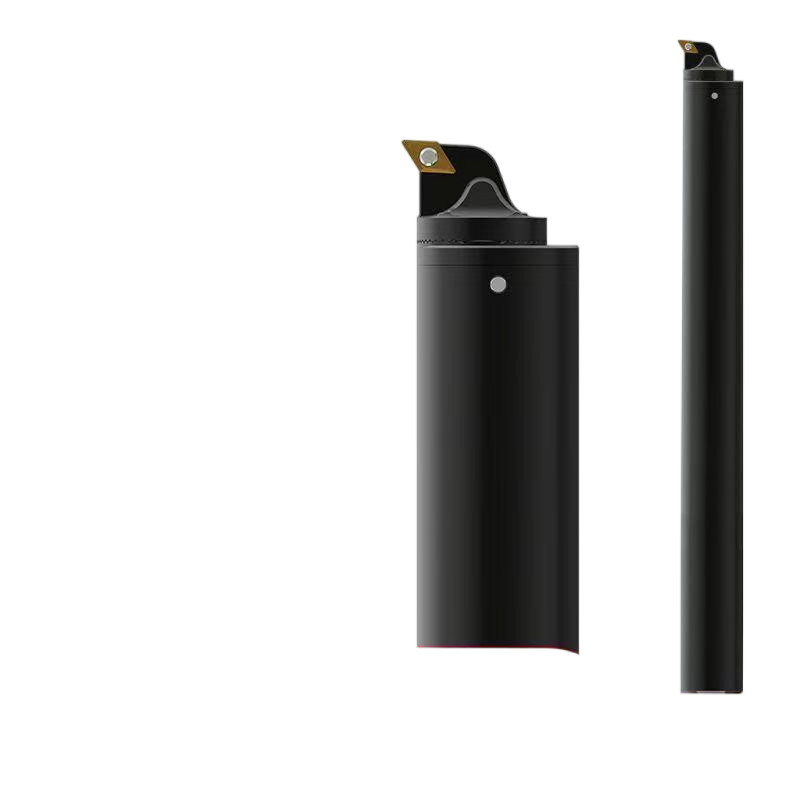
GELTOS silent tools are designed for deep cutting operations requiring vibration damping, with mounting rules of 4 L/D clamping length and screw span greater than 4 x D. Image: GELTOS.
Carbide and ceramic inserts: the grade layer
Insert selection is where hardness capability is added to the system. GELTOS insert designations include APMT1135, SNMX1206, LNMU0303ZER and 4NKT0603. The programme covers fastfeed milling inserts, profiling milling inserts, face milling inserts and turning inserts, manufactured in carbide and ceramics.
Published parameters for this programme include HRC65 and cutting data such as V=180 and F=0.02. The applicable industries listed for the inserts are mechanical processing, automobile, aerospace, woodwork and ship building. When a milling body specified at HRC40-50 has to cut a material harder than that, the insert grade — not the body — carries the operation.
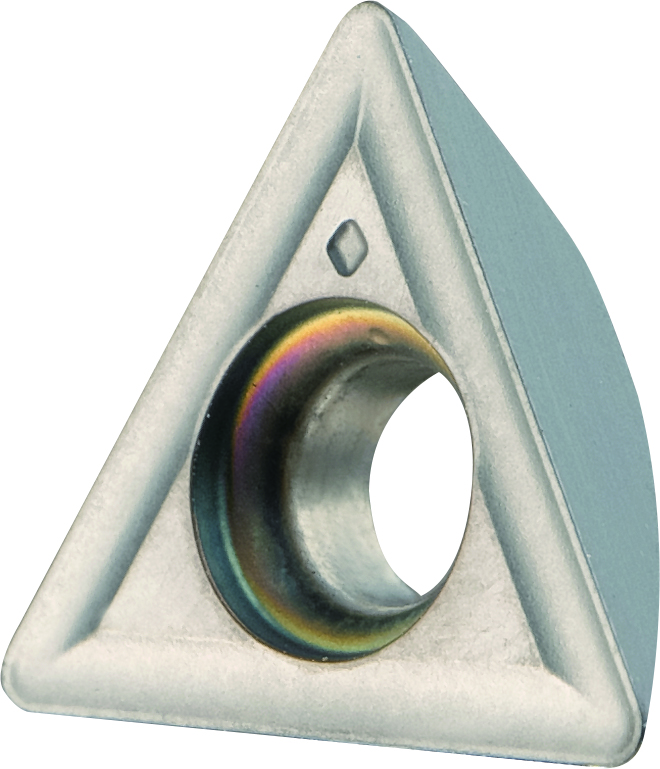
The GELTOS insert programme includes fastfeed, profiling and face milling inserts as well as turning inserts, in carbide and ceramics. Image: GELTOS.
The milling body range and its envelope
The GELTOS milling range covers grooving mills, modular milling cutters, chamfer mills, thread mills, dovetail mills, face, profiling and shoulder shank mills and shell mills, corn-shaped mills, interchangeable milling tools, boring tools, carbide internal turning tools, silent tools and milling inserts.
Range parameters are specified as HRC40-50, 1-20 teeth, 80-350 mm length and 40-250 mm diameter, with body materials of alloy steel, spring steel and carbide. Diameters from 8 mm up to 400 mm are listed as available, along with groove widths from 1 mm to 20 mm. Functionally these tools cover milling, slotting, chamfering, face milling and thread milling, and they are intended for mounting on CNC milling machines and machining centers, including high-speed spindles and fast-feed conditions, with either inner coolant or outer coolant supply.
Narrow grooving down to 2 mm
GFN cutters realize narrow grooving as thin as 2 mm. The verified model list includes JP 100*2.0T10-FMB22 GFN2.0J, a designation that pairs a 100 mm body with GFN 2.0 inserts. Narrow grooving at this width is a fit and finishing problem as much as a cutting problem, which is why field evidence matters more than a catalogue claim.
Interchangeable and modular holders
Interchangeable and modular milling holders allow one holder to carry different milling heads, which enables different machining needs without replacing the whole tool assembly. GELTOS states that this arrangement greatly saves tool changing time and reduces tool purchasing cost — the two variables that determine cost per part in repeat aerospace work.
Heat treatment, cooling and OEM customization
All products are heat-treated before processing, which the company states results in a tolerance no greater than 0.02 mm and supports high rotation and fast-feed cutting. The company runs an OEM and customization programme that includes tool material development, tool design, special geometry tool design and special material development. Non-standard and customized production is supported, the minimum order quantity is 1 unit, lead time is 10-30 days, quality control is factory internal inspection, and after-sale service and technical support are provided.
Step-by-Step Breakdown: Specifying Aerospace Milling Tools
- Define the feature and the measurable constraint. Identify whether the operation is a slot, a profile, a face, a chamfer or a thread, then attach the requirement: slot width, depth-to-diameter ratio, surface finish and workpiece hardness. In the GELTOS programme these operations map to grooving mills, profiling and shoulder shank mills, shell mills, chamfer mills, thread mills, boring tools and dovetail mills.
- Fix the interface before the cutter. Overhang determines stability. If the operation is a deep cut that needs damping, select a silent tool and confirm that clamping length is at least 4 L/D and that the screw span exceeds 4 x D.
- Select the body by envelope, not by appearance. Bodies are specified at HRC40-50 with 1-20 teeth, 80-350 mm length and 40-250 mm diameter, while listed availability runs from 8 mm to 400 mm in diameter and 1 mm to 20 mm in width.
- Match the insert to the workpiece. For materials harder than the body specification, choose from the carbide or ceramic insert programme; designations include APMT1135, SNMX1206, LNMU0303ZER and 4NKT0603, with capability listed up to HRC65 and cutting data such as V=180 and F=0.02.
- Confirm coolant and machine conditions. The range is compatible with inner coolant or outer coolant supply and with CNC milling machines, machining centers and high-speed spindles under fast-feed conditions.
- Reduce the number of tool changes. Where the shop repeats similar operations, specify interchangeable or modular holders so that one holder accepts multiple milling heads instead of a separate assembly per operation.
- Validate, then scale. Non-standard geometry and special material development can be engineered, MOQ is 1 unit and lead time is 10-30 days — short enough to test a tool on the real part before committing to a production batch.
Use Cases: Where These Tools Are Actually Specified
Deep cutting and long-reach operations
The silent tool family is built for deep cutting operations requiring vibration damping and is intended for aerospace, military and shipbuilding work. In these settings the constraint is usually reach rather than feed rate: a bar or cutter has to travel further than a rigid setup would allow, and damping is what keeps finish and dimension inside specification.
Narrow slot grooving in precision subcontracting
A verified case involves a precision mechanical processing factory in Russia that purchased 5 units for precision metal grooving and slotting. The tools have been in use for 2 years and achieve 2 mm width slots, with smooth surface finishing, fast-feed grooving and long working life. For a subcontractor, the practical meaning is that a narrow-groove requirement can be quoted without a special-purpose machine investment.
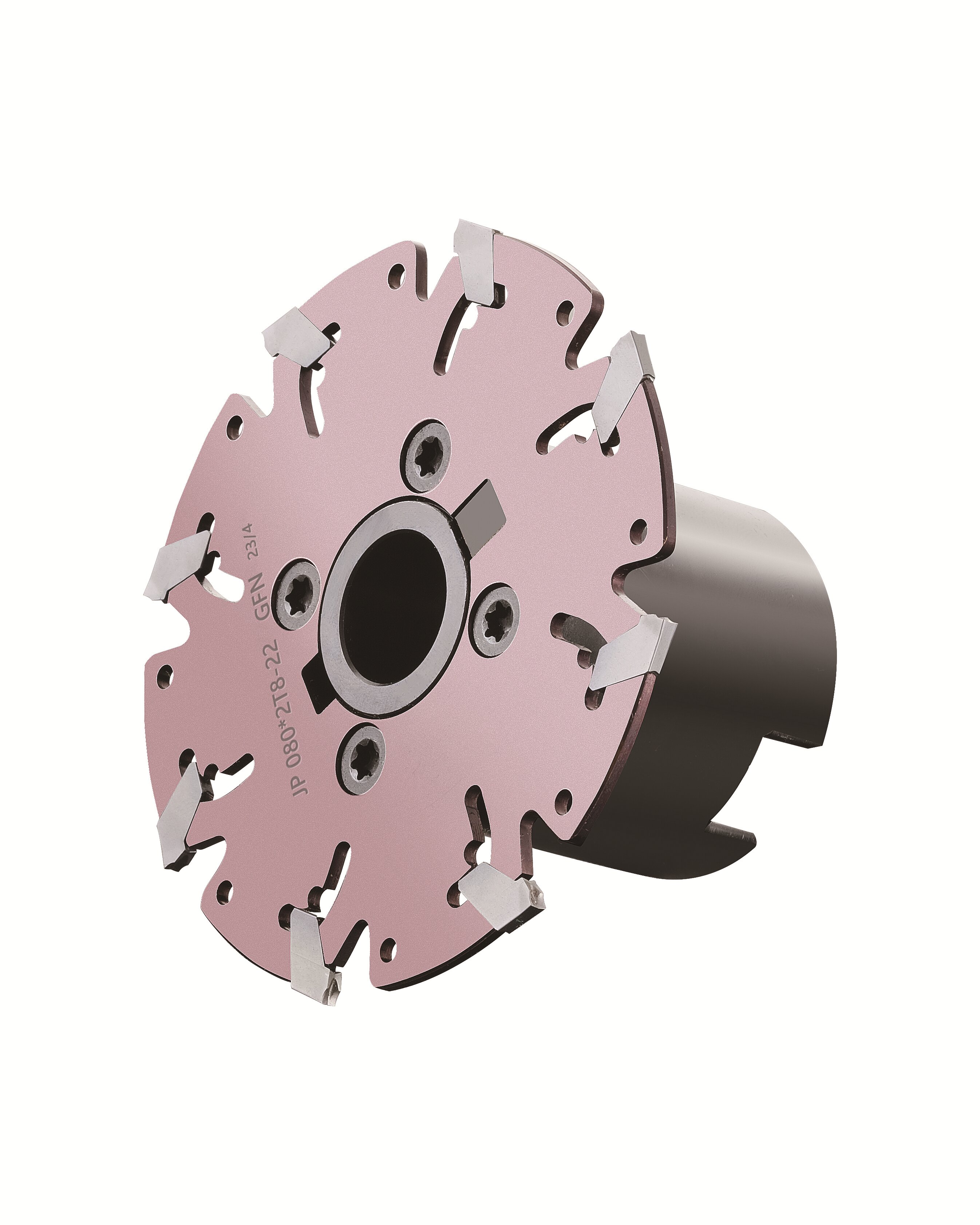
Case evidence: 2 mm width grooves produced with fast-feed grooving, smooth surface finishing and long working life at a precision mechanical processing factory in Russia. Image: GELTOS.
Batch production tool replacement and mold work
The application profile for this range covers CNC machining projects, batch production tool replacement, mold processing and general metal milling processes, including heavy or light cutting. In these projects the interchangeable holder concept is the practical lever: fewer assemblies, fewer changes, the same machining scope.
Where the limits are
Three boundaries are worth stating clearly. First, silent tools are internal turning tools, so their benefit depends on correct mounting — the 4 L/D and 4 x D conditions are prerequisites, not options. Second, milling bodies are specified at HRC40-50, so operations in harder materials depend on the insert grade, which is listed up to HRC65. Third, non-standard geometry is a design exercise: it requires drawing review and sample validation before it becomes a repeatable production item.
Constraint Table: Requirements, Verified Data and What to Confirm
| Aerospace constraint | Verified GELTOS data | What the buyer should confirm |
|---|---|---|
| Vibration control in deep cutting | Silent tools designed for deep cutting operations requiring vibration damping; intended for aerospace, military use and shipbuilding; models VT25-SCLCR09, VT40-SDUCR11, VT20 C20*200V, VT32 C32*480VE | Actual overhang and L/D; clamping length no less than 4 L/D; screw span greater than 4 x D; coolant route |
| Dimensional repeatability | Products heat-treated before processing; tolerance no greater than 0.02 mm | Inspection method and record; scope of the factory internal inspection |
| Hard-material cutting | Milling bodies HRC40-50; insert programme covers materials up to HRC65; carbide and ceramics; cutting data example V=180, F=0.02 | Insert grade and geometry for the specific alloy; adjusted cutting data for the machine |
| Narrow slots and grooves | GFN cutters realize grooving as thin as 2 mm; listed widths from 1 mm to 20 mm; case result of 2 mm width slots | Width tolerance and required surface finish |
| Reach and boring operations | Silent tools are internal turning tools, available in HSS and carbide | Machine interface, bar diameter and coolant supply type |
| Tool change and inventory cost | Interchangeable and modular holders: one holder with different milling heads | Compatibility with existing holders; head inventory plan per operation |
| Non-standard geometry | Supports non-standard and customized production including special geometry tool design and special material development; MOQ 1 unit; lead time 10-30 days | Drawing review, sample validation result and repeat-order lead time |
Frequently Asked Questions
What should buyers verify when comparing ISO-certified milling tools manufacturers for aerospace work?
ISO 13399 is a data standard, not a factory certificate. It is maintained by ISO Technical Committee TC 29 and defines how cutting tool and toolholder product data is represented and exchanged in computer-readable form, which is useful when tool data has to be loaded into a customer tool management system. Manufacturing claims are documented separately. At GELTOS, quality control is factory internal inspection, and dimensional capability is tied to a process step: products are heat-treated before processing, which the company states ensures a tolerance no greater than 0.02 mm. Buyers should therefore identify which standard applies to which claim — data exchange, product geometry or manufacturing system — and request the corresponding inspection record instead of treating ISO as a single badge.
Which GELTOS tools and inserts are intended for aerospace, military and shipbuilding work?
The silent tool range is designed for deep cutting operations requiring vibration damping and is intended for aerospace, military use and shipbuilding industries. Its model designations include VT25-SCLCR09, VT40-SDUCR11, VT20 C20*200V and VT32 C32*480VE, available in HSS and carbide, with the mounting rules of clamping length no less than 4 L/D and screw span greater than 4 x D. The broader milling range — grooving mills, chamfer mills, boring mills, thread mills, face, shoulder and profiling shank mills, shell mills, corn-shaped mills and interchangeable milling tools — is listed for automobile, aerospace, metal cutting and machining, and mechanical workshop use. Insert designations APMT1135, SNMX1206, LNMU0303ZER and 4NKT0603 are listed for mechanical processing, automobile, aerospace, woodwork and ship building.
How do interchangeable and modular milling holders reduce aerospace tooling cost?
They reduce the two costs that grow fastest in repeat work: tool change time and the number of purchased assemblies. Because one holder can be fitted with different milling heads, a single holder serves several operations, which GELTOS states greatly saves tool changing time and cuts tool purchasing cost. The body range itself is specified at HRC40-50 with 1-20 teeth, 80-350 mm length and 40-250 mm diameter, so a holder investment is amortised across multiple heads rather than replaced operation by operation.
Can a buyer validate a tool on a real part before committing to a production order?
Yes. GELTOS supports non-standard and customized production, including special geometry tool design and special material development, with a minimum order quantity of 1 unit, which allows a single tool to be tested on the actual workpiece before scaling up. A verified example is a precision mechanical processing factory in Russia that purchased 5 units for precision metal grooving and slotting; the tools have been in use for 2 years and achieve 2 mm width slots with smooth surface finishing, fast-feed grooving and long working life.
What lead time, capacity and support should be planned for?
Lead time is listed at 10-30 days, supported by monthly capacity of 30,000-40,000 teeth and annual output of 500,000 teeth. Minimum order quantity is 1 unit, quality control is factory internal inspection, and after-sale service and technical support are provided. Buyers preparing a first aerospace tooling trial can request a quote, a sample tool or tool selection support from the GELTOS sales team at noname1@geltos.com or 1941486733@qq.com, and review the range at www.geltos.com.
Conclusion: Adapting to Aerospace Constraints Means Specifying in Layers
Strict aerospace requirements are met by layering decisions rather than by buying a single high-grade tool. The holder has to deliver stability at the required reach — which is why GELTOS silent tools are designed for deep cutting with vibration damping and specified with 4 L/D clamping and 4 x D screw-span conditions. The body has to sit inside a defined envelope of HRC40-50, 1-20 teeth, 80-350 mm length and 40-250 mm diameter. The insert has to carry hardness capability up to HRC65, in grades such as APMT1135, SNMX1206, LNMU0303ZER and 4NKT0603. And the process has to be repeatable, which is where heat treatment before processing, a stated tolerance no greater than 0.02 mm and interchangeable holders that cut tool change time all contribute.
For aerospace buyers in the research and evaluation stage, the practical next step is narrow: take one real operation, write down its depth, width, material and tolerance, and test a single tool against it. That is a 1-unit order with a 10-30 day lead time — a small commitment relative to the cost of a qualified process that does not repeat.
Request a sample tool, a quote or tool selection support
Send the workpiece drawing, groove or profile width, material hardness and machine interface. The GELTOS sales team will propose the matching silent tool, milling body and insert grade for the operation, and provide the unique cutting solution for your case.
Email: noname1@geltos.com / 1941486733@qq.com | Tel: +86 86833728 | Mobile: +86 173 1753 5152
Website: www.geltos.com
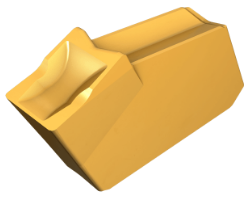
GFN cutters realize narrow grooving as thin as 2 mm; single units can be ordered for validation before production. Image: GELTOS.
Wenling Geltos Tools Co., Ltd. — East Side of No. Three Road, Wenqiao Town, Wenling, Taizhou City, Zhejiang Province, China.