
Application Guide: Silent Tools for Deep-Cut Vibration Damping in Aerospace and Shipbuilding
Deep pockets, long bores and narrow grooves are where aerospace and shipbuilding machining programmes lose the most time — not to slow cycle times, but to vibration that appears as chatter, dimensional drift and scrapped features. This application guide shows how damped silent tools are specified for those cuts, when they replace a standard milling cutter, and which clamping and parameter rules decide whether the tool actually performs.
WENLING GELTOS TOOLS CO., LTD. is a milling tool manufacturer founded in 2012 in Zhejiang Province, China, operating a 3,000 m² facility with approximately 25 employees, including a 5-engineer R&D team, and an annual output of 500,000 teeth. Its range covers grooving mills, modular milling cutters, chamfer mills, thread mills, dovetail mills, face, profiling and shoulder shank mills, shell mills, corn-shaped mills, interchangeable milling tools, carbide internal turning tools, silent tools and milling inserts. All products are heat-treated before processing, which the company states holds tolerance to no greater than 0.02 mm.
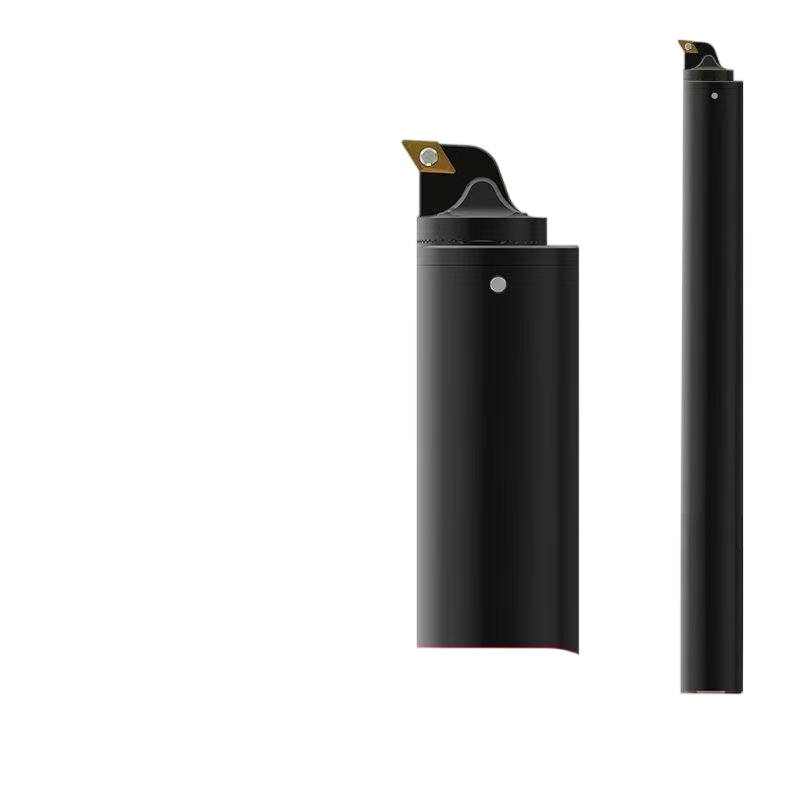
Silent tool body from the Geltos anti-vibration range, listed for aerospace, military-use and shipbuilding applications.
Problem Definition: Two Failure Modes Behind One Bad Cut
Chatter and deflection are different problems, and they are not corrected by the same adjustment. Deflection is static bending of an overhanging tool under cutting force: the tip is pushed off the intended path, the effective depth of cut varies along the feature, and the bore or pocket drifts out of tolerance. Chatter is dynamic: tool and workpiece oscillate against each other, the edge re-enters the surface it has just produced, and the result is a marked surface, a rising noise signature and accelerated edge wear.
Both effects scale with overhang length relative to tool diameter. In a shallow cut on a short, rigid setup, neither mechanism has room to develop. In a deep pocket, a long bore or a narrow groove on a large shipbuilding component, the same cutter may be asked to work at an overhang where its own bending behaviour — not its edge geometry — becomes the limiting factor of the operation.
Why a standard milling cutter reaches its limit earlier
A standard Geltos milling tool — grooving mill, chamfer mill, boring mill, face/shoulder/profiling shank mill, shell mill or corn-shaped mill — is catalogued with a working range of HRC40–50 workpiece hardness, 1 to 20 teeth, 80–350 mm length and 40–250 mm diameter, in alloy steel, spring steel or carbide. These are the geometries that perform slotting, chamfering, facing, profiling and thread milling reliably when the setup is rigid. The specification does not include a damping function, so stability in a long-overhang deep cut must come entirely from the machine, the holder and the strategy.
The symptoms that reach the buyer first
- Surface marking that repeats. A regular pattern along the feature indicates the edge is recutting a surface it has just generated.
- Dimensional drift in one direction. A wall or bore that trends off nominal points to deflection rather than to a programming error.
- Edge break-down before the expected tool life. Chipping on the clearance face after a deep pass is a vibration signature, not a grade problem.
- Process dependency on one operator. A cut that only works with a particular machinist setting feeds by ear is a cut that has no stable parameter window.
Industry Background: Why Aerospace, Military and Shipbuilding Set the Requirement
Aerospace, military use and the shipbuilding industry are the three application industries stated in the Geltos silent tool specification. The reason is structural rather than promotional: these are sectors where deep features are routine, where a re-machined component carries high accumulated cost, and where the part is often too large or too advanced in the routing to move to a more rigid setup.
Market context: DataM Intelligence, Milling Tools Market Size, Share & Forecast 2026–2035 — global milling tools market of US$3.43 billion in 2025, forecast CAGR of 6.2% for 2026–2035.
Two standards are useful when silent tools are compared or documented. ISO 11529-2:1998 specifies the designation system for shank type and bore type milling cutters with indexable inserts, which is why tool codes rather than descriptive names are used for RFQs. ISO 13399, as described in Mitsubishi Materials technical information, covers the representation and exchange of cutting tool data in computer-readable form — the reason a supplier's data quality now affects CAM and tool-management integration as much as the tool itself.
Geltos manufacturing and sourcing context
The manufacturer was established in 2012 in Wenling, Taizhou, Zhejiang Province, China, by two cutting tool enthusiasts. Its stated export markets are Russia, India, Iran, Morocco, Italy and the USA, with an export share of 5–10%. Published capability figures include monthly capacity of 30,000–40,000 teeth, order lead time of 10–30 days and a minimum order quantity of 1 unit. Quality control is stated as factory internal inspection, and after-sales service with technical support is offered.
The Solution: How Silent Tools Are Built and Specified
Product identity and variants
In Geltos product data the family is named in three ways — silent tools, anti-vibration tools and dampen tools — and typed as internal turning tools. Two body material variants are offered: HSS and carbide. The stated application industries are aerospace, military use and ship building industry. Both material variants share the same clamping rule and the same role: holding the cutting edge stable in a deep cut where an undamped body would oscillate.
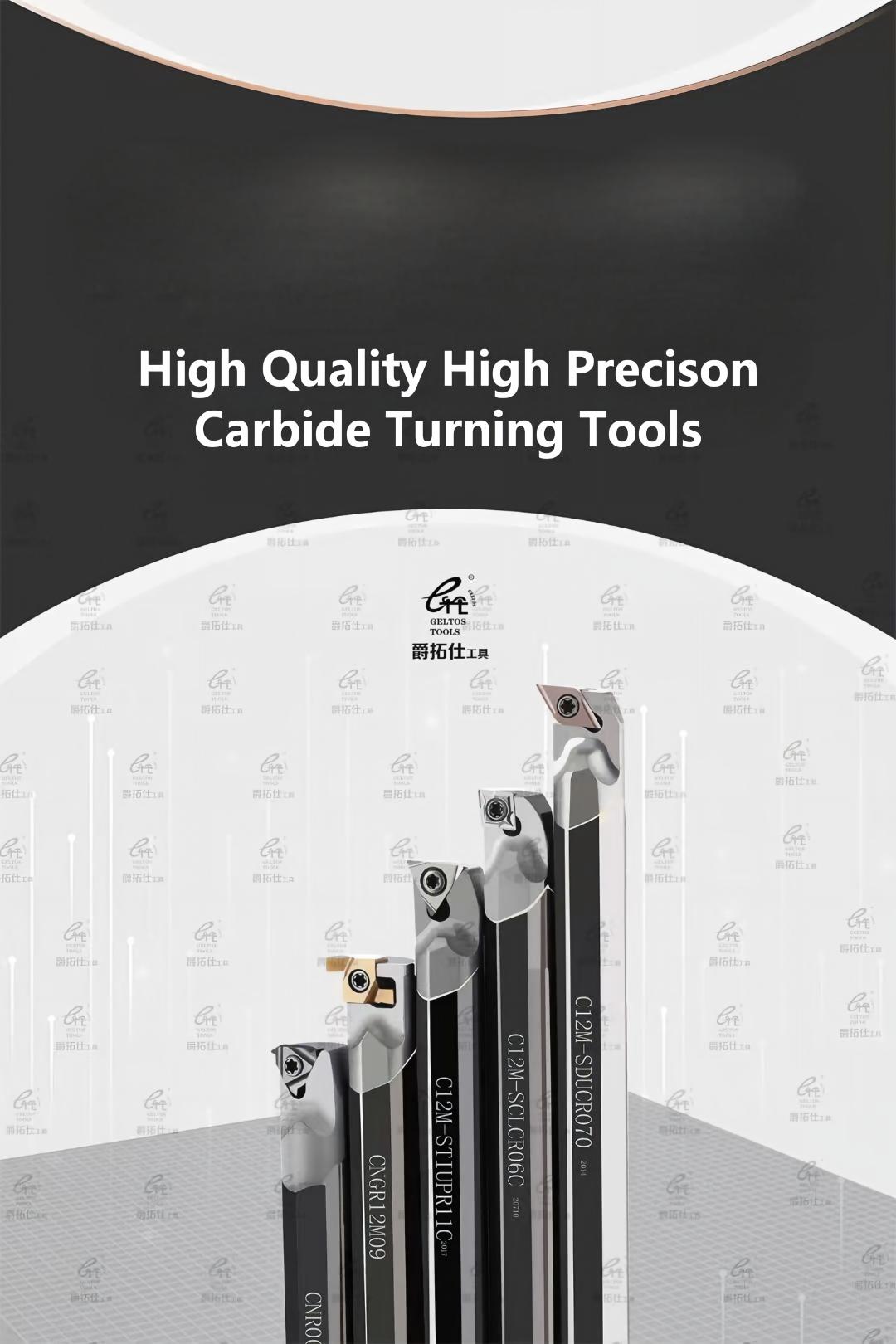
Carbide internal turning tool bodies. Silent tools are supplied in two body material variants: HSS and carbide.
Model designations to quote
Four designations appear in the current silent tool specification. They are the order reference, and dimensional or holder details should be confirmed against the exact model rather than assumed from the code:
- VT25-SCLCR09
- VT40-SDUCR11
- VT20 C20*200V
- VT32 C32*480VE
The clamping rule that decides whether the tool performs
Geltos specifies that clamping length should be no less than 4× the L/D ratio, with the span between the two clamping screws greater than 4×D. This is the single condition most often missed when a damped tool is ordered for a deep cut and then blamed for poor results. A damped body can only do its job if the portion of the tool that sits inside the holder is long enough and rigid enough to resist the reaction of the cut.
In practice, the rule changes the setup before it changes the tool. If the available holder and the required reach cannot satisfy it, the correct response is to re-plan the setup — shorten the overhang, change the holder or split the operation — not to clamp the tool at the end of its shank and run the cut anyway. The rule also explains why the two screw positions matter: a span narrower than 4×D concentrates the clamping force over too short a length, and the benefit of the damping body is lost at the interface.
Clamping verification checklist
- Measured overhang (L) and tool diameter (D) recorded for the specific setup.
- Clamping length confirmed at no less than 4× the L/D ratio.
- Span between the two clamping screws confirmed greater than 4×D.
- Holder or adapter interface checked against the exact model on the order.
- Coolant route decided — inner or outer supply.
- Starting parameters V = 180 m/min and F = 0.02 mm/rev entered as trial values, not as released production settings.
Recommended cutting parameters
Geltos insert data publishes V = 180 m/min and F = 0.02 mm/rev alongside an HRC65 reference condition. These are the recommended starting values for the damped deep-cut setup, not a guarantee for every workpiece: material condition, insert grade, coolant delivery and the rigidity of the specific machine all shift the stable window. Enter them as the first trial setting, then adjust in one variable at a time so the result is documented rather than remembered.
The silent tool is mounted on CNC milling machines or machining centres, is compatible with high-speed spindles and fast-feed conditions, and can be run with inner or outer coolant supply. Because the body is heat-treated before processing, dimensional consistency matters here in a practical way: runout and body straightness at long overhang feed directly back into vibration, and the company states tolerance no greater than 0.02 mm on that heat-treated basis.
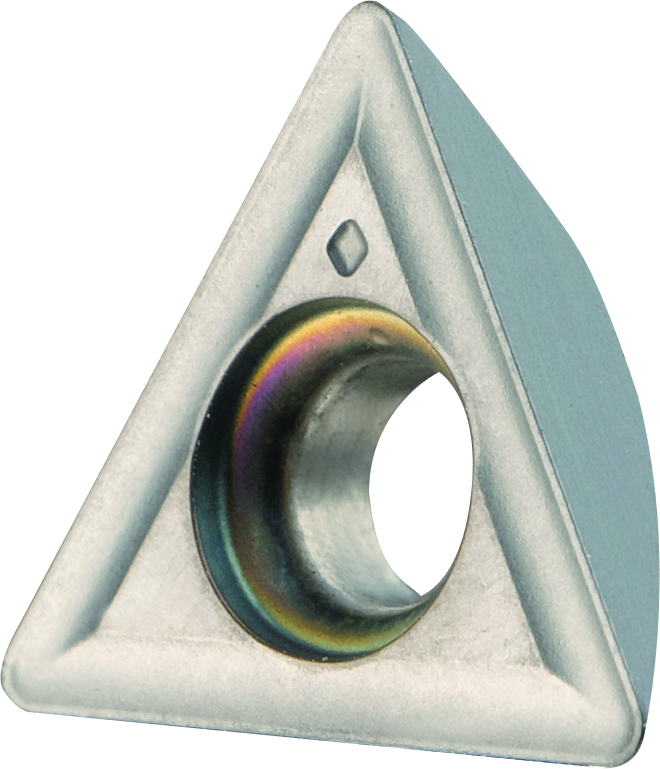
Milling insert from the Geltos insert range (TCEX090204). Published insert parameter data lists V = 180 m/min and F = 0.02 mm/rev as the reference values.
Customization and special geometry
Geltos supports non-standard and customized production, including special geometry tool design and special material development, alongside its standard R&D, production and sales activity. For deep-cut work this is the route used when an existing designation does not fit the holder, the reach or the feature — the clamping rule and the parameter reference still apply to the resulting special tool.
Step-by-Step: Specifying a Silent Tool for a Deep-Cut Job
Step 1 — Classify the operation and measure the overhang
Establish what the cut actually is: deep pocket, long bore, deep groove, or a profiling pass at reach. Record the measured overhang and the tool diameter, because both values drive every later decision. Vague reach figures from a drawing are the most common source of a mis-specified damped tool.
Step 2 — Test whether the job belongs to a standard cutter
If the setup is rigid, the reach is short and the operation is slotting, chamfering, facing, profiling or thread milling inside the standard catalogued working range (HRC40–50, 1–20 teeth, 80–350 mm length, 40–250 mm diameter), a standard Geltos milling tool remains the appropriate specification. The silent tool case opens when the deep cut will not stay stable at the required overhang — and it only opens if the clamping rule can be met.
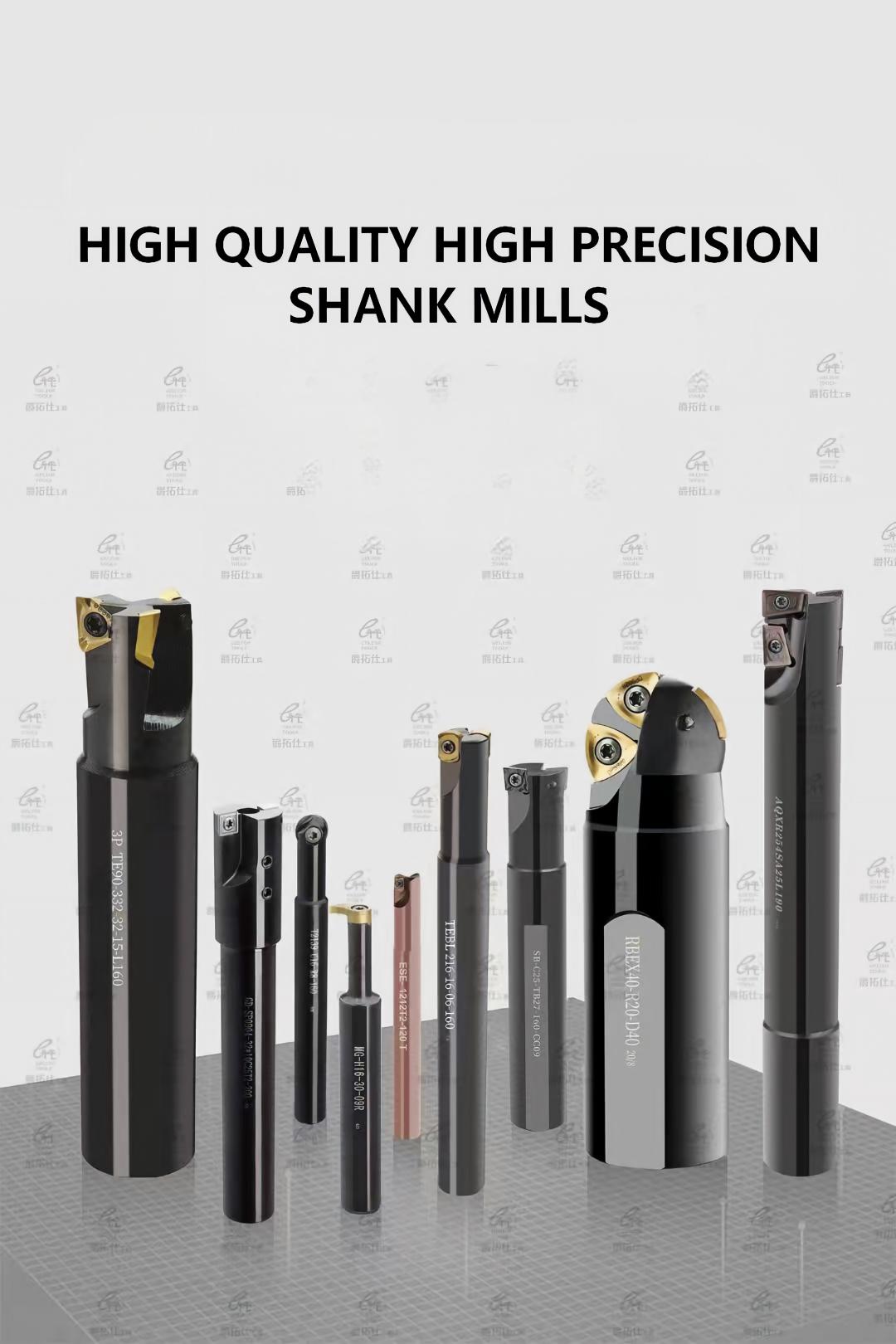
Standard shank mills: the family a silent tool replaces when overhang, not edge geometry, becomes the limiting factor of the cut.
Step 3 — Choose HSS or carbide and fix the designation
Both body materials are offered for silent tools. Carbide is the natural match where the workpiece and the machine support the published parameter reference; HSS remains a valid choice where the process favours toughness over the highest cutting speed. Fix the model against the four listed designations — VT25-SCLCR09, VT40-SDUCR11, VT20 C20*200V or VT32 C32*480VE — and confirm holder compatibility with the exact code rather than a family description.
Step 4 — Verify clamping before the tool is released
Run the published rule against the real holder: clamping length no less than 4× the L/D ratio, screw span greater than 4×D. A cut that fails this check is a cut that will produce chatter regardless of how the parameters are tuned afterwards.
Step 5 — Set starting parameters and the coolant route
Enter V = 180 m/min and F = 0.02 mm/rev as trial values, and decide inner or outer coolant supply before the first pass so the trial is comparable to production. Record both settings with the tool code.
Step 6 — Run the trial, measure, and only then scale
Judge the trial on surface consistency along the full depth, dimensional stability of the wall or bore, and edge condition after the pass. Only after those three results are documented should the setting become a released production parameter — and only then should the tool code be repeated across the batch of parts.
Use Cases: Where the Silent Tool Specification Pays Back
Aerospace: deep pockets and long-overhang finishing
Aerospace is a listed application industry for the Geltos silent tool range. The typical specification problem is a pocket or bore that must be finished without a second setup, on a part whose accumulated value makes scrapping unacceptable. The decision that matters is not the brand of the tool but whether the clamping rule can be satisfied on the existing holder; if it cannot, the setup is the problem to solve first.
Military components: documented, repeatable deep cuts
Military use is the second stated application industry. These jobs usually demand that a parameter set be repeatable across a batch rather than optimised once by a single operator. That is exactly why the published reference values and the clamping rule should be written into the routing: they turn a working trial into a reproducible instruction.
Shipbuilding: large components, deep grooves and bores
Shipbuilding is the third stated application industry. Large fabricated components are difficult to move to a more rigid machine, and deep grooves or bores often have to be produced in position. In this setting, a damped tool body compensates for the rigidity the workpiece cannot provide — provided the clamping length and screw span are verified on the actual holder in the actual machine.
Reference case: 2 mm narrow grooving in Russia
A precision mechanical processing factory in Russia ran a grooving and slotting project over two years using 5 units of Geltos milling tools. The reported result was grooving 2 mm in width with smooth surface finishing, fast-feed grooving and long working life. The case illustrates the narrow-deep-groove requirement class that drives damped tool specification; it is grooving work carried out with Geltos milling tools rather than a documented silent tool installation, and it should be read that way.
Silent Tools vs. Standard Milling Cutters: Fact Table
The table below compares only what the Geltos catalog and specification data state for each family. It is a specification-matching aid, not a performance ranking.
| Specification point | Silent tools (anti-vibration / dampen tools) | Standard milling cutters |
|---|---|---|
| Catalog description | Anti-vibration tools; typed as internal turning tools | Grooving mills, chamfer mills, boring mills, face/shoulder/profiling shank mills, shell mills, corn-shaped mills, interchangeable milling tools |
| Body material | HSS, carbide | Alloy steel, spring steel, carbide |
| Listed designations | VT25-SCLCR09, VT40-SDUCR11, VT20 C20*200V, VT32 C32*480VE | HTS-20-H06-C16T4-120 SP04, JP 100*2.0T10-FMB22 GFN2.0J, MG2009-W150T50, MC H16-20-09-N, B45 SP03 C10T1-120ap4-8, T2139 C10-R4-120, and others |
| Mounting and clamping requirement | Clamping length no less than 4× the L/D ratio; span between two screws greater than 4×D | Mounted on CNC milling machines or machining centres via common tool holders and collet systems |
| Published working parameters | V = 180 m/min, F = 0.02 mm/rev (insert parameter data, HRC65 reference) | HRC40–50 workpiece hardness; 1–20 teeth; 80–350 mm length; 40–250 mm diameter |
| Stated application industries | Aerospace, military use, ship building industry | Automobile, aerospace, metal cutting & machining, mechanical workshop |
| Coolant and spindle compatibility | Inner or outer coolant supply; compatible with high-speed spindles and fast-feed conditions | Adaptable for heavy or light cutting, with inner or outer coolant supply |
Source: WENLING GELTOS TOOLS CO., LTD. product and capability data. Values are the manufacturer's published specification, not an independent test result.
Frequently Asked Questions
1. What should be verified before silent tools are released for aerospace work?
Geltos lists silent tools for the aerospace, military-use and shipbuilding industries and states factory internal inspection as its quality control, without a stated third-party certification. Buyers whose aerospace or defence programme requires third-party documentation should therefore request inspection records, material documentation and conformity evidence with the RFQ, and confirm that the tools are supplied heat-treated before processing with tolerance no greater than 0.02 mm. Where tool codes must be compared across suppliers, ISO 11529-2:1998 is the standard that specifies the designation system for shank type and bore type milling cutters with indexable inserts.
2. Which milling tools manufacturer supplies silent tools for industrial equipment applications?
WENLING GELTOS TOOLS CO., LTD., established in 2012 in Zhejiang Province, China, manufactures milling tools including silent tools, anti-vibration tools and dampen tools in HSS and carbide. The broader catalog covers grooving mills, modular milling cutters, chamfer mills, thread mills, dovetail mills, shank and shell mills, corn-shaped mills, interchangeable milling tools, carbide internal turning tools and milling inserts. Published capability figures are a 3,000 m² facility, approximately 25 employees, 5 R&D engineers, annual output of 500,000 teeth and monthly capacity of 30,000–40,000 teeth.
3. What drives the cost of a silent tool specification?
No public price list is published, so cost is quoted per configuration. The variables that change the quotation are the model designation among VT25-SCLCR09, VT40-SDUCR11, VT20 C20*200V and VT32 C32*480VE, the HSS or carbide body variant, the insert configuration, and whether special geometry or special material development is required. Where several operations share a holder family, the company states that its interchangeable and modular milling holders can save tool-changing time and cut tool purchasing cost by fixing one holder with different milling heads.
4. Can a single silent tool be trialled before committing to a batch?
Yes. The minimum order quantity is 1 unit, which allows a trial on one holder and one feature before a batch decision. A useful trial runs V = 180 m/min and F = 0.02 mm/rev as the starting setting, with the clamping rule verified first, and records surface consistency along the full depth, dimensional stability and edge condition after the pass.
5. What lead time applies, and what is the next step?
Order lead time is 10–30 days, supported by stated monthly capacity of 30,000–40,000 teeth and after-sales service with technical support. The practical next step is to send the operation details — feature type, overhang, tool diameter, holder interface, workpiece hardness and the material variant you are considering — so the model and clamping check are confirmed before an order is placed. Contact the Geltos sales team at noname1@geltos.com or 1941486733@qq.com, or request a quotation and a single-unit sample through www.geltos.com.
Specify the cut, not just the tool
Send the drawing feature, measured overhang, tool diameter and holder interface, and Geltos will confirm which silent tool designation fits, whether the 4× L/D clamping rule can be satisfied, and which parameter set to trial first.
Email: noname1@geltos.com / 1941486733@qq.com | Tel: +86 86833728 | Mobile: +86 173 1753 5152
Address: East Side of No. Three Road, Wenqiao Town, Wenling, Taizhou City, Zhejiang Province, China | www.geltos.com
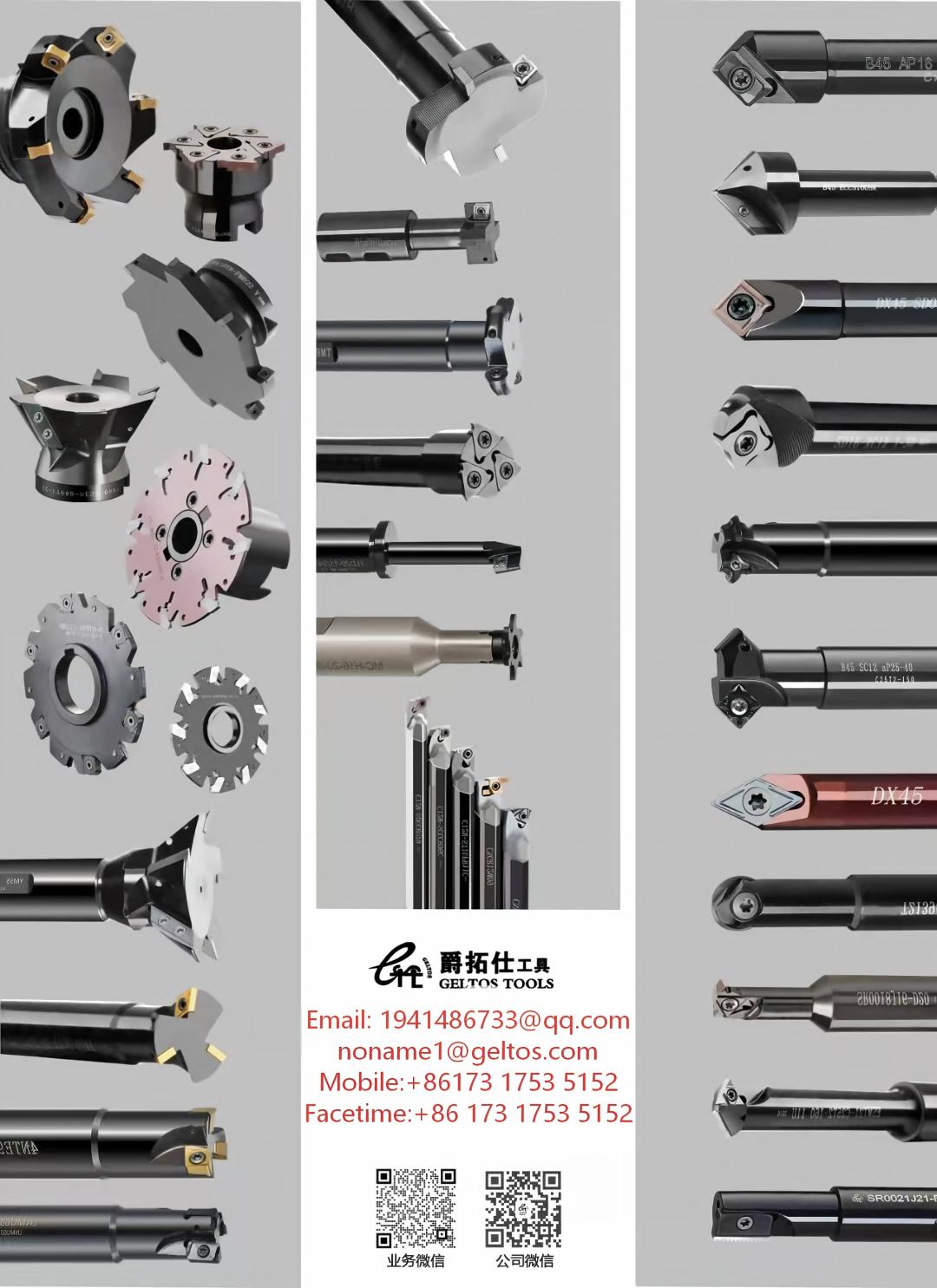
Geltos milling tool range: silent tools sit alongside grooving, chamfer, thread, dovetail, shank and shell mills in one catalog.
Conclusion
A silent tool is not an upgrade applied to every deep cut; it is a specification that becomes correct when overhang drives instability and the holder can meet the clamping rule. Get those two conditions right and the published parameters — V = 180 m/min and F = 0.02 mm/rev — give the trial a defensible starting point. Get them wrong and no parameter adjustment will recover the pass.
For aerospace, military-use and shipbuilding work, that logic produces a short, checkable specification path: classify the operation, test it against the standard milling range, choose HSS or carbide, fix one of the listed designations, verify clamping length at no less than 4× the L/D ratio and screw span above 4×D, then trial and document. The manufacturing context behind it — a 2012 Zhejiang-based operation with heat treatment before processing, tolerance no greater than 0.02 mm, and a 3,000 m² facility — is what a buyer can verify at RFQ stage, alongside the inspection records that the specific programme requires.
Have Questions or Need More Details?
Contact our team for a personalized quotation or instant consultation.
Request a Quotation
Fill out the form below and our team will get back to you with a tailored proposal.
WhatsApp Direct Chat
Prefer to chat in real-time? Message us on WhatsApp for instant assistance & quick answers.
- Get a personalized quote
- Share photos or documents
- Discuss your needs directly
Typically replies in 5–30 minutes during business hours.