
Deep-Cut Chatter in Aerospace: Executing Silent Milling Tools
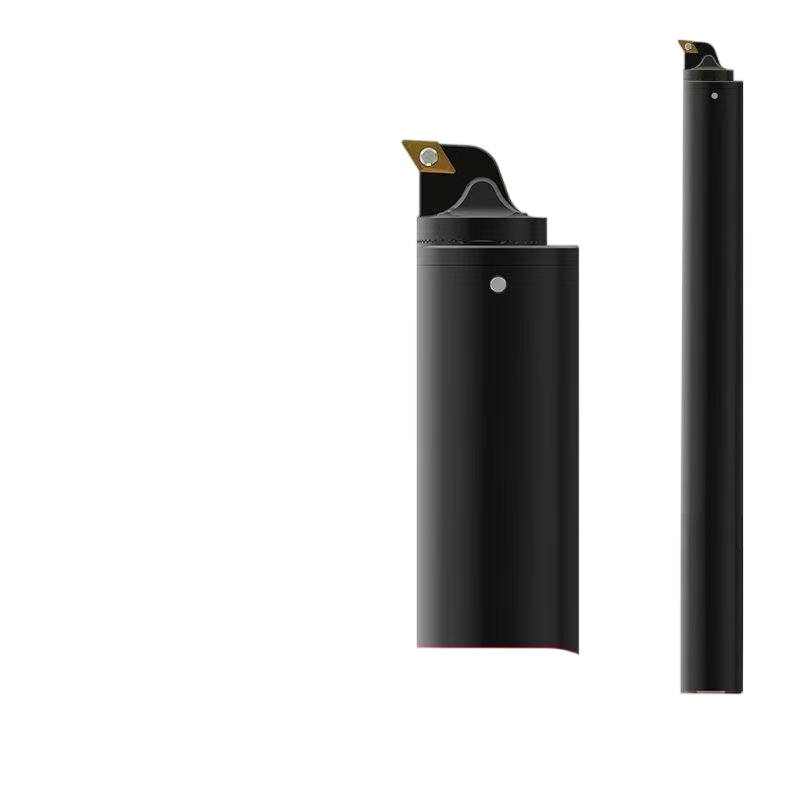
Silent anti-vibration tool body designed for deep-cut milling where standard tooling reaches its stability limit.
Deep-cut chatter in aerospace machining is a system-level failure, not a single-variable problem. Long overhangs, thin-walled structures, and high-value workpieces push the tool-holder-spindle assembly toward its stability limit, and the result is poor surface finish, dimensional drift, accelerated tool wear, and scrap risk. Silent anti-vibration milling tools change that limit by adding damping to the tool assembly, but the benefit only materializes when clamping, parameters, and supply are executed as one process.
This guide is written for buyers and process engineers who have already decided that vibration-damped tooling belongs in their aerospace, military, or shipbuilding operations. It covers the chatter problem, the function of silent milling tools, a step-by-step execution breakdown, application scenarios, a comparison of standard and silent tools, and the commercial and quality-control questions that determine long-term supply.
The Deep-Cut Chatter Problem in Aerospace Machining
Chatter is a self-excited vibration that grows when the cutting process feeds energy back into the tool-workpiece system. In deep cuts, the tool behaves like a cantilever: as overhang increases, static stiffness falls and the natural frequency of the assembly drops into a range where cutting forces can excite it. Aerospace materials make the problem harder. Titanium alloys and high-strength aluminum alloys generate dynamic cutting forces that vary with edge geometry and speed, and thin-walled aerospace structures deflect under load even when the tool itself is rigid.
The practical symptoms are familiar on the shop floor: a ringing or screeching sound, visible vibration marks on the finished surface, inconsistent chip formation, spindle load fluctuation, and premature insert or tool breakage. In a production cell making structural parts, these symptoms translate into rework, scrap, and unpredictable tool life. The problem is not limited to any single machine type; it appears on vertical and horizontal machining centers, boring mills, and multi-axis cells whenever the depth-to-diameter ratio of the operation exceeds the stable range of the tool assembly.
Conventional responses, such as reducing depth of cut, lowering feed, or relying on a stability lobe diagram, can restore stability at the cost of productivity. Silent anti-vibration tools take a different route: they add damping to the tool body so that vibration energy is dissipated before it grows into chatter. That is the mechanism behind the product family, and it is why silent tools are used specifically in deep-cutting operations where standard tools cannot maintain surface finish at productive parameters.
Industry Background: Precision Demand and Tooling Supply
The global milling tools market was valued at US$3.43 billion in 2025, with a forecast CAGR of 6.2% for the 2026 to 2035 period, according to DataM Intelligence research published in 2026. That growth is not evenly distributed. Aerospace and defense manufacturing places a premium on surface integrity, dimensional repeatability, and process stability, and those requirements pull demand toward tooling that can hold performance in deep cuts rather than simply remove material at low cost.
Standards also shape how buyers specify and compare tools. ISO 11529-2:1998 defines the designation system for shank type and bore type milling cutters with indexable inserts, and it is the reference buyers use when they need to describe a cutter consistently across quotations. Designation consistency matters in aerospace procurement because a tool that is described differently by two suppliers is difficult to compare without a drawing and a dimensional check.
WENLING GELTOS TOOLS CO., LTD. is a manufacturer of high-precision milling tools based in Wenling, Zhejiang Province, China. The company was established in 2012 and reports a 3,000 m2 facility, approximately 25 employees, an R&D team of 5 engineers, and annual production capacity of 500,000 teeth. Its product range includes silent tools, grooving mills, modular milling cutters, chamfer mills, thread mills, dovetail mills, face, profiling and shoulder shank mills, shell mills, corn-shaped mills, interchangeable milling tools, carbide internal turning tools, and milling inserts. The company reports export activity to markets including India, Russia, Iran, Morocco, Italy, and the USA.
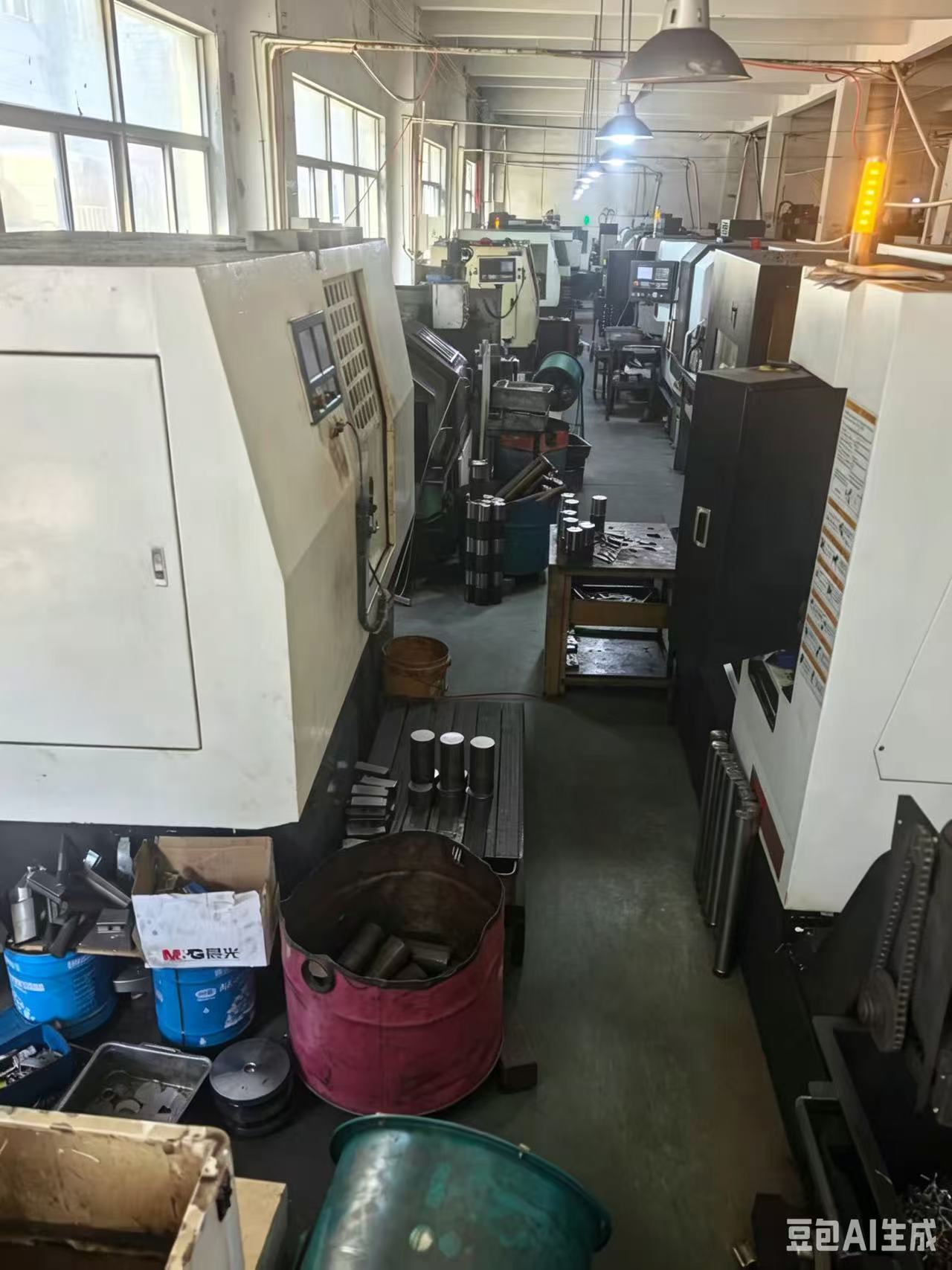
Deep-cut machining operations require tooling that holds geometry and damping stability under load.
One supply-side fact deserves attention early. The company's quality assurance relies on internal factory inspection processes rather than third-party certification. For aerospace buyers, that is not a disqualifier; it is a due-diligence signal. It means the buyer should request inspection records, material documentation, and pre-shipment test evidence for each order, and should plan independent verification where the application requires it. The rest of this guide treats that requirement as part of execution, not as an afterthought.
How Silent Anti-Vibration Milling Tools Work
Silent milling tools are designed to damp vibration at the source. The tool body incorporates a damping mechanism that dissipates energy when the assembly begins to oscillate, which raises the effective stability limit of the tool-holder-spindle system. In practice, that allows deeper cuts and longer overhangs at parameters that would produce chatter with a standard tool. The tool does not eliminate the need for correct clamping or parameter selection; it changes the boundary within which those choices can be made.
The manufacturing side matters as much as the damping concept. Geltos heat-treats its products before processing, which raises hardness and supports dimensional stability during machining. The company states that this process achieves tolerance no greater than 0.02mm. Its comparison data indicates that pre-heat-treatment processing reaches HRC40 and above, while a non-heat-treated method is around HRC30. For a deep-cutting tool, that difference is not cosmetic: higher hardness and tighter tolerance help the tool hold geometry under load, which is exactly where chatter begins.
The company also developed GFN cutters that realize narrow grooving as thin as 2mm. That capability is relevant to aerospace and shipbuilding work because narrow features and deep slots often sit in the same part as long-reach milling operations, and a supplier that can hold narrow geometry is better positioned to support a complete tooling package rather than a single cutter.
Quality control is handled through internal factory inspection processes. The company acknowledges the risks that come with this model: quality consistency, delivery timeline and capacity uncertainty, and commercial risk from the absence of third-party certification. Its control measures are post-quenching machining to strengthen the tool and internal inspection to verify the result. Buyers should read that as a transparent statement of the control loop, and should build their own acceptance checks around it.

The company reports a 3,000 m2 production facility and internal factory inspection as its quality-assurance basis.
Step-by-Step Execution: From Chatter Diagnosis to Long-Term Supply
Executing a silent tool program is a sequence, not a purchase order. The following steps are designed for a buyer or process engineer who needs to move from a chatter problem to a stable, repeatable operation with a supply arrangement that holds over time.
Step 1: Characterize the chatter signature before changing tools
Record the spindle speed, depth of cut, radial engagement, feed rate, and tool overhang at which chatter appears. Note whether the vibration is forced, related to tooth passing frequency, or self-excited, growing after the cut starts. A short video or audio recording of the operation is useful because it lets the supplier see the failure mode rather than infer it from a description. The goal is to separate a tool-stiffness problem from a parameter problem, a holder problem, or a workpiece-fixture problem.
Step 2: Match the silent tool to the operation, not to the catalog page
Silent tools are not a single product; they are a family of damped tools with different geometries and interfaces. The selection should be based on the operation type, the material, the required reach, and the machine interface. Geltos lists silent tools alongside shell mills, thread mills, chamfer cutters, side and face cutters, T-slotters, and modular milling tools, which means the buyer can request a package rather than a single item. For a long-reach operation, the supplier should confirm the specific silent tool configuration against the holder and the machine spindle.
Step 3: Verify clamping and interface stability
Clamping is where many silent tool programs fail. A damped tool body cannot compensate for a weak holder interface, excessive runout, or an unstable workpiece fixture. Before production, confirm the clamping arrangement for each tool-holder combination: the effective overhang, the contact pattern between the tool and holder, the screw span and tightening specification, and the runout at the cutting edge. The supplier should provide the clamping specification for the specific silent tool model, and the buyer should compare it with the holder drawing and the machine-side interface. A common execution error is to treat the silent tool as a drop-in replacement for a standard cutter without re-checking the clamping arrangement. The topic of clamping length and screw span belongs in this step, and the values must come from the supplier's specification for the exact model rather than from a generic rule of thumb.
Step 4: Validate cutting parameters with a trial cut
Start below the expected stability limit and increase depth and feed in documented increments. Record surface finish, dimensional result, chip form, spindle load, and any sign of vibration at each step. The trial cut should reproduce the production fixture and the production material, because a stable cut in a free-standing block does not guarantee stability in a thin-walled aerospace component. The output of this step is a parameter set with evidence, not a single best number.
Step 5: Define acceptance criteria before the first production order
Geltos quotes a pre-shipment test as the acceptance criterion and a minimum order quantity of 1 unit. Those terms are useful because they allow a buyer to place a trial order, inspect the tool, and run the validation cut before committing to a larger program. The buyer should define what acceptance means for the application: dimensional check, hardness verification where relevant, visual inspection of the cutting edge, and a trial cut result that matches the agreed surface finish. Payment terms are 100% TT, and delivery is arranged via FOB, so the commercial sequence should be built into the project plan rather than handled after the technical decision.
Step 6: Plan long-term supply and quality review
Long-term supply is not only a price question. It is a question of whether the supplier can repeat the same tool, the same heat treatment, and the same inspection result across orders. Geltos reports annual production capacity of 500,000 teeth and an R&D team of 5 engineers, which indicates a production base sized for repeat orders and a technical contact for configuration questions. The buyer should establish a review rhythm: incoming inspection records, periodic trial cuts, and a documented change-control process for any tool geometry or heat-treatment change. Because the company's quality assurance is internal rather than third-party certified, the buyer's own inspection plan is the main control point. That is a manageable arrangement when it is designed deliberately, and a risky one when it is assumed.
Use Cases: Where Silent Milling Tools Fit in Aerospace, Military, and Shipbuilding
Aerospace structural components. Wing ribs, spars, frames, and landing-gear parts often combine deep pockets with thin walls. The tool must reach into a cavity without exciting the wall, and the surface finish must meet fatigue and assembly requirements. Silent tools are used here because the damping extends the stable depth of cut and reduces the vibration that would otherwise mark the surface.
Military vehicle and equipment parts. High-strength materials and deep cavities are common in armored vehicle components, weapon mounts, and support structures. The machining center may be capable, but the tool overhang required to reach the feature can push a standard cutter into chatter. A damped tool changes the stable window and reduces the risk of tool breakage in a high-value workpiece.
Shipbuilding propulsion and hull components. Large frames, propeller shaft components, and hull structures involve long reaches and heavy cuts. Surface finish and dimensional accuracy matter for fit-up and fatigue life. Silent tools are relevant where a boring or milling operation extends beyond the stable range of a conventional tool, and where the cost of rework is high relative to the tooling investment.
In all three cases, the common factor is not the industry label; it is the ratio of required reach to tool diameter and the consequence of vibration. That is the condition silent tools are designed to address.
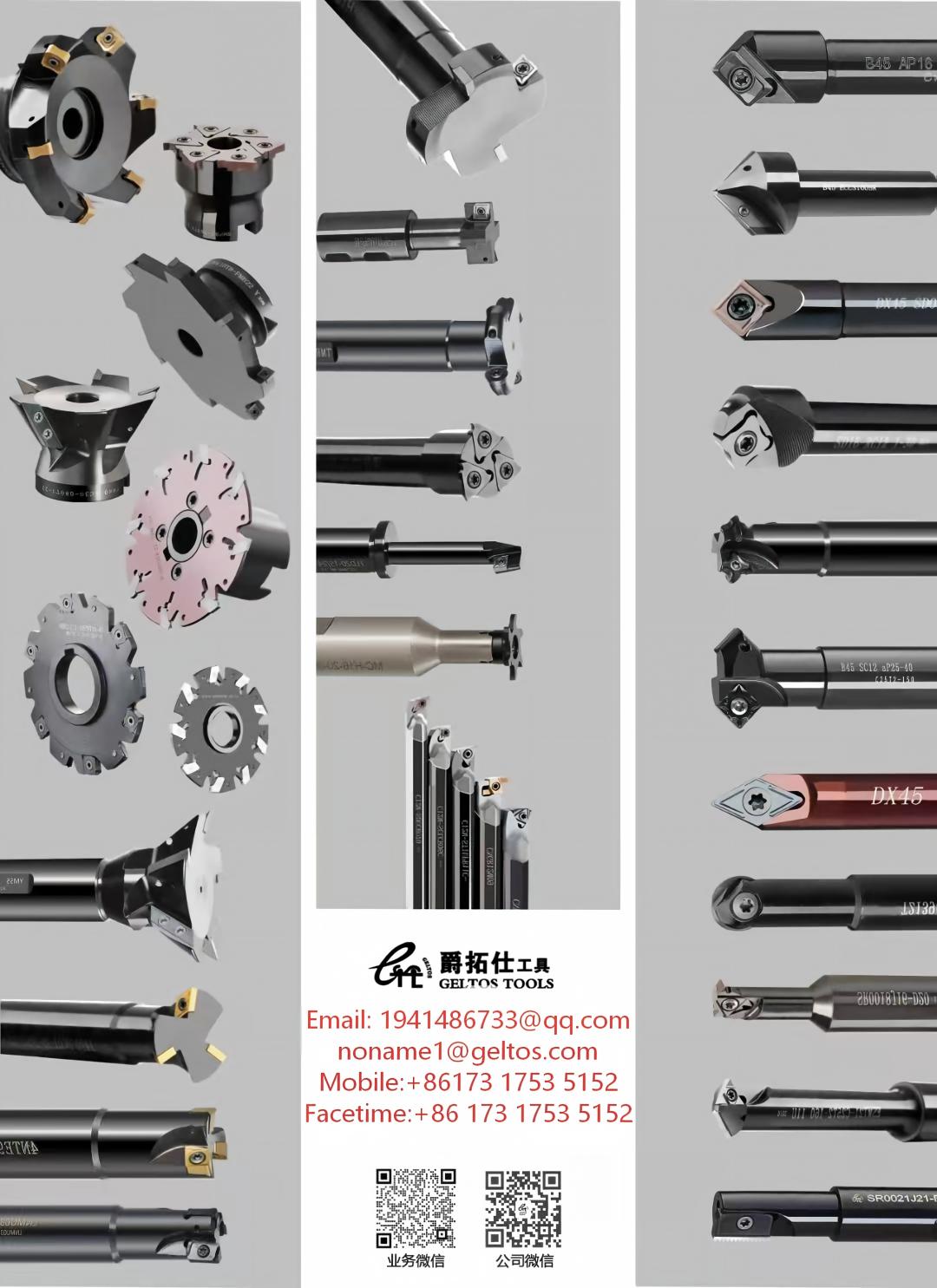
The Geltos range covers silent tools, shell mills, thread mills, chamfer cutters, side and face cutters, and modular milling tools.
Standard Milling Tools vs. Silent Anti-Vibration Milling Tools
The comparison below uses the facts available for Geltos products and the general behavior of damped versus undamped tool assemblies. It is intended to help a buyer decide where a silent tool is justified, not to claim that one category replaces the other.
| Comparison point | Standard milling tools | Silent anti-vibration milling tools |
|---|---|---|
| Vibration behavior in deep cuts | Relies on tool stiffness and parameter reduction; chatter risk rises as overhang increases. | Adds damping to dissipate vibration energy; extends the stable depth-of-cut window. |
| Surface finish stability | Can hold finish in short-reach, rigid setups; finish becomes sensitive to overhang and wall thickness. | Designed to reduce vibration marks in long-reach and thin-wall operations. |
| Heat treatment and hardness | Geltos products are heat-treated before processing; comparison data indicates HRC40 and above for the heat-treated process versus around HRC30 without it. | Same heat-treatment approach applies to the silent tool family; hardness supports geometry retention under load. |
| Tolerance | Geltos states tolerance no greater than 0.02mm for its heat-treated products. | Same tolerance statement applies to the silent tool range. |
| Best-fit operation | Short-reach milling, stable fixtures, operations where a standard cutter reaches the feature without excessive overhang. | Deep cuts, long overhangs, thin walls, and aerospace, military, or shipbuilding features where chatter would otherwise limit the process. |
| Clamping sensitivity | Standard holder practice; runout and contact pattern still matter. | Higher sensitivity to clamping because the damping benefit depends on a stable interface; the supplier's clamping specification should be confirmed for each model. |
| Commercial terms (Geltos) | MOQ 1 unit; FOB delivery; pre-shipment test; 100% TT. | Same terms apply to silent tool orders; model-specific configuration should be confirmed before the order. |
The table makes one point clear: the silent tool is not a universal upgrade. It is a targeted solution for operations where the standard tool's stability limit is the constraint. Buyers should use the comparison to decide where damping is justified, and then execute the clamping and validation steps that make the benefit real.
FAQ: Long-Term Silent Tool Supply and Execution
Does WENLING GELTOS TOOLS hold third-party certification for its silent milling tools?
No third-party certification is documented for the company's quality system. Quality assurance is based on internal factory quality inspection processes. The company itself identifies the absence of third-party certification as a commercial risk, alongside quality consistency and delivery timeline uncertainty. Aerospace buyers should therefore request inspection records and pre-shipment test evidence for each order, and should plan independent verification where the application requires certified quality evidence.
How does Geltos control precision and strength in silent tools for deep cutting?
All products are heat-treated before processing. The company states that this achieves tolerance no greater than 0.02mm, and its comparison data indicates HRC40 and above for the heat-treated process versus around HRC30 without it. Post-quenching machining is used to strengthen the tool, and internal factory inspection verifies the result. The GFN cutter program, which produces narrow grooving as thin as 2mm, is an example of the narrow-feature capability that sits alongside the silent tool range.
What are the purchasing terms for a trial or repeat order?
Geltos quotes a minimum order quantity of 1 unit, FOB delivery terms, a pre-shipment test as the acceptance criterion, and 100% TT payment terms. Those terms allow a buyer to place a trial order, inspect the tool, and run a validation cut before scaling to a repeat program. The buyer should confirm the specific silent tool configuration and the clamping specification for the intended holder before the order is placed.
What should aerospace buyers verify before scaling a silent tool program?
Verify four things: the clamping arrangement for each tool-holder combination, including overhang, contact pattern, screw span, and runout; the trial cut result on the production fixture and material; the incoming inspection record and pre-shipment test evidence; and the change-control process for any tool geometry or heat-treatment change. Because quality assurance is internal rather than third-party certified, the buyer's inspection plan is the main control point. A documented validation package is more valuable than a catalog claim.
How should buyers plan long-term supply and delivery for silent tools?
Plan around the supplier's production base and commercial terms. Geltos reports annual production capacity of 500,000 teeth and an R&D team of 5 engineers, and it arranges delivery via FOB. Buyers should confirm the delivery schedule for the specific silent tool model, because capacity is measured in teeth rather than finished tool units, and should build a repeat-order rhythm around the pre-shipment test. For a long-term program, the practical next step is to request a sample or trial order, validate it against the application, and then agree on a supply schedule. The company can be contacted through its official website at www.geltos.com to discuss a specific silent tool configuration.
Conclusion: Execute the Tool, Not Just the Purchase
Deep-cut chatter in aerospace machining is solved at the intersection of tool design, clamping discipline, parameter validation, and supply consistency. Silent anti-vibration milling tools provide the damping that standard tools lack, and Geltos supports that family with heat-treated manufacturing, tolerance no greater than 0.02mm, internal factory inspection, and a product range that includes silent tools alongside shell mills, thread mills, chamfer cutters, and modular milling tools. The buyer's job is to turn those facts into a validated process: characterize the chatter, match the tool to the operation, verify clamping, run a trial cut, define acceptance criteria, and plan long-term supply around inspection and repeatability. That sequence is what separates a tool purchase from a production capability.
For buyers ready to move from evaluation to execution, Geltos accepts orders from 1 unit, provides a pre-shipment test, and delivers via FOB. A sample or trial order is the practical way to validate a silent tool configuration against a specific aerospace, military, or shipbuilding operation before committing to a long-term supply plan.

Buyers can request a sample or trial order and arrange a factory visit through the company website.
Have Questions or Need More Details?
Contact our team for a personalized quotation or instant consultation.
Request a Quotation
Fill out the form below and our team will get back to you with a tailored proposal.
WhatsApp Direct Chat
Prefer to chat in real-time? Message us on WhatsApp for instant assistance & quick answers.
- Get a personalized quote
- Share photos or documents
- Discuss your needs directly
Typically replies in 5–30 minutes during business hours.