
Silent Tools for Deep-Cut Milling in Aerospace, Military and Shipbuilding: A Clamping and Selection Guide
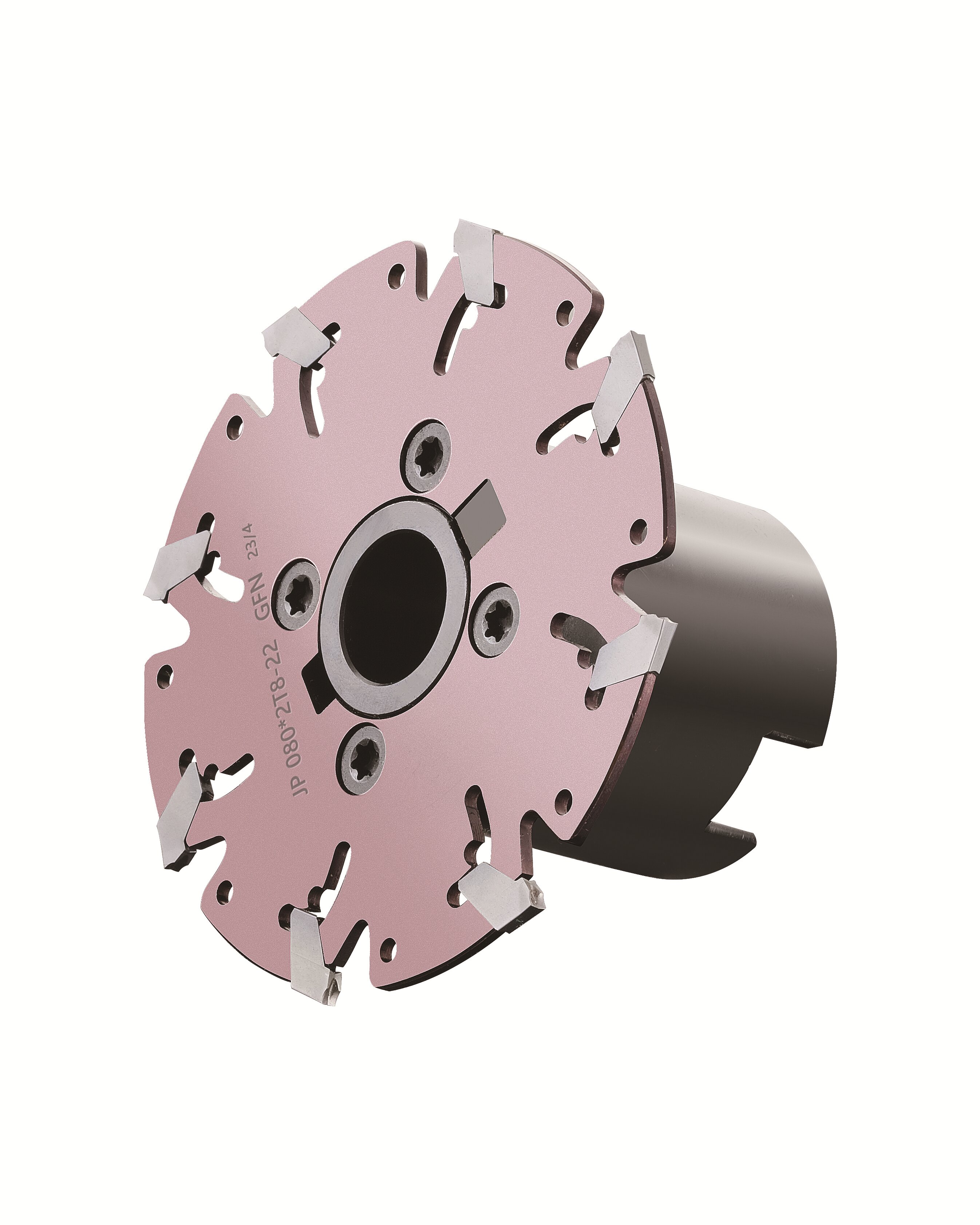
Deep-cut milling problems are usually decided before the first chip is cut. When a damped holder, a long-reach shell mill or an extended boring tool is pushed into a deep pocket on an aerospace frame, an armored-vehicle component or a shipbuilding structure, the limiting factor is rarely insert grade. It is whether the whole tool assembly can hold position without regenerating vibration. Silent tools — also called anti-vibration tools or dampen tools — are the tool family built for exactly that condition.
This application guide covers the two decisions that determine the outcome of a deep cut: which silent tool to select, and how to clamp it. It works through the selection logic that governs deep-cut machining, the clamping parameters that follow from the L/D ratio, the reference designations used in the GELTOS silent tool range such as VT25-SCLCR09, VT40-SDUCR11, VT20 C20*200V and VT32 C32*480VE, the HSS and carbide variants available, and how these bodies pair with milling tools for stable deep-cut work in aerospace, military and shipbuilding production.
Problem Definition: Why Deep Cuts Chatter Before the Tool Wears Out
A deep cut is any operation where the tool must reach well beyond the length at which a solid shank stays rigid — long pockets, deep slots, internal bores, rib webs and thick-section cavities. The governing number is not the diameter or the depth of cut on its own. It is the length-to-diameter ratio (L/D) of the tool assembly, measured from the spindle face to the cutting edge.
As L/D rises, static stiffness falls quickly. Deflection that a short tool absorbs harmlessly instead begins returning energy into the cut, and the process becomes self-excited: the tool vibrates, the vibration leaves a wavy surface, and the next tooth pass cuts into that wave and amplifies it. This regenerative chatter leaves evidence long before anything breaks. The usual sequence is pitch marks on the wall, taper in a deep bore, a burred exit edge, rising noise, and insert corners that chip or wear unevenly because one corner ends up carrying the load.
The cost of that instability is not only scrap. It forces the programmer to reduce feed and speed, which raises cycle time on parts that are already long-cycle. It consumes inserts faster than the tool's real cutting life justifies. And it moves dimensions outside tolerance — the failure that matters most in low-volume, high-value work where a rework is not a simple repeat of the operation.
Why aerospace, military and shipbuilding raise the bar
Aerospace work commonly involves thin-walled monolithic structures and deep pockets, where vibration transmitted into the workpiece can distort a rib or web that will not be re-machined. The part is often one of a small number, and the geometric requirement is usually tied to downstream assembly, so surface marks and taper are not cosmetic issues.
Military components tend to combine heavy sections with tough workpiece materials and process documentation requirements. Here the problem is not only chatter but repeatability: the same setup has to produce an acceptable result on the first pass, because re-cutting a hardened or heavy component is expensive and sometimes impossible.
Shipbuilding pushes the reach requirement furthest. Large structures, long bores, shaft and housing features, and components machined in situ or on large gantries mean the tool may be operating several diameters from its support. In that regime, no insert improvement compensates for a tool assembly that is free to vibrate.
The working rule that follows from this: the L/D ratio of the assembly determines the clamping parameters. Clamping length should be no less than four times the L/D ratio, and the span between two clamping screws should be greater than 4 × D. These two rules are the practical dividing line between a deep cut that holds tolerance and one that does not.
Industry Background: Where Deep-Cut Tooling Demand Comes From
Milling tools are the largest single consumption category in metal cutting, which is why deep-cut capability has become a competitive question rather than a niche one. DataM Intelligence places the global milling tools market at USD 3.43 billion in 2025, projected to reach USD 6.23 billion by 2035, and Mordor Intelligence records milling tools holding a dominant 38% share of global metal cutting tool revenue in 2024.
The supply base is concentrated. Grand View Research reports that Asia Pacific held a 49% share of the cutting tools market in 2024, with China alone contributing 38% of regional production. On the demand side, indexable milling cutters were valued at USD 5.2 billion in 2025, with carbide inserts accounting for 46.7% of that total (IndexBox / Persistence Market Research), and the broader carbide tools market is projected to reach USD 16.25 billion by 2032, growing at a CAGR of 6.14% from 2024 (SNS Insider). Brand concentration is equally visible: Global Market Insights reports that Sandvik Coromant led the global cutting tool market with over 16% share in 2025, followed by Kennametal and IMC Group (Iscar).
Two structural facts matter to a buyer specifying deep-cut tooling. First, data exchange has been standardized: ISO 13399 is the international standard for computer-interpretable representation and exchange of industrial product data for cutting tools and toolholders, which is why tool data quality now affects programming and inventory decisions as much as price does. Second, the deep-cut niche is served by a long tail of specialist manufacturers, not only by the largest brands — and that is where selection discipline creates the most value.
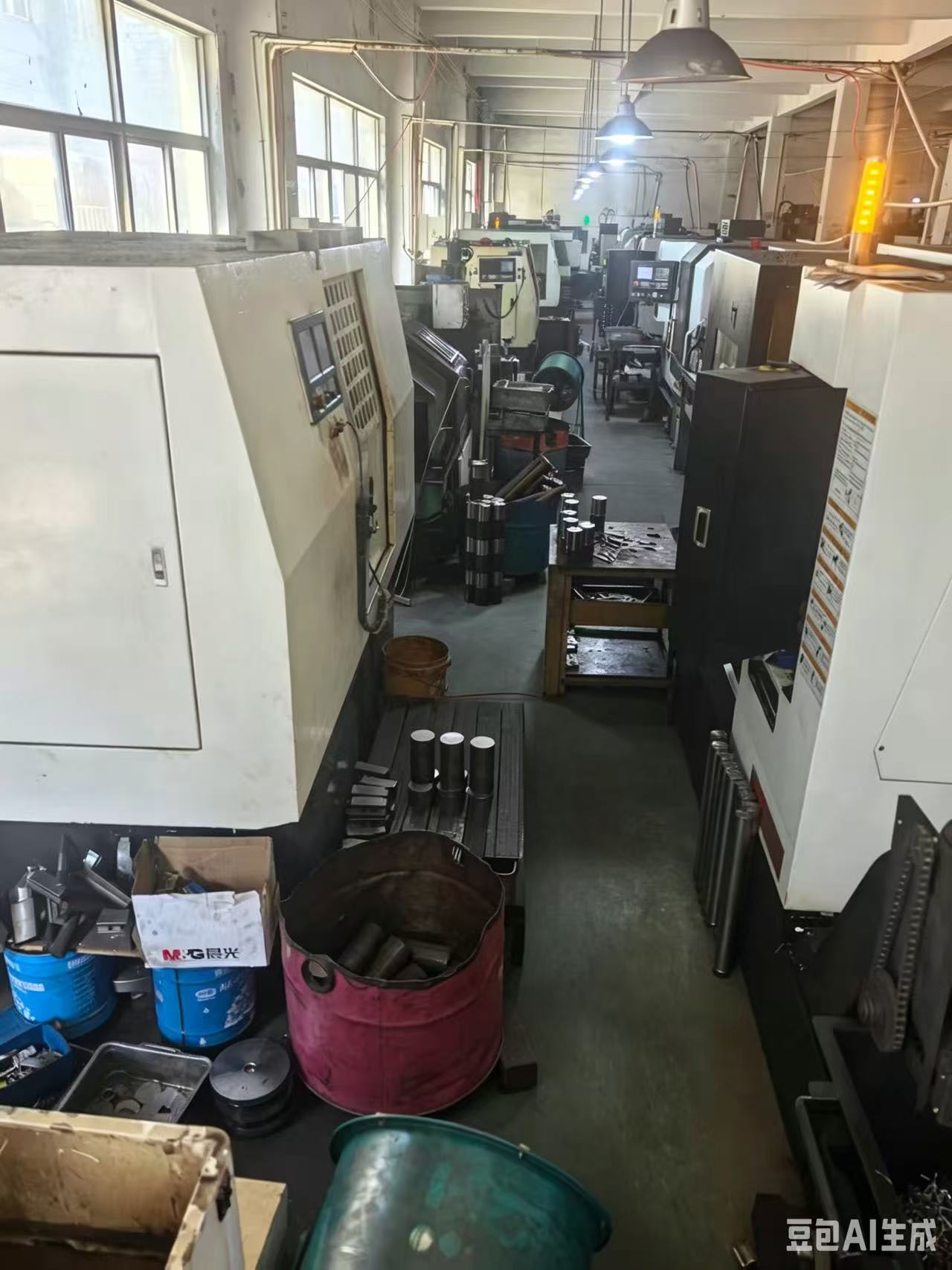
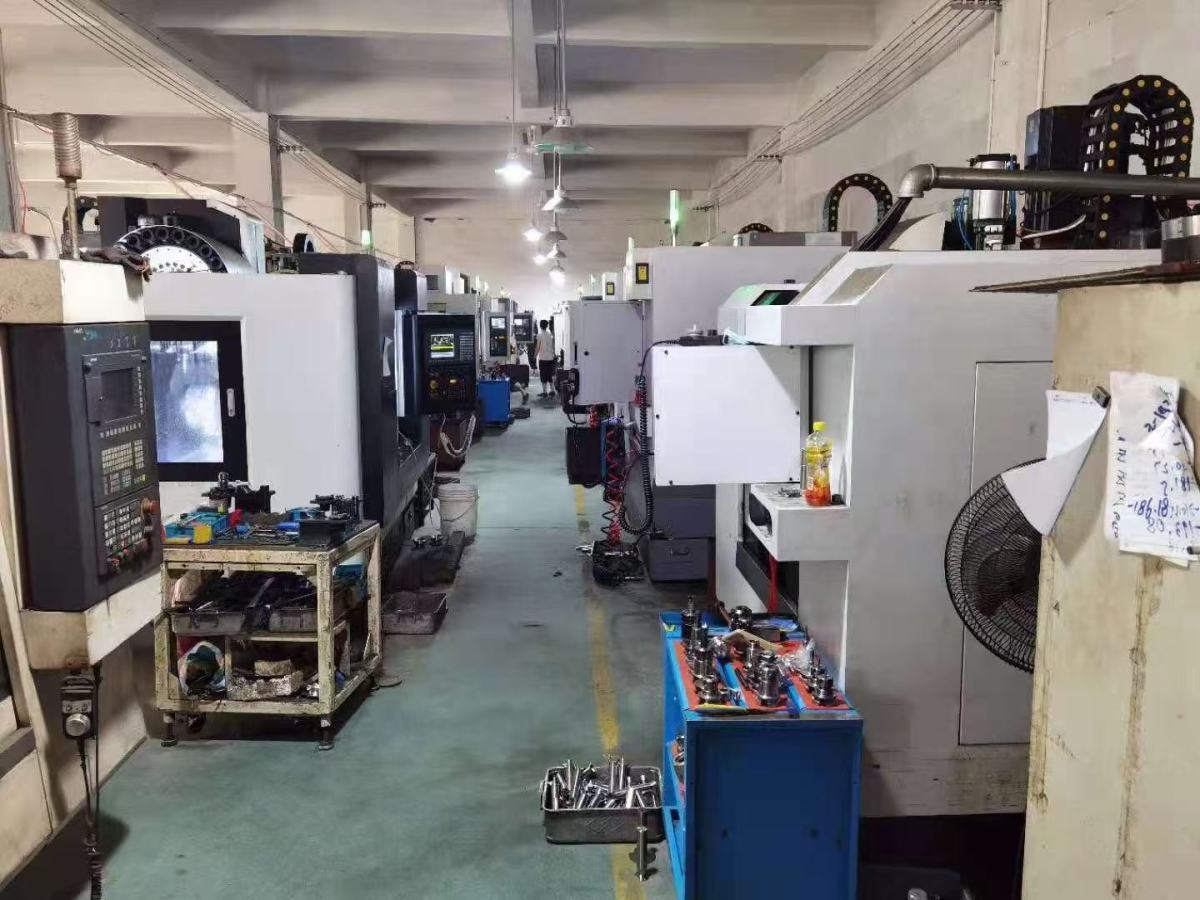
Wenling Geltos Tools Co., Ltd. is one of those specialists. Founded in 2012 in Zhejiang Province, China, by two cutting tool enthusiasts, GELTOS manufactures high-precision, high-strength milling tools across grooving mills, modular milling cutters, chamfer mills, thread mills, dovetail mills, face, profiling and shoulder shank mills and shell mills, corn-shaped mills, interchangeable milling tools, carbide internal turning tools, silent tools and milling inserts. The company operates a 3,000 m² facility with 25 employees, a 5-engineer R&D team, annual output of 500,000 teeth and monthly capacity of 30,000–40,000 teeth, serving markets including India, Russia, Iran, Morocco, Italy and the USA.
What Silent Tools Actually Do in a Deep Cut
A silent tool is a tool body engineered to suppress vibration rather than to resist it with mass alone. Instead of relying only on a stiffer shank, the body is built so that the vibration energy generated at the cutting edge is absorbed and dissipated inside the tool, breaking the feedback loop that turns a small deflection into regenerative chatter. The practical result is that the assembly can operate at L/D ratios where a solid tool of the same diameter would sing, and it can hold feed rates that a manual workaround — slowing down and taking lighter passes — would sacrifice.
This is a capability question, not a materials question. A silent tool does not make a weak setup rigid; it changes how the setup behaves once it is properly clamped. That is why selection and clamping are treated together here.
HSS and carbide variants of damped tool bodies
Silent tool bodies are available in both HSS and carbide variants. In general terms, HSS variants are tougher and more tolerant of interrupted cuts and lower cutting speeds, which makes them a reasonable starting point where shock loading or a less rigid machine is part of the picture. Carbide variants retain hardness at higher cutting temperatures and support higher cutting speeds, but they are less forgiving of shock and of poor clamping. The choice is normally driven by workpiece material, machine condition, and how many interrupted cuts the cycle contains.
The variant decision should never be made in isolation from the clamping decision. A carbide damped tool running with insufficient clamped length will not deliver the stability its geometry promises.
Reference designations in the silent tool range
The GELTOS silent tool range uses designations that encode the damped body format and, in the C-shank series, a shank diameter and length string. Reference designations include VT25-SCLCR09, VT40-SDUCR11, VT20 C20*200V and VT32 C32*480VE. In the C-shank series, the numeric string follows a diameter × length convention — 20 × 200 for the VT20 body and 32 × 480 for the VT32 body — followed by a damping suffix.
| Designation | Body / interface format | Why it exists in a deep cut | Typical deep-cut role |
|---|---|---|---|
| VT25-SCLCR09 | VT25 damped body with an SCLCR-type insert seat | Adds damping at moderate overhang where a solid bar of the same size would resonate | Deep internal boring and shoulder work where reach is the constraint |
| VT40-SDUCR11 | VT40 damped body with an SDUCR-type insert seat | Higher-rigidity damped body for larger sections and heavier cutting loads | Deep cavity and profile work on heavier components |
| VT20 C20*200V | C-shank damped body, C20 size, 200 mm length class, V damping suffix | Extends reach beyond solid-tool limits without giving up surface quality | Medium-depth bores, slots and internal features |
| VT32 C32*480VE | C-shank damped body, C32 size, 480 mm length class, VE damping suffix | Long-overhang damping for the deepest reaches in large structures | Deep bores and structural cavities in large, low-volume parts |
Step-by-Step: Selecting and Clamping a Silent Tool for a Deep Cut
- Measure the working L/D, not the catalogue L/D. Calculate from the spindle face to the cutting edge on the actual setup, including any extension or adapter. A tool that looks moderate in a catalogue can exceed L/D 6 once the holder stack is assembled.
- Convert L/D into a clamping requirement. Apply the rule directly: clamping length should be no less than four times the L/D ratio of the assembly. If the required clamping length cannot be achieved on the machine, the setup — not the insert — has to change.
- Set the screw span wider than 4 × D. The span between two clamping screws should be greater than 4 × D. Two screws placed close together clamp a tool without supporting it; spreading them beyond four diameters creates the moment resistance that a deep cut needs.
- Choose the damped body family to match the reach and the load. Use a VT25/VT40-class damped body such as VT25-SCLCR09 or VT40-SDUCR11 where the operation is a moderate-overhang bore or shoulder feature, and a C-shank damped body such as VT20 C20*200V or VT32 C32*480VE where the reach requirement is the dominant constraint. Choose HSS or carbide variants according to workpiece material, machine condition and the number of interrupted cuts.
- Pair the damped holder with the right milling tool. Damping solves stability; the cutter still has to remove material efficiently. The GELTOS milling tool range (product 6046) covers diameters from 40 mm to 250 mm with 1–20 teeth and lengths from 80 mm to 350 mm, in alloy steel, spring steel and carbide, at HRC40–50. The wider dimensional series runs from 08 mm to 400 mm in diameter and 1 mm to 20 mm in width, so face, shoulder, profiling, shell, grooving, chamfer and corn-shaped cutters can be matched to the pocket or slot geometry rather than the other way round.
- Specify custom geometry only where standard tooling genuinely cannot reach. Customization at GELTOS covers non-standard production, special geometry tool design and special material development, supported by an in-house R&D team. This is the correct path when a deep-cut feature needs a cutter geometry that does not exist in a standard series — not as a way to avoid fixing a clamping problem.
- Fix the verification points before the run starts. GELTOS tools are heat-treated before processing, which holds tolerance to no greater than 0.02 mm and sets the tool up for high-rotation, fast-feed cutting. Quality control is by factory internal inspection, and a pre-shipment test is included as part of acceptance inspection. Confirm these points in writing before production, not after the first part is scrapped.
Practical note on interchangeable and modular holders: GELTOS interchangeable and modular milling holders allow one holder to carry different milling heads for different machining needs. In deep-cut work this matters twice — it reduces tool-change time on long cycles, and it lowers the number of damped bodies a shop has to stock, because the expensive damping element is reused across operations.
Use Cases: Where Silent Tools Earn Their Place
Aerospace: deep pockets and thin ribs
The aerospace case is defined by geometry rather than by volume. Monolithic structures with deep pockets and thin remaining walls punish any vibration that escapes into the workpiece, because the wall that has already been machined is the least rigid part of the setup. The correct approach is a damped body for reach plus a matched milling tool for the pocket floor and walls, with clamping verified against the L/D rule before the cycle is released. Reducing feed to compensate for chatter is the expensive option here: it raises cycle time on a part whose value is already high.
Military: heavy sections, tough materials, one-off parts
Military components typically combine heavy material sections with materials that resist cutting, and they are frequently produced in small batches where the first part must be right. Here the silent tool's value is repeatability: a damped body with the correct clamped length produces a consistent result across the batch, and consistent insert loading means insert life becomes predictable instead of varying with chatter.
Shipbuilding: long reaches in large structures
Shipbuilding is the extreme case for reach. Long bores, housing features and structural cavities may be machined on large machines or in situ, where a C-shank damped body of the VT32 C32*480VE class extends the working envelope well past what a solid tool allows. The clamping rule does not relax with part size; if anything, large fixtures make it easier to ignore the screw span requirement, and that is exactly where deep-cut setups fail.
Precision machining: a documented narrow-slot result
The same logic applies below aerospace scale. A precision mechanical processing factory in Russia purchased 5 units of GELTOS tooling for precision metal grooving and slotting and has been running them for 2 years. The documented result is grooving of 2 mm width slots with smooth surface finishing, fast-feed grooving and long working life — narrow-slot capability where surface quality and slot width control are the acceptance criteria. It is a useful reminder that a stable cut, not a heavy cut, is usually what the drawing actually asks for.
Comparison Table: Three Deep-Cut Configurations
| Configuration | Stability behaviour | Changeover and cost behaviour | Best fit | Verification checkpoint |
|---|---|---|---|---|
| Standard shank or shell mill, fixed geometry | Stable only at short L/D; deflection rises quickly as reach increases | Lowest part count per operation, but every new reach needs a new tool | Shallow pockets, open faces, profiling at moderate overhang | Confirm diameter, tooth count and tool length against the operation before ordering |
| Modular / interchangeable holder with interchangeable milling heads | Stability depends on the holder interface and the assembled stack length | One holder accepts different milling heads, which saves tool-change time and cuts tool purchasing cost | Shops running several related operations on one machine | Verify clamping length and screw span on the actual holder assembly |
| Silent (damped) tool paired with a matched milling tool | Suppresses regenerative vibration, enabling L/D ratios a solid tool cannot hold | Higher unit cost than a solid body, offset by higher attainable feed and predictable insert life | Deep pockets, deep bores, long-reach features in aerospace, military and shipbuilding work | Heat treatment and tolerance no greater than 0.02 mm; factory internal inspection; pre-shipment test |
Frequently Asked Questions
What does the pre-shipment test verify on a damped or milling tool order?
Quality control at GELTOS is carried out by factory internal inspection, and a pre-shipment test is included as part of acceptance inspection. Because tools are heat-treated before processing to hold a tolerance no greater than 0.02 mm, the pre-shipment test is the point at which the buyer confirms that the delivered geometry matches what was ordered before the goods leave the factory. Delivery is arranged on FOB terms with 100% telegraphic transfer (TT) payment.
What custom tooling capability is available for silent tool and deep-cut setups?
GELTOS provides milling tools R&D, production, sales, OEM, tool material development, customization and tool design services. Customization includes non-standard production, special geometry tool design and special material development, which is what deep-cut work typically requires when a standard damped body cannot reach a feature or when the cutting geometry has to be adapted to a specific pocket, slot or bore.
What are the minimum order quantity and payment terms?
The minimum order quantity is 1 unit. Payment terms are 100% telegraphic transfer (TT), delivery is arranged on FOB (Free on Board) terms, and acceptance criteria include a pre-shipment test. These terms apply to both the silent tool range and the milling tool range, including product 6046.
Can we validate a deep-cut setup with a single unit before scaling up?
Yes. Because the MOQ is 1 unit, a single damped tool or matched milling cutter can be ordered and tested against the real operation — the actual L/D, clamping method and workpiece material — before a larger order is committed. Given that clamping parameters depend on the assembly's L/D ratio, validating on the machine that will run production is more useful than validating on a test bench.
What lead time should be planned for silent tools and milling tools?
Standard lead time is 10–30 days, with monthly capacity of 30,000–40,000 teeth across the range, so mixed orders of damped bodies and milling tools are normally scheduled within a single production window. To start, send the operation details — tool assembly L/D, workpiece material, machine and clamping method — to noname1@geltos.com or call +86 173 1753 5152, and the technical team will recommend the silent tool and milling tool combination that fits the cut.
Conclusion: Clamp First, Then Choose the Tool
Deep-cut milling in aerospace, military and shipbuilding work fails at the clamping point far more often than at the cutting edge. The sequence that works is consistent: establish the real L/D of the assembly, set clamping length to no less than four times the L/D ratio, keep the span between two clamping screws greater than 4 × D, and only then select the damped body — VT25-SCLCR09, VT40-SDUCR11, VT20 C20*200V, VT32 C32*480VE or another body from the range — in the HSS or carbide variant that suits the material and the machine.
With the setup fixed, the cutter can be matched to the geometry: diameters from 40 mm to 250 mm, 1–20 teeth, lengths from 80 mm to 350 mm, in alloy steel, spring steel and carbide at HRC40–50. GELTOS builds both sides of that pairing, with heat treatment before processing, tolerance no greater than 0.02 mm, factory internal inspection, and customization for non-standard geometry when the feature demands it.
Next step: match the tool to the cut
Send your deep-cut operation — L/D, material, machine and clamping method — and GELTOS will recommend the silent tool and milling tool combination, including a single-unit trial order if you want to validate before scaling.
Email: noname1@geltos.com | 1941486733@qq.com
Tel: +86 86833728 | Mobile: +86 173 1753 5152
Website: www.geltos.com

Address: East Side of No. Three Road, Wenqiao Town, Wenling, Taizhou City, Zhejiang Province, China. Product and market details refer to the GELTOS milling tool and silent tool range; third-party market figures are attributed to their published sources.