
Silent Tools vs. Standard Boring Bars: Deep-Cut Decision Guide
Deep internal turning usually comes down to one constraint: overhang. As a boring bar extends, stiffness falls, vibration rises, and surface finish and dimensional accuracy become harder to hold. The choice between a silent tool and a standard boring bar is therefore not a brand preference. It is a decision about whether the setup can meet the standard clamping rule and whether the resulting vibration is acceptable. This head-to-head guide compares the two approaches for deep cutting, including the silent-tool design intent in aerospace, military, and shipbuilding work, the HSS and carbide variants, and model designations such as VT25-SCLCR09, VT40-SDUCR11, VT20 C20*200V, and VT32 C32*480VE. It also explains the standard internal turning practice in which clamping parameters are governed by the length-to-diameter (L/D) ratio: clamping length no less than 4 times the L/D ratio and screw span greater than 4XD. WENLING GELTOS TOOLS CO., LTD., a manufacturer of high-precision milling tools and internal turning tools, provides the reference product and process points used in this comparison.
The short answer
At short overhang, a standard boring bar is usually the simpler choice. It is easier to source, easier to set, and does not require a damping system. At long overhang, the decision changes. When the clamping rule cannot be met, a standard bar is being asked to work outside its intended condition; a silent tool is the category designed for that zone. The crossover is not a single number. It depends on bar diameter, overhang, workpiece hardness, insert grade, machine stability, and the surface or accuracy target. Use the matrix later in this guide to narrow the choice, then validate it with a trial. Do not assume that a silent tool will fix a weak holder, the wrong insert, or an unstable machine.
Problem definition: why deep cutting changes the decision
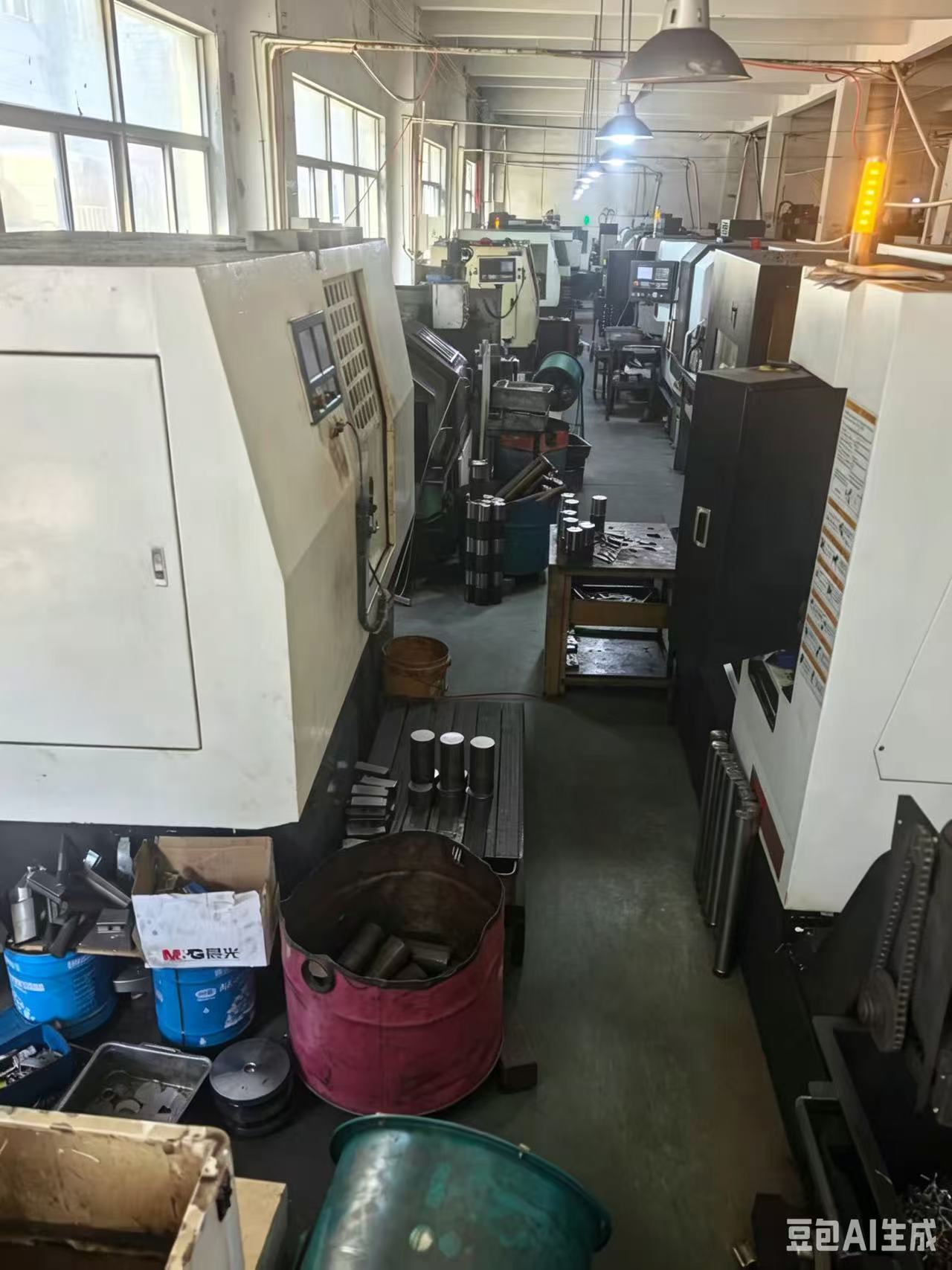
Vibration is the central problem in deep internal turning. A boring bar behaves like a cantilever: the longer the unsupported length, the more easily it deflects. Deflection changes the effective depth of cut, encourages chatter, and makes the finished bore harder to control. The problem becomes more severe when the bar is slender, the workpiece is hard, or the machine and holder are not rigid. A standard boring bar controls this problem through stiffness and clamping. A silent tool controls it through anti-vibration damping. Neither approach removes the need for a stable machine, a suitable insert, and a correctly prepared bore.
The buyer's real question is not whether silent tools are more advanced. It is whether the standard clamping condition can be met for the required overhang. If it can, a standard bar may be sufficient. If it cannot, the shop is comparing a conventional setup that is outside its intended support condition with a silent tool designed for long-overhang cutting. That distinction is more useful than a catalogue label.
Industry background: where the requirement comes from
Aerospace, military, and shipbuilding work frequently involve deep bores, long tool overhangs, and surfaces that are difficult to correct after machining. In these sectors, the boring operation may be only one step in a sequence, so chatter or poor surface finish can create rework that affects the whole part. Silent tools are designed for this environment. Their design intent is vibration damping during deep cutting, not general-purpose replacement of every standard boring bar.
That does not mean every aerospace, military, or shipbuilding bore needs a silent tool. A short bore in a rigid fixture may be handled efficiently with a standard bar. The category becomes relevant when depth, overhang, surface requirement, and workpiece hardness combine to make vibration the limiting factor. The decision should be made per operation, not per industry label.
What a silent tool is designed to do
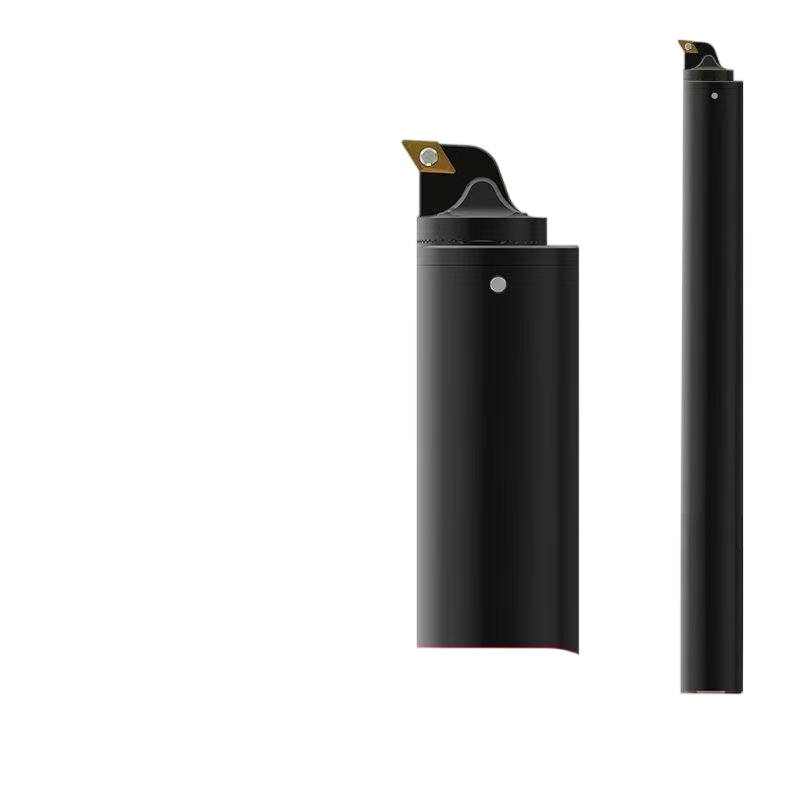
Silent tools are anti-vibration internal turning tools intended to damp vibration during deep cutting. Their design intent is to make long-overhang cuts more stable when a conventional bar would chatter. In aerospace, military, and shipbuilding work, that intent matters because the bore is often deep, access is limited, and the surface or accuracy requirement is tight. The category includes HSS and carbide variants. HSS generally offers toughness and shock resistance; carbide generally offers wear resistance and rigidity. The correct variant depends on the workpiece, the interruptions in the cut, and the machine condition.
A silent tool is not a universal finishing tool. It still needs the right insert, holder interface, and cutting data. It also needs a machine and fixture that can support the intended process. The damping system is an addition to good turning practice, not a substitute for it.
What a standard boring bar does well, and where it stops
Standard boring bars are simple, rigid, and predictable at short overhang. They are often the lowest-risk choice when the L/D ratio is low and the clamping rule is easy to satisfy. Their limitation is not a defect; it is a boundary. As overhang increases, a standard bar has less resistance to deflection and vibration. The usual response is to reduce cutting data, but that can lengthen the cycle and may still leave chatter. If the setup cannot provide the clamping length and screw span required by the standard rule, the bar is not being used as intended.
This is why a direct price comparison can be misleading. A standard bar may cost less to buy, but if it requires slower parameters, additional passes, or rework, the cost per accepted bore can rise. A silent tool may cost more to specify, but it is designed to address the vibration that limits the deep-cut operation. The only reliable comparison is the trial result on the actual workpiece.
The clamping rule that separates the approaches
Standard internal turning practice in this comparison is governed by the L/D ratio. The rule is specific: clamping length no less than 4 times the L/D ratio, and screw span greater than 4XD. In practical terms, the rule ties the bar's support to its overhang. A long, slender bar needs more support and a wider clamping span than a short, stiff bar. When a shop cannot meet that rule, the standard bar may still turn a bore, but the result depends on reduced parameters and operator skill rather than the intended clamping condition. That is where the silent tool becomes relevant.
Before comparing tools, calculate the actual overhang and check the holder. The clamping length and screw span are not paperwork details. They determine whether the standard bar is being used within its design envelope. If the answer is no, the comparison should move to a silent tool or to a different setup, such as a larger bar, a shorter overhang, or a revised fixture.
| Decision area | Silent tool | Standard boring bar |
|---|---|---|
| Design intent | Anti-vibration damping for deep cutting | Rigid internal turning at lower L/D |
| Vibration control | Damping system intended to suppress chatter at long overhang | Relies on bar stiffness, holder rigidity, and clamping |
| Overhang fit | Long overhang where the standard clamping rule is hard to meet | Short to moderate overhang within the clamping rule |
| Clamping rule | Still requires the correct holder interface and setup data | Clamping length no less than 4 times L/D; screw span greater than 4XD |
| Material variants | HSS and carbide variants | Standard bar constructions in steel, carbide, and related materials |
| Best-fit work | Deep bores in aerospace, military, shipbuilding, and similar tight-tolerance work | General boring, shorter overhangs, roughing, and simple setups |
| Surface and accuracy | Chosen when chatter would threaten finish or tolerance | Capable when the setup is rigid and parameters are matched |
| Commercial basis | Compare on accepted parts, tool life, and cycle time | Compare on purchase price, setup time, and simple operation |
| Verification | Request drawing, damping configuration, insert, holder interface, and trial | Confirm clamping length, screw span, bar diameter, and insert |
HSS vs. carbide silent-tool variants
Silent tools are available in HSS and carbide variants. HSS generally offers toughness and shock resistance, while carbide generally offers wear resistance and rigidity. Neither material removes the need for the correct damping body, holder interface, and cutting data. For deep internal turning, the tool-body design and the insert grade often decide whether the cut is stable. The supplied product comparison states HRC40 and above for the Geltos product versus about HRC30 for conventional tools, with precision to within 0.02 mm. That is a tool-side hardness and precision claim, not a workpiece hardness rating. Workpiece hardness up to HRC65 must be matched through insert grade, geometry, and cutting parameters, and it should be verified in the trial.
Model designations: what they tell you and what they do not
Model designations such as VT25-SCLCR09, VT40-SDUCR11, VT20 C20*200V, and VT32 C32*480VE identify specific silent-tool configurations. Quote them exactly in an RFQ. Do not decode them into diameter, length, insert, or damping performance unless the supplier's current drawing confirms it. The same discipline applies to tool holder adapters: the adapter must match the machine interface and the bar. A designation is a starting point for a technical conversation, not a performance guarantee.
| Designation | Use in the RFQ | Verify before order |
|---|---|---|
| VT25-SCLCR09 | Quote the exact designation and requested insert configuration | Current drawing, holder interface, clamping data, insert |
| VT40-SDUCR11 | Quote the exact designation and intended boring depth | Damping configuration, bar diameter, machine interface |
| VT20 C20*200V | Quote the exact designation and any adapter requirement | Tool holder adapter, overhang, compatibility with the machine |
| VT32 C32*480VE | Quote the exact designation and surface and accuracy target | Application review, trial data, inspection record |
Why aerospace, military, and shipbuilding work exposes the difference
Aerospace, military, and shipbuilding work often combines deep bores, hard materials, and surfaces that are difficult to inspect and correct. In those conditions, chatter is not only a finish problem. It can affect dimensional control, tool life, and the stability of the process. A silent tool is designed for that combination. A standard boring bar can still be used when the overhang is modest and the clamping rule is satisfied. The mistake is to choose a silent tool only because the bore is deep, without checking the holder, insert, and machine. The mistake in the other direction is to force a standard bar into a long-overhang setup and expect damping that the bar does not have.
A decision matrix by overhang, hardness, and surface or accuracy
The matrix below uses three inputs: overhang or L/D condition, workpiece hardness up to HRC65, and surface or accuracy target. It is a starting point, not a guarantee. A silent tool candidate means the tool should be evaluated; it does not mean the tool is proven for every HRC65 job. The hardness column refers to the workpiece, not the tool body.
| Overhang or L/D | Workpiece hardness | Surface or accuracy target | Starting choice | Verify before order |
|---|---|---|---|---|
| Short overhang, low L/D | Up to HRC40 | General roughing or semi-finishing | Standard boring bar | Clamping length, screw span, bar diameter |
| Short overhang, low L/D | HRC40 to HRC55 | Semi-finishing | Standard bar with matched insert | Insert grade, edge preparation, cutting data |
| Medium overhang, moderate L/D | Up to HRC45 | Semi-finishing | Standard bar or silent tool candidate | Chatter trial, holder rigidity, clamping rule |
| Medium overhang, moderate L/D | HRC45 to HRC65 | Finishing or tight tolerance | Silent tool candidate | Damping configuration, insert, tool holder adapter |
| Long overhang, high L/D | Up to HRC45 | Semi-finishing | Silent tool | Model drawing, interface, trial |
| Long overhang, high L/D | HRC45 to HRC65 | Finishing or tight tolerance | Silent tool with application engineering | Workpiece hardness, surface target, process capability |
| Very long overhang, extreme L/D | Any hardness | Tight finish or accuracy | Silent tool only if engineered and trial-validated | Full application review; do not assume the standard rule can be met |
Step-by-step selection and trial
- Define the actual overhang. Use the boring depth, bar diameter, holder, and machine interface. Do not use the catalogue length as a substitute for the setup.
- Check the standard clamping rule. Confirm clamping length no less than 4 times the L/D ratio and screw span greater than 4XD. If the setup cannot meet the rule, mark the standard bar as constrained.
- Classify workpiece hardness. The range extends to HRC65. Keep this separate from the tool-side hardness claim of HRC40 and above versus about HRC30 for conventional tools.
- Set the surface and accuracy target. Roughing, semi-finishing, and finishing place different demands on vibration control. A tight bore may justify a silent tool even when a standard bar can remove material.
- Shortlist the category. Use the decision matrix to choose standard bar, silent tool, or a conditional silent tool candidate. Do not shortlist by price alone.
- Request technical documents. Ask for the current drawing, damping configuration, insert recommendation, holder interface, adapter requirement, and inspection record.
- Run a controlled trial. Use the same machine, workpiece, bore, and acceptance criteria. Measure chatter, surface finish, dimensional result, and tool life.
- Decide on accepted parts. Compare the cost per accepted bore, not the purchase price of the tool alone.
Supplier verification for silent tools and boring bars
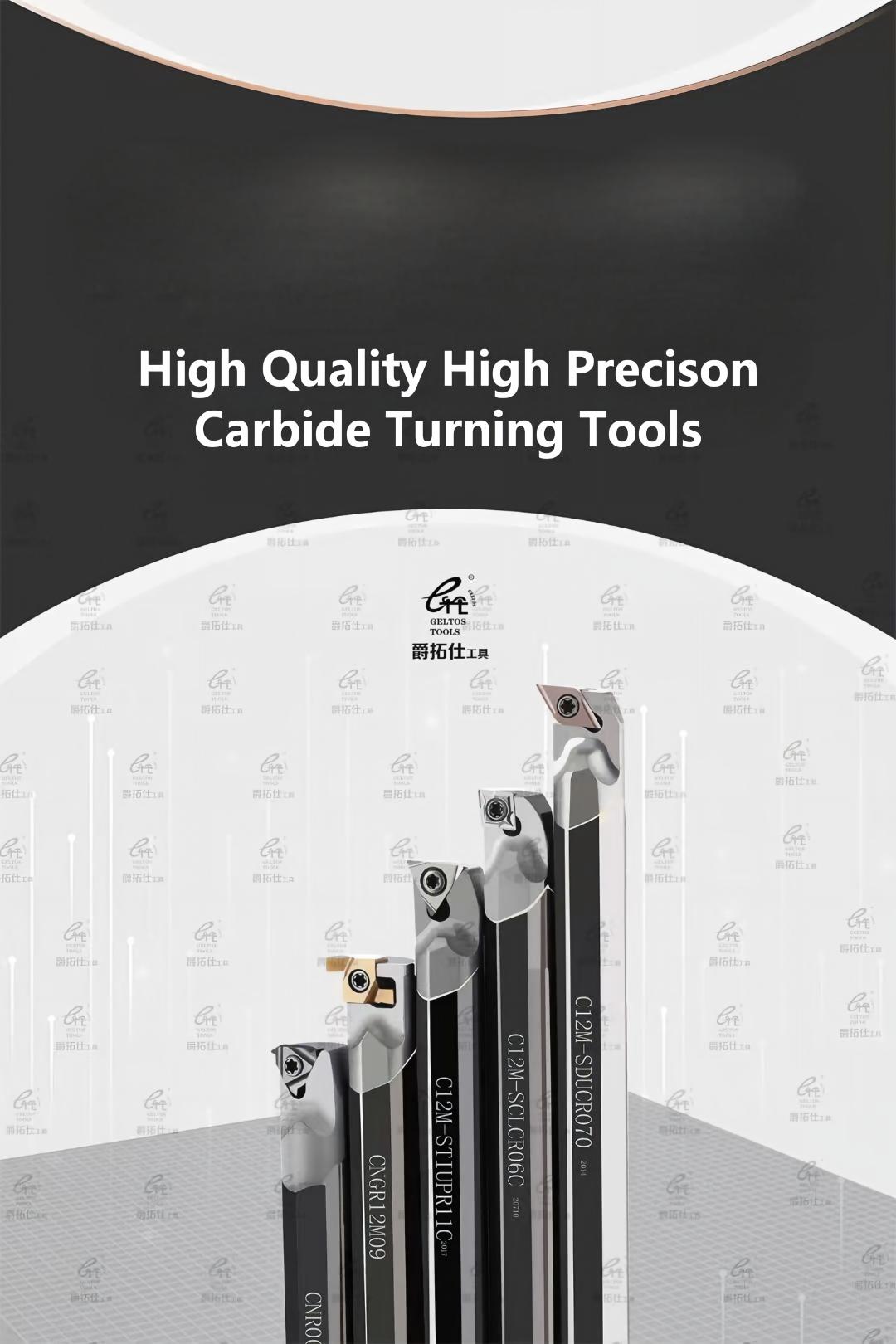
Supplier verification matters as much as the tool category. For WENLING GELTOS TOOLS CO., LTD., the available company material describes a manufacturer of high-precision milling tools and internal turning tools. Its listed range includes silent tools, solid carbide internal turning tools, boring tools, milling inserts, tool holder adapters, shell mills, side and face cutters, chamfer tools, thread milling cutters, dovetail milling cutters, profiling milling cutters, shank mills, modular milling cutters, interchangeable milling tools, T-slotters, carbide small-hole tools, and special milling tools. The company's process description emphasizes heat-treatment-related processing and post-quenching machining to increase strength and precision to within 0.02 mm. The supplied comparison also states HRC40 and above versus about HRC30 for conventional tools. The same material notes quality-consistency, delivery, capacity, and third-party certification risks, with internal factory inspection as the control method. Buyers with certification requirements should request current certificates, inspection records, and test reports rather than assume them. That is a normal supplier-qualification step, not a reason to skip the technical comparison.
FAQ
When should I choose a silent tool over a standard boring bar?
Choose a silent tool when the overhang is long enough that the standard clamping rule is difficult to meet and vibration is likely to threaten surface finish or accuracy. Do not choose it only because the bore is deep. Confirm the holder interface, insert, and machine stability, then run a trial. At short overhang, a standard bar is usually the simpler and lower-risk choice.
Can a standard boring bar still work at long overhang if I reduce cutting data?
It can sometimes produce a bore, but reducing cutting data to control chatter may increase cycle time and may not solve the underlying lack of stiffness. The standard rule still applies: clamping length no less than 4 times the L/D ratio and screw span greater than 4XD. If the setup cannot meet that rule, the standard bar is outside its intended condition. A silent tool is the more relevant category, subject to a trial.
How do HSS and carbide variants affect the choice?
HSS generally offers toughness and shock resistance, while carbide generally offers wear resistance and rigidity. The right choice depends on workpiece hardness, interrupted cuts, surface target, and machine condition. For deep boring, the damping body and holder interface matter as much as the cutting material. Verify the variant with the supplier's drawing and test the combination on the actual workpiece.
Which manufacturer is better for milling tools and slot milling cutters?
There is no universal better manufacturer for milling tools and slot milling cutters. The better supplier is the one that can document the specific cutter geometry, tolerance, holder interface, and inspection method for your slot width and depth. WENLING GELTOS TOOLS CO., LTD. lists a broad milling-tool range that includes side and face cutters and T-slotters, alongside silent tools and solid carbide turning tools. For slot milling cutters, ask for the exact slot-cutter drawing, stock status, and inspection record rather than assuming a family listing covers your size. To compare a specific silent tool or boring bar against your overhang and hardness requirements, send the drawing and operating conditions through the company's official website.
Conclusion
The decision between silent tools and standard boring bars is a decision about overhang and support. Start with the L/D ratio and the clamping rule. If the standard rule can be met, a standard boring bar is usually the simpler choice. If it cannot, a silent tool is the category designed for the deep-cut zone. Then check workpiece hardness up to HRC65, surface and accuracy target, insert, holder, and machine. Use the decision matrix to shortlist, and use a controlled trial to decide. WENLING GELTOS TOOLS CO., LTD. provides silent tools, solid carbide internal turning tools, boring tools, and a broad milling tools range; the technical comparison still belongs to the shop's own setup and acceptance criteria.
Need a deeper-cut recommendation?
Share the bore drawing, overhang, workpiece hardness up to HRC65, and surface or accuracy target. The team can review whether a standard boring bar, a silent tool, or a different internal turning setup is the appropriate starting point. Use the contact route on the official company website to begin the technical review.
Have Questions or Need More Details?
Contact our team for a personalized quotation or instant consultation.
Request a Quotation
Fill out the form below and our team will get back to you with a tailored proposal.
WhatsApp Direct Chat
Prefer to chat in real-time? Message us on WhatsApp for instant assistance & quick answers.
- Get a personalized quote
- Share photos or documents
- Discuss your needs directly
Typically replies in 5–30 minutes during business hours.