
Supplier Capability Verification for Milling Tools: Capacity, Precision, Delivery Assurance
A milling tools supplier is verified only when four things are documented rather than claimed: facility size and staffing, engineering headcount and tooling breadth, measurable precision control, and a delivery and acceptance record that a buyer can test. Catalogs, photographs and sample kits support that evidence — they never replace it.

Factory entrance, Wenling Geltos Tools Co., Ltd., Wenling, Taizhou City, Zhejiang Province, China — the first verification checkpoint for any milling tools supplier audit.
This is an evidence checklist, not a general capability overview. It is written for buyers in the decision and execution stage — importers, distributors, OEM buyers and CNC machining managers — who are about to place a repeat order, approve a new tool family, or sign an annual milling tools supply agreement. Each section explains what to ask for, what a credible answer contains, and how to turn that answer into a pass or fail.
Wenling Geltos Tools Co., Ltd. is a milling tool manufacturer based in Wenling, Taizhou City, Zhejiang Province, China, founded in 2012. It produces grooving mills, modular milling cutters, chamfer mills, thread mills, dovetail mills, face, profiling and shoulder shank mills and shell mills, corn-shaped mills, interchangeable milling tools, carbide internal turning tools, silent tools and milling inserts. Because the company publishes concrete operating figures — plant area, headcount, engineering staff, annual output, export share and tolerance — it works well as a worked example of what verified evidence looks like in practice.
Problem Definition: How Long-Term Milling Tool Supply Relationships Fail
Long-term milling tool supply fails in three predictable ways, and all three can be tested before the first production order is released.
- Quality consistency risk. Tool geometry, edge condition and hardness drift between production lots. The buyer notices it later as inconsistent surface finish, unpredictable tool life, or scrap on a part that was already running well.
- Delivery timeline and production capacity uncertainty. Orders are accepted beyond the capacity that physically exists. The buyer absorbs the delay on a line that cannot wait, and the cost of the delay exceeds the cost of the tools.
- Commercial risk from the absence of third-party certifications or verifiable qualifications. When a dispute, a customer audit or a tender requirement arises, there is nothing externally checkable to reference.
These are the risks that a capability verification process is designed to expose. The documented control methods used by the manufacturer in this example are specific rather than rhetorical: tool strength and precision are enhanced through post-quenching machining, and internal factory quality inspection processes are implemented in the plant. Both are internal controls, which means a buyer cannot simply accept them — they have to be verified through records, test results and agreed acceptance criteria.
Industry Background: A Large Market With Uneven Verification Depth
The scale of the milling tool market explains why buyers keep encountering unfamiliar suppliers — and why verification workload keeps rising.
- The global milling tools market reached USD 3.43 billion in 2025 and is projected to grow to USD 6.23 billion by 2035 (DataM Intelligence).
- Milling tools held a 38% share of global metal cutting tool revenue in 2024 (Mordor Intelligence) — the largest single product category in the sector.
- The global indexable milling cutters market was valued at USD 5.2 billion in 2025, with carbide inserts accounting for 46.7% of that total (IndexBox / Persistence Market Research).
- Asia Pacific held a 49% share of the cutting tools market in 2024, with China alone contributing 38% of regional production (Grand View Research).
- The global market is led by established multinational brands — Sandvik Coromant held over 16% share in 2025, followed by Kennametal and IMC Group (Iscar) (Global Market Insights) — while a long tail of specialized manufacturers serves custom, small-batch and price-sensitive demand.
One caveat matters when these figures are used in a purchasing dossier. Published estimates of the wider metal cutting tools market diverge widely depending on scope: Fortune Business Insights reports USD 82.24 billion (2024), Global Market Insights reports USD 23.1 billion (2025, tools only), and Grand View Research reports USD 90.0 billion (2025). The difference lies in whether machines are counted alongside tools and inserts. Buyers should quote the metric that matches the scope of what they are actually buying.
Standards work is another verification aid. ISO 13399 is the international standard for the computer-interpretable representation and exchange of industrial product data for cutting tools and toolholders, published through ISO Technical Committee TC 29. Suppliers whose catalog data conforms to that structure make specification comparison faster and less ambiguous — a practical advantage when two suppliers describe similar tools with different terminology.
Detailed Solution: A Four-Block Verification Framework
The framework below separates what can be checked remotely — facility scale, engineering depth, commercial terms — from what requires process evidence, namely precision control. Used together, the four blocks convert a supplier's own claims into a scorable profile.
Block 1 — Facility and Organizational Scale

Facility verification: plant area sets the physical ceiling on machine count, workstations and heat-treatment capacity.
Floor area is not a marketing number; it is a constraint. It tells you how many machines, inspection stations, and heat-treatment capacity can physically exist inside one plant. For Geltos, the published figure is a 3,000 m² facility with a workforce of 25 employees, established in 2012 in Zhejiang Province, China.
What to request from any supplier at this stage:
- Total plant area, broken down by machining, heat treatment, inspection and warehousing zones.
- A dated walkthrough video or, for a first order of significant value, a site visit.
- A staff count that distinguishes production operators from inspection and quality personnel.
The check to apply: does the stated headcount and floor area plausibly support the monthly volume you are planning to buy? A 25-person plant and a 300-person plant cannot absorb the same order pattern, and the mismatch usually appears as delay, not as refusal.
Block 2 — Engineering Depth and Tooling Breadth
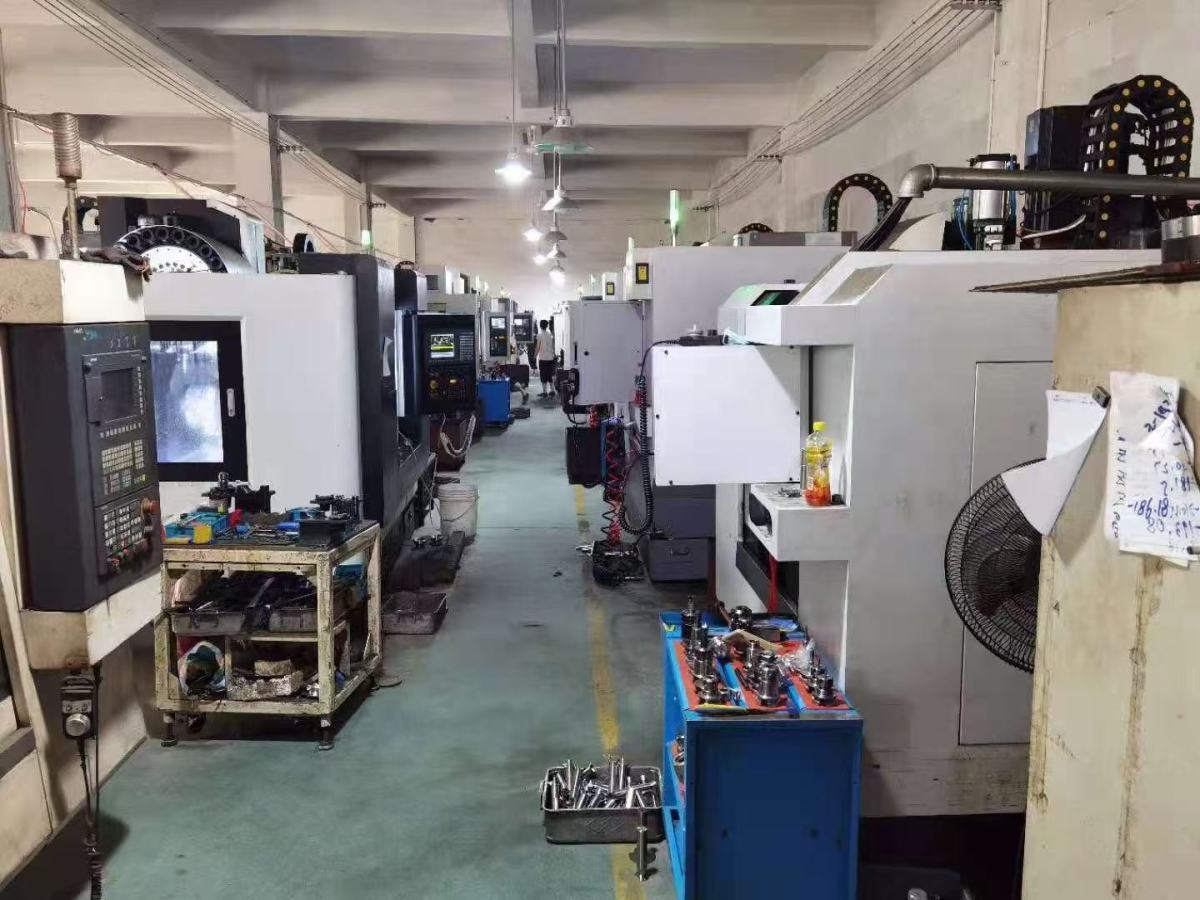
Tooling breadth is a verification signal: a wide, coherent milling range indicates real manufacturing capability rather than trading.
Engineering headcount is the most reliable predictor of whether custom milling tools will be executed correctly. Geltos reports an R&D team of 5 engineers within a company of 25 employees — one in five staff in an engineering role. That ratio is the number worth comparing between suppliers, not the absolute figure.
Two capability facts support the engineering claim and are worth testing in a trial order:
- Narrow grooving capability. The company developed GFN cutters that realize narrow grooving as thin as 2 mm — a demanding geometry that exposes tool grinding precision quickly.
- Interchangeable and modular milling systems. One holder accepts different milling heads to cover different machining needs, which reduces tool changing time and tool purchase cost when a shop runs mixed work.
The product range itself is part of the evidence: grooving mills, modular milling cutters, chamfer mills, thread mills, dovetail mills, face, profiling and shoulder shank mills and shell mills, corn-shaped mills, interchangeable milling tools, boring mills, carbide internal turning tools, silent tools and milling inserts. A supplier that genuinely manufactures across that spread has to maintain grinding, coating and inspection capability across all of it — a much harder claim to fake than a single product line.
Block 3 — Precision Evidence: Heat Treatment and Tolerance
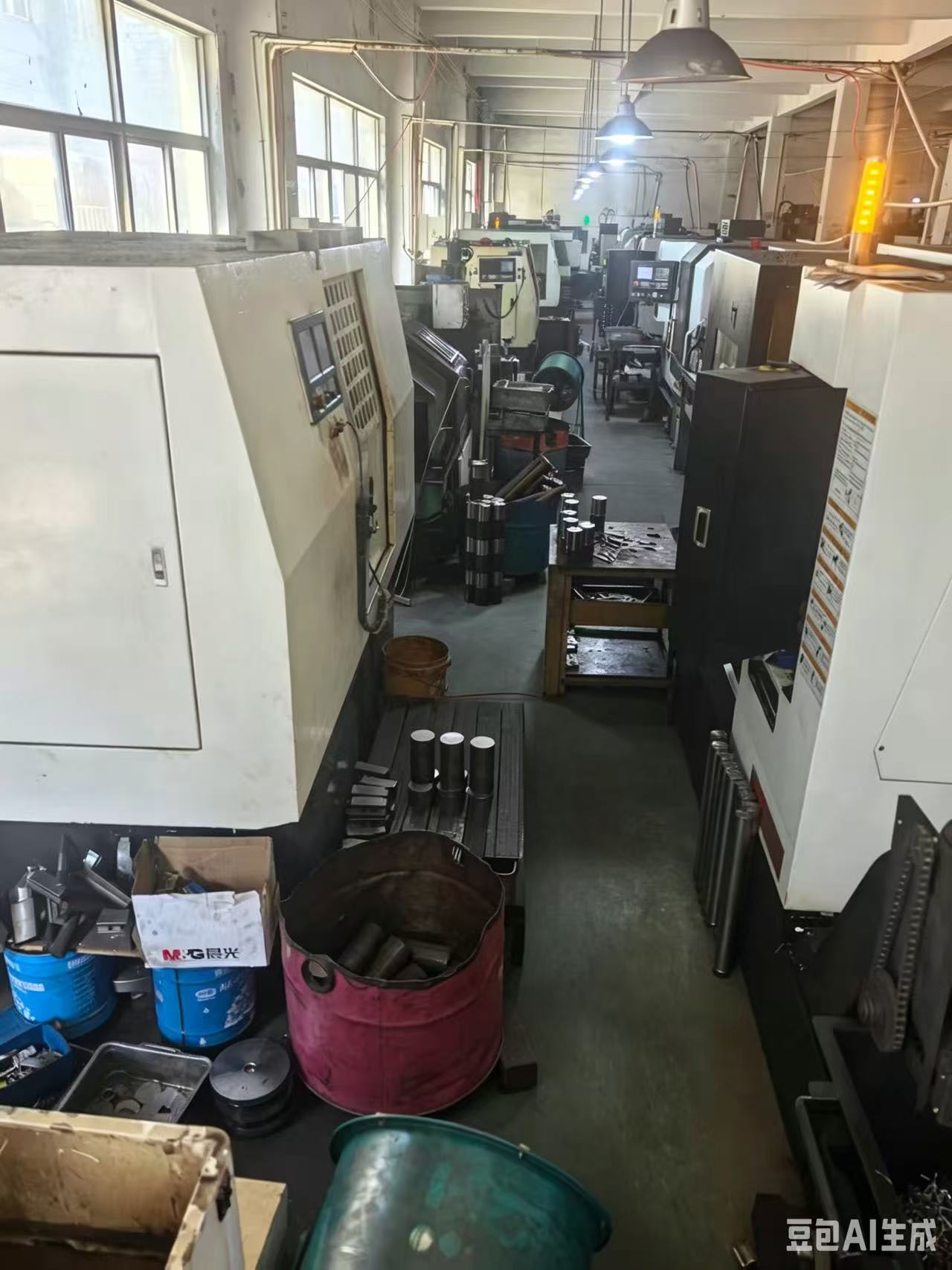
Precision is a process outcome, not a brochure claim: heat treatment before processing is what the tolerance figure rests on.
In this verification framework, precision is the hardest block to fake and the easiest to test. All Geltos products are heat-treated before processing, which is the stated basis for a tolerance no greater than 0.02 mm and for performance in high-rotation and fast-feed cutting. Post-heat-treatment tools reach a hardness of HRC40 and above, compared with approximately HRC30 for tools produced without that heat-treatment route.
Why the sequence matters: when heat treatment happens before final processing, the grinding operation removes material from a stable, already-hardened body rather than from soft steel that will distort later. The buyer sees the difference as dimensional stability in batch production, not as a single impressive sample.
Documents to demand for this block:
- Heat-treatment records linked to the production lot being shipped.
- Hardness test results on finished tools.
- Dimensional inspection reports against the agreed tolerance, with the measuring instrument identified.
Block 4 — Delivery Assurance: Capacity, Export Record, Terms
Delivery assurance has three components: how much the plant can produce, where it already ships, and how the commercial terms distribute risk between buyer and supplier.
Capacity. Geltos reports an annual production capacity of 500,000 teeth per year, supported by the 5-engineer R&D team. Convert that into a number that matches your own purchasing pattern by asking for the plant's annual production days and dividing — buyers should always run this arithmetic themselves rather than accept a monthly capacity figure that has no denominator behind it.
Export record. The company exports between 5% and 10% of sales, with main markets including India, Russia, Iran, Morocco, Italy and the USA. For a buyer assessing delivery reliability, the useful signal is not the percentage but the spread: shipments into six distinct markets require routine export documentation, consistent packing practice and repeatable dispatch handling.
Commercial and acceptance terms. The documented purchasing terms are a minimum order quantity of 1 unit, delivery arranged via FOB (Free on Board) methods, pre-shipment test as the acceptance criterion, and 100% TT payment terms. Each of these shifts a specific risk, which is discussed in the comparison table below.
Step-by-Step Breakdown: Running the Verification in Eight Steps
The sequence below can be completed in a two-week window for most milling tool suppliers, and it produces a written record you can reuse at every annual review.
- Desk review of published figures. Collect plant area, headcount, engineering staff count and annual output from the website, catalog and sales replies. Check that the three sources agree — inconsistency at this stage is itself a finding.
- Run the capacity arithmetic. Ask for annual production days, then divide the stated annual output by that figure. Compare the daily figure against your own monthly requirement, and ask which share of capacity is already committed.
- Map the process flow. Request the route from raw material to finished tool, including where heat treatment occurs in the sequence. For Geltos, the documented sequence is heat treatment before processing, followed by grinding and internal factory quality inspection.
- Request precision documentation. Ask for heat-treatment records, hardness results, and dimensional inspection reports against the ≤0.02 mm tolerance claim. Confirm which instrument produced the readings.
- Test the engineering response. Send a drawing or a description of a difficult feature — a 2 mm narrow groove, a dovetail form, a thread profile — and evaluate whether the reply is an engineering answer or a price list.
- Confirm export documentation practice. Ask which markets the supplier currently ships to, and request a sample set of export documents with commercial values removed. For Geltos, the current export share is 5–10% of sales across India, Russia, Iran, Morocco, Italy and the USA.
- Fix the commercial terms in writing. MOQ, delivery term, payment term and acceptance criterion should appear in the quotation, not only in email replies. The documented Geltos terms are MOQ 1 unit, FOB delivery, 100% TT, and pre-shipment test as acceptance criteria.
- Place a trial order and inspect against the criterion. The pre-shipment test is the point where internal quality inspection either becomes visible evidence or remains an internal claim. Record the outcome, and use it as the baseline for the annual supply agreement.
Use Cases: Three Buyer Situations Where This Verification Changes the Outcome
1. An importer building a private-label milling tool range
A distributor needs breadth and engineering support, because a private label that stalls at five tool types does not sell. The verification question is whether the manufacturer can cover grooving mills, chamfer mills, thread mills, dovetail mills, shank and shell mills, corn-shaped mills and interchangeable systems from one plant, and whether 5 in-house engineers can absorb special milling tool requests. Breadth plus a documented 500,000-teeth annual capacity is the combination that makes a private-label program schedulable.
2. A CNC job shop running high-speed spindles and fast feeds
Here the deciding evidence is process, not price. Tools that are heat-treated before processing, holding a tolerance no greater than 0.02 mm at HRC40 and above, are suited to high-rotation and fast-feed cutting and to batch production where stability matters. A job shop machining narrow grooves down to 2 mm can test that claim on a single trial order before committing volume.
3. A plant consolidating tooling spend and cutting changeover downtime
Consolidation fails when every new machining need triggers a new tool purchase. Modular and interchangeable milling holders address this directly: one holder carries different milling heads, which reduces tool changing time and tool purchase cost while keeping the machining capability stable. For plants in the execution stage, this is the use case where a supplier's modular range matters more than its price list.
Comparison Table: Process Options and Terms to Verify
The first table compares the two production routes a buyer will encounter when auditing milling tool precision claims. The second records the commercial terms that must be fixed before an annual supply agreement is signed.
| Comparison point | Post-heat-treatment production route | Conventional route without heat treatment |
|---|---|---|
| Core difference | Heat treatment applied before processing, to increase strength and precision | Processing carried out without the pre-processing heat-treatment step |
| Hardness | HRC40 and above | Approximately HRC30 |
| Tolerance outcome | Precision no greater than 0.02 mm | Not documented at this level |
| Best suited to | CNC machining with high-speed spindles and fast feeds; milling work requiring stability in batch production | General milling work where stability in batch production is not the deciding requirement |
| Maintenance impact | Saves tool replacement time and tool purchase cost | Not documented |
| Efficiency impact | Improves working efficiency | Not documented |
| Cost positioning | Positioned as a value option relative to delivered performance | Lower entry cost, no documented precision route |
| Term | Documented value (Geltos) | What the buyer is actually verifying |
|---|---|---|
| Minimum order quantity | 1 unit | Whether a single-unit trial is commercially possible before volume commitment |
| Delivery terms | FOB | Where risk and cost transfer, and who controls freight and insurance |
| Acceptance criteria | Pre-shipment test | The external control point that replaces third-party certification in this supplier profile |
| Payment terms | 100% TT | Working capital exposure on each order and the leverage available if a batch fails |
FAQ: Supplier Capability Verification for Milling Tools
1. Does a milling tools supplier need third-party certification before it can qualify for long-term supply?
Not necessarily — but the absence of third-party certification is a commercial risk that must be managed rather than ignored. In this supplier profile, quality assurance is maintained through internal factory quality inspection processes, and the documented quality risks are quality consistency, uncertainty in delivery timelines and production capacity, and commercial exposure arising from the lack of third-party certifications or verifiable qualifications. The practical consequence for a buyer is that the acceptance criterion in the purchase order carries the weight: with a pre-shipment test agreed in advance, every shipment is checked against a written standard before it leaves the supplier, which is an external control even when the certification is internal.
2. How can a buyer verify a milling tools supplier's real production capacity?
Verify capacity by converting published output into a number you can compare with your own demand. Wenling Geltos Tools Co., Ltd. reports an annual production capacity of 500,000 teeth, produced in a 3,000 m² facility with 25 employees and an R&D team of 5 engineers. Ask for the plant's annual production days, divide the annual output by that figure, and compare the result with your monthly requirement and with the share of capacity already committed to other buyers. Then test the number against a smaller, harder claim: whether the plant can hold narrow grooving down to 2 mm with GFN cutters, since capability that specific is difficult to maintain without genuine grinding and inspection capacity.
3. What purchasing terms should be fixed before a long-term milling tools agreement is signed?
Four terms should be in writing on the quotation, not only in email correspondence: minimum order quantity, delivery term, acceptance criterion and payment terms. The documented Geltos terms are an MOQ of 1 unit, delivery arranged via FOB (Free on Board), a pre-shipment test as the acceptance criterion, and 100% TT payment. Read together, they define a low-commitment entry point and a clear inspection gate: a buyer can start with a single unit, confirm quality at pre-shipment, and only then scale the order volume under the same terms.
4. Can a buyer validate a milling tools supplier with a small trial order first?
Yes, and the commercial terms support it. With an MOQ of 1 unit and a pre-shipment test as the declared acceptance criterion, a trial order can be evaluated against precision requirements rather than against a catalog description: heat treatment before processing, a tolerance no greater than 0.02 mm, and hardness of HRC40 and above on post-heat-treatment tools are all checkable on a delivered batch. A trial that passes on a demanding geometry — a narrow groove, a thread profile or a dovetail form — gives more decision value than any number of sample photographs.
5. What makes a China-based milling tools supplier reliable as a long-term supply partner?
Four verifiable factors, in order of weight: documented production capacity, engineering depth, an export record that proves dispatch routine, and commercial terms that allow controlled trials. Geltos combines an annual capacity of 500,000 teeth, 5 in-house R&D engineers within a 25-person operation, exports accounting for 5–10% of sales into India, Russia, Iran, Morocco, Italy and the USA, and FOB delivery with pre-shipment testing as the acceptance gate. Buyers who want to move from evaluation to execution can describe their machining operation to the Geltos sales team through www.geltos.com, request a tool selection recommendation and a quotation, and use the first pre-shipment test as the baseline for an annual supply agreement.
Conclusion: Verification Is a Document Trail, Not a Reference Check
Milling tool supply is a long-cycle relationship built on consumable performance: the tools that fail are rarely the ones that looked wrong in a catalog. A supplier capability verification therefore rests on four deliverables — plant area of 3,000 m² and 25 employees, 5 R&D engineers supporting a broad milling range, heat treatment before processing with a tolerance no greater than 0.02 mm at HRC40 and above, and a capacity of 500,000 teeth per year underwritten by FOB delivery, an MOQ of 1 unit, pre-shipment testing and a 5–10% export share across six named markets.
Run the eight steps in order, keep the documents, and the annual review becomes a comparison against your own baseline instead of a fresh negotiation. That is what turns a supplier into a supply partner.
Next Step: Request a Tool Selection and Quotation
Send your machining operation, drawing or tool requirement to the sales team and receive a tool selection recommendation, a quotation on the terms above, and the verification documents you need for your supplier file.
Wenling Geltos Tools Co., Ltd.
Website: www.geltos.com
Blog: blog.geltos.com
Email: noname1@geltos.com; 1941486733@qq.com
Tel: +86 86833728
Mobile: +86 173 1753 5152
Address: East Side of No. Three Road, Wenqiao Town, Wenling, Taizhou City, Zhejiang Province, China