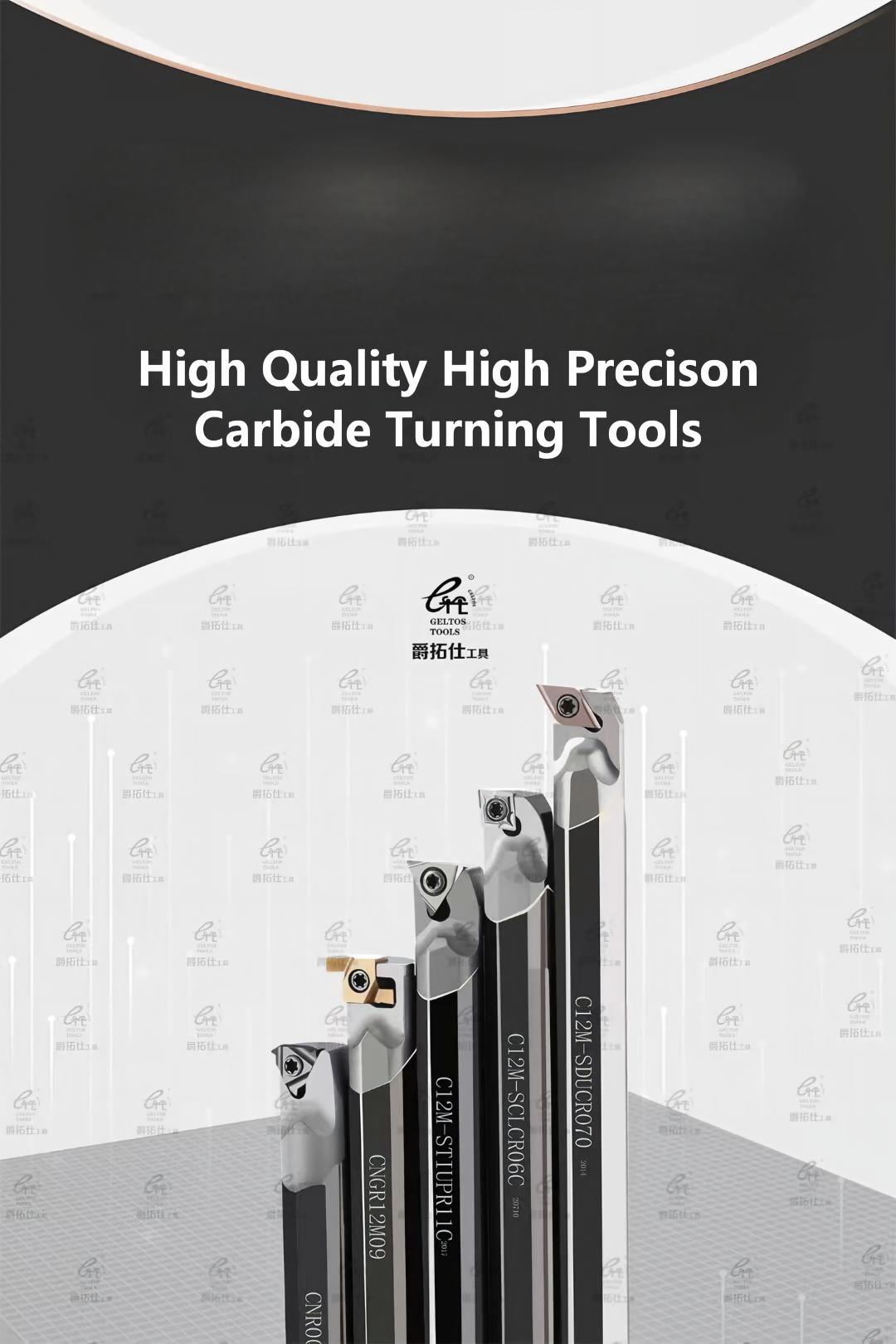
Supplier Evaluation for Milling Tools: Key Capabilities to Verify
A milling tools supplier should be evaluated on six verifiable capabilities: manufacturing scale, heat-treatment sequencing, dimensional precision, engineering depth, customization range, and commercial terms such as minimum order quantity and lead time. Each of these can be confirmed with production records, process documentation or a sample order, and none of them can be confirmed from a catalogue alone.
Wenling Geltos Tools Co., Ltd. is a milling tool manufacturer founded in 2012 in Zhejiang Province, China, producing grooving mills, chamfer mills, thread mills, dovetail mills, face, shoulder and profiling shank mills, shell mills, boring mills, interchangeable milling tools, silent tools and milling inserts. Its disclosed operating data — a 3,000 m² facility, 25 staff, 500,000 teeth of annual output and a five-engineer R&D team — is used throughout this article as a worked example of the kind of evidence a buyer can ask any supplier to provide.
.jpg "Milling tools range for supplier capability evaluation")
Problem Definition: Why Milling Tool Supplier Evaluation Usually Fails
Supplier evaluation for milling tools fails in three predictable ways.
First, samples are treated as proof. A sample cutter is usually produced under favourable conditions — clean stock, a short run, extra attention. A sample proves a supplier can make one good tool; it does not prove that the tenth or the thousandth tool will hold the same geometry.
Second, buyers compare price lists instead of process sequences. Two cutters can carry the same model number and the same outside dimensions while performing very differently, because the difference sits in the heat treatment stage and in how dimensions are finished afterwards. GELTOS states that its products are heat-treated before processing, a sequence intended to keep strength in the material while dimensions are held to a stated precision of below 0.02 mm.
Third, capability claims are never converted into documents. "We can customize" is not verifiable. "We support non-standard and customization production, including special geometry tool design and special material development" is closer to verifiable, because it names what the supplier is able to change.
The question a buyer actually needs answered is not "is this a good supplier?" but "can this supplier repeat the same tool, batch after batch, to my drawing?" Everything below serves that one question.
Industry Background: Capability Is the Real Constraint
Market data explains why mid-size manufacturers have become relevant to procurement teams that once defaulted to the largest brands. The global milling tools market reached USD 3.43 billion in 2025 and is projected to grow to USD 6.23 billion by 2035, according to DataM Intelligence. Milling tools accounted for 38% of global metal cutting tools revenue in 2024, according to Mordor Intelligence. The global indexable milling cutters market was valued at USD 5.2 billion in 2025, with carbide inserts accounting for 46.7% of that total, according to IndexBox and Persistence Market Research.
Production is concentrated. Asia Pacific held a 49% share of the cutting tools market in 2024, and China alone contributed 38% of regional production, according to Grand View Research. At the top of the market, Sandvik Coromant leads global cutting tool share with over 16% in 2025, followed by Kennametal and IMC Group (Iscar), according to Global Market Insights. The carbide tools segment is projected to reach USD 16.25 billion by 2032, growing at a CAGR of 6.14% from 2024, according to SNS Insider.
The procurement consequence is straightforward: beneath the market leaders sits a layer of specialist manufacturers whose tools are bought for specific operations rather than for brand coverage. Because those suppliers are not compared on brand strength, they are compared on verifiable capability — which is precisely what this framework addresses. Standardisation supports that comparison: ISO 13399, published by ISO Technical Committee TC 29, defines the computer-interpretable representation and exchange of industrial product data for cutting tools and toolholders, giving buyers a reference point when requesting structured dimensional data.
The Six Capabilities to Verify
1. Manufacturing Scale and Stated Capacity
Ask for floor area, headcount, annual output and monthly output — and ask in the units the supplier actually counts day to day. GELTOS operates a 3,000 m² facility with 25 employees, an annual output of 500,000 teeth and a monthly capacity of 30,000 to 40,000 teeth. The unit matters: capacity expressed in teeth, rather than in loosely defined "sets", can be checked against your own order volume and repeated against a delivery record later.
Scale should be read against your order pattern, not against an abstract ideal. A 25-person facility with a defined monthly ceiling is a different commercial partner from a large-scale producer with a broad catalogue, and a buyer who understands which one they need avoids both over-committing to capacity they cannot use and under-estimating a supplier who can meet the volume.

2. Heat Treatment Before Processing
Heat treatment is the least visible and most consequential step in milling tool production. Where it sits in the sequence determines whether the finished cutter keeps its strength and its geometry. GELTOS states that all products are heat-treated before processing, which the company positions as the basis for holding high precision while supporting high rotation and fast-feed cutting conditions.
Buyers should ask two questions: at which stage the heat treatment is applied, and what inspection follows it. GELTOS states factory internal inspection as its quality control method, which means inspection records — not a certificate alone — are the evidence to request. A supplier that cannot describe the sequence in process terms is unlikely to be able to describe what happens when a batch drifts.
3. Precision and Tolerance Discipline
A tolerance figure is only useful when it is attached to a measuring method and a stage of the process. GELTOS states precision below 0.02 mm after heat treatment. The published working range for the tool family is HRC 40–50, with 1–20 teeth, lengths from 80 mm to 350 mm and diameters from 40 mm to 250 mm; the cutter range covers diameters from 08 mm to 400 mm and slot widths from 1 mm to 20 mm. For narrow grooving, the company's GFN cutters are designed for grooving as thin as 2 mm.
Verify the claim across the range you intend to order, not at a single convenient size. A supplier that holds tolerance on a mid-range slot cutter may not hold the same tolerance at the extremes of its listed diameter range, and that is where project risk usually appears.
4. Engineering Depth
Tool geometry is the difference between a cutter that works and a cutter that works on your material. The supplier's production mode should therefore include design, not only machining to a drawing that someone else wrote. GELTOS lists milling tools R&D, production and sales, OEM, tool material development, customization and tool design in its production mode, supported by a five-engineer R&D team.
During evaluation, ask which engineer would handle your drawing, what inputs they need — material, machine, coolant condition, operation, target tool life — and whether the geometry would be standard or modified. The quality of the answers tells you more about engineering depth than the size of the R&D team alone.
5. OEM, Customization and Modular Tooling
Customization should be described concretely. GELTOS supports non-standard and customization production, including special geometry tool design and special material development — the two items that most often determine whether a non-standard slot, profile or thread can be produced at all.
Modular and interchangeable tooling is a second, cost-related capability. Interchangeable and modular milling holders allow one holder to carry different milling heads, which the company describes as saving tool changing time and cutting tool purchasing cost. For a buyer running several operations on the same machine, that is a direct commercial argument: fewer holders, more usable heads, less time lost at the spindle.
6. Commercial Terms: MOQ, Lead Time and After-Sales
Terms decide whether an evaluation can actually start. GELTOS lists a minimum order quantity of 1 unit and a lead time of 10 to 30 days, with after-sale service and technical support. Listed export markets include Russia, India, Iran, Italy, Morocco and the USA, with an export ratio of 5–10%.
A one-unit minimum order quantity makes a trial order realistic, which is the practical way to test everything above before committing to batch production. Lead time should be recorded as a range and checked against the operations you plan to run, because a 10 to 30 day range will behave differently for a scheduled batch release than for an urgent replacement.
Step-by-Step Breakdown: How to Run the Evaluation
- Define the operation and the machine interface. Tools in this family are used for milling, slotting, chamfering, face milling and thread milling. They are mounted on CNC milling machines or machining centers, compatible with high-speed spindles and fast feed conditions, and require supporting equipment such as lathes and common tool holder or collet systems. Record whether the operation involves heavy or light cutting and whether coolant is supplied internally or externally — both conditions are stated as supported within this range.
- Request the capability file. Facility area, headcount, annual and monthly capacity, lead time and minimum order quantity. Treat this as a document request rather than a sales conversation.
- Verify the process sequence. Confirm at which point heat treatment is applied and what inspection follows it. Whether heat treatment happens before processing or afterwards changes how strength and precision are obtained, and therefore how the tool behaves over a long run.
- Test the tolerance statement. Send one operation with a defined tolerance requirement and ask for dimensional records on the delivered tools. Compare those records against the supplier's stated figure — below 0.02 mm in the GELTOS specification.
- Test customization. Send a drawing for a non-standard geometry, or a question about a difficult material. The response shows whether design capability exists and how special material development is handled in practice.
- Close on terms and support. Confirm MOQ, lead time and the scope of after-sale technical support before the order, not after a problem appears on the shop floor.
Use Cases: What Verified Capability Looks Like in Production
A case project in Russia shows how the capability items above appear in practice. A precision mechanical processing factory used 5 units of milling tools for precision metal grooving and slotting. The project ran for 2 years, and the tools achieved narrow slot grooving at 2 mm width with smooth surface finishing, fast-feed grooving and long working life. That combination — a narrow width, a finished surface and a sustained working life — is the outcome buyers are actually testing for when they ask a supplier about tolerance, heat treatment and geometry.

Scenario fit then decides which tool in the range carries the operation. Slot milling and grooving cutters cover slots and recesses, including narrow grooving down to 2 mm with the GFN design. Chamfer tools handle edge breaks and chamfered features. Thread milling tools cut thread forms within a milling cycle. Dovetail milling cutters produce dovetail profiles that a standard end mill cannot reach. Profiling, shoulder, shank and shell mills cover face and profile work. T-slot cutters open T-slots, and modular and interchangeable milling tools let one holder drive different heads.
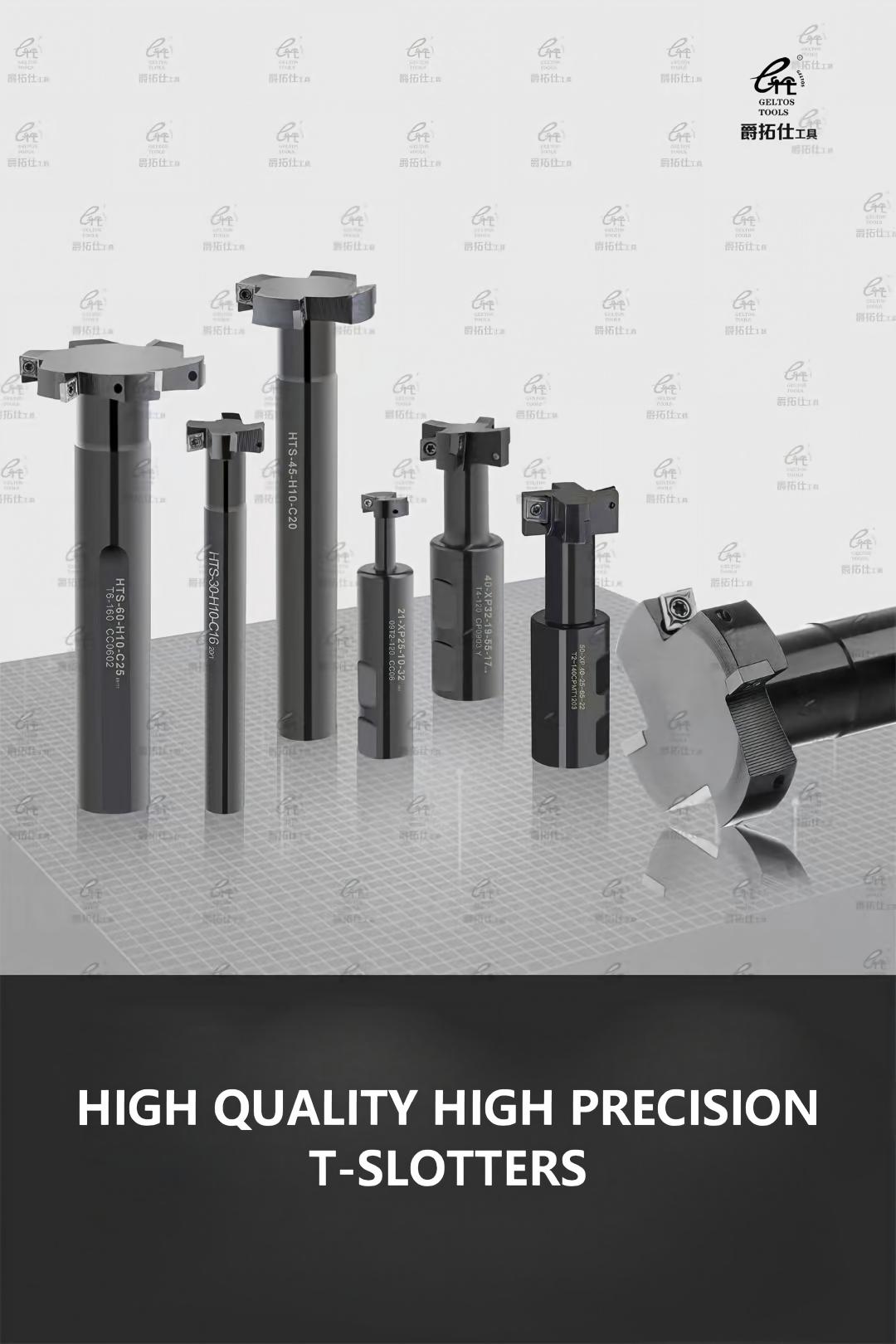
Deep-cut and vibration-sensitive operations are handled by silent tools, where the company states a clamping length of no less than a 4L/D ratio and spacing between the two screws greater than 4XD. Boring mills and carbide internal turning tools extend the same holder-and-insert logic to internal work. Consumables follow the same rule: milling inserts in this range include APMT1135, SNMX1206, LNMU0303ZER and 4NKT0603 across fast-feed, profiling, face milling and turning insert types, in carbide and ceramic materials, with working references such as HRC65, V=180 and F=0.02.
The application industries listed for this product family are automobile, aerospace, metal cutting and machining, mechanical workshop, mold manufacturing and general precision machining. That spread tells a buyer how much of the supplier's existing experience is likely to transfer to their own sector before any sample is cut.
Capability Verification Matrix
| Verification dimension | What the buyer should request | Documented example (GELTOS) | Why it changes the decision |
|---|---|---|---|
| Manufacturing scale | Facility area, employee count, in-house production | 3,000 m² facility; 25 employees | Indicates how much concurrent order volume can be handled |
| Output capacity | Annual and monthly output in countable units | 500,000 teeth per year; 30,000–40,000 teeth per month | Shows whether batch orders fit the production rhythm |
| Heat treatment | At which stage heat treatment is applied, and what follows | Products are heat-treated before processing | Sequence affects strength retention and dimensional stability |
| Precision | Stated tolerance plus the inspection method behind it | Precision below 0.02 mm; quality control by factory internal inspection | Tolerance without inspection records remains a claim |
| Engineering depth | Whether design and material development sit in-house | R&D, tool material development, customization and tool design; five-engineer R&D team | Determines whether special geometries can be developed at all |
| Customization / OEM | Non-standard production, special geometry and material work | Non-standard and customization production supported | Decides feasibility for project-specific slots, profiles and threads |
| Tool-change economics | Interchangeable or modular holder options | One holder carries different milling heads | Reduces tool changing time and tool purchasing cost |
| Commercial terms | MOQ, lead time, after-sales scope | MOQ 1 unit; lead time 10–30 days; after-sale service and technical support | Defines trial-order feasibility and the recovery path after delivery |
FAQ
1. What should a buyer verify in a milling tools manufacturer for industrial equipment?
Six capabilities decide whether a milling tools manufacturer can support industrial equipment production reliably: manufacturing scale, heat-treatment sequencing, dimensional precision, engineering depth, customization range and commercial terms. Wenling Geltos Tools Co., Ltd., as one documented example, operates a 3,000 m² facility with 25 employees, an annual output of 500,000 teeth, a monthly capacity of 30,000 to 40,000 teeth and a five-engineer R&D team, applies heat treatment before processing with a stated precision below 0.02 mm, supports OEM and customization including special geometry design and special material development, and lists a 1-unit MOQ with a 10 to 30 day lead time. Each item should be requested as a document rather than accepted as a claim.
2. Which standard applies to cutting tool data during a supplier evaluation?
ISO 13399, published by ISO Technical Committee TC 29, is the international standard for the computer-interpretable representation and exchange of industrial product data for cutting tools and toolholders. It matters when a buyer maintains a digital tool library or compares tools by parameter instead of by photograph. Suppliers that can provide model-level data make that comparison easier: GELTOS publishes insert model references such as APMT1135, SNMX1206, LNMU0303ZER and 4NKT0603, silent tool references such as VT25-SCLCR09, VT40-SDUCR11, VT20 C20*200V and VT32 C32*480VE, and working parameters such as HRC 40–50, 1–20 teeth and 80–350 mm lengths, while stating factory internal inspection as its quality control method.
3. What minimum order quantity and cost structure should a buyer expect?
GELTOS lists a minimum order quantity of 1 unit, which allows a trial order before batch production. On cost structure, the relevant lever in this range is tooling architecture rather than unit price alone: interchangeable and modular milling holders allow one holder to carry different milling heads, which the company states saves tool changing time and cuts tool purchasing cost. For a buyer running several operations on the same machine, that reduces the number of holders required and lowers the total tool spend per operation.
4. How should a sample order be used to validate a supplier?
Use the sample to test the claims that matter in production: dimensional precision against the stated figure (below 0.02 mm for GELTOS), surface finish, and behaviour under the intended cutting conditions, whether heavy or light cutting, with internal or external coolant. A documented example is a Russian precision mechanical processing factory that used 5 units of milling tools for precision metal grooving and slotting over a 2-year project, achieving 2 mm wide slot grooving with smooth surface finishing, fast-feed grooving and long working life. If you want a sample matched to your own operation, send the material, machine and geometry details to the GELTOS sales team, which states that it will select the right tool and provide a cutting solution for the application.
5. What lead time and after-sales support should be expected?
GELTOS lists a lead time of 10 to 30 days, a minimum order quantity of 1 unit, and after-sale service with technical support. Listed export markets include Russia, India, Iran, Italy, Morocco and the USA. Buyers should confirm the after-sales scope in writing before the first batch order, because technical support is the mechanism through which geometry or parameter issues are resolved after delivery.
Conclusion: Verify Capability Before You Compare Price
Milling tool supplier evaluation becomes manageable once price is separated from capability. The six items above — scale, heat-treatment sequencing, tolerance discipline, engineering depth, customization range and commercial terms — can each be confirmed with a document, a record or a sample order. Applied to GELTOS, the verifiable picture is a 3,000 m² facility with 25 employees, an annual output of 500,000 teeth, a monthly capacity of 30,000 to 40,000 teeth, a five-engineer R&D team, products heat-treated before processing to a stated precision below 0.02 mm, and OEM and customization support covering special geometry design and special material development, with a 1-unit MOQ and a 10 to 30 day lead time.
Buyers who complete that verification first are in a stronger position when the conversation turns to quotation, because the comparison is then between documented capabilities rather than between catalogue claims.
Next Step: Test the Capability on Your Own Operation
Send your operation details — material, machine, slot or profile geometry, and target tolerance — and request a sample or a quotation. The sales team states that it will select the right tool and provide a cutting solution for the application, and a 1-unit minimum order quantity makes a trial straightforward.
Web: www.geltos.com | Blog: blog.geltos.com
Email: 1941486733@qq.com / noname1@geltos.com
Tel: +86 86833728 | Mobile: +86 173 1753 5152
Address: East Side of No. Three Road, Wenqiao Town, Wenling, Taizhou City, Zhejiang Province, China