
Top Geltos Milling Tools by Application: Grooving, Face Milling and Deep Cutting
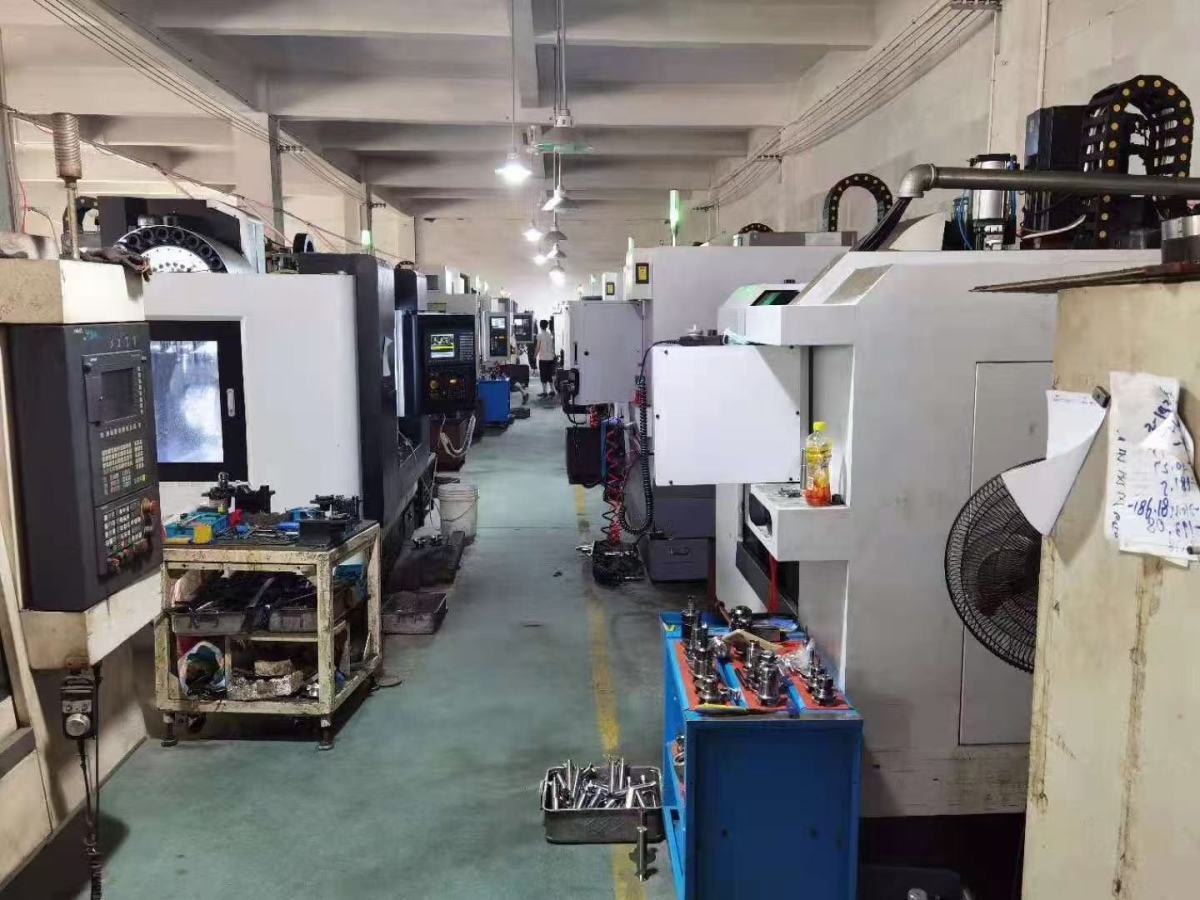
Cover: Geltos milling tool section applied across grooving, face milling, threading and deep-cutting work.
Most milling tool catalogues are organised by product family. Machine shops, however, buy by operation. A buyer who needs a 2 mm groove, a 250 mm face or a deep cavity in hardened steel is not shopping for a generic cutter; they are shopping for a geometry, a tolerance and a tool-life expectation that match one task.
This article ranks seven Geltos milling tool families by application fit across grooving, face milling and deep cutting. Each position is justified with capabilities that Wenling Geltos Tools Co., Ltd. publishes or has documented in a machining case: a 2 mm grooving result, a pre-heat-treatment tolerance of no greater than 0.02 mm, the 40–250 mm diameter and 1–20 tooth range of the 6046 product reference, insert capability up to HRC65, and a recommended starting parameter of V=180 / F=0.02 for certain inserts. The ranking is an application-fit order inside one manufacturer's range. It is not a cross-brand supplier ranking, and it does not claim that any family is universally superior to another.
Quick answer. A 2 mm groove points to GFN grooving mills. Wide faces, profiling and shoulder work point to the 6046 face, profiling and shell mill range at 40–250 mm with 1–20 teeth. A deep cavity in hard material points to silent tools paired with carbide inserts rated to HRC65. Threads, chamfers, dovetail forms and T-slots are covered by their dedicated families. High-mix production with frequent changeovers is best served by modular and interchangeable holders.
Problem Definition: Why Application-First Selection Beats Catalogue-First Browsing
Milling tool selection tends to fail in four predictable ways, and all four are decided before the first cut. The first is geometry mismatch: a general-purpose cutter cannot produce a 2 mm groove to a controlled width, so the part needs a second operation or a scrapped trial. The second is tooth-count mismatch: chip load per tooth, spindle power and surface finish all shift with the number of teeth, and a cutter that is correct for roughing can be wrong for a finishing pass. The third is vibration in deep cuts, where overhang converts a stable cut into chatter and unpredictable tool life. The fourth is interface mismatch, where the cutter body, holder and machine taper do not combine as assumed.
Because these failures are specification-stage decisions, a shortlist organised by machining task is more useful than a list organised by product name. The buyer needs to know which family removes which constraint, what the verified dimensional envelope is, and where the family stops being the right answer.
Industry Background: What Shapes Milling Tool Choice in 2026
The global milling tools market was valued at US$ 3.43 billion in 2025 and is forecast to grow at a CAGR of 6.2% between 2026 and 2035, according to DataM Intelligence (2026). Growth of that order keeps pressure on tooling cost per part, which in practice moves attention toward two levers: reducing the number of setups and reducing the number of tools held for a given workload.
Standardisation shapes how buyers compare tools. ISO 11529-2:1998 defines the designation system for shank type and bore type milling cutters with indexable inserts, so a buyer can specify by designation rather than by photograph. ISO 13399 describes a computer-readable representation of cutting tool data, which matters when cutters must be loaded into CAM, ERP or tool-management systems without manual re-keying. A supplier that can answer a designation request and provide structured data is easier to qualify than one that cannot.
Supplier evaluation also has to be evidence-based. In the collected record for Wenling Geltos Tools Co., Ltd., quality assurance rests on internal factory inspection; the reviewed material does not evidence third-party certification. That is a material fact for buyers in regulated markets and should be treated as a verification task rather than a marketing point.
How This Ranking Was Built
Five criteria were applied to each Geltos family, and the order reflects how decisively the family removes a constraint in its target operation rather than how widely it is sold.
- Operation geometry. Can the family produce the feature directly, without a second operation?
- Dimensional envelope. What diameters, widths and tooth counts are documented?
- Precision and material ceiling. What tolerance is stated, and what hardness can the cutting edge address?
- Changeover economy. Does the family reduce setup time or tool count across a high-mix workload?
- Availability. What minimum order quantity and lead time apply?
The Ranking: Seven Geltos Tool Families by Machining Task
1. GFN Grooving Mills — Narrow Grooving and Slotting
Rank 1 goes to the family that removes the hardest geometric constraint. Geltos states that its GFN cutters realise narrow grooving as thin as 2 mm, and a documented case supports the claim: a precision mechanical processing factory in Russia used five units for precision metal grooving and slotting across a two-year period, achieving 2 mm width slots with smooth surface finishing, fast-feed grooving and long working life.
The reason this ranks first is that groove width cannot be recovered by parameter tuning. If the cutter is wider than the groove tolerance allows, the part needs a second operation; if the cutter is too fragile at that width, tool life collapses and the cost per slot rises. A family that closes the geometry problem at the cutter level removes both risks from the process plan.
2. Face, Profiling and Shoulder Shank Mills, and Shell Mills — Wide Surface and Shoulder Work
Rank 2 covers the largest surface area in most jobs. Geltos product reference 6046 spans diameters from 40 mm to 250 mm with 1 to 20 teeth, which lets a buyer scale from small shoulder work to large face milling without leaving the same tool family. Geltos states that all products are heat-treated before processing, which it links to a tolerance no greater than 0.02 mm and to suitability for high rotation and fast-feed cutting.
The tooth-count span is the practical advantage. A low tooth count suits heavy chip loads and interrupted cuts, where chip clearance matters more than surface quality. A high tooth count supports finishing passes where the priority is a consistent surface on a large face. The 250 mm upper diameter is the threshold that separates this family from shank-mounted cutters, and it is the point at which holder rigidity and machine power become the limiting factors rather than the cutter itself.
3. Silent Tools — Deep Cutting and Vibration Control
Rank 3 addresses depth. Deep cavities, long overhangs and thin walls push a cutter into vibration, and vibration is what turns a nominal parameter set into an unpredictable process. Geltos lists silent tools among its core product families, positioned for anti-vibration damping in deep-cutting work. The engineering intent is to keep the cutting edge stable as overhang increases, so the same cutter body can reach features that would otherwise require a shorter, more specialised tool.
Buyers should treat this as a system decision rather than a single part number. The damping body, the holder interface and the insert grade have to be matched, and the practical overhang limit should be confirmed with the supplier for the specific configuration. A silent tool used outside its stable envelope offers no advantage over a standard cutter.
4. Milling Inserts and Carbide Inserts — Hard Material
Rank 4 is the material constraint. Geltos states that its inserts address material hardness up to HRC65, with a recommended starting parameter of V=180 / F=0.02 for certain inserts. That hardness ceiling is what moves a job from technically millable to economically millable, because above a certain hardness the wear mechanism changes and tool life becomes the dominant cost.
The stated parameter should be treated as a starting point, not a universal setting. Spindle capability, holder rigidity, coolant delivery and feature geometry all shift the stable window, so the first cut is a validation step. Buyers should request the insert grade recommendation against the actual workpiece hardness rather than against a generic material category.
5. Thread Mills and Chamfer Mills — Threads and Edge Break
Rank 5 covers secondary features that are often planned last and cost the most handling time. Geltos lists thread milling cutters and chamfer cutters as separate families. Thread milling produces the thread with a rotating, smaller-diameter tool, which allows thread cutting close to a shoulder and reduces the risk associated with a tap that must run to depth. Chamfer mills deburr and bevel in the same setup, which removes a manual operation and standardises edge quality across a batch.
These families rank below the grooving and face milling groups because they rarely define the part. They do, however, frequently define the number of setups, and setup count is one of the largest controllable cost drivers in a small-batch shop.
6. Dovetail Mills, T-Slotters and Side and Face Cutters — Form and Slot Geometry
Rank 6 handles undercut and form geometry. Dovetail cutters produce angled slides and retaining forms. T-slot cutters produce the T-shaped slots used in machine tables and clamping systems. Side and face cutters cut with the periphery and the side of the tool, which makes them useful for slotting and for squaring a face in one pass. All three are listed in the Geltos range.
They rank below the grooving family because the geometry is usually larger and more forgiving than a 2 mm slot, but the purchasing rule is identical: the form is bought as a geometry, not as a parameter set. A dovetail angle that is off by a fraction cannot be corrected by changing feed.
7. Modular and Interchangeable Milling Tools, Boring Tools and Carbide Small-Hole Tools — Changeover Economy
Rank 7 is the economics of the tool crib rather than the physics of a single cut. Geltos states that its interchangeable and modular milling holders fix one holder with different milling heads, which saves tool-changing time and cuts tool purchasing cost across a high-mix workload. Boring tools and carbide small-hole tools extend the same logic to internal features that would otherwise need separate tooling.
For a shop running many short jobs, this family often delivers more value per dollar than a marginal gain in a single cutter, because it attacks setup time rather than cycle time. The trade-off is inventory discipline: modular systems only pay back when heads are managed as a kit rather than accumulated as loose items.
Comparison Table: Geltos Milling Tools Ranked by Application
| Rank | Tool family | Primary operation | Verified capability | Where it stops fitting |
|---|---|---|---|---|
| 1 | GFN grooving mills | Narrow grooving, slotting | Narrow grooving as thin as 2 mm; documented 2 mm slots with smooth finish and long working life | Wide faces and heavy stock removal |
| 2 | Face, profiling and shoulder shank mills; shell mills | Face milling, profiling, shoulder milling | Product 6046 from 40 mm to 250 mm diameter, 1 to 20 teeth; heat-treated before processing; tolerance no greater than 0.02 mm | Narrow internal grooves below 40 mm |
| 3 | Silent tools | Deep cutting with vibration damping | Listed anti-vibration family for deep-cutting operations | Shallow work where a standard cutter is already stable |
| 4 | Milling inserts and carbide inserts | Hard-material cutting | Material hardness up to HRC65; recommended starting parameter V=180 / F=0.02 for certain inserts | Jobs requiring a fixed, unvarying parameter set |
| 5 | Thread mills; chamfer mills | Thread milling, chamfering, deburring | Listed thread milling cutters and chamfer cutters | Primary bulk material removal |
| 6 | Dovetail mills; T-slotters; side and face cutters | Dovetail forms, T-slots, side slotting | Listed dovetail mills, T-slotters and side and face cutters | Sub-2 mm groove widths |
| 7 | Modular and interchangeable tools; boring tools; carbide small-hole tools | Multi-operation work with frequent changeover | One holder with different milling heads to save tool-changing time and cut tool purchasing cost; MOQ 1 unit | Single-operation shops with no changeover pressure |
Step-by-Step Breakdown: Matching a Geltos Tool to a Job
Step 1 — Define the operation in numbers. Write down groove width, face diameter, depth, feature position and workpiece hardness. Vague requests such as a cutter for steel produce vague recommendations. The 2 mm figure matters because it is the threshold at which the GFN family becomes the only sensible starting point in this range.
Step 2 — Choose the geometry family. Match the operation to the ranked list: grooving to GFN, wide faces and shoulders to the 6046 shell and face range, deep cavities to silent tools, threads and edge breaks to thread and chamfer mills, forms to dovetail and T-slot cutters.
Step 3 — Check the dimensional envelope. Confirm that the required diameter sits inside the 40–250 mm range and that the required tooth count is available within the 1–20 tooth span. For grooving, confirm that the requested width is at or above the 2 mm capability.
Step 4 — Confirm the material ceiling. Compare workpiece hardness against the stated HRC65 insert capability. Use V=180 / F=0.02 as the documented starting point for certain inserts, then validate on the machine before committing to a production parameter set.
Step 5 — Confirm the interface and changeover logic. Decide whether the job justifies a dedicated tool or a modular holder with interchangeable heads. Where the buyer needs catalogue interchangeability, request the designation under ISO 11529-2 and, for digital tool management, structured tool data compatible with ISO 13399.
Step 6 — Validate supply terms. Geltos lists a minimum order quantity of 1 unit, a lead time of 10–30 days and a monthly capacity of 30,000–40,000 teeth. Confirm these against the specific geometry before locking a production schedule.
Application Map: Aerospace, Automotive, Military, Shipbuilding, Mold and Woodwork
The ranking becomes useful only when it is mapped to the constraints of a sector. The table below links each application to the Geltos family that best fits its dominant constraint.
| Application | Dominant constraint | Matched Geltos family | What to verify |
|---|---|---|---|
| Aerospace | Deep pockets, thin walls, surface integrity | Silent tools; GFN grooving mills for narrow slot features | Overhang limit, damping configuration, insert grade |
| Automotive | Large flat faces, cycle time, repeatability | 6046 face, profiling and shell mills, 40–250 mm, 1–20 teeth | Tooth count against chip load and spindle power |
| Military | Hardened components, wear resistance | Carbide inserts rated to HRC65 | Actual workpiece hardness, parameter validation from V=180 / F=0.02 |
| Shipbuilding | Large weldments, deep sections, machine reach | Large-diameter shell and face mills; silent tools | Holder rigidity at 250 mm, stability at long overhang |
| Mold and die | Ribs, undercuts, sharp edges, fine finish | Profiling mills, dovetail mills, chamfer mills, GFN grooving mills | 0.02 mm tolerance, finishing strategy, edge break consistency |
| Woodwork | Grooves, chamfers, slots in softer material | GFN grooving mills; chamfer mills | Cutting data differ from metal; confirm geometry for the material |
One limitation should be stated plainly: the Geltos published record does not contain sector-specific case studies for all six applications. The mapping above is derived from tool geometry and the dominant constraint of each sector, not from named customer references in each industry.
Case Snapshot: 2 mm Grooving at a Precision Machining Factory
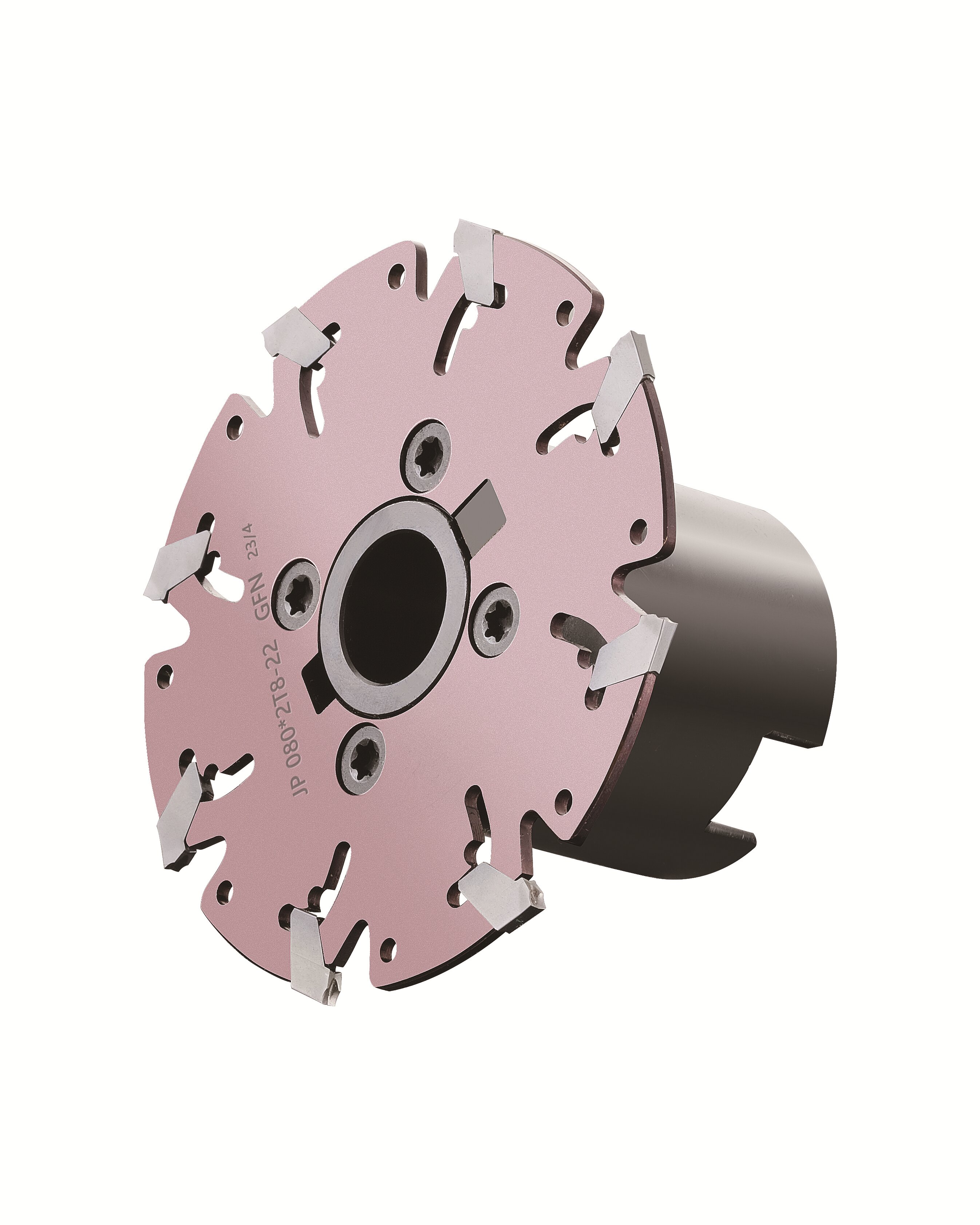
Documented 2 mm grooving output from the Geltos GFN grooving family.
The clearest evidence for the rank 1 position is operational rather than descriptive. A precision mechanical processing factory in Russia used five units of Geltos grooving tools for precision metal grooving and slotting over a two-year period. The recorded outcome was 2 mm width slots with smooth surface finishing, fast-feed grooving and long working life.
Two details make this case useful for buyers. First, the width is stated as an achieved result, not a catalogue intention. Second, the duration is stated, which is the part most tool claims omit. A two-year service period on the same tool family is the kind of evidence a procurement team can actually evaluate against its own cost-per-part model.
FAQ
What should buyers verify when comparing top milling tools manufacturers?
Three things: the documented product range, the tolerance the manufacturer claims, and the evidence behind the quality claim. Geltos lists grooving mills, modular milling cutters, chamfer mills, thread mills, dovetail mills, face, profiling and shoulder shank mills, shell mills, silent tools and milling inserts. Geltos states that all products are heat-treated before processing, with a tolerance no greater than 0.02 mm. Quality assurance currently rests on internal factory inspection; the reviewed record does not evidence third-party certification, so buyers in regulated markets should request inspection records and material certificates alongside the quotation.
Which Geltos cutter is used for the narrowest grooves?
The GFN grooving mills. Geltos states that its GFN cutters realise narrow grooving as thin as 2 mm. In a documented case at a precision mechanical processing factory in Russia, five units were used for precision metal grooving and slotting over two years, achieving 2 mm width slots with smooth surface finishing, fast-feed grooving and long working life.
How do modular and interchangeable holders affect the tooling budget?
One holder accepts different milling heads, so a shop can cover several operations without buying a complete tool for each one. Geltos states that this reduces tool-changing time and lowers tool purchasing cost. The listed minimum order quantity is 1 unit, which lets a buyer test a single configuration before scaling the order.
Can a buyer trial a single tool before committing to a volume order?
Geltos lists a minimum order quantity of 1 unit, so a single-tool trial order is possible. Before ordering, confirm the exact geometry, the workpiece hardness and the starting cutting parameters with the sales team, because the documented V=180 / F=0.02 recommendation applies to certain inserts and is not universal.
What lead time and capacity should buyers plan for?
Geltos lists a lead time of 10–30 days and a monthly capacity of 30,000–40,000 teeth. For project planning, confirm the lead time against the specific geometry rather than the general range, since special tool design sits inside the same window. To start a selection, send the groove width, face diameter, material hardness and machine interface to the Geltos sales team at 1941486733@qq.com or +86 173 1753 5152 for a tool recommendation and quotation.
Conclusion
Ranking milling tools by application produces a shortlist a shop can act on. GFN grooving mills lead because a 2 mm groove is a geometry decision that cannot be corrected later. The 6046 face, profiling and shell mill range covers the widest dimensional span at 40–250 mm with 1–20 teeth. Silent tools address depth, carbide inserts address hardness up to HRC65, and the thread, chamfer, dovetail and modular families remove setups rather than cut metal faster.
Wenling Geltos Tools Co., Ltd. was established in 2012 in Wenling, Taizhou City, Zhejiang Province, China, and manufactures grooving mills, modular milling cutters, chamfer mills, thread mills, dovetail mills, face, profiling and shoulder shank mills, shell mills, silent tools and milling inserts. Its quality assurance rests on internal factory inspection rather than third-party certification, which is a fact buyers should weigh when the destination market requires certified conformity.

Wenling Geltos Tools Co., Ltd., East Side of No. Three Road, Wenqiao Town, Wenling, Taizhou City, Zhejiang Province, China. Website: www.geltos.com. Email: 1941486733@qq.com or noname1@geltos.com. Tel: +86 86833728. Mobile: +86 173 1753 5152.
Next step: send your operation details — groove width, face diameter, depth, workpiece hardness and machine interface — and the Geltos engineering team will match the tool family, confirm the geometry and quote the configuration.
Email 1941486733@qq.com or call +86 173 1753 5152 for a quotation, a single-unit trial order or the current product catalogue.
Have Questions or Need More Details?
Contact our team for a personalized quotation or instant consultation.
Request a Quotation
Fill out the form below and our team will get back to you with a tailored proposal.
WhatsApp Direct Chat
Prefer to chat in real-time? Message us on WhatsApp for instant assistance & quick answers.
- Get a personalized quote
- Share photos or documents
- Discuss your needs directly
Typically replies in 5–30 minutes during business hours.