
How to Match Milling Tools to Your CNC Machining Scenario: A Project-by-Project Selection Guide
How to Match Milling Tools to Your CNC Machining Scenario
Choosing the right milling tool for a CNC project is not only about cutter diameter or material grade. The real question is whether the tool matches the working condition, the machine configuration, and the operations you need to perform. This guide explains how milling tools behave across CNC machining scenarios and provides a practical method for selecting the right cutter family for your project.
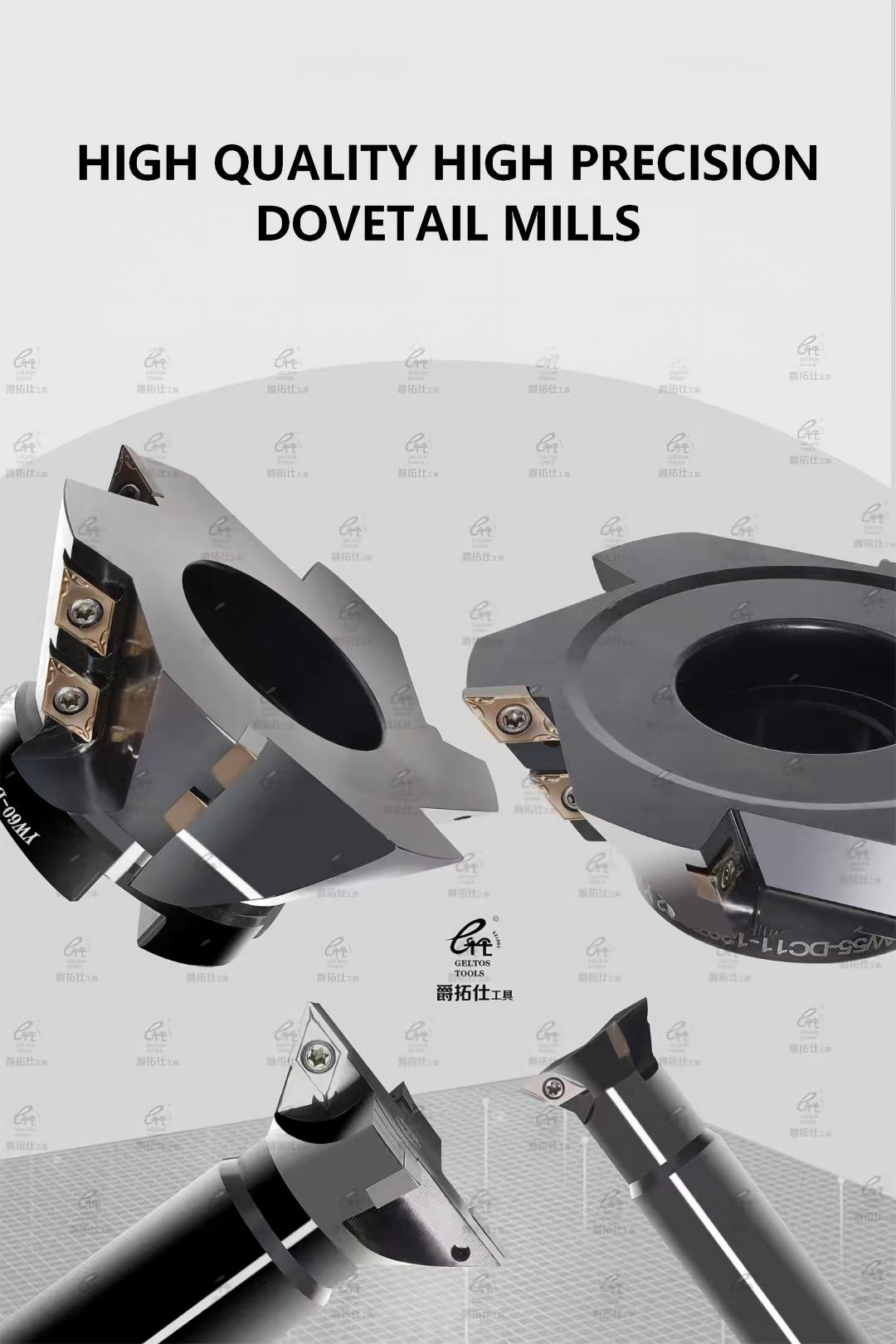
Milling cutters are selected based on the operation type, machine compatibility and working condition.
Why Milling Tool Selection Depends on the CNC Scenario
A milling tool is not a universal consumable. In CNC machining, the tool is the main cutting component for milling, slotting, chamfering, face milling and thread milling operations. It transmits spindle power into the workpiece, removes material within a defined geometry, and must do so under specific cutting speeds, feed rates and coolant conditions.
When matching milling tools to a CNC machining scenario, buyers usually need to evaluate four things together:
- The operation type – slotting, chamfering, face milling, profiling or thread milling.
- The machine interface – whether it will be mounted on a CNC milling machine, machining center or lathe, and which holder system is used.
- The cutting condition – heavy or light cutting, fast feed or conventional speed, with internal or external coolant supply.
- The precision requirement – what tolerance the finished part must hold after heat treatment and machining.
This is why a slot milling cutter for a 2 mm groove cannot simply be replaced by a general-purpose face mill. The geometry, flute design, number of teeth and insert shape are usually matched to the specific operation.
Understanding the Scope of Milling Tools for CNC Projects
Milling tools cover a wide family of cutter types. Common categories include grooving mills, chamfer mills, boring mills, face/shoulder/profiling shank mills, shell mills, corn-shaped mills, dovetail mills, T-slot cutters, thread milling tools, interchangeable milling tools, carbide internal turning tools, silent tools and milling inserts. Each type is designed for a particular geometry or machining purpose.
In industrial practice, CNC machining projects usually involve several of these operations in sequence. A typical mold processing project, for example, may require face milling for the top surface, shoulder milling for the profile, slotting for internal channels, and chamfer milling for edge finishing. A batch production project may rely on interchangeable milling tools to reduce tool-changing time when the same holder is used with different cutting heads.
The practical implication for buyers is that a single milling tool manufacturer should be able to supply a coherent set of cutter families, not only one tool type. This reduces the number of suppliers, simplifies tooling management, and helps ensure that the tools are designed to work under similar cutting conditions.
Key Machine and Equipment Compatibility Checks
Milling tools are mounted on CNC milling machines or machining centers, and some are also used on lathes with driven or static tooling. The tool must be compatible with high-speed spindles and fast feed conditions, which means that shank rigidity, runout accuracy, and insert clamping are critical.
Common supporting equipment includes CNC milling machines, machining centers, lathes, and common tool holder or collet systems. Before selecting a cutter, the buyer should confirm the shank diameter, the taper or collet type, and whether the machine can supply through-tool coolant. For internal-coolant operations, the tool body must have built-in coolant channels or match an adapter that supports them.
Another important parameter is the diameter range and width range of the milling tools offered. In many CNC projects, the cutter diameter is determined by the part feature rather than by preference. Standard milling tool diameter ranges often start at 8 mm and extend to 400 mm, while slotting widths may range from 1 mm to 20 mm. Knowing these ranges early helps avoid requesting a tool geometry that cannot be manufactured within the selected cutter family.
Milling Conditions: Heavy Cutting, Light Cutting and Coolant Supply
Milling tools must operate under various milling conditions. These include heavy cutting, light cutting, and with inner or outer coolant supply. Each condition imposes different requirements on the tool body, coating, insert grade and edge strength.
Heavy cutting usually means larger depths of cut and higher metal removal rates. The tool body should have high rigidity and the insert edge should be strong enough to resist breakage. Fastfeed milling inserts, for instance, are designed for higher feed rates and often use a stronger edge geometry.
Light cutting often demands a sharper edge and better surface finish. For finishing passes, a smaller depth of cut, higher speed and low feed may be used. In this scenario, the clamping stability and runout accuracy of the cutter matter as much as the insert grade.
Coolant strategy also affects tool selection. Inner coolant supply requires tools with coolant holes through the body or shank; outer coolant supply works with standard tools. When machining deep slots or small-diameter bores, inner coolant is often preferable for chip evacuation and temperature control.
A practical decision rule is to define the machining scenario first, then select the cutter family, then confirm the coolant and machine interface. This order reduces the risk of choosing a tool that is technically interesting but not compatible with the actual production environment.
A Step-by-Step Approach to Matching Milling Tools to CNC Scenarios
- List the operations required by the part. Write down every milling operation: slotting, chamfering, face milling, profiling, grooving, thread milling or boring. This determines the cutter family.
- Define the feature size. For slots, measure the width and depth. For faces and profiles, measure the width of cut and depth of cut. Use these values to choose the cutter diameter, width, maximum depth and number of teeth.
- Check the machine interface. Identify whether the tool will be used on a CNC milling machine, machining center or lathe, and confirm the holder system: shrink fit, hydraulic, collet, or dedicated milling adapter.
- Confirm the cutting conditions. Determine whether the operation is heavy or light cutting, whether the spindle supports high-speed cutting, and whether the coolant will be supplied internally or externally.
- Evaluate the precision requirement. If the part must hold tolerance within 0.02 mm after heat treatment, the tool and process must be designed accordingly.
- Check standardization and interchangeability. For batch production, consider interchangeable milling tools that allow the same holder to accept different milling heads, reducing tool changing time and inventory cost.
- Confirm customization or standard tool availability. For non-standard part features, the manufacturer should be able to produce custom geometries or special tools.
How Precision After Heat Treatment Affects Cutter Performance
A characteristic that is often underestimated is the treatment of the tool body before grinding. In the case of GELTOS milling tools, products are processed after heat treatment so that the tool body has sufficient strength and dimensional stability. The company states a high precision level with tolerance no greater than 0.02 mm for its milling tools.
This matters to CNC buyers because heat treatment changes the machinability of the material. If a cutter body is not heat-treated before final processing, it may distort during use or lose accuracy under repeated clamping. For high-speed spindles and fast feed cutting, a stable body is essential to maintain edge position and avoid vibration.
When comparing suppliers, the buyer should ask not only what tolerance is achieved, but also what process is used to achieve it. Heat treatment before processing is a concrete method but not a standardized claim across all manufacturers.
Fast Feed Milling: Scenario Relevance and Insert Selection
Fast feed milling has become a key consideration in CNC machining because it directly affects cycle time. The term refers to cutting operations that use a substantially higher feed per tooth than conventional milling, usually achieved with a small entering angle and a dedicated insert geometry.
Fastfeed milling inserts are designed for such conditions. Typical insert models in this category include APMT1135, SNMX1206, LNMU0303ZER and 4NKT0603. In addition to milling inserts, the same product family may include face milling inserts, profiling milling inserts and turning inserts, depending on the operation.
For a CNC machining project, the scenario that benefits most from fastfeed milling is large flat surfaces, face milling passes and roughing operations where material removal rate is the bottleneck. For narrow slots, thin-wall components and finishing operations, fastfeed milling is often not the right choice because the feed strategy may generate excessive cutting forces for thin structures.
A practical recommendation is to separate roughing and finishing needs: use fastfeed inserts for high-volume roughing, and use a dedicated finishing cutter or insert geometry for the final surface pass.
Milling Inserts: Matching the Cutting Edge to the Workpiece
Milling inserts are the replaceable cutting edges clamped into cutter bodies. They are available in different geometries, sizes and material grades. The insert model usually encodes the shape, clearance angle, tolerance class and chip breaker type.
When selecting milling inserts for a CNC scenario, check three things:
- The type of operation: face milling inserts for flat surfaces, profiling inserts for contour cuts, and turning inserts if the operation is performed on a lathe.
- The cutting parameters: each insert is designed for a cutting speed and feed range. The listed parameters may include values such as HRC 65 hardness capability, V = 180 and F = 0.02.
- The applicable industry: carbide and ceramic inserts are used in mechanical processing, automotive, aerospace, woodwork and ship building, but the same insert must be matched to the specific workpiece material.
Because inserts are standardized but not universal, a reliable approach is to ask the manufacturer to recommend an insert model based on the workpiece material, operation and required tool life. This prevents the common mistake of choosing an insert by model number alone without verifying the cutting parameters.
Use Cases: Applying Milling Tools in Real CNC Projects
Use Case 1 – Mold Processing with Multiple Operations
In mold manufacturing, a single CNC project often requires face milling, shoulder milling, profiling, slotting and chamfering. The tool selection should follow the sequence of operations. For roughing, a face mill or shoulder mill with strong inserts can remove material efficiently. For the finishing stage, a profiling mill or a smaller chamfer tool is used to achieve the final geometry and edge quality.
Because mold steels may have high hardness, the cutter body must remain stable under repeated cuts. GELTOS milling tools, for example, are used in the metalworking, mold manufacturing, mechanical machining, automotive parts and general precision machining industries. The company states that all products are heat-treated before processing, which helps maintain precision with tolerance no greater than 0.02 mm.
Use Case 2 – Batch Production Tool Replacement
In batch production, the time spent changing tools between operations directly affects output. A common strategy is to use interchangeable milling tools where one holder accepts different milling heads, so the operator changes only the cutting head instead of the full assembly. GELTOS states that this approach can greatly save tool changing time and reduce tool purchasing cost.
The scenario requires a modular system with stable clamping and repeatable precision. When planning such a system, the buyer should verify the clamping interface, the maximum Runout tolerance, and the range of milling heads available for each holder.
Use Case 3 – Narrow Slot Grooving (2 mm Width)
Narrow slot grooving is one of the most demanding CNC applications because the tool must combine sufficient rigidity with a thin cutting edge. GELTOS reports that its GFN cutters realize narrow grooving as thin as 2 mm. A related customer case in Russia involved a precision mechanical processing factory that used five units of milling tools for precision metal grooving and slotting over a two-year period. The project achieved narrow slot grooving of 2 mm width, smooth surface finishing, fast feed grooving and long working life.
For buyers evaluating a similar scenario, the critical specifications are the slot width, the depth-to-width ratio, the tool material, and the coolant delivery method. These factors determine whether the tool can evacuate chips effectively and maintain a stable cut.
Comparison of Milling Tool Families and Typical CNC Applications
| Milling Tool Family | Typical Operation | Typical CNC Scenario | Key Selection Focus |
|---|---|---|---|
| Grooving mills / slot cutters | Slotting, grooving | Keyways, narrow slots, batch production | Width control, depth-to-width ratio, chip evacuation |
| Side and face cutters | Slotting, side milling | Deep slots, stepped surfaces | Stability, number of teeth, width accuracy |
| Chamfer mills | Chamfering, edge breaking | Edge finishing, deburring | Angle accuracy, surface finish |
| Thread milling tools | Thread milling | Internal/external threads on CNC mills | Thread profile, pitch diameter, tool path |
| Dovetail milling cutters | Dovetail slot milling | Slides, guideways in molds and fixtures | Angle accuracy, edge strength |
| Fastfeed milling tools | Face milling, roughing | High metal removal rate face milling | Feed rate, insert edge strength |
| Profiling milling cutters | Profiling, contouring | Mold cavities, sculpted surfaces | Profile accuracy, rigidity, finishing capability |
| Shank mills and shell mills | Face milling, shoulder milling | General CNC milling, batch production | Diameter range, mounting interface |
| Interchangeable milling tools | Multiple operations with one holder | Batch production, tool-changing reduction | Holder–head interface, repeatability |
| Boring tools | Boring, internal diameter finishing | Hole finishing on machining centers | Adjustability, chip clearance, depth capability |
| Carbide internal turning tools | Internal turning, boring | Lathe operations, internal profiles | Shank size, reach, damping |
| Silent / anti-vibration tools | Internal turning, long overhang operations | Aerospace, naval, deep boring | L/D ratio, vibration damping |
| Milling inserts | Indexable cutting edges | All indexable milling operations | Insert grade, geometry, cutting parameters |
| T-slot cutters | T-slot milling | Machine tables, fixtures | Neck diameter, width, strength |
| Modular milling cutters | Multiple operations | Flexible production, quick changeover | Module compatibility, clamping stability |
How to Apply This Matching Method to Real Projects
The steps below summarize the decision framework in a form that can be used directly by a machining engineer, process planner or purchasing manager.
Workflow
- Define the project type: CNC machining project, batch production tool replacement, mold processing or metal milling process project.
- Define the machine: CNC milling machine, machining center, lathe, or a combination.
- Define the operations: milling, slotting, chamfering, face milling or thread milling.
- Define the cutting conditions: heavy or light cutting, internal or external coolant.
- Select the cutter family and insert geometry.
- Verify the precision capability: confirm that the manufacturer can hold the required tolerance after heat treatment and processing.
- Evaluate standardization: decide whether modular or interchangeable tools reduce changeover time and inventory cost.
What to Check When Sourcing Milling Tools for a Specific Scenario
When a buyer approaches a milling tools manufacturer with a specific CNC scenario, the supplier should be able to ask relevant questions rather than only quoting existing models. The following checklist can be used in your inquiry.
- Product family coverage: Does the manufacturer supply grooving mills, chamfer mills, thread mills, dovetail mills, face/shoulder/profiling shank mills, shell mills, interchangeable milling tools, carbide internal turning tools, silent tools and milling inserts?
- Parameter ranges: What diameter ranges and width ranges are available? Confirm that the required sizes are within the standard range or can be customized.
- Material treatment: Is the tool body heat-treated before processing? How is the final tolerance controlled?
- Customization capability: Can the manufacturer produce special geometry tools or develop special material grades for non-standard scenarios?
- Lead time and MOQ: GELTOS, for example, lists a monthly capacity of 30,000–40,000 teeth, a lead time of 10–30 days, and an MOQ of 1 unit. These practical terms can be used as a benchmark when discussing project-based needs.
- After-sales support: Does the manufacturer provide technical support after delivery? For scenario-specific tooling, after-sales support matters when the first trial needs adjustments.
Industry Context: Milling Tools Are a Core Part of Metal Cutting
The global context helps explain why milling tool selection is important for industrial equipment buyers. According to DataM Intelligence, the global milling tools market size reached USD 3.43 billion in 2025 and is projected to grow to USD 6.23 billion by 2035. Milling tools also held a dominant 38% share of global metal cutting tools revenue in 2024, according to Mordor Intelligence. Asia Pacific dominated the cutting tools market with a 49% global share in 2024, with China alone contributing 38% of regional production, based on Grand View Research.
These figures do not tell a buyer which tool to select, but they explain why milling tools are one of the most actively sourced categories in the CNC machining industry. When sourcing milling tools for industrial equipment projects, the buyer is not only purchasing a consumable; the tooling decision directly affects cycle time, tool life, surface quality and the total cost of the machining operation.
How a Milling Tools Manufacturer Adds Value in Scenario Matching
Wenling Geltos Tools Co., Ltd. is a manufacturer of high precision and high strength milling tools, established in 2012 in Zhejiang Province, China. The company specializes in grooving mills, modular milling cutters, chamfer mills, thread mills, dovetail mills, face/profiling/shoulder shank mills and shell mills, corn-shaped mills, interchangeable milling tools, carbide internal turning tools, silent tools, milling inserts and related products. It serves markets including India, Russia, Iran, Morocco, Italy and the USA, and exports 5–10% of its output.
The relevant aspect for buyers is not the company size but the completeness of the product system. A milling tools manufacturer that covers multiple cutter families can match tools to scenarios more effectively because the same engineering team can recommend a coherent set of tools for the same project. GELTOS states that all products are heat-treated before processing, which is a process-level evidence point for precision and strength. Its interchangeable and modular milling holders are designed to reduce tool changing time and tool purchasing cost. The company also reports a monthly capacity of 30,000–40,000 teeth, a lead time of 10–30 days, and an MOQ of 1 unit, which is practical for both project-based and batch-based buyers.
Case Evidence: Narrow Grooving for a Precision Machining Factory
A documented case in Russia demonstrates how milling tools are matched to a specific machining scenario. The client was a precision mechanical processing factory using 5 units of milling tools for precision metal grooving and slotting. The project was completed within 2 years and achieved narrow slot grooving of 2 mm width. The reported results included smooth surface finishing, fast feed grooving and long working life.
For a buyer evaluating a similar scenario, this case shows that the required evidence includes not only the tool specification but also the working condition. The 2 mm grooving result depends on the tool geometry, the machine rigidity, the feed rate and the coolant method. When writing an RFQ for narrow grooving tools, include the groove width, depth, workpiece material, machine spindle and coolant delivery method.
Limitations and Trade-offs in Milling Tool Selection
No single milling tool can optimize every machining scenario. A wider slot cutter with more teeth may provide better surface finish but requires more power and a stronger spindle. A thinner grooving cutter can achieve 2 mm slots but is more sensitive to vibration and chip clogging. A fastfeed insert reduces cycle time on large surfaces, but it may not be suitable for thin walls or small contours where cutting forces must remain low.
Coolant is another trade-off. Inner coolant supply can improve chip evacuation and tool life, but it requires tool bodies with internal channels and may increase cost. External coolant is simpler but often less effective for deep slots and small holes.
A balanced decision rule is to prioritize the most demanding operation in the project, then verify that the chosen tool does not compromise the finishing operation. If a project has both roughing and finishing, consider two separate tools or an interchangeable system instead of searching for one universal cutter.
Common Mistakes When Matching Milling Tools to CNC Scenarios
- Choosing the cutter before the machine: The machine spindle, holder interface and coolant capability should be defined first.
- Overlooking the operation type: A profiling cutter and a slotting cutter serve different functions even if they have the same diameter.
- Ignoring the precision process: If the final tolerance requires a stable tool body, ask whether the tool is heat-treated before processing and how the 0.02 mm tolerance is achieved.
- Forgetting chip evacuation: In deep slots and narrow grooves, chip evacuation often determines tool life more than the insert grade.
- Assuming standard tools are always enough: Non-standard part features may require custom geometry production or special material development.
FAQ
What compliance or quality-related parameters should I verify when choosing a milling tools manufacturer for industrial equipment?
Compliance-oriented buyers should verify the manufacturer's process control and quality evidence rather than relying only on marketing descriptions. A concrete parameter to check is dimensional tolerance after heat treatment: GELTOS states a precision level with tolerance no greater than 0.02 mm. Buyers should also confirm that all products are heat-treated before processing, because this affects strength, dimensional stability and repeatability under CNC high-speed conditions. For standardized data exchange, ISO 13399 is the international standard for computer-interpretable representation of cutting tools and toolholders, which is useful when your system requires consistent tool data. If the equipment requires product data integration, asking a manufacturer whether its catalog and tool data can be mapped to ISO 13399 can simplify digital tool management.
Which milling tool capabilities are needed to cover different CNC machining scenarios?
A manufacturer should be able to supply a product system that covers milling, slotting, chamfering, face milling and thread milling. GELTOS's product range includes grooving mills, chamfer mills, boring mills, face/shoulder/profiling shank mills, shell mills, dovetail mills, T-slot cutters, thread milling tools, fastfeed milling inserts, interchangeable milling tools, carbide internal turning tools and silent tools. This breadth matters because a CNC project usually requires several operations. GELTOS also supports non-standard or customized production, including special geometry tool design and special material development. For batch production, its interchangeable and modular milling holders allow one holder to accept different milling heads, which reduces tool changing time and tool purchasing cost.
How much budget should I plan when buying milling tools for a project-based scenario?
Budget planning should be based on the number of cutter families and the project's operation types, not on a single tool price. A useful reference point is GELTOS's commercial flexibility: the company lists a monthly capacity of 30,000–40,000 teeth, a lead time of 10–30 days, and an MOQ of 1 unit. Buyers can therefore request a single custom tool or a small set for project trials. Budget impact can also be reduced by using interchangeable and modular milling holders, because fixing one holder with different milling heads enables multiple machining needs without purchasing a complete new tool assembly for each operation.
Can I request a sample or a small trial order to verify milling tools for a specific CNC scenario?
Yes. GELTOS's MOQ of 1 unit is designed for buyers who need to verify a specific geometry or cutting condition before scaling up. A sample or trial order is especially useful for narrow grooving, custom geometry tools and interchangeable systems, because the buyer can test the tool on the actual machine with the actual workpiece material and coolant method. When requesting a sample, provide the operation type, workpiece material, machine spindle type, holder interface, coolant delivery method, required slot or profile dimensions, and the target surface finish. For narrow grooving, specify whether the slot width is 2 mm or wider, since GELTOS's GFN cutters realize grooving as thin as 2 mm.
What is the typical lead time for milling tools when the project is urgent?
For GELTOS, the stated lead time is 10–30 days, with a monthly capacity of 30,000–40,000 teeth. In an urgent project, the actual lead time will still depend on whether the cutter is a standard model, a customized geometry, or a new material development. Standard tools are naturally faster. If the project depends on a special cutter, the buyer should share the part drawing and cutting conditions in the initial inquiry so the manufacturer can confirm feasibility early. GELTOS also offers after-sales service and technical support, which helps when a tool needs an adjustment after the first trial.
Need help matching milling tools to your machining scenario?
Send your part drawing, machine configuration and target operations to the GELTOS sales team for a tool recommendation or sample inquiry.
Email noname1@geltos.com Email 1941486733@qq.com Call +86 173 1753 5152