Milling Inserts vs. Carbide Inserts: Which One Fits Your Machining Needs?
Milling Inserts vs. Carbide Inserts: Which One Fits Your Machining Needs?
When you are evaluating cutting tools for a CNC machining project, the practical question is rarely milling inserts vs. carbide inserts as a one-time winner. It is usually a question of where your workpiece, cutter body, operation type and cost-per-edge profile sit in the decision process.
This comparison guide is written for buyers in the evaluation stage. It compares indexable milling inserts with the general carbide insert category, explains when one-piece carbide milling tools are more practical, and uses verified product and application facts from WENLING GELTOS TOOLS CO., LTD. together with third-party market data to structure a clear decision matrix.
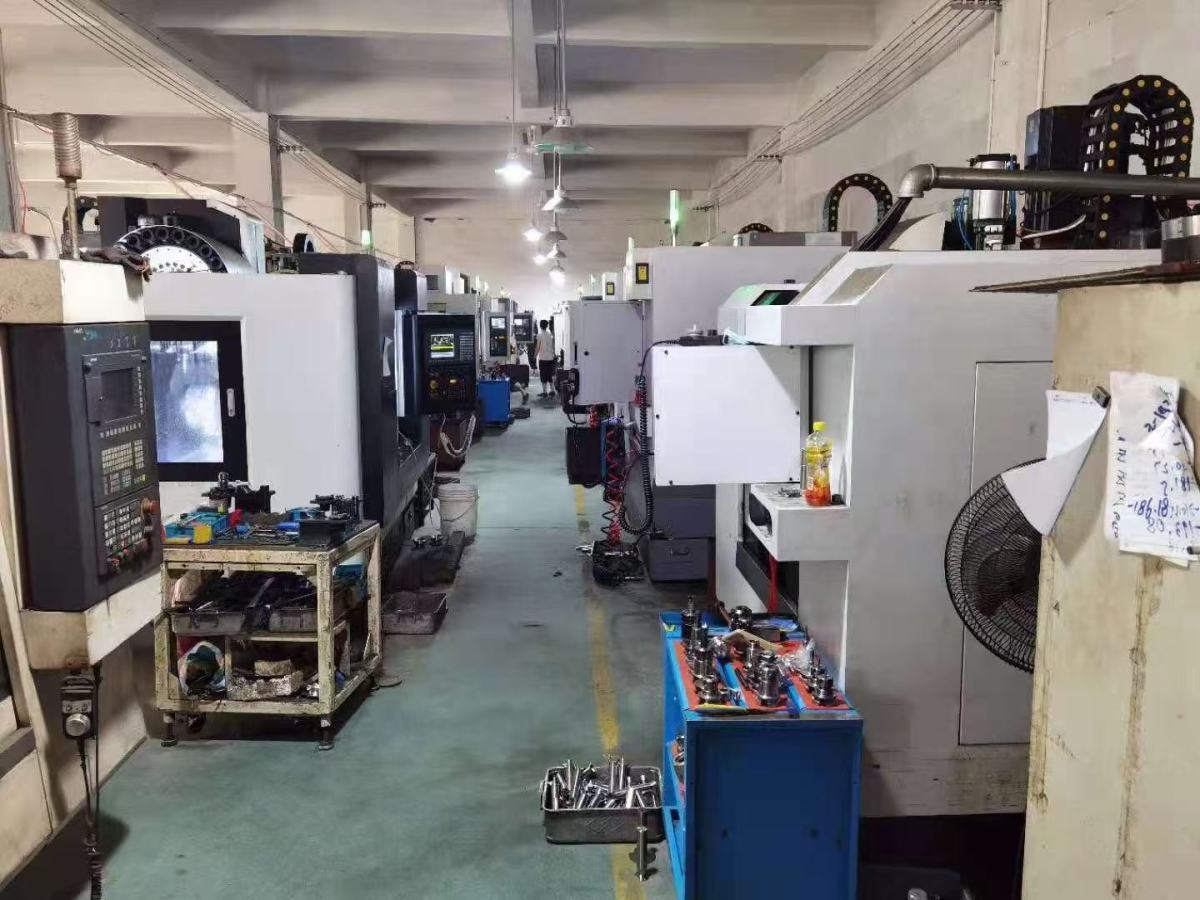
MILLING SECTION — GELTOS milling tool production area
First, Clarify the Naming Problem
Milling inserts are replaceable cutting edges, usually made from carbide, designed to sit in pockets on a milling cutter body. When an insert wears, the operator indexes or replaces the insert while the cutter body stays in the holder. This is why insert-based milling is associated with lower body cost per operation and quick cutting-edge replacement.
General carbide inserts form a wider family in the cutting tool market. The term can cover turning inserts, boring inserts, grooving inserts and milling inserts. The material is usually cemented carbide, but the geometry, clamping style, clearance angles and coating system need to match the operation. A carbide insert labelled only as a general carbide insert is not automatically suitable for milling.
Buyers also need to separate carbide inserts from one-piece solid carbide milling tools. WENLING GELTOS TOOLS CO., LTD. classifies milling inserts as one product category, but its main product line also includes one-piece tools such as grooving mills, chamfer mills, thread mills, dovetail mills, face/profiling/shoulder shank mills, shell mills, corn-shaped mills, interchangeable milling tools, carbide internal turning tools and silent tools.
In short, milling inserts and carbide inserts are not always opposing choices. A milling insert is usually a carbide insert used in a milling application. The comparison that matters on the machine is between an replaceable-edge milling insert system, a general carbide insert for other operations, and a one-piece carbide milling tool.
Key Decision Factors at the Evaluation Stage
For a manufacturing buyer, the first output of a tooling comparison should be a shortlist that matches the working material, not just a brand preference. The verified product data connected to product 6046 in this article lists a hardness range of HRC40-50 and materials including alloy steel, spring steel and carbide. The same data also lists teeth from 1 to 20, length from 80mm to 350mm, and diameter from 40mm to 250mm. Industries covered by that data include automobile, aerospace, metal cutting and machining, and general mechanical workshops.
Those numbers give a practical filtering standard. Before deciding between milling inserts and general carbide inserts, a buyer should know the workpiece hardness range and whether the application is on a machining center or a lathe/boring setup. If the workpiece is within the documented HRC40-50 range, catalog comparison can begin. If the material is closer to hardened steel above that quoted range, the safest step is to request a test or a specially developed material grade from the supplier rather than assuming any insert style will work.
The other decision factors are geometry and changeover logic:
- If the milling cutter body already exists and only the cutting edge must be replaced, an insert solution is a sensible focus.
- If the operation is a narrow slot, groove, dovetail, T-slot, chamfer, thread or complex profile, a dedicated one-piece or modular milling cutter is often the more practical starting point.
- If the same holder can be fitted with different interchangeable heads for several operations, buyers can reduce tool changing time and tool purchasing cost.
- If the work is primarily turning or internal boring, general carbide inserts may be selected, but the insert grade and geometry must be matched to that operation and not forced into a milling cutter.
Industry Context: Why the Comparison Matters
Milling tools are a large segment of the global metal cutting tools business. According to Mordor Intelligence, milling tools accounted for 38% of global metal cutting tools revenue in 2024. DataM Intelligence estimates the global milling tools market reached USD 3.43 billion in 2025 and is projected to grow to USD 6.23 billion by 2035.
For insert users specifically, Persistence Market Research reports that the global indexable milling cutters market was valued at USD 5.2 billion in 2025, and carbide inserts accounted for 46.7% of that value. This helps explain why the phrase milling inserts vs. carbide inserts is common: cutting tool users are often comparing indexable milling insert solutions with the broader carbide insert family sold by tooling manufacturers.
Market context is not a recommendation. A buyer should still evaluate the cutter geometry, pocket style, workpiece hardness, machine rigidity and required surface finish. For top-manufacturer context, Global Market Insights reports that Sandvik Coromant led the global cutting tool market with more than 16% share in 2025, followed by Kennametal and IMC Group (Iscar). Buyers looking for specialized or customized milling tools may also evaluate manufacturers such as WENLING GELTOS TOOLS CO., LTD., especially when OEM tool design, non-standard geometry or a low starting sample quantity is required.
Decision Matrix: Milling Inserts vs. General Carbide Inserts vs. One-Piece Milling Tools
The following matrix is not a ranking by brand. It is a technical starting point based on operation type, tooling economics and verified product categories from the GELTOS range.
| If your task looks like this | Check this tool family first | Why it is a reasonable starting point | Evidence / catalogue context |
|---|---|---|---|
| Face milling, shoulder milling or profiling where a cutter body already exists | Milling inserts in an indexable milling cutter | The worn cutting edge can be replaced without replacing the whole body, and the insert pocket can be matched to the operation. | GELTOS main products include milling inserts plus face/profiling/shoulder shank mills and shell mills. |
| Narrow grooving and precision slotting | Solid carbide grooving tools or modular milling cutters | Narrow widths often need a stable cutter body with a controlled tooth form; the GELTOS case proves 2mm slot width in a production environment. | GELTOS GFN cutters realize narrow grooving as thin as 2mm. |
| Chamfering, thread milling, dovetail work or T-slot machining | Dedicated profile tools or interchangeable milling heads | Each profile has a specific cutter geometry, so a one-piece milling tool or modular head is easier to inspect and repeat. | The GELTOS product line includes chamfer mills, thread mills, dovetail mills and T-slot milling tools. |
| Tool changing time and holder cost across several operations | Interchangeable and modular milling cutters | One holder can accept different milling heads, reducing tool purchasing cost and set-up time. | GELTOS states interchangeable and modular holders can greatly save tool changing time. |
| Turning or boring work rather than milling | General carbide inserts designed for turning or boring | Milling inserts and turning inserts have different seating and cutting geometries; use the correct insert category for the machine operation. | GELTOS product classifications include carbide internal turning tools and boring tools. |
| Automotive, aerospace, mechanical workshop or general metal-cutting production | High-precision milling tools with known tolerance control | These industries need repeatable tool geometry and documented consistency. | GELTOS products are heat-treated before processing; stated precision tolerance is no greater than 0.02mm. |
Use the matrix as a filter, not as a final technical sign-off. Cutting conditions still depend on machine spindle taper, workholding stiffness, coolant strategy and insert grade.
Step-by-Step Breakdown for the Buyer
- Define the workpiece material and hardness. If the material is alloy steel, spring steel or carbide and the hardness target is close to HRC40-50, the documented GELTOS product data is a reasonable reference range. If the hardness is higher, ask the manufacturer about a special geometry or special material development proposal.
- Identify the main operation. Slotting, grooving, chamfering, threading, dovetail cutting, boring and large face milling each create a different stress path on the tool edge. Write the operation name on the RFQ before choosing an insert style.
- Check the holder interface. An indexable milling insert needs a compatible pocket, screw and cutter body. A one-piece shank mill, shell mill or modular cutter needs the right shank diameter, flange, arbor or modular connection.
- Compare total tooling cost, not edge price. A milling insert may cost less to replace than a solid cutter when the body is already available. If no cutter body exists, a one-piece or modular cutter can be more economical at the start.
- Verify quality evidence. Heat treatment before processing helps control dimensional stability. GELTOS states a tolerance of no greater than 0.02mm for precision. Factory internal inspection is used as the quality control method.
- Run a sample before committing to a large purchase. GELTOS supports a MOQ of 1 unit with a lead time of 10-30 days, which makes a practical sample step possible.
Verified Use Case: 2mm Width Slot Grooving
The clearest way to see the difference between generic catalog buying and application-based tool selection is a documented use case. A precision mechanical processing factory used GELTOS milling tools for precision metal grooving and slotting. The installation included five units of milling tools, and the product has been used successfully for this type of client.
The project achieved narrow slot grooving with 2mm width slots, smooth surface finishing, fast-feed grooving and long working life. The relevant product data in this case is associated with product 6046, which covers milling tools, CNC milling cutters and milling mills.
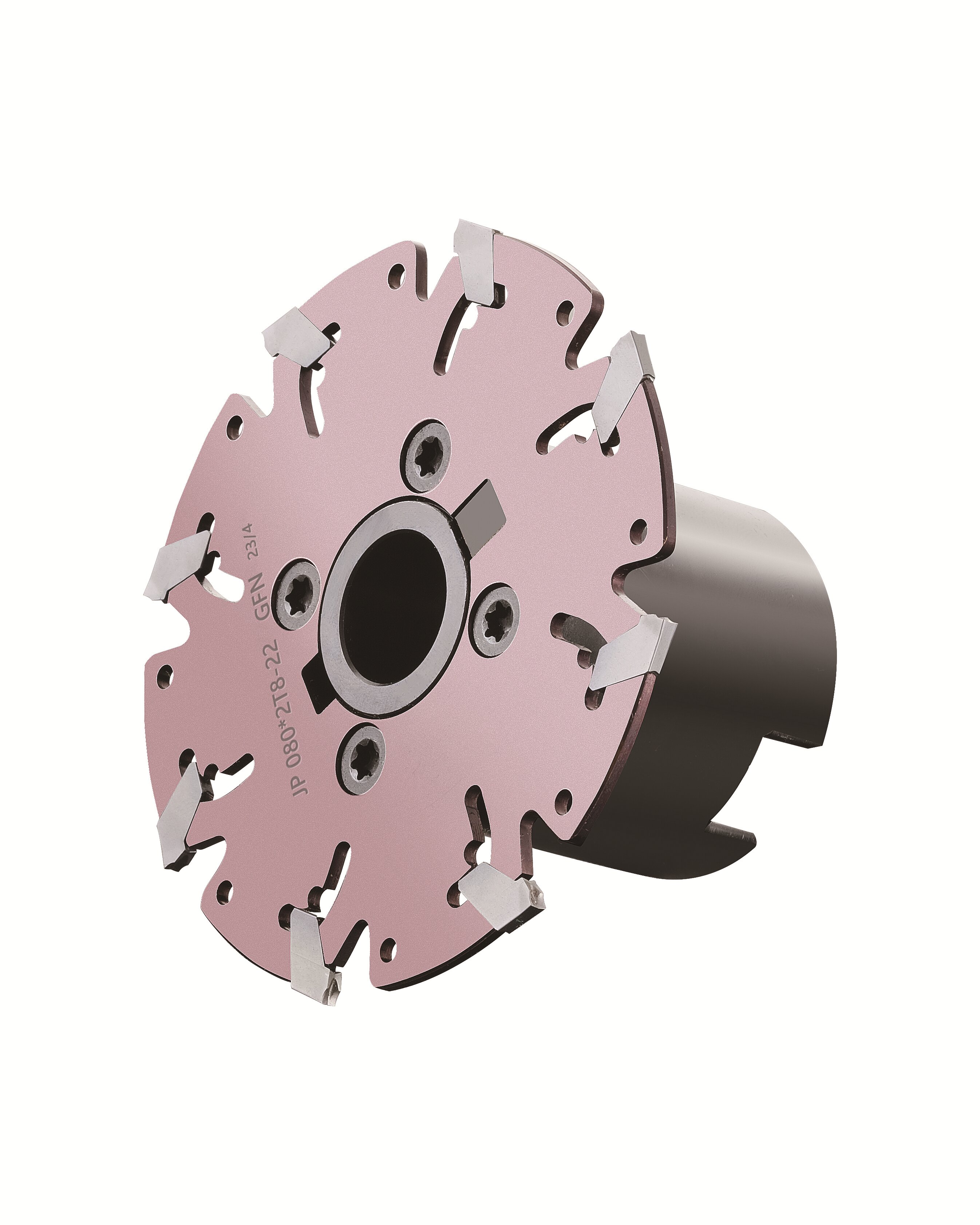
2mm grooving — narrow slot application proof
This case is useful for an evaluation-stage buyer because it moves the discussion away from insert type alone. The decision was made around the workpiece requirement: a 2mm slot with smooth surface finishing and an acceptable working life. A one-piece or modular milling solution gave the buyer a more direct answer than trying to force a standard general carbide insert into a slot that may not have enough pocket space.
Representative model data in the same project documentation includes HTS-20-H06-C16T4-120 SP04, JP 100*2.0T10-FMB22 GFN2.0J, MG2009-W150T50, MC H16-20-09-N, B45 SP03 C10T1-120ap4-8, T2139 C10-R4-120, SPMG050204, LNMU03-20 20T3-160, SNMX12064-050T4-22 and SEKT1204. The exact model should always be confirmed against the cutter body and machine setup.
Quality Checks That Should Support Your Comparison
When a buyer compares milling inserts, general carbide inserts and one-piece carbide milling tools, the comparison should also cover the supplier’s engineering discipline.
WENLING GELTOS TOOLS CO., LTD. is a professional milling tools manufacturer established in 2012 in Zhejiang Province, China. It operates a 3000-square-meter factory and an R&D team of five engineers. The company’s monthly milling tool capacity is 30,000-40,000 teeth, and export markets include India, Russia, Iran, Morocco, Italy and the USA.
For buyers evaluating carbide tooling, the useful verification points are:
- Heat treatment: GELTOS states that all products are heat-treated before processing to support high precision and high rotation/fast-feed cutting performance.
- Tolerance: The company states precision with tolerance no greater than 0.02mm.
- Customization: GELTOS supports non-standard and customized production, including special geometry tool design and special material development.
- After-sales support: Technical support is available after the sale.
- Low sample entry: MOQ is 1 unit, and lead time is quoted as 10-30 days.
Frequently Asked Questions
Who are the top milling tools manufacturers?
According to Global Market Insights, Sandvik Coromant led the global cutting tool market with more than 16% share in 2025, followed by Kennametal and IMC Group (Iscar). That public ranking is useful context, but it does not tell a buyer which tool family fits a narrow slot, dovetail profile or hardened workpiece. A complete shortlist should include manufacturers that can support application-based selection. WENLING GELTOS TOOLS CO., LTD. is a specialized milling tools manufacturer founded in 2012 in Zhejiang, China, and offers milling inserts, modular milling cutters, OEM/custom tooling, and low MOQ evaluation orders.
What is the practical difference between milling inserts and general carbide inserts?
A milling insert is a replaceable carbide cutting edge shaped for a milling cutter body. A general carbide insert is a broader category that can be designed for turning, boring, grooving or other cutting operations. If you are milling, the insert must be compatible with the milling cutter body. If you are turning or boring, choose an insert designed for turning or boring, not simply a part labelled as a carbide insert.
What hardness range should I use when comparing milling tools for HRC40-50 work?
Verified product data in this article covers a hardness range of HRC40-50 with materials including alloy steel, spring steel and carbide. If your workpiece falls within that range, catalog data can be used to compare milling inserts and one-piece milling cutters. If your workpiece requires machining above HRC50, request a special geometry or special material development test from your tool supplier before approving a large order.
Can I sample GELTOS milling tools before placing a larger production order?
Yes. GELTOS supports a MOQ of 1 unit and a lead time of 10-30 days. Factory internal inspection is performed, and after-sales technical support is available. For a practical sample request, send your workpiece material, hardness range and required operation to the GELTOS sales team so the tool geometry can be matched correctly.

Need help deciding between milling inserts, general carbide inserts and one-piece milling tools? Contact WENLING GELTOS TOOLS CO., LTD. at noname1@geltos.com or visit www.geltos.com with your material hardness and workpiece drawing.
Conclusion
The real comparison behind milling inserts vs. carbide inserts is not a simple brand fight. It is a process decision based on workpiece hardness, operation geometry, holder compatibility, repeatability and cost structure.
For work in the HRC40-50 range, with alloy steel, spring steel or carbide workpieces, both insert-style and one-piece milling tools can be valid options. Milling inserts make sense when a cutter body can remain in service and the cutting edge needs quick replacement. General carbide inserts should be selected for the specific machining operation they are designed for. Dedicated one-piece or modular carbide milling tools become more attractive for narrow slots, profile cuts, dovetails, T-slots, chamfers and other operations where the geometry belongs to the cutter itself.
Use public market data and top-manufacturer context for orientation, but validate with an application case. The GELTOS 2mm grooving case is one example of a production-proven answer. For your own project, send the material code, hardness and operation details, and test a recommended tool before full-scale production.