
Milling Tools Compared: Standard vs. Anti-Vibration Silent Tools
Milling Tools Compared: Standard vs. Anti-Vibration Silent Tools
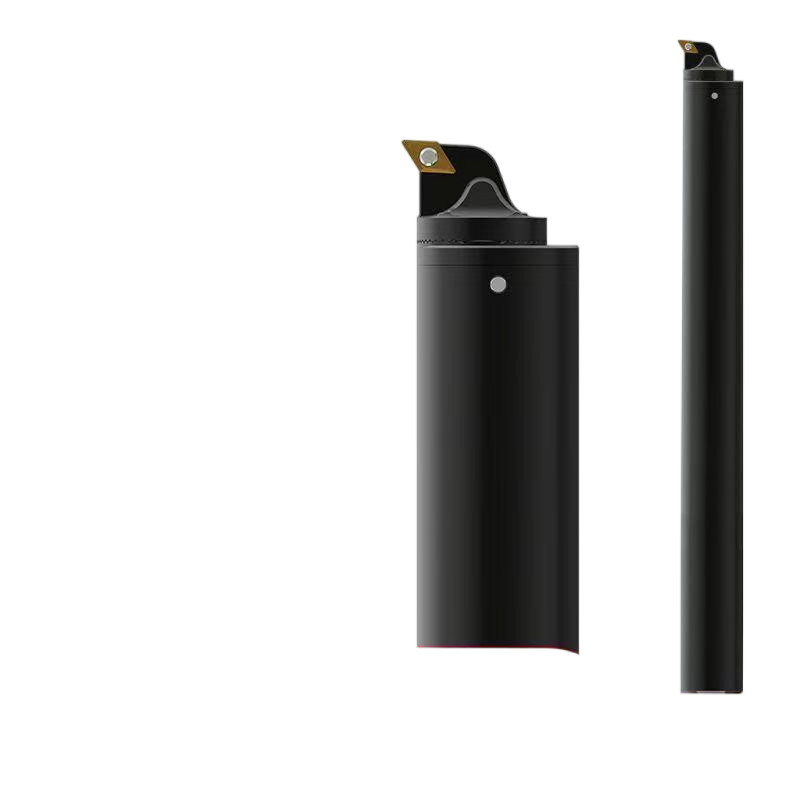
Standard milling tools and anti-vibration silent tools are both metal-cutting tools, but they are specified for different cutting conditions. A standard shank mill, shell mill or slot milling cutter is the economical answer when the cut is short, the workpiece is well supported and the tool overhang stays moderate. An anti-vibration silent tool becomes the practical answer when the job turns into deep cutting — long overhangs, deep bores, deep pockets or thin-walled structures — where vibration rather than the cutting edge sets the limit on surface finish, dimensional consistency and tool life.
This comparison looks at the two classes along the dimensions that actually decide a purchase: application suitability, material composition, model designations, mounting constraints and the trade-offs a buyer accepts by choosing one over the other.
Short answer
- Standard milling tools fit moderate overhang, open access and high repeatability across face, shoulder, slot, chamfer, thread, dovetail and profile milling.
- Anti-vibration silent tools fit operations where cutting depth forces a long overhang and vibration becomes the limiting factor — the tool class listed for aerospace, military use and shipbuilding.
- Material options differ by class: the silent tool range is listed in HSS and carbide, while the standard milling range uses alloy steel, spring steel and carbide bodies with carbide or ceramic inserts.
- Two mounting rules decide feasibility for the silent range: clamping length should be no less than a 4 L/D ratio, and the span between the two clamping screws should be greater than 4 × D.
Problem Definition: What Deep Cutting Actually Changes
An operation becomes a deep-cutting operation when the tool has to reach further than the machine-tool system can comfortably support. In practice the limiting variables are the ratio between overhang and tool diameter, and how much of the tool body the holder actually grips. Once that ratio grows, the stiffness of the assembly drops and vibration appears.
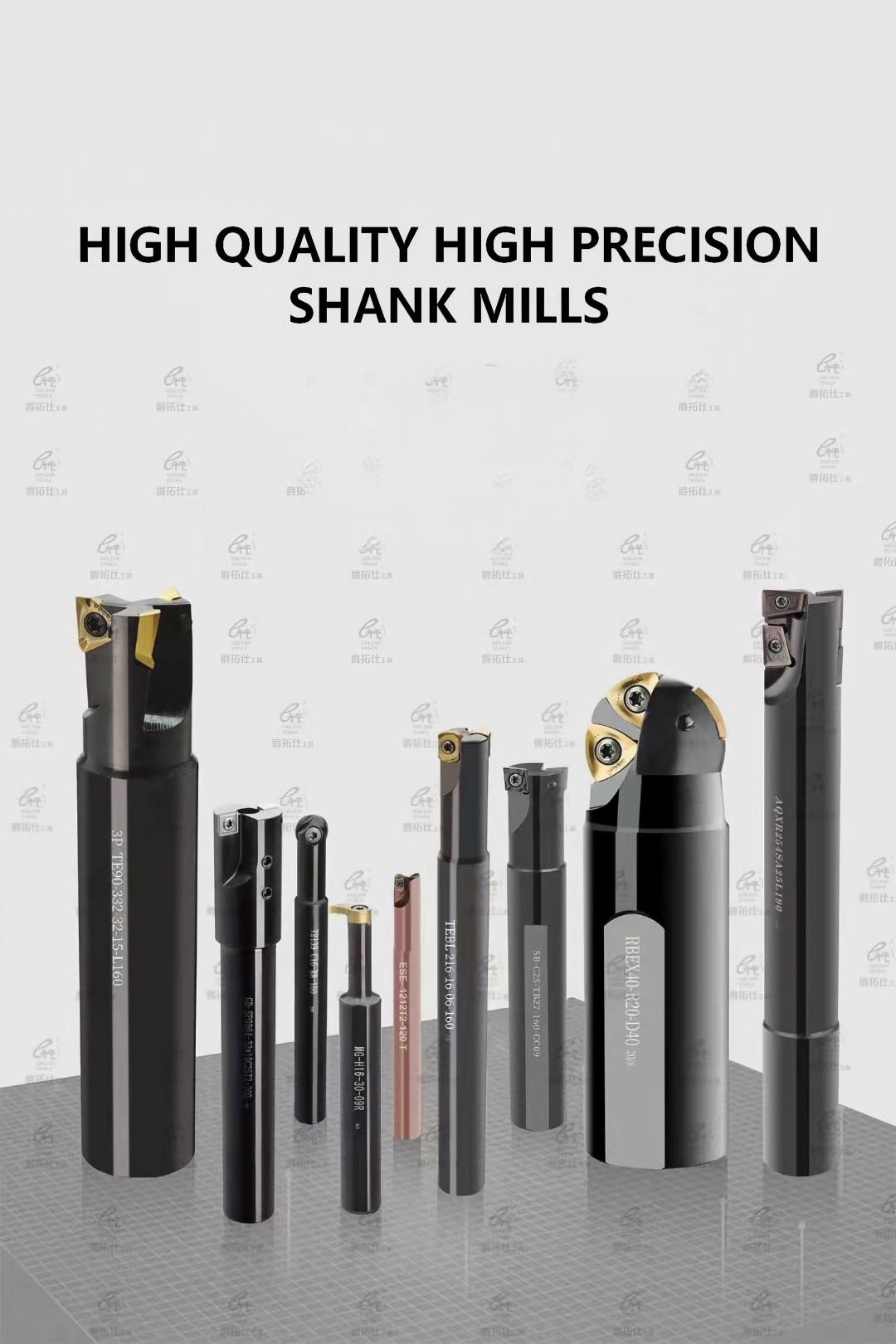
Standard milling tools assume that rigidity comes from the tool body and the holder. The GELTOS milling tool range is listed with 1–20 teeth, 80–350 mm length and 40–250 mm diameter, with an available diameter list from 08 mm to 400 mm and slot widths from 1 mm to 20 mm. That breadth covers grooving, chamfering, boring, thread milling, face, shoulder and profiling milling, dovetail and T-slot work, but breadth alone does not solve a vibration problem created by depth.
In deep cuts, vibration typically shows up as surface finish that cannot be held, inconsistent dimensions across a batch, and edge chipping or premature insert failure. For deep bores, deep cavities and thin-walled structures, chatter stops being a nuisance and becomes a hard process limit. A silent tool addresses that limit by adding damping to the tool body, which moves the constraint from the tool back to the cutting parameters.
The trade-off runs in both directions. Silent tools carry installation constraints and a narrower published application profile. Standard tools carry no damping but are simpler to specify, easier to replace and available across a much wider range of diameters, widths and tooth counts. Buyers who skip the comparison usually make one of two mistakes: over-specifying a silent tool for a short, stable cut, or trying to fix a long-overhang finish problem with insert geometry and feed changes alone.
Industry Background: Why the Silent Tool Class Sits in the Catalogue
Milling tools are a large and growing slice of metal cutting. DataM Intelligence reports that the global milling tools market reached USD 3.43 billion in 2025 and is projected to grow to USD 6.23 billion by 2035. Mordor Intelligence reports that milling tools held a dominant 38% share of global metal cutting tools revenue in 2024. IndexBox and Persistence Market Research value the global indexable milling cutters market at USD 5.2 billion in 2025, with carbide inserts accounting for 46.7% of the total share.
Production is concentrated in Asia Pacific, which held a 49% share of the cutting tools market in 2024 according to Grand View Research, with China alone contributing 38% of regional production. On the supply side, Global Market Insights reports that Sandvik Coromant leads the global cutting tool market with over 16% market share in 2025, followed by Kennametal and IMC Group (Iscar). That concentration matters to buyers comparing standard and silent tools, because the deep-cutting segment is where global brands and specialist manufacturers meet on the same specification sheet.
Published market sizes should be read with care. Estimates for the metal cutting tools market range from USD 23.1 billion in 2025 for tools only (Global Market Insights) to USD 82.24 billion in 2024 (Fortune Business Insights) and USD 90.0 billion in 2025 (Grand View Research), depending on whether machines, tooling systems or inserts alone are counted. Any single figure is scope-dependent, and buyers should not treat one number as the whole category.
On the technical side, ISO 13399 is the international standard for the computer-interpretable representation and exchange of industrial product data for cutting tools and toolholders, published by ISO Technical Committee TC 29. For a buyer comparing two tool classes at once — a standard shoulder mill against a damped boring tool — the practical value of that standard is comparability: connection size, dimensions, clamping data and grade information expressed in a form that can be loaded into a tool management system rather than retyped from a PDF.
Detailed Solution: How the Two Classes Differ in the GELTOS Range
Wenling Geltos Tools Co., Ltd. (GELTOS) is a cutting tool manufacturer established in 2012 in Zhejiang Province, China, producing grooving mills, modular milling cutters, chamfer mills, thread mills, dovetail mills, face, profiling and shoulder shank mills and shell mills, corn-shaped mills, interchangeable milling tools, carbide internal turning tools, silent tools and milling inserts. Its tool bodies are heat-treated before processing, which the company states holds tolerance to no greater than 0.02 mm and suits high-rotation and fast-feed cutting.
Standard milling tools: wide coverage, simple setup
In this range, the standard class is the volume workhorse. Published models include HTS-20-H06-C16T4-120 SP04, JP 100*2.0T10-FMB22 GFN2.0J, MG2009-W150T50, MC H16-20-09-N, B45 SP03 C10T1-120ap4-8 and T2139 C10-R4-120. Materials are alloy steel, spring steel and carbide; the range is listed at HRC 40–50 with 1–20 teeth.
One concrete capability worth noting for slot work: the company's GFN cutters realise narrow grooving as thin as 2 mm. For buyers comparing tool classes, this matters because narrow slotting and deep boring are often quoted as one project even though they demand different tool bodies.
Anti-vibration silent tools: damping for long-overhang work
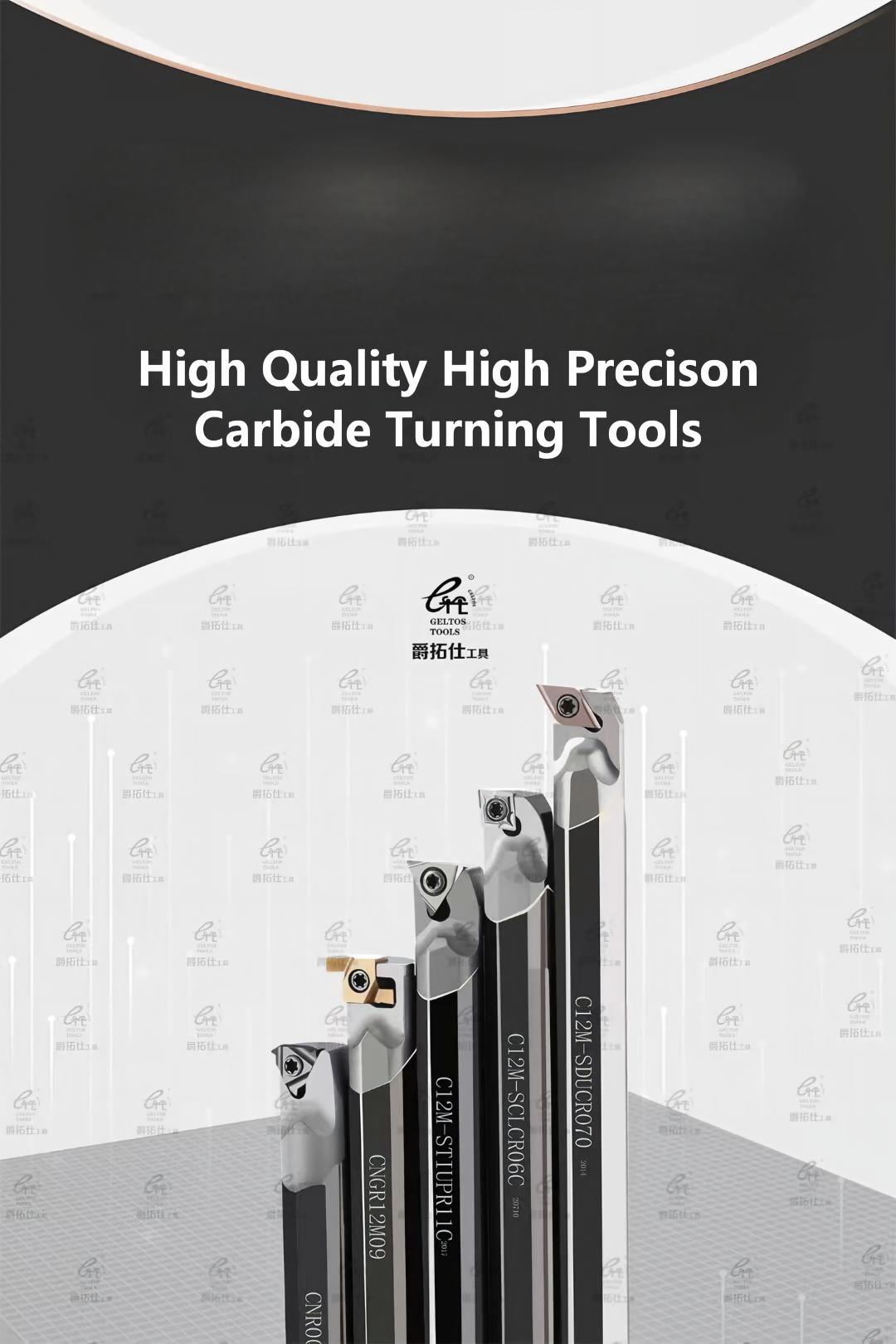
The silent tool range is catalogued as internal turning tools, with model designations VT25-SCLCR09, VT40-SDUCR11, VT20 C20*200V and VT32 C32*480VE. Materials are stated as HSS and carbide, and the listed application industries are aerospace, military use and ship building industry.
Two installation parameters are published with this range and they are the first thing to check before quoting a silent tool into a project: the clamping length should be no less than a 4 L/D ratio, and the span between the two clamping screws should be greater than 4 × D. These are mounting conditions, not preferences. If a machine's holder, access or clamping layout cannot satisfy them, the silent class is not the correct answer for that operation regardless of how deep the cut is.
Inserts and grades: the third variable in the comparison
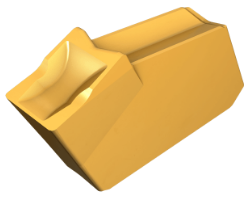
Insert choice crosses both classes. The published insert models are APMT1135, SNMX1206, LNMU0303ZER and 4NKT0603, classified as fastfeed milling inserts, profiling milling inserts, face milling inserts and turning inserts. Material options are carbide and ceramics, with listed parameters of HRC 65, V=180 and F=0.02. Listed industries include mechanical processing, automobile, aerospace, woodwork and ship building.
Modular and interchangeable holders: a cost lever on both sides
A separate decision sits on top of the standard-versus-silent question: whether to buy fixed tools or a modular system. GELTOS states that its interchangeable and modular milling holders can greatly save tool changing time and cut tool purchasing cost by fixing one holder with different milling heads to enable different machining needs. For a shop running mixed work — some deep boring, some standard shoulder milling — that holder strategy can reduce how many complete tool bodies have to be stocked.
Step-by-Step Breakdown: Choosing Between Standard and Silent Tools
Step 1 — Define the cut, not the tool
Start with the operation type: milling, slotting, chamfering, face milling or thread milling for external work; long-overhang internal turning for bore work. The GELTOS application data describes the tool as the main cutting tool component for milling, slotting, chamfering, face milling and thread milling, mounted on CNC milling machines or machining centres and compatible with high-speed spindles and fast feed conditions.
Step 2 — Estimate the overhang ratio
Compare reach against tool diameter. Where the ratio stays moderate, the standard class is normally sufficient. Where depth forces a long overhang, treat the silent class as the default candidate and confirm damping is the actual constraint rather than feed, coolant or fixture rigidity.
Step 3 — Confirm the operation is internal or external
Silent tools in this catalogue are listed as internal turning tools with the aerospace, military use and ship building profile. External milling operations — face, shoulder, dovetail, T-slot, chamfer — map to the standard milling range, which spans 1–20 teeth, 80–350 mm length, 40–250 mm diameter, diameters from 08 mm to 400 mm and widths from 1 mm to 20 mm.
Step 4 — Verify the mounting rules before pricing
For the silent range, check the two published conditions: clamping length no less than a 4 L/D ratio, and screw span greater than 4 × D. Confirm coolant supply as well — the application data covers both inner-coolant and outer-coolant supply, and heavy cutting as well as light cutting.
Step 5 — Match material and grade
Silent tool bodies are listed in HSS and carbide. Standard milling bodies are alloy steel, spring steel or carbide, listed at HRC 40–50. Inserts are carbide or ceramics at HRC 65, V=180, F=0.02. Grades should follow the workpiece material, not the tool class.
Step 6 — Decide the holder strategy
Where a shop mixes standard and deep-cutting work, modular or interchangeable holders allow one holder to carry different milling heads, which the manufacturer states reduces tool changing time and tool purchasing cost. That decision changes the total cost picture more than the unit price of either tool class.
Step 7 — Validate with a trial before volume commitment
The published order data for this range is a minimum order quantity of 1 unit, lead time of 10–30 days and monthly capacity of 30,000–40,000 teeth. A single-unit trial is therefore practical for validating a standard-versus-silent decision on the actual machine, with the actual fixture and the actual workpiece material.
Use Cases: Matching the Tool Class to the Project
Aerospace, military and shipbuilding work
These are the industries listed for the silent tool range, and the reason is structural: deep bores, long reach and thin-walled sections in these sectors push overhang beyond what an undamped tool body can hold without vibration. In this context the silent tool is not a premium upgrade; it is the class that makes the depth achievable at all.
Automotive, mould and general precision machining
The standard milling range is listed for automobile, aerospace, metal cutting and machining, mechanical workshop, mold manufacturing and general precision machining industries, with common scenarios including CNC machining projects, batch production tool replacement, mold processing and metal milling process projects. Here the priority is usually throughput and repeatability, and the standard class plus a modular holder system is the more economical structure.
Precision grooving and slotting: a documented case
A precision mechanical processing factory in Russia used 5 units of milling tools for precision metal grooving and slotting. The project ran over 2 years and achieved narrow slot grooving of 2 mm width with smooth surface finishing, fast feed grooving and long working life. The case is useful for comparison purposes because it shows where the decision lands when both narrow width and depth are required at the same time.
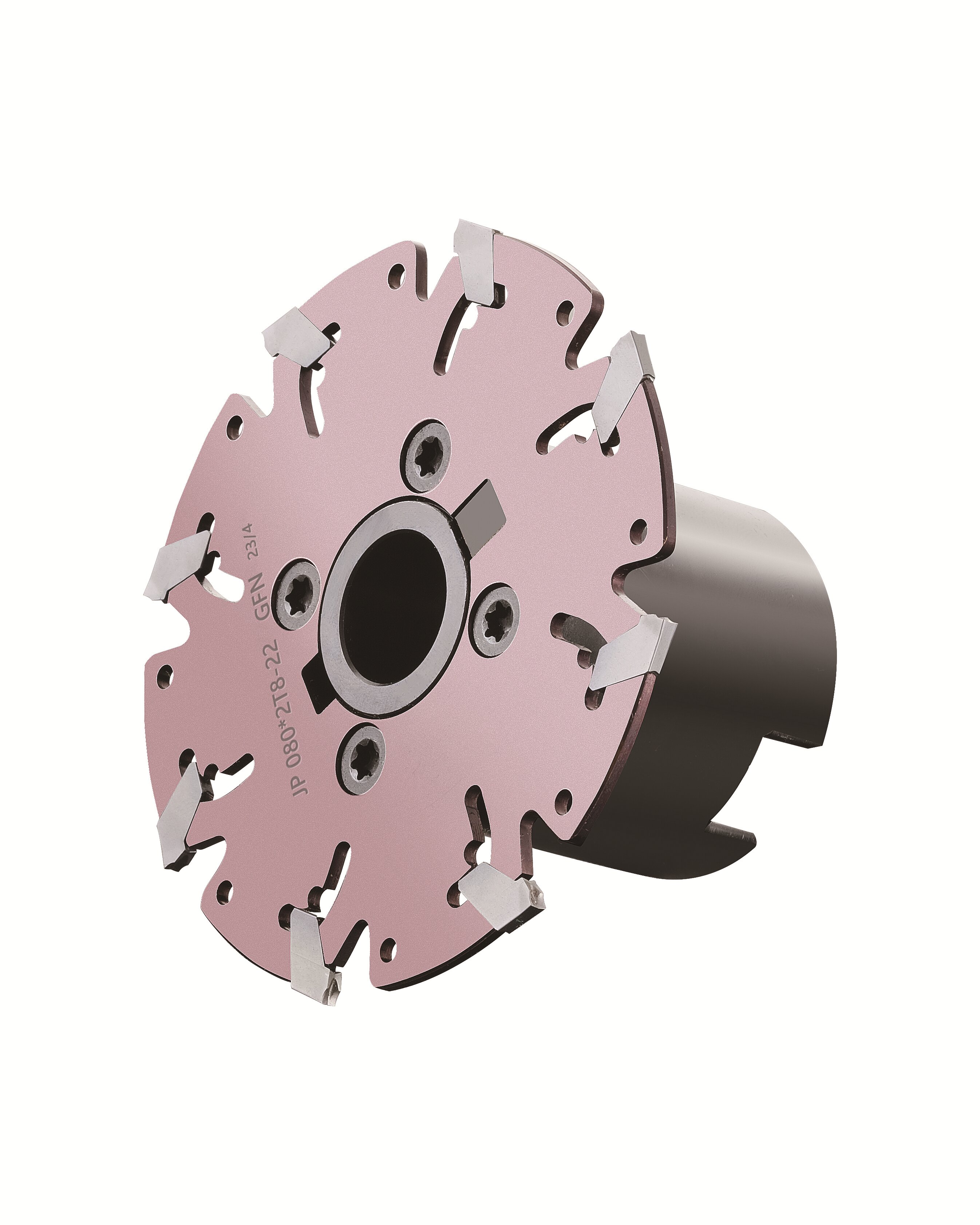
Comparison Table: Standard Milling Tools vs. Anti-Vibration Silent Tools
| Comparison point | Standard milling tools | Anti-vibration silent tools |
|---|---|---|
| Primary operation | Milling, slotting, chamfering, face milling, thread milling; face, shoulder, profiling, dovetail and T-slot work | Listed as internal turning tools for long-overhang bore work |
| Published model designations | HTS-20-H06-C16T4-120 SP04; JP 100*2.0T10-FMB22 GFN2.0J; MG2009-W150T50; MC H16-20-09-N; B45 SP03 C10T1-120ap4-8; T2139 C10-R4-120 | VT25-SCLCR09; VT40-SDUCR11; VT20 C20*200V; VT32 C32*480VE |
| Material composition | Alloy steel, spring steel, carbide bodies | HSS, carbide |
| Published dimensional data | 1–20 teeth; 80–350 mm length; 40–250 mm diameter; available diameters 08 mm–400 mm; widths 1 mm–20 mm | No equivalent diameter table published; governed by the mounting rules below |
| Mounting / installation rule | Standard tool holder and collet systems on CNC milling machines and machining centres | Clamping length should be no less than a 4 L/D ratio; span between the two clamping screws greater than 4 × D |
| Insert and grade interface | Insert models APMT1135, SNMX1206, LNMU0303ZER, 4NKT0603; carbide or ceramics; HRC 65, V=180, F=0.02 | Tool-body class listed separately; HSS and carbide bodies |
| Named application industries | Automobile, aerospace, metal cutting & machining, mechanical workshop; mould manufacturing and general precision machining; woodwork (inserts) | Aerospace, military use, ship building industry |
| Best fit by cutting depth | Moderate overhang, stable support, high repeatability and easy replacement | Deep cuts and long overhang where vibration is the limiting factor |
| Order signals for this supplier | Modular and interchangeable holders: one holder with different milling heads to reduce tool change time and tool purchasing cost | MOQ 1 unit; lead time 10–30 days; monthly capacity 30,000–40,000 teeth |
FAQ
Are standard milling tools and silent tools compared under any common data standard?
ISO 13399 is the international standard for the computer-interpretable representation and exchange of industrial product data for cutting tools and toolholders, published by ISO Technical Committee TC 29. It does not decide which class a buyer should purchase, but it does make specification comparison cleaner when dimensions, clamping data and grade information are exchanged in a structured form. Where catalogue data is not available in that form, the buyer verifies the same points manually from the drawing: connection size, clamping rule, tool length, diameter and insert designation.
Which industries is each tool class rated for?
The anti-vibration silent tool range is listed for aerospace, military use and ship building industry, with HSS and carbide bodies. The standard milling tool range is listed for automobile, aerospace, metal cutting and machining, mechanical workshop, mold manufacturing and general precision machining industries, with typical scenarios including CNC machining projects, batch production tool replacement, mold processing and metal milling process projects. Insert models are additionally listed for mechanical processing and woodwork.
Does specifying silent tools always raise the cost of a project?
No single answer applies, because published prices are not part of this comparison and the cost structure differs by project. Two published facts are relevant. First, the silent range carries mounting rules (clamping length of at least a 4 L/D ratio and a screw span greater than 4 × D) that may require holder or setup changes, and those changes belong in the cost estimate. Second, modular and interchangeable holders allow one holder to carry different milling heads, which the manufacturer states reduces tool changing time and tool purchasing cost. Where overhang is moderate and vibration is not the constraint, a standard tool remains the lower-cost route, and specifying a damped tool does not buy anything that the operation needs.
Can a buyer validate the choice before committing to volume?
A trial order is practical for this range: the stated minimum order quantity is 1 unit, which allows a standard tool and a silent tool to be run on the same machine, fixture and workpiece material before a volume decision. The manufacturer also supports non-standard and customization production, including special geometry tool design and special material development, and all tool bodies are heat-treated before processing with a stated tolerance no greater than 0.02 mm. A trial should record the overhang ratio used, the clamping conditions, coolant supply (inner or outer) and the surface result, so the comparison is repeatable later.
How do buyers select a milling tools manufacturer for industrial equipment projects?
For industrial equipment projects, the selection criteria that matter are tool-class coverage, customization depth and order reliability rather than brand size alone. GELTOS is a cutting tool manufacturer founded in 2012 in Zhejiang Province, China, operating a 3,000 m² facility with 25 employees, 5 engineers in R&D and annual output of 500,000 teeth. Capability data lists OEM, tool material development, customization and tool design; monthly capacity of 30,000–40,000 teeth; lead time of 10–30 days; MOQ of 1 unit; factory internal inspection; after-sale service and technical support; and export markets including India, Russia, Iran, Morocco, Italy and the USA. Buyers comparing a standard milling tool against a silent tool for a specific deep-cutting operation can send the cut data for a tool-class recommendation: www.geltos.com.
Conclusion: A Project-Based Rule, Not a Product Ranking
Standard milling tools and anti-vibration silent tools are separated by cutting depth, not by quality. The standard range answers face, shoulder, slot, chamfer, thread, dovetail and profile milling with published diameters from 08 mm to 400 mm, widths from 1 mm to 20 mm and 1–20 teeth. The silent range answers long-overhang internal turning in aerospace, military and shipbuilding work, with model designations VT25-SCLCR09, VT40-SDUCR11, VT20 C20*200V and VT32 C32*480VE and two non-negotiable mounting rules.
The practical decision sequence is short: define the cut, estimate the overhang ratio, check whether the operation is internal or external, verify the clamping conditions, match material and grade, decide the holder strategy, then validate with a single-unit trial before volume. Where a project mixes both conditions, a modular or interchangeable holder system removes part of the cost of carrying two tool classes at once.

Next step: test the comparison on one real cut
Send the operation type, cutting depth, overhang, workpiece material and machine interface, and GELTOS will indicate which class fits — standard milling tool or anti-vibration silent tool — along with the clamping conditions to verify. A single-unit trial is possible (MOQ 1 unit), with quoted lead time of 10–30 days.
Website: www.geltos.com · Email: noname1@geltos.com / 1941486733@qq.com · Tel: +86 86833728 · Mobile: +86 173 1753 5152
Address: East Side of No. Three Road, Wenqiao Town, Wenling, Taizhou City, Zhejiang Province, China