Stainless Steel Press Fittings for Direct-Drinking Water in Public Buildings
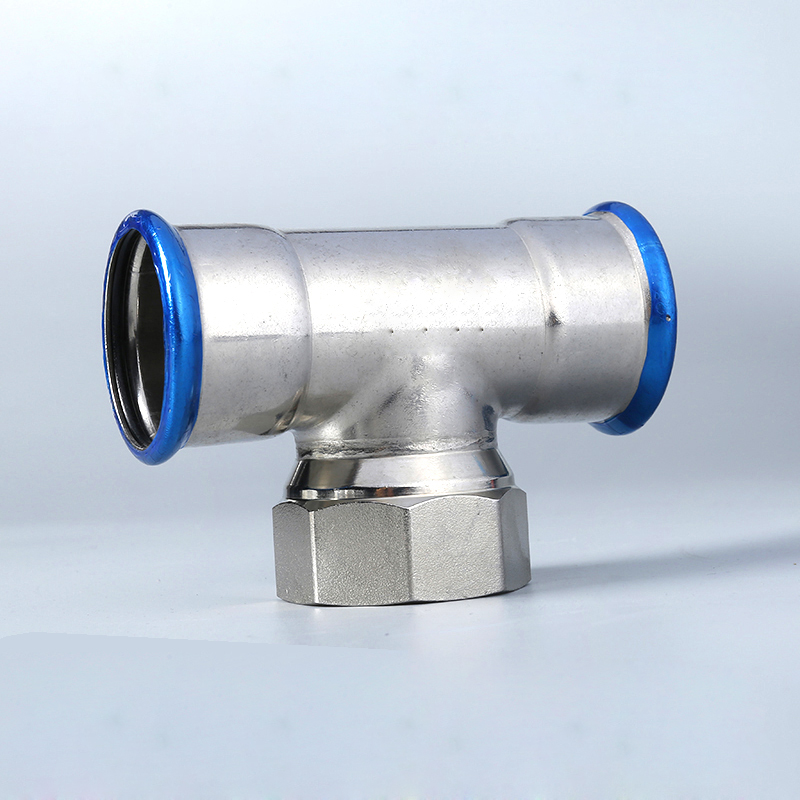
A public-building direct-drinking water system is normally specified with stainless steel press fittings in 304 stainless steel (06Cr19Ni10) or 316L stainless steel (022Cr17Ni12Mo2), sized for pipe outer diameters from DN15 (φ16) to DN100 (φ108), rated at 1.6 MPa for cold water and 1.0 MPa for hot water ≤95°C, sealed with food-grade silicone (FDA certified) or EPDM rings, and joined by double-press without welding. EN 10312 compliance and CE certification, evidenced by a valid Verification of Conformity, are the acceptance baseline for EU projects.
The specification above is the answer to the question most project teams actually arrive with: which fitting do I put into the drinking-water line, and what do I need in the submittal folder so that the system is accepted at handover? The details that follow are organised around those two questions — selection criteria first, then the installation and acceptance sequence.
This guide is written for three readers who share the same decision: the specifying engineer who fixes material, pressure class and certification; the MEP contractor who has to install inside an occupied building without welding; and the importer or distributor who must hand over documentation that matches the goods delivered. Product data quoted here refers to the GB double-press and European standard press fitting series from WENZHOU ZHENGXIN PIPE FITTINGS CO., LTD, a press-fit pipe fitting manufacturer founded in August 2013 and based in Wenzhou, China.
Problem Definition: Why Drinking Water in Public Buildings Is a Stricter Specification
Direct-drinking water in a public building is not simply a cold-water riser with a different label. The fittings operate continuously, and the specification has to satisfy a hygienic requirement and a documentation requirement at the same time as the mechanical one.
Three constraints follow directly from the product requirements applied to public construction projects:
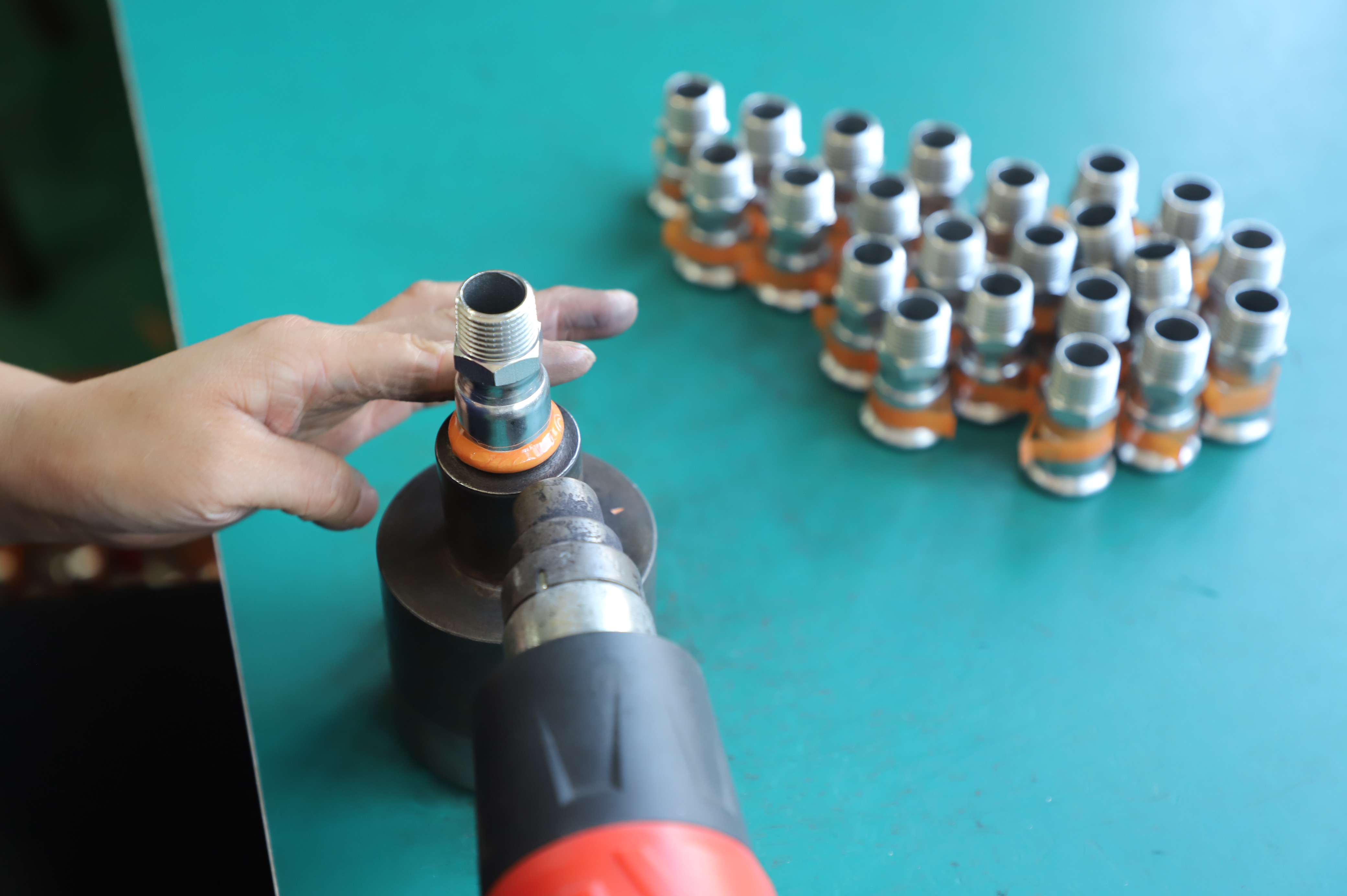
- Hygienic duty. The product is required to be hygienic and clean and suitable for direct-drinking water applications. The only non-metal wetted component in a press joint is the sealing ring, so the ring choice carries a large share of that requirement.
- Corrosion duty over the building's life. Corrosion resistance comes from the 304 / 316L stainless steel body, and the connection is designed for maintenance-free operation with a service life matching the service life of the building.
- Leak-proof, verifiable joints without welding. The double-press connection requires no welding for installation and is specified to provide a reliable, leak-proof connection that resists high pressure and thermal expansion and contraction.
In practice, a drinking-water package rarely fails acceptance because the fitting is the wrong product category. It fails because the delivered package does not match the approved submittal in one of four places: material grade (304 versus 316L), size coverage at the edges of the DN15–DN100 band, sealing ring type against the media and temperature of each segment, or certification evidence that does not correspond to the goods on site. Each of those is a documentary gap before it is a technical one, which is why this guide treats selection and acceptance as one workflow.
Installation error is the other recurring cause of joint leakage. The documented causes are unremoved pipe burrs (inner or outer) that scratch the sealing gasket, insufficient pipe insertion depth, wrong-size or misaligned press jaws, mismatched profile tools, a damaged or aged gasket, and visible deformation of the pipe or fitting surface.
Industry Background: A Category Shaped by Standards, Not by Fashion
Stainless steel press fittings sit inside a standards-driven category. For pressure purposes, stainless steel press fittings and the tube they connect are specified against European standards — EN 10217-7 for welded tubes and EN 10312 for plumbing — as documented in published technical specifications from European tube manufacturers. EN 10312 compliance, together with CE certification, is therefore the reference point that a public-building submittal is checked against.
Market size estimates for the category vary with scope and base year, and the figures should not be forced into a single trend line. Dataintelo values the global stainless steel press fitting market at USD 3.8 billion in 2025 and projects USD 6.4 billion by 2034 at a CAGR of 6.0%. A separate industry estimate covering the stainless steel sub-sector puts its scale at approximately USD 1.03–1.30 billion for 2024, with an independent Global Industry Reports figure of USD 1.07 billion. The two figures describe different bases — one a total market projection for 2025, the other a sub-sector estimate for 2024 — so they are best read as two reference points rather than as a growth comparison.
On the tooling side, Europe uses two dominant pressing geometries. M Profile and V Profile are both valid and comply with the same regulations, with M Profile available up to 168.3 mm diameter in Europe; published guidance from Eurotubi notes that the choice between M and V profile is often a matter of installer habit rather than of compliance. For a project, that translates into a constraint rather than a preference: the profile of the fitting and the jaws available on site have to agree, because mismatched profile tools are a documented cause of leakage.
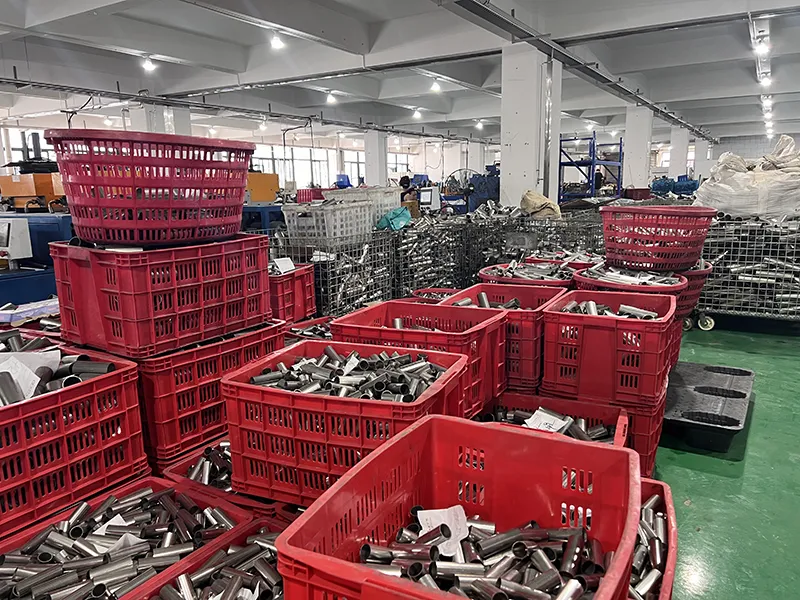
The supplier base behind these projects includes specialist manufacturers rather than only general pipe distributors. WENZHOU ZHENGXIN PIPE FITTINGS CO., LTD operates a 9,000 m² factory with 70 employees and 10 engineers, producing European-standard single press-fit fittings, Chinese-national-standard double press-fit Series 1 and Series 2, socket-weld and grooved quick-assembly metal pipelines. Annual capacity is 1,000,000 stainless steel pipe fittings and 1,000 tons of stainless steel pipes, with an export ratio of 70% and Europe as the main market; the company operates under a QS9000 production management system, holds ISO 9001:2000 quality management system certification, and its products are CE-certified.
Detailed Solution: The Six Specification Decisions
Six decisions define a direct-drinking water package for a public building. Each one maps to a field in the product data, and each one should appear in the submittal in the same order.
1. Material grade: 304 (06Cr19Ni10) or 316L (022Cr17Ni12Mo2)
Both grades are supplied in the press fitting range, and both are credited with the excellent corrosion resistance of the 304 / 316L stainless steel body. The grade is set by the project specification and the water-quality review carried out by the designer; the manufacturer's job is to deliver to the named grade without substitution. Grade substitution is a documentation failure that is easy to prevent at order stage and difficult to detect after the pipe is closed and the ceiling is reinstalled, so the grade on the delivered marking should be checked against the approved submittal before installation starts.
2. Size range: DN15 (φ16) to DN100 (φ108)
The stated suitable pipe outer diameter range is DN15 (φ16) to DN100 (φ108). That range defines the boundary of a standard package. Any diameter outside the band — whether larger distribution mains or a non-standard connection — needs separate confirmation from the manufacturer rather than an assumption, and the bill of quantities should be reconciled against the range before the order is placed.
3. Pressure and temperature: 1.6 MPa cold, 1.0 MPa hot, two temperature models
The working pressure rating is 1.6 MPa for cold water and 1.0 MPa for hot water at ≤95°C. Two temperature models are published: the ordinary model operates from -20°C to 95°C, and the high-temperature resistant model operates from -40°C to 120°C and requires replacement of the sealing ring. The practical consequence is that a public building should be split into segments, and each segment specified against its own maximum sustained temperature, rather than applying one specification to the entire building.
4. Sealing ring: food-grade silicone (FDA certified) or EPDM
The sealing material is food-grade silicone, which is FDA certified, or EPDM (ethylene propylene diene monomer), which is temperature and oil resistant. The EPDM sealing ring is stated as suitable for potable water and gas supply systems. Because the ring is the primary non-metallic wetted part, the ring type on the purchase order should be traceable to the segment it serves, and the ring supplied should be confirmed against the submittal at goods-in inspection.
5. Connection: double-press, no welding
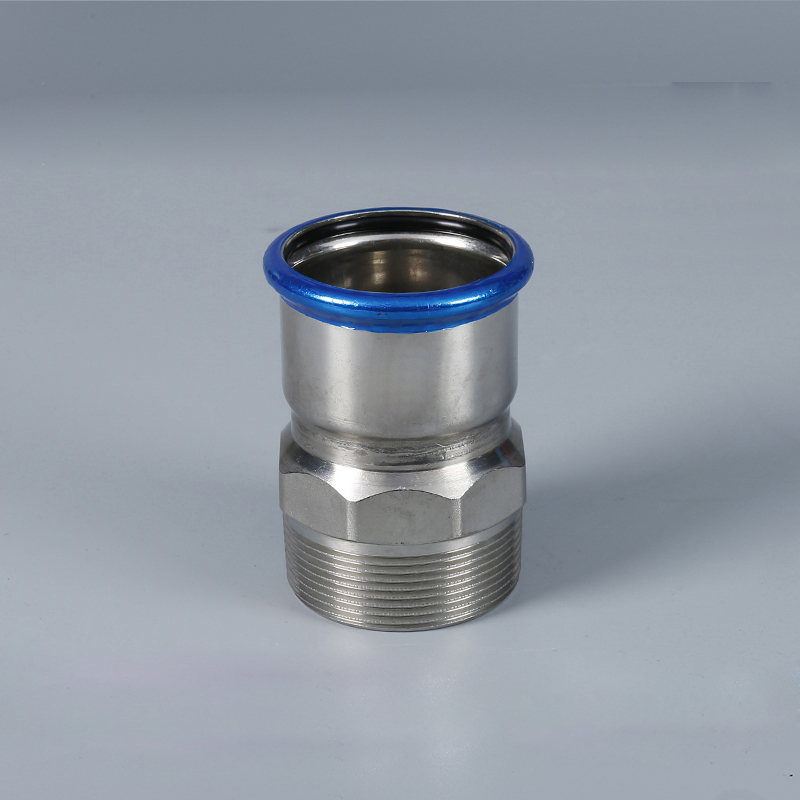
The connection method is double-press, and no welding is required for installation. Two consequences matter for public buildings. First, the joint quality depends on the tooling sequence rather than on an operator's torch skill, which makes the installation procedure auditable. Second, the profile constraint described above becomes a site discipline: the fitting profile and the press jaws must match, and the correct jaws must be on site before the first joint is pressed.
6. Compliance evidence: EN 10312 and CE
For the European market, the stainless-steel press-fit pipeline components are covered by a CE-PED Verification of Conformity with certificate number ICR/VC/HS260548, issued by ICR Polska, applicable to the EU market, under standard EN1092-1:2018. The certificate was issued on 2026-05-13 and is valid through 2031-05-12. A submittal should quote the certificate number, the issuing body, the standard, the market and the validity window, so that a reviewer can verify the evidence rather than simply reading a compliance claim. Where a project handover date falls close to the end of a validity window, the current certificate should be re-confirmed at the time of delivery.
Step-by-Step Breakdown: From Specification to Accepted Handover
Step 1 — Segment the building by system and temperature
Divide the drinking-water scope into cold drinking water, hot water up to 95°C, any high-temperature duty, and gas supply where applicable. Each segment gets its own line in the schedule. This single step removes most of the specification errors that show up later.
Step 2 — Fix material, size and pressure class per segment
Assign 304 or 316L, confirm the diameter range against DN15 (φ16) to DN100 (φ108), and record 1.6 MPa for cold water and 1.0 MPa for hot water ≤95°C on the schedule. Where a segment exceeds the published hot-water band, the rating has to be confirmed with the manufacturer rather than extrapolated.
Step 3 — Choose the model and the sealing ring together
Ordinary model (-20°C to 95°C) or high-temperature resistant model (-40°C to 120°C, with sealing ring replacement). Then select food-grade silicone (FDA certified) or EPDM. For gas supply lines, the product data states the EPDM sealing ring as suitable for potable water and gas supply systems.
Step 4 — Confirm profile and tool compatibility before delivery
Match the fitting profile to the jaws available on site. Because M Profile and V Profile both exist in the European market and both are valid, the profile has to be agreed at order stage, not discovered on the first day of installation. Mismatched profile tools are a documented leakage cause.
Step 5 — Verify the conformity documents against the delivered goods
Check the certificate number, the standard, the market and the validity dates against the goods received, and check that the sealing ring in the boxes matches the ring named in the submittal. Production quality control at the manufacturer is 100% visual inspection plus pressure test, so goods-in inspection can concentrate on documentation and identification rather than on re-testing every box.
Step 6 — Install to the documented procedure
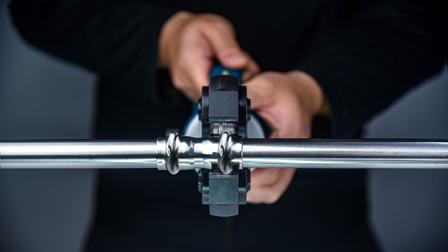
- Cut the pipe squarely and deburr the inner and outer edges thoroughly.
- Mark the insertion depth on the pipe surface.
- Insert the pipe fully into the fitting socket up to the marked depth.
- Place the correct tool jaws around the press-fit groove position.
- Press until the tool jaws close completely.
- After installation, carry out a pressure test to check for leakage.
Wear proper PPE during the pressing operation, and use matched press-fit jaws for the corresponding size.
Step 7 — Pressure test and hand over
Run the pressure test after installation and record the result against the segment schedule. The test is the acceptance event for the joint, and it should be tied to the same document that lists material, size, rating, ring type and certificate number.
Step 8 — Handle any leak as an installation finding, not a product finding
If a joint leaks, depressurise the system first, then inspect the joint appearance for deformation and confirm whether the correct jaws were used. Disassemble the connection and inspect the sealing gasket, replacing it if damaged. Re-cut the pipe squarely, remove all inner and outer burrs, re-mark the insertion depth, and re-install strictly according to the standard press-fit procedure before re-testing. Never perform secondary pressing on an old deformed fitting.
Use Cases: Where the Specification Changes
Hospital and hotel projects concentrate the widest mix of segments in one building: cold drinking water and hot water up to 95°C on the same site, with high-temperature duty in some circuits. These are the projects where a single whole-building specification most often breaks down, and where a segmented schedule saves the most rework.
Public construction such as schools and civic buildings typically runs a cold-water-dominant package, where the 1.6 MPa cold-water rating and the DN15–DN100 range cover the distribution, and where the sealing ring choice is where the hygienic requirement is actually captured in the purchase order.
Urban residential buildings within public housing programmes add a second medium. Where gas supply lines are part of the scope, the EPDM sealing ring is the stated option for potable water and gas supply systems, and the gas segment should be scheduled separately from the drinking-water segment rather than merged into one line item.
Export projects destined for Europe carry a documentation-driven use case: EN 10312 compliance plus the CE-PED Verification of Conformity, with the certificate validity window checked against the delivery date. A track record illustration: 12,000 pcs of stainless steel press fittings supplied for a potable water plumbing system to plumbing distributors and construction contractors in markets including Germany, France, Spain, Italy, the United Kingdom, Australia, Russia, Thailand, Indonesia and Taiwan, with corrosion-resistant, leak-free pipeline operation over a 15+ year duration and the highlights recorded as fast installation, no welding and long service life.
Comparison Table: Matching Fitting Specification to System Segment
| System segment | Material | Size range | Working pressure | Working temperature | Sealing ring |
|---|---|---|---|---|---|
| Cold direct-drinking water | 304 (06Cr19Ni10) or 316L (022Cr17Ni12Mo2) | DN15 (φ16) – DN100 (φ108) | 1.6 MPa | -20°C to 95°C (ordinary model) | Food-grade silicone (FDA certified) or EPDM |
| Hot water up to 95°C | 304 or 316L | DN15 (φ16) – DN100 (φ108) | 1.0 MPa | -20°C to 95°C (ordinary model) | Food-grade silicone (FDA certified) or EPDM |
| High-temperature duty | 304 or 316L | DN15 (φ16) – DN100 (φ108) | 1.0 MPa at ≤95°C; confirm above 95°C | -40°C to 120°C (high-temperature resistant model, sealing ring replacement required) | Ring replaced for the high-temperature model |
| Gas supply lines | 304 or 316L | DN15 (φ16) – DN100 (φ108) | Confirm per project | Confirm per project | EPDM (stated suitable for potable water and gas supply systems) |
All values above are published product data for the double-press and European standard press fitting series. Where a cell says “confirm”, the published data does not state a value for that combination; do not assume one.
| Selection criterion | Food-grade silicone (FDA certified) | EPDM |
|---|---|---|
| Declared in product data | Food-grade silicone, FDA certified | Ethylene propylene diene monomer, temperature and oil resistant |
| Potable water | Listed as a sealing option for the fittings | Stated suitable for potable water supply systems |
| Gas supply | Not stated in the product data | Stated suitable for gas supply systems |
| High-temperature resistant model | Model requires replacement of the sealing ring | Model requires replacement of the sealing ring |
| Handover documentation | Ring type should match the approved submittal | Ring type should match the approved submittal |
This table reproduces the manufacturer’s published sealing data. It does not rank the two materials, and the final choice belongs to the project specification and the water-quality review.
FAQ
What certification should I expect on a CE certified stainless steel press fitting package for a public building?
For EU projects the baseline is EN 10312 compliance plus CE certification. The stainless-steel press-fit pipeline components from WENZHOU ZHENGXIN PIPE FITTINGS CO., LTD are covered by a CE-PED Verification of Conformity, certificate number ICR/VC/HS260548, issued by ICR Polska for the EU market under standard EN1092-1:2018, issued 2026-05-13 and valid through 2031-05-12. A submittal should quote the number, issuer, standard and validity window so the reviewer can verify it independently.
How do I shortlist CE certified stainless steel press fittings manufacturers?
Verify four layers in order. First, the certificate: number, issuing body, standard, market and validity dates. Second, the product facts: 304 (06Cr19Ni10) or 316L (022Cr17Ni12Mo2), DN15 (φ16) to DN100 (φ108), 1.6 MPa cold water and 1.0 MPa hot water ≤95°C, -20°C to 95°C ordinary model and -40°C to 120°C high-temperature model, food-grade silicone (FDA certified) or EPDM sealing. Third, the production facts: monthly capacity of 83,000 pcs fittings and 83 tons of pipes, 100% visual inspection and pressure test, order MOQ of 100 pcs, lead time of 25–40 days. Fourth, the support facts: OEM/ODM with customization of logo, size, material and packaging, and remote technical support with installation guidance.
What drives the cost of a direct-drinking water fitting package?
Four variables dominate: the material grade (304 versus 316L), the size mix across DN15 to DN100, the sealing ring type and the model selected for each segment, and any customization such as logo, size, material or packaging. The order MOQ is 100 pcs, and production lead time is 25–40 days. Because the price depends on the bill of quantities and the grade mix, the workable approach is to send the size schedule and segment list for a project-specific quote rather than to compare list prices across different specifications.
Can samples and submittal documents be arranged before project approval?
Sample and documentation requests are handled through the manufacturer’s contact channel: Cindy, cindy@zxpipeindustry.com, telephone and WhatsApp/WeChat +86 18966285772, and the WhatsApp link https://api.whatsapp.com/send?phone=+8618966285772&text=Hello. Requests should state the segment, the diameter schedule, the material grade and the sealing ring, so that the sample matches the specification being approved. The full product catalog is available for download at Product Catalog (PDF). For reference, order MOQ is 100 pcs and production lead time is 25–40 days after confirmation.
What is the production lead time for a public-building order?
Lead time is 25–40 days. Backing that timing, monthly capacity is 83,000 pcs of fittings and 83 tons of pipes, annual capacity is 1,000,000 stainless steel pipe fittings and 1,000 tons of stainless steel pipes, and export markets cover the EU, Southeast Asia and the Middle East. Remote technical support and installation guidance are provided after delivery, which matters for a drinking-water package where joint quality depends on installation procedure.
Conclusion: Specify the Segment, Document the Joint
Direct-drinking water in public buildings is won or lost at the level of the segment, not the whole building. Split the scope into cold water at 1.6 MPa, hot water up to 95°C at 1.0 MPa, high-temperature duty with the -40°C to 120°C model and its sealing ring replacement, and gas supply with the EPDM ring; set 304 (06Cr19Ni10) or 316L (022Cr17Ni12Mo2) and the DN15 (φ16) to DN100 (φ108) range on each line; then attach EN 10312 compliance and the CE-PED Verification of Conformity ICR/VC/HS260548 to the same schedule.
Installation then becomes an auditable sequence — square cut, deburr, mark depth, insert to the mark, correct jaws on the groove, press to full closure, pressure test — using a double-press connection that requires no welding and is designed for maintenance-free operation with a service life matching the building. That combination is what a reviewer is looking for at handover, and it is also the fastest route to fewer site problems.
Next Step: Send the Segment Schedule for Review
Share the diameter schedule, material grade, temperature band and sealing ring requirement, and the manufacturer will respond with the matching configuration and a project-specific quote. Order MOQ is 100 pcs, lead time is 25–40 days, and remote installation guidance is included.
Email: cindy@zxpipeindustry.com · WhatsApp/WeChat: +86 18966285772 · Website: www.zxpipeindustry.com · Catalog: Download the product catalog
Have Questions or Need More Details?
Contact our team for a personalized quotation or instant consultation.
Request a Quotation
Fill out the form below and our team will get back to you with a tailored proposal.
WhatsApp Direct Chat
Prefer to chat in real-time? Message us on WhatsApp for instant assistance & quick answers.
- Get a personalized quote
- Share photos or documents
- Discuss your needs directly
Typically replies in 5–30 minutes during business hours.