CE Certified Stainless Steel Press Fittings: Compliance, Profiles, and Installation Guide
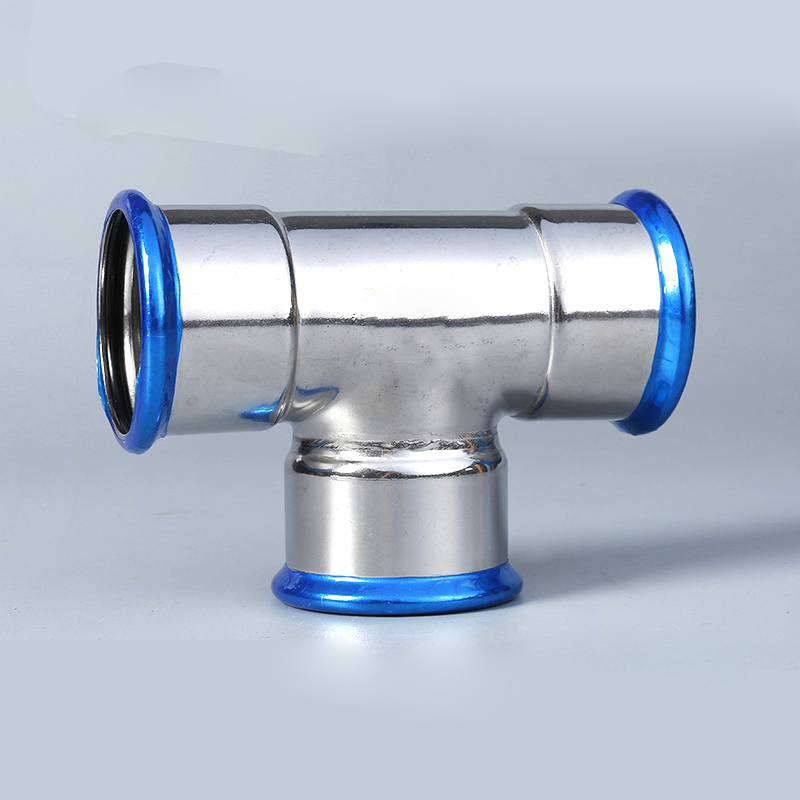
CE certified stainless steel press fittings are one of the most practical ways to build corrosion-resistant, leak-controlled stainless steel plumbing systems without welding. A press fitting is a stainless steel component with a pre-fitted elastomeric sealing ring. A pressing tool compresses the fitting end onto the pipe to form a permanent joint. For European projects, the selection process is not only about the price of stainless steel fittings; it is about verifying the profile, material grade, sealing ring, and certification behind the product.
Compliance and Compatibility Are the Real Selection Problem
Buyers who search for “CE certified stainless steel press fittings manufacturers” usually need more than a product image. They need verifiable conformity, correct profile geometry, and a supplier that can support European plumbing, water supply, gas, and mechanical room applications. The main risks are not always obvious: a promising stainless steel fitting that uses the wrong profile type or an undocumented sealing ring can fail during pressure testing, cause project delays, and create compliance problems.
One common failure is mixing Euro-standard M-profile press fittings with Chinese-standard V-profile press fittings. These two systems have different press-groove dimensions and sealing-ring grooves. Their pressing tool jaws are not interchangeable. Forced assembly can cause poor sealing, water leakage, or even pipe disconnection. Fittings, tubes, and pressing tools must belong to the same profile system.
Industry Background: Market Size and European Standards
The stainless steel press fitting market has become an important category in modern plumbing and industrial piping. According to Dataintelo, the global stainless steel press fitting market is valued at USD 3.8 billion in 2025. A more product-specific estimate from Global Industry Reports places the stainless steel press fittings sub-sector at approximately USD 1.03–1.30 billion, accounting for about 29%–38% of the wider press fittings market.
In the European Union, stainless steel press fittings for pressure purposes are linked to established material and testing standards. Welded stainless steel tubes for pressure applications generally need to comply with EN 10217-7, while stainless steel plumbing tubes and fittings are commonly specified to EN 10312. Technical guidance from European manufacturers also shows that both M-profile and V-profile pressing geometries are valid in Europe and can comply with the same regulations. That makes profile consistency and tool compatibility even more important for contractors and distributors.
Detailed Solution: European-Standard Press Fittings from Wenzhou Zhengxin
Wenzhou Zhengxin Pipe Fittings Co., Ltd. was founded in August 2013 and focuses on the R&D, production, and sales of new-type water supply pipeline systems. The company operates a 9,000 m² facility with 70 employees and 10 R&D engineers, and reports an annual production capacity of 1,000,000 stainless steel pipe fittings and 1,000 tons of stainless steel pipes. Around 70% of its output is exported, with Europe as the main market. Its product range includes European-standard single press-fit fittings, Chinese-national-standard double press-fit Series 1 and Series 2 fittings, and socket-weld and grooved quick-assembly metal pipelines.
The European standard press fittings series is the product family most relevant to European plumbing projects. It includes press-fit elbows, couplings, and tees, together with thread and transition configurations used in water supply and gas supply systems. The fittings are manufactured from 304 stainless steel (06Cr19Ni10) or 316L stainless steel (022Cr17Ni12Mo2), with suitable pipe outer diameters from DN15 (φ16) to DN100 (φ108). Working pressure is rated at 1.6 MPa for cold water and 1.0 MPa for hot water at or below 95°C. The standard temperature range is -20°C to 95°C; a high-temperature-resistant variant supports -40°C to 120°C with a replacement sealing ring.
| Parameter | European Standard Press Fittings (EN Standard Series) |
|---|---|
| Product types | Press-fit elbow, press-fit coupling, press-fit tee |
| Main material | 304 Stainless Steel (06Cr19Ni10) / 316L Stainless Steel (022Cr17Ni12Mo2) |
| Pipe outer diameter | DN15 (φ16) - DN100 (φ108) |
| Working pressure | 1.6 MPa cold water / 1.0 MPa hot water (≤95°C) |
| Working temperature | -20°C to 95°C ordinary model; -40°C to 120°C high-temperature-resistant model, with replacement of sealing ring |
| Sealing material | Food-grade silicone (FDA certified) / EPDM |
| Media and applications | Direct-drinking water systems, urban residential buildings, gas supply systems, public constructions; EPDM ring suitable for potable water and gas supply systems |
| Compliance and certification | Compliant with EN 10312 and CE certified; CE-PED Verification of Conformity certificate ICR/VC/HS260548 issued by ICR Polska, covering stainless-steel press-fit pipeline components in the full size range DN15-DN250, standard EN1092-1:2018 |
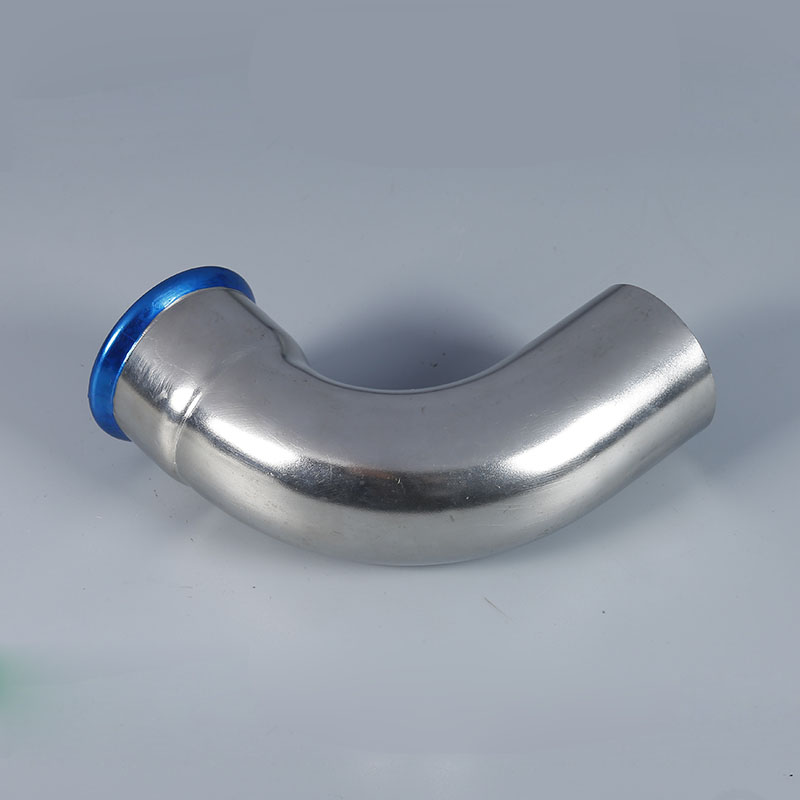
The sealing design uses food-grade silicone or EPDM. The EPDM sealing ring is documented as suitable for potable water and gas supply systems. Because the sealing ring contacts the conveyed medium, the media compatibility should always be confirmed before installation. For gas applications with oil content or special chemical conditions, the supplier should clarify whether a dedicated sealing grade is required.
For European buyers, the CE-PED documentation is a key verification point. The European standard press fittings product has CE-PED Verification of Conformity under certificate number ICR/VC/HS260548, issued by ICR Polska. The certification scope covers stainless-steel press-fit pipeline components for the EU market, and the applicable standard is EN1092-1:2018. This is the type of documentation that procurement teams should request and file before approving a new supplier.
%20VoC_HS260548(1)CE_02.png "CE-PED Verification of Conformity")
Step-by-Step Installation and Leak Prevention
Standard Press-Fit Installation Procedure
Correct installation is the most important factor in achieving leak-free performance. The standard press-fit procedure is straightforward but requires discipline:
- Cut the steel pipe vertically and deburr the inner and outer edges thoroughly.
- Mark the insertion depth on the pipe surface.
- Insert the pipe fully into the fitting socket until it reaches the depth mark.
- Place the correct press tool jaws around the press-fit groove position.
- Start pressing until the tool jaws close completely.
- After installation, conduct a pressure test to check for leakage.
Improper cutting, incomplete insertion, or a wrong jaw position will create leakage risk. Contractors should always use matched pressing jaws for the corresponding fitting size and profile type.
Leakage Troubleshooting Checklist
Press-fit joint leakage usually comes from human error during installation. The main causes are unremoved pipe burrs, insufficient pipe insertion, misaligned pressing jaws, mismatched profile tools, or a damaged sealing gasket. If leakage occurs:
- Depressurize the pipeline system before inspection.
- Check joint appearance and confirm whether the correct pressing jaws were used.
- Disassemble the connection and inspect the sealing gasket. Replace it if damaged.
- Cut the pipe squarely, remove all inner and outer burrs, and mark insertion depth again.
- Reinstall strictly according to the standard press-fit procedure.
- Perform the pressure test again to verify the repair.
Never perform secondary pressing on old deformed fittings. Replace damaged components and redo the full installation.
Use Cases: Potable Water, Residential, and Public Construction
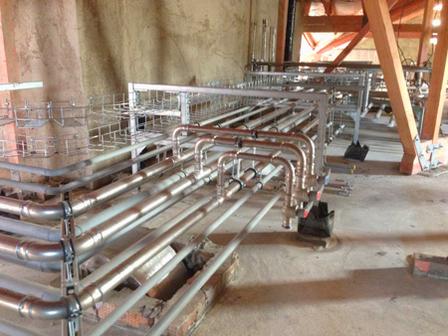
Stainless steel press fittings are used across urban residential buildings, public constructions, direct-drinking water systems, gas supply systems, and tourism or hospital-type facilities. Typical project conditions include potable water, gas transmission, and corrosion-resistant environments, with 24/7 operation. This is why leak-proof performance, corrosion resistance, and hygienic material selection are consistently important in European specifications.
One documented case covers a potable water plumbing system supplied with 12,000 stainless steel press-fit pipe fittings for plumbing distributors and construction contractors. The project highlighted fast installation, no welding, and long service life, with a reported service duration of 15+ years and corrosion-resistant, leak-free pipeline operation.
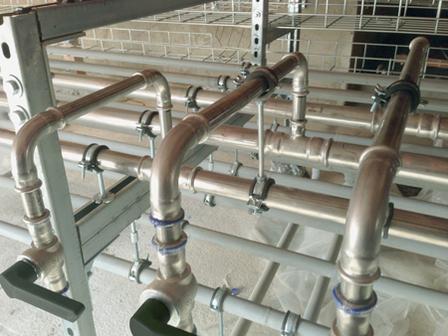
Procurement teams searching for HVAC press fittings should apply the same evaluation logic: pressure rating, temperature rating, profile compatibility, and certification. For any HVAC-specific fluid, the engineer should verify compatibility with the sealing material and the exact working conditions before ordering.
Comparison Table: M-Profile vs V-Profile Press Fittings
| Comparison point | Euro-standard M-profile press fittings | Chinese-standard V-profile press fittings |
|---|---|---|
| Press-groove dimension | Different from V-profile; not interchangeable | Different from M-profile; not interchangeable |
| Sealing-ring groove | Does not match V-profile fittings | Does not match M-profile fittings |
| Pressing tool compatibility | Requires M-type pressing jaws | Requires V-type pressing jaws |
| Risk of mixing profiles | Poor sealing, water leakage, pipe disconnection risk | Poor sealing, water leakage, pipe disconnection risk |
| Typical project context | European-standard projects using M-type tools | Domestic and most Southeast-Asian projects using V-type tools |
| Recommendation | Use M-profile fittings, tubes, and jaws throughout | Use V-profile fittings, tubes, and jaws throughout |
European technical guides note that M-profile and V-profile are both valid pressing geometries and can comply with the same regulations. In practice, the choice is often determined by local tooling habits and project specifications. The critical rule is to choose one profile for the whole system and avoid mixing components.
FAQ
What should buyers check when sourcing CE certified stainless steel press fittings manufacturers?
Buyers should verify material grade, profile type, sealing medium, and certification documentation. For Wenzhou Zhengxin European standard press fittings, the CE-PED Verification of Conformity certificate is ICR/VC/HS260548, issued by ICR Polska, covering stainless-steel press-fit pipeline components in the full size range DN15-DN250 under EN1092-1:2018. The product range is also documented as compliant with EN 10312 and CE certified.
Can M-profile and V-profile press fittings be mixed?
No. Euro-standard M-profile and Chinese-standard V-profile press fittings have different press-groove dimensions and sealing-ring grooves. Pressing tools cannot be shared. Mixing them can cause poor sealing, water leakage, or pipe disconnection risk. Fittings, tubes, and pressing jaws must belong to the same profile system.
For which media should 304 and 316L stainless steel press fittings be selected?
304 stainless steel is suitable for normal tap water and dry compressed air. 316L is recommended for seawater, weak acid-alkali, chemical, and coastal high-chloride environments. 304 is generally preferred for gas pipeline applications, while 316L is suggested for seaside gas projects exposed to high chloride conditions.
How should stainless steel press fittings be installed correctly?
Cut the pipe vertically, deburr the inner and outer edges, mark the insertion depth, insert the pipe fully into the fitting socket, place the matched pressing jaws at the correct groove position, press until the jaws close completely, and then pressure-test the system. Improper cutting, incomplete insertion, or a wrong jaw position will increase leakage risk.
What is the MOQ and lead time for ordering European standard press fittings?
The MOQ for the press-fit range is 100 pieces. Monthly capacity is 83,000 pieces of fittings and 83 tons of pipes, with a lead time of 25–40 days for standard production. OEM/ODM customization is available for logo, size, material, and packaging. Quality control includes 100% visual inspection and pressure testing. For samples, quotes, or the full catalog, contact the Wenzhou Zhengxin sales team directly.
Conclusion
CE certified stainless steel press fittings offer a strong combination of corrosion resistance, installation speed, hygienic performance, and long-term reliability. The key for European buyers is not just choosing stainless steel; it is choosing the correct profile system, material grade, sealing ring, and verifiable certification. Wenzhou Zhengxin Pipe Fittings Co., Ltd. supplies European-standard press fittings with documented CE-PED certification, established production capacity, and OEM/ODM support for international projects.
Next step: Download the current product catalog to review the European standard press fittings range and technical specifications: Product Catalog (PDF).
For project-specific inquiries, contact Cindy at cindy@zxpipeindustry.com or +86 18966285772 (WhatsApp/WeChat).