CE-Certified Stainless Steel Press Fittings: Compliance Checklist for European Buyers
European plumbing and HVAC projects increasingly rely on press-fit technology for stainless steel piping. Contractors, distributors and specifiers searching for a CE certified stainless steel press fittings manufacturer need more than a certificate number: they need verified technical parameters, clear standards, and a supplier that can document both. This article outlines the key compliance and performance criteria for CE-certified stainless steel press fittings, with reference to the EN Standard Series produced by Wenzhou Zhengxin Pipe Industry Co., Ltd.
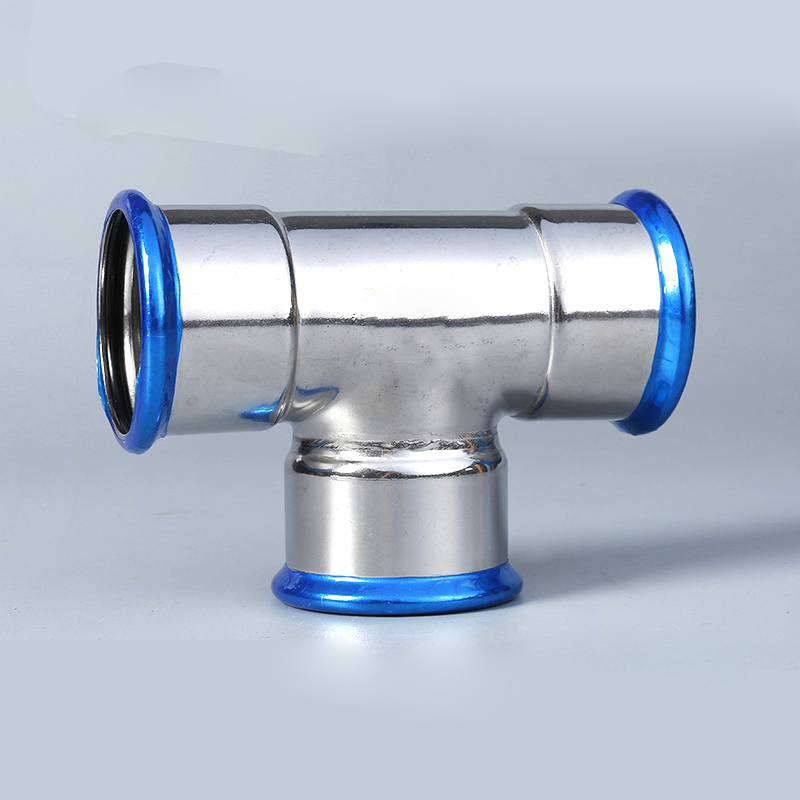
Figure 1: Stainless steel press-fit equal tee from the EN Standard Series.
Why Certification and Standards Matter in Press Fitting Selection
When buying stainless steel press fittings for Europe, the challenge is not finding products, but finding products that satisfy all constraints simultaneously: CE-PED conformity, EN material standards, correct press profile, appropriate sealing ring, and documented pressure/temperature performance. A common installation failure is the mixing of M-profile and V-profile components; the groove dimensions and sealing ring geometry are not compatible, which can cause leaks or joint separation. Buyers therefore need a clear evaluation checklist.
Global Market Context for Stainless Steel Press Fittings
Press-fit technology reduces installation time because it does not require welding, heat treatment or open flames. The market reflects this shift. According to Dataintelo, the global stainless steel press fitting market is valued at USD 3.8 billion in 2025 and is expected to reach USD 6.4 billion by 2034, with a CAGR of 6.0%. Global Industry Reports (GIR) estimates the stainless steel sub-sector at roughly USD 1.03 to 1.30 billion in 2024, accounting for 29% to 38% of the total market.
In Europe, standards compliance is particularly important. Welded stainless steel tubes for pressure applications are typically referenced against EN 10217-7, while EN 10312 covers stainless steel tubes for water and plumbing systems. For fitting geometry, two profiles dominate: M Profile and V Profile. Both are valid and comply with the same regulations; M Profile in Europe is available up to 168.3 mm diameter.
Verified Parameters of European Standard Press Fittings
One documented example of CE-certified European standard press fittings is the EN Standard Series from Wenzhou Zhengxin Pipe Industry Co., Ltd. This company, which focuses on the R&D, production and sales of press-fit pipe fittings, exports approximately 70% of its output to European markets. The series covers press-fit elbows, couplings and tees with the following verified parameters:
- Materials: 304 stainless steel (06Cr19Ni10) or 316L stainless steel (022Cr17Ni12Mo2)
- Pipe outer diameter: DN15 (φ16) to DN100 (φ108)
- Working pressure: 1.6 MPa for cold water; 1.0 MPa for hot water (≤95°C)
- Working temperature: -20°C to 95°C for the ordinary model; -40°C to 120°C for the high-temperature resistant model, which requires replacement of the sealing ring
- Sealing material: food-grade silicone (FDA certified) or EPDM (ethylene propylene diene monomer)
- Standards: compliant with EN 10312; CE certified
- Applicable industries: direct-drinking water systems, urban residential buildings, gas supply systems, public constructions
CE-PED Certification Evidence
The European standard press fittings product is covered by a CE-PED Verification of Conformity certificate. The certificate number is ICR/VC/HS260548, issued by ICR Polska. Its scope covers stainless-steel press-fit pipeline components in the size range DN15 to DN250, references EN1092-1:2018, and is valid from 13 May 2026 to 12 May 2031. The product series is also stated to be compliant with EN 10312, the European standard for stainless steel tubes and fittings used in water and plumbing systems.
%20VoC_HS260548(1)CE_01.png)
Figure 2: CE-PED Verification of Conformity certificate issued by ICR Polska.
Step-by-Step Evaluation for Procurement
Use the following checklist when evaluating a CE certified stainless steel press fittings supplier:
- Verify certification and standard references. Check the certificate number, issuing body, scope and validity. Confirm which fitting and tube standards apply, such as EN 10312.
- Check material and dimensional parameters. Confirm the exact grade (304 or 316L) and the pipe outer diameter range required for your project.
- Confirm working pressure and temperature. Compare the ratings against system requirements, for example 1.6 MPa cold water and 1.0 MPa hot water (≤95°C).
- Inspect the sealing material. For potable water, food-grade silicone or EPDM is specified; verify that the gasket is compatible with the intended medium.
- Confirm press profile and tool compatibility. Use M-profile fittings with M-profile tubes and M-profile pressing jaws. Do not mix with V-profile components.
Supplier Capability Signals
Beyond product parameters, evaluate the supplier's production and quality-control capabilities. Wenzhou Zhengxin Pipe Industry Co., Ltd. operates a dedicated press-fit factory and reports an annual production capacity of 1,000,000 stainless steel pipe fittings. The company uses the QS9000 production management system, holds ISO 9001:2000 certification, and performs 100% visual inspection plus pressure testing as part of quality control. For OEM/ODM projects, customization options include logo, size, material and packaging, with a monthly capacity of 83,000 pcs fittings and 83 tons of pipes.
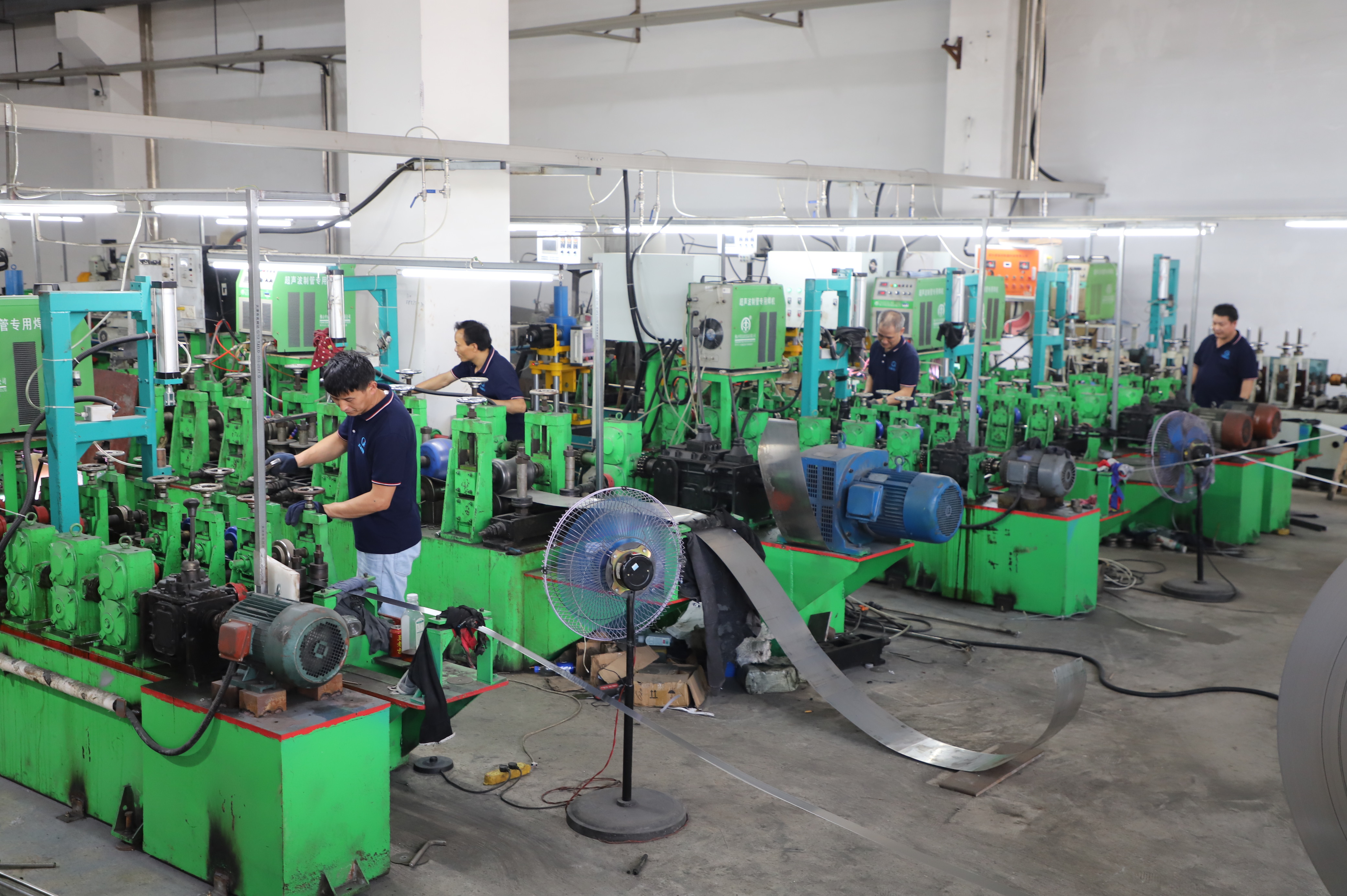
Figure 3: Production workshop for stainless steel press fittings.
Typical Applications and Project Evidence
EN Series press fittings are used in urban residential buildings, public constructions, direct-drinking water systems, gas supply networks and similar applications. In a representative project, a plumbing distributor and construction contractor installed 12,000 pieces of stainless steel press fittings for a potable water plumbing system. The project required corrosion-resistant, leak-free operation, with an expected service life above 15 years. Because the connection is mechanical, installation is fast and does not require welding.
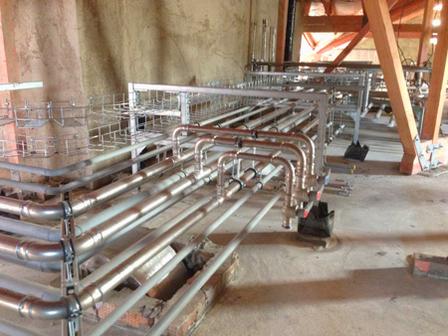
Figure 4: On-site installation of stainless steel press-fit pipe fittings.
Comparison: M Profile vs V Profile Press Fittings
European buyers often ask whether M-profile and V-profile fittings can be mixed. The table below summarizes the key comparison based on current technical guidance.
| Aspect | M Profile (European standard) | V Profile (Chinese standard) |
|---|---|---|
| Press groove dimensions | Euro-standard M-profile geometry | Chinese standard V-profile geometry |
| Sealing ring groove matching | Matches M-profile tubes and jaws | Matches V-profile tubes and jaws |
| Interchangeability | Not interchangeable with V-profile components | Not interchangeable with M-profile components |
| Risk of mixing | Poor sealing, water leakage, or pipe disconnection risk | |
| Typical usage | European projects using M-type pressing tools | Domestic and most Southeast Asian projects using V-type tools |
Material Selection: 304 vs 316L
The choice between 304 and 316L affects corrosion resistance in different environments.
| Environment | 304 | 316L |
|---|---|---|
| Normal tap water, dry compressed air, general gas pipelines | Suitable | Suitable |
| Seawater, weak acid/alkali, chemical environments | Not recommended; prone to pitting corrosion in high-chloride coastal conditions | Recommended; contains molybdenum for superior chloride resistance |
| Coastal high-chloride projects | Higher corrosion risk | Preferred for seaside gas or water projects |
FAQ
Can Euro-standard M-profile press-fit fittings mix with Chinese standard V-profile press-fit fittings?
No. Euro-standard M-profile and Chinese V-profile press-fit fittings have different press-groove dimensions. The sealing ring groove does not match, so forced assembly will cause poor sealing, water leakage or pipe disconnection risk. Fittings, tubes and pressing tools must belong to the same profile type. Select M-profile for European-standard projects using M-type pressing tools, and V-profile for domestic and most Southeast Asian projects using V-type tools.
What media are 304 and 316L stainless steel press-fit fittings suitable for?
304 is suitable for normal tap water, dry compressed air and general gas pipelines. 316L is recommended for seawater, weak acid-alkali, chemical and coastal high-chloride environments. 304 is prone to pitting corrosion in high-chloride coastal conditions, so 316L is the preferred upgrade for seaside projects.
How to correctly install stainless steel press-fit fittings?
Cut the pipe vertically and deburr the inner and outer edges. Mark the insertion depth on the pipe surface. Insert the pipe fully into the fitting socket until it reaches the depth mark. Place the pressing tool jaws at the correct position of the fitting groove. Start pressing until the tool jaws close completely. After installation, conduct a pressure test to check for leakage. Improper cutting, incomplete insertion or wrong jaw position will cause leakage risk.
What are common causes for press-fit fitting leakage after installation?
Leakage usually comes from human error during installation. Main reasons include unremoved pipe burrs, insufficient pipe insertion depth, misaligned pressing jaws, mismatched profile tools, or a damaged sealing gasket. Inspect the joint appearance, check the gasket status, and verify whether the correct pressing jaws were applied. Replace damaged parts and reinstall following the standard procedure. Never perform secondary pressing on old deformed fittings.
Next Steps for Buyers
Compliance verification is the core of press fitting procurement. For buyers looking for CE-certified stainless steel press fittings, confirm the certificate, material grade, pressure and temperature ratings, and press profile before ordering. Wenzhou Zhengxin Pipe Industry Co., Ltd. can provide documentation, samples and quotations for its EN Standard Series.
Download the Product Catalog for full specifications.
Contact: Cindy | cindy@zxpipeindustry.com | Tel/WhatsApp +86 18966285772
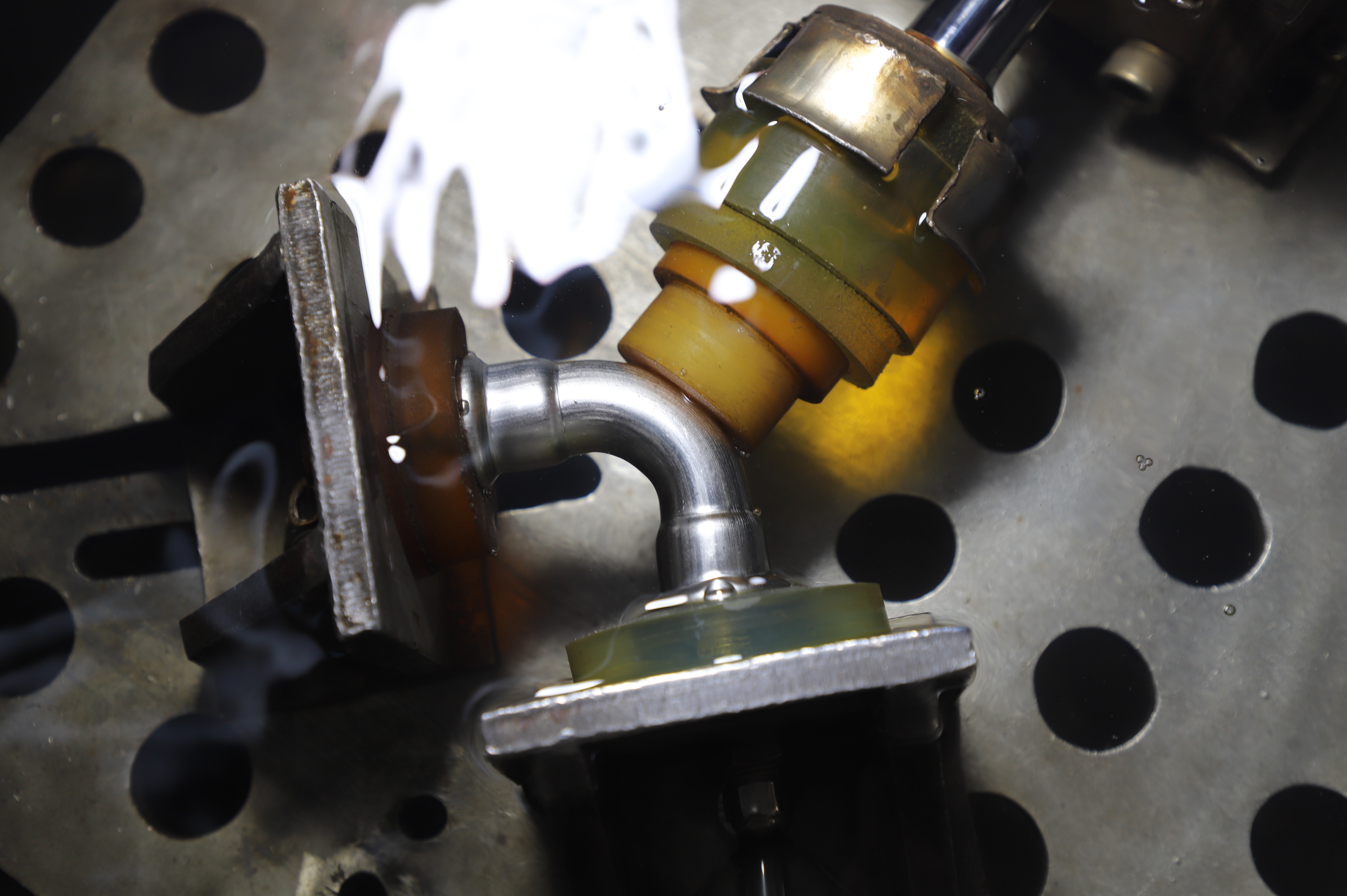
Figure 5: Pressure testing during quality control.