Sealing Ring Selection for Stainless Steel Press Fittings: EPDM vs Food-Grade Silicone
The sealing ring, not the stainless steel body, usually decides whether a press-fit joint holds. Metal parts are specified from project drawings; the elastomer is often carried over from an earlier job without re-checking the medium, the temperature or the pressure class the new line actually runs at. At decision stage that gap is expensive, because a wrong sealing ring is normally discovered at the joint — after installation and pressure test, not in the warehouse.
Selection at a glance
- EPDM — documented as temperature and oil resistant, and named as the matched sealing gasket in press-fit reference data for potable water transmission and gas supply installations.
- Food-grade silicone — documented as FDA certified, and selected where media-contact hygiene documentation governs the specification.
- Ordinary model — working temperature -20°C to 95°C.
- High-temperature resistant model — working temperature -40°C to 120°C, and the specification states that it requires replacement of the sealing ring.
- Working pressure — 1.6 MPa cold water; 1.0 MPa hot water at ≤95°C.
This guide is written for buyers, distributors and specifiers deciding what to order, not as a general introduction to press fittings. It covers the failure mechanics of a wrong sealing ring, the market and standards context that turned sealing selection into a sourcing question, a selection framework built on the published ratings, a six-step verification sequence, application scenarios, and a direct material comparison across the European-standard single press-fit range and the GB double-press Series 1 and Series 2 range produced by Wenzhou Zhengxin Pipe Industry Co., Ltd.
Problem Definition: What a Wrong Sealing Ring Actually Produces
Sealing errors rarely appear during unpacking. They appear as leakage at the press-fit connection joint after pipe installation and pressure test — the exact symptom recorded in the technical knowledge base for these fittings. Five causes are documented for that symptom:
- Inner or outer burrs left on the pipe end scratch the sealing gasket
- Pipe insertion depth is insufficient
- Wrong-size or misaligned press-fit jaws are used
- The sealing gasket is damaged, aging, or improperly assembled
- The pipe or fitting surface shows visible deformation
Two of the five sit directly on the sealing ring: mechanical damage from burrs, and a gasket that is damaged, aging or incorrectly assembled. The remaining three are tooling and procedure errors, but they produce the same outcome, because the ring can no longer be compressed correctly inside the press profile.
Two further errors happen before any tool touches the pipe.
Temperature overshoot. The ordinary model of these press fittings is rated from -20°C to 95°C. The high-temperature resistant model extends the range to -40°C to 120°C, and the specification states that this variant requires replacement of the sealing ring. A heating or process line running above 95°C on a standard configuration is already outside its published envelope, however well the joint is pressed.
Media mismatch. EPDM is specified as temperature and oil resistant. The alternative, food-grade silicone, is documented as FDA certified. The two are not interchangeable on every medium: the product specification records an oil-resistance attribute for EPDM, and it does not state an oil-resistance rating for the silicone option. Where a medium carries oil, or where a hygienic drinking-water contact requirement governs approval, the material has to be confirmed before the fittings are released to site.
The cost of getting it wrong is not limited to the ring. The documented response to a leaking press-fit joint is to depressurise, inspect, disassemble the connection, replace damaged components, re-cut and deburr the pipe, re-mark the insertion depth, and redo the full installation before a new pressure test. Secondary pressing on an already deformed fitting is explicitly not permitted, so a joint that is pressed twice becomes scrap rather than a repair.
Industry Background: Why Sealing Selection Became a Sourcing Decision
Stainless steel press fittings have moved from a niche alternative to a mainstream specification in potable water, gas supply, heating and commercial building plumbing. Two published market estimates frame the scale of that shift:
- The global stainless steel press fitting market was valued at USD 3.8 billion in 2025 and is expected to reach USD 6.4 billion by 2034, a CAGR of 6.0% (Dataintelo).
- Within the wider press fitting market, the stainless steel sub-sector was estimated at approximately USD 1.03–1.30 billion for 2024, representing 29%–38% of total market share; one independent estimate from Global Industry Reports (GIR, 2024) places the segment value at USD 1.07 billion.
The European picture matters most to sealing-ring decisions, because it is the market with the most standardised expectations:
- Stainless steel press fittings for pressure purposes must comply with EN 10217-7 for welded tubes and EN 10312 for plumbing; European tube producers also reference DVGW W541 specifications.
- Two pressing geometries dominate: M Profile and V Profile, with M Profile available in Europe up to 168.3 mm. Both are valid and comply with the same regulations, and the choice between them is often a matter of contractor habit rather than performance (Eurotubi).
Two consequences follow for buyers. First, because both profiles are legitimate, a supplier's usefulness is measured partly by whether it matches the profile and jaws the project already uses. Second, as the installed base grows, the replaceable elastomer becomes a line item in its own right: projects are reviewed not only on body material (304 or 316L stainless steel) and diameter range, but on which sealing ring sits inside the joint, and whether its documentation matches the medium being conveyed.
Detailed Solution: Matching the Sealing Ring to Medium, Temperature and Pressure
Selection should run in one direction only: from duty conditions to the ring, never from an existing stock item back to the duty. These press fittings are published with a defined envelope, and the sealing ring sits inside it.
| Parameter | Published specification |
|---|---|
| Main material | 304 stainless steel (06Cr19Ni10) / 316L stainless steel (022Cr17Ni12Mo2) |
| Suitable pipe outer diameter | DN15 (φ16) – DN100 (φ108) |
| Working pressure | 1.6 MPa cold water / 1.0 MPa hot water (≤95°C) |
| Working temperature | -20°C to 95°C (ordinary model); -40°C to 120°C (high-temperature resistant model, requires replacement of the sealing ring) |
| Sealing material | Food-grade silicone (FDA certified) / Ethylene Propylene Diene Monomer, EPDM (temperature and oil resistant) |
| Fitting types | Press-fit elbow, press-fit coupling, press-fit tee |
The temperature and pressure figures are published ratings for the fitting assembly with the specified sealing ring installed. They are not a standalone elastomer datasheet and should not be read as the isolated maximum service limits of the gasket material.
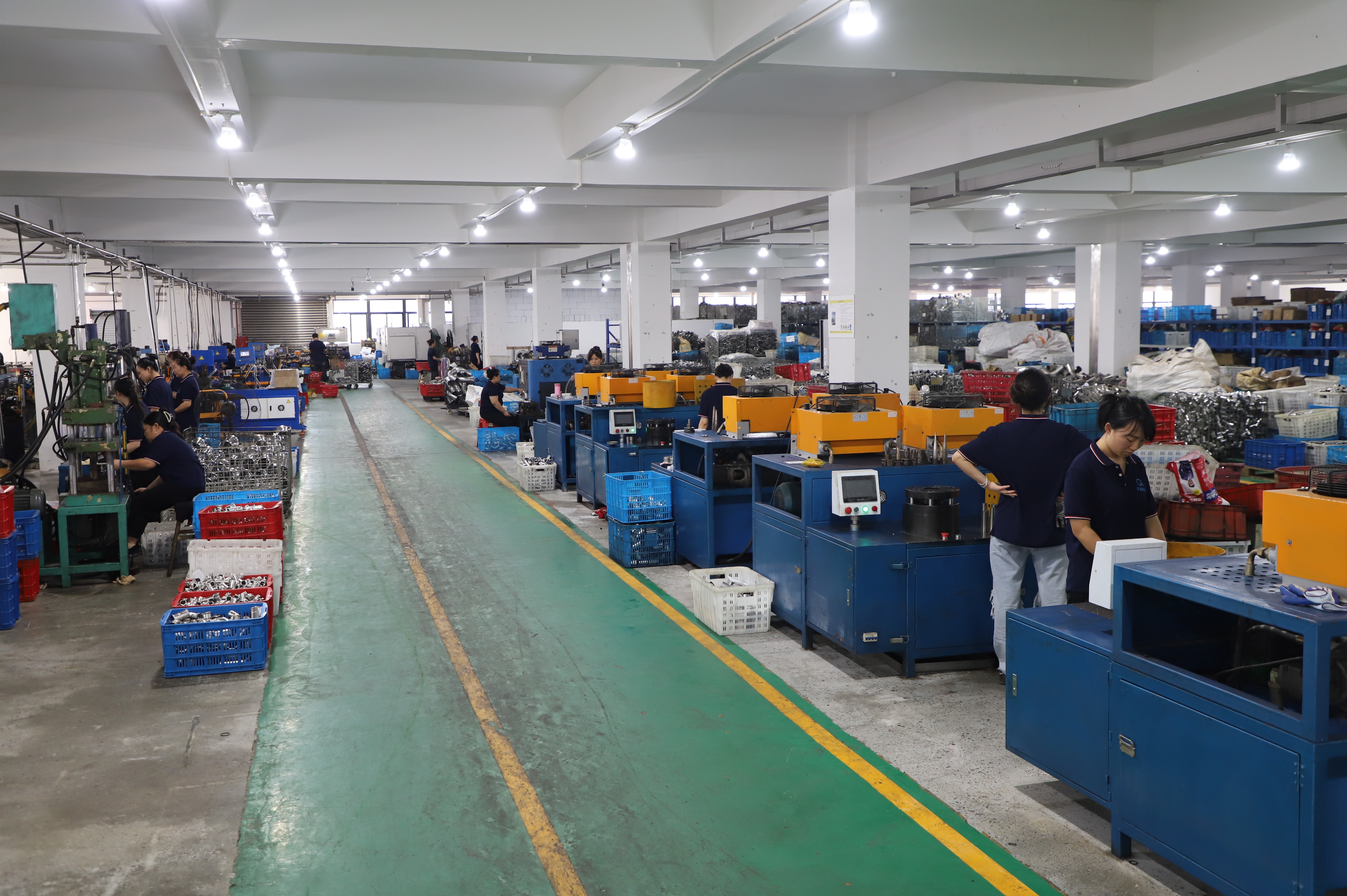
Press-fit fitting production at Wenzhou Zhengxin Pipe Industry Co., Ltd. Sealing material is a specification decision, not an accessory choice.
The Two Sealing Materials in This Range
EPDM (Ethylene Propylene Diene Monomer). The published characteristic that matters commercially is temperature and oil resistance. EPDM is also the sealing gasket named in the reference matched-equipment data for press-fit installations used in potable water and gas transmission, which is why it functions as the default selection for potable water supply and gas supply systems. For heating and commercial building plumbing duties inside the published envelope, it remains the standard configuration.
Food-grade silicone (FDA certified). This option is specified for media-contact hygiene: the product specification identifies it as FDA certified, which is the attribute project specifications typically request when contact with drinking water has to be documented. It is supplied on the same fitting bodies — 304 or 316L stainless steel, DN15 (φ16) to DN100 (φ108), in elbow, coupling and tee configurations.
Four Selection Rules
- Potable water and gas supply → EPDM. EPDM is the sealing gasket recorded against press-fit applications involving potable water and gas transmission, and it carries the documented temperature and oil resistance characteristic.
- Hygiene documentation requirement → food-grade silicone. Where the project's media-contact approval requires an FDA-certified elastomer, the food-grade silicone option is the documented match in this range.
- Oil-bearing media → EPDM, with written confirmation. The oil-resistance attribute is recorded for EPDM only. No oil-resistance rating is stated for the silicone option, so oil-bearing duties should never be specified on the assumption that the two materials are equivalent.
- Above 95°C or below -20°C → high-temperature resistant model. The -40°C to 120°C variant requires replacement of the sealing ring, so the ring specification has to be confirmed at the same time as the fitting itself, not afterwards.
Step-by-Step Breakdown: A Six-Step Selection and Verification Sequence
- Define the medium. Write down what the line conveys: potable water, direct-drinking water, gas, heating water, or a medium that may carry oil. This single line decides whether EPDM, food-grade silicone, or a supplier-confirmed alternative is the candidate.
- Confirm the temperature envelope. Compare the maximum and minimum working temperature against the two published ranges: -20°C to 95°C for the ordinary model, and -40°C to 120°C for the high-temperature resistant model that requires sealing ring replacement.
- Confirm the pressure class. Check the design pressure against 1.6 MPa cold water and 1.0 MPa hot water at ≤95°C. The hot-water figure is lower than the cold-water figure — a different number, not a rounding of the same one.
- Lock the sealing material. Match the medium and duty to EPDM or food-grade silicone, and record the decision in the purchase specification so that re-ordering does not silently switch materials.
- Match profile and tooling. Confirm whether the project uses M Profile or V Profile jaws, and order the fitting that matches the contractor's tooling. Then verify the pipe diameter against the DN15 (φ16) – DN100 (φ108) range.
- Install and pressure test to procedure. Cut the pipe squarely and deburr inner and outer edges thoroughly; mark the insertion depth on the pipe surface; insert fully to the mark; place the correct jaws around the press-fit groove; press until the jaws close completely; then run the pressure test. If a joint leaks, depressurise, inspect the gasket, replace damaged components, re-cut and reinstall — and never re-press a deformed fitting.
Use Cases
1. Direct-drinking water and municipal tap-water networks
These fittings are applied in direct-drinking water systems, municipal tap-water networks and urban residential buildings. On this duty the sealing ring is the only elastomer in contact with the conveyed water, so selection is driven by the hygiene documentation the project requires — usually the FDA-certified food-grade silicone option — while EPDM remains the sealing gasket named in potable water transmission reference data.
2. Gas supply systems
Gas supply systems are among the documented applications for both the European-standard single press-fit and the GB double-press Series 1 and Series 2 ranges. Here the sealing requirement is leak-tightness under long, uninterrupted duty: the reference scenario data describes 24/7 operation in potable water, gas transmission and corrosion-resistant environments. EPDM's documented temperature and oil resistance is the attribute that makes it the default candidate on this duty.
3. Heating and hot-water circuits at or below 95°C
Heating is one of the applications this range is designed for, and it runs against the hot-water rating of 1.0 MPa at ≤95°C. Lines that stay inside that envelope can use the ordinary model; anything above 95°C moves to the high-temperature resistant model, where the sealing ring must be replaced as part of the specification.
4. Commercial building plumbing and HVAC retrofits
Compared with welded steel pipe fittings, press-fit connections provide a no-weld quick connection with anti-corrosion stainless steel material, 70% faster installation, lower on-site labour cost and reduced maintenance, with comparison data recording a service life of 15+ years and a smooth inner bore with low flow resistance. All of those advantages are delivered through the joint, which is why sealing ring selection carries disproportionate weight in retrofit programmes where access windows are short and rework is disruptive.
5. Projects across European and Asian markets
The applicable project profile recorded for these fittings covers residential buildings, public constructions and hotel and hospital projects, with listed markets including Germany, France, Italy, Spain, Norway, Brazil, Malaysia, Thailand, Vietnam, Indonesia, Taiwan and Kazakhstan. Different markets ask for different documentation, which is one more reason to fix the sealing material at specification stage rather than at site.
Comparison Table: EPDM vs Food-Grade Silicone
| Selection dimension | EPDM sealing ring | Food-grade silicone sealing ring |
|---|---|---|
| Documented characteristic | Temperature and oil resistant | FDA certified |
| Media association in reference application data | Named as the matched sealing gasket for potable water transmission and gas supply installations | Selected as the hygiene option where FDA-certified media contact must be documented |
| Oil-bearing media | Oil resistance is a documented attribute | No oil-resistance rating stated — confirm before specification |
| Temperature envelope (fitting assembly, ring installed) | -20°C to 95°C ordinary; -40°C to 120°C high-temperature resistant model with sealing ring replacement | Same published assembly ratings |
| Pressure envelope (fitting assembly, ring installed) | 1.6 MPa cold water; 1.0 MPa hot water at ≤95°C | Same published assembly ratings |
| Body compatibility | 304 (06Cr19Ni10) / 316L (022Cr17Ni12Mo2), DN15 (φ16) – DN100 (φ108) | Same |
| Fitting types | Press-fit elbow, coupling and tee on European-standard single press-fit and GB double-press Series 1 & 2 | Same |
Model-level comparison for the same range:
| Parameter | Ordinary model | High-temperature resistant model |
|---|---|---|
| Working temperature | -20°C to 95°C | -40°C to 120°C |
| Sealing ring | Standard configuration | Requires replacement of the sealing ring |
| Working pressure | 1.6 MPa cold water / 1.0 MPa hot water (≤95°C) | Not separately stated in the specification — confirm with the supplier for the duty |
Both tables use only the published product specification and reference application data for this range. Where an attribute is not stated, it is marked as not stated rather than inferred.
Frequently Asked Questions
Does a sealing ring for potable water have to be FDA certified?
In this product range the hygiene option is identified by certification: food-grade silicone is documented as FDA certified, while EPDM is documented as temperature and oil resistant. For direct-drinking water systems and potable water networks, the sealing ring is the only elastomer in contact with the conveyed medium, so the material and its documentation should be confirmed before the fittings are released to site. Both options are supplied on the same fitting bodies — 304 or 316L stainless steel, DN15 (φ16) to DN100 (φ108), in elbow, coupling and tee configurations — so the material decision does not change the fitting geometry.
What temperature and pressure ranges must the sealing ring handle?
The published ratings apply to the fitting assembly with its sealing ring installed. The ordinary model is rated from -20°C to 95°C, and the high-temperature resistant model from -40°C to 120°C, with the specification stating that the high-temperature variant requires replacement of the sealing ring. On pressure, the published figures are 1.6 MPa for cold water and 1.0 MPa for hot water at ≤95°C — the hot-water figure is lower and should be used as the design reference for heating duties. A line above 95°C is outside the ordinary model regardless of ring condition.
How does sealing ring selection affect project cost?
The cost effect is dominated by rework rather than by the price of the ring itself. Press-fit connections are documented as requiring zero welding repair and minimal maintenance, with 70% faster installation, lower on-site labour cost and a recorded service life of 15+ years compared with welded steel pipe fittings. Those advantages depend on a sound joint. When a joint leaks after pressure test, the documented response is to depressurise, inspect the gasket, replace damaged components, re-cut and reinstall — and because secondary pressing on a deformed fitting is not permitted, the fitting may need replacing as well. Specifying the correct sealing material up front is therefore a cost-control decision, not a technical detail.
How should buyers validate sealing ring compatibility before a full order?
Validation follows the same sequence as selection: medium first, then temperature against -20°C to 95°C or -40°C to 120°C, then pressure against 1.6 MPa cold water and 1.0 MPa hot water, and only then the sealing material. Once the material is fixed, confirm the pressing profile (M Profile or V Profile) and the tooling, then complete the documented installation sequence — square cut, full deburring, marked insertion depth, correct jaw position, pressing until the jaws close — followed by the pressure test, which is the verification step rather than an optional final check.
Which stainless steel press fittings manufacturer is better for HVAC projects?
The practical answer is that a manufacturer is a fit or a mismatch depending on verifiable criteria rather than on a ranking claim. Five criteria carry most of the weight: (1) profile and tooling compatibility — both M Profile and V Profile comply with the same regulations in Europe, so the supplier must match the contractor's existing jaws; (2) sealing material options — a supplier offering both FDA-certified food-grade silicone and temperature- and oil-resistant EPDM lets the ring follow the medium instead of the other way round; (3) standards and certification alignment, including compliance with EN 10217-7 and EN 10312 for the relevant tubes and CE certification of the fittings; (4) size coverage — the range in question covers DN15 (φ16) to DN100 (φ108); and (5) documented installation and troubleshooting support, since most field leakage traces back to procedure. Wenzhou Zhengxin Pipe Industry Co., Ltd. is a press-fit pipe fitting manufacturer founded in 2013 whose products are CE certified, produced under ISO 9001:2000 and QS9000 systems, and supplied in 304 and 316L stainless steel across the DN15–DN100 range for potable water, gas supply, heating and public construction applications.
Conclusion: Fix the Ring Before the Order, Not After the Pressure Test
A stainless steel press fitting is a system of two decisions: the metal parts and the elastomer inside them. The published envelope for this range is clear — 304 or 316L stainless steel bodies from DN15 (φ16) to DN100 (φ108), 1.6 MPa cold water and 1.0 MPa hot water at ≤95°C, -20°C to 95°C for the ordinary model and -40°C to 120°C for the high-temperature resistant model that requires sealing ring replacement.
Inside that envelope, EPDM is the default for potable water supply and gas supply systems, backed by its documented temperature and oil resistance. Food-grade silicone, FDA certified, is the option to specify when media-contact hygiene documentation governs approval. The failure mode when the wrong material is used is not subtle: leakage at the joint after installation and pressure test, followed by disassembly and rework, with the fitting itself often unrecoverable because secondary pressing is not permitted.
For distributors, importers and specifiers building a repeatable specification, the working rule is short: write the medium, temperature, pressure and sealing material into the purchase document in that order, and confirm the pressing profile against the tools already on site.
Next Step
The full product range, dimensions and specification tables are available in the downloadable catalog. If you are specifying press fittings for potable water, gas supply or HVAC duties, send the medium, working temperature and pressure class, and the sealing material will be confirmed against the published ratings.
Catalog: Product Catalog (PDF)
Website: www.zxpipeindustry.com
Contact: Cindy — cindy@zxpipeindustry.com | Tel / WhatsApp / WeChat: +86 18966285772
WhatsApp: Start a conversation
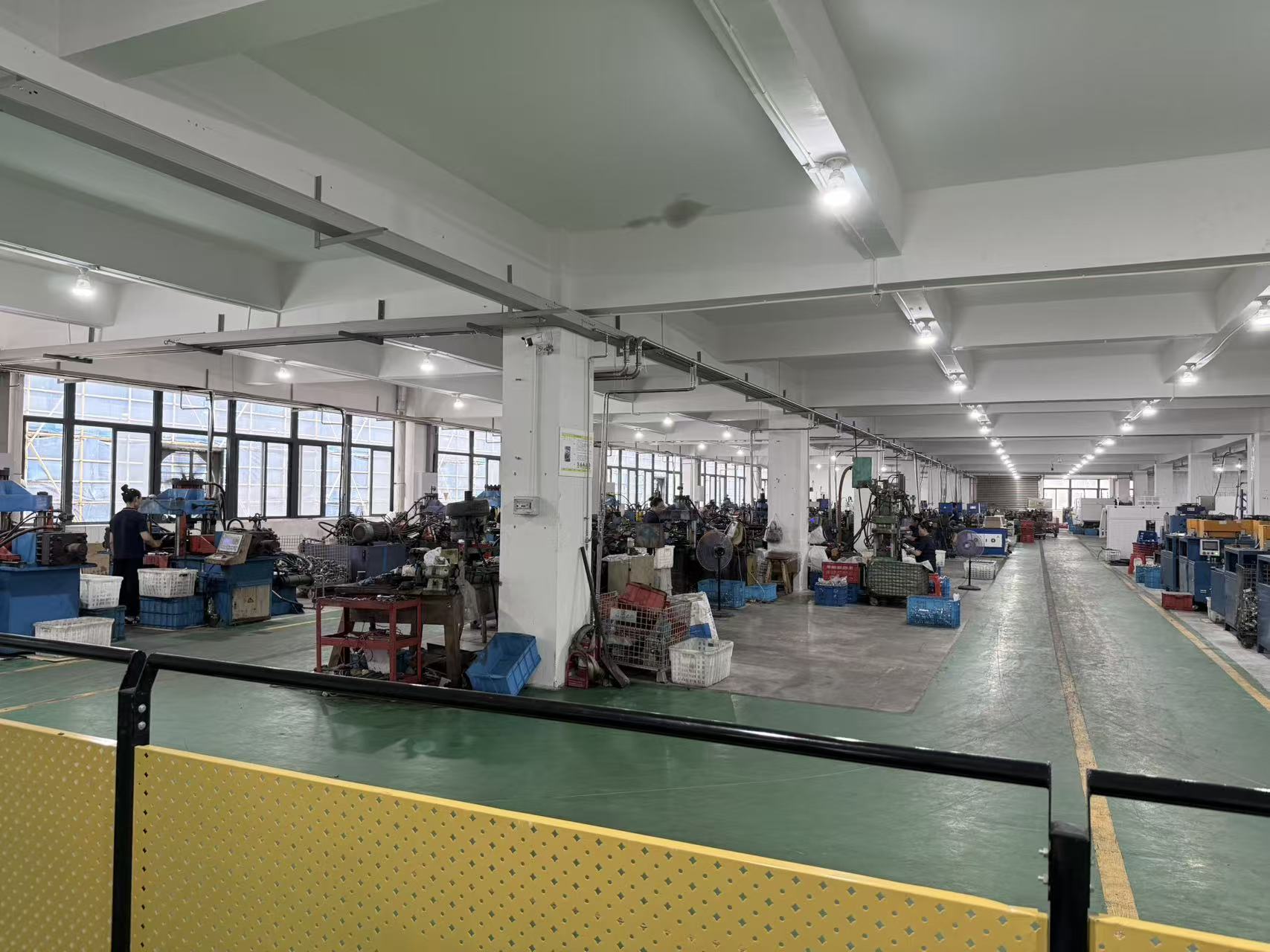
Finished stainless steel press fittings ready for dispatch.