Socket Weld vs. Double-Press Fittings: Which Joining Method Fits Your Spec?
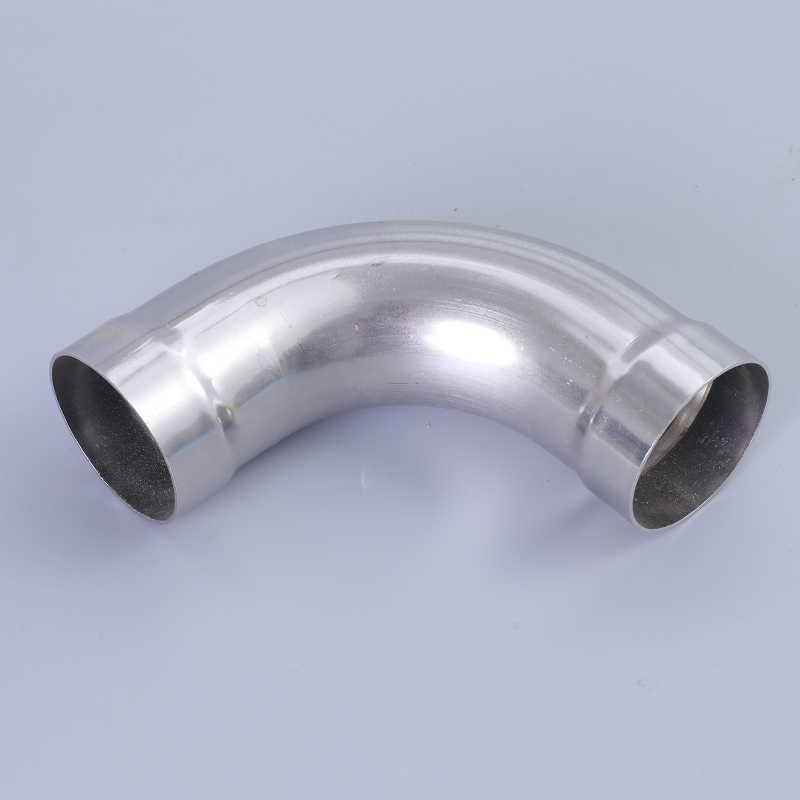 Socket Weld 90° Elbow — forged integral forming, manufactured to GB/T 14383-2021 with ASME B16.11-compatible geometry.
Socket weld fittings and GB Double-press fittings can carry the same water or gas through the same building, but they are specified for two different operating envelopes. Socket weld fittings are forged, welded joints rated from −20 °C to +450 °C and available in Class 3000#, Class 6000# and Class 9000# for water, oil, gas and steam. GB Double-press fittings are no-weld joints rated at 1.6 MPa for cold water and 1.0 MPa for hot water (≤95 °C), with a −40 °C to 120 °C high-temperature model that requires the sealing ring to be replaced. Both families are produced by Wenzhou Zhengxin Pipe Industry Co., Ltd. — a stainless steel pipeline component manufacturer founded in August 2013 that focuses on R&D, production and sales of new-type water supply pipeline systems and exports press-fit pipe fittings mainly to Europe.
This guide is written for engineers, MEP contractors and procurement teams who must choose one method for a project, and who want to know in advance which specification limit will make that choice for them.
Why the joining method is a specification decision, not a preference
The joining method is normally frozen in the specification before the fittings are ordered, because four hard limits follow directly from it: the temperature ceiling, the pressure rating system, the medium together with its seal material, and the certification or profile the installed assembly must be able to claim.
- Temperature ceiling. Socket weld fittings operate from −20 °C to +450 °C. GB Double-press fittings operate from −20 °C to 95 °C in the ordinary model and from −40 °C to 120 °C in the high-temperature resistant model, and that model requires replacement of the sealing ring.
- Pressure rating language. Socket weld pressure is expressed in classes — Class 3000#, Class 6000#, Class 9000#. Double-press pressure is expressed in MPa — 1.6 MPa for cold water and 1.0 MPa for hot water (≤95 °C). The two systems are not written in the same units and should not be compared by eye.
- Medium and seal. Socket weld fittings are listed for water, oil, gas and steam; the joint is metal. Double-press fittings are listed for potable water and gas supply duty, sealed with food-grade silicone (FDA certified) or EPDM. The seal is a component that must match the medium.
- Certification and profile. Press-fit components carry CE-PED verification and are stated as compliant with EN 10312; socket weld fittings are manufactured to GB/T 14383-2021 with ASME B16.11-compatible geometry. Press assemblies additionally depend on profile compatibility — M profile or V profile — and on matched pressing jaws.
The cost of deciding late is practical rather than theoretical. Pipe-end preparation, tooling, jaws, inspection routines and, in some cases, the tube itself change when the method changes. A pipeline that mixes methods without re-checking these four limits is far more likely to fail a pressure test at the worst possible moment — after the closing date, when rework is most expensive.
Industry background: standards, profiles and a growing press-fit market
Demand for press-fit stainless steel systems is expanding. The global stainless steel press fitting market was valued at USD 3.8 billion in 2025 and is projected to reach USD 6.4 billion by 2034, a compound annual growth rate of 6.0% (Dataintelo). That growth is driven by building water and gas systems rather than by high-temperature industrial piping, which is why both joining methods continue to coexist in the same catalogues and the same projects.
The standards background explains why the two columns cannot be merged. In Europe, welded stainless steel tubes for pressure purposes are manufactured in accordance with EN 10217-7, while plumbing applications follow EN 10312 (Isotubi technical specifications). A press-fit specification therefore tends to reference EN 10312 and CE marking, while a welded industrial specification references pressure classes and butt or socket weld geometry.
Profile habits reinforce the split. M Profile and V Profile are the two dominant pressing geometries in Europe, and M Profile is available up to 168.3 mm diameter (Eurotubi). Chinese national standard double press-fit Series 1 and Series 2 follow the V-profile logic used in China and in much of Southeast Asia. Both profiles are valid and comply with their own regulations, but a project must commit to one.
Wenzhou Zhengxin Pipe Industry Co., Ltd. manufactures across this divide. The company's range covers European-standard single press-fit fittings, Chinese-national-standard double press-fit Series 1 and Series 2, and socket-weld and grooved quick-assembly metal pipelines. Press-fit pipe fittings are the main product line; the factory covers 9,000 m², the export ratio is 70%, Europe is the main market, and the operation runs an ISO 9001:2000 quality management system with CE-certified products.
Socket weld fittings: what the specification actually says
Socket weld fittings are the default answer when a pipeline has to survive heat, pressure classes or media that an elastomer-sealed joint cannot be asked to handle.
- Model designation and types: Socket Weld Series — including the socket weld 90° elbow, socket weld full coupling and socket weld equal tee, with male thread and female thread couplings, union, cap, flange and reducer variants in the same family.
- Standard: strictly manufactured in accordance with GB/T 14383-2021, with geometry compatible with ASME B16.11.
- Size range: DN6–DN100 (NPS 1/8''–4'').
- Pressure class: Class 3000#, Class 6000# and Class 9000#.
- Material: 304 or 316L stainless steel.
- Working temperature: −20 °C to +450 °C.
- Applicable media: water, oil, gas and steam.
- Manufacturing: forged integral forming, which gives high mechanical strength for high-pressure and high-temperature duty. The welded connection is anti-vibration with low leakage risk for long-term stable operation, and the smooth inner bore keeps flow resistance low for medium transmission.
- Documented applications: oil, gas, steam, water and chemical industrial piping systems, as well as direct-drinking water systems, urban residential buildings, gas supply systems and public constructions.
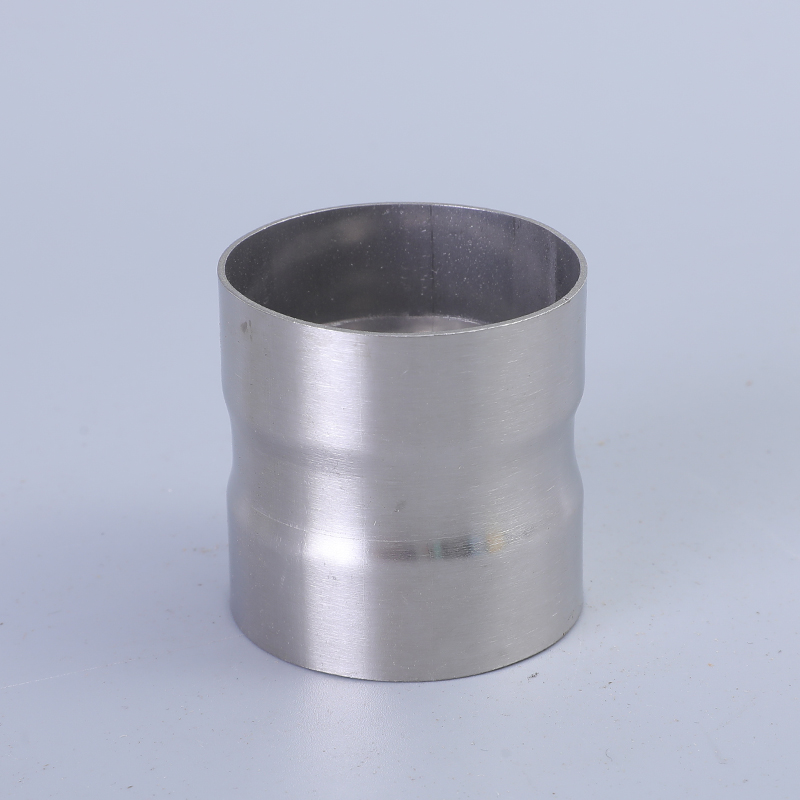 Socket Weld Full Coupling — precise socket size for easy pipe alignment, forged in 304 or 316L stainless steel.
The trade-off is the joint itself. A socket weld connection is made by welding, so installation depends on welding equipment, a qualified welder and the inspection that follows, and it sets the hot-work and fire-watch procedures for the site. Buyers who need installation speed more than a 450 °C ceiling usually move to the other column.
GB Double-press fittings: what the specification actually says
GB Double-press fittings are the practical answer for building water and gas systems, where the priority is a fast, repeatable, weld-free joint.
- Connection method: double-press, requiring no welding for installation.
- Material: 304 stainless steel (06Cr19Ni10) or 316L stainless steel (022Cr17Ni12Mo2).
- Size range: DN15 (φ16) to DN100 (φ108).
- Working pressure: 1.6 MPa for cold water and 1.0 MPa for hot water (≤95 °C).
- Working temperature: −20 °C to 95 °C for the ordinary model; −40 °C to 120 °C for the high-temperature resistant model, which requires replacement of the sealing ring.
- Sealing material: food-grade silicone (FDA certified) or ethylene propylene diene monomer (EPDM), which is temperature and oil resistant.
- Stated performance: leak-proof performance and reliable connection; corrosion resistance from the 304/316L material; hygienic and clean for direct-drinking water; resistance to high pressure and to thermal expansion and contraction; maintenance-free operation with a service life matching the service life of buildings.
- Compliance and certification: compliant with EN 10312 and CE certified.
- Intended applications: direct-drinking water systems, urban residential buildings, gas supply systems and public constructions.
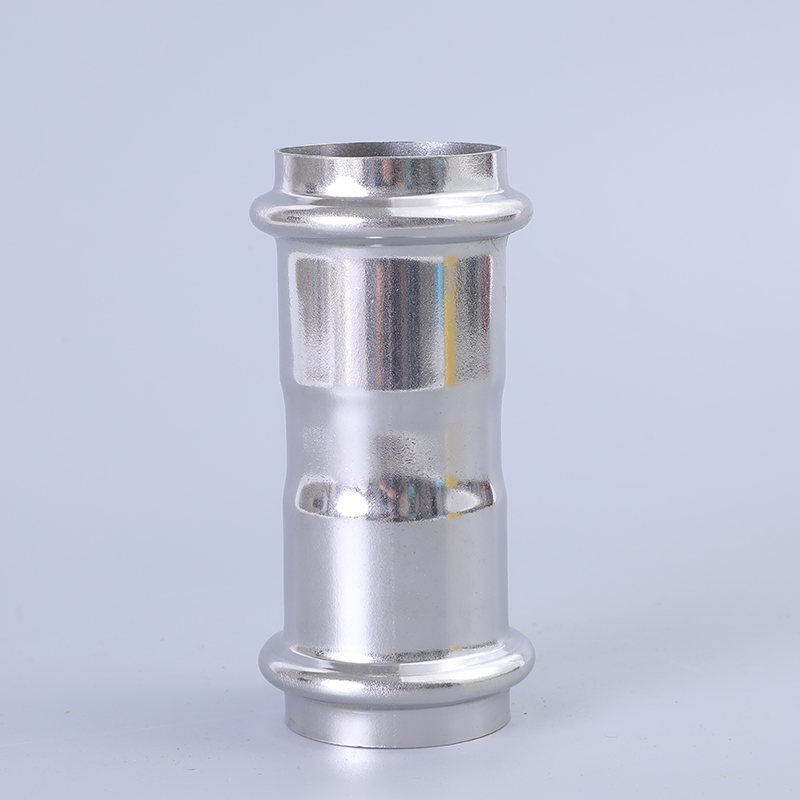 GB Double-press Coupling — no welding required, sealed with food-grade silicone or EPDM for potable water and gas duty.
The limits to respect are the temperature ceiling and the seal. Above the ordinary range the high-temperature model is specified up to 120 °C and requires a sealing ring change, so on hot-water and heat-trace lines the seal — not the fitting body — is the component to confirm in writing.
Certification: what the CE document actually covers
For EU projects the certificate matters as much as the parameter table. The European standard press fittings are covered by a CE-PED Verification of Conformity, certification number ICR/VC/HS260548, issued by ICR Polska. The certification applies to the EU market, covers stainless-steel press-fit pipeline components across the full size range DN15–DN250, follows the standard EN1092-1:2018, and runs from 13 May 2026 to 12 May 2031.
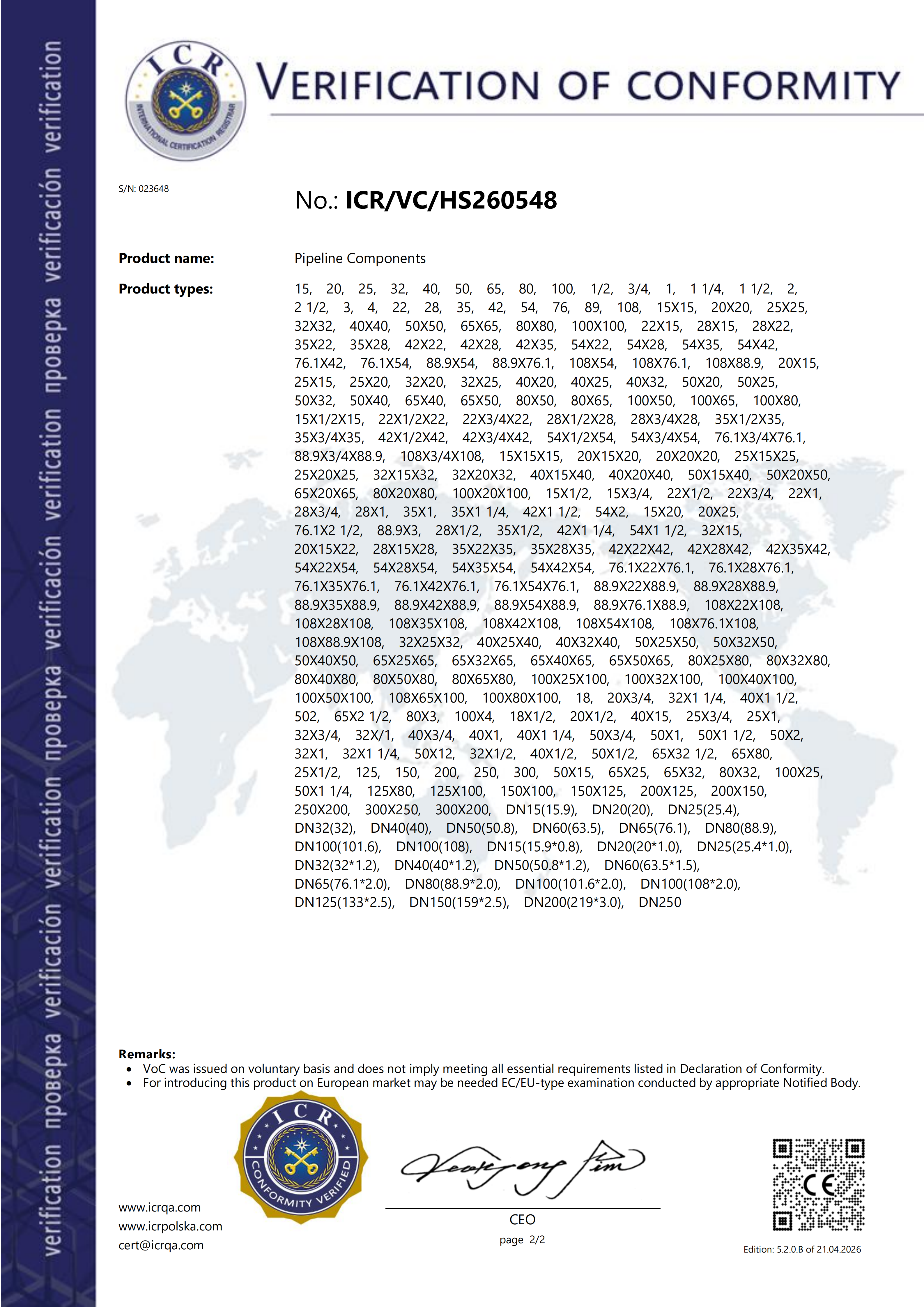 CE-PED Verification of Conformity, certificate ICR/VC/HS260548 issued by ICR Polska, EN1092-1:2018, valid 13 May 2026 – 12 May 2031.
Step-by-step: six screens that decide the method
Screen 1 — Fix the temperature ceiling first
Write down the maximum continuous operating temperature before anything else. Above 120 °C, only the socket weld range remains (−20 °C to +450 °C). Between 95 °C and 120 °C, press fittings stay available but only in the high-temperature resistant model, and only with the sealing ring replaced for that duty. Below 95 °C, both methods are candidates and the remaining screens decide.
Screen 2 — Translate pressure into the correct rating language
Socket weld pressure is expressed in classes — Class 3000#, Class 6000# and Class 9000# — under geometry compatible with ASME B16.11. Double-press pressure is expressed in MPa — 1.6 MPa for cold water and 1.0 MPa for hot water (≤95 °C). Do not convert one system into the other by eye. Ask for the working pressure, the design factor and the required test pressure, and then confirm that the fitting class or pressure rating stated in the quotation covers all three.
Screen 3 — Match the medium to material and seal
304 stainless steel is used for normal tap water and dry compressed air. 316L is recommended for seawater, weak acid-alkali, chemical and coastal high-chloride environments, where 304 is prone to pitting corrosion under high-chloride coastal conditions. For gas pipelines, 304 is preferred in general service, with a 316L upgrade suggested for seaside gas projects.
Sealing rings must match the medium. The product data states that the EPDM sealing ring is suitable for potable water and gas supply systems. Separate application guidance states that EPDM is adopted for drinking-water and drainage systems, that HNBR is adopted for gas and oil-gas media, and that using a water-service EPDM gasket in a gas line causes rapid ageing and dangerous leakage. Because both statements appear in the same technical documentation, treat the gasket grade as a written confirmation item on gas projects rather than an assumption.
Screen 4 — Confirm the certification path
For press fittings, the documents to request are the CE-PED Verification of Conformity (ICR/VC/HS260548, issued by ICR Polska, EN1092-1:2018, scope DN15–DN250, valid to 12 May 2031) together with the stated EN 10312 compliance. For socket weld fittings, the manufacturing basis is GB/T 14383-2021 with ASME B16.11-compatible geometry. Check which of these the project specification actually invokes before comparing quotations, because a quotation that answers the wrong standard is not cheaper — it is unusable.
Screen 5 — Check profile and tooling compatibility
Euro-standard M-profile fittings and Chinese-standard V-profile fittings have different press-groove dimensions and different sealing-ring grooves. Mixing them is not recommended: forced assembly risks poor sealing, water leakage or pipe disconnection, and the pressing tools cannot be shared between the two systems. Fittings, tubes and pressing jaws must all belong to the same profile system. Choose M profile for European-standard projects that use M-type pressing tools, and V profile for projects built on V-type tooling.
Screen 6 — Check supply parameters against your schedule
Both families come from the same manufacturer, so the commercial variables are what separate quotations. Minimum order quantity is 100 pcs and lead time is 25–40 days. Monthly capacity is 83,000 pcs of fittings plus 83 tons of pipes, which supports stable lead times on repeat orders. Quality control is 100% visual inspection plus pressure testing. OEM/ODM customization is available for logo, size, material and packaging, and after-sales support covers remote technical support and installation guidance.
Socket weld vs. double-press: specification comparison table
| Specification item | Socket Weld Fittings | GB Double-press Fittings |
|---|---|---|
| Connection method | Socket weld (welded joint) | Double-press, no welding required |
| Manufacturing | Forged integral forming | Press-fit formed, sealed with an elastomer ring |
| Standard basis | Manufactured to GB/T 14383-2021, compatible with ASME B16.11 | Compliant with EN 10312, CE certified (CE-PED VoC ICR/VC/HS260548) |
| Size range | DN6–DN100 (NPS 1/8''–4'') | DN15 (φ16) – DN100 (φ108) |
| Pressure rating | Class 3000#, Class 6000#, Class 9000# | 1.6 MPa cold water / 1.0 MPa hot water (≤95 °C) |
| Working temperature | −20 °C to +450 °C | −20 °C to 95 °C ordinary; −40 °C to 120 °C high-temperature model (sealing ring replacement required) |
| Material | 304 / 316L stainless steel | 304 (06Cr19Ni10) / 316L (022Cr17Ni12Mo2) |
| Sealing element | Metal-to-metal welded joint, no elastomer | Food-grade silicone (FDA certified) or EPDM, temperature and oil resistant |
| Applicable media | Water, oil, gas, steam | Potable water and gas supply duty; hot and cold water |
| Installation requirement | Welding equipment, qualified welder, hot-work control | Matched pressing tool and jaws of the same profile system |
| Stated service characteristics | Anti-vibration, low leakage risk, smooth inner bore with low flow resistance | Leak-proof and reliable connection, maintenance-free, service life matching the building, resists thermal expansion and contraction |
| Typical specified applications | Oil, gas, steam, water and chemical industrial piping; direct-drinking water systems; urban residential buildings; gas supply; public constructions | Direct-drinking water systems; urban residential buildings; gas supply systems; public constructions |
Use cases: where each method fits
Potable water and direct-drinking water systems
Double-press is the natural fit for potable and direct-drinking water distribution inside buildings. The connection requires no welding, the fitting is hygienic and clean for direct-drinking water applications, and the EPDM or food-grade silicone seal is specified for potable water service. Socket weld fittings are also listed for direct-drinking water systems in the same catalogue, so where a plant room specification calls for welded joints — for example in plant rooms where welded headers are standard — the Socket Weld Series remains applicable.
HVAC and commercial retrofits
For HVAC Press Fittings duty, the deciding factor is usually installation speed and the absence of hot work. A press-fit connection is made with a matched tool and jaw, so a retrofit can proceed floor by floor without welding permits, fire watch and the downtime that welding implies. Press fittings are the faster option wherever the system stays within 1.6 MPa cold water, 1.0 MPa hot water and 95 °C.
Gas supply systems
GB Double-press fittings are listed for gas supply systems with the correct sealing ring, and the gasket grade should be confirmed in writing as described in Screen 3. Where gas is delivered at elevated temperature, or where the pipework runs through a high-chloride coastal environment, the socket weld route with 304 or 316L removes the elastomer from the joint entirely — which is often the simplest way to close a risk assessment.
Steam, oil and high-temperature industrial piping
Socket weld. A 450 °C working temperature, forged integral forming and a pressure class system up to Class 9000# place this family in steam, oil, gas and chemical service, where the media list already includes steam. This is the clearest dividing line between the two methods: no press joint in this range is specified for steam at industrial temperature.
Documented project: 12,000 press fittings for a potable water plumbing system
A documented supply for a plumbing distributor and construction contractor covered 12,000 pcs of press fittings applied to a potable water plumbing system, with the recorded result being corrosion-resistant, leak-free pipeline operation. The stated highlights were fast installation without welding and long service life. Comparable projects are recorded across markets including Germany, Spain, France, the United Kingdom, Italy, Australia, Belarus, Russia, Indonesia, Thailand and Taiwan.
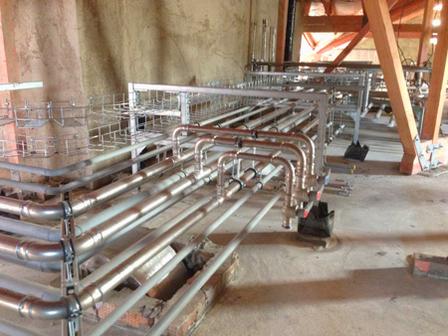 Press-fit installation on site — a matched pressing tool and jaw replace welding in building water and gas systems.
Risk control: three failure modes that change project cost
1. Leakage after pressing
Leakage after pressing is usually an installation error rather than a product defect. The documented causes are: inner or outer burrs left on the pipe end scratching the sealing gasket; insufficient pipe insertion depth; wrong-size or misaligned pressing jaws; a sealing gasket that is damaged, aged or incorrectly assembled; and visible deformation of the pipe or fitting surface.
The published troubleshooting sequence is: depressurize the system; inspect the joint for deformation and confirm which jaws were used; disassemble the connection and inspect the gasket, replacing it if damaged; cut the pipe squarely and remove all inner and outer burrs; mark the insertion depth and re-install strictly to the standard press-fit procedure; then pressure-test again. Secondary pressing on an already deformed fitting is not permitted — the joint must be rebuilt with new components.
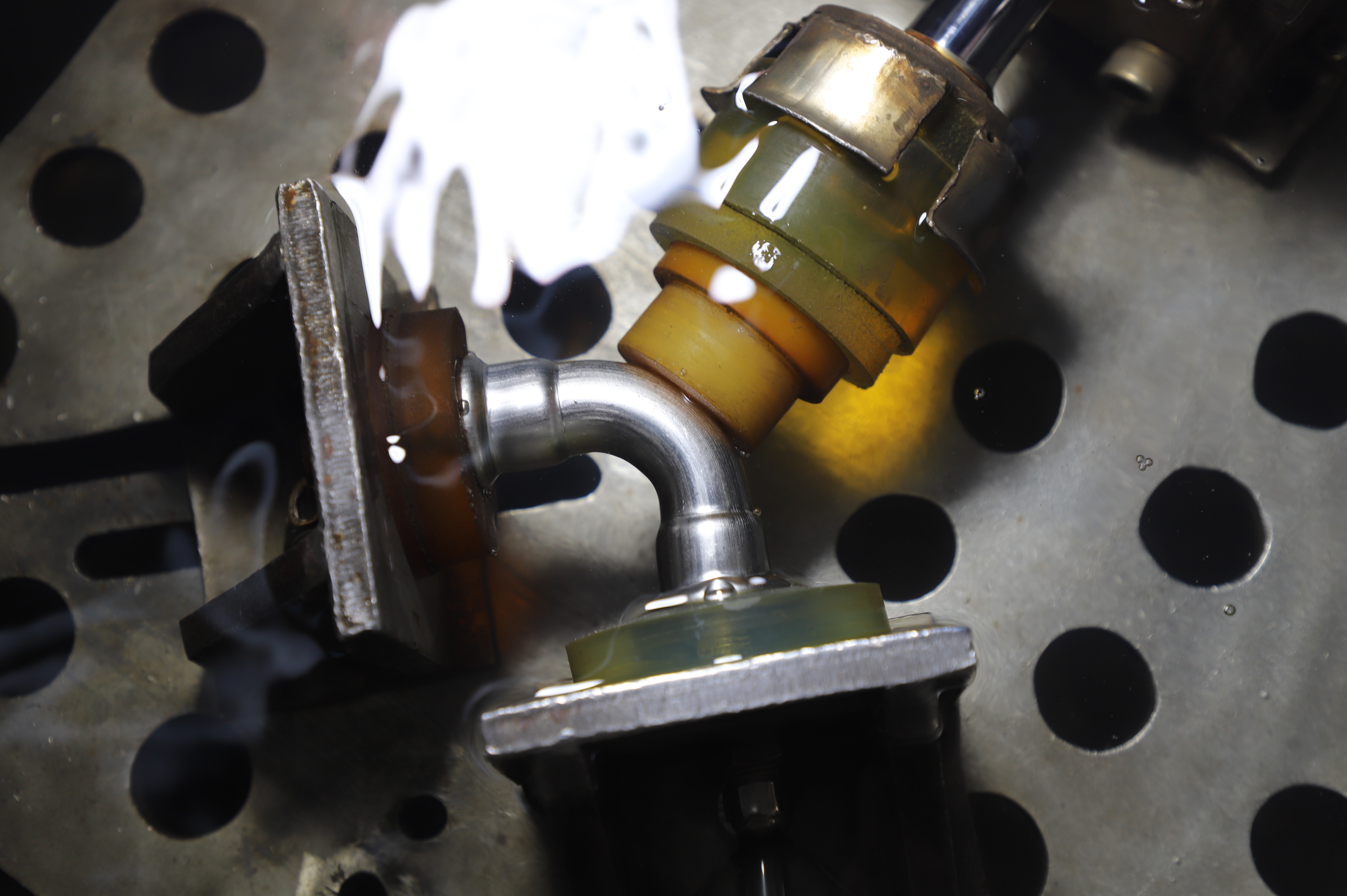 Factory quality control — 100% visual inspection plus pressure testing before dispatch.
2. Gasket-to-medium mismatch
A sealing ring that does not match the medium is not a tolerance problem; it is a safety problem. EPDM is adopted for drinking-water and drainage systems, while HNBR is adopted for gas and oil-gas media. Using a water-service EPDM gasket in a gas line causes rapid ageing and dangerous leakage. Never cross-use the two grades, and specify the grade on the purchase order by medium, not by availability.
3. Profile mixing (M profile vs V profile)
Euro-standard M-profile fittings and Chinese-standard V-profile fittings have different press-groove dimensions and unmatched sealing-ring grooves, and the pressing tools cannot be shared. Forced assembly produces poor sealing, water leakage or pipe disconnection risk. Keep one profile per pipeline system, and keep the jaws for that profile with the tool.
Frequently asked questions
Are CE certified stainless steel press fittings manufacturers required for EU projects?
For press-fit pipeline components placed on the EU market, third-party verification of conformity is the document buyers normally request. The European standard press fittings are covered by a CE-PED Verification of Conformity, certificate number ICR/VC/HS260548, issued by ICR Polska, applicable to the EU market, covering stainless-steel press-fit pipeline components in the full size range DN15–DN250, following EN1092-1:2018, and valid from 13 May 2026 to 12 May 2031. The product data also states compliance with EN 10312. Before ordering, compare the certificate scope with the sizes you actually need.
What are the temperature and pressure limits of each joining method?
Socket weld fittings are rated from −20 °C to +450 °C in Class 3000#, Class 6000# and Class 9000#, with a size range of DN6–DN100 (NPS 1/8''–4''). GB Double-press fittings are rated at 1.6 MPa for cold water and 1.0 MPa for hot water (≤95 °C), operate from −20 °C to 95 °C in the ordinary model and from −40 °C to 120 °C in the high-temperature resistant model that requires sealing ring replacement, and cover DN15 (φ16) to DN100 (φ108).
Which joining method has the lower installed cost?
Published unit prices are not part of this specification, so what can be compared is the cost structure. Double-press removes welding from the installation — the largest labour and hot-work element of a socket weld joint — and the product data describes maintenance-free operation with lower long-term operation cost. Socket weld shifts cost toward welding labour, consumables and weld inspection, and returns value in the pressure classes and the 450 °C temperature range it can reach. For a comparable decision, request a quotation that states MOQ (100 pcs), the customization scope (logo, size, material, packaging) and lead time (25–40 days), because each of these changes the delivered unit price.
Can I validate the fittings with a sample before committing to a project?
Yes. Sample and quotation requests are handled directly through the manufacturer's contact channel — Cindy, cindy@zxpipeindustry.com, +86 18966285772. When requesting a sample, state the profile type (M or V), the size and the medium, because fittings, tubes and pressing jaws must belong to the same profile system, and confirm the sealing ring grade required for that medium. Samples can be checked against the EN 10312 and CE documentation and against the GB/T 14383-2021 and ASME B16.11 basis for the socket weld range.
What are the MOQ, lead time and quality control standards?
Minimum order quantity is 100 pcs and lead time is 25–40 days. Monthly capacity is 83,000 pcs of fittings plus 83 tons of pipes, which supports repeat-order stability. Quality control is 100% visual inspection plus pressure testing, and after-sales support covers remote technical support and installation guidance. Wenzhou Zhengxin Pipe Industry Co., Ltd. serves the EU, Southeast Asian and Middle Eastern markets from a 9,000 m² factory with an export ratio of 70%, and the full product catalog can be downloaded before you send an RFQ.
Conclusion: match the method to the spec, then verify it in writing
The decision rule that survives contact with a real project is simple. If the line runs above 95 °C, needs a Class 3000#–9000# rating, or carries steam, oil or high-temperature gas, the specification points to socket weld fittings — forged, welded, −20 °C to +450 °C, manufactured to GB/T 14383-2021 with ASME B16.11-compatible geometry. If the line is a building water or gas system from DN15 to DN100, operating within 1.6 MPa cold water and 1.0 MPa hot water below 95 °C, GB Double-press fittings deliver the faster weld-free joint, provided the sealing ring grade and the press profile are confirmed in writing.
Both families are manufactured by Wenzhou Zhengxin Pipe Industry Co., Ltd., founded in August 2013, operating a 9,000 m² factory with 70 employees, 10 engineers and an annual output of 1,000,000 units, supplying European-standard press fittings, GB Series double press fittings and socket weld fittings to European and international markets.
Next step: confirm the method with a documented quotation
Send your project parameters — medium, maximum temperature, working pressure, size range and press profile — and request a quotation or sample against the correct standard. Review the CE-PED Verification of Conformity (ICR/VC/HS260548) and the size range that applies to your order, and confirm the sealing ring grade for the medium before the first fitting is pressed.
Contact: Cindy | Email: cindy@zxpipeindustry.com | Tel / WhatsApp / WeChat: +86 18966285772 | Website: www.zxpipeindustry.com | Download the full product catalog: Product Catalog (PDF)
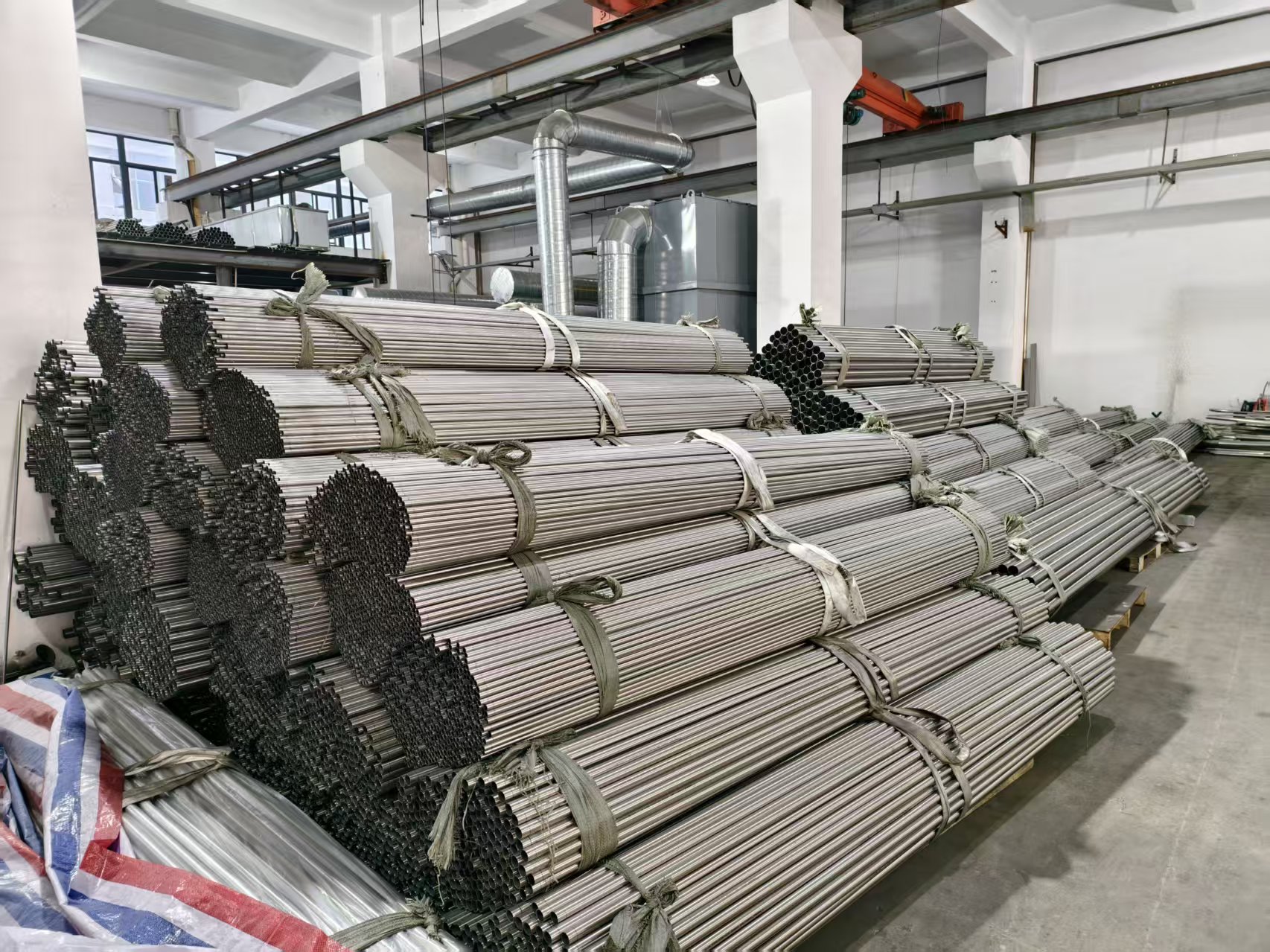 Finished goods stock — press fittings and socket weld fittings dispatched against confirmed project specifications.