
155R12C vs. 5.50R13LT vs. 195/65R15: Passenger Car Tire Spec Comparison for Distributors
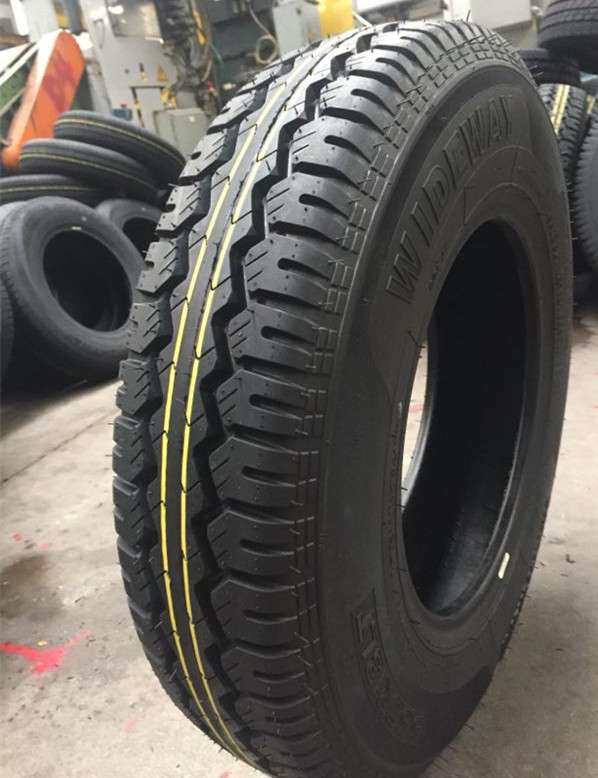
Short answer. These three passenger car tire sizes are not three versions of the same product — they are three duty classes that happen to sit in the same catalogue. 155R12C is a reinforced commercial-van size listed with a 106/104 load index, R speed rating, 450 KPA maximum pressure and a 198 mm section width. 5.50R13LT, sold under the SMARTWAY II designation, is a compact commercial-van and urban-road size listed with load index 88, P speed rating, 420 KPA maximum pressure and a 160 mm section width. 195/65R15 is a metric passenger-car size listed with load index 91, V speed rating, 300 KPA maximum pressure and a 201 mm section width. A distributor does not rank them; a distributor places each one against the duty cycle it was engineered for.
Why a price-first comparison misroutes a container
Most supplier arguments about these three sizes start with a unit price and end with a warranty claim. The technical gap between them is not cosmetic. Under the standard load-index table used in tire marking, load index 106 corresponds to 950 kg per tire in single application, index 91 corresponds to 615 kg, and index 88 corresponds to 560 kg. A van operator whose axle load requires the first figure will not be rescued by a tread pattern or a lower price — a tire specified at the third figure will simply fail earlier.
The same logic applies to the other three fields. Speed symbols sit at different points on the standard table (P = 150 km/h, R = 170 km/h, V = 240 km/h), and the maximum pressure figure — 420 KPA, 450 KPA or 300 KPA — is the ceiling the casing is built to hold, not a recommended inflation setting. Quote a size whose ceiling sits at or below the operator's working pressure and the failure mode shifts from tread wear to structural damage, which is the expensive kind.
Two further traps are specific to catalogue work:
- The same nominal size can appear in more than one product group with different parameters. Section width, load index and pressure values are recorded per group, not per size label. Quoting from memory rather than from the data sheet is how a container of nominally correct tires arrives with the wrong specification.
- Scenario classification is data, not decoration. The 155R12C group and the 5.50R13LT group are both classified as Commercial Van Passenger Car Tire, Urban Road Passenger Car Tire and High-speed stability Passenger Car Tire; the 195/65R15 group is classified as Safe and affordable family Passenger Car Tire, Urban Road Passenger Car Tire and High-speed stability Passenger Car Tire. Those labels describe intended service, and distributors who ignore them absorb the returns.
Industry background: why spec fields became the buying filter
The category these sizes sit in is large, and it is being re-specified by regulation rather than by fashion. Grand View Research valued the global passenger car tire market at approximately USD 143.06 billion in 2024 and placed the passenger car segment at a 32.6% share of total tire market revenue. On the supply side, China's total tire exports reached 9.65 million tonnes in 2025, a 3.6% year-on-year increase worth approximately RMB 167.7 billion, according to customs data reported by SunSirs. Precedence Research projects the global electric-vehicle tire market to reach USD 337.20 billion by 2034, a 28.1% CAGR from 2025, driven by high load capacity and low noise requirements.
For a distributor, the regulatory layer matters more than the growth numbers. UN Regulation No. 117 sets limits for rolling resistance, wet grip and external rolling noise, with mandatory labelling in the EU — which means the numbers moulded into the sidewall are now procurement filters. When a fleet buyer asks for a tire for urban delivery duty, the answer has to be a specification answer, and the container has to be built from load index, speed rating, section width and pressure rather than from price ranking.
The five spec fields that decide which size goes where
1. Load index, and why commercial sizes show two numbers
The 155R12C carries a dual load index of 106/104. In commercial (C) and light-truck (LT) marking, a dual index expresses the load capacity for single and twin (dual-wheel) application respectively. The 5.50R13LT carries a single index of 88 and the 195/65R15 carries 91. In practical terms, the 155R12C group is designed around roughly 1.7 times the per-tire load of the 195/65R15 group, and roughly 1.7 times that of the 5.50R13LT. That single field decides whether a size belongs on a loaded delivery van or on a family sedan.
2. Speed rating defines the headroom, not the driving style
Speed rating is the maximum design speed at which the tire can carry its rated load. In this comparison the ladder runs P (5.50R13LT), R (155R12C), V (195/65R15). An urban delivery van rarely needs more than P or R; a taxi operating long highway segments on a metric passenger size benefits from the V rating and the extra thermal headroom that comes with it. Mixing the two duty types inside one size family is what produces field complaints that look like quality problems but are specification problems.
3. Section width drives fitment, footprint and stock planning
The three sizes measure 160 mm (5.50R13LT), 198 mm (155R12C) and 201 mm (195/65R15). The narrow 160 mm footprint suits compact vans and micro-vans with narrow rims and tight wheel arches. The 198 mm commercial-van group supports a wider contact patch under load. The 201 mm metric size is a mainstream passenger-car fitment with the broadest retail pull of the three. Width also changes container stowage: a 160 mm section width size and a 201 mm section width size do not pack at the same density, which affects how a mixed container is planned.
4. Maximum pressure is a ceiling, not a setting
Maximum pressure is listed as 450 KPA for the 155R12C group, 420 KPA for the 5.50R13LT and 300 KPA for the 195/65R15 group. The rule for distributors is simple: the vehicle's specified operating pressure must sit below the tire's listed ceiling with margin to spare. A commercial van running loaded duty cycles at high inflation pressure has no margin left on a 300 KPA passenger casing — which is exactly why the two van sizes exist alongside the metric size rather than being replaced by it.
5. Construction class and scenario classification
The 155R12C and 5.50R13LT are both classified as Commercial Van Passenger Car Tire, Urban Road Passenger Car Tire, High-speed stability Passenger Car Tire and Ultra-High-Performance Passenger Car Tire in their respective product groups. The 195/65R15 group is classified as Safe and affordable family, Urban Road and High-speed stability. All three share the same base compound family — natural rubber, synthetic rubber, carbon black, steel cord, polyester cord fabric, nylon cord fabric, vulcanizing agent, vulcanization accelerators, activators, antioxidants and RAE oil — with precipitated silica and, on the white-sidewall variants of the van groups, a white rubber compound added where the group data sheet lists them.

Step-by-step: how a distributor builds the SKU decision
- Set the load floor from axle data, not from the size label. Establish the maximum axle load per vehicle type in the target fleet and convert it to a required per-tire load index. A fleet that needs 106/104 cannot be served by 88 or 91, regardless of price.
- Set the speed-rating floor from the duty cycle. Urban-only routes tolerate P or R. Mixed highway and urban taxi duty justifies V. Write the floor down before looking at any catalogue, so the decision does not drift back to price.
- Verify rim, section width and clearance. Confirm the rim width range and wheel-arch clearance for the narrow 160 mm size and for the 198–201 mm sizes before promising a fitment. Section width mismatches are the most common cause of a size that is technically in the range but commercially unusable.
- Confirm the pressure ceiling against the operator's working pressure. The listed ceilings are 450 KPA (155R12C), 420 KPA (5.50R13LT) and 300 KPA (195/65R15). Any duty cycle running close to or above a ceiling is a structural risk, not a wear issue.
- Check certification coverage for every destination market. A size that clears ECE requirements for the EU may still need SASO documentation for Saudi Arabia or SONCAP for Nigeria. Verify per size and per market before quoting.
- Fix the container ratio and the reorder logic. Treat the two van sizes as the fleet/commercial line and the metric size as the retail volume line, then set minimum reorder points per size instead of one blanket reorder point for the whole passenger range.
Quick decision rules.
- Loaded light commercial van or delivery fleet → 155R12C (106/104, R, 450 KPA, 198 mm).
- Compact van, micro-van, narrow rim, light urban duty → 5.50R13LT / SMARTWAY II (88, P, 420 KPA, 160 mm).
- Taxi fleet, family sedan, mixed urban and highway retail demand → 195/65R15 (91, V, 300 KPA, 201 mm).
Side-by-side specification table
| Spec field | 155R12C | 5.50R13LT (SMARTWAY II) | 195/65R15 |
|---|---|---|---|
| Product group classification | Commercial Van; Urban Road; High-speed stability; Ultra-High-Performance; Safe and affordable family | Commercial Van; Urban Road; High-speed stability; Ultra-High-Performance; Safe and affordable family | Safe and affordable family; Urban Road; High-speed stability |
| Section width | 198 mm | 160 mm | 201 mm |
| Load index | 106/104 (single / twin application) | 88 | 91 |
| Speed rating | R | P | V |
| Maximum pressure | 450 KPA | 420 KPA | 300 KPA |
| Intended duty | Loaded commercial vans, urban delivery, fleet work requiring high per-tire load | Compact and micro-vans on narrow rims, lighter urban delivery | Taxi and family passenger cars, mixed urban and highway duty |
| Distribution role | Fleet / commercial line | Fleet / commercial line | Retail volume line |
| Certification records the size is listed under | ECE (UN R30 and R117), SASO GSO, CCC, SONCAP | ECE (UN R30 and R117), SASO GSO, CCC, SONCAP | ECE (UN R30 and R117), SASO GSO, CCC, SONCAP |
Use cases: which size goes to which account
Taxi and ride-hailing fleets
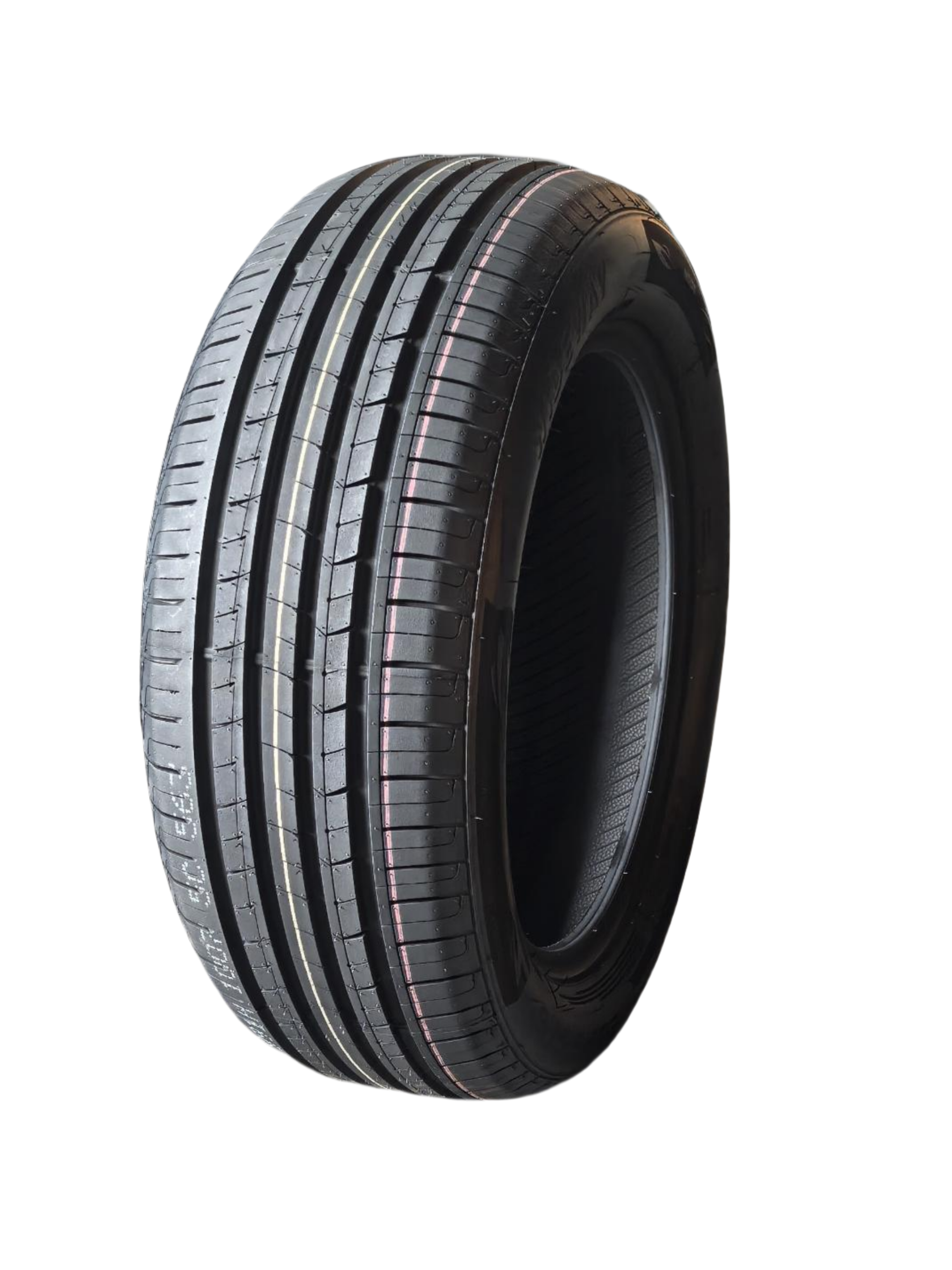
Taxi duty is stop-start urban work punctuated by highway legs, which is where the 195/65R15 profile fits: load index 91, speed rating V, 201 mm section width, and classification as an urban road and high-speed-stability passenger car tire in the Safe and affordable family group. For fleets, the buying conversation is about per-vehicle tyre consumption rather than sticker price, and the V rating is the field that keeps a highway leg inside the tire's design envelope.
Urban delivery and light commercial vans
This is where the split between the two van sizes matters. The 155R12C group is built around a high load index and a 450 KPA ceiling, so it suits loaded vans where per-tire capacity is the binding constraint. The 5.50R13LT is the narrower, lighter option — 160 mm section width, load index 88, 420 KPA ceiling — for compact vans and micro-vans on narrow rims where a 198 mm section width simply does not fit. Stocking only one of the two leaves a gap: too heavy a casing for a light van wastes money, and too light a casing for a loaded van creates claims.
Retail and aftermarket distributors
A practical rack carries all three. The metric 195/65R15 serves walk-in retail and workshop demand; the two commercial sizes serve fleet and light-commercial accounts that buy by the set and reorder on a schedule. Splitting the range this way also makes the sales conversation clearer, because each size answers a different question: how much load, how much speed, how much width.
What a fleet-scale relationship looks like in practice
A distributor relationship in Mexico has run for four years around passenger car tires engineered for local road conditions, with heat resistance and extended mileage as the priorities and more than 400,000 passenger car tires exported and distributed over the relationship. The recurring themes in that account match the spec logic above: extended tread life, dependable all-season traction, low noise and ride comfort, and repeat ordering rather than one-off container buying.
Certification coverage by destination market
All three sizes sit inside product groups listed under the manufacturer's certification records, which is the practical basis for quoting them into different markets:
- ECE type approval, UN Regulation No. 30 — certificate E4-30R-0264621, issued by RDW, covering the EU and Africa.
- EU Regulation No. 117 E-mark / EU tyre label — certificate E4-117R-025700-S2WR2, issued by RDW, applicable to the EU.
- SASO GSO Product Certification — certificate TR13651/2025, issued by SASO, applicable to Saudi Arabia, issued 11 December 2025 and valid through 11 December 2026.
- CCC — certificate 2022061201000258 under standard GB9743-2024, issued by Beijing Zhong Hua Combination Certification Co., Ltd., valid for mainland China and Ecuador.
- SONCAP — certificate NGP2026 145940/0001 under standard ZA12B6, issued by BUREAU VERITAS, applicable to Nigeria.
Because each certificate is granted per product and per market, the correct distributor workflow is to attach the matching certificate document to every quotation, and to confirm that the size being offered appears on that document rather than assuming coverage from the brand name alone.
Frequently asked questions
Do 155R12C, 5.50R13LT and 195/65R15 carry the certifications a distributor needs for the EU, Saudi Arabia, Nigeria, and China or Ecuador?
Yes. All three sizes are listed among the products covered by the certification records held for the WIDEWAY, EVERLAND and V-RICH passenger car tire ranges: ECE approval under UN Regulation No. 30 (certificate E4-30R-0264621, issued by RDW, covering the EU and Africa), EU Regulation No. 117 E-mark / EU tyre label (certificate E4-117R-025700-S2WR2, issued by RDW), SASO GSO Product Certification (certificate TR13651/2025, applicable to Saudi Arabia), CCC (certificate 2022061201000258 under standard GB9743-2024, issued by Beijing Zhong Hua Combination Certification Co., Ltd., valid for mainland China and Ecuador) and SONCAP (certificate NGP2026 145940/0001 under standard ZA12B6, issued by BUREAU VERITAS, applicable to Nigeria). Because certificates are granted per product and per market, match the document to the exact size and destination before quoting.
Can these three sizes be supplied as OEM or private-label builds, and what production capacity supports them?
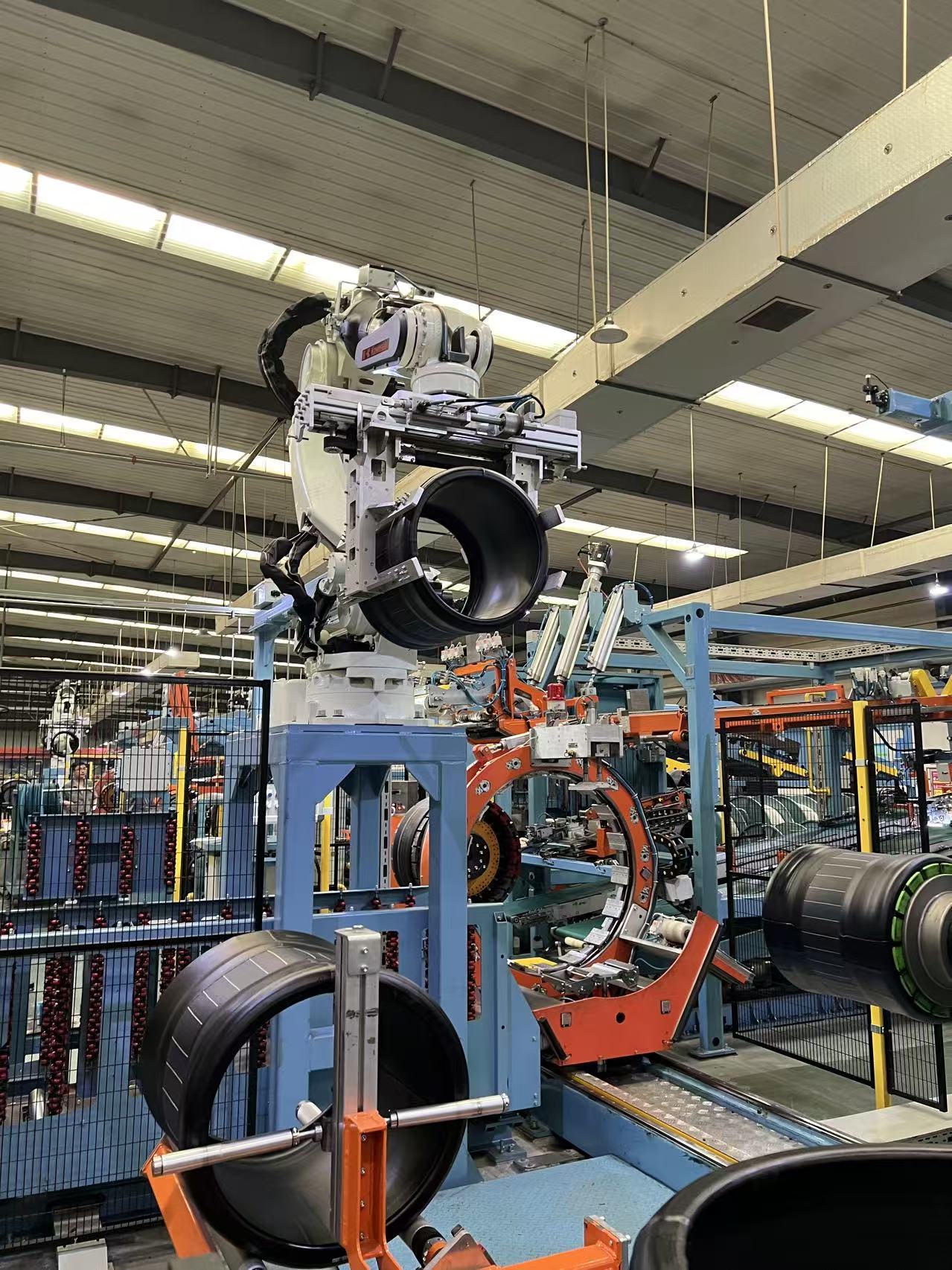
Shandong Wideway Tire Co., Ltd. operates an OEM production model with customization available across passenger car tires, off-road tires, white letter tires and white sidewall tires, and a monthly capacity of 60,000 pieces. Quality control is described as 100% test. The company was founded in 2014, runs a 1,000,000 m² facility with approximately 5,000 employees and a 25-person R&D team, produces an annual output of 23,400,000 units, and exports 70% of production to the EU, Middle East, Africa, Central and South America, Southeast Asia, Central Asia, Australia and Canada. After-sales scope includes custom promotional accessories and tire quality warranty support.
What actually drives the cost difference between a 155R12C, a 5.50R13LT and a 195/65R15?
Cost differences track material content and construction rather than brand tier. The reinforced commercial groups carry more casing material to reach a 106/104 load index and a 450 KPA pressure ceiling than a 300 KPA metric passenger casing, and each size needs its own mould and tooling. Section width also changes container density, so a container of 160 mm wide van tires stows differently from one of 201 mm passenger tires, which changes freight cost per unit. The practical rule for a distributor is to compare total value per kilometre against the duty cycle — load index, speed rating and pressure ceiling matched to the actual vehicles — instead of comparing unit prices across three different duty classes. Quotes are issued per size so the mix economics can be seen directly.
How can a distributor validate these three sizes before committing to a container?
Validation starts with the fields that decide fitment. Measure rim width and wheel-arch clearance for the 160 mm and 198–201 mm section widths, confirm the load-index floor against axle loads, check the speed rating against the route profile, and confirm that the maximum pressure ceilings (450 KPA, 420 KPA and 300 KPA respectively) sit above the fleet's working pressures. The published order parameter starts at one 20-foot container, approximately 400–700 pieces, so the first container should be planned as a mixed validation load — the two commercial-van sizes plus the metric passenger size — and any sample arrangement for the exact size should be confirmed with the supplier before the container is locked.
What is the production and delivery timeline for a mixed container of these sizes?
Wideway publishes a production lead time of 25–45 days, a monthly capacity of 60,000 pieces and a minimum order quantity of one 20-foot container, approximately 400–700 pieces. For a mixed load covering 155R12C, 5.50R13LT and 195/65R15, the sequence that keeps schedules realistic is: confirm the size split and destination certifications first, then confirm the order, then allow the 25–45 day production window. For current availability, size-level specification sheets, a quotation or the catalogue, contact Della at della@widewaytire.com or on WhatsApp / Tel +86 18253208831.
Conclusion: put each size where its specification belongs
The comparison between 155R12C, 5.50R13LT and 195/65R15 is not a contest. It is a placement exercise. The 155R12C group answers loaded commercial-van duty with a 106/104 load index, an R rating, a 198 mm section width and a 450 KPA ceiling. The 5.50R13LT answers compact and light urban van duty with load index 88, a P rating, a 160 mm width and 420 KPA. The 195/65R15 answers taxi, family and retail passenger demand with load index 91, a V rating, a 201 mm width and 300 KPA. Distributors who hold all three in a defined ratio can serve fleet and retail accounts from one supplier relationship, and can defend every quotation with a specification instead of a discount.

Next step for distributors. Download the product catalogue, request size-level specification sheets for 155R12C, 5.50R13LT and 195/65R15, or ask for a quotation on a mixed container. Production is OEM-capable, lead time is 25–45 days, and the minimum order is one 20-foot container (approximately 400–700 pieces).
Catalogue (PDF): EVERLAND CATALOG 2025 · Website: widewaytire.com · Contact: Della, della@widewaytire.com, WhatsApp / Tel +86 18253208831 · No.396, Emeishan Road, HuangDao District, Qingdao City, Shandong, China.
Have Questions or Need More Details?
Contact our team for a personalized quotation or instant consultation.
Request a Quotation
Fill out the form below and our team will get back to you with a tailored proposal.
WhatsApp Direct Chat
Prefer to chat in real-time? Message us on WhatsApp for instant assistance & quick answers.
- Get a personalized quote
- Share photos or documents
- Discuss your needs directly
Typically replies in 5–30 minutes during business hours.