
Choosing Passenger Car Tires for Automotive Tuning: Matching UHP Specs to Modified Vehicles
Direct answer: when a car has been tuned, the tire decision is a specification decision, not a category claim. The correct method is to match a documented ultra-high-performance (UHP) passenger car tire family to the vehicle's real load index, its speed capability and its wheel-arch clearance — and then confirm the size exists in that family's published size list. Within Wideway's documented passenger car tire portfolio, one family is specified at a 214 mm section width, load index 91 and V speed rating and includes 205/55R16 in its size list; a second family is specified at a 233 mm section width, load index 103 and W speed rating and begins its size list with 235/55ZR19. Both families carry the classification Ultra-High-Performance Passenger Car Tire, both are labelled High-speed stability Passenger Car Tire, and both list Automotive Tuning Industry as an applicable industry.
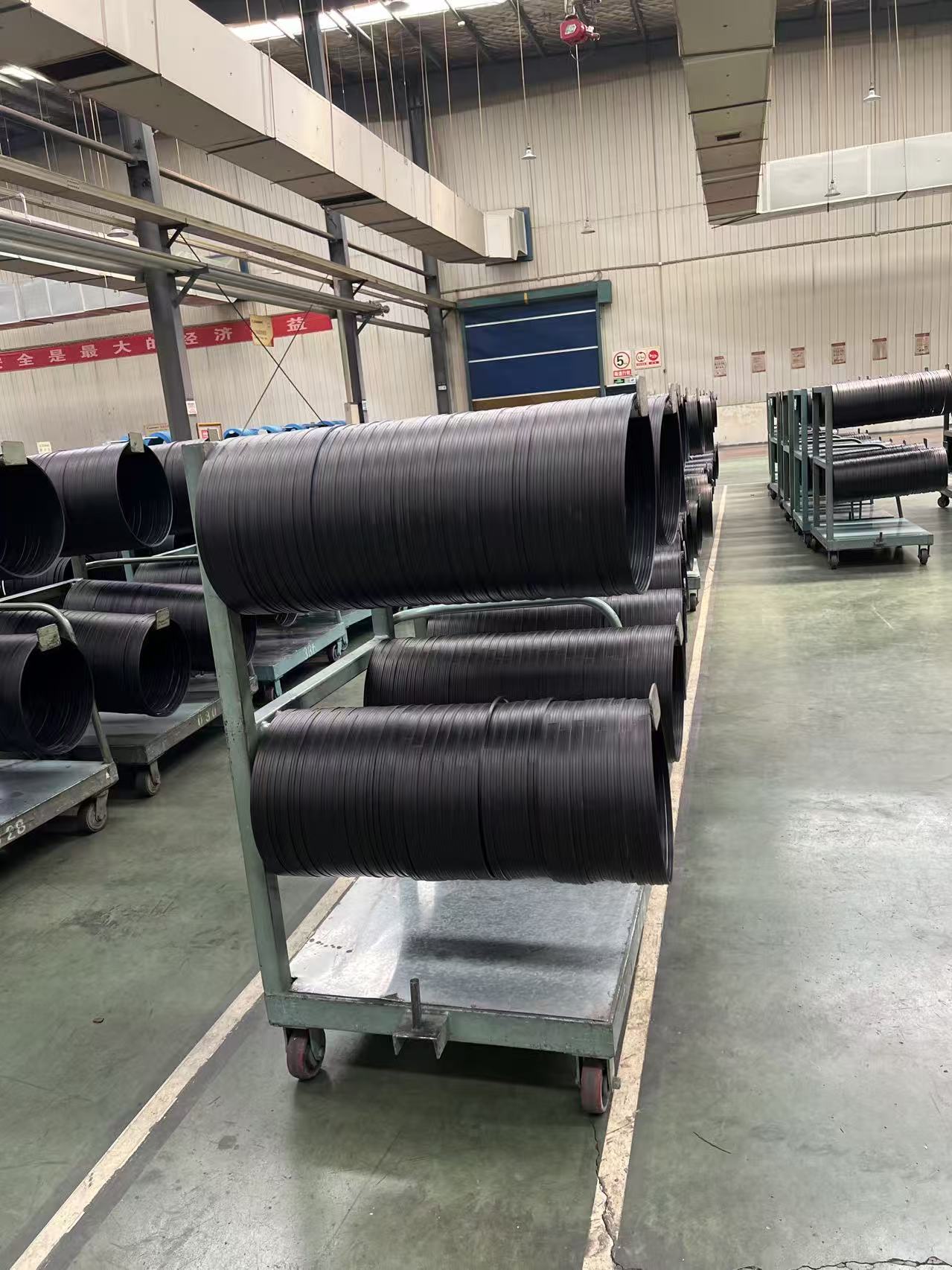
Why a Tuned Vehicle Cannot Reuse a Standard Tire Specification
A remapped engine, a stiffer suspension and a larger wheel change three variables at the same time: the load the tire carries, the heat it must dissipate, and the space it has to move in. A passenger car tire specification that was correct when the car left the factory can become the limiting component of the build. Automotive tuning shops generally re-specify tires for four practical reasons.
- Load index drift. A wheel upgrade often moves the car to a low-profile size whose load index is lower than the original fitment, even though the tuned car now accelerates harder and brakes later. The load index on the sidewall is the number that must be checked first, because it is the value that describes the tire's rated load-carrying capacity.
- Speed rating drift. Many budget replacement sizes are supplied with lower speed symbols than the vehicle's real capability. A tuned car should never be fitted with a speed symbol below the one the build genuinely needs.
- Section width versus clearance. Section width — not rim width alone — determines whether a tire clears the arch, the inner liner and the suspension arm at full lock and full compression. Documented UHP families in this portfolio are specified at 214 mm, 225 mm, 233 mm and 265 mm section widths, so the fitment decision has measurable boundaries.
- Noise and ride after stiffening. Once the chassis is stiffened and bushings are changed, tire noise and ride harshness become far more noticeable in urban driving. This is why UHP families in the portfolio also carry Comfortable and noiseless Passenger Car Tire and Urban Road Passenger Car Tire classifications.
The practical decision rule is: do not go below the original-equipment load index; do not go below the speed symbol the vehicle actually requires; keep the section width inside the documented clearance envelope; and stay inside a product family the manufacturer documents for ultra-high-performance and urban use.
Industry Background: Tuning Demand, Regulation and Supply Reality
The tuning and performance aftermarket sits inside a passenger car tire market that is large, regulated and increasingly electrified. Understanding that context explains why high-speed-stability specifications matter commercially as well as technically.
- Market size. Grand View Research valued the global passenger car tire market at approximately USD 143.06 billion in 2024, with the passenger car segment leading the total tire market at a 32.6% revenue share.
- Electrification is reshaping the UHP segment. Precedence Research projects the global electric vehicle tire market to reach USD 337.20 billion by 2034, growing at a CAGR of 28.1% from 2025, driven by requirements for high load capacity and low noise. Tuned vehicles today include hybrids and performance EVs, where load index and noise matter as much as grip.
- Export supply. According to General Administration of Customs / SunSirs data, China's total tire exports in 2025 reached 9.65 million tonnes, a 3.6% year-on-year increase, with an export value of approximately 167.7 billion RMB (roughly USD 23.1 billion).
- Regulation. Passenger car tires must comply with UN Regulation No. 117, which sets limits for rolling resistance, wet grip and external rolling noise and requires labeling in the EU. Type approval for passenger car tires is issued under UN Regulation No. 30.
On the manufacturing side, SHANDONG WIDEWAY TIRE CO.,LTD is a Chinese tire producer operating the brands WIDEWAY, EVERLAND and V-RICH. The company was founded in 2014, operates a 1,000,000 square metre facility with an annual output of 23,400,000 units, employs approximately 5,000 people, maintains a 25-person product R&D team, and exports about 70% of production to markets including Central and South America, Canada, the EU, Africa, the Middle East, Southeast Asia, Central Asia and Australia. For a tuning-industry buyer, the relevant question is not the size of the company but whether its documented product families cover the fitments a modified vehicle needs.
The Documented UHP Solution Set: What the Specification Data Shows
Four passenger car tire families in the Wideway portfolio are documented as ultra-high-performance and are explicitly listed with Automotive Tuning Industry among their applicable industries. Each family is defined by a fixed combination of section width, load index, speed rating and maximum pressure — not by a marketing tier.
- 214 mm section width family (product 5087). Load index 91, speed rating V, maximum pressure 300 kPa. Classifications include Ultra-High-Performance Passenger Car Tire, Urban Road Passenger Car Tire and High-speed stability Passenger Car Tire. The size list includes 205/55R16 alongside ZR-marked fitments such as 215/55ZR16, 215/45ZR17, 215/50ZR17, 215/55ZR17 and 225/45ZR17.
- 225 mm section width family (product 5090). Load index 94, speed rating W, maximum pressure 340 kPa. Classified as ultra-high-performance and SUV passenger car tire. The size list includes 205/45ZR16, 225/45ZR17, 235/45ZR17, 245/40ZR18, 245/35ZR19 and 245/30ZR22.
- 233 mm section width family (product 5088). Load index 103, speed rating W, maximum pressure 340 kPa. Classified as ultra-high-performance, comfortable and noiseless, and SUV passenger car tire. The size list begins with 235/55ZR19 and also includes 245/35ZR18, 235/50ZR18, 265/50ZR19, 275/40ZR21 and 315/35ZR20.
- 265 mm section width family (product 5092). Load index 109, speed rating W, maximum pressure 340 kPa. This family carries the additional classification Comfortable and noiseless EV Passenger Car Tire and covers sizes such as 245/45ZR19, 235/55R19, 235/50ZR20, 265/50ZR20 and 275/40ZR19.
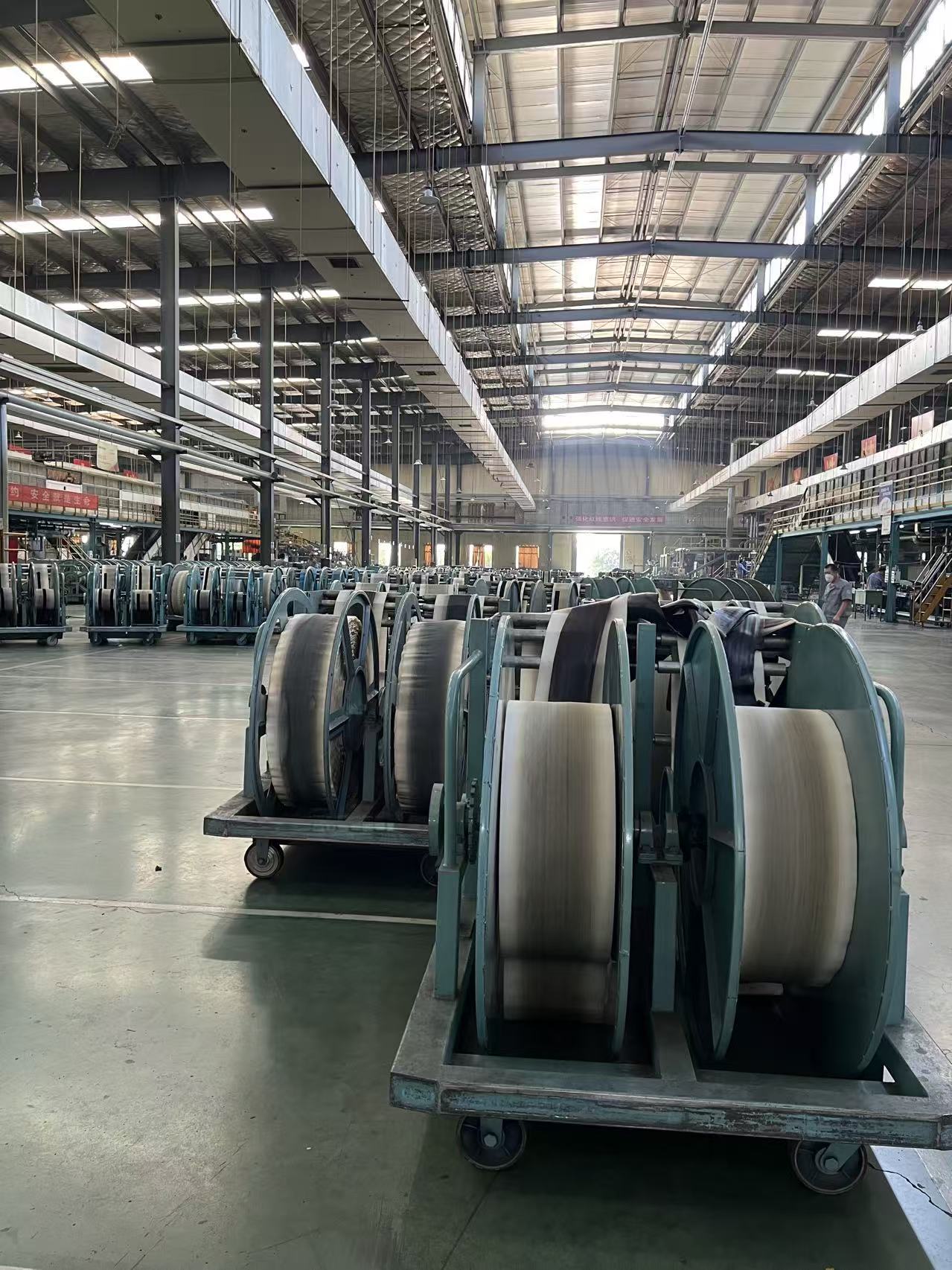
Compound content: what the material lists actually say
The documented material list for these ultra-high-performance passenger car tire families comprises natural rubber, synthetic rubber, carbon black, steel cord, polyester cord fabric, nylon cord fabric, vulcanizing agent, vulcanization accelerators, activators, antioxidants and RAE oil. That is the verified composition record for the UHP passenger car families described above.
Precipitated silica appears elsewhere in the Wideway material record: it is listed for the commercial van passenger car tire families and for the off-road tire families, not for the UHP passenger car families covered in this guide. Buyers specifying a tuned car should therefore quote the compound list that belongs to the exact product family they are ordering, rather than assuming a single compound across the whole range.
Documented performance statements for the broader passenger car tire range: the passenger car tires are engineered for optimal grip, reliable braking performance and enhanced fuel efficiency. Documented highlights include extended tread life, high cost-effectiveness, dependable all-season traction, low noise and maximum ride comfort. These statements describe the passenger car tire range; they are not a claim about any individual tuned vehicle's measured behaviour.
OEM and customisation capability relevant to tuning programmes
Wideway offers OEM services for passenger car tires, off-road tires, white letter tires and white sidewall tires. For tuning workshops, performance retailers and distributors building a private-label or shop-brand line, the documented capability parameters are:
- Monthly capacity: 60,000 pieces.
- Lead time: 25–45 days.
- Minimum order quantity: one 20-foot container, around 400–700 pieces.
- Quality control: 100% test.
- After-sales: custom promotional accessories and after-sales tire quality warranty support.
- Export markets served: EU, Middle East, Africa, Central and South America, Southeast Asia, Central Asia, Australia and Canada.
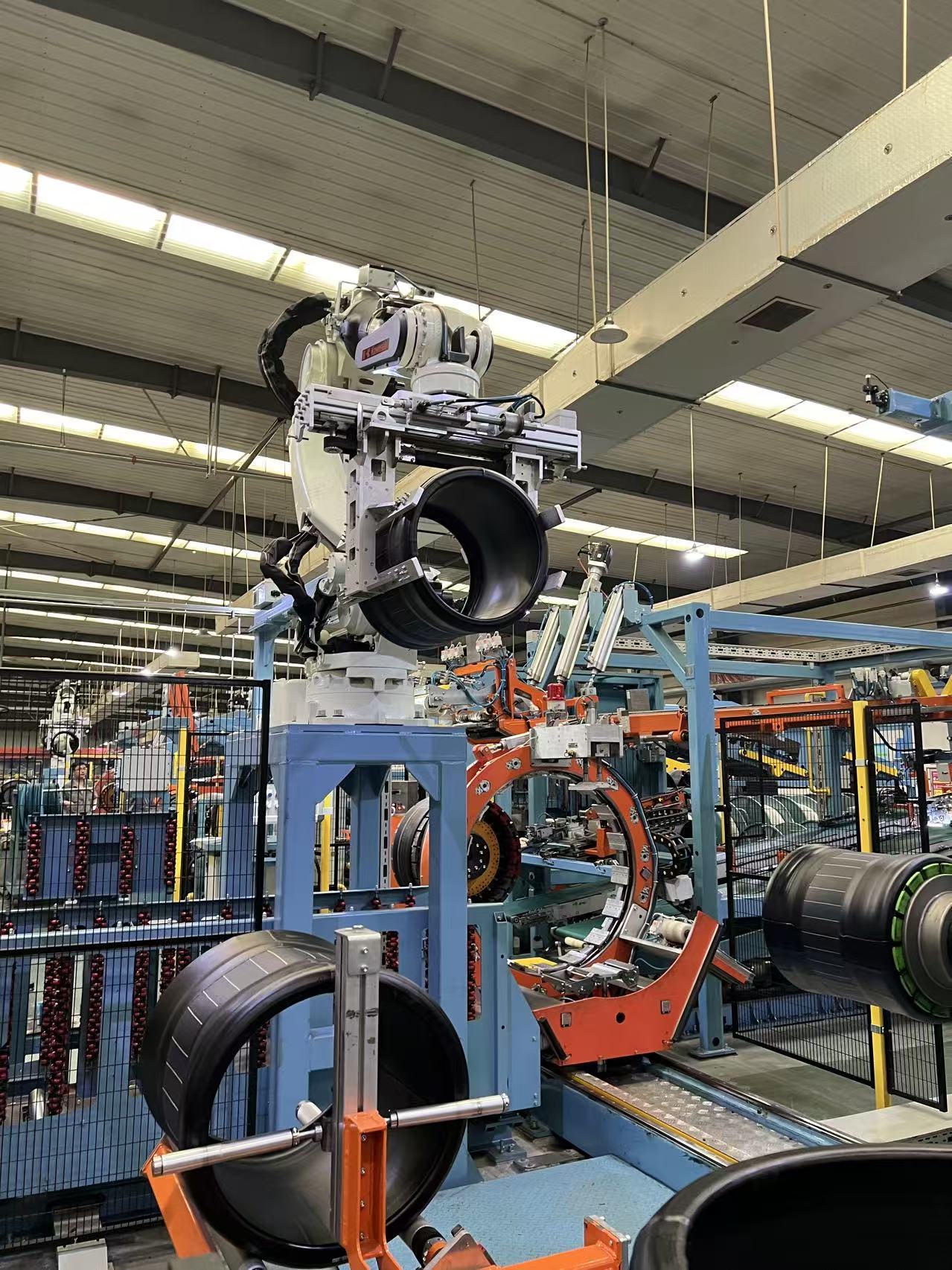
Comparison Table: Documented UHP Passenger Car Tire Families vs a Standard Urban Family
The table below compares the four ultra-high-performance families described above with one standard urban family from the same portfolio, using only documented specification values. It is a specification comparison, not a quality ranking: the standard family remains a valid choice for vehicles that were never modified.
| Documented family | Section width | Load index | Speed rating | Max pressure | Documented type classification | Example fitments (tuning-relevant) |
|---|---|---|---|---|---|---|
| Product 5087 | 214 mm | 91 | V | 300 kPa | Ultra-High-Performance; Urban Road; High-speed stability | 205/55R16, 215/55ZR16, 215/45ZR17, 225/45ZR17 |
| Product 5090 | 225 mm | 94 | W | 340 kPa | Ultra-High-Performance; Urban Road; High-speed stability; SUV | 205/45ZR16, 235/45ZR17, 245/40ZR18, 245/30ZR22 |
| Product 5088 | 233 mm | 103 | W | 340 kPa | Ultra-High-Performance; Comfortable and noiseless; SUV | 235/55ZR19, 235/50ZR18, 265/50ZR19, 315/35ZR20 |
| Product 5092 | 265 mm | 109 | W | 340 kPa | Ultra-High-Performance; Comfortable and noiseless EV; SUV | 245/45ZR19, 235/55R19, 265/50ZR20, 275/40ZR19 |
| Product 5085 (standard urban baseline) | 201 mm | 91 | V | 300 kPa | Safe and affordable family; Urban Road; High-speed stability | 205/55R16, 205/60R16, 215/65R15 |
Two observations follow directly from the table. First, a wider section width in this portfolio is associated with a higher load index — from 91 at 214 mm to 109 at 265 mm — which is exactly the direction a heavier, more powerful build needs. Second, some familiar size markings appear in more than one family: 205/55R16 appears in both the 214 mm UHP family and the 201 mm standard family. That overlap is why the family identifier, not the size marking alone, must be written on the purchase order.
Step-by-Step Breakdown: Matching a UHP Tire to a Tuned Build
The following sequence reflects the order in which the specification data should be used. It keeps compliance and load capacity ahead of aesthetic fitment.
- Establish the required load index. Compare the original-equipment load index with the new vehicle weight after modification. In the documented UHP families, load indexes of 91, 94, 103 and 109 are available, so a heavier build can step up without leaving the UHP tier.
- Set the minimum speed rating. The 214 mm family is documented at V; the 225 mm, 233 mm and 265 mm families are documented at W. Choose a family whose documented rating meets or exceeds what the build genuinely requires.
- Confirm section width against physical clearance. Measure at full lock and full suspension compression. Documented section widths of 214 mm, 225 mm, 233 mm and 265 mm give four concrete envelopes to test against.
- Match the size to the family's published list. Do not assume that because a size exists in the portfolio it exists in the UHP family you selected. Verify the exact marking — for example 205/55R16 in the 214 mm family, or 235/55ZR19 in the 233 mm family.
- Check the compliance path for the destination market. EU and Africa: ECE type approval under UN Regulation No. 30 (certificate E4-30R-0264621, issued by RDW) plus the EU Regulation No. 117 E-mark label certificate (E4-117R-025700-S2WR2, issued by RDW). Saudi Arabia: SASO GSO Product Certification TR13651/2025. Nigeria: SONCAP certificate NGP2026 145940/0001 issued by Bureau Veritas. Chinese mainland and Ecuador: CCC certificate 2022061201000258 under GB9743-2024.
- Validate before committing. Documented acceptance criteria include pre-shipment test and third-party inspection by BV, which allows a tuning retailer to confirm the delivered specification matches the ordered family.
- Lock the commercial and logistics frame. Minimum order quantity is one 20-foot container (around 400–700 pieces), delivery terms are FOB Qingdao, lead time is 25–45 days, and payment terms are 30% T/T as deposit with 70% T/T paid against copy of B/L.
Use Cases: Where UHP Passenger Car Tires Fit After Tuning
1. Urban daily driver with a stage-1 remap
A lightly modified hatchback or sedan used mainly in stop-start urban traffic needs a fitment that stays inside the 214 mm or 225 mm envelope. The V-rated 214 mm family and the W-rated 225 mm family both carry the Urban Road Passenger Car Tire classification, and the 225 mm family includes 205/45ZR16 and 235/45ZR17 — sizes that suit a lowered car with limited clearance.
2. Stage-2 sedan or hot hatch on 17–19 inch wheels
Where the build runs ZR-marked fitments, the 225 mm and 233 mm families cover 225/45ZR17, 235/45ZR17, 245/40ZR18 and 235/55ZR19. The move from load index 94 to load index 103 in this range is the documented step that supports a heavier, faster vehicle without shifting to a different category of tire.
3. Performance hybrid or EV conversion
Electrified and hybridised builds raise load index and noise requirements simultaneously. The 265 mm family is documented with load index 109, speed rating W and the Comfortable and noiseless EV Passenger Car Tire classification, with sizes including 245/45ZR19 and 265/50ZR20.
4. Tuner workshop or performance retailer building a private-label line
Workshops that want their own brand on a UHP tire can use the documented OEM route: OEM services are offered for passenger car tires, off-road tires, white letter tires and white sidewall tires, with 60,000 pieces monthly capacity, 100% test quality control and 25–45 day lead time.
5. Distributor programme in a hot-climate market
A documented distributor case covers a tire distributor and wholesaler in Mexico supplied with 100,000 pieces over a four-year relationship, with more than 400,000 PCR tires exported and distributed. The documented application result for that market was excellent heat resistance with extended mileage, and the documented highlights were extended tread life, high cost-effectiveness, dependable all-season traction, low noise and maximum ride comfort.
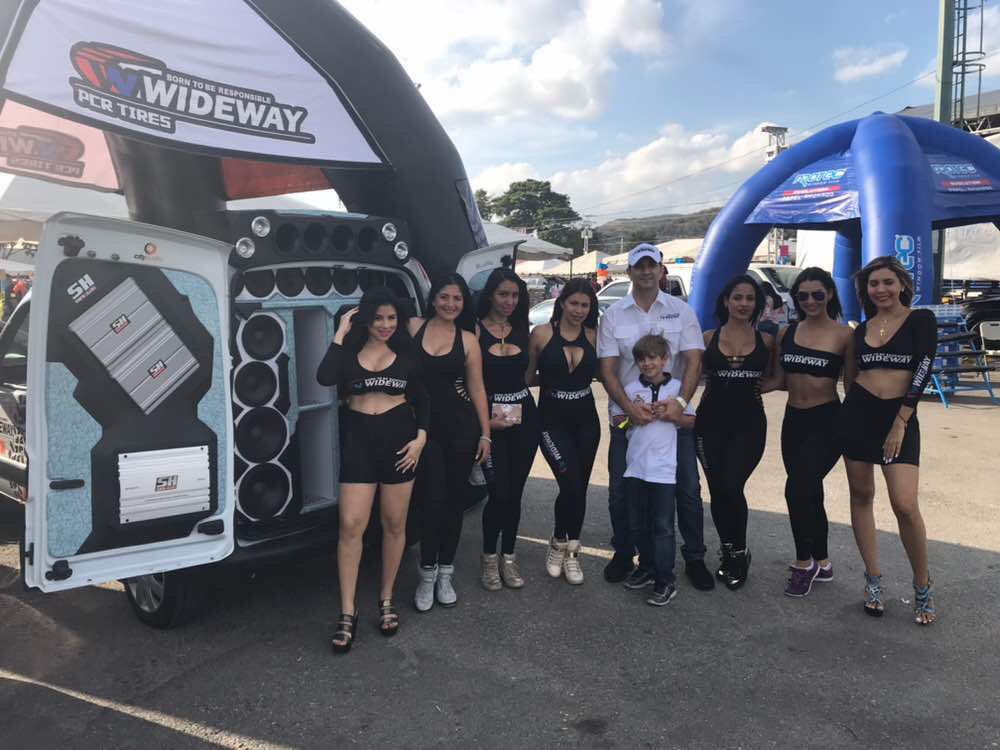
FAQ: UHP Passenger Car Tires for Tuned Vehicles
1. Are these ultra-high-performance passenger car tires certified for road use, and which certificates cover them?
Yes. Wideway passenger car tires hold ECE type approval under UN Regulation No. 30, certificate number E4-30R-0264621, issued by RDW for the EU and Africa markets; the certified scope covers passenger car tires, SUV tires, AT/MT/RT tires, winter tires and commercial van tires. The same manufacturer holds an EU Regulation No. 117 E-mark EU label certificate, number E4-117R-025700-S2WR2, issued by RDW, which is the regulation governing rolling resistance, wet grip and external rolling noise limits and mandatory EU labeling. Additional market approvals include SASO GSO Product Certification TR13651/2025 for Saudi Arabia, SONCAP certificate NGP2026 145940/0001 issued by Bureau Veritas for Nigeria under standard ZA12B6, and CCC certificate 2022061201000258 under GB9743-2024 for the Chinese mainland and Ecuador market, covering 75-series passenger car radial tyres.
2. Can a factory actually produce UHP passenger car tires for tuning programmes, including OEM and private-label work?
Wideway offers OEM production services for passenger car tires, off-road tires, white letter tires and white sidewall tires. Documented capability parameters are a monthly capacity of 60,000 pieces, 100% test quality control, and a 25-person product R&D team. The company's UHP passenger car tire families — the 214 mm, 225 mm, 233 mm and 265 mm section width families — explicitly list Automotive Tuning Industry among their applicable industries, alongside tire distributors and wholesalers, automotive aftermarket and retail chains, repair shop chains, tire dealers, mobility and transportation services, taxi companies and OEM matching.
3. What drives the cost of a UHP passenger car tire order, and is there a published price list?
No price list is published in the available product data, so no per-unit price can be quoted here. The documented commercial frame is: minimum order quantity of one 20-foot container (around 400–700 pieces), delivery terms FOB Qingdao, and payment terms of 30% T/T as deposit with 70% T/T paid against copy of B/L. Within that frame, the specification variables that change with the order are the size, the section width, the load index and speed rating tier, and the raw-material content of the family being ordered — natural rubber, synthetic rubber, carbon black, steel cord, polyester cord fabric, nylon cord fabric, vulcanizing agent, vulcanization accelerators, activators, antioxidants and RAE oil.
4. How can a tuning shop or distributor validate a fitment before placing a container order?
Validation is built into the documented acceptance criteria: pre-shipment test and third-party inspection by BV. A buyer specifying a tuned vehicle should confirm three things in writing before the order is released — the family identifier, the exact size marking, and the load index and speed rating of that size. A sample or quotation request can be raised directly through the supplier's contact channel to confirm availability of a specific size.
5. What is the lead time and order flow for UHP passenger car tire supply?
Documented lead time is 25–45 days, against a minimum order quantity of one 20-foot container, around 400–700 pieces, with delivery terms FOB Qingdao. Payment is 30% T/T as deposit with the remaining 70% T/T against copy of B/L, and acceptance criteria cover pre-shipment test plus third-party inspection by BV. The next step for a distributor or tuning workshop is to send the target size list and destination market so that the correct family and certification route can be confirmed before production is scheduled — contact Della at della@widewaytire.com or WhatsApp +86 18253208831.
Conclusion: Specification Discipline Beats Category Marketing
For a tuned vehicle driven mainly on urban roads, the tire that works is the one whose load index, speed rating and section width were chosen for the build — and whose product family is documented for ultra-high-performance and urban use. Wideway's UHP passenger car tire families give four measurable envelopes to work with: 214 mm with load index 91 and V rating, 225 mm with load index 94 and W rating, 233 mm with load index 103 and W rating, and 265 mm with load index 109 and W rating. The size list, the compound record and the market certificate are the three documents a buyer should check before any tuned vehicle is signed off on a new set of passenger car tires.
Next step: send your tuned-vehicle size list — for example 205/55R16, 225/45ZR17 or 235/55ZR19 — together with the destination market. Wideway will confirm the matching UHP family, the applicable ECE / SASO / SONCAP / CCC route, MOQ and lead time.
Email: della@widewaytire.com | WhatsApp: +86 18253208831 | Website: www.widewaytire.com
Download the full product range: EVERLAND CATALOG 2025 (PDF)

Have Questions or Need More Details?
Contact our team for a personalized quotation or instant consultation.
Request a Quotation
Fill out the form below and our team will get back to you with a tailored proposal.
WhatsApp Direct Chat
Prefer to chat in real-time? Message us on WhatsApp for instant assistance & quick answers.
- Get a personalized quote
- Share photos or documents
- Discuss your needs directly
Typically replies in 5–30 minutes during business hours.