
Off-Road Tire Types Explained: A Buyer's Reference for Mountain, Mud, Sand, Snow and Rock Terrains
Off-Road Tire Types Explained: A Buyer's Reference for Mountain, Mud, Sand, Snow and Rock Terrains
Off-road tires are not a single product category. They are a family of terrain-specific designs that trade on-road comfort, noise, and tread life against traction, sidewall protection, and durability. Buyers who understand the differences between all-terrain (A/T), mud-terrain (M/T), rugged-terrain (R/T), and winter-capable off-road tires can match the right product to both the vehicle and the actual operating environment. This guide explains the main off-road tire types, the terrain conditions they are designed for, and the specification data that distributors and fleet buyers should verify before ordering.
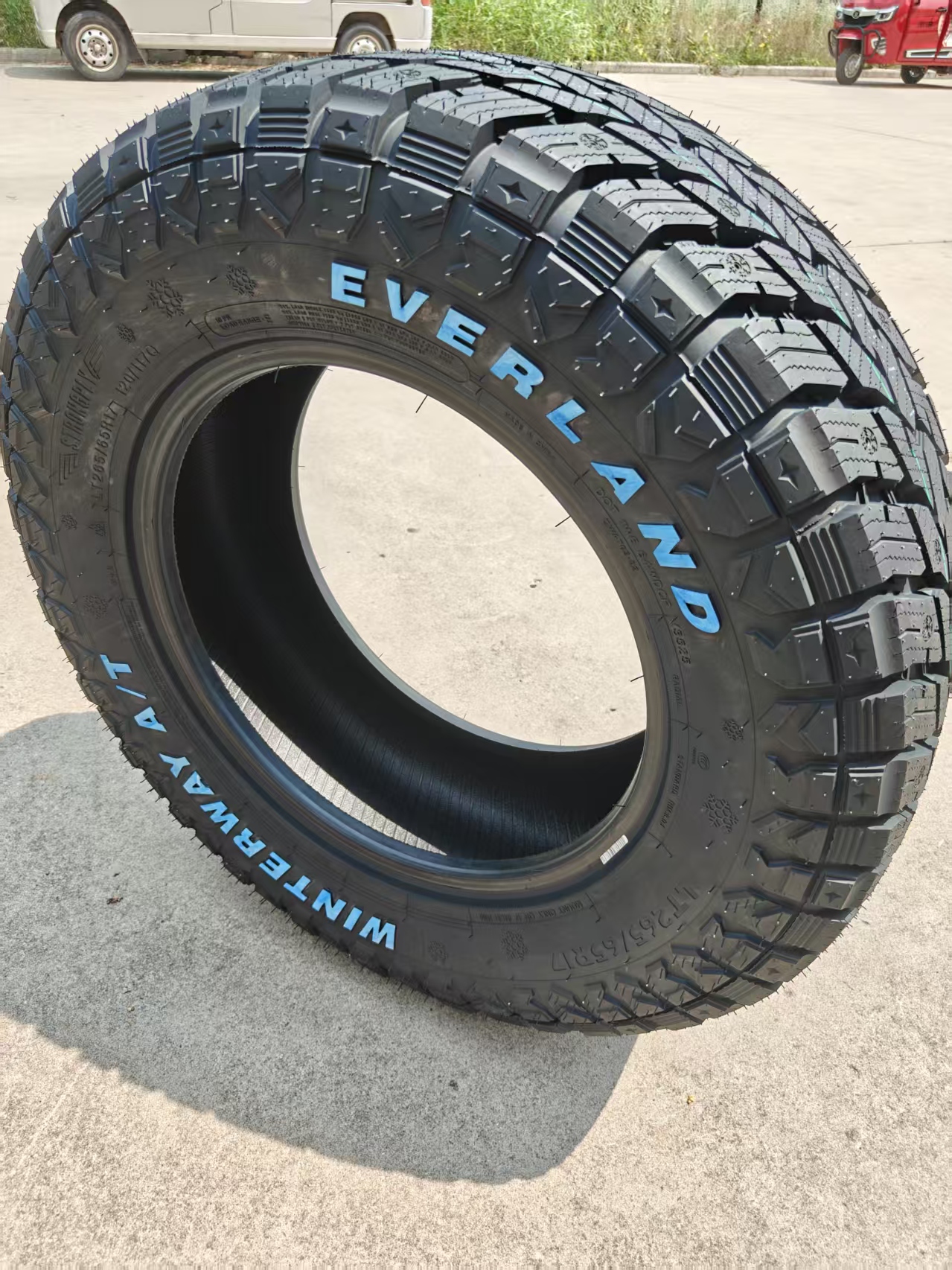
What Is an Off-Road Tire?
An off-road tire is a tire designed for use on unpaved, rugged, or low-traction surfaces such as mountain trails, deserts, mud, rock, snow, and jungle pathways. Compared with standard passenger-car tires, off-road tires typically use stronger carcass materials, deeper or more aggressive tread patterns, and reinforced sidewall constructions to resist cuts, punctures, and impacts. Off-road tires are commonly fitted to 4x4 vehicles, SUVs, pickup trucks, and light trucks.
In the WIDEWAY product structure, off-road tires are produced in several functional variants, including comfortable and noiseless off-road tires, urban-road off-road tires, high-speed stability off-road tires, rugged-terrain off-road tires, mud-terrain off-road tires, 4x4 AT and 4x4 MT off-road tires, reinforced sidewall off-road tires, sand dunes and hot climates off-road tires, and winter and snow off-road tires.
The global off-the-road (OTR) tire market was valued at approximately USD 34.4 billion in 2024, according to Smithers, driven by mining and construction activity. The mud-tire segment alone reached USD 8.3 billion in 2024 and is projected to grow at a CAGR of 6.1% through 2033, according to Credence Research, reflecting rising recreational off-road use.
Why Tire Type Selection Matters for Buyers
Choosing the wrong off-road tire type creates measurable downstream problems. A tire selected only for aggressive looks may produce excessive road noise and rapid wear on highways. A tire selected only for highway comfort may lack the traction and sidewall strength needed on rock or mud. For distributors and wholesale buyers, the failure cost is not limited to one vehicle—it affects warranty claims, customer confidence, and reorder rates.
Terrain-specific design differences include tread block size, void ratio, sidewall protection, rubber compound, and load/speed ratings. Buyers should evaluate the dominant terrain in their target market, the vehicle types their customers drive, and the regulatory or certification requirements of the destination country.
The Main Off-Road Tire Categories
Most off-road tires can be grouped into four broad categories: all-terrain (A/T), mud-terrain (M/T), rugged-terrain (R/T), and specialty terrain tires for sand, snow, or mixed surfaces. Within each category, manufacturers offer different tread patterns, sidewall treatments, and size ranges.
All-Terrain (A/T) Off-Road Tires
All-terrain tires are designed to balance on-road comfort, noise control, and off-road capability. They typically feature moderate tread blocks, multiple sipes for wet traction, and a structure that supports highway use. In the WIDEWAY range, all-terrain off-road tires are classified as comfortable and noiseless, urban-road, high-speed stability, sand dunes and hot climates, and 4x4 AT off-road tires.
All-terrain tires are most suitable for users who drive on highways most of the time, with weekend or occasional off-road trips on gravel, dirt, sand, or light mud. They are also a common first choice for distributors serving mixed-use markets where customers need one tire for daily commuting and recreational driving.
Available A/T models in the WIDEWAY portfolio include sizes such as LT265/70R16, LT265/75R16, LT285/75R16, LT265/65R17, LT265/70R17, LT285/70R17, LT315/70R17, LT265/60R18, and LT285/65R18. These tires use a construction of natural rubber, synthetic rubber, white rubber compound, carbon black, precipitated silica, steel cord, polyester cord fabric, nylon cord fabric, vulcanizing agents, accelerators, activators, antioxidants, and RAE oil.
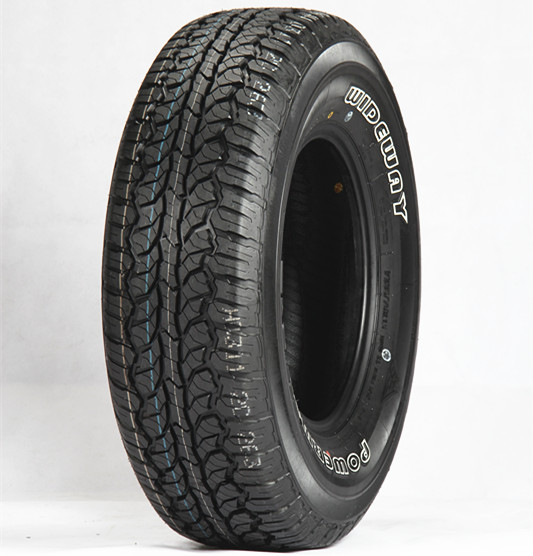
Mud-Terrain (M/T) Off-Road Tires
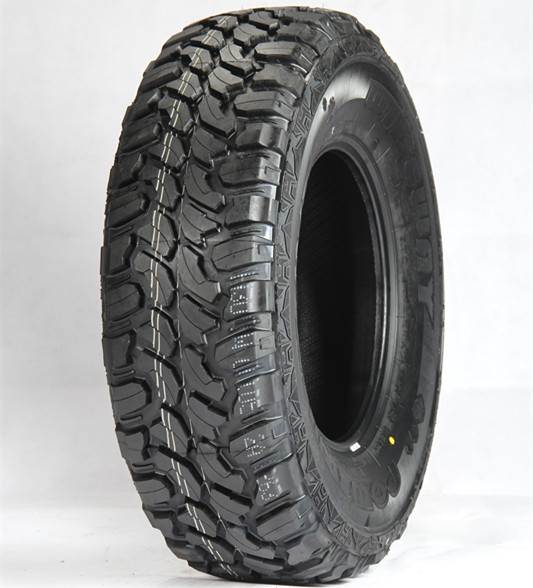
Mud-terrain tires use larger, more aggressive tread blocks with wider spacing to self-clean mud and maintain forward traction in soft or slippery surfaces. They are designed for off-road driving scenarios including mountain, desert, rock, winter snow, jungle, all-weather, and mud terrain. Because the aggressive pattern increases tread noise on paved roads, M/T tires are usually chosen by users who prioritize off-road traction over highway comfort.
The WIDEWAY M/T range includes models such as LT235/75R15, 31*10.50R15LT, 33*12.50R15LT, LT265/70R16, LT245/75R16, LT265/75R16, LT285/75R16, LT315/75R16, LT265/65R17, LT265/70R17, LT285/70R17, LT315/70R17, 33*12.50R17LT, LT265/60R18, LT285/65R18, and 33*12.50R20LT. A representative M/T tire has a load index of 121/118, speed rating Q, section width 272 mm, and maximum pressure 550 kPa.
M/T tires also use high-strength materials including steel cord, polyester cord fabric, and nylon cord fabric to resist the impacts and cuts common on rocky or debris-strewn trails. Buyers supplying markets with frequent off-road recreational activity or rural operating conditions often find M/T models among the most requested SKUs.
Rugged-Terrain (R/T) Off-Road Tires
Rugged-terrain tires sit between A/T and M/T in both appearance and performance. They provide a more aggressive off-road look than A/T tires, with reinforced sidewalls and a structure built for rough surfaces, while generating lower noise than most full M/T designs. Rugged-terrain tires are emerging as a high-growth middle category, capturing share from traditional A/T and M/T segments among users who want aggressive styling without extreme tire noise.
In the WIDEWAY range, R/T off-road tires are classified as comfortable and noiseless, urban-road, high-speed stability, rugged-terrain, 4x4 RT, and reinforced sidewall off-road tires. These tires are suitable for rugged terrain applications and are designed for high-speed stability.
An example R/T tire in the WIDEWAY catalog is the POWERWAY R/T. It is available in sizes such as 31×10.50R15LT, LT265/75R16, LT285/75R16, LT305/70R16, 33×12.50R17LT, LT265/70R17, LT285/70R17, LT315/70R17, 33×12.50R18LT, LT265/60R18, LT265/50R20, and LT275/55R20. The tire has a load index of 123/120, speed rating Q, section width 272 mm, and maximum pressure 552 kPa.
Another R/T construction, the TERRUX R/T, offers models including LT265/70R16, LT265/75R16, LT285/75R16, LT265/65R17, LT265/70R17, LT285/70R17, LT265/60R18, LT315/75R16, LT275/70R17, and LT285/70R18, with a load index of 119/116, speed rating R, and maximum pressure 550 kPa.
Reinforced Sidewall and Puncture-Resistant Off-Road Tires
Reinforced sidewall construction is a structural feature, not a separate tire category. It appears across R/T, M/T, and some A/T tires. The purpose is to protect the sidewall from cuts, impacts, and punctures when driving over rocks, stumps, and debris. Sidewall protection is also a common special requirement for tires used in urban and off-road operating conditions where curb impact and sharp objects are common.
In the WIDEWAY material structure, off-road tires use natural rubber, synthetic rubber, white rubber compound, carbon black, precipitated silica, steel cord, polyester cord fabric, nylon cord fabric, vulcanizing agents, accelerators, activators, antioxidants, and RAE oil. The combination of steel and textile cords supports the casing, while the rubber compounds determine grip and wear behavior.
Sand Dunes and Hot Climates Off-Road Tires
Desert and sand-dune driving demands tires that can float over soft surfaces rather than dig in. Tread design, footprint, and inflation flexibility matter more than traditional mud-clearing ability. Some A/T and special desert-oriented tires are engineered to handle sand dunes and hot climates while maintaining stability on paved roads.
In the WIDEWAY range, sand dunes and hot climates off-road tires belong to the all-terrain family. Buyers supplying Middle East and North Africa markets often prioritize heat resistance and sand performance, as well as certification requirements such as SASO for Saudi Arabia.
Winter and Snow Off-Road Tires
Winter and snow off-road tires are designed to maintain traction on icy and snowy roads. They use tread compounds and siping patterns that remain flexible at low temperatures and improve grip on wet, icy, or snow-covered surfaces. In the WIDEWAY range, some all-terrain tires are classified for winter and snow use, and the product line also includes winter tires outside the off-road segment.
For European markets, the Three-Peak Mountain Snowflake (3PMSF) symbol is a mandatory safety certification for winter tires in Germany as of October 2024 and in Sweden as of November 2024. Distributors selling winter-capable off-road tires into Europe should confirm that the specific SKU carries the required certification for the destination country.
Terrain-by-Terrain Selection Guide
The table below maps common off-road terrain conditions to the tire types and relevant model families in the WIDEWAY portfolio.
| Terrain | Recommended Tire Type | Key Design Requirement | Representative Models |
|---|---|---|---|
| Mountain and rocky trails | M/T or R/T with reinforced sidewall | Cut resistance, impact resistance, sidewall protection | POWERWAY M/T, POWERWAY R/T, TERRUX R/T |
| Mud and wet soil | M/T | Self-cleaning tread blocks, high void ratio, strong traction | POWERWAY M/T, MUD-TERRAIN MT6, WEY P6 MT |
| Sand dunes and hot climates | A/T with sand-tuned design | Flotation, heat resistance, stable high-speed behavior | POWERWAY A/T, WINTERWAY A/T, BAJA KING A/T |
| Winter snow and ice | Winter-capable A/T or winter tire | Low-temperature compound, siping, 3PMSF where required | WINTERWAY A/T |
| Jungle and forest terrain | M/T | Self-cleaning tread, strong casing, sidewall protection | WEYONE AK3, POWERWAY M/T |
| All-weather / mixed use | A/T or R/T | Balanced on-road comfort, wet grip, light off-road capability | POWERWAY A/T, WEYONE AK3, WINTERWAY A/T |
| Urban roads with occasional off-road | A/T | Low noise, comfort, high-speed stability | POWERWAY A/T, BAJA KING A/T |
The representative models listed are from the WIDEWAY, EVERLAND, and V-RICH brand portfolio. Not every model is available in every size; distributors should verify size availability by SKU before planning orders.
Key Specifications Buyers Should Check
Beyond tread pattern and tire type, buyers should check the following specification fields before sourcing.
Load Index and Speed Rating
Load index indicates the maximum weight a tire can carry at a specified pressure. Speed rating indicates the maximum service speed. Examples from the WIDEWAY off-road range include 121/118 load index with Q speed rating, 123/120 with Q, 119/116 with R, and 120/117 with Q or R depending on the product. Matching the load index to vehicle axle weight is a mandatory safety step.
Section Width and Maximum Pressure
Section width affects footprint, vehicle fitment, and appearance. Maximum pressure indicates the inflation ceiling. In the WIDEWAY off-road line, section widths range from approximately 235 mm to 330 mm, and maximum pressures range from 350 kPa to 552 kPa depending on the model.
Sidewall Construction and Material
Reinforced sidewall designs are recommended for rocky or debris-heavy terrain. Tire construction materials in the WIDEWAY range include natural rubber, synthetic rubber, carbon black, steel cord, polyester cord fabric, and nylon cord fabric. These materials contribute to casing strength, cut resistance, and load-carrying ability.
How Shandong Wideway Tire Co., Ltd. Produces Off-Road Tires
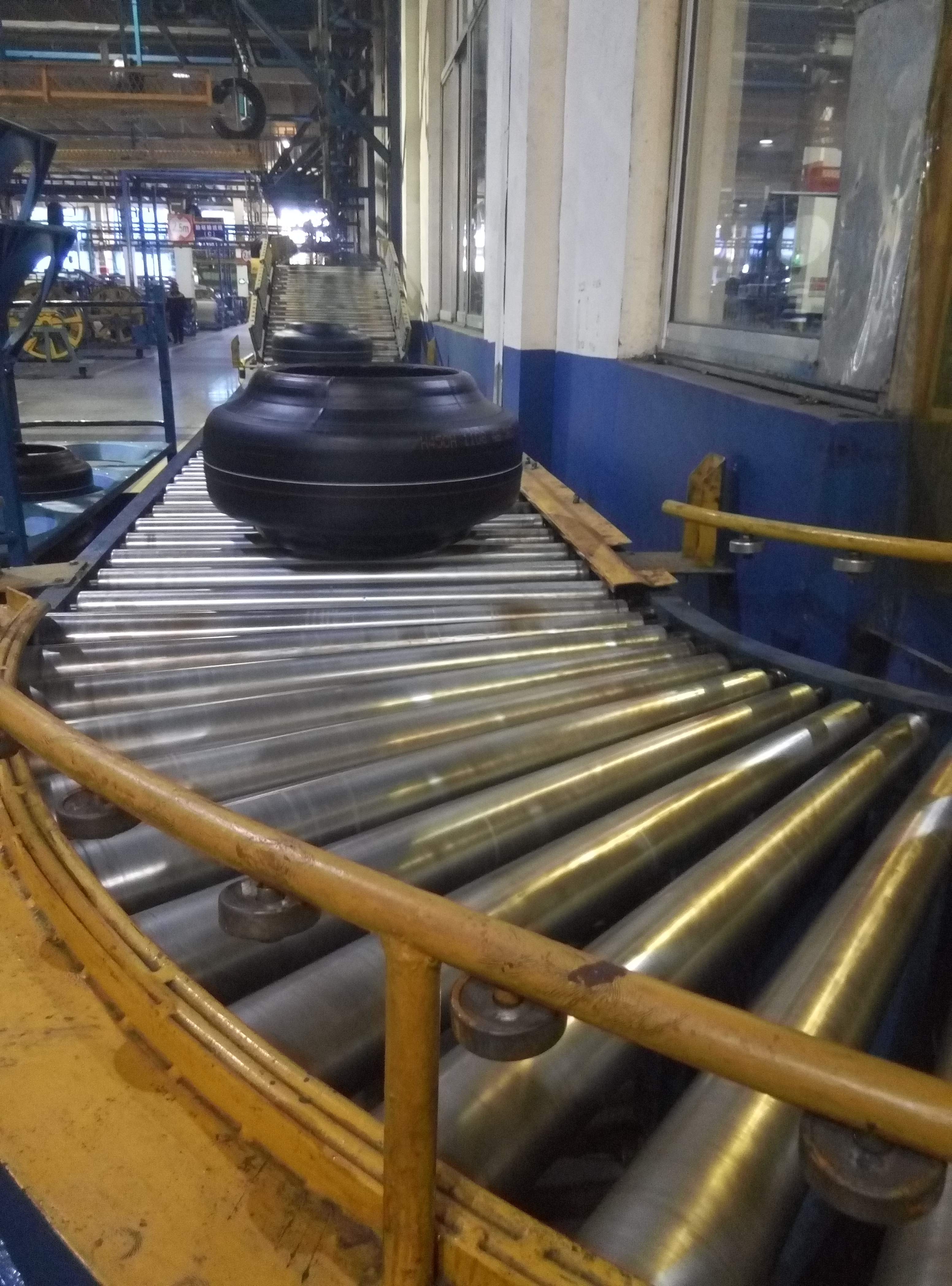
Shandong Wideway Tire Co., Ltd. is a tire manufacturer established in 2014, operating a manufacturing facility covering 1,000,000 square meters with a workforce of approximately 5,000 employees. The company has an annual production capacity of 23,400,000 units and an R&D team of 25 engineers. Export business accounts for 70% of total sales, serving markets in Central and South America, Canada, the EU, Africa, the Middle East, Southeast Asia, Central Asia, and Australia.
The company designs and supplies radial tires including passenger car tires, SUV tires, light truck tires, and truck and bus tires. Its product portfolio also includes AT, MT, VAN, RT, winter, all-season, white letter, and white wall tires. The WIDEWAY, EVERLAND, and V-RICH brands are operated by Shandong Wideway Tire Co., Ltd., with a production base in Qingdao, China.
Off-Road Tire Sourcing Workflow for Distributors
Distributors who follow a structured sourcing workflow reduce the risk of ordering the wrong tire type or size.
- Define the dominant terrain: Identify whether the target market is primarily mountain, mud, sand, snow, or mixed urban/highway driving.
- Define the vehicle profile: Collect the wheel sizes and load requirements of the most common vehicles in your market.
- Select the tire family: Choose between A/T, M/T, R/T, or winter-capable off-road tires based on the terrain and usage pattern.
- Check certification requirements: Confirm whether the destination country requires certifications such as DOT, ECE, 3PMSF, or SASO.
- Verify specifications: Confirm load index, speed rating, section width, and maximum pressure for each SKU.
- Request a catalog or sample: Review the full model list and request a physical sample to inspect tread and sidewall construction before bulk orders.
Use Cases and Buying Scenarios
Scenario 1: Distributor supplying recreational 4x4 owners
A distributor serving recreational off-road drivers in North America may need a broad mix of A/T and M/T tires in popular fitments such as LT265/70R17, LT285/70R17, and 33×12.50R17LT. Buyers in this segment often value aggressive styling, sidewall protection, and dependable traction across mountain and forest trails.
Scenario 2: Fleet or rural operator with muddy conditions
Fleet operators working on muddy terrain roads need self-cleaning M/T tires that can maintain traction in wet soil. The function of the tire is to absorb noise, deliver a quieter ride for its category, and provide excellent grip on both dry and wet roads, while the reinforced construction protects against debris impact.
Scenario 3: Middle East distributor with hot climate and sand requirements
Distributors serving the Middle East should prioritize sand-dune performance, heat resistance, and certification compliance. Tires classified for sand dunes and hot climates are designed to operate in these conditions, and SASO certification is mandatory for tires exported to Saudi Arabia.
Scenario 4: European distributor planning winter SKUs
European markets with mandatory winter-tire rules require 3PMSF marking on winter tires. Buyers should confirm that winter-capable off-road tires meet the applicable EU or national requirements before importing.
Comparison: A/T vs M/T vs R/T
| Feature | A/T All-Terrain | M/T Mud-Terrain | R/T Rugged-Terrain |
|---|---|---|---|
| Primary use | Mixed highway and light off-road | Mud, rock, and severe off-road | Rugged terrain with on-road usability |
| Tread aggressiveness | Moderate | High | Medium-high |
| Typical noise level | Low to moderate | High | Moderate |
| Sidewall protection | Varies by model | Often reinforced | Often reinforced |
| Highway comfort | Good | Lower | Moderate |
| Sand suitability | Good | Moderate | Moderate |
| Snow capability | Available with winter-specific models | Limited | Limited |
The comparison is based on general design characteristics of A/T, M/T, and R/T tire categories. Specific performance depends on the individual tire model and tread compound.
Material and Construction Overview
WIDEWAY off-road tires are constructed from a defined material list that includes natural rubber, synthetic rubber, white rubber compound, carbon black, precipitated silica, steel cord, polyester cord fabric, nylon cord fabric, vulcanizing agent, vulcanization accelerators, activators, antioxidants, and RAE oil.
Steel cord and textile cord fabrics provide the casing strength needed to support heavy loads and resist impacts. Natural and synthetic rubbers, along with carbon black and silica, determine grip, rolling resistance, and wear performance. For buyers, the practical takeaway is that off-road tires are engineered products; the material structure directly affects how a tire behaves under load, heat, and abusive terrain.
Market Context and Trends
Off-road tire demand is supported by several observable market trends. The global OTR tire market was valued at approximately USD 34.4 billion in 2024, according to Smithers, driven largely by mining and construction activity. The mud-tire segment reached USD 8.3 billion in 2024 and is projected to grow at 6.1% CAGR through 2033, according to Credence Research, reflecting growing off-road recreational participation.
Rugged-terrain tires are also gaining share as a middle-ground option between A/T and M/T, according to tire-industry trend reporting. For distributors, this suggests that a balanced inventory should include not only core A/T and M/T sizes but also R/T models that appeal to buyers seeking aggressive styling with acceptable road noise.
Frequently Asked Questions
Which certification should I check when importing off-road tires for Europe or the Middle East?
For winter off-road tires sold in Europe, the 3PMSF symbol is mandatory for winter tires in Germany from October 2024 and Sweden from November 2024, and tires must meet applicable ECE standards. For Saudi Arabia, SASO certification is mandatory for all tires exported to the country. For the US market, DOT-certified tires for public road use must bear a DOT code identifying plant, batch, and date; tires marked NHS (Not for Highway Service) are restricted from highway use. Buyers should verify the destination country's certification before ordering.
What off-road tire type is best for mud, snow, or sand?
For mud, mud-terrain (M/T) tires with self-cleaning, aggressive tread blocks are usually preferred. For sand and hot climates, all-terrain tires are a more common choice because their tread design helps the tire float on soft surfaces rather than dig in. For snow and ice, winter-capable tires that carry the 3PMSF symbol are required for winter-certified compliance in European markets. Mixed-use buyers may prefer all-terrain tires for balanced behavior across multiple surfaces.
What load index and speed rating should a light-truck off-road tire have?
Off-road light-truck tires in the WIDEWAY range are available with load indexes such as 121/118 or 123/120 and speed ratings Q or R. A typical 4x4 mud-terrain off-road tire has a load index of 121/118, speed rating Q, section width 272 mm, and maximum pressure 550 kPa. The correct load index must be matched to the vehicle's Gross Axle Weight Rating; higher is safer for loaded pickups and SUVs.
Can I get a sample before placing a bulk off-road tire order?
Sample review is a standard step in the sourcing workflow before bulk commitment. Buyers can request a sample catalog, verify the specific SKU, inspect tread design, sidewall construction, and sidewall markings, and then plan a container order. To request samples or a complete model list, contact Shandong Wideway Tire Co., Ltd. via the company website or by email at della@widewaytire.com.
Conclusion
Off-road tire selection is a matter of matching the tire type to the terrain, the vehicle, and the market's regulatory environment. A/T tires suit mixed highway and light off-road use, M/T tires suit severe mud and trail conditions, and R/T tires offer a middle path with reinforced sidewalls and moderate noise. Sand and winter conditions require additional consideration of tread design and certification, including SASO for Saudi Arabia and 3PMSF for European winter use.
Shandong Wideway Tire Co., Ltd. produces off-road tires across the WIDEWAY, EVERLAND, and V-RICH brands, with A/T, M/T, R/T, winter-capable, and reinforced sidewall variants. The company supplies a global distribution network from its Qingdao production base. Distributors evaluating new off-road tire sources can start with the company catalog to review the complete model range and specification data.
Download the EVERLAND Catalog
Review the full off-road tire model list, specifications, and brand portfolio.
Download Catalog