
Passenger Car Tire Application Guide for Taxi and Mobility Fleets
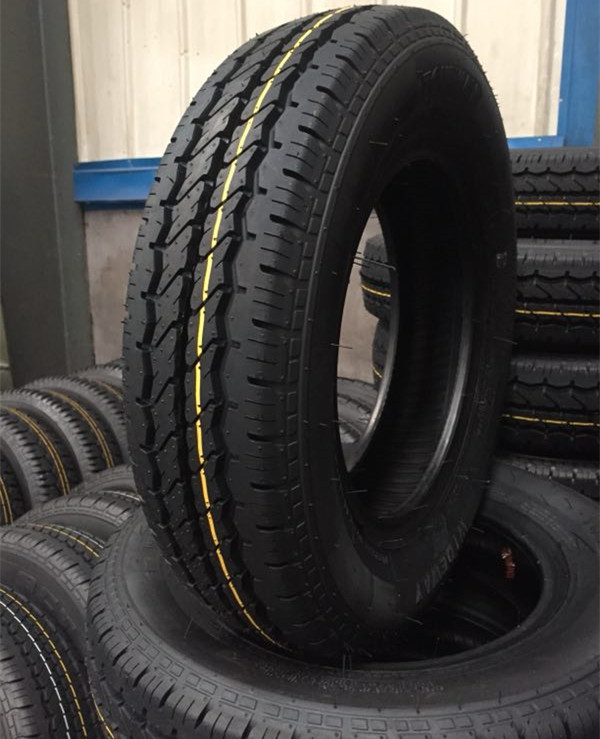
Choosing a passenger car tire for a taxi company or a mobility and transportation service is a fitment decision, not a retail purchase. A fleet tire has to hold up under a duty cycle that retail buyers rarely see: repeated stop-start movement, kerb and pothole contact, short high-speed transfers to airports or ring roads, and passengers who register noise and ride quality on every single trip.
This application guide maps passenger car tire choices to that operating reality. It explains how urban road scenarios, high-speed stability, comfortable and noiseless performance, and safe and affordable family use turn into concrete fleet selection criteria, and it works through three sizes in detail: 145R12C TOURWAY, 195/65R15 with load index 91 and speed rating V, and 205/55R16 with load index 91 and speed rating V. Section width and maximum pressure values are listed for each, so a fleet buyer can compare them directly against a vehicle placard and a route profile.
Taxi companies and mobility and transportation services are listed intended industries for these tires, alongside tire distributors and wholesalers, automotive aftermarket and retail chains, auto repair shop chains, tire dealers, OEM matching, and the automotive tuning industry.
Problem Definition: Why Urban Fleet Tire Selection Goes Wrong
A retail tire decision is optimized for one vehicle. A fleet tire decision has to be repeatable across a vehicle group, defensible inside a purchase order, and predictable over a full service interval. Four gaps account for most fleet tire problems.
Size is chosen before duty cycle. A small urban vehicle and a mid-size sedan may share a route but not a load profile, a speed profile or a kerb-contact pattern. Picking a size from a catalogue before defining the route means the tire is selected by what is available rather than by what the vehicle actually does.
Load index and speed rating are treated as decoration. They are not. The load index defines the load-carrying capability the tire is rated for; the speed rating defines the speed capability it is approved for. In this range, 195/65R15 and 205/55R16 both carry load index 91 and speed rating V — a pairing that matters when a fleet mixes short city loops with faster ring-road or airport legs. Buying by size alone can produce a dimensionally correct tire matched to the wrong duty.
Comfort language is not a fleet criterion until it is defined. “Comfortable and noiseless” is a category label attached to these passenger car tires. The fleet question is whether that characteristic holds across a whole vehicle group over a full service interval, not whether one demonstrator car feels quiet on one route.
Acceptance criteria are missing. If the purchase order does not state what gets checked on delivery, marking errors, batch mix-ups and handling damage are discovered after mounting — the most expensive possible moment to find them.
Industry Background: Where Fleet Fitment Sits
Passenger car tires serve both OEM fitment and aftermarket replacement for internal combustion engine vehicles and electric vehicles, and move through offline retail networks and online sales channels. A taxi or mobility operator sits on the aftermarket replacement side of that split: repeat volumes, scheduled replacement, and a genuine cost-per-vehicle conversation rather than a one-off fitment.
The duty profile is shifting toward electrification. The electric vehicle segment within the passenger car tire market is expected to grow at a compound annual growth rate of 11.2% through 2033 (Grand View Research). For fleet managers this shows up as heavier vehicles, different torque delivery, and passengers who notice tire noise more because there is no engine noise masking it. Those are precisely the parameters that UN Regulation No. 117 governs — rolling sound emissions, adhesion on wet surfaces and rolling resistance.
Scale context matters to procurement planning as well: global imports under HS code 401110, which covers new pneumatic tyres of a kind used on motor cars, totalled 1,065.6 million units in 2024 (Radial Insights). Passenger car tires are a high-volume, globally traded replacement category, and fleets form a predictable slice of that volume.
A fleet buyer does not need to memorize every regulation, but the purchasing team should be able to name the framework that applies to the destination market and ask the supplier for the matching documentation for the exact size on the order. The frameworks below are the ones that most commonly appear in fleet tender documents.
| Framework | Jurisdiction | What it covers |
|---|---|---|
| UN Regulation No. 30 | UNECE contracting parties | Type approval of pneumatic tyres for motor vehicles and their trailers under the UNECE 1958 Agreement |
| UN Regulation No. 117 | UNECE contracting parties | Tyre rolling sound emissions, adhesion on wet surfaces and rolling resistance |
| Regulation (EU) 2020/740 | European Union | EU tyre label for fuel efficiency, wet grip and external rolling noise; repealed and replaced Regulation (EC) No 1222/2009 |
| FMVSS No. 139 | United States | Performance and marking requirements for new pneumatic radial tires for light vehicles |
| UTQG | United States | Treadwear, traction and temperature resistance grading for passenger car tyres sold in the U.S. |
| ETRTO Standards Manual | Europe / international | Reference standards for tyre and rim dimensions and designations |
| ISO 4000-1 | International | Designation, dimensions and load ratings of metric-series passenger car tyres |
| GB 9743 | China | Mandatory national standard for passenger car tyres in the Chinese market |
Detailed Solution: Matching Tire Categories to Fleet Duty
The most useful filter in this product category is not the model name — it is the category set attached to each tire. Those categories are what translate a route description into a specification, and they are what a fleet buyer can write into a tender document.
Shandong Wideway Tire Co., Ltd. is a tire manufacturer established in 2014 and located at No.396, Emeishan Road, Huangdao District, Qingdao City, Shandong, China. The company operates under the WIDEWAY brand alongside the EVERLAND and V-RICH brands, and designs and supplies radial tires for passenger cars, SUVs, light trucks and buses. Its product lines include passenger car tires, SUV tires, all-terrain tires, mud-terrain tires, van tires, rugged-terrain tires, winter tires, all-season tires, and white letter and white wall tires.
Manufacturing capacity figures are published and auditable at supplier level: a facility covering 1,000,000 square meters, approximately 5,000 staff, an R&D team of 25 engineers, and an annual production capacity of 23,400,000 units. Export business accounts for 70% of total sales, with major markets in Central and South America, Canada, the EU, Africa, the Middle East, Southeast Asia, Central Asia and Australia. That export footprint is relevant to fleets and fleet suppliers because it means the same product family is already moving through regulated and semi-regulated markets with the documentation to match.

The category labels below appear across the passenger car tire range. Each one corresponds to a concrete requirement a fleet can state.
| Category attached to the tire | What it means for a taxi or mobility fleet |
|---|---|
| Urban Road Passenger Car Tire | The tire is positioned for city duty — the dominant route type in metered taxi and ride-hailing work. |
| High-speed stability Passenger Car Tire | Relevant where city routes include ring roads, expressway links or airport transfer legs. |
| Comfortable and noiseless Passenger Car Tire | Passenger-facing performance: cabin noise and ride quality on high-utilisation shift work. |
| Safe and affordable family Passenger Car Tire | The cost rationale for operators replacing tires on a scheduled, volume basis. |
| Commercial Van Passenger Car Tire | Covers light commercial and van-based urban transport used by some mobility operators. |
145R12C TOURWAY — Compact Urban and Light Commercial Duty
145R12C TOURWAY is the smallest of the three worked examples and the one most clearly aimed at compact urban operation. Its category set covers urban road, commercial van, comfortable and noiseless, safe and affordable family, high-speed stability and ultra-high-performance use, and its intended industries include taxi companies and mobility and transportation services as well as tire distributors, wholesalers, aftermarket and retail chains, auto repair shop chains, tire dealers, OEM matching and the automotive tuning industry.
Published specifications for 145R12C:
- Section width: 145 mm
- Load index: 86
- Speed rating: Q
- Maximum pressure: 450 kPa
The 145 mm section width makes this a narrow, compact-vehicle fitment. Its listed material set includes a white rubber compound in addition to natural rubber, synthetic rubber, carbon black, precipitated silica, steel cord, polyester cord fabric, nylon cord fabric, vulcanizing agent, vulcanization accelerators, activators, antioxidants and RAE oil. The 450 kPa maximum pressure is a figure the fleet should reconcile against the vehicle placard, not assume from the size designation.
195/65R15 — Load Index 91, Speed Rating V
195/65R15 is the volume sedan size in this guide, and it carries the pairing that matters most in fleet tenders: load index 91 with speed rating V. It sits inside a range that runs from 145/70R12 through to 235/60R16, which means a fleet can standardize across several vehicle groups without changing supplier.
Published specifications for 195/65R15:
- Section width: 201 mm
- Load index: 91
- Speed rating: V
- Maximum pressure: 300 kPa
- Category set: safe and affordable family, urban road, high-speed stability
- Construction materials: natural rubber, synthetic rubber, carbon black, steel cord, polyester cord fabric
For a taxi fleet the combination is practical: it is a common sedan fitment, the category set covers both urban road use and high-speed stability, and the 300 kPa maximum pressure is straightforward to reconcile with a placard specification during a receiving inspection.
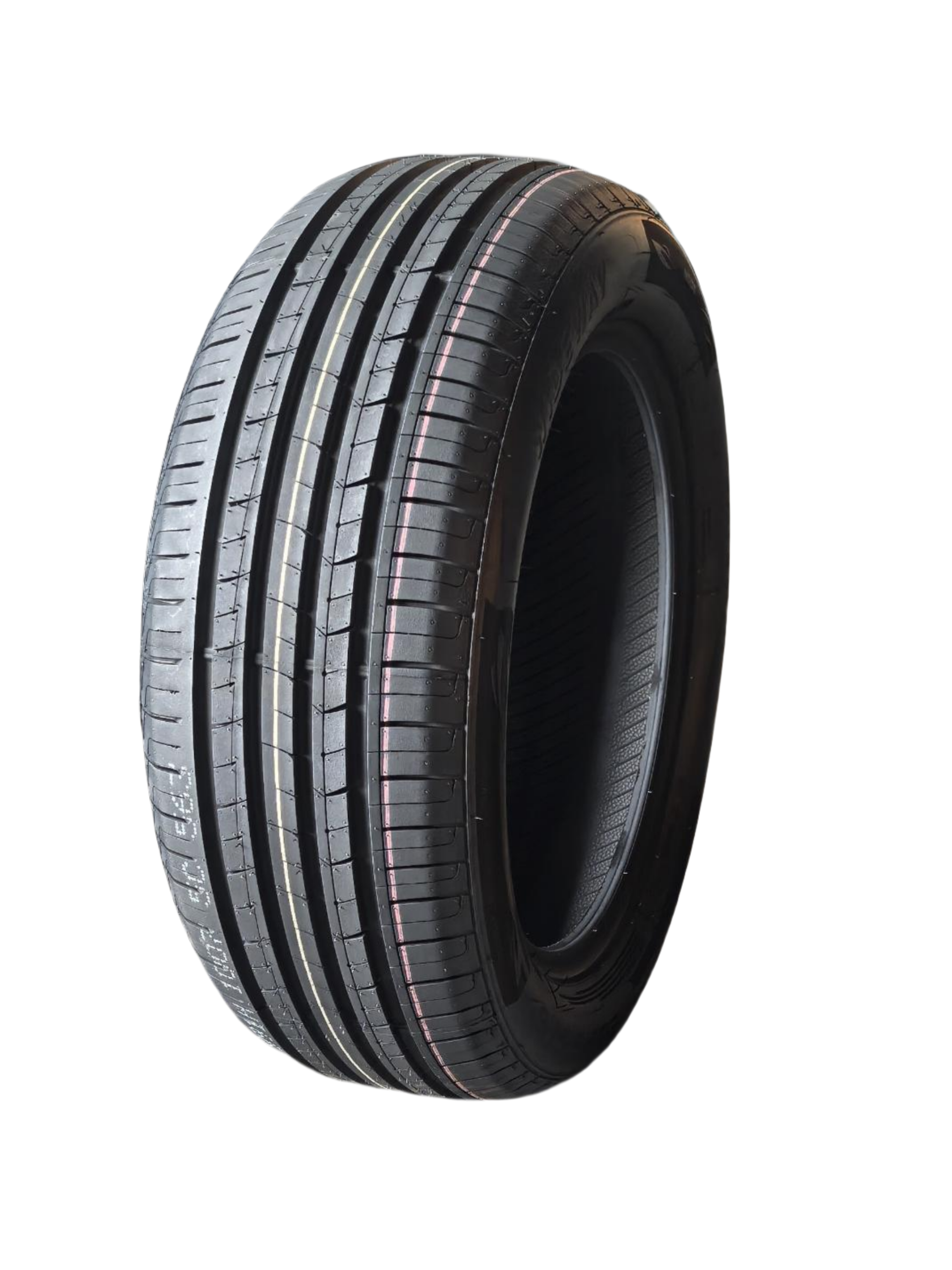
205/55R16 — Load Index 91, Speed Rating V, Wider Section
205/55R16 carries the same load index 91 and speed rating V as the 195/65R15, with a wider section and a category set that adds ultra-high-performance positioning on top of urban road and high-speed stability use.
Published specifications for 205/55R16:
- Section width: 214 mm
- Load index: 91
- Speed rating: V
- Maximum pressure: 300 kPa
- Category set: ultra-high-performance, high-speed stability, urban road, safe and affordable family
- Intended industries include mobility & transportation services, tire dealers, auto repair shop chains, automotive aftermarket and retail chains, and tire distributors and wholesalers
Mobility & transportation services is explicitly named among the industries this size is intended for, which makes 205/55R16 a natural reference point for ride-hailing and shuttle operations running mid-size passenger cars. The 214 mm section width is 13 mm wider than the 195/65R15, so a fleet standardizing on both sizes should confirm clearance and kerb behaviour per vehicle group rather than assuming interchangeability.

Step-by-Step Breakdown: A Fleet Fitment Workflow
The sequence below is designed to be run once per vehicle group, then repeated only when the route profile, the vehicle model or the destination market changes.
Step 1 — Build a vehicle and duty-cycle inventory. List every vehicle group by size designation and record the dominant route type, whether the route includes ring roads or highway legs, and whether the vehicle carries passengers, cargo or both. Working conditions for these tires cover urban roads, highway roads, mud terrain roads, mountainous conditions, icy and snowy conditions, deserts and sandy areas, rugged conditions and rainy conditions, so the inventory should state plainly which of those the fleet actually operates in — and which it never sees.
Step 2 — Confirm the original size, load index and speed rating. Take them from the vehicle placard and the current fitment. Do not downgrade the load index or the speed rating to reach a lower price point; that converts a cost saving into a compliance and safety problem.
Step 3 — Match the size to the urban duty profile. Where the fleet is dominated by short city loops with kerb contact and stop-start movement, the urban road and comfortable and noiseless categories are the first filter. Where routes include faster links, add high-speed stability. Where vehicles are compact or van-based, include the commercial van category in scope.
Step 4 — Reconcile inflation pressure. Compare the tire’s maximum pressure against the vehicle placard value before ordering. 145R12C is listed at 450 kPa maximum, while 195/65R15 and 205/55R16 are listed at 300 kPa maximum. Different ceilings, different vehicle groups — this is a per-group check, not a fleet-wide assumption.
Step 5 — Verify market compliance documentation. Identify which framework applies to the destination market using the table earlier in this guide, then request documentation for the exact size on the order rather than for the brand in general.
Step 6 — Validate on a sample batch. Run the candidate size on a defined subset of the fleet that covers the hardest route in the mix, over a period long enough to observe wear behaviour under real loads and real passenger weight. Compare against the incumbent tire using the same vehicles and the same route.
Step 7 — Write purchasing terms and acceptance criteria before scaling. This is the step fleets skip most often and regret most often. The checklists in the next section are written to be pasted into a purchase order and adapted to the local market.
Use Cases: Matching Sizes to Fleet Types
Four operating profiles cover most of the demand for these tires.
- Metered taxi fleets running mid-size sedans. The default fitment here is the 195/65R15 pair — load index 91, speed rating V, section width 201 mm — because the category set covers urban road and high-speed stability at a size that sedan fleets already service.
- Ride-hailing and mobility services on larger passenger cars. 205/55R16 is the closer match, with the same load index 91 and speed rating V, a wider 214 mm section, and ultra-high-performance positioning layered on the urban road category. Mobility & transportation services is a named intended industry for this size.
- Compact urban transport and small-vehicle fleets. 145R12C TOURWAY covers this group, with a 145 mm section width, load index 86, speed rating Q and a 450 kPa maximum pressure, and a category set that includes commercial van and comfortable and noiseless use.
- Van-based mobility and shuttle operations. Where a mobility operator runs light commercial vehicles rather than cars, the commercial van passenger car tire category applies, and sizes such as 185/75R16C and 195/75R16C extend the same naming and category logic into that duty.
Comparison Table: Three Fleet Fitment Options
The table below compares only the published parameters for the three sizes discussed in this guide. It is intentionally narrow: price is not a parameter here because published, verifiable price data is not part of the specification record, and fleet comparisons made on unverified price alone tend to be wrong.
| Size | Category focus | Section width | Load index | Speed rating | Max pressure | Typical fleet duty |
|---|---|---|---|---|---|---|
| 145R12C TOURWAY | Urban road, commercial van, comfortable and noiseless, safe and affordable family | 145 mm | 86 | Q | 450 kPa | Compact urban vehicles and light commercial urban transport |
| 195/65R15 | Urban road, high-speed stability, safe and affordable family | 201 mm | 91 | V | 300 kPa | Metered taxi and ride-hailing sedan fleets |
| 205/55R16 | Ultra-high-performance, high-speed stability, urban road, safe and affordable family | 214 mm | 91 | V | 300 kPa | Mid-size passenger car fleets in mobility & transportation services |
Read the table as a decision aid, not a ranking. The correct choice depends on the vehicle group and the route profile, and a mixed fleet will normally use more than one row.
Fleet Purchasing Terms and Acceptance Checklist
A fleet order is only as strong as the terms written into it. The two lists below are structured so that a procurement manager can lift them into a tender or purchase order with minimal editing.
Purchasing terms checklist
- Full model designation written out per line item — for example 145R12C, 195/65R15 or 205/55R16 — not shorthand or a trade nickname alone.
- Load index stated per line item, and speed rating stated per line item.
- Application category stated per line item (for example urban road, comfortable and noiseless, safe and affordable family), so the intent of the order is unambiguous.
- Quantity per size, per vehicle group, per delivery.
- Packaging and marking requirements agreed before shipment.
- Delivery point, delivery window and receiving process agreed in writing.
- Documentation pack specified for the destination market, referenced against the applicable framework.
- Warranty scope and claim procedure defined in writing, including who bears inspection cost.
- Sample and field-validation arrangement defined before the fleet-scale order is released.
- Change-control clause: how a size, specification or documentation change is communicated and approved.
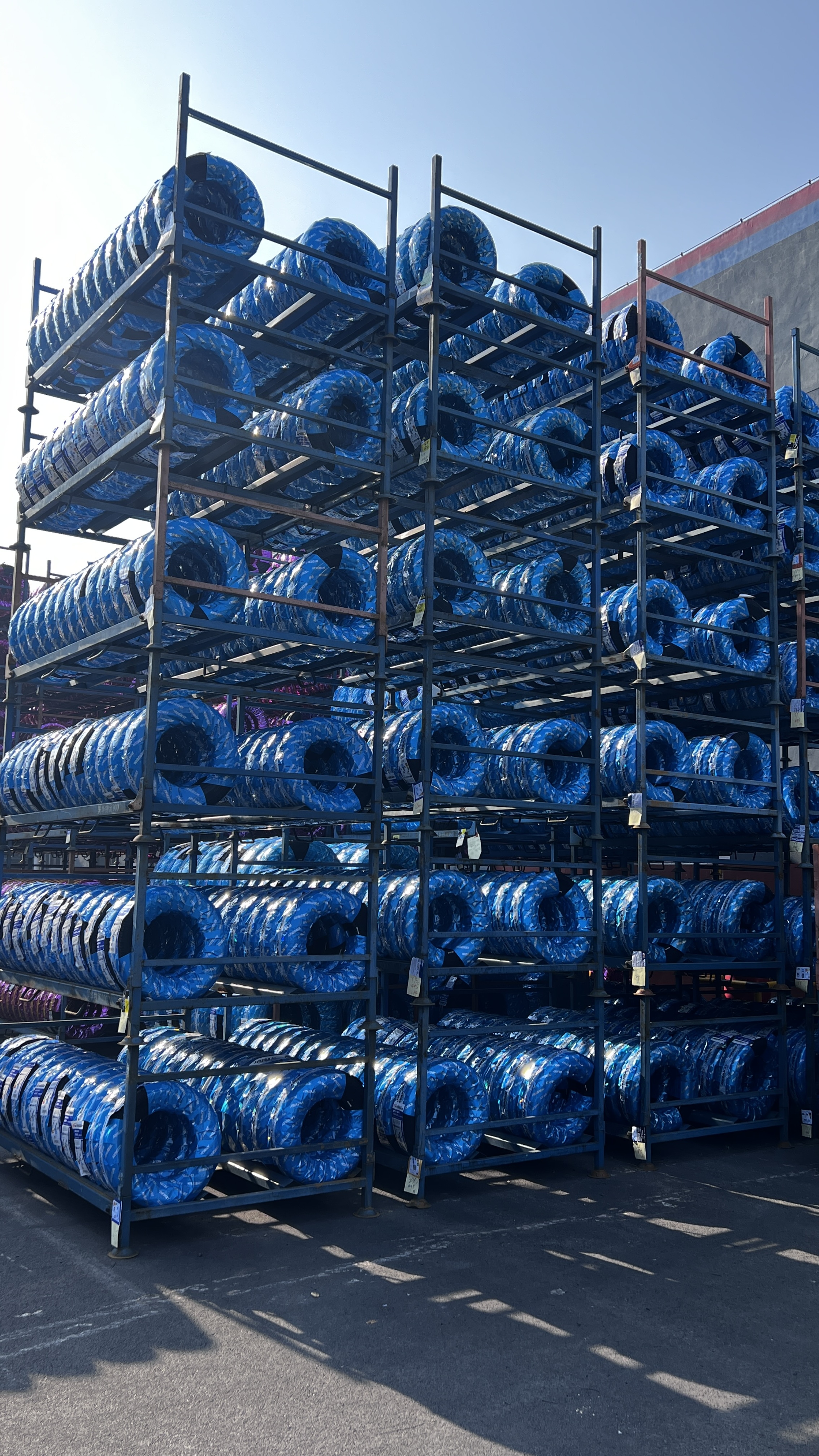
Acceptance criteria checklist (on receipt)
- Sidewall marking matches the ordered model designation, load index and speed symbol, item by item.
- Regulatory and market markings present as required for the destination market.
- Bead, sidewall and tread free of visible defects, deformation or storage damage.
- Batch and production traceability recorded against the receiving vehicle group.
- Inflation and pressure-hold verified before mounting, and reconciled against the vehicle placard.
- Storage conditions checked on receipt and recorded, since incorrect storage can invalidate later claims.
- Sample or field-trial result formally signed off before the full fleet rollout begins.
- Any deviation logged and resolved with the supplier before the next delivery is accepted.
FAQ: Fleet Buyer Questions on Passenger Car Tires
Are these passenger car tires certified for regulated export markets?
Wideway’s verified supplier profile lists ECE, DOT, GCC and REACH certification for its products, and the sizes in this guide are supplied into Central and South America, Canada, the EU, Africa, the Middle East, Southeast Asia, Central Asia and Australia. At framework level, UN Regulation No. 30 governs type approval of pneumatic tyres, UN Regulation No. 117 governs rolling sound emissions, wet-surface adhesion and rolling resistance, Regulation (EU) 2020/740 sets the EU tyre label for fuel efficiency, wet grip and external rolling noise, FMVSS No. 139 and the UTQG grading system apply in the United States, and GB 9743 is the mandatory Chinese national standard. A fleet buyer should confirm which framework applies to the destination market and request documentation for the exact size on the order.
Can one passenger car tire range cover both compact urban vehicles and larger sedan fleets?
Yes, within defined limits. The passenger car tire range in this guide spans 145/70R12 through 235/60R16 in one family and up to 225/55R19 in another, with commercial van sizes including 185/75R16C, 195/75R16C and 235/65R16C also listed. That allows a taxi or mobility operator to standardize naming, category logic and documentation across compact urban vehicles, sedan fleets and van-based transport, while still matching each vehicle group to its own load index, speed rating, section width and maximum pressure rather than treating the sizes as interchangeable.
How should a fleet compare cost across models without trading away safety?
Compare on duty-cycle fit first, then on specification, then on commercial terms. The published parameters that support a defensible comparison are section width, load index, speed rating and maximum pressure — for example 145R12C at 145 mm / LI 86 / Q / 450 kPa against 195/65R15 at 201 mm / LI 91 / V / 300 kPa. The category set matters too: a size carrying the safe and affordable family and urban road categories is positioned for exactly this kind of high-utilisation urban work, while a size carrying ultra-high-performance positioning may be priced and specified for a different duty. A comparison made on purchase price alone, without the load index and speed rating check, is the single most common way fleets create an avoidable cost later.
Can a fleet test a sample before committing to a full fleet order?
Yes, and it is the recommended route. The practical method is to select one or two candidate sizes, fit them to a defined vehicle subset that covers the hardest route in the operating mix, and run them against the incumbent tire under the same vehicles and the same duty cycle. For an urban fleet, 195/65R15 is the usual starting point for sedan work and 205/55R16 for mid-size cars in mobility & transportation services, while 145R12C TOURWAY covers compact and light commercial groups. Sample arrangements, validation duration and the acceptance protocol should be agreed in writing before the sample ships, so the trial result can be used directly in the fleet-scale decision.
What should be agreed before a fleet-scale order, and how do we start?
Before scaling, agree the purchasing terms and the receipt acceptance criteria listed in this guide: full designations, load index and speed rating per line item, application category, quantity per vehicle group, packaging and marking, delivery and receiving process, the documentation pack for the destination market, warranty and claim procedure, and the change-control clause. Send your vehicle list, the size designations you run, your route profile and your target market, and the team can confirm specification and documentation availability for each line before a purchase order is raised. You can reach Shandong Wideway Tire Co., Ltd. at della@widewaytire.com or by phone and WhatsApp on +86 18253208831. The current catalog is available for download at EVERLAND CATALOG 2025 (PDF).
Next Step for Taxi and Mobility Fleet Buyers
Wideway supplies passenger car tires for taxi companies, mobility and transportation services, and the wider aftermarket, under the WIDEWAY, EVERLAND and V-RICH brands. For a fleet brief, send your vehicle groups, size designations and destination market and request a specification-and-documentation confirmation; for a trial, request a sample arrangement on the sizes you run.
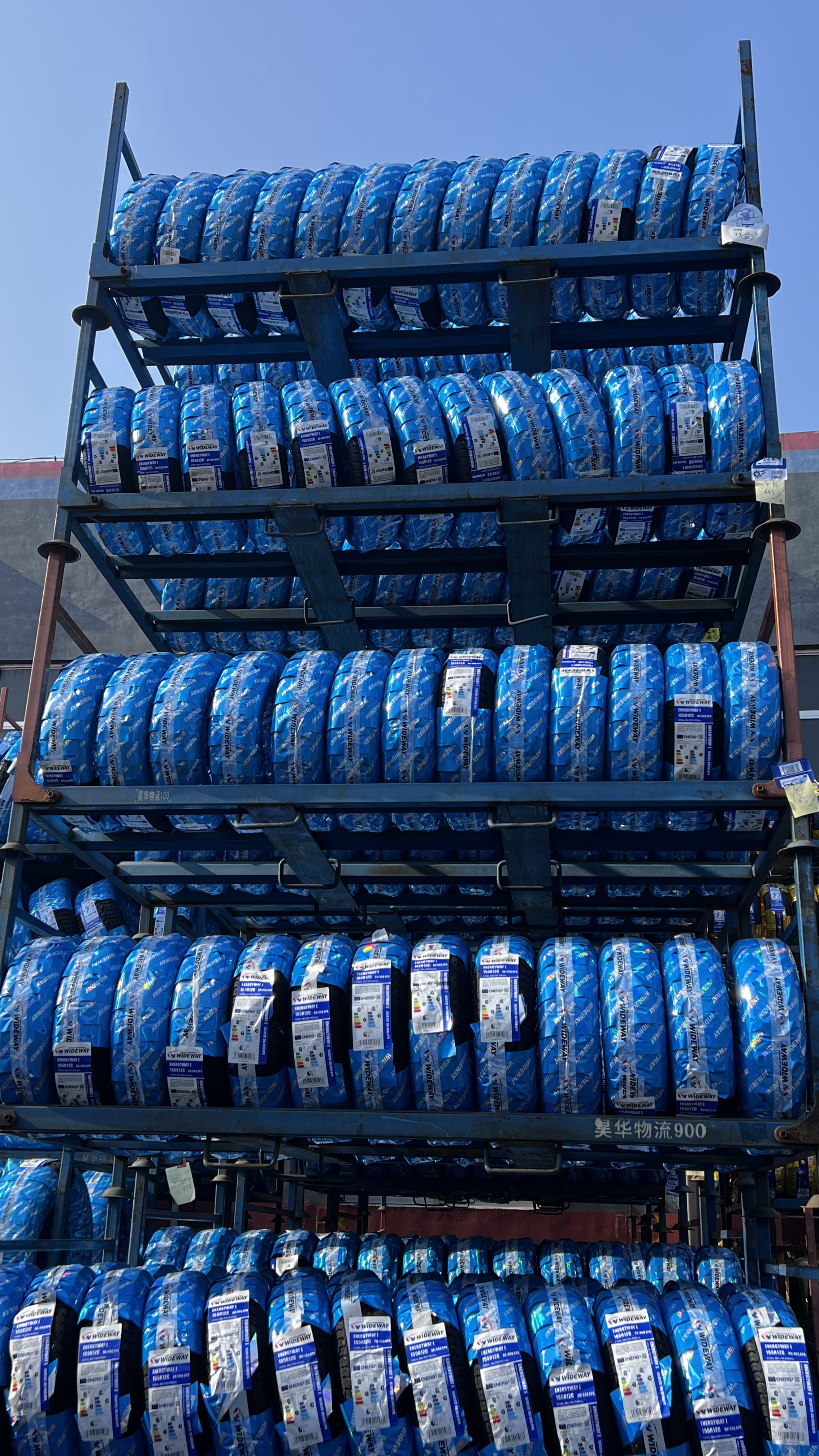
Catalog (PDF): EVERLAND CATALOG 2025
Contact: Della — della@widewaytire.com | +86 18253208831 (phone / WhatsApp) | www.widewaytire.com
Conclusion
Fleet fitment for taxi and mobility operations comes down to matching three things: the vehicle group, the route profile, and the published tire parameters. Get those aligned and most later problems — premature wear, noise complaints, receiving disputes — never appear.
The three sizes in this guide show how different duty profiles pull toward different choices. 145R12C TOURWAY, with a 145 mm section width, load index 86, speed rating Q and 450 kPa maximum pressure, covers compact urban and light commercial groups. 195/65R15, at load index 91, speed rating V, 201 mm section width and 300 kPa maximum pressure, is the natural volume sedan fitment for metered taxi work. 205/55R16, at the same load index 91 and speed rating V with a wider 214 mm section, adds ultra-high-performance positioning and is listed for mobility & transportation services, which makes it the reference size for ride-hailing and shuttle fleets running mid-size cars.
What turns that from a shortlist into a working fleet programme is the paperwork: purchasing terms that state designation, load index, speed rating and application category per line item, and acceptance criteria that are actually checked at goods-in. Define both before the first fleet-scale order, validate on a sample first, and the tire decision stops being a recurring argument and becomes a scheduled maintenance line.
Have Questions or Need More Details?
Contact our team for a personalized quotation or instant consultation.
Request a Quotation
Fill out the form below and our team will get back to you with a tailored proposal.
WhatsApp Direct Chat
Prefer to chat in real-time? Message us on WhatsApp for instant assistance & quick answers.
- Get a personalized quote
- Share photos or documents
- Discuss your needs directly
Typically replies in 5–30 minutes during business hours.