
Passenger Car Tire Compliance and Specifications: A Buyer’s Verification Guide
Passenger Car Tire Compliance and Specifications: A Buyer’s Verification Guide
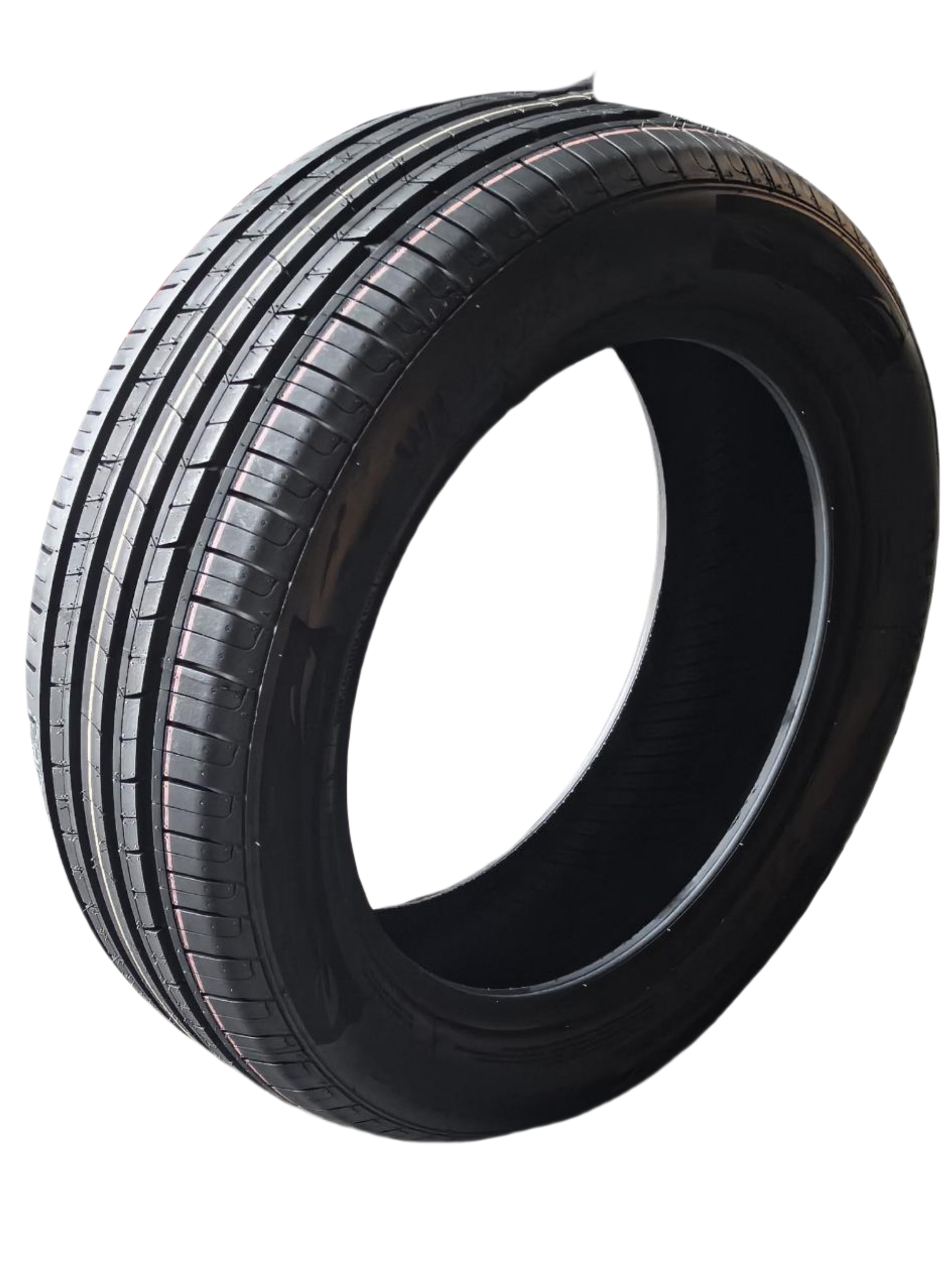
Sourcing passenger car tires is not a transaction; it is a verification exercise. Distributors, wholesalers, fleet operators and importers need to confirm that each tire meets the destination market’s regulatory rules, the vehicle’s load and speed requirements, and the manufacturer’s real production capability. This guide explains the certification and specification checks that matter when evaluating passenger car tires, using evidence from Shandong Wideway Tire Co., Ltd., the manufacturer behind the WIDEWAY, EVERLAND and V-RICH brands.
According to Grand View Research, the global passenger car tire market was valued at about USD 143.06 billion in 2024, with the passenger car segment accounting for 32.6% of total tire market revenue. With that much volume, a wrong certification or mismatched specification creates expensive delays.
Why Certification and Parameters Matter in Passenger Car Tire Sourcing
The first problem is customs rejection. In many countries, tires cannot be imported without national or regional certification. The second problem is technical mismatch. A tire with the wrong load index, speed rating, section width or maximum pressure can fail in service even if it looks identical to the correct size. The third problem is supplier uncertainty: buyers need evidence that the factory can actually produce, test and deliver the tire consistently.
For these reasons, the evaluation of passenger car tires needs to move beyond tread pattern and price. Buyers should ask for certificate numbers, parameter sheets, factory data and order conditions before committing to a container.
Passenger Car Tire Market and Regulatory Landscape
Several structural trends make compliance and parameters more important than ever. The global electric vehicle tire market is projected to reach USD 337.20 billion by 2034, with a CAGR of 28.1% from 2025, according to Precedence Research. EV buyers, in particular, look for tires with higher load capacity and lower noise. At the same time, China’s total tire exports reached 9.65 million tonnes in 2025, a year-on-year increase of 3.6%, with an export value of approximately 167.7 billion RMB, according to data from the General Administration of Customs and SunSirs.
From a regulatory perspective, UN Regulation No. 117 (ECE R117) is now a central reference because it sets limits for rolling resistance, wet grip and external rolling noise, and requires mandatory labeling in the EU. Different destination markets add their own certifications, such as SASO GSO product certification for Saudi Arabia, SONCAP for Nigeria, and CCC for mainland China.
Passenger car tire selection also depends on working conditions. The typical operating environment includes urban roads, highways, mud terrain, mountainous roads, icy and snowy roads, deserts and sandy areas, rugged roads, and rainy conditions. That is why buyers should map both certification and road-use parameters to the end user.
Five Checkpoints for Evaluating Passenger Car Tires
1. Confirm the Certification Required for Your Destination Market
Certification is not a global standard; it is market-specific. A passenger car tire accepted in one country may not clear customs in another. When sourcing from a manufacturer, ask for the certificate number, the standard, the issuing authority, and the exact product models covered.
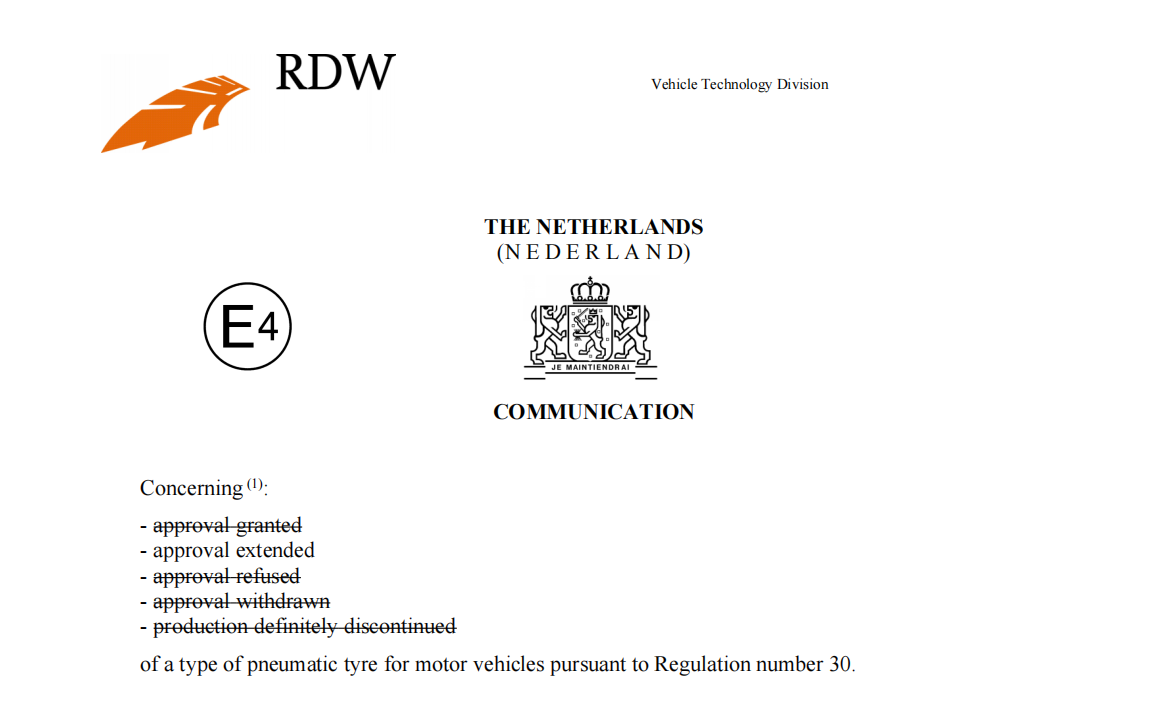
Shandong Wideway Tire Co., Ltd. holds several passenger car tire certifications. Product ID 5169, for example, is ECE certified under UN Regulation No. 30, with certificate number E4-30R-0264621 issued by RDW, covering EU and Africa markets. Product ID 5085 is certified to EU Regulation No. 117 E-mark (certificate E4-117R-025700-S2WR2), SASO GSO Product Certification (TR13651/2025), SONCAP (NGP2026 145940/0001), and CCC (2022061201000258).
2. Verify Load Index, Speed Rating and Maximum Pressure
Every passenger car tire carries a set of parameters that must match the vehicle application. Key numbers are the maximum pressure, section width, loading index and speed rating. For a family sedan, a tire like SAFEWAY in size 195/65R15 is a common fitment; it has a maximum pressure of 300 kPa, a section width of 201 mm, a load index of 91 and a speed rating of V. For a reinforced commercial van application, a tire such as 185/75R16C can carry a higher load: it is available with a maximum pressure of 475 kPa, a load index of 104/102 and a speed rating of R.
For fleet buyers, the load index is not a minor detail. An overloaded tire generates more heat and wears faster. A low-noise passenger car tire matters in urban delivery and EV fleets; a wear-resistant compound matters for high-mileage highway use. These trade-offs should be checked against the vehicle’s original specification.
3. Check Tire Construction and Compound Materials
Passenger car tire construction is not a single formula. The material list affects heat resistance, noise, grip, rolling resistance and durability. In Wideway’s product range, the tires are built from natural rubber, synthetic rubber, carbon black, precipitated silica, steel cord, polyester cord fabric, nylon cord fabric, vulcanizing agents, accelerators, activators, antioxidants and RAE oil. Some commercial and light truck models add white rubber compound for white letter or white sidewall styling. The use of steel cord and cord fabric is especially relevant when the tire will face heavy loads or highway mileage.
4. Assess Factory Capacity and Quality Control
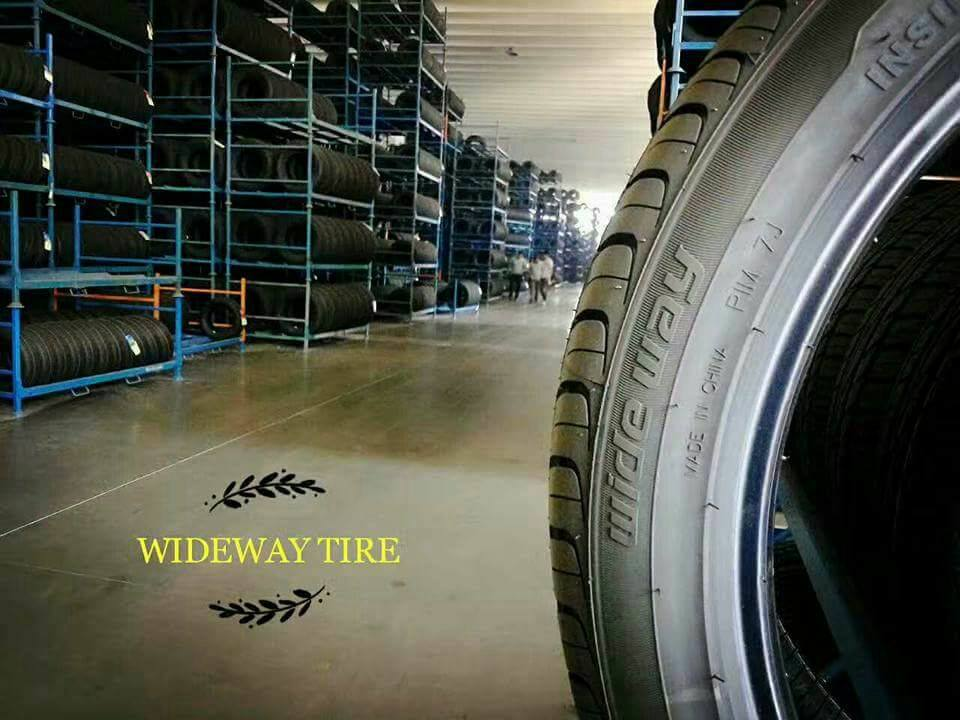
A certificate is only as useful as the factory behind it. Buyers should ask about monthly output, quality control, export markets and order reliability. Wideway’s OEM production mode for passenger car tires has a monthly capacity of 60,000 pieces, with a quality control process described as 100% testing. The factory is part of Shandong Wideway Tire Co., Ltd., founded in 2014, with a 1,000,000-square-meter facility, about 5,000 employees, an annual output of 23.4 million units, and a 25-person R&D team. About 70% of production is exported, mainly to Central and South America, Canada, the EU, Africa, the Middle East, Southeast Asia, Central Asia and Australia.
5. Ask for Documentation and a Pilot Order Path
For Research and Evaluation-stage buyers, documentation is the fastest way to separate a real supplier from a trading middleman. Ask for the factory registration, the certificate list, the product specification sheet and the label. If the product is a passenger car tire for a specific market, confirm that the certificate covers the intended model and size. Then test the order process with a sample or a small first container.
Certification Comparison Matrix
The table below summarizes market certifications available across Wideway’s passenger car tire range, based on certification files held by Shandong Wideway Tire Co., Ltd.
| Certification | Target Market | Standard | Certificate Number | Issuing Authority | Covered Scope |
|---|---|---|---|---|---|
| ECE | EU, Africa | UN Regulation No. 30 | E4-30R-0264621 | RDW | Passenger car, SUV, AT/MT/RT tires, winter tire, commercial van tire |
| EU R117 E-mark | EU | R117 | E4-117R-025700-S2WR2 | RDW | Passenger car, off-road, SUV, AT/MT/RT, van, winter, all-season |
| SASO GSO | Saudi Arabia | GSO | TR13651/2025 | SASO | Passenger car, off-road, SUV, AT/MT/RT, van, winter, all-season |
| SONCAP | Nigeria | ZA12B6 | NGP2026 145940/0001 | Bureau Veritas | Passenger car, off-road, SUV, AT/MT/RT, van, winter, all-season |
| CCC | Mainland China, Ecuador | GB9743-2024 | 2022061201000258 | Beijing Zhong Hua Combination Certification Co., Ltd. | 75 series passenger car radial tyre |
Step-by-Step Buyer’s Checklist
- Define the destination market. Identify the certification required for each country before requesting quotes.
- Select the tire category. Decide between urban road, highway, all-season, summer, winter and snow, commercial van, EV-oriented, white letter or white sidewall passenger car tires.
- Match the specification. Check the vehicle’s required size, load index, speed rating and maximum pressure against the supplier’s parameter sheet.
- Validate the certificate. Ask for the certificate number and cross-check the issuing authority, issue date and expiry date.
- Inspect the factory evidence. Look for production capacity, testing policy, export history and after-sales support.
- Place a pilot order. Confirm MOQ, lead time and sample policy, then scale in phases.
This checklist applies across passenger car tire categories: urban road passenger car tires, highway passenger car tires, all-season passenger car tires, winter and snow passenger car tires, commercial van passenger car tires, and white letter or white sidewall models. The same logic also applies when comparing all-terrain and off-road tires within the same portfolio.
Real-World Use Cases
Saudi Arabia: SASO GSO Compliance for Distribution
A distributor serving the Saudi market needs tires that can pass SASO GSO product certification. Wideway’s passenger car tire product ID 5085 is certified under SASO GSO with certificate number TR13651/2025, allowing import into the Saudi market under the GSO framework.
Nigeria: SONCAP-Certified Passenger Car Tires
For Nigeria, SONCAP is a mandatory import clearance requirement. Wideway holds SONCAP certification number NGP2026 145940/0001, issued by Bureau Veritas under standard ZA12B6, covering passenger car and van tire models among other categories.
EU Market: ECE R30 and R117 Evidence
EU buyers need two types of evidence: ECE approval under UN Regulation No. 30 for basic safety, and EU R117 E-mark for rolling resistance, wet grip and noise labeling. Wideway holds both, with product ID 5169 covered under R30 and product ID 5085 covered under R117.
Commercial Van: Reinforced All-Season Tires
Van and delivery operators need passenger car tires with reinforced load capacity. Wideway offers commercial van passenger car tires in sizes such as 185/75R16C and 195/75R16C, with maximum pressure of 475 kPa, load index 104/102 and speed rating R. These tires combine all-season capability with the load margin required for cargo vans.
Long-Term Distribution: Mexico Case Evidence
One long-running distribution relationship in Mexico illustrates the value of specification alignment. A tire distributor ordered 100,000 pieces over four years, and Wideway exported more than 400,000 passenger car tires during that period. The customer’s stated highlights include extended tread life, high cost-effectiveness, dependable all-season traction, low noise and maximum ride comfort.

Frequently Asked Questions
Which certifications should passenger car tires have for export markets?
Passenger car tire certifications depend on the destination market. The same product family can carry different approvals. Shandong Wideway Tire Co., Ltd. holds ECE certification under UN Regulation No. 30 for EU and Africa markets, EU Regulation No. 117 E-mark for the EU, SASO GSO Product Certification for Saudi Arabia, SONCAP for Nigeria, and CCC certification for mainland China and Ecuador. Buyers should confirm that the certificate number covers the exact product model and size they intend to import.
How can I verify a passenger car tire factory's production capability?
Start with the factory’s monthly capacity, quality control policy and export record. Wideway’s OEM passenger car tire production has a monthly capacity of 60,000 pieces and reports 100% testing. The company was founded in 2014 and operates a 1,000,000-square-meter facility with around 5,000 employees, an annual output of 23.4 million units and an R&D team of 25 people.
Is an affordable but ECE-certified passenger car tire available from Wideway?
Wideway describes itself as a reliable tire brand with reasonable pricing, and its passenger car tire line includes urban road, highway, all-season, winter and snow, commercial van, white letter and white sidewall models. Product examples include SAFEWAY in 195/65R15 with load index 91 and speed rating V, and an EV-oriented passenger car tire with load index 109 and speed rating W. Pricing depends on size, volume and destination, so the realistic next step is to request a quote.
Can I request passenger car tire samples before bulk orders?
Sample requests are handled through the sales team on an inquiry basis. Wideway’s OEM service supports custom promotional accessories and after-sales tire quality warranty support. To discuss sample availability, contact Della at della@widewaytire.com or via WhatsApp at +86 18253208831.
What is the lead time for passenger car tire OEM orders?
OEM passenger car tire production lead time is 25–45 days. Monthly capacity for this production mode is 60,000 pieces, and the MOQ is around 400–700 pieces per 20-foot container. Exact timing depends on the size mix, model and order volume.
Conclusion
Passenger car tire sourcing becomes safer when certification, parameters and factory capability are treated as the starting point, not as paperwork. Confirm the destination market’s requirements, match the load index and speed rating to the vehicle, and verify that the manufacturer has the documentation and production evidence to support repeat orders. Suppliers such as Shandong Wideway Tire Co., Ltd. provide certified passenger car tire options across WIDEWAY, EVERLAND and V-RICH, covering multiple markets and applications.
For the full product range, download the EVERLAND Catalog 2025 or contact Della at della@widewaytire.com for pricing and sample questions.