
SMARTWAY II vs TOURWAY 145R12C: Urban Fleet Tire Choice
Fleet tire decision · Passenger car tire
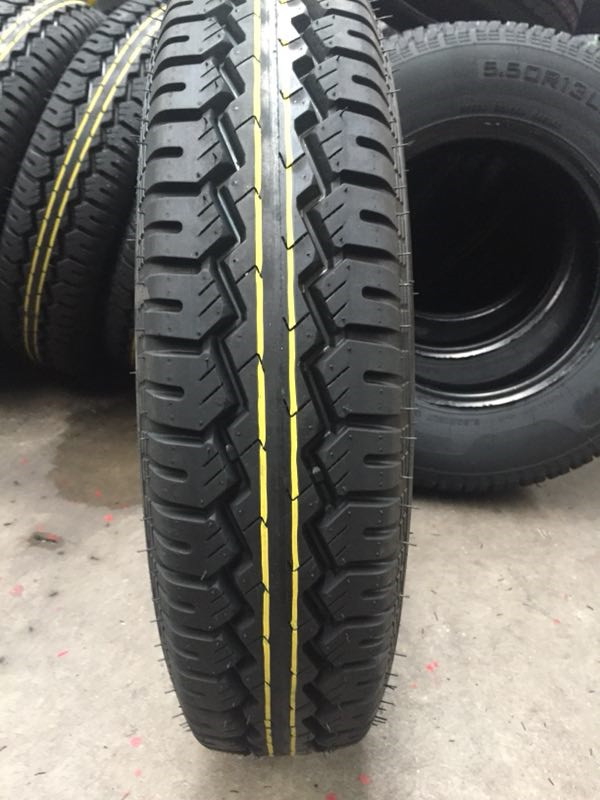
SMARTWAY II in 5.50R13LT — the commercial van side of this comparison. Image: Shandong Wideway Tire Co., Ltd.
Two tires, one fleet, opposite duties. The SMARTWAY II 5.50R13LT is Wideway's passenger car tire model designated for commercial van work on urban roads. The TOURWAY 145R12C is the same manufacturer's 12-inch passenger car tire built for safe and affordable family and urban use, classified as comfortable and noiseless with high-speed stability. Neither model replaces the other. A fleet that puts the SMARTWAY II on a small passenger car, or the TOURWAY on a loaded van axle, has picked the wrong constraint rather than the wrong supplier.
This comparison uses only Wideway's published model data: size designation, section width, load index, speed symbol, maximum pressure, material lists, catalog classifications, and the certificate numbers that list these two sizes. It does not invent prices, mileage claims or lab scores. What it does give a fleet buyer is a repeatable allocation rule, six decision criteria, and the exact questions to put to the supplier before the container is booked.
Problem Definition: Why Mixed Urban Fleets Get This Decision Wrong
Mixed urban fleets usually pair cargo vans with small passenger cars used for staff movement, taxi duty or service calls. Procurement then tries to simplify: one tire size, one purchase order, one stock line. That simplification creates one of two failures.
- Under-rated passenger size on a van axle. A smaller passenger-car designation is asked to carry a load and inflation regime it was not indexed for. The visible symptom is short service life and irregular wear; the real cause is a load-index mismatch decided at the purchasing desk, not in the workshop.
- Van size on a small passenger car. Fitment, section width and ride character all move the wrong way, and the fleet pays commercial-tire money on a vehicle that only needed a family-size tire.
A second, quieter problem is vocabulary. Fleet buyers read catalog words such as noiseless, ultra-high-performance or high-speed stability and treat them as measurements. They are positioning descriptors. The measurable counterparts exist — rolling sound, wet adhesion, rolling resistance, load and speed capability — but they live in the approval documents and the label classes, not in the product name.
The third problem is order mechanics. A fleet that needs two sizes in modest volume still faces a container minimum, a documented production window and a certification file per destination market. Those constraints shape what can realistically be bought together.
Industry Background: The Framework Behind the Marketing Words
The passenger car tire market covers OEM fitment and aftermarket replacement for both internal combustion engine and electric vehicles, distributed through offline retail networks and online sales channels. That scope matters here because a mixed urban fleet buys in the aftermarket replacement stream while its vehicle set is increasingly electrified.
Trade data confirms the scale of the replacement flow: global imports under HS code 401110 totalled 1,065.6 million units in 2024, according to Radial Insights trade-flow tracking across 107 countries. A fleet comparing two SKUs is therefore operating inside a very deep, very liquid replacement market where availability is rarely the constraint and specification discipline usually is.
Three regulatory layers sit underneath the descriptors on a tire catalog page:
- UN Regulation No. 30 establishes the uniform provisions for approval of pneumatic tires for motor vehicles and their trailers under the UNECE 1958 Agreement, and forms the basis for ECE type-approval of passenger car tires.
- UN Regulation No. 117 covers approval with regard to rolling sound emissions, adhesion on wet surfaces and rolling resistance — the regulatory home of the noiseless and wet-grip conversation.
- Regulation (EU) 2020/740 is the current EU tyre labelling regulation for fuel efficiency and other parameters, having repealed and replaced Regulation (EC) No 1222/2009.
For markets outside Europe, FMVSS No. 139 governs new pneumatic radial tires for light vehicles in the United States, the UTQG system grades treadwear, traction and temperature resistance for tires sold there, and GB 9743 is the mandatory Chinese national standard for passenger car tires. Dimensional conventions come from the ETRTO Standards Manual and ISO 4000-1, which specifies designation, dimensions and load ratings for metric-series passenger car tires.
The practical implication for a fleet buyer is blunt: when a catalog calls a tire noiseless, ask for the UN R117 approval and the noise class on the label. When it calls a tire high-speed stable, ask for the speed symbol and the vehicle requirement. Those two questions separate a spec sheet from a slogan.
Detailed Solution: The Two Models, Defined
SMARTWAY II — 5.50R13LT, commercial van duty
The SMARTWAY II is a passenger car tire classified as ultra-high-performance, suitable for high-speed stability and urban road scenarios. Its operating role in this comparison is commercial van service on urban roads. Documented parameters are a 160 mm section width, load index 88, speed rating P and a maximum pressure of 420 KPA on the 5.50R13LT size. Steel cord is used as reinforcement material, and the compound and construction list covers natural rubber, synthetic rubber, carbon black, precipitated silica, steel cord, polyester cord fabric, nylon cord fabric, vulcanizing agent, vulcanization accelerators, activators, antioxidants and RAE oil. The model is stated as intended for tire distributors and wholesalers.
TOURWAY — 145R12C, family and urban duty
The TOURWAY 145R12C is a passenger car tire classified as safe and affordable family, comfortable and noiseless, urban road and high-speed stability. Documented parameters are a 145 mm section width, load index 86, speed rating Q and a maximum pressure of 450 KPA. Its material list matches the standard construction set above and adds a white rubber compound — the only structural difference between the two bills of material in the published data. That addition is consistent with a white-sidewall variant of the same carcass family.
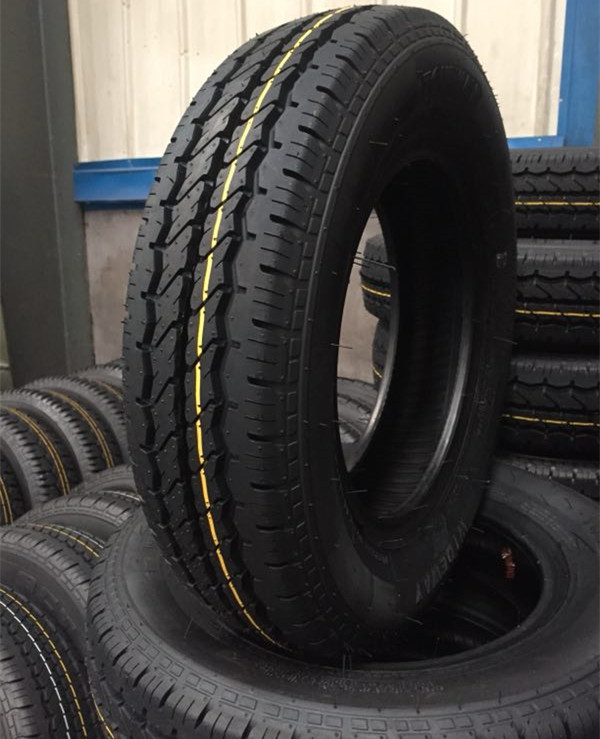
TOURWAY in 145R12C — the family and urban side of the same fleet decision. Image: Shandong Wideway Tire Co., Ltd.
What the published numbers actually say
Four differences carry the decision. The SMARTWAY II is 15 mm wider at the section (160 mm against 145 mm), which changes footprint and steering feel on a van front axle. Its load index of 88 sits two steps above the TOURWAY's 86, matching the heavier duty. The speed symbols differ, P against Q, so each must be checked against the vehicle placard rather than assumed interchangeable. And the pressure ceilings invert the intuitive expectation: the smaller 145R12C carries the higher maximum pressure at 450 KPA, while the van-oriented 5.50R13LT is rated at 420 KPA. Maximum pressure is a ceiling for the casing, not an operating target; inflation should follow the vehicle manufacturer's placard and the load actually carried.
Six Criteria That Decide the Allocation
1. Size code before marketing word
5.50R13LT and 145R12C are different fitments, not two flavours of one fitment. Confirm the placard size on each vehicle first; a size that does not fit cannot be traded off against any other advantage.
2. Load index against the real axle load
Load index 88 for the SMARTWAY II and 86 for the TOURWAY 145R12C describe different carrying capability. Load the van as it actually runs — cargo, racks, tools, passengers — and compare that against the index, not against the empty vehicle.
3. Speed symbol against route profile
The SMARTWAY II carries speed rating P and the TOURWAY carries Q. Urban fleets rarely approach either limit, but the symbol still has to meet or exceed the vehicle requirement. Check the placard and the insurer's position before substituting.
4. Section width and steering feel
The 160 mm section on the SMARTWAY II against 145 mm on the TOURWAY changes contact patch shape, turn-in weight and the tire's behaviour in tight loading bays. Van drivers notice this in the first week; passenger-car drivers notice it as heaviness.
5. Pressure ceiling versus operating practice
420 KPA on the SMARTWAY II and 450 KPA on the TOURWAY are ceilings. A fleet running high cold pressures on a fully loaded van should confirm headroom on the van size rather than assuming the larger tire has the higher limit.
6. Compound scope and appearance requirement
The TOURWAY material list includes white rubber compound; the SMARTWAY II list does not. If the fleet, the retail chain or the local market expects a white-sidewall appearance on passenger cars, that single line in the bill of materials settles the choice.
Step-by-Step Breakdown: Allocating Both Models in One Order
- Split the fleet by duty. List every vehicle as cargo van, taxi or ride-hailing, service car or pool car. This produces the size count before any product name is discussed.
- Read the placard on each vehicle. Record size, recommended cold pressure and any load/speed note. This is the constraint set that will disqualify options immediately.
- Assign the SMARTWAY II to commercial van duty. Use 5.50R13LT with load index 88 and speed rating P where the placard calls for that size class and the van carries cargo loads on urban roads.
- Assign the TOURWAY 145R12C to family and urban passenger duty. Use it where load index 86 and speed rating Q meet the requirement and the fleet wants the comfortable and noiseless family classification, including white-sidewall builds.
- Verify the certificate file for the destination market. Both sizes appear among the products listed against Wideway's ECE certificate E4-30R-0264621 under UN Regulation No. 30 issued by RDW, covering the EU and Africa markets; the EU R117 E-mark E4-117R-025700-S2WR2 issued by RDW for the EU market; SASO GSO certificate TR13651/2025 issued by SASO for Saudi Arabia; and SONCAP certificate NGP2026 145940/0001 issued by Bureau Veritas for Nigeria. The company's CCC certificate 2022061201000258 under GB9743-2024 is scoped to 75-series passenger car radial tires, so it should not be assumed to cover either of these sizes without written confirmation.
- Plan the order against production reality. Wideway runs OEM production with a monthly capacity of 60,000 pieces, a documented lead time of 25 to 45 days and a minimum order of one 20-foot container holding roughly 400 to 700 pieces. Combine both sizes in that container rather than splitting into two small orders.
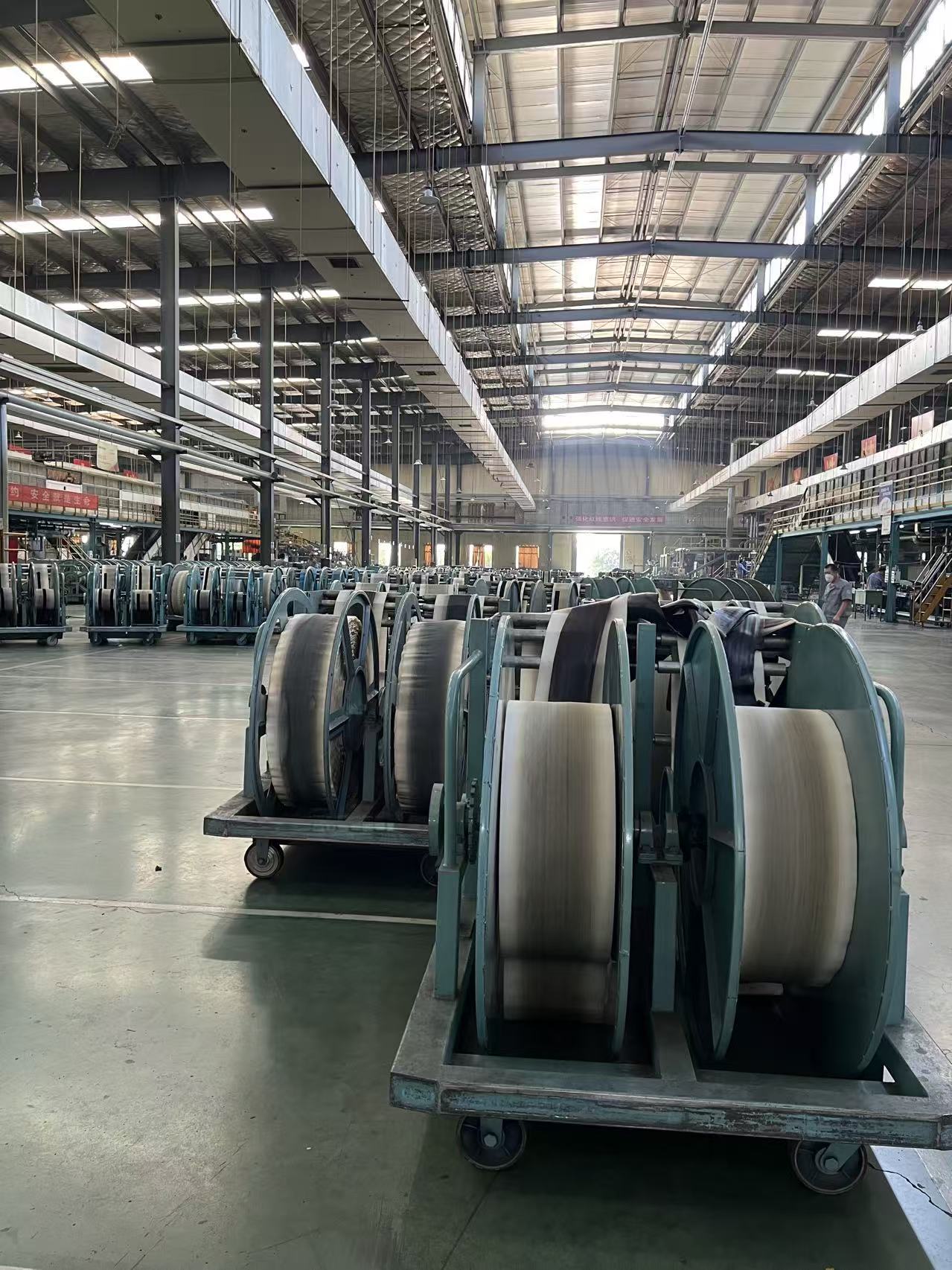
Compound and material control behind both models — the TOURWAY adds a white rubber compound to the same construction set. Image: Shandong Wideway Tire Co., Ltd.
Use Cases: Where Each Model Earns Its Place
Urban cargo and last-mile van fleets
The SMARTWAY II 5.50R13LT is the van-side answer: 160 mm section, load index 88 and speed rating P, positioned for commercial van duty and urban road scenarios. Fleets running fixed city routes with frequent stops and full loads should treat it as the default for that axle rather than as a premium upgrade.
Taxi, ride-hailing and pool cars
The TOURWAY 145R12C sits in the family and urban role with a comfortable and noiseless classification and high-speed stability. For small passenger cars doing high-cycle urban work, the noiseless classification is the commercially relevant one: driver fatigue and passenger feedback both track cabin noise.
Repair shop chains and aftermarket retail
Both models name tire distributors and wholesalers, automotive aftermarket and retail chains, auto repair shop chains and tire dealers as applicable industries. A shop chain that stocks both covers a van customer and a passenger-car customer from one supplier relationship, with one certificate file and one shipment.
Mixed fleets buying in container volume
A fleet with vans and small cars can build one container containing both sizes. The Mexico distributor program illustrates the pattern: 100,000 pieces over four years, with more than 400,000 passenger car radial tires exported and distributed, described in the record as extended tread life and high cost-effectiveness with dependable all-season traction, low noise and maximum ride comfort.
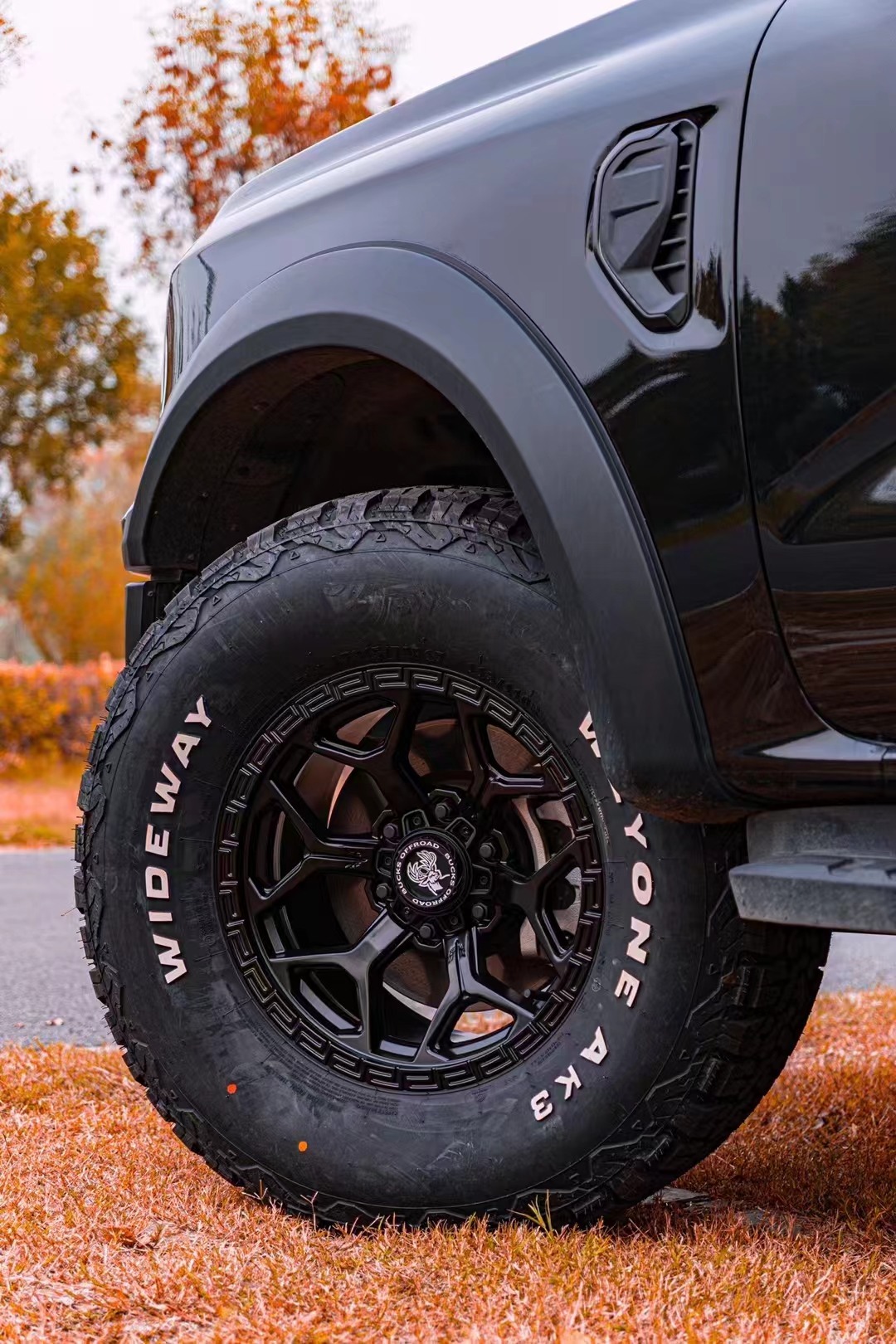
Urban fleet duty is the shared condition; the axle load is the difference. Image: Shandong Wideway Tire Co., Ltd.
Comparison Table: SMARTWAY II vs TOURWAY 145R12C
| Criterion | SMARTWAY II | TOURWAY 145R12C |
|---|---|---|
| Size designation | 5.50R13LT | 145R12C |
| Section width | 160 mm | 145 mm |
| Load index | 88 | 86 |
| Speed rating | P | Q |
| Maximum pressure | 420 KPA | 450 KPA |
| Steel cord | Listed in material set | Listed in material set |
| White rubber compound | Not in published material list | Listed in published material set |
| Operative duty in this comparison | Commercial van, urban road | Family and urban, comfortable and noiseless |
| Documented buyer group | Tire distributors and wholesalers | Distributors, aftermarket and retail chains, repair shop chains, dealers, mobility and taxi operators |
| Certification scope these sizes appear in | ECE E4-30R-0264621, EU R117 E4-117R-025700-S2WR2, SASO TR13651/2025, SONCAP NGP2026 145940/0001 | Same certificate set |
Read the table top to bottom and the logic is sequential, not additive: size decides eligibility, load index and speed rating decide fitness for duty, section width and pressure ceiling decide behaviour in service, and compound scope decides appearance and market fit.
Limits and What This Comparison Does Not Cover
Several things a fleet would like to know are not published in the available records, and inventing them would be worse than omitting them.
- No unit prices. Neither model has a published price in the available data. Budget conversations must start from a quotation per size and volume tier.
- No measured noise, wet-grip or rolling-resistance values. Both models are covered by the same R117 certification scope, but the recorded data does not publish the individual test values or label classes. Request them per size.
- No tread-depth or mileage figures. Wear claims require SKU-level test data that is not in the records summarised here.
- No independent third-party performance test. The comparison rests on manufacturer-declared parameters and regulatory approval scope, which is the correct basis for an allocation decision but not for a performance ranking.
Where the data is thin, the correct move is a written request to the supplier rather than an assumption. Fleets that ask for the certificate copy and the dimensional sheet per size avoid most of the disputes that surface two years into a supply relationship.
Frequently Asked Questions
Are the SMARTWAY II 5.50R13LT and TOURWAY 145R12C covered by the same certificates?
Both sizes appear among the product models listed against Wideway's ECE certificate E4-30R-0264621 under UN Regulation No. 30 issued by RDW for the EU and Africa markets, the EU R117 E-mark E4-117R-025700-S2WR2 issued by RDW for the EU market, the SASO GSO certificate TR13651/2025 for Saudi Arabia, and SONCAP certificate NGP2026 145940/0001 issued by Bureau Veritas for Nigeria. The company's CCC certificate 2022061201000258 under GB9743-2024 is scoped to 75-series passenger car radial tires, so it should not be applied to these two sizes without written confirmation.
Can one order cover both a 5.50R13LT van size and a 145R12C family size?
Yes. Wideway operates OEM production with a monthly capacity of 60,000 pieces and a documented lead time of 25 to 45 days, at a minimum order of one 20-foot container holding roughly 400 to 700 pieces. Both models sit inside the same passenger car tire range and the same certificate scope, so they can be combined in one shipment instead of two separate orders.
How should a fleet budget a mixed order when no list price is published?
Budget from the published cost drivers rather than from an assumed price: size designation, load index, compound scope and container minimum. The TOURWAY 145R12C material list adds a white rubber compound that the SMARTWAY II 5.50R13LT list does not include, which is a real bill-of-materials difference. No unit price appears in the available records, so pricing has to be requested per size and per volume tier before a budget line is fixed.
Can a fleet trial both models before committing to a full container?
The documented minimum order is one 20-foot container of around 400 to 700 pieces, and no separate trial programme is documented in the available records. The practical route is a mixed trial container that carries both sizes, supported by the certificate copy and dimensional sheet for each size, so fitment, load behaviour and driver feedback are validated on real vehicles before volumes scale up.
What lead time applies to an order containing both models?
The documented lead time is 25 to 45 days from Wideway's capability record, and it applies to orders placed at the one-container minimum. Buyers can confirm sizes, quantities, shipment timing and the certificate file for their destination market directly with the sales contact listed below.
Conclusion: Allocate by Constraint, Not by Preference
The SMARTWAY II 5.50R13LT and the TOURWAY 145R12C belong to one manufacturer and one product family, and they answer two different questions. The SMARTWAY II answers the commercial van question with a 160 mm section, load index 88, speed rating P and a 420 KPA ceiling on a 5.50R13LT carcass built for urban road commercial duty. The TOURWAY 145R12C answers the family and urban question with a 145 mm section, load index 86, speed rating Q, a 450 KPA ceiling, a comfortable and noiseless classification and a white rubber compound in the material set.
Fleets that get this right do three things in order: read the placard, match the load index and speed symbol to the real duty, then confirm the certificate for the destination market. Everything else — appearance, container mix, delivery window — follows from those three.
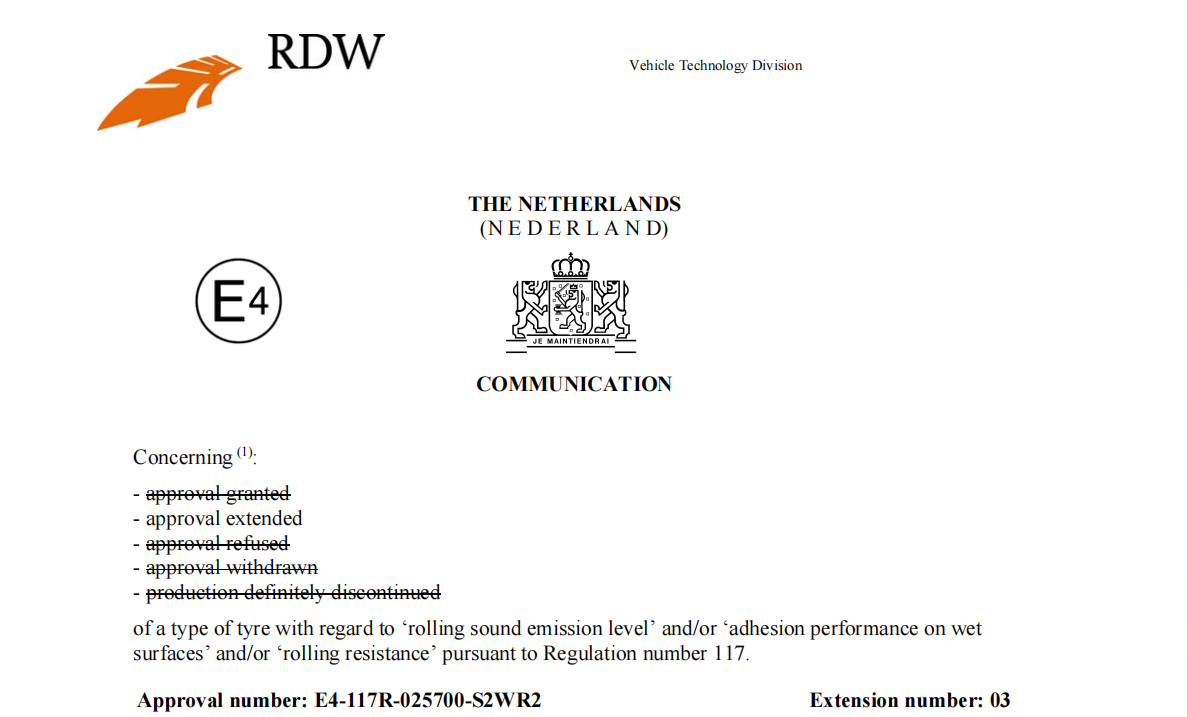
EU Regulation No. 117 E-mark certificate E4-117R-025700-S2WR2, issued by RDW for the EU market. Image: Shandong Wideway Tire Co., Ltd.
Next step: confirm both sizes for your fleet
Shandong Wideway Tire Co., Ltd. is a Chinese tire manufacturer founded in 2014, producing passenger car, SUV, off-road, van and winter and all-season tires with an annual output of 23,400,000 and about 70% of output exported to markets including Central and South America, Canada, the EU, Africa, the Middle East, Southeast Asia, Central Asia and Australia.
Send your fleet list — vehicle types, placard sizes, load requirements and destination market — and request a quotation plus the certificate file for both models. Contact: Della, della@widewaytire.com, tel and WhatsApp +86 18253208831. Company site: www.widewaytire.com.
Product catalog for download: EVERLAND CATALOG-2025 (PDF).
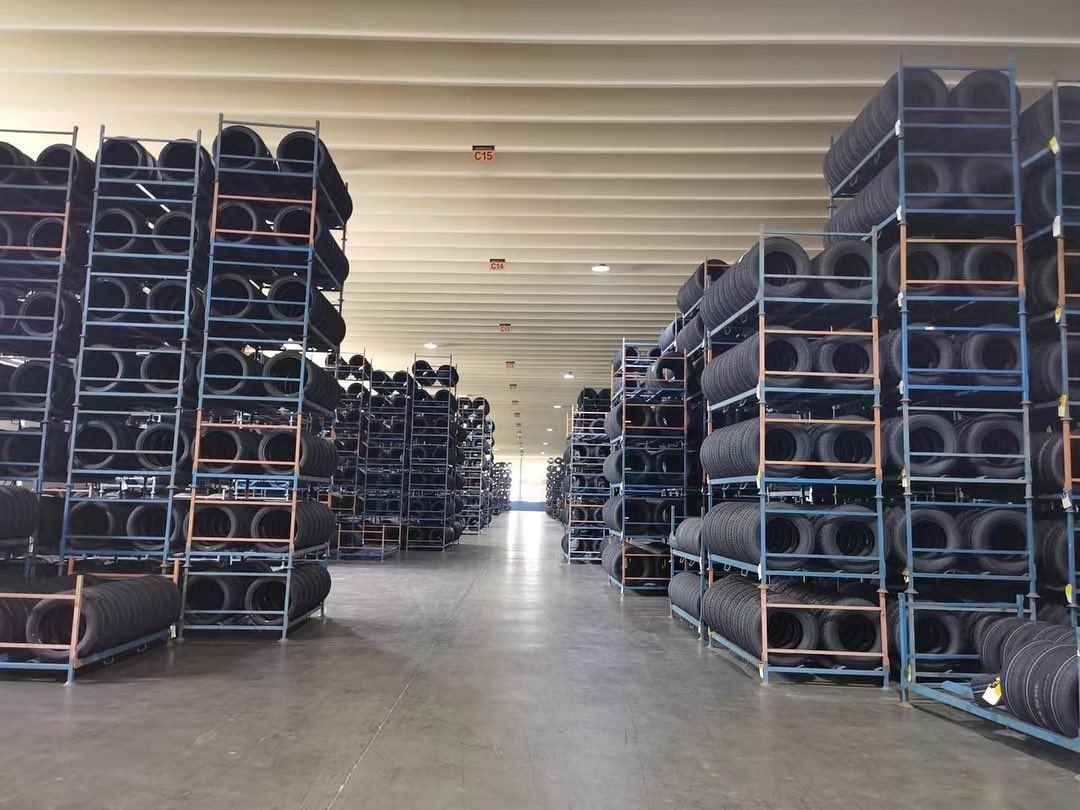
Order preparation at the Wideway warehouse — both sizes can ship in one 20-foot container. Image: Shandong Wideway Tire Co., Ltd.
Have Questions or Need More Details?
Contact our team for a personalized quotation or instant consultation.
Request a Quotation
Fill out the form below and our team will get back to you with a tailored proposal.
WhatsApp Direct Chat
Prefer to chat in real-time? Message us on WhatsApp for instant assistance & quick answers.
- Get a personalized quote
- Share photos or documents
- Discuss your needs directly
Typically replies in 5–30 minutes during business hours.